Step off the train in Osaka, then do the same in Kyoto. The cities are just thirty minutes apart by express train, a quick blink on the Shinkansen, yet you’ve crossed a cultural chasm deeper than the Yodo River that connects them. It’s a contrast that goes far beyond Kyoto’s serene temples and Osaka’s blazing neon. The real difference, the one you feel in your bones when you actually live here, isn’t in the landmarks. It’s in the streets. It’s in the way a neighbor says hello—or doesn’t. It’s the sound of a community, the texture of daily life. In Osaka, that life spills out into the open, a chaotic, warm, and sometimes overwhelming embrace. In Kyoto, it recedes behind perfectly swept doorsteps and sliding paper screens, a world of elegant restraint and unspoken rules. For any foreigner trying to build a life in Kansai, understanding this split personality is everything. It’s the choice between a neighborhood that pulls you into its loud, messy heart and one that politely asks you to wait at the door. One isn’t better than the other, but one of them is probably better for you.
This isn’t just about friendliness versus formality. It’s about two different philosophies of community, forged in centuries of history. Osaka, the merchant’s capital, built its identity on directness, pragmatism, and the boisterous energy of the marketplace. Kyoto, the imperial court, cultivated a culture of refinement, subtlety, and the quiet preservation of tradition. Today, those ancient identities echo in the most mundane interactions: buying vegetables, sorting your trash, or simply walking down your own street. Before you plant your roots, it pays to know which city’s rhythm matches your own. And in Osaka, that rhythm starts in the vibrant, covered heart of its neighborhoods: the shotengai.
Delve even deeper into Osaka’s vibrant neighborhood culture by exploring a vegan dashi exploration that highlights the city’s unique umami spirit.
The Sound of an Osaka Neighborhood: Chatter, Laughter, and “Are You Eating Right?”
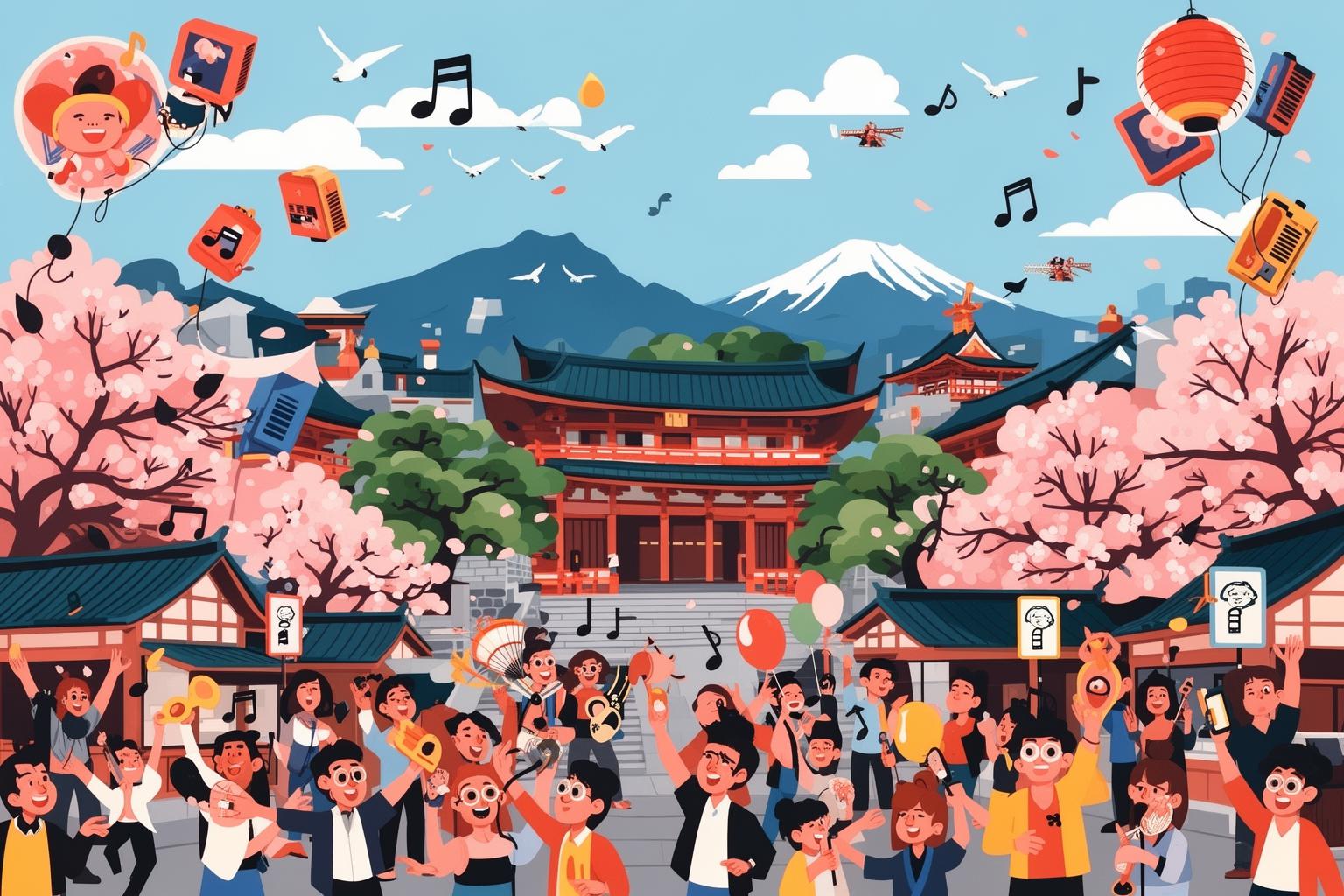
To understand daily life in Osaka, you need to grasp the concept of the shotengai. These covered shopping arcades act as the city’s lifeblood, channeling energy, commerce, and a great deal of noise through every neighborhood. This experience is far from the sterile quiet of a modern shopping mall. A shotengai is a joyful sensory overload. It’s the aroma of freshly fried croquettes from the butcher mixed with the sweet smell of grilled eel from the neighboring stall. It’s the sound of bicycles clattering through the crowds, the loud hum of pachinko parlors with their doors wide open, and most notably, the continuous overlapping chatter of people. Vendors shout greetings, elderly women haggle kindly over daikon radishes, and friends collide, stopping for long chats that block the aisle. It’s chaotic, inefficient, but undeniably the heart and soul of the city.
Welcome to the Shotengai: The Community’s Living Room
In Tokyo, shopping streets are transactional: you arrive, buy what you need, and leave. In Osaka, the shotengai is social. It’s less about shopping and more like a vast, communal living room for the neighborhood. This is where you not only get your groceries but also catch up on local gossip, receive unsolicited cooking tips for your fish, and have your new haircut admired by a handful of regulars. The purchase is often secondary to the social interaction. Once you become a regular, shopkeepers shift from strangers to familiar faces. They become the grandmother at the fruit stall who reserves the sweetest strawberries for you, the middle-aged man at the tofu shop who knows you prefer your tofu firm, and the butcher who questions why you’re buying chicken for one again. They recognize you, understand your routines, and aren’t shy about showing it. For some, this feels like a warm embrace; for others, it can feel like an unrelenting spotlight.
The Art of Osekkai: When Nosiness Shows You Care
There’s a Japanese word that perfectly captures this Osaka spirit: osekkai. Officially, it translates to “meddlesome” or “nosy.” Technically, that’s true. But in Osaka, it carries a deeper, affectionate meaning. Osekkai describes getting involved in someone else’s affairs out of genuine, if sometimes clumsy, care. It acts as social glue. Your neighbor isn’t just being nosy when she checks if you’re eating well; she’s quietly looking out for your health. The old man who asks where you’re heading isn’t interrogating you; he’s reinforcing your presence as a familiar figure in the community. It’s an informal system of mutual watchfulness that creates a strong sense of safety and belonging. If you don’t show up at your regular coffee spot for days, someone will notice, inquire, maybe even knock on your door. This contrasts starkly with the anonymous, head-down city life of Tokyo, where neighbors can coexist for years without knowing each other’s names. Of course, this openness means privacy is limited. Personal matters become community conversations, discussed over pickled vegetables and green tea. If you stayed out late, the bakery owner will know; if you’re having a quarrel, the whole arcade might weigh in. It’s a package deal: the warmth of community comes with the intensity of its ever-watchful gaze.
It’s All Business, and It’s All Personal
This culture of friendly intrusion is deeply embedded in Osaka’s identity as a city of merchants (shonin no machi). For centuries, business wasn’t conducted through cold, formal contracts but through relationships, trust, and knowing the person you dealt with. A good reputation in the community was your greatest asset. That mindset remains today. The shopkeeper’s interest in your life stems from the fact that a customer is not just a sale but a neighbor and part of the local ecosystem. A happy, stable neighborhood benefits business. This practical outlook is what makes Osaka’s warmth distinct from, say, the polished hospitality seen elsewhere. It’s not just about being polite—it’s about sustaining a functional, resilient, and mutually supportive social network. It’s a loud, unpretentious, profoundly human system where the line between your private and public life is beautifully—and sometimes maddeningly—blurred.
The Silence of a Kyoto Street: Politeness, Privacy, and Unspoken Rules
Cross the prefectural border into Kyoto, and the volume diminishes. The air itself seems to become more still. Even residential streets just a block away from bustling, tourist-filled avenues are quiet. The architecture enhances this sensation; traditional machiya townhouses show a solid, latticed wooden facade to the world. There are no open doors spilling life onto the sidewalk. Here, life is lived indoors, behind screens. The community exists, yet it functions on an entirely different wavelength. It’s a realm of great politeness, deeply rooted privacy, and a complex network of unspoken rules that can take a lifetime to master. As a newcomer, especially as a foreigner, you remain outside looking in, and the glass is very, very thick.
The Invisible Wall: Uchi vs. Soto
If Osaka’s defining trait is connection, Kyoto’s is separation. The most important concept to understand is the distinction between uchi (inside, us) and soto (outside, them). This distinction is a core part of Japanese culture everywhere, but in Kyoto, it becomes an art form. Your neighbors will be exquisitely polite. They will greet you with a perfect, crisp ohayou gozaimasu in the morning. They will bow. They will comment on the weather. And that is where the conversation ends. There will be no follow-up questions about your job, your family, or how you are settling in. Asking such personal questions of someone who is soto would be considered a breach of etiquette, an unwelcome intrusion. This attitude isn’t borne of coldness or dislike. On the contrary, it shows respect—respect for your privacy. They extend you the same courtesy they expect for themselves. But for someone used to Osaka’s easy familiarity, this formal distance can feel like an invisible barrier. You are seen, acknowledged, but not invited in. Gaining entry to the uchi circle is a slow, delicate process, measured not in months but in years, sometimes decades, of proven commitment to the community’s subtle norms.
Reading the Air in the Ancient Capital
In Osaka, if there’s a problem, you’ll hear about it—directly and probably loudly. In Kyoto, communication is an exercise in nuance and inference. The concepts of honne (one’s true feelings) and tatemae (the public face one presents) are essential. Criticism is almost never direct. Instead, it is hinted at, wrapped in layers of polite language that a non-native, and even many Japanese from other regions, might entirely miss. The classic, though perhaps apocryphal, example is the Kyoto resident who, wanting a guest to leave, asks, “Would you like to stay for some bubuzuke (a simple tea-on-rice dish)?” The polite response is to take this as a cue that it’s time to go home. Accepting the offer would be a major social faux pas. While this exact scenario may be rare, the principle applies in daily life. A neighbor’s remark about noisy crows might really be a complaint about how you dispose of your trash. A simple, “You’re always so busy, aren’t you?” could be a subtle dig at your lack of participation in neighborhood cleaning. Learning to read this refined air is the main challenge of living in Kyoto. You are expected to observe, understand, and conform without ever being explicitly told the rules.
The Price of Serenity: Community Duties and Silent Expectations
This quiet, orderly way of life doesn’t happen by chance. It is carefully preserved through strict community expectations. Though you might experience less spontaneous social interaction, your formal responsibilities to the neighborhood (chounaikai) are often stricter than in Osaka. There are exact, non-negotiable rules for sorting garbage. There are designated, mandatory cleaning days for the area. Festivities and events require not just participation but attendance. Neglecting these duties is a serious offense against communal harmony. In Osaka, if you mess up the garbage sorting, someone might scold you, show you the correct way, and then drop the matter. In Kyoto, your mistake will be met with silent, collective disapproval that is far more chilling. You won’t be told you did anything wrong. Instead, you’ll feel a subtle shift, a cooling in the already formal greetings. You will have proven yourself to be someone who doesn’t understand, truly soto. The privacy you enjoy in Kyoto is conditional; it is earned by impeccably fulfilling your public obligations.
Why the Divide? A Tale of Two Cities
This significant difference in social temperament is no coincidence of history; it is their history. The characters of Osaka and Kyoto were shaped by the distinct roles they assumed in the formation of Japan. For more than a thousand years, Kyoto served as the Emperor’s seat, the aristocracy’s home, and the hub of high culture. It was a city rooted in hierarchy, ceremony, aesthetics, and the preservation of status. Social interaction functioned as a performance, governed by elaborate etiquette. The aim was to sustain harmony (wa) and avoid giving offense, which meant concealing one’s true feelings and keeping private life hidden. This environment gave rise to the culture of honne and tatemae.
Meanwhile, just down the river, Osaka was evolving into its role as the tenka no daidokoro, the “nation’s kitchen.” It was a city of rice brokers, merchants, and artisans—the engine of the economy. In this world, there was no place for courtly ambiguity. Business demanded clear communication, swift calculations, and the ability to build trust through a handshake and a laugh. A merchant’s success relied on being direct, skilled at bargaining, cultivating a broad network, and being seen as reliable and straightforward. Humor acted as social lubrication and a negotiation tool. Discussing money wasn’t considered crass; it was the very point. This practical, results-driven, and inherently social approach to commerce permeated all aspects of life, fostering a culture that values openness, efficiency, and a good-natured joke over silent, dignified restraint.
The Merchant’s Logic vs. The Courtier’s Code
The historical identities of these two cities resonate in their language. The well-known Osaka greeting, moukarimakka? (“Are you making a profit?”), along with its typical response, bochi bochi denna (“So-so”), would be unthinkable in Kyoto. This greeting serves as both a friendly check-in and a recognition of their shared identity as people of commerce. It is simultaneously personal and pragmatic. In Kyoto, such a direct question about one’s finances would be extremely rude. Instead, the proper greeting is a formal remark on the season or weather, a topic that is pleasant yet impersonal. This linguistic difference highlights each city’s core values. Osaka’s initial question is, “How is business?” because business is life, and individual success is tied to the community’s prosperity. Kyoto’s opening comment addresses the shared environment, establishing a connection without breaching personal boundaries. One invites engagement; the other maintains respectful distance.
Finding Your Fit: What This Means for Your Life in Kansai
So, where do you truly belong? The answer depends less on which city boasts better food or more captivating temples, and more on your own personality and what you desire from a community. It’s a choice between two fundamentally different ways of social living, each presenting its own rewards and challenges.
Choosing Osaka: Embracing the Beautiful Chaos
Life in Osaka is an immersive experience. If you decide to live here, especially in a lively shotengai neighborhood, you’re choosing to be part of something greater. The benefits are vast: you will rarely feel alone. You’ll have a built-in support network of neighbors who genuinely look out for you. Engaging in conversations and making casual friends comes easily. The city’s energy is contagious, and its humor can be comforting. On the downside, this means limited privacy. Your business becomes everyone’s business. For introverts, the constant social interaction can be exhausting. But if you thrive on social energy, enjoy a bit of friendly banter, and view a nosy neighbor as simply someone who cares, Osaka will welcome you with open, warm, and slightly intrusive arms. It’s a city that asks you to be present, to engage, and to laugh at yourself. If you can do that, you’ll find a home unlike any other.
Choosing Kyoto: The Path of Patience and Observation
Life in Kyoto teaches patience. Choosing to live here means opting for peace, order, and the freedom to be yourself—quietly. The advantages are clear: you’ll enjoy unparalleled privacy. You can live without constant commentary or intrusion. The city’s beauty offers daily tranquility, and its cultural depth is vast. However, it can feel profoundly lonely. Making authentic local friends often takes a slow, frustrating process. The unspoken rules may feel oppressive, and the fear of missteps can cause a low-level, persistent anxiety. If you are a quiet observer, someone who values personal space above all else, and have the patience to learn a new social language through careful observation, Kyoto’s serene embrace might be the right fit. It’s a city that doesn’t ask you to perform but to conform. It rewards those who watch, listen, and learn to move gracefully within its subtle, ancient rhythm.
The Foreigner’s Advantage (and Disadvantage)
As a non-Japanese resident, you occupy a unique position in both cities. Your foreignness acts as a kind of social wildcard. In Osaka, it can make you even more of a novelty, a fascinating new character in the neighborhood story. People tend to be curious and often more forgiving of your social mistakes. In Kyoto, however, your outsider status is a double-edged sword. On one side, you might be held to a slightly less rigid standard since you are not expected to grasp all the intricate rules. On the other, this can deepen your soto status, making it harder to ever be fully accepted as a true community member. You remain a guest—a long-term, respected guest, perhaps—but a guest nonetheless.
Ultimately, deciding between Osaka and Kyoto isn’t about choosing the “better” city. It’s a matter of self-reflection. It’s about asking what you need to feel at home. Do you want a community that calls out your name loudly across the street, where belonging is a vibrant, daily affirmation? Or do you prefer a community that shows respect by granting you space, where belonging is a quiet harmony earned over time? One is an open door, inviting you into a lively, chaotic living room. The other, a beautifully crafted sliding screen, waiting for you to learn the proper way to knock. The Kansai region offers both. The only question is, which threshold will you choose to cross?