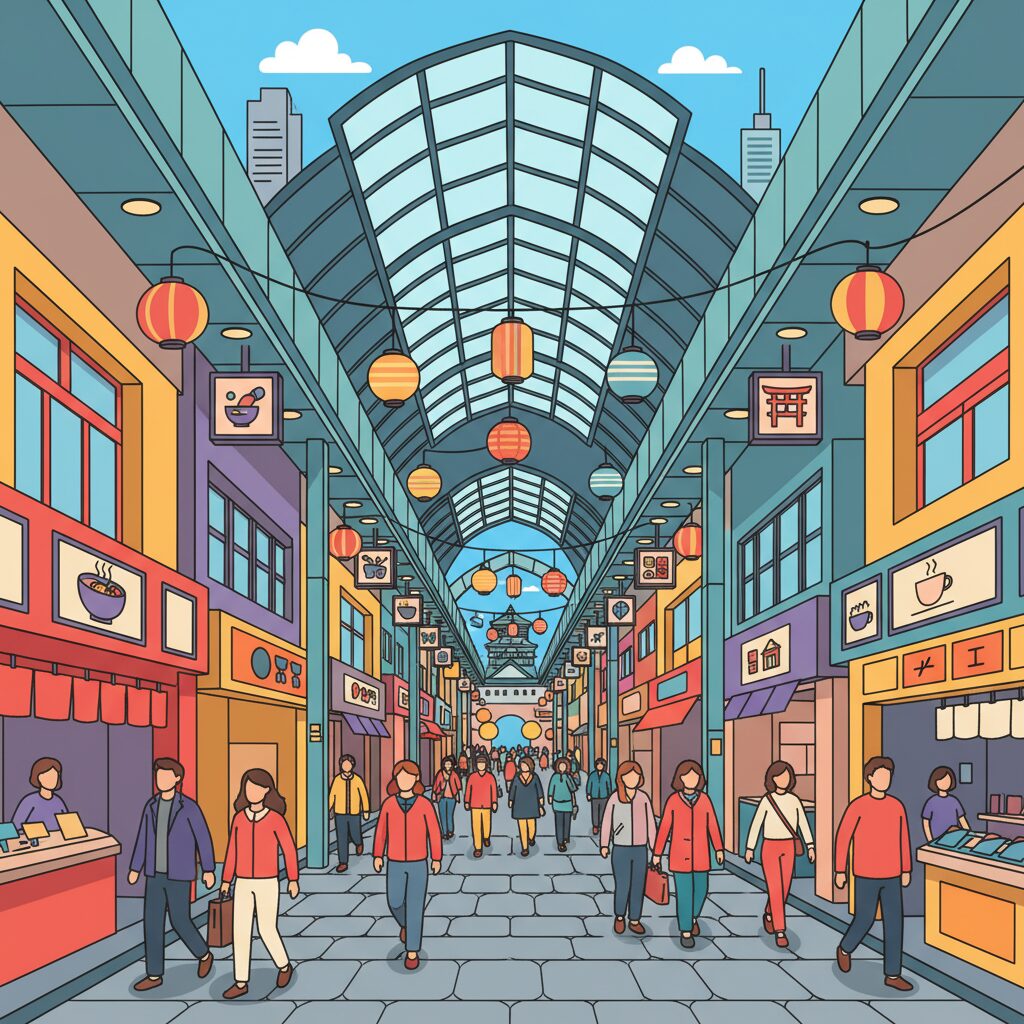
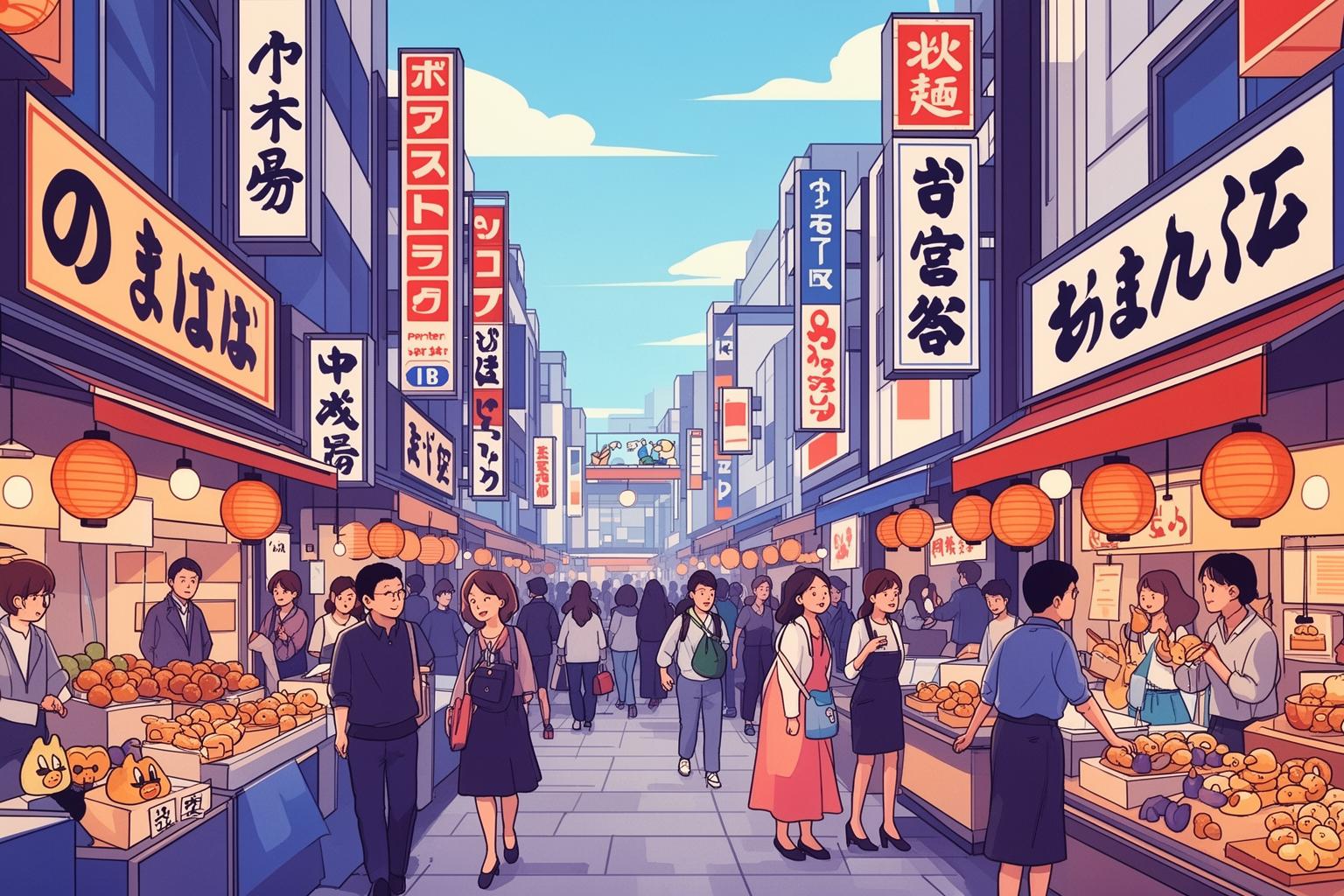
Before I moved to Osaka, my image of a Japanese city was all sleek trains, silent crowds, and gleaming towers of glass. It was an image crafted from movies and media, an image largely shaped by Tokyo. Then I found an apartment here, tucked away on a side street just off a sprawling, covered shopping arcade—a shotengai. My first walk through it was a sensory overload. It wasn’t sleek; it was a chaotic, beautiful mess. Banners with bold calligraphy hung from the rafters, the air was thick with the scent of fried croquettes and grilled fish, and the sound… the sound was a constant, energetic hum of vendors calling out deals, bicycles ringing their bells, and neighbors laughing loudly. This wasn’t the silent, orderly Japan I had imagined. This was something else entirely. It was alive. This is the real question for anyone thinking of renting here: What does it mean to make this vibrant, noisy, intensely human arcade the backdrop of your everyday life? It’s about more than convenience; it’s about choosing to live inside a community that operates on a different, more traditional and deeply personal wavelength. It’s choosing to make the neighborhood’s main artery your own front porch.
The urban vibrancy extends beyond the lively shotengai, inviting you to delve deeper into local culture by exploring Osaka neighborhood kissaten experiences.
Beyond the Lanterns: Decoding the Shotengai’s Social Code
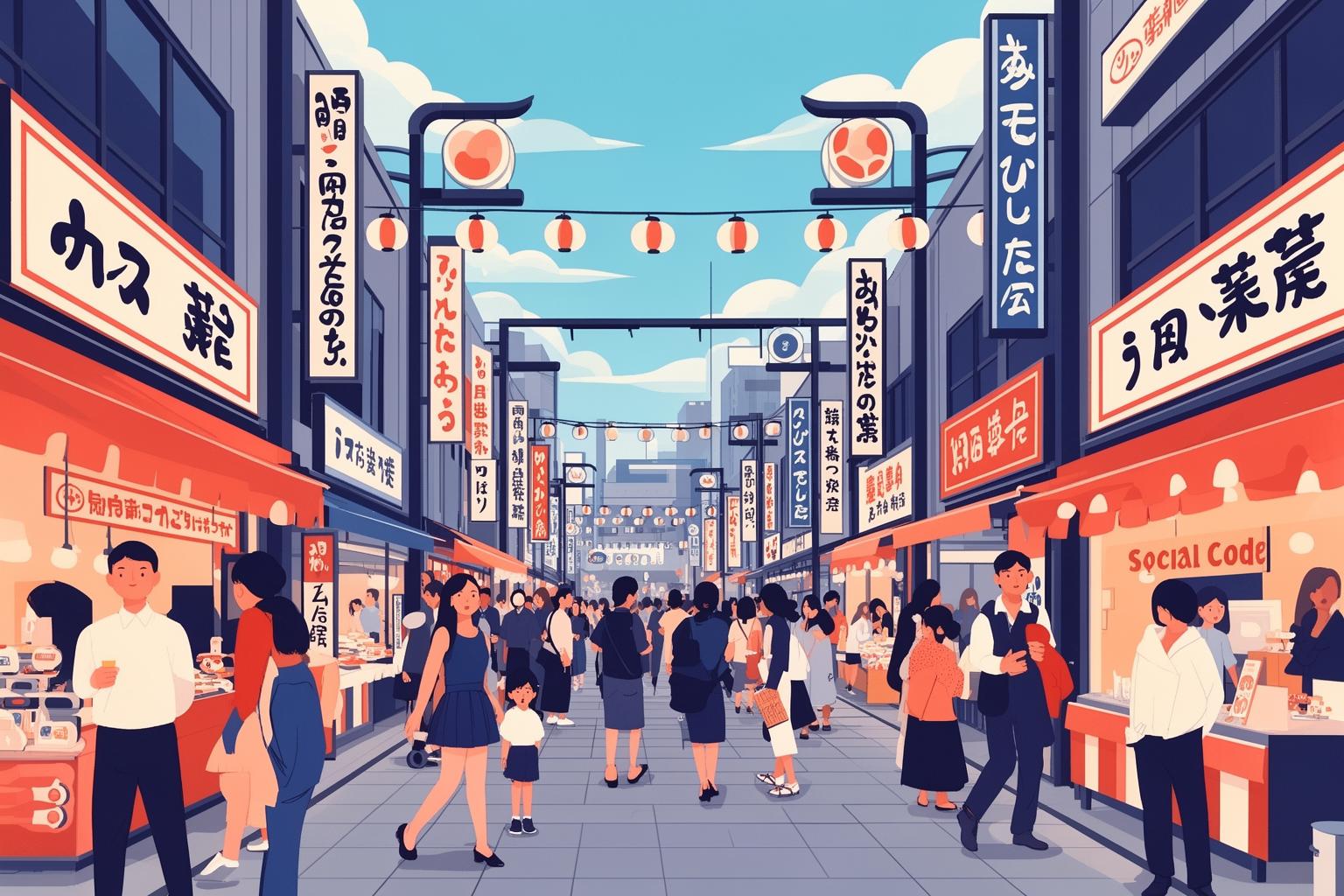
Living in a shotengai neighborhood is never a passive experience. You are immediately—and perhaps a bit abruptly—drawn into its social fabric. The first lesson you learn is that anonymity, the comforting shield of big city life, holds little value here. This community thrives on recognition and a shared understanding that everyone is part of the same ecosystem. It’s a stark contrast to life in Tokyo, where you can live in an apartment building for years without ever learning your neighbor’s name. Here, while your name might be unknown, your face becomes familiar within a week.
The Unspoken Language of Greetings
The most basic rule is also the simplest: you greet people. On your morning walk to the station, a stream of “Ohayo gozaimasu!” follows you along the arcade. It comes from the elderly woman carefully arranging vegetables at her stall, the butcher wiping down his counter, and the owner of the tiny kissaten coffee shop fanning the aroma of roasting beans out his door. At first, it feels like a performance, but you quickly understand it’s an essential daily ritual. Acknowledging one another is how the community reaffirms its existence every morning.
The real transformation happens when greetings become personal. The generic “Irasshaimase!” (Welcome!) you hear as a newcomer evolves into a warm “Maido!” once you become a regular. “Maido” sums up Osaka perfectly. Literally meaning “every time,” it is shorthand for “thank you for your continued patronage.” But its significance runs deeper—a verbal nod of recognition that says, “I see you. You belong here. See you again tomorrow.” Strolling down a street in Tokyo, you are just one of millions. Walking through your shotengai in Osaka, you are the person who always buys tofu on Tuesdays.
“Chotto soko made”: The Neighborhood’s Uniform
There’s an unspoken dress code in the shotengai, and it’s all about absolute comfort. The phrase “chotto soko made,” meaning “just going over there,” perfectly captures the vibe. You’ll spot people shuffling along in house slippers and sweatpants to grab a carton of milk, or a grandmother in her apron picking up daikon for dinner. This isn’t seen as sloppiness or neglect; rather, it signals that the shotengai is regarded as a semi-private space—an extension of one’s own home.
This subtle but important cultural difference stands out. In many parts of Tokyo, there is more pressure to present a polished public image, even for a quick errand. The shotengai’s casual atmosphere reflects the practical, down-to-earth nature of Osakans. Why dress up when you’re going to what is essentially your community pantry? This mindset permeates daily life. There’s less pretense and less focus on appearance for its own sake. Life unfolds openly, comfortably, and without affectation. Your apartment is your private room, but the shotengai is the neighborhood’s shared living room.
The Economics of Everyday Life: More Than Just a Price Tag
The shotengai functions according to its own economic logic, a system founded as much on relationships as on yen. It stands as a clear rejection of the cold, impersonal efficiency found in large supermarkets. Here, shopping is a dialogue, a negotiation, and a daily interaction that deepens community ties. It reshapes your entire mindset toward budgeting, cooking, and consumption.
The Art of the Deal, Osaka Style
Foreigners often hear that Osaka is a city of merchants where haggling is expected for everything. This is a misconception. You don’t haggle over the price of a single apple. Instead, the “deal” happens in a subtler way through the wonderful custom of “omake,” meaning a small gift or extra. Once you become a regular customer, omake begins to appear. After weighing your oranges, the fruit vendor might slip an extra one into your bag with a smile. The butcher may throw in some extra pork scraps for your soup. The woman selling tempura might offer a slightly imperfect shrimp for free while you wait.
This isn’t charity or a discount; it’s a tangible expression of a relationship. It’s the shopkeeper’s way of saying, “Thank you for your loyalty.” This relational style of commerce is a defining feature of Osaka’s identity. While Tokyo service is often lauded for its flawless, polite precision, Osaka’s service is cherished for its warmth and humanity. A Tokyo cashier will complete the transaction flawlessly. An Osaka shopkeeper will inquire about your family while handing you an extra potato. For renters, investing your loyalty in a few key shops yields returns that go beyond monetary value.
Your Wallet’s Best Friend: The Rhythm of Shopping
Living near a shotengai breaks down the Western idea of a “weekly grocery run.” Your fridge becomes a short-term holding area rather than long-term storage. You shop for tonight’s meal, not the entire week. The shotengai itself serves as your pantry—always fresh and always accessible. You pick up what looks good at the fishmonger, what’s in season from the vegetable stand, and just enough meat for one dish from the butcher.
This daily rhythm aligns you with the neighborhood’s pulse. You learn to recognize the late-afternoon calls of the “time sale” (taimu seru), when shops discount remaining stock. The shout of “Korokke, yasui yo!” signals it’s time to consider a side for dinner. This responsive way of living and eating is more spontaneous and less wasteful. It also keeps you constantly engaged with your neighbors. You’re not just a shopper completing a chore; you’re a participant in a daily economic dance. That’s why renting an apartment with a large, American-style refrigerator near a shotengai feels almost unnecessary. The whole street is your larder.
Finding Your Place: From Renter to Resident
Transitioning from being a renter who simply lives near a shotengai to becoming a resident who is truly part of it requires a shift in mindset. You need to learn how to engage with the analog, human-powered networks that shape the neighborhood. It’s about realizing that the most valuable information isn’t accessed through an app, but rather comes from a casual conversation with a shopkeeper.
The Information Network That Isn’t Online
In most modern cities, we depend on Google Maps, restaurant review sites, and online community boards to guide our lives. In a shotengai, however, the information network operates entirely offline and is managed by the vendors. Want to know which local clinic has the most patient doctor? Ask the woman at the pharmacy. Looking for a trustworthy plumber? The hardware store owner has a recommendation. Curious about the schedule for the local summer festival? The elderly man at the tea shop has all the details.
These shopkeepers act as the hubs of the community. They see everyone and hear everything. They are the keepers of local knowledge. For a foreigner, this can feel intimidating. It means putting yourself out there, practicing your Japanese, and being willing to ask for help. But once you start asking, you’ll discover people are eager to share. This network transforms a collection of buildings into a living, functioning community. It’s a system founded on trust and reciprocity—something no algorithm can replicate.
Navigating the Neighborhood Noise (and Smells)
Let’s be honest: living in a shotengai is not a quiet experience. It demands embracing a certain level of sensory stimulation. The day begins early with the metallic clatter of shop shutters being raised. Throughout the day, there’s a constant symphony of sounds: the sizzle of oil at the tempura stand, the rhythmic pounding of a mochi maker, the cheerful, endlessly looping jingle of the local supermarket, and the overlapping chatter of shoppers. The air itself carries a tapestry of scents—sweet soy sauce from a senbei cracker shop, roasting tea leaves, fresh fish on ice, and savory steam from a ramen joint.
For a prospective renter, this is an important consideration. If you need monastic silence to feel at peace, an apartment directly on or near a shotengai will prove challenging. But if you thrive on the energy of a place, these sounds and smells aren’t noise or pollution; they are signs of a vibrant, healthy neighborhood. They provide constant, comforting proof that you are not alone. You are in the very heart of the community. The apartments themselves tend to be older, with quirks and character absent from newer high-rises, but they offer an unmatched trade-off: incomparable convenience and a strong sense of place.
Common Misunderstandings and How to Fit In
Osaka has a well-known reputation within Japan, and many stereotypes about the city hold some truth. However, when viewed from the inside—especially within the microcosm of a shotengai—these traits appear quite different. Understanding the local mindset is essential not only for coexisting but also for genuinely enjoying life here.
“Friendliness” vs. “Nosiness”: The Osaka Fine Line
The most common cliché about Osakans is that they are “friendly.” This is accurate, but it’s not the passive, polite friendliness you might expect. Instead, it’s an active, engaging, and sometimes distinctly nosy kind of friendliness. The obaasan at the vegetable stand won’t just sell you a cucumber; she’ll ask what you’re making for dinner, tell you you’re cutting it wrong, and inquire if you’re eating enough vegetables in general. Your neighbors might comment if you look tired. The man at the fish stand will ask where you’re from before launching into a story about his one trip abroad two decades ago.
In Tokyo, this level of personal questioning from a casual acquaintance would be considered a major social faux pas. Here, it signals care. It’s how the community conducts wellness checks on itself. They aren’t attempting to invade your privacy, but rather to include you in the circle. The best way to respond is with openness and humor. Share a little about your life and ask questions in return. This continuous, low-level social interaction is what holds the community together. It highlights a fundamental difference in social philosophy: in Tokyo, politeness often involves maintaining respectful distance, whereas in Osaka, it’s about bridging that distance.
The Myth of the “Loud” Osakan
Another common stereotype is that Osakans are loud. This isn’t about volume so much as a culture of direct communication. There’s generally less emphasis on “tatemae,” the Japanese custom of expressing what is socially expected rather than what one truly feels. In the shotengai, this is visible every day. Customers openly complain if prices are too high. Shopkeepers tease and banter with each other across the arcade. Laughter is frequent and loud.
This straightforwardness can be refreshing to foreigners used to navigating layers of unspoken meaning. People tend to say what they mean, often with a punchline included. Business is conducted with a handshake and direct conversation. This style values honesty and efficiency over delicate formality. The “noise” of a shotengai is the sound of this philosophy in action: a chorus of honest, unfiltered, and deeply human interaction.
Choosing to rent an apartment in an Osaka shotengai neighborhood is more than a practical decision about location and price. It represents a choice for a different way of living. It’s stepping out of the sterile silence of a modern apartment building into the warm, chaotic, and vibrant embrace of a genuine community. You exchange the privacy of anonymity for the gift of recognition. Your daily errands become social visits. The people who sell you your food become those who look out for you. When you rent here, you’re not just receiving keys to a door—you’re gaining a front-row seat to the daily performance of Osaka’s true character, and in time, you may even find yourself playing a role.