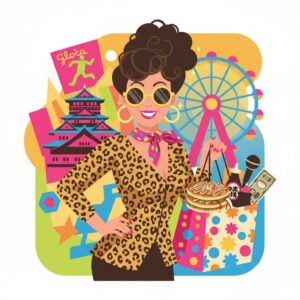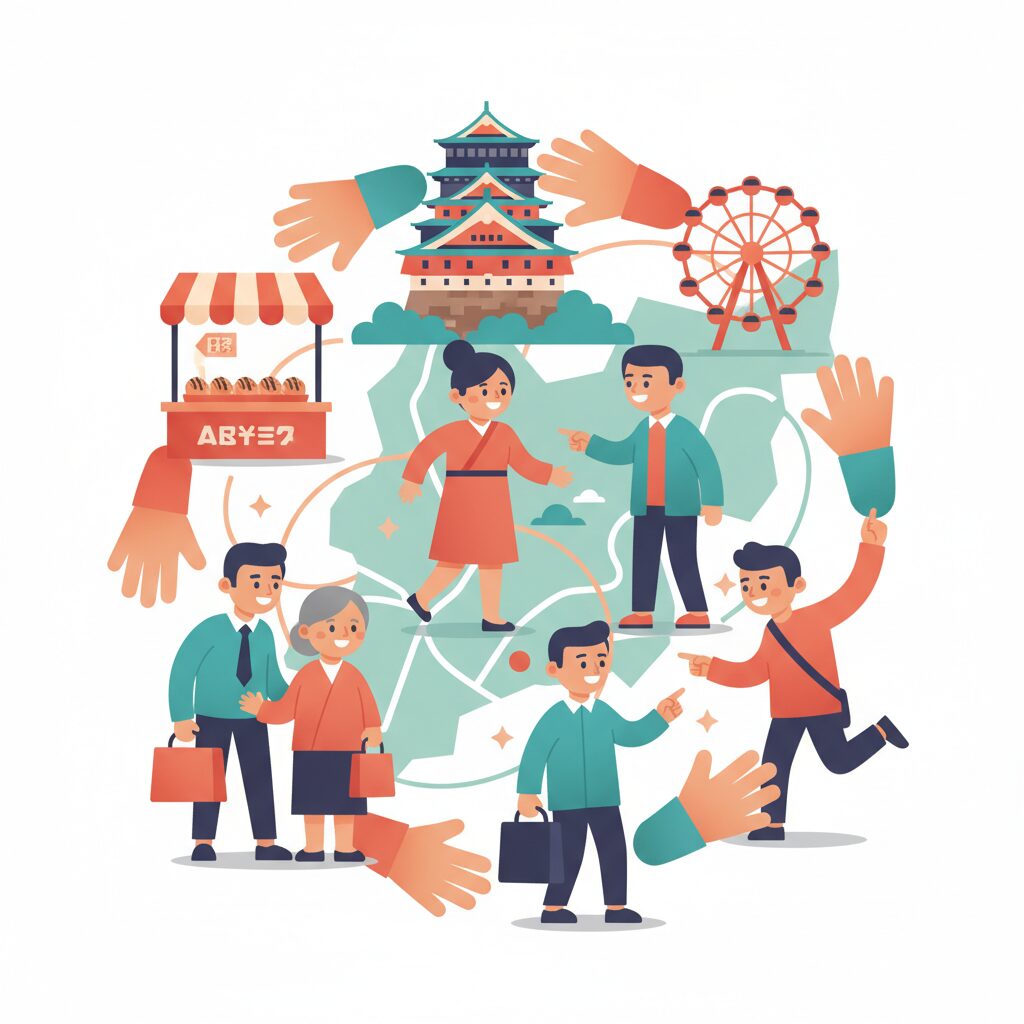
The first time it happens, you won’t know what hit you. You’re standing in the aisle of a supermarket in Tennoji, maybe staring at a wall of soy sauce, completely lost. Your internal monologue is a frantic loop of confusion. Which one is for sashimi? Which one for cooking? A shadow falls over you. An older woman, an obachan you’ve never seen before, taps you on the shoulder with a leek she’s about to buy. She points to a bottle. “Anata, kore ya de,” she says, her voice a gravelly mix of certainty and command. “This one. It’s the best deal, and it works for everything. The expensive one is a rip-off. Are you eating properly? You look a little thin.” She then proceeds to ask where you’re from, what you’re cooking for dinner, and why you’re not wearing a warmer jacket. You’re left standing there, soy sauce in hand, feeling a strange mix of invaded, cared for, and utterly bewildered. Welcome to Osaka. You’ve just had your first dose of osekkai. It’s a word you’ll hear thrown around, a concept that sits at the very heart of what makes living in Osaka a fundamentally different universe from anywhere else in Japan, especially Tokyo. Is it meddling? Is it kindness? The answer is a messy, beautiful, and loud, “Yes.” This isn’t just about being friendly; it’s about a deep-seated belief that we’re all in this together, and if you look like you need help, someone’s going to step in, whether you asked for it or not.
This deep-seated belief in community is also what keeps the tradition of the local sentō alive as a vital neighborhood hub.
The Unspoken Social Contract of Osaka
Before we can begin to unpack osekkai, it’s important to grasp the fundamental difference between Osaka and Tokyo. It goes beyond just an accent or a preference for different foods—it’s an entirely different social operating system. Tokyo operates on a code of elegant, unspoken distance. It’s a city of millions moving in perfect, synchronized harmony by maintaining a respectful bubble of personal space and emotional privacy. The guiding principles are enryo, a form of reserved politeness, and meiwaku, the major offense of bothering others. You don’t strike up conversations with strangers on the train, nor comment on someone’s shopping basket. You keep to yourself, and in return, everyone else does the same. It’s efficient, orderly, and peaceful.
Osaka discards that entire operating system. Here, the social contract isn’t about avoiding bothering people; it’s about not ignoring them. Leaving someone to struggle—whether with deciphering a train map or reaching for something on a high shelf—is seen as cold and uncaring, the real social faux pas. Osekkai is the mechanism that enforces this contract. It’s a proactive, often unsolicited offer of help, advice, or connection. It’s like a pop-up ad you can’t close—but this ad is trying to give you a discount coupon and a free recipe for nikujaga.
This is the core misunderstanding for many foreigners and even Japanese from other regions. They interpret such proactive engagement through their own cultural lens, where unsolicited advice feels like criticism and personal questions from strangers feel intrusive. In Osaka, it’s quite the opposite: it’s a sign of inclusion. That obachan wasn’t judging your soy sauce knowledge; she was welcoming you into her circle of shared knowledge. She was saying, “You’re in my neighborhood, you look confused, so now you’re my responsibility.” It’s a heavy, sometimes overwhelming, but often deeply warm blanket of community care.
The Anatomy of an Osekkai Encounter
Let’s break down a typical osekkai moment. It’s not merely a spontaneous act of kindness. It follows a certain rhythm, a kind of street-level social choreography. Grasping these steps can help you handle these encounters smoothly and maybe even appreciate them. It’s a performance, and once you know the script, you can play your role.
The Opening Salvo: The Direct Approach
An osekkai intervention rarely starts with a hesitant, “Excuse me, do you need some help?” That’s too indirect, too Tokyo. It begins with a statement of fact, a direct observation, or a sudden, loud declaration. You’re trying to take a picture in front of the Glico Running Man sign in Dotonbori. Someone will come up and, instead of offering to take it for you, they’ll just say, “Ah, you’re doing it all wrong! You’re not getting the whole sign in. Here, give me the phone.” There’s no small talk. The problem has been spotted, and the solution is being applied immediately. The assumption is that, of course, you want help—you just didn’t know how or whom to ask. This directness may be startling, but it stems from efficiency, not rudeness. Why waste time with pleasantries when there’s a problem to fix?
The Core Content: Unsolicited Advice and Personal Questions
This is the essence. After the initial contact, the floodgates open. The advice is specific, practical, and delivered with the certainty of someone who’s been buying daikon radishes at the same shop for fifty years. “Don’t buy that one, it’s not fresh. See the leaves? A bit wilted. This one’s better. And it’s ten yen cheaper.” This is often followed by a flurry of personal questions. They’re not meant as an interrogation but rather a way to quickly establish context and build a temporary, intense human connection. Where are you from? Why are you in Osaka? Are you a student? Do you have a girlfriend or boyfriend? How do you find the summers here? Hot, aren’t they? It’s a social data-gathering exercise to better tailor the osekkai. If you say you’re a student, they might offer tips on cheap places to eat near your university. If you say you just moved here, they might share the entire history of the neighborhood. It’s a way of weaving you, a stranger, into the local story, even if just for a brief conversation.
The Physical Element: The Casual Touch
Don’t be surprised if an osekkai encounter includes some casual physical contact. A hand on your arm to capture your attention. A tap on the back to steer you in the right direction. A finger pointing directly at the item in your shopping cart they disapprove of. In a culture like Japan’s, generally low-contact, this can feel especially unexpected. But within the context of Osaka osekkai, it’s part of breaking down barriers. It’s a non-verbal signal meaning, “We’re beyond formal distance. We’re in this together now.” It’s a gesture of familiarity, intended to put you at ease by treating you like a neighbor or a somewhat clueless nephew rather than a complete stranger. It dissolves the formal bubble that typically envelops individuals in public spaces in Japan.
The Closing: A Warm Dismissal
As abruptly as it began, the encounter will end. The advice given, the questions asked, the problem solved. The person will offer a hearty, “Ja, ganbatte ya!” (“Alright, do your best!”) or “Kaze hikan toite ya!” (“Don’t catch a cold!”), and then disappear back into the city’s flow. There’s no lingering, no expectation of a long, drawn-out thank you. The exchange is complete. They did their part, you received the help, and the social balance of the universe is restored. You’re left feeling like you’ve been swept up in a whirlwind of human connection—a brief but potent micro-relationship that lasted only moments but left a genuine impression.
The Natural Habitat of Osekkai: Where to Find It
While osekkai can occur anywhere at any time, it thrives particularly well in specific environments. These are the places where the city’s communal spirit is most concentrated, where the boundaries between public and private, stranger and neighbor, become delightfully blurred. To truly understand what living in Osaka is like, spend time in these settings.
The Shotengai: Arteries of Community
Covered shopping arcades, or shotengai, are the heart of osekkai culture. Places like Tenjinbashisuji, Japan’s longest, or the more chaotic and gritty Senbayashi Shotengai are more than mere shopping destinations. They serve as linear community hubs. Vendors have known each other for generations, and customers have been returning for decades. Here, commerce and conversation are inseparable. When you buy fish, the seller might offer unsolicited cooking tips. When you purchase vegetables, the woman beside you might tell you you’re overpaying and direct you to a better stall. It’s a living theater of communal economics.
Tune in to the rhythm of the language. It’s loud, fast, and full of laughter. Shopkeepers hurl friendly insults across the arcade, all while keeping an eye on the neighborhood kids. If you become a regular, they start to recognize you, asking why they didn’t see you last week or if you were feeling unwell. They’ll notice a new haircut and may slip you an omake, a little free bonus, not just as a business tactic but as a sign you’ve joined the community ecosystem. In the shotengai, you’re never just another consumer — you’re a participant in a daily drama of connection and commerce.
The Tachinomi: Vertical Socializing
Tachinomi, or standing bars, are another key incubator of osekkai. These small, often cramped spots have you standing shoulder-to-shoulder with strangers, drinking cheap beer and eating simple snacks. The close quarters quickly dissolve social barriers. There’s no room for the Tokyo-style personal bubble. You’ll inevitably strike up a conversation with the salaryman next to you or the retired grandpa on your other side. They’ll want to hear your story, recommend dishes, and teach you Osaka-ben phrases. It’s an immersive crash course in local culture. A tachinomi embodies Osaka’s social philosophy: shared space, shared food, shared stories. Being a stranger is only temporary — everyone around actively and enthusiastically helps to change that. You may come in alone, but loneliness rarely lingers.
The Public Bath: The Sento Experience
Though it may seem daunting at first, the local public bath, or sento, offers one of the purest expressions of this culture. As the ultimate equalizer through shared nudity, social status fades away. It’s here, amid steam and hot water, that you’ll experience the most unfiltered osekkai. The older regulars — the nushi, or masters of the bath — won’t hesitate to correct your washing etiquette: “You need to rinse off more before getting in the tub!” They’ll ask about your life, share homespun wisdom, and treat you like a grandchild they’re obliged to look after. This is a deeply local, profoundly human experience. In the vulnerability of that shared space, the Osaka impulse to connect, guide, and care for one another shines brightest.
The Language of Connection: Osekkai and Osaka-ben
The way people speak in Osaka goes beyond just an accent; it serves as a perfectly tailored tool for the role of osekkai. Osaka-ben, the local dialect, is more direct, expressive, and informal than standard Japanese. It’s a language meant to bridge gaps, not widen them.
Letting Go of Formality
Standard Japanese involves intricate levels of politeness, known as keigo. Although Osaka-ben has its own polite expressions, everyday speech tends to flatten these social layers. People are quicker to shed formal language and adopt a more casual, familiar tone. This isn’t disrespectful; rather, it signifies acceptance and accelerates the transition from “stranger” to “acquaintance.” Sentences often end with friendly, declarative particles like ~ya de or ~nen, which feel like shared statements of fact instead of formal declarations. For example, the phrase “Sore, ee yan!” (“That’s great, isn’t it!”) works as both a statement and an invitation to agree, instantly creating connection.
The Emotional Soundscape
Osaka-ben is deeply expressive. Its intonation is more melodic and varied compared to the flatter rhythm of Tokyo Japanese, allowing a broader emotional range. When someone offers you osekkai, their voice carries genuine concern, amusement, or urgency. It’s almost a performance. The words are only part of the message—the tone conveys the emotional weight. This is why it can feel overwhelming at times; it’s not a gentle suggestion but a full-bodied, emotionally charged message that commands attention.
Essential Phrases to Recognize
If you live in Osaka, you’ll soon learn to spot the signs of an incoming osekkai moment.
- “Chotto, chotto!” (“Hey, wait a minute!”): This is the classic opener, like pressing pause on your life because someone has noticed something off.
- “Anata, doko no ko?” (“You, where are you from?”): Literally “whose kid are you?”, but used to mean “where are you from?” It’s surprisingly familiar, setting the conversation on a personal, almost familial note.
- “Shiran kedo.” (“I don’t really know, but…”): This phrase is magical. An Osakan will offer detailed, confident advice and then soften it with “shiran kedo.” It’s a verbal shrug that means, “This is my strong opinion, but I could be wrong, so no pressure.” It gently cushions their directness and offers you a way out—an ultimate blend of confidence and humility.
When Osekkai Crosses the Line: The Nosy Side of Nice
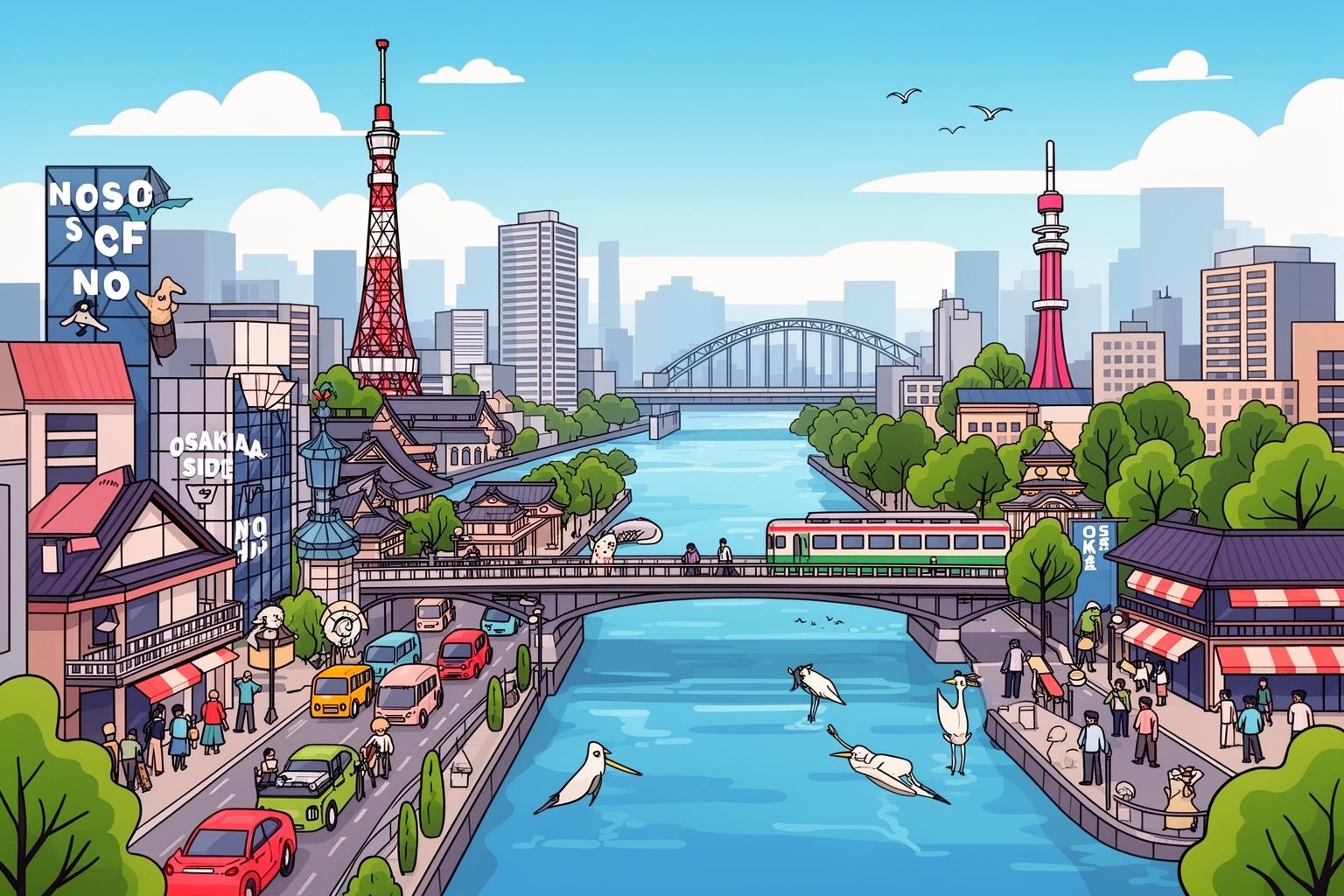
Let’s be honest. Despite its warmth, osekkai has a downside. There are days when you just want to be left alone, and times when the advice feels less helpful and more judgmental. Recognizing these potential drawbacks is crucial for anyone considering life in Osaka. This isn’t a story of universal friendliness; it’s a real, complex human culture with its unique challenges.
The Invasion of Privacy
The most frequent complaint is the apparent lack of boundaries. The questions can seem very personal: “Why aren’t you married yet?” “Haven’t you gained a bit of weight?” “Is that really what you’re feeding your child?” For those from cultures that value individualism and privacy, this can feel deeply intrusive. The key is to remember the intent behind them. These questions are seldom meant to be hurtful or judgmental. They stem from a worldview where aspects of life—marriage, health, family—are seen as a communal concern. Your well-being reflects on the community’s well-being. While that doesn’t always make it easier to hear, understanding this motivation can help you not take the comments personally.
The Pressure to Conform
Because osekkai is grounded in shared norms and common sense, it can sometimes exert subtle pressure to conform. The advice you receive is based on what the local community regards as the “right” way to do things—the right way to shop, cook, or raise a child. If your approach differs, you may find yourself frequently on the receiving end of “corrections.” This can be draining. It requires a certain confidence to smile, say thank you, and continue doing things your own way. You need to learn to distinguish genuinely useful advice from expressions of a different cultural norm.
Navigating an Unwanted Encounter
So, what do you do when you’re simply not in the mood? Rejecting osekkai can be delicate, as a blunt refusal may be seen as an insult. The person was trying to be kind, and shutting them down feels like refusing a gift. The Osaka-style solution is to use humor and vagueness. A technique called noren ni udeoshi, or “pushing on a shop curtain,” works well. You offer no resistance but don’t fully engage either. A non-committal laugh, a vague “Ah, sou desu ka!” (“Oh, is that so!”), and a polite “Arigatou gozaimasu!” (“Thank you!”) followed by a quick change of subject or a strategic retreat usually does the trick. You acknowledge the gesture without accepting the content, employing social jiu-jitsu that allows both sides to save face.
Why Here? The Merchant Soul of Osaka
This distinctive cultural trait didn’t simply emerge out of nowhere; it is deeply rooted in the city’s history. Tokyo was the city of samurai and government—a place defined by hierarchy, formality, and rules. Osaka, in contrast, was the city of merchants, the shonin no machi. Its strength came from its economy, not political power.
In a merchant culture, reputation, relationships, and the ability to build trust were the most valuable assets. Business was not just about transactions; it was about long-term connections. You needed to know your customers, suppliers, and neighbors. Looking out for one another was essential because a thriving community benefited everyone’s bottom line. This fostered a culture of pragmatism, mutual support, and, yes, a certain degree of getting involved in each other’s affairs. A problem for your neighbor could eventually become your problem, so it was better to intervene early.
This mindset, shaped by centuries of commerce, still drives the city today. The merchant spirit—practical, communicative, human-centered, and always seeking a good deal—is the essence of osekkai. It represents a pragmatic investment in those around you. It is not abstract altruism; it is a functional, time-tested strategy for building a resilient, vibrant community. It’s the belief that a little meddling is a small price to pay for a strong social fabric.
So, is osekkai nosy or kind? By now, you should realize that’s the wrong question. It’s not an either/or matter. It is a fundamental communication style, a form of care expressed through direct, proactive engagement. It can be surprising, funny, annoying, and heartwarming—sometimes all within a single five-minute conversation. It is the audible, visible heartbeat of daily life in Osaka. To live here is to learn the rhythm of that beat. You come to appreciate the warmth beneath the sometimes-blunt words. You understand that a stranger’s concern for your well-being is a gift. And one day, you might find yourself tapping a puzzled tourist on the shoulder at the supermarket, a leek in hand, ready to recommend exactly which soy sauce to buy. That’s when you’ll know you’re no longer just living in Osaka; you’ll know a little piece of Osaka lives in you.