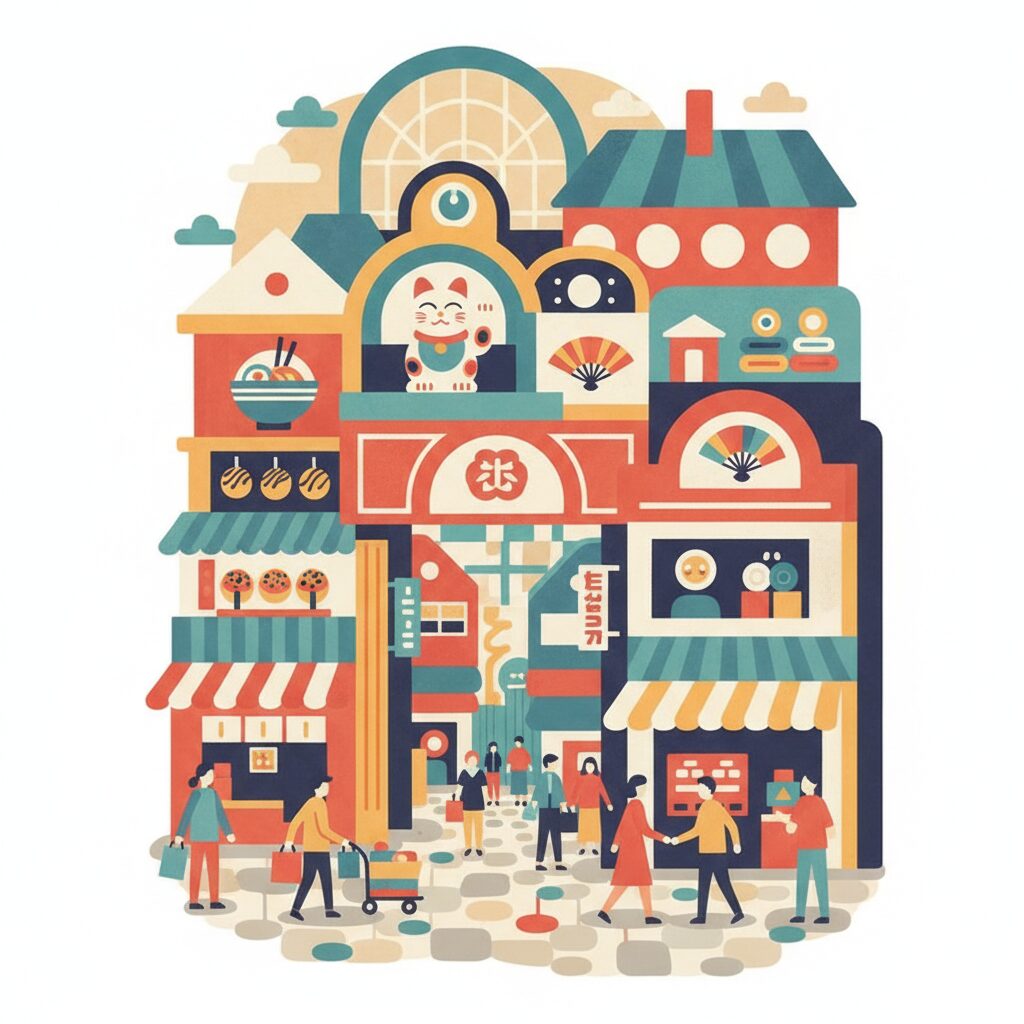
Walk into a shotengai for the first time, and your senses might just short-circuit. It’s a full-frontal assault of stimuli, a chaotic symphony that feels a world away from the Japan you see in slick travel brochures. The air is thick with the scent of grilled eel, sweet dashi broth, and the faint, briny tang of a fishmonger’s stall. The light is a strange, filtered twilight under a long, arched roof, punctuated by the neon glow of a pachinko parlor and the warm, incandescent bulbs of a shop selling freshly fried tempura. You hear the rhythmic clatter of a shopkeeper’s wooden sandals, the piercing cry of a vendor hawking impossibly cheap cabbages, the distant rumble of a train, and the constant, cheerful hum of a hundred conversations happening all at once. It’s a tunnel of life, a river of commerce and community that flows right through the heart of the neighborhood. My first thought, coming from the wide, orderly avenues of the US, was, “What is this place?” It felt ancient and utterly, vibrantly alive. In a country often stereotyped for its quiet reverence and meticulous order, the shotengai feels like a glorious, wonderful exception. But here in Osaka, it’s not the exception; it’s the rule. This isn’t just a place to buy your groceries. It’s the city’s living room, its public square, and the single best place to understand what makes Osaka tick. Forget the guidebooks for a moment. If you want to learn the language of this city, you need to learn the rhythm of the shotengai.
To further capture Osaka’s vibrant rhythm, delve into the city’s renowned kuidaore culture, where gastronomic delights become a savvy cultural exchange.
More Than a Market: The Shotengai as a Social Network

In many parts of the world, and even elsewhere in Japan, shopping is an anonymous, efficient transaction. You push a cart under fluorescent lights, scan your items at a self-checkout, and leave without making eye contact. The shotengai is the complete opposite. It’s a deeply social, high-context environment where relationships matter just as much as the products. The whole system relies on recognition and repetition, transforming the routine act of buying dinner ingredients into a thread woven into the fabric of your community life.
The Art of the “Maido!”
Step into a chain supermarket in Tokyo, and you’ll be greeted with a crisp, polite, and entirely impersonal “Irasshaimase!” (Welcome!). It’s a broadcast, an automated announcement that a customer has arrived. In an Osaka shotengai, the atmosphere is different. As you approach a stall, the shopkeeper looks up, meets your gaze, and warmly calls out, “Maido!” Literally, it means something like “every time” or “always,” a shorthand for “Maido arigato gozaimasu,” or “Thank you for your continued patronage.” But it’s far more than that. “Maido!” is recognition. It communicates, “I see you. I remember you. You belong here.” The first time it’s said to you, it feels like a milestone. You’ve moved from being just a random face to being a regular, part of the ecosystem. The butcher who once merely served you now asks, “The usual lean pork for stir-fry today?” The fruit stand owner waves you over, saying, “The melons from Kumamoto just arrived. Don’t get the pricey boxed ones; this one right here is the sweetest.” This isn’t an attempt to upsell; it’s insider knowledge, a benefit of membership in the unwritten club of the shotengai. This continual, low-key social exchange is the glue bonding the neighborhood. It’s hundreds of small conversations each day that foster a strong sense of place and belonging.
It’s Loud, and That’s the Point
A common misconception among foreigners, especially those used to the subdued tones of Tokyo, is that the shotengai is simply… loud. Vendors shout their daily specials. Shop shutters clang open and shut. The rhythmic pounding of a mochi maker reverberates down the arcade. It can feel overwhelming, even abrasive, if you’re not familiar with it. But in the Osaka style of social interaction, this noise isn’t aggression; it’s vitality. It’s life. It’s what Osakans call genki. A quiet market is a dead market. The shouting is a performance, an invitation. It’s a vendor’s way of declaring, “I’m here! I’m proud of what I’m selling! Come check it out!” It creates a dynamic, competitive, and theatrical atmosphere. You’ll witness two neighboring fruit stands trying to out-shout each other over the price of strawberries, not out of hostility, but with a kind of spirited enthusiasm. It’s a game, with customers both the audience and the winners. This soundscape directly reflects the Osaka character: expressive, straightforward, and unabashedly present. They believe business, and life itself, should be conducted with passion and a touch of flair.
The Unspoken Rules of the Arcade
Though it may appear to be pure chaos, the shotengai functions according to a set of deeply ingrained, unspoken rules. This is where the contrast between Osaka and Tokyo becomes unmistakably clear. Tokyo often operates on explicit directions and clearly marked lanes. Osaka, on the other hand, relies on an organic, intuitive understanding of shared spaces and mutual responsibility. Navigating the shotengai offers your first lesson in thinking like a local.
Navigating the Flow: The Bicycle Conundrum
If you stand still in the middle of a busy shotengai, you become an island in a river of people. Pedestrians will flow around you. But what will truly challenge your composure are the bicycles. Grandmothers riding old, squeaky mamachari bikes, delivery workers balancing stacks of ramen bowls, children weaving home from school—they all share the narrow arcade with pedestrians. There are no bike lanes. No stop signs. Only “the flow.” A tourist might see a bike approaching and freeze, expecting it to stop. A local knows the rhythm. You hold your course, and the cyclist will make countless micro-adjustments to slip past you by mere millimeters. It’s not a challenge; it’s a trust fall. The unwritten rule is that everyone takes responsibility for being aware of their surroundings and predictable in their movements. It’s a stunning, nerve-wracking ballet of pragmatism. This is Osaka’s core philosophy at work: things don’t have to be perfectly orderly to function perfectly. As long as everyone pays attention and does their part, it all just flows. Don’t stop. Don’t make sudden moves. Simply become part of the current.
Haggling? Not Exactly. It’s “Omake” Culture.
Many foreigners come from cultures where bargaining at a market is common. They see the lively atmosphere of the shotengai and assume it’s a place to haggle. This is a critical cultural misunderstanding. Trying to knock 50 yen off the price of some tomatoes will likely earn you a puzzled look or even mild offense. It can seem as though you’re implying the vendor’s prices are unfair. But that doesn’t mean the price on the sign is always final. Osaka follows a different, more relationship-based system of value: omake. Omake means a little extra, a bonus, a gift. It’s not something to ask for; it’s something you earn through loyalty. Become a regular at the croquette shop. Chat with the elderly woman who runs it. After a few visits, when you order five, she’ll smile and add a sixth to the bag. “Omake,” she’ll say. “A little something for you.” This isn’t a discount. It’s a gesture of goodwill, a way to deepen the social bond. It turns a simple purchase into a moment of human connection. Osakans are famously savvy with money, but their sense of value goes beyond the lowest price. It’s about fairness, relationships, and the warm sense of mutual appreciation. The omake is the ultimate expression of this philosophy.
Shotengai vs. Supermarket: A Tale of Two Pantries
The modern supermarket offers undeniable convenience, with everything you need—from toilet paper to tuna—under one roof. However, in Osaka, a city that values expertise and quality, many people still prefer the seemingly inefficient shotengai for their everyday needs. The choice between the two reflects a fundamental difference in how people connect with their food and community.
The Hyper-Specialist vs. The One-Stop Shop
A trip to the supermarket is a solo endeavor, whereas a visit to the shotengai is a communal experience. You don’t just buy food; you seek advice from specialists. You visit the tofu maker, whose family has produced tofu at the same location for three generations. He offers a dozen varieties and will recommend which is best for a cold dish and which holds up in a hot pot. Then you move on to the fishmonger, who asks about your dinner plans before suggesting the freshest catch and even scales, guts, and fillets it while you chat. Next comes the tiny shop dedicated solely to konbu seaweed or the pickle stand with vats of seasonal vegetables in brine. Each vendor is a master of their craft. Curating your meal from multiple specialists fosters a deep appreciation for the ingredients, standing in contrast to grabbing a vacuum-sealed tray of mystery meat from a refrigerated case. It makes you a more mindful and connected cook.
Where Price Reflects Reality, Not Marketing
There’s a common belief that shotengai are always cheaper, which is often true, but the key difference lies in the honesty of the pricing. Prices are handwritten on cardboard signs with a thick marker and can fluctuate throughout the day. Vegetables harvested that morning are at their freshest, and fish that hasn’t sold by 4 PM goes on a “time sale.” This fluid pricing creates a culture of savvy shopping that Osakans take pride in. They value their ability to spot bargains and understand real worth. It’s not about being cheap (kechi), but about being shrewd. They know that the perfectly shaped, uniformly sized cucumbers in supermarkets are priced for appearance, while the slightly crooked yet far more flavorful ones at the shotengai stand are priced for what they truly are: good food. Hearing vendors announce their end-of-day deals is like joining a city-wide sport. Scoring a great deal on fresh produce isn’t just a financial win; it’s a story to share, a small triumph in the art of living well on your own terms.
The Shotengai as the Heart of Neighborhood Identity
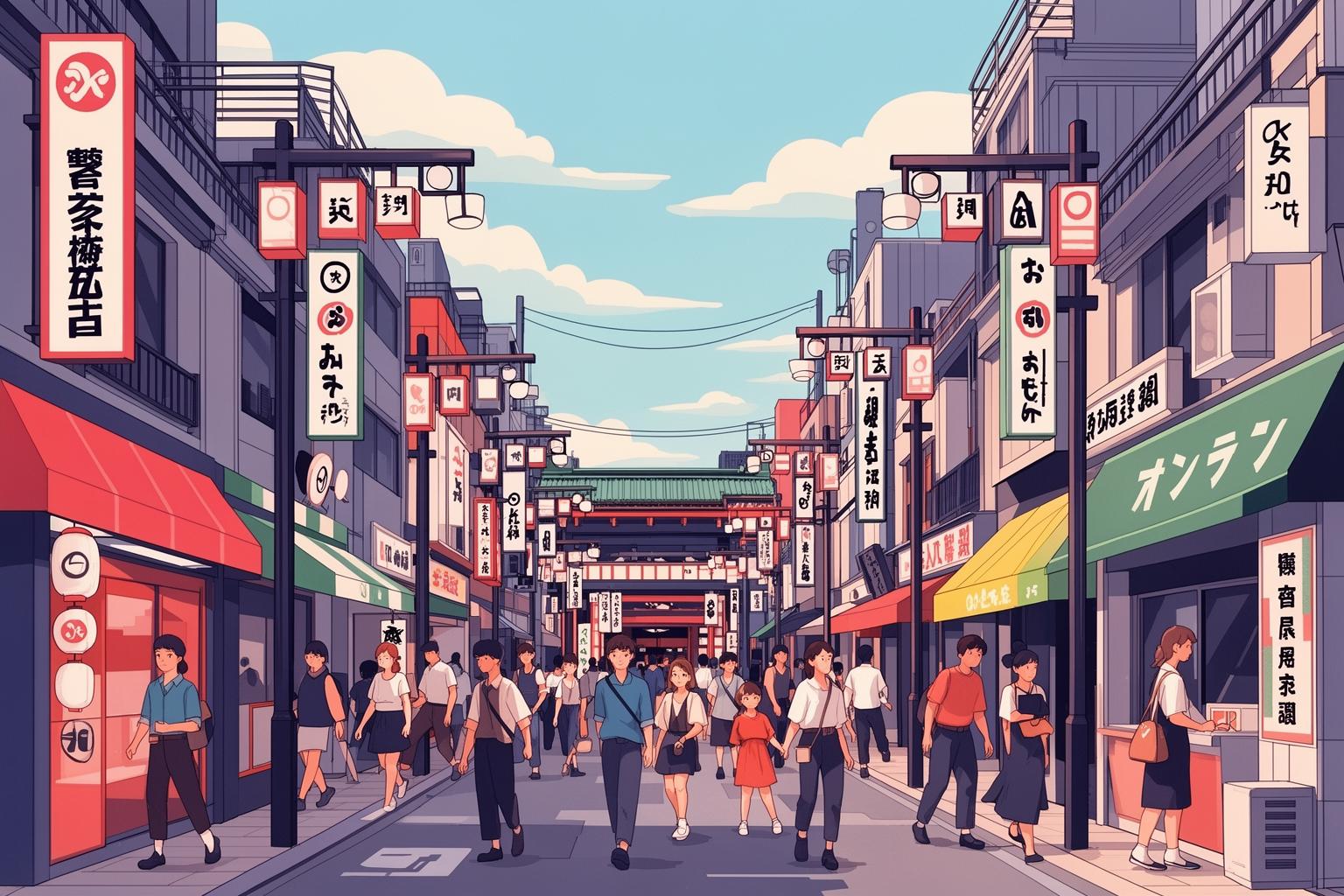
More than anywhere else in Japan, Osaka’s shotengai acts as the physical and spiritual heart of its neighborhood. It serves as the main artery that breathes life into the community, a shared space that adjusts to the needs of its residents while marking the passage of time and celebrating local culture.
From Daily Errands to Festival Central
The arcade serves as the stage for everyday life, but it truly comes alive during festivals. For Tanabata, the Star Festival, the entire ceiling is adorned with colorful streamers and handmade wishes tied to bamboo branches. During a local matsuri, the typically commerce-driven space transforms into a parade route and a giant outdoor party. Stalls selling takoyaki and fried noodles appear, children run around playing games, and the local shrine’s portable mikoshi is carried proudly through the arcade, cheered on by shopkeepers who step out of their stores to join the festivities. This seamless mix of commercial and communal life is what makes the shotengai so vital. While many parts of Tokyo revolve around sterile, corporate-owned train station complexes, in Osaka, life centers around this vibrant, locally-owned, sometimes gritty, and always authentic corridor.
Surviving and Thriving: The Modern Shotengai
Across Japan, traditional shotengai face extinction, struggling to compete with giant, air-conditioned shopping malls and the convenience of online retail. Although Osaka is not exempt from this trend, its arcades seem to be resisting with remarkable tenacity. This resilience stems from the city’s practical nature and entrepreneurial spirit. The Osaka shotengai is not a museum artifact frozen in time; it is a living, evolving entity that adapts to survive. This is evident in surprising contrasts: a sleek, minimalist third-wave coffee shop opening beside a cluttered, century-old hardware store; a trendy craft beer pub replacing a former fish stall, with patrons spilling out into the arcade; a young couple launching a vegan bakery across from an old-school butcher. There’s no grand plan—just the messy, organic process of evolution. In Osaka, if you have a good idea and are willing to work hard, you can carve out a place for yourself. The shotengai embodies this spirit—a place where tradition and innovation coexist, shouting “Maido!” to each other across the way.