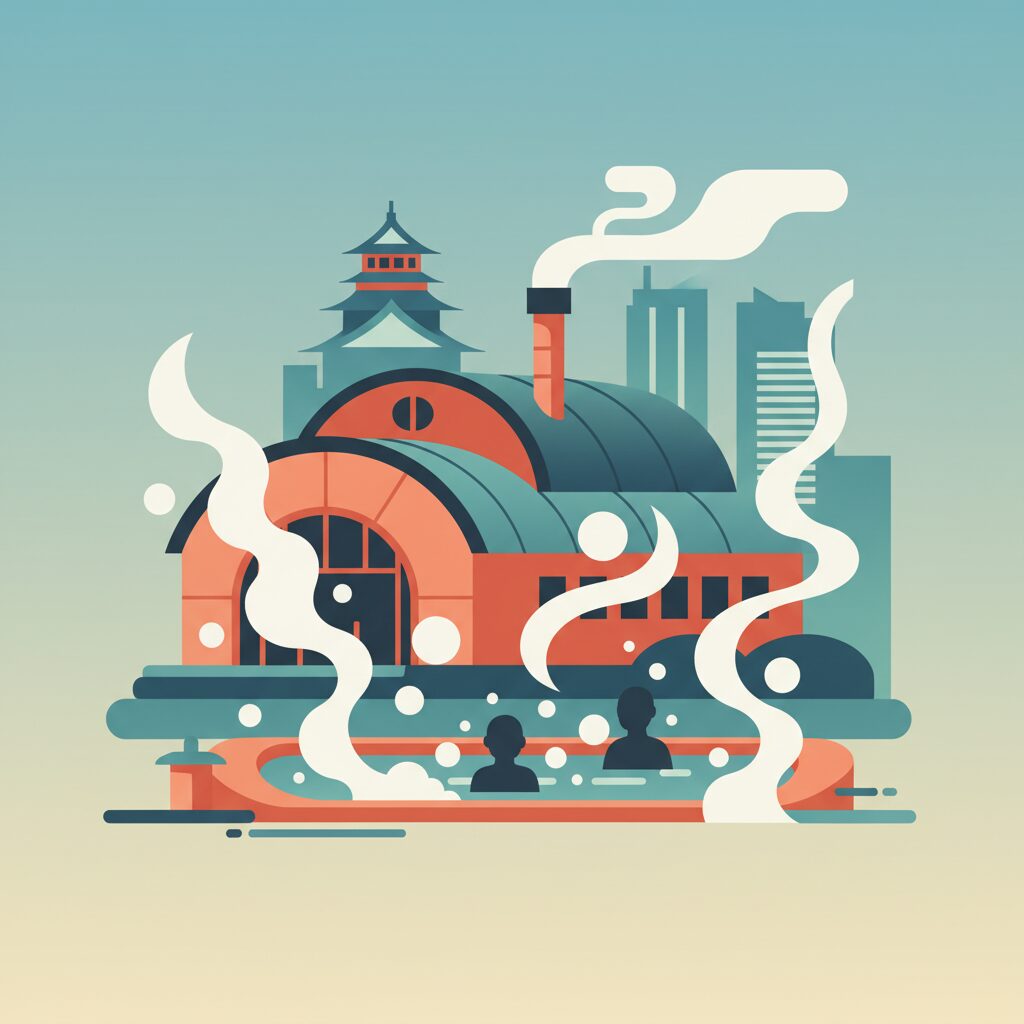
Walk down any residential street in Osaka, away from the glittering neon of Dōtonbori and the corporate hum of Umeda, and you’ll eventually feel it. A subtle shift in the air, a plume of steam curling from a tall chimney, a faint scent of soap and minerals. You’ve found a sentō, a neighborhood public bathhouse. For many foreigners, the sentō is a bucket-list item, a cultural curiosity filed alongside sumo and geisha. But to truly understand Osaka, to get under its skin and feel its real pulse, you have to understand that the sentō is not a tourist attraction. It’s the city’s steam-filled, tile-lined living room. It’s a classroom for social etiquette, a multi-generational community center, and the great equalizer in a city that prides itself on being down-to-earth. Forget what you’ve read in travel guides about the simple mechanics of bathing. We’re not here to talk about a quick wash. We’re here to talk about how a simple building of hot water and high ceilings reveals the soul of Osaka, a soul that often feels worlds away from the buttoned-up reserve of Tokyo. It’s in the sentō where the unspoken rules of Osaka life are taught, where friendships are forged in the buff, and where the city’s famous directness and humanity are on full display, every single evening.
While the sentō offers a window into Osaka’s soul, understanding the city’s modern pulse also means keeping up with practical travel news, such as the recent shake-up in airport rankings that could affect your trip to Kansai.
More Than Just a Bath: The Sentō as Osaka’s Neighborhood Living Room
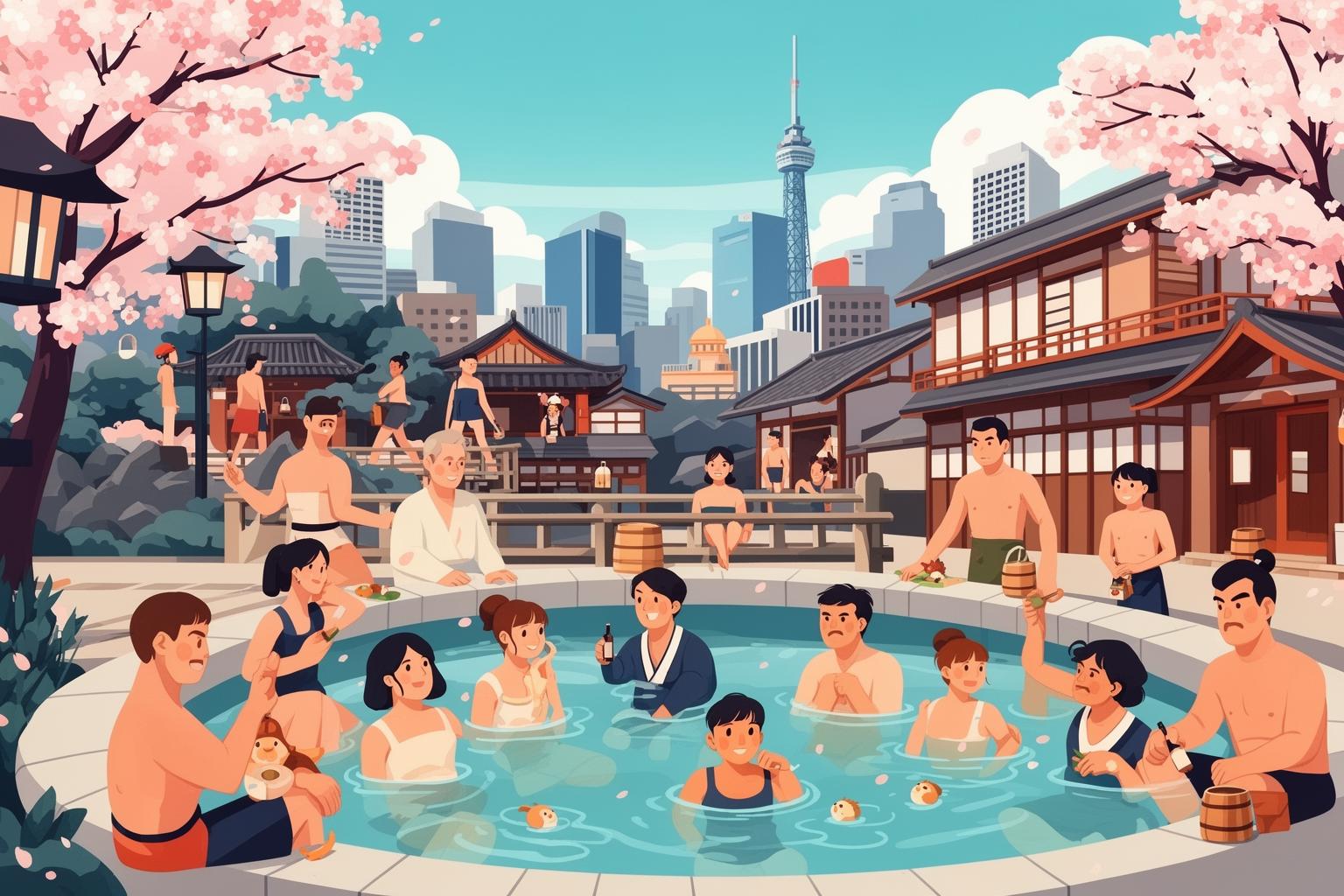
In a world where nearly every apartment, regardless of size, includes its own private bathroom, the ongoing existence of the neighborhood sentō feels almost out of place. Why would anyone pay a few hundred yen to bathe with strangers when they can do so for free in the privacy of their own home? This question stems from a fundamental misunderstanding of the sentō’s role. It’s not mainly about hygiene; it’s about connection. The modern apartment bathroom is a sterile, isolated space, whereas the sentō bursts with life—a sensory experience that immerses you in the community. The moment you slide open the door, you’re met with a wave of warm, humid air carrying the scents of soap, cedar buckets, and something unmistakably clean. The sounds form a symphony of neighborhood life: the rhythmic splash of water from faucets, voices echoing off the high tiled walls, children’s laughter, the rumble of a television in the changing room, and the friendly greeting from the bandai-san, the attendant overseeing the bathhouse like a kind-hearted lifeguard of local society. This is the opposite of the quiet, orderly public spaces typical in Tokyo. In an Osaka sentō, silence feels unusual. The air is meant to be filled with conversation, lively with the raw, musical rhythm of Osaka-ben. You’ll find local shop owners, weary from a long day, soaking next to university students. Young mothers gently wash their toddlers, surrounded by elderly women offering unsolicited but genuinely helpful advice. Men with elaborate tattoos, who might seem intimidating on the street, gently assist an elderly man with a bad back. The sentō is a cross-section of the neighborhood, a place where social hierarchies dissolve into the steam. It’s a living, breathing entity, far more vital to the community’s health than mere cleanliness would indicate. It serves as a news hub, a therapy session, a social club, and a support network, all under one roof. The private bath is for the body; the public bath is for the soul of the neighborhood.
The Unspoken Rules: Navigating Sentō Etiquette Like a Local
Every culture has its unwritten social codes, and the Osaka sentō offers an exceptional lesson in learning them through observation. Tourist guides often provide just the basics: wash before entering the main baths. But that’s like saying the only rule of chess is to move the pieces. The true etiquette is a subtle choreography of respect, consideration, and communal awareness, with Osakans—especially the older generation—acting as vigilant conductors. Mastering these rules grants you acceptance not merely as a visitor, but as a participant in the community. It’s a silent way of expressing, “I respect this space and the people in it.” Ignoring them won’t get you expelled, but it may earn you a sharp look from an obāchan, a glance that conveys volumes of social correction without a word. These rules aren’t arbitrary; they are the invisible threads weaving the communal experience, ensuring the bath remains comfortable and clean for everyone.
The Art of “Kake-yu” (The Pre-Rinse)
The pre-rinse, or kake-yu, is the initial and most important ritual—an earnest act of respect for the shared water. This isn’t a mere splash. You take a basin, fill it with hot water from the tub’s edge or a nearby tap, and thoroughly rinse your entire body from neck to toe. Observe the regulars, the true sentō experts. They carry out this act with deliberate, practiced grace—washing their feet, legs, and torso, making sure every trace of the outside world is washed away before entering the communal bath. This ritual embodies a core Japanese social value: not bringing your own impurities, literal or figurative, into a shared space. In Osaka, this is performed with pragmatic intensity. It’s less about serene purification and more about a common-sense duty to your neighbors. Doing it quickly signals that you don’t care about others who will use the water—it’s like walking into a home with muddy shoes. You cleanse yourself for the community, a small but meaningful gesture that sums up the sentō philosophy.
Claiming Your Spot: The Plastic Stool and Basin
Once inside the washing area, you enter a realm of temporary personal territories marked by a small plastic stool and matching basin. You claim an open washing station—with a faucet and shower head—and this becomes your base. The personal space bubble, so carefully respected in other parts of Japanese society, shrinks considerably here. You’ll be shoulder-to-shoulder with neighbors, scrubbing away. The unspoken rule is spatial awareness. Be mindful of your suds and splashes. A stray spray of cold water onto the person beside you is a minor but noticeable breach. The most critical rule comes at the end: when finished washing, you must thoroughly rinse your stool, basin, and the floor around your spot with hot water. Then you either stack them neatly where you found them or return them to a designated pile. Leaving a soapy stool behind is a cardinal sin—a clear sign of disrespect, a selfish act in a space built on selflessness. Cleaning up after yourself is a microcosm of Japanese social responsibility, but in the tight quarters of an Osaka sentō, it’s an immediate and visible reflection of your character. It shows you consider the next person, the very heart of living in community.
Towel Taboos and Modesty Myths
The Japanese sentō follows a two-towel system, and understanding their distinct roles is essential. You’ll have a large bath towel, which stays in your locker in the changing room and is used only to dry off after leaving the bathing area. The second is a small, thin towel, about the size of a large washcloth, your all-purpose tool inside the bathing area. You use it to scrub your body with soap. When moving between the washing area and the baths, this small towel acts as a modesty shield, held strategically to cover yourself. While the sentō embraces nudity, it is not a place for exhibitionism. There is a casual acceptance of the human body, but the small towel offers a thin veil of privacy. Its most sacred rule is this: the small towel must never, ever enter the bathwater. The bath is meant for soaking clean bodies, and a soapy, used towel is considered a contaminant. People commonly fold it neatly and place it on their heads, which also helps keep them cool. Others lay it on the edge of the bath, well away from the water. Placing the towel on your head is the ultimate sign of an experienced sentō-goer—a badge of honor that says, “I know the rules. I belong here.”
The Sentō Generation Gap: Where Grandparents Teach and Grandkids Listen
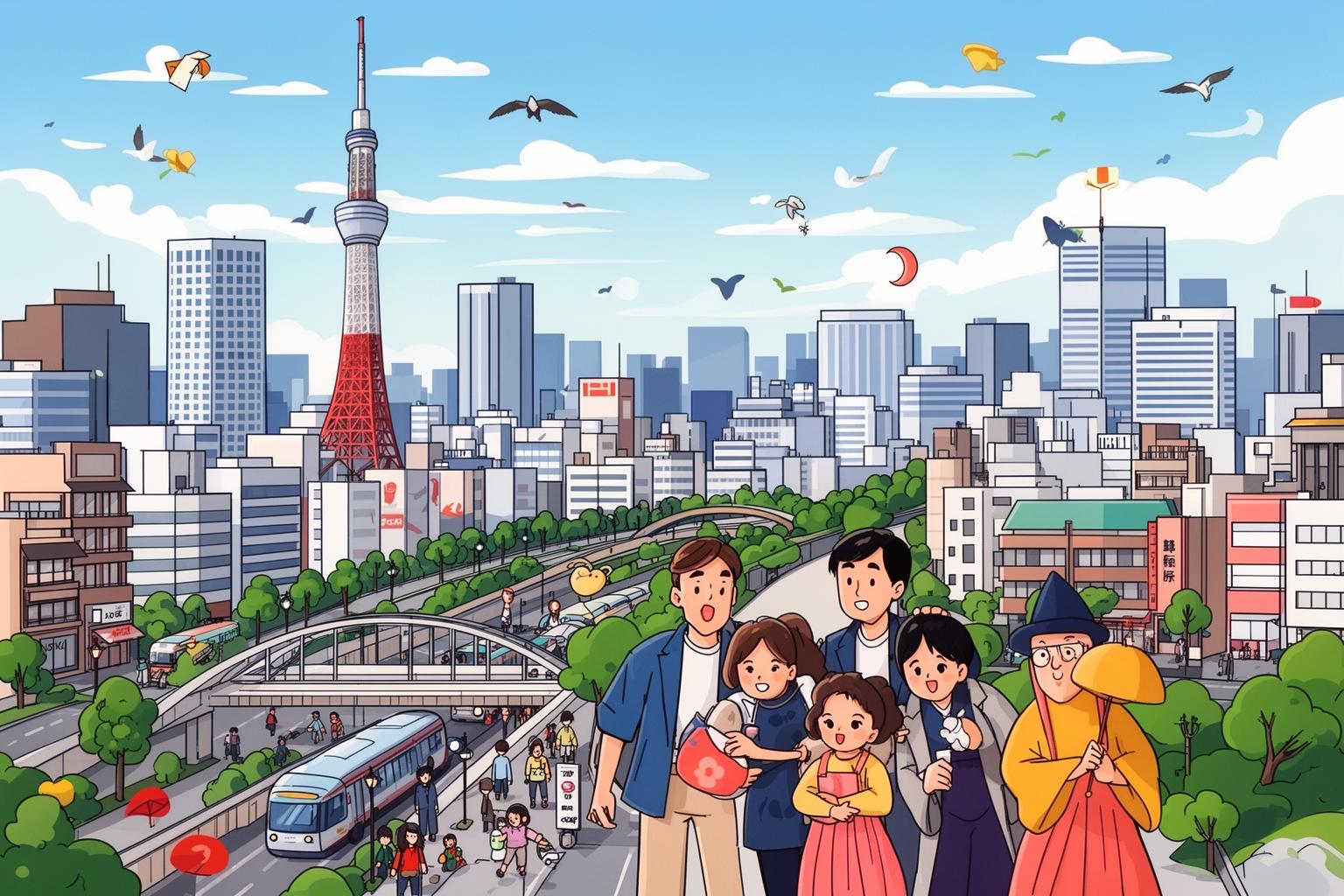
The sentō’s role as a community pillar is most clearly seen in its multi-generational nature. It remains one of the few public spaces where three generations of a family—and the wider community—interact so naturally and informally. This scene unfolds every evening in hundreds of sentō across Osaka. A grandfather, his body marked by the passage of time, patiently guides his young grandson on how to properly scrub behind his ears. Rather than just explaining, he demonstrates with his gentle, wrinkled hands holding the small washcloth. This moment is not merely a task; it is a lesson, a transmission of tradition and care from one generation to the next. In the women’s bath, a young mother might be wrestling with her squirming toddler, as a group of elderly regulars chime in with advice, encouragement, and playful admonitions for the child. They share tips on preventing soap from getting in the eyes or offer old folk remedies for skin rashes. This knowledge is not found in books or online; it is passed down through lived experience amid the warm, steamy air of the bathhouse. This dynamic fosters a distinctive and tangible respect for elders. They are not distant figures to be admired from afar but active, vocal, and present participants in daily life. Children learn to listen to them, accept their help, and regard them as sources of wisdom and affection. In an increasingly age-segregated world, the Osaka sentō stands out as a powerful exception—a place where the generation gap is bridged by shared water and the simple, human act of bathing together. It strengthens both the family unit and the broader neighborhood community, ensuring traditions are not only remembered but actively practiced and passed down.
The “Naked Social Contract”: Why Osaka People Get Real in the Buff
There’s a Japanese concept called hadaka no tsukiai, which roughly translates to “naked communication” or “naked relationship.” It reflects the idea that when you remove your clothes, you also shed social status, titles, wealth, and pretenses. In the sentō, the company president and the construction worker stand as equals, their bodies exposed to the same heat, their concerns dissolving into the same steam. This principle is embraced throughout Japan, but it finds its strongest and most vocal expression in Osaka. This city’s culture is well-known for valuing honne (one’s true feelings) over tatemae (the public facade one displays). The sentō becomes the ultimate honne zone. Physical vulnerability here seems to foster emotional and verbal openness that starkly contrasts with the carefully managed interactions of everyday life, especially when compared to Tokyo’s more formal social atmosphere. In a Tokyo office, conversations are layered with honorifics and a clear sense of hierarchy. In an Osaka sentō, talks about a struggling neighborhood restaurant can spark spontaneously, with strangers in the bath sharing heartfelt advice, business leads, or simple words of encouragement. You’ll hear candid discussions about family issues, health concerns, and financial struggles, met not with awkward silence but with empathetic nods and shared experiences. It’s like group therapy in a hot tub. This forms the foundation of Osaka’s reputation for being both friendly and meddlesome—a reflection of genuine, unfiltered care for one’s neighbors, nurtured in this space of shared vulnerability. The “naked social contract” gives you the right to speak your mind but also the responsibility to listen and care. It is in these moments that you realize the sentō is not just cleansing the city’s bodies; it is strengthening its social immune system.
Post-Bath Rituals: The Socializing Continues
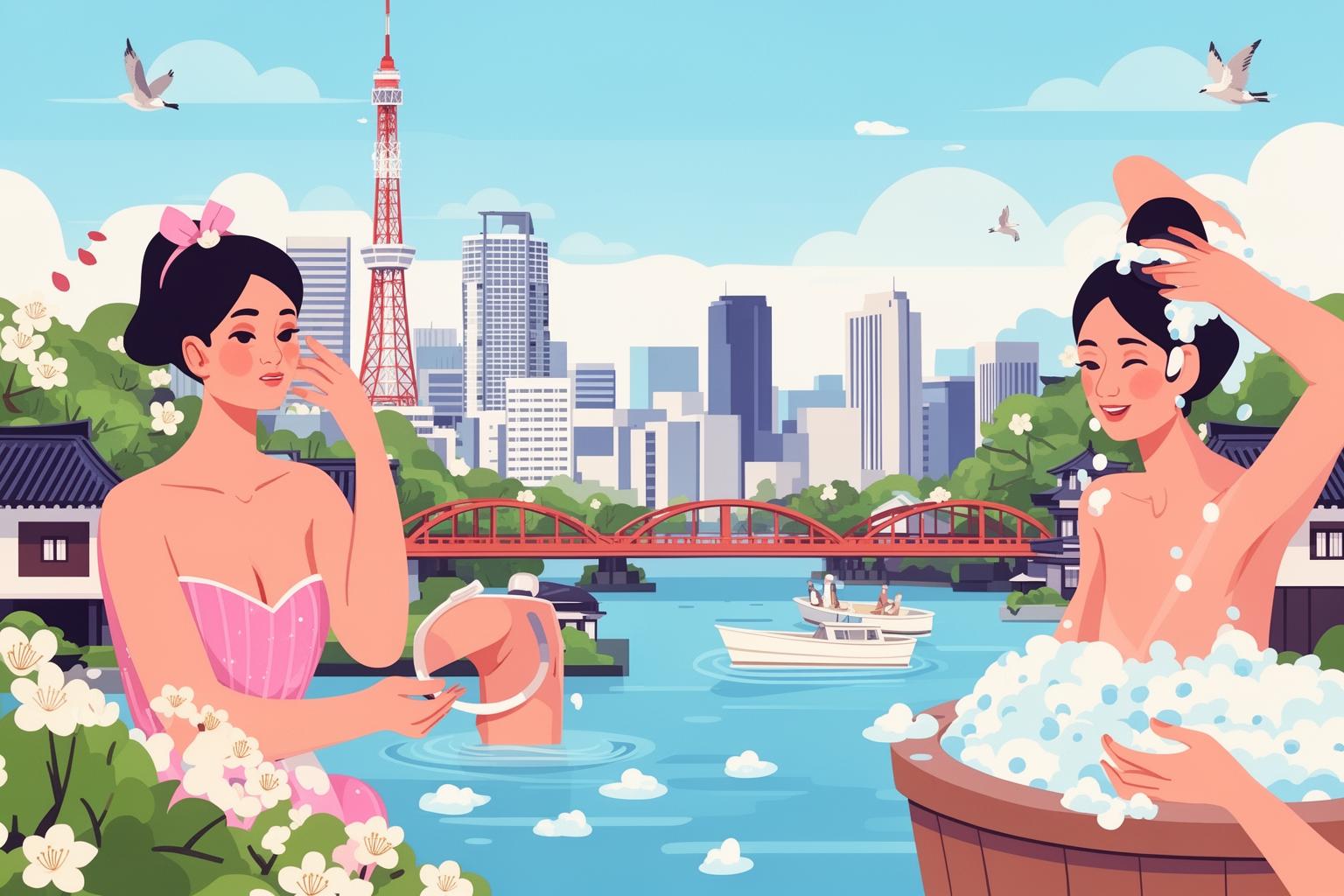
The sentō experience does not conclude when you pull the plug on the bath. The datsuiba, or changing room, serves as the second act of this communal ritual. Moving from the humid bathing area into the slightly cooler, drier air of the datsuiba marks a transition back toward the outside world, yet the social bubble remains intact. This space is a nostalgic repository of mid-century design and neighborhood life. Wicker baskets or old wooden lockers line the walls. A large, analog scale sits in the corner, where regulars monitor their weight with either grim determination or triumphant cheers. An ancient, coin-operated massage chair rumbles away, delivering a bone-shaking massage to a contented patron. Inevitably, a television is mounted on the wall, and when the Hanshin Tigers are playing, all eyes lock onto it, with commentary shouted from every corner of the room. This is the neighborhood’s den, and the post-bath ritual is a vital part of the bonding experience. The classic move is to buy a drink from the front desk or a vending machine. The quintessential choice is a small glass bottle of milk—plain, coffee, or fruit-flavored—downed while still savoring the pleasant warmth of the bath. It’s a shared cultural touchstone, a taste of childhood for many. People don’t just drink and leave. They linger. They sit on the vinyl benches, wrapped in their towels, continuing conversations that began in the bath. They chat with the bandai-san, exchanging neighborhood gossip. This cool-down period is essential. It’s where the community ties, loosened and warmed in the water, are gently bound back together before everyone returns to their individual homes. It reinforces the sentō’s role as a true “third place,” a vital hub between home and work where the simple, unhurried act of being together is the main event.
Sentō vs. Super Sentō: Why the Neighborhood Spot Still Wins
It’s important to differentiate the traditional neighborhood sentō from its modern, massive counterpart, the “super sentō.” Super sentō are large, resort-style complexes, often found in suburban areas, where you typically drive to. They feature an impressive variety of amenities: multiple types of baths (carbonated, herbal, electric), saunas, restaurants, massage parlors, relaxation rooms with manga libraries, and even karaoke booths. They provide an excellent, all-day entertainment experience. However, they are not the same as a neighborhood sentō, and understanding this distinction is essential to grasping the Osaka mindset. A super sentō is a consumer experience, largely anonymous. You go there with your own friends or family, enjoy the facilities, and leave. You are a customer. A neighborhood sentō, in contrast, is a community experience. You walk there from your home. The bandai-san knows your name and asks why they haven’t seen you in a few days. The other bathers are your neighbors. You are a member. While Osakans certainly appreciate the novelty and luxury of a super sentō for special occasions, it is the humble, no-frills neighborhood bathhouse they return to day after day. This reflects a deeply rooted value in Osaka culture: an appreciation for the local, the familiar, and the human-scale. It embodies loyalty to one’s roots, to the people and places that form the fabric of daily life. The super sentō provides a temporary escape, but the neighborhood sentō offers a sense of belonging. In a world rushing toward bigger and newer, the lasting popularity of the small, traditional sentō stands as a testament to the city’s prioritization of community over commodity.
Final Thoughts
Living in Osaka means being immersed in a culture that is famously straightforward, unapologetically human, and fiercely community-oriented. There is no better place to witness these characteristics in their purest form than in the steam of a local sentō. It serves as a microcosm of the city itself. It can be loud and somewhat chaotic, the etiquette may seem intimidating at first, and personal space is limited. Yet beneath it all, it operates on a deep system of mutual respect, shared responsibility, and genuine care. It’s where you realize that in Osaka, being a good neighbor involves more than a polite nod on the street; it means being willing to share a bath, share your thoughts, and participate in the collective life of your community. Foreigners often get caught up in the clichés of Osaka being “friendly” or “funny.” The sentō reveals the why. The friendliness stems from a cultivated intimacy, from seeing your neighbors in their most unguarded moments. The humor arises from the shared absurdity of life—a perspective easily reached when you’re discussing stock prices or baseball with a group of naked strangers. If you truly want to understand what makes Osaka tick, beyond the takoyaki and comedy routines, visit a local sentō. Step inside, follow the unspoken rules, and simply listen. In the splash of the water and the echo of laughter, you’ll hear the true heartbeat of this remarkable city. It’s not merely a place to get clean; it’s a place to grasp what it means to be part of a community that, quite literally, endures the heat together.