The first time it happened, I was completely baffled. I was at my local supermarket in Tennoji, a little flustered with a toddler in the shopping cart and a mental grocery list that was rapidly evaporating. I placed a single, sad-looking onion on the conveyor belt. The cashier, a cheerful woman in her fifties, picked it up, scanned it, and then looked at me with an utterly serious expression. “Big plans for this one?” she asked, her eyes twinkling. I froze. Was she mocking my meager purchase? Was this some kind of passive-aggressive commentary on my cooking skills? I mumbled something about making soup, paid, and fled, my face burning with confusion. I spent the rest of the day wondering what I’d done wrong. The answer, I would soon learn, was nothing. My only mistake was not understanding the fundamental rule of Osaka conversation: a joke has been served, and you are expected to return it.
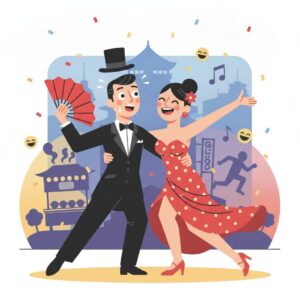
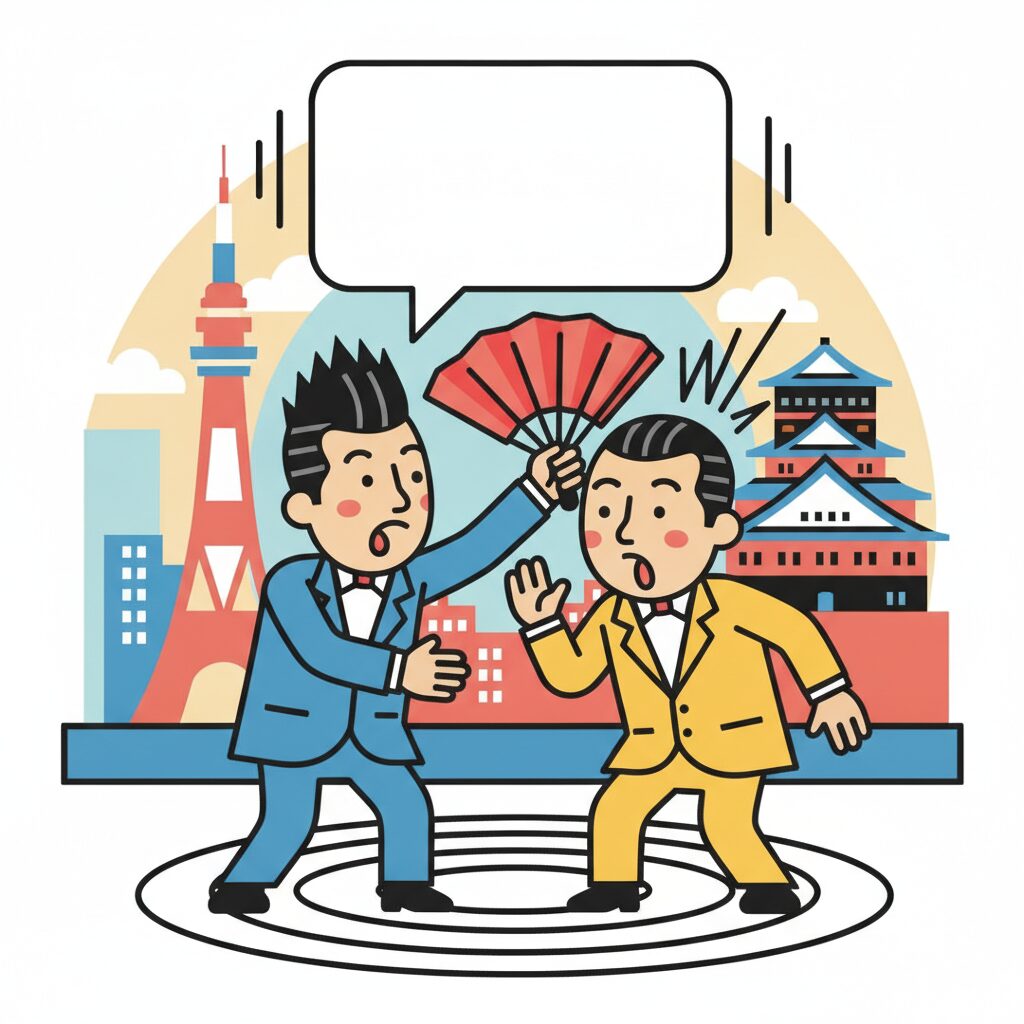
Living in Osaka is a constant immersion in a specific kind of conversational rhythm, a verbal dance that’s as essential to the city’s identity as takoyaki or the Glico running man. It’s a rhythm that can feel jarring, even aggressive, if you’re coming from a culture that values polite distance, like much of the Western world or, frankly, even Tokyo. Conversations don’t just flow; they jab, poke, and pivot with the lightning-fast timing of a comedy duo. This isn’t rudeness. This is connection. This is the art of manzai, the traditional Japanese stand-up comedy, playing out in real-time on street corners, in shops, and over neighborhood fences. And at the heart of this dance are two crucial roles: the boke and the tsukkomi. The boke is the fool, the one who says something absurd or silly. The tsukkomi is the straight man, the one who calls them out on it with a sharp, witty retort. My cashier was playing the boke, setting me up with a ridiculous question. I was supposed to be the tsukkomi. I was supposed to hit the ball back. Understanding this dynamic isn’t just a fun cultural quirk; it’s the key to unlocking the entire social operating system of Osaka.
For those intrigued by Osaka’s vibrant social scene, our insider guide to Osaka Ura Namba provides an excellent look into the city’s hidden nightlife.
The Anatomy of an Osaka Conversation: Boke and Tsukkomi 101
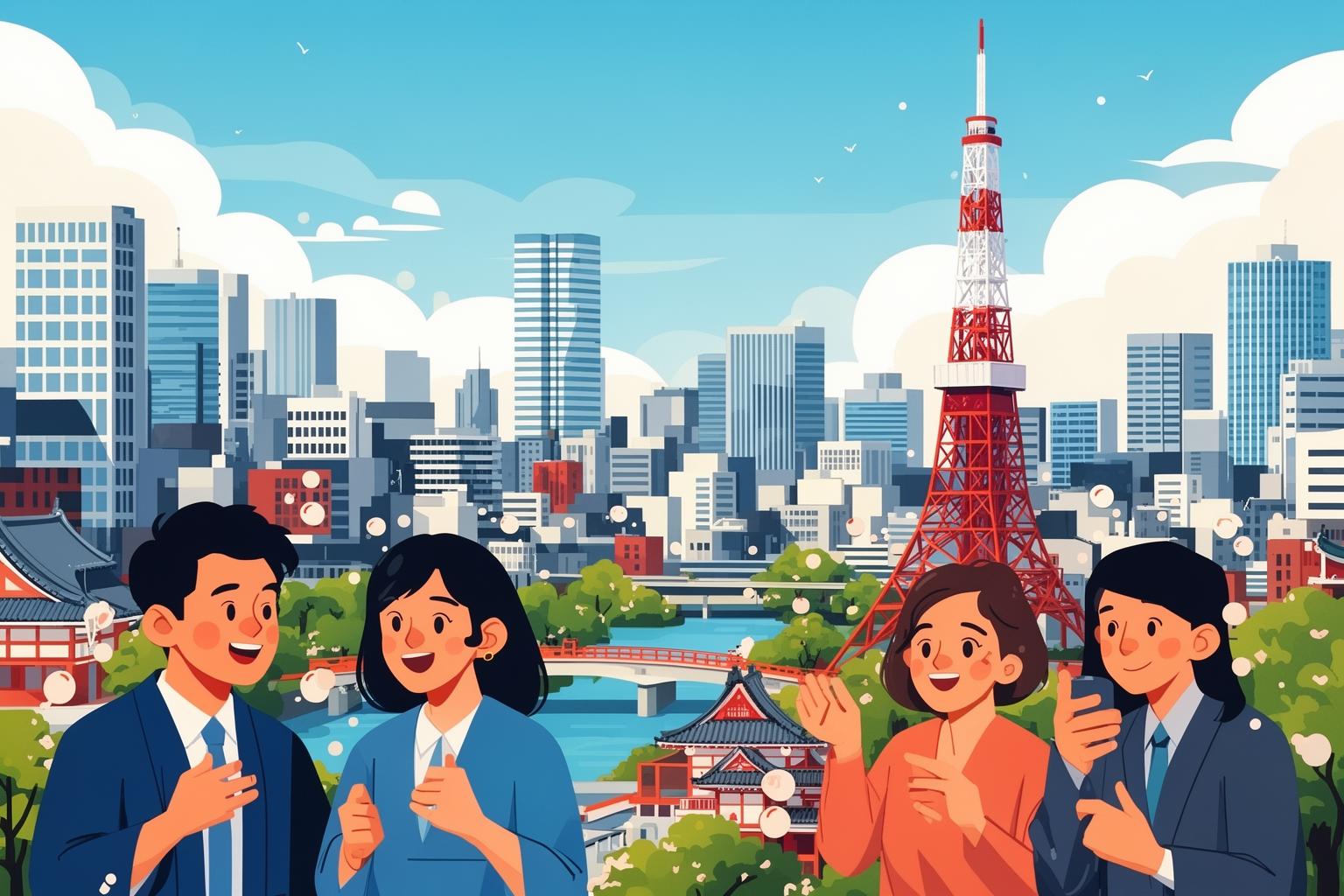
To navigate daily life here, you need to understand its components. It’s like learning grammar, but for jokes. Almost every interaction is a subtle—or sometimes not-so-subtle—invitation to join this little performance. The whole city is a stage, and everyone, from your boss to the baker, knows their possible role.
What is ‘Boke’? The Art of the Absurd Setup
First, let’s clarify one thing: boke doesn’t mean stupid. It derives from the verb bokeru, which can mean to become senile or absent-minded, but in the context of Osaka humor, it’s an act. It’s intentionally playing the fool. The boke is the one who purposely inserts a flaw into reality, creating a small, absurd crack for someone else to repair. It’s a deliberate, calculated move intended to provoke a reaction.
The boke is an offering. Think of it as a conversational softball gently tossed your way. It might be your neighbor watching you water your plants and asking, “Giving them a drink? They look thirsty.” Or your colleague arriving at 9:01 AM and dramatically sighing, “Glad you could make it. We almost started without you.” It could be the takoyaki vendor handing you your order and saying, “Careful, it’s as hot as my love for you.” These are setups—statements so obvious, exaggerated, or silly that they invite a response. The person delivering the boke creates a moment of shared comedy, a tiny bubble of fun in an otherwise ordinary exchange. They trust you to catch the joke and, more importantly, to complete it.
What is ‘Tsukkomi’? The Sharp, Loving Correction
This is where you, the unsuspecting foreigner, enter the scene. The tsukkomi is the corrective force. It’s the verbal—and sometimes physical—act of highlighting the absurdity of the boke. The word tsukkomi literally means to thrust or poke into, and that’s exactly the sensation—a sharp, pointed remark that bursts the bubble of nonsense the boke has made. It’s the punchline. It’s the release of tension. And it is absolutely essential.
The classic, almost cliché, tsukkomi is a loud “Nande ya nen!,” roughly meaning “Why?!” or “What the heck?!” It’s often paired with a light, open-handed tap on the boke’s arm or shoulder. This isn’t violence; it’s punctuation—the exclamation mark at the end of the joke. But a tsukkomi can take many forms. To the cashier with the onion, a good tsukkomi might be, “Yep, it’s a wild party for one!” or simply, “It’s just one onion!” To the neighbor, you could reply, “Of course, they told me they were parched.” To the colleague, a simple eye-roll and “Har-har, very funny” works perfectly. To the takoyaki vendor, maybe a sly, “Oh, so not that hot then?”
The key thing to grasp is that the tsukkomi is an act of social bonding. It’s not an attack. In many cultures, pointing out someone’s silly mistake is rude—you’d ignore it to spare them embarrassment. In Osaka, the opposite is true. Ignoring the boke is the real rudeness. It leaves the joke-teller stranded, their conversational ball lying sadly on the ground. Your tsukkomi signals, “I hear you. I see the game you’re playing, and I’m playing too. We’re in this together.” It validates the other person’s attempt at humor and connection. It closes the loop.
Tsukkomi in the Wild: Everyday Examples from the Streets of Osaka
Once you learn to recognize it, you’ll notice this dynamic everywhere. It’s the unseen energy driving the city’s social life. It exists in the most ordinary places, turning everyday tasks into moments of playful interaction.
At the Supermarket Checkout
The grocery store is an ideal training ground for tsukkomi novices. The staff, especially the older women—the iconic Osaka obachan—are often experts at boke. You might buy just one bottle of beer, and the cashier will deadpan, “Just one? Taking it easy tonight?” The right reply isn’t to explain your drinking habits but to respond with a witty comeback: “I’m in training!” or “Don’t tell my wife!” They may hold up your instant ramen and say, “Ah, a gourmet meal!” You should reply with equal seriousness, “Only the best for me.” This isn’t about the exchange of goods; it’s about exchanging goodwill. They’re making a dull part of their day—and yours—a bit more personable.
Talking to Your Neighbors
The interactions here are warmer, more frequent, and more intrusive than elsewhere in Japan, with humor serving as the social glue. If my neighbor sees my child throwing a tantrum in the hallway, she doesn’t pretend not to notice. Instead, she’ll catch my eye and say, “Wow, powerful lungs on that one! Future opera singer?” This boke breaks the awkwardness. My tsukkomi—something like, “We’re hoping for rock and roll, actually”—signals that I’m not offended, and that we can laugh together at the beautiful chaos of parenting. This is how bonds form. It’s a shared understanding that life is messy and imperfect, so we might as well joke about it.
In the Office or with Colleagues
Even in a workplace setting, the boke–tsukkomi pattern remains vibrant, though often subtler. It’s a valuable tool for team building and stress relief. If you’re working late, a colleague might pass by your desk, shake their head, and say, “Are you trying to run the company all by yourself?” This isn’t a critique of your work habits—it’s an invitation. A good tsukkomi would be, “Someone has to! The rest of you aren’t pulling your weight!” This playful exchange eases tension and builds camaraderie, something rarely found in the more formal, hierarchical offices of Tokyo.
Even with Strangers on the Train
This is where Osaka really stands out. The boundary between public and private is fluid, and strangers are potential comedy partners. An obachan might notice you looking at your phone and say, “You’ll get square eyes!” A man might see you carrying a large bag and ask, “Moving out?” These aren’t sincere questions—they’re openings. A simple laugh and head shake suffice as a minimal tsukkomi, but a verbal response is even better. This can be startling for those used to the quiet anonymity of commuting in megacities like Tokyo. But in Osaka, shared spaces are shared stages.
The Tokyo-Osaka Divide: Why This Humor Doesn’t Travel
Understanding Osaka’s humor is impossible without comparing it to Tokyo’s. The two cities embody distinct poles of Japanese social philosophy, and their conversational styles perfectly illustrate this contrast.
Tokyo’s Social Etiquette: Harmony Through Non-Interference
In Tokyo, social grace is often expressed by fostering a smooth, frictionless atmosphere. The core principle is to avoid imposing on others, preventing trouble or embarrassment. The well-known concept of kuuki wo yomu, meaning “reading the air,” is essential. This involves anticipating others’ needs and feelings and acting in a way that preserves group harmony. In this setting, calling out someone’s absurd comment or silly mistake, even playfully, could be considered highly inappropriate. It disrupts the smooth flow of interaction. If a Tokyo shopkeeper accidentally made a boke-style remark, the polite reaction would be to offer a small, slightly puzzled smile and pretend it didn’t happen. Saving them from potential embarrassment would take precedence over engaging with the joke. The social aim is a flawless, courteous exchange.
Osaka’s Social Etiquette: Connection Through Engagement
Osaka discards that approach entirely. Here, harmony is achieved not by avoidance but through lively and sometimes chaotic participation. The aim is not a perfect exchange but a memorable one. A connection, even if brief, has been formed. Silence is unwelcome. A conversation without some banter or a boke and tsukkomi interplay can feel cold, distant, and unsuccessful. The tsukkomi is Osaka’s interpretation of “reading the air.” It signals that you are present, listening, and on the same wavelength. This style involves a more direct and engaged form of communication. This difference is the basis of the stereotype that Osakans are louder, more straightforward, or even nosier than Tokyoites. It’s not a lack of manners but a different understanding of what it means to be polite and connected.
A Foreigner’s Guide to Mastering Tsukkomi (or at Least Surviving It)
For many of us, our cultural conditioning strongly suggests that this behavior is inappropriate. We’re taught not to point, not to interrupt, and not to tease others. So, how do you adjust? It takes practice, but mastering this skill will profoundly transform your experience of living in this city.
Rule One: Don’t Take It Personally
This is the most crucial lesson. A tsukkomi aimed at you is almost always a sign of affection. It means the person feels comfortable enough with you to joke around. If the lady at the bakery teases you for buying a pastry three days in a row, she’s not criticizing your diet. She’s remembering you. She’s including you. She’s treating you like a local. It’s one of the highest compliments. Viewing it as an attack is the biggest mistake a newcomer can make.
Rule Two: You Don’t Have to Be a Professional Comedian
The pressure to be witty can be overwhelming. Don’t stress about it. The quality of your tsukkomi matters far less than the fact that you made one at all. Participation is what counts. You don’t need a perfectly polished comeback. Often, the simplest replies work best. Learning a few key phrases can serve as your toolkit. A slightly exasperated “Mou ee wa!” (“Oh, that’s enough!”) is a classic. A quick “Chotto, chotto!” (“Hey, wait a minute!”) does wonders. Even a dramatic, drawn-out “Ehhhhh?!” followed by a laugh shows you understand the game. Your foreign accent will only add to the charm.
Rule Three: The Dangers of Silence
Remember my supermarket story? My embarrassed silence was the worst possible reaction. From the cashier’s perspective, her friendly joke had just fallen flat. It created an awkwardness far worse than any clumsy comeback could have. When you don’t respond to a boke, you’re essentially rejecting a social invitation. The person may feel they crossed a line or made you uncomfortable. The conversation stalls. In a culture where we’re often told, “if you don’t have anything nice to say, don’t say anything at all,” this is a tough habit to break. In Osaka, the rule is more like, “if someone says something silly, for goodness’ sake, say something back.”
Rule Four: When to Try Your Own ‘Boke’
This is the advanced stage. Once you feel comfortable both receiving and replying with a tsukkomi, you can try starting the exchange yourself. It’s similar to learning to lead a dance after mastering how to follow. Begin with people you know well. When a friend asks if you’ve finished a task, you can look them in the eye with mock seriousness and say, “What task?” before grinning. When they inevitably hit you with a loud tsukkomi, you’ll know you’ve succeeded. Successfully delivering a boke and receiving a tsukkomi back is a major milestone. It shows that you’re not just observing the culture — you’re becoming part of it.
Beyond the Laughs: What Tsukkomi Reveals About Osaka’s Soul
This ongoing comedic exchange is more than merely a manner of speaking. It offers a glimpse into the city’s history, its values, and its very essence. It is a philosophy of life wrapped in humor.
A Culture of Resilience
Osaka has long been a city of merchants, traders, and artisans. Its fortunes rose and fell based on the cleverness and determination of its people, rather than the commands of a distant emperor or shogun. In the competitive, high-pressure world of commerce, quickly building relationships was crucial. Humor served as the currency. A shared laugh could close a deal, ease a disagreement, or make a tough workday more bearable. This tradition of finding humor in everyday struggles represents resilience—a way to confront life’s challenges with a wink and a punchline rather than a grimace.
Valuing Human Connection Over Formalities
The tsukkomi culture is essentially about breaking down barriers. It skips rigid formalities and goes straight for raw, genuine human connection. It says, “Let’s not waste time on stiff pleasantries. Let’s be honest with each other. Let’s be playful.” This can feel incredibly freeing once you get used to it. It fosters an environment where people feel more at ease being themselves, flaws and all. The aim isn’t to present a perfect, polished version of yourself, but to interact as the messy, funny, imperfect human being you truly are.
A City That Doesn’t Take Itself Too Seriously
In the end, this is what it boils down to. Osaka is a city that recognizes the value of not taking itself too seriously. In a country that often holds form, precision, and saving face in high regard, Osaka offers an essential, grounded counterbalance. It’s a place where being the fool is acceptable because you know someone will be there to play the straight man. It’s an acknowledgment that life is inherently a little absurd, and the best way to get through it is to laugh together. Mastering tsukkomi isn’t just about learning Japanese; it’s about embracing this spirit. It’s the most valuable social skill you can develop here—a key that opens the door to a warmer, funnier, and profoundly more human way of life.