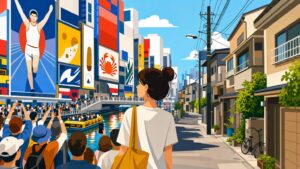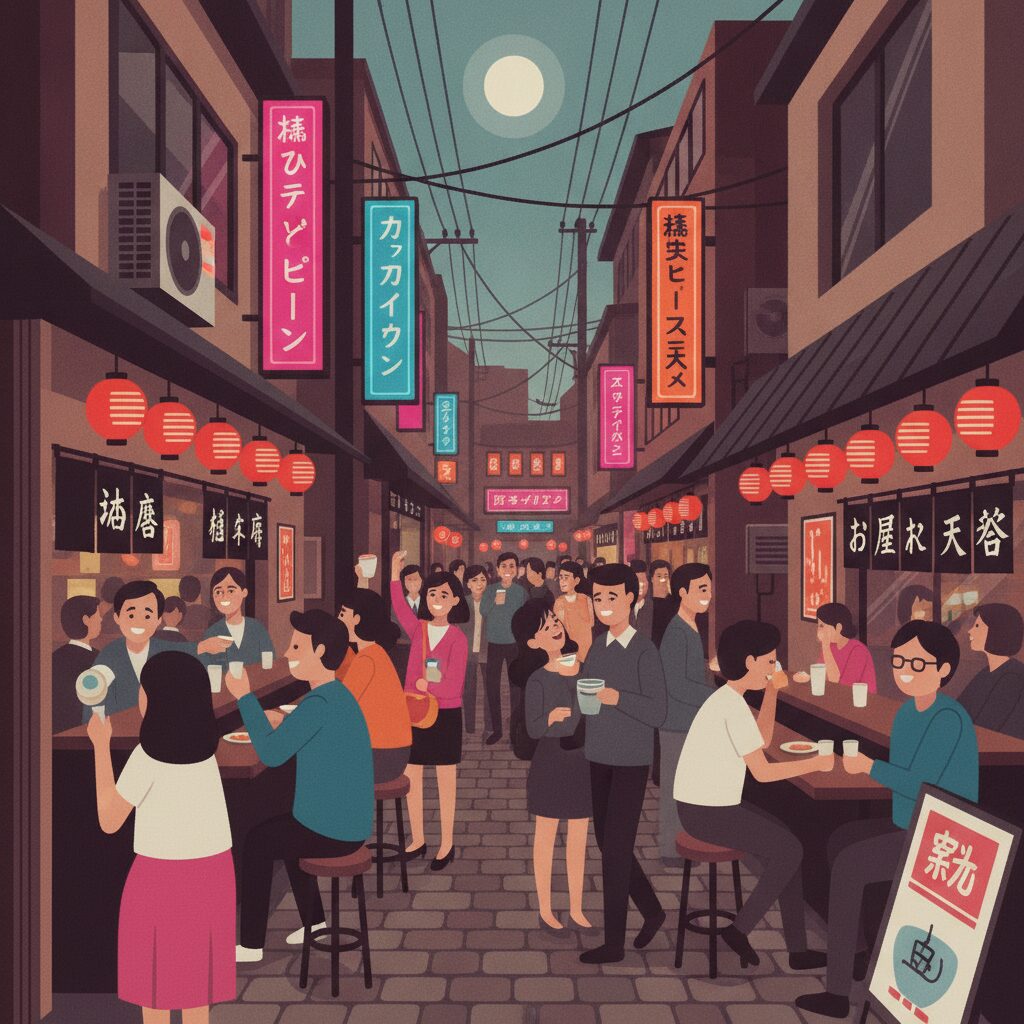
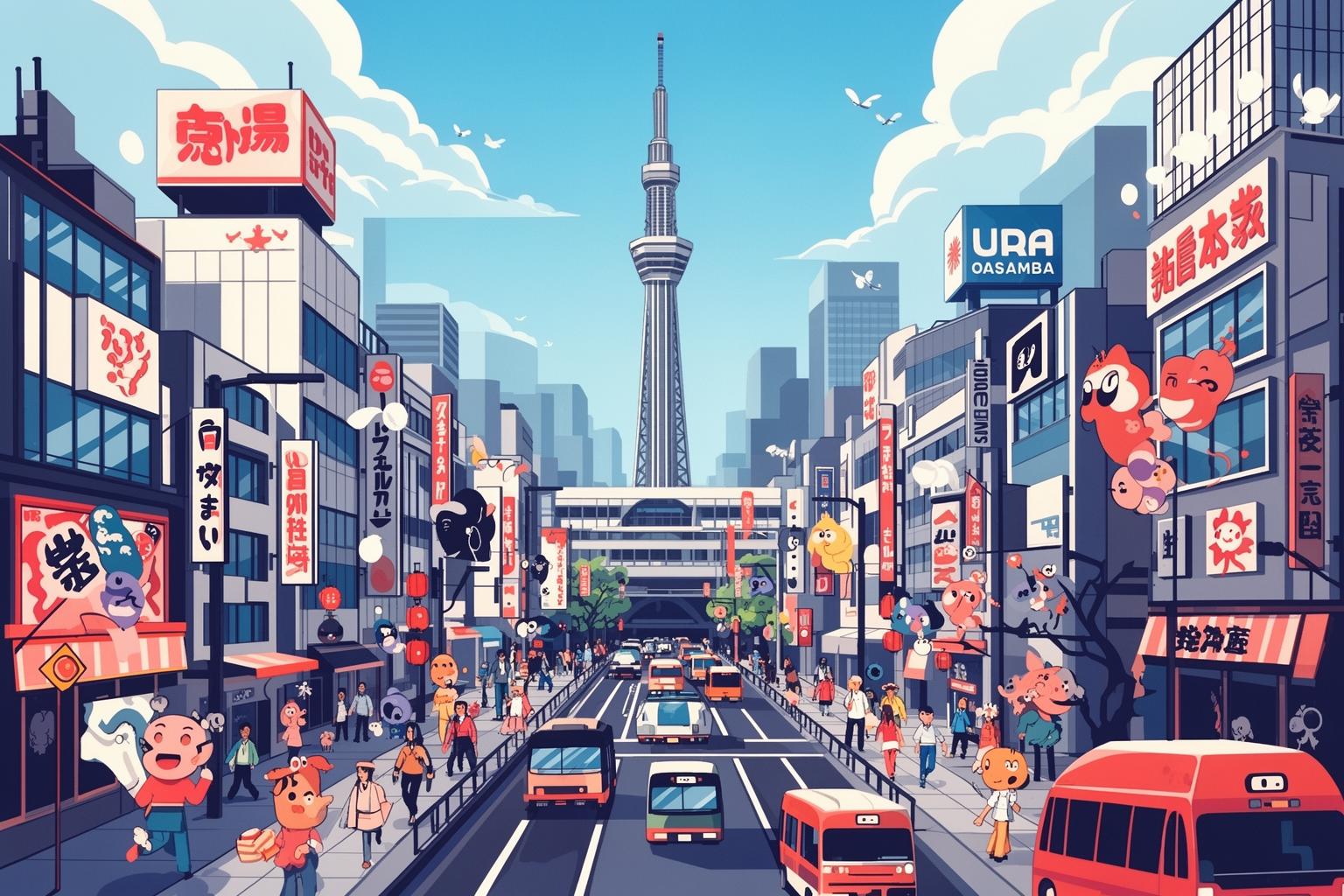
When you first think of Osaka, your mind probably conjures a very specific image. The electric glow of the Glico Running Man, the giant mechanical crab looming over Dotonbori, the sizzle of takoyaki on a hot griddle. It’s a city that wears its identity on its sleeve—loud, bright, and unapologetically commercial. For tourists, this is the entire show. For those of us who live here, it’s just the lobby. The real action, the place where the city’s true pulse can be felt, lies just a few steps away, hidden in a labyrinth of narrow streets and unmarked doorways. This is Ura Namba, or “Back Namba,” a chaotic, electrifying network of back alleys that serves as the city’s unofficial living room, canteen, and confession booth all rolled into one. It’s a world away from the curated experiences of Tokyo, a place where the social rules are written in condensation on the side of a beer mug. To understand Ura Namba is to understand the operating system of Osaka itself—its pragmatism, its relentless sociability, and its deep-seated belief that a good conversation is the best seasoning for any meal. This isn’t a guide to the best bars. It’s a map to the city’s heart.
For those who crave a break from the lively back-alley buzz, Osaka also offers hidden quiet community-focused cafes where work and connection form an oasis of calm.
The Unspoken Geometry of the Standing Bar
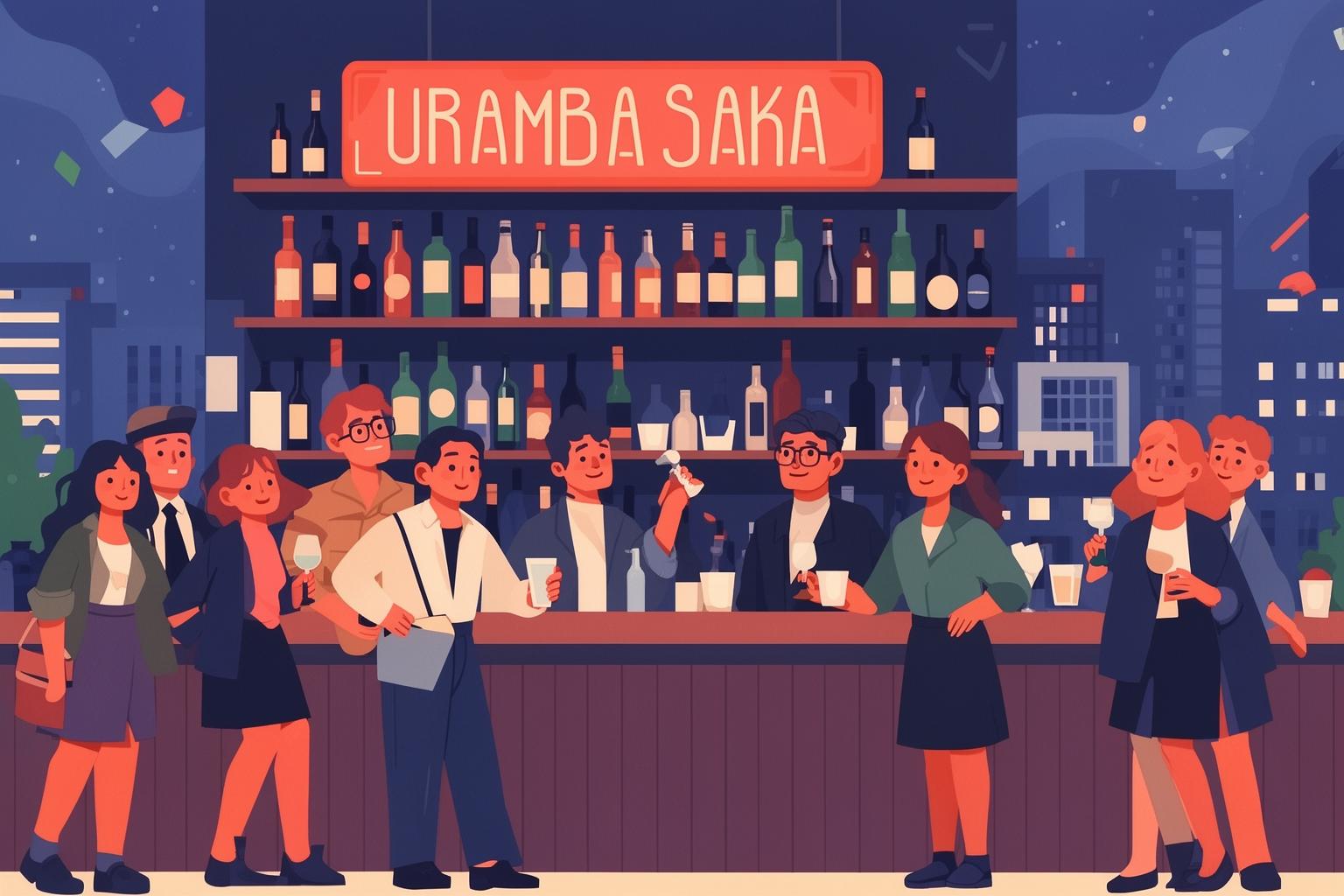
Step into a typical Ura Namba tachinomi, or standing bar. What strikes you first isn’t the menu or the décor—it’s the overwhelming closeness of other people. These venues are deliberately small, often just a counter and enough room for about a dozen patrons to stand shoulder-to-shoulder, elbow-to-elbow. In Tokyo, this kind of closeness often causes people to shrink into themselves, forming invisible barriers of privacy. They’ll face the counter, focus on their phones, and speak softly to their companions. It’s an exercise in occupying a space without truly engaging with it.
In Osaka, the situation is quite the opposite. The lack of space isn’t a nuisance; it serves as a social catalyst. The confined quarters are intentional, not accidental. They break down social barriers by making them physically unfeasible. A shared counter becomes more than separate zones—it transforms into a communal table. The unspoken understanding is that everyone is part of the same temporary, fleeting community. Making eye contact with the person next to you isn’t followed by awkward silence; it acts as a silent invitation to connect.
This is one of the first things foreigners often misunderstand. They may attempt to create personal space, a habit formed in more reserved cultures. Here, that can come across as distant or unfriendly. The local approach is to embrace the close quarters. You learn the subtle choreography of making room for newcomers, passing a soy sauce bottle along the line, and striking up a chat with the chef as he slides a plate of grilled gizzards your way. Conversations naturally spill over to your neighbors. They’ll comment on your order, ask where you’re from, or offer a suggestion. It’s not curiosity; it’s the norm. Anonymity isn’t the aim here. Connection, however brief, is.
“Moukari Makka?” – The Currency of Conversation
In Ura Namba, you’ll quickly notice that the conversations around you are infused with a distinct kind of pragmatic humor. A perfect example is the classic Osaka greeting, “Moukari makka?,” which literally means “Are you making a profit?” The usual, almost obligatory, reply is “Bochi bochi denna,” a delightfully vague phrase roughly translating to “So-so” or “Can’t complain.”
To an outsider, especially someone from Tokyo, this might sound surprisingly blunt, even rude. Talking about money so openly, even jokingly, breaks the capital’s unwritten rule of maintaining a polished, professional distance. But in Osaka, this exchange isn’t really about money at all. It serves as a conversational shortcut, a kind of verbal shorthand that fulfills several purposes at once. It acts as an icebreaker that reflects the city’s merchant heritage and the shared reality that everyone is hustling to get by. It’s a demonstration of humility; nobody wants to come across as boasting. And most importantly, it’s a joke. This playful jab immediately lowers the tension and signals that the space is for honest, straightforward conversation.
This mentality shapes the vibe in Ura Namba’s bars. Conversations are rooted in real life. People vent about their bosses, celebrate minor victories at work, or compare the value of different beer brands. There’s a refreshing absence of pretense. It’s a world apart from the often abstract, status-conscious chats you might overhear in a sleek Ginza bar, which might focus on a recent trip to Europe or a new art show. In Osaka, a person’s worth isn’t judged by refined taste but by their ability to find value, share a good story, and laugh at their own misfortunes. This straightforwardness can feel abrupt at first, but it stems from a profound honesty that many locals find freeing.
The Art of the Hashigo: Bar-Hopping as a Social Strategy
One of the hallmark aspects of a night out in Ura Namba is the hashigo-zake, or ladder drinking—the art of bar-hopping. Groups seldom remain in one spot for the entire evening. Instead, they’ll enjoy a drink and a small dish at one venue, settle their modest bill, and then move on to the next. Then the next. And the next.
This behavior isn’t merely a sign of a short attention span. It’s a deeply rooted cultural practice that reveals much about the Osaka mindset. First, it reflects the city’s obsession with kosupa, or cost performance. Why settle for one potentially pricey establishment when you can experience the unique specialties of three or four different places for the same cost? Each bar in Ura Namba has its own distinct character: one may have the best doteyaki (slow-cooked beef sinew), another boasts a fantastic sake selection, while a spot down the alley offers unbelievably fresh sashimi. Staying in one place means missing out. It’s a philosophy centered on maximizing experience.
Second, the hashigo serves as a social strategy. It keeps the night’s energy lively and prevents conversations from growing stale. It brings a sense of adventure and spontaneity to the evening. The idea is to not have a plan. You follow the mood, the crowd, a sudden craving. This sharply contrasts with a typical night out in Tokyo, which tends to be meticulously planned. Reservations are made weeks ahead, and the evening unfolds in a single, structured location. The Osaka style is more fluid, adaptable, and chaotic—much like the city itself.
To a foreigner, this constant movement might feel disorienting. But for locals, it’s the natural rhythm of the night. It’s a way to cast a wider social net. You might part ways with a new acquaintance at one bar only to run into them again an hour later two alleys away. The second encounter feels less like chance and more like a reunion. These brief, repeated meetings are how social bonds form in the city’s nightlife—not through deep, lengthy conversations, but through a series of light, friendly check-ins across multiple venues.
It’s Not About Being a Comedian
There is a common cliché that everyone from Osaka is naturally hilarious. This is one of the biggest and most misleading misconceptions about the culture. While humor undeniably plays a huge role in the social fabric, it’s not about delivering punchlines like a stand-up comedian. Instead, it centers on a unique style of conversational interaction, a verbal dance known as manzai.
Manzai is a traditional form of Japanese double-act comedy featuring a boke (the silly, air-headed character) and a tsukkomi (the sharp, straight man who corrects him). In Osaka, this dynamic isn’t limited to the stage; it forms the basic rhythm of everyday conversations. One person makes a slightly exaggerated or goofy statement (the boke), and immediately, a friend, colleague, or even a stranger at the bar responds with a witty retort or correction (the tsukkomi). This isn’t an argument; it’s a sign of affection and engagement. The tsukkomi means, “I’m paying such close attention that I caught your slip,” or “That’s so absurd, I have to call you out on it.”
In the standing bars of Ura Namba, you witness—and take part in—hundreds of these brief manzai exchanges every hour. A man might sigh and say, “I’m so tired, I could sleep for a week.” His friend instantly fires back, “You’d still be late for work on Monday!” Everyone laughs. The banter is quick, sharp, and inclusive. To outsiders, it might look like constant teasing or cutting down, but it’s quite the opposite. It’s a collective effort to make the conversation more lively. The worst social faux pas in Osaka is not being funny—it’s being boring and failing to join the back-and-forth.
As a foreigner, you’re not expected to master the boke. However, learning to offer a simple tsukkomi can open doors into local social circles. When your new bar friend spins a tall tale, a cheerful “Uso ya!” (“No way!” or “You’re lying!”) will be met with delighted laughter. It shows that you don’t just grasp the language—you grasp the rhythm.
The Food is the Foundation
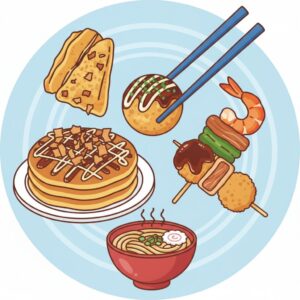
Ultimately, it’s impossible to discuss Ura Namba without mentioning the food. However, here, food serves a slightly different purpose. It isn’t the centerpiece as it might be in a fine dining restaurant. Instead, it forms the essential, democratic foundation on which the entire social ecosystem depends. The food is affordable, quick, and packed with intense flavor. It acts as fuel for conversation.
Consider classics like kushikatsu (deep-fried skewers) and doteyaki. Kushikatsu comes with its well-known, cardinal rule: “No double-dipping!” This rule, displayed on every wall and counter, represents the fundamental social contract of the Osaka eatery. Since we all share this communal sauce, a bit of civility is required. It’s a lesson in communal living conveyed through a deep-fried lotus root. Doteyaki simmers for hours in a large communal pot, ready to be ladled into a bowl at a moment’s notice. The emphasis is on efficiency and instant satisfaction.
This culinary ethos mirrors Osaka’s wider merchant culture. Value substance over style. Favor flavor over elaborate presentation. This is the essence of kuidaore, a famous local phrase often translated as “eat until you drop,” but more accurately means “to ruin oneself by extravagance in food.” In Ura Namba, this extravagance isn’t about splurging. It’s about the abundance and accessibility of good, honest food. A 150-yen skewer of perfectly crispy and salty grilled chicken skin is held in higher regard than a 2,000-yen plate of artistically presented yet mediocre carpaccio. This practicality is the soul of the city. People here value authenticity, straightforwardness, and genuine quality without any pretension.
So, if you want to truly grasp what makes Osaka tick, avoid the tourist traps for one evening. Slip into an alley in Ura Namba, claim a spot at a crowded counter, and simply listen. Observe the effortless dance of conversation, the rapid-fire jokes, the easy camaraderie among strangers. Order a beer and a dish you can’t pronounce. Before long, you’ll realize that the vibrant, chaotic, and deeply human energy surrounding you is the true spirit of this city. It’s not found beneath the neon glare but in the warm glow of a hundred tiny bars, each a tribute to Osaka’s enduring belief in the simple, profound joy of sharing a drink, a meal, and a laugh.