When people in Osaka hear “Kishiwada,” many immediately think of danjiri: huge wooden festival floats, shouted commands, drums, and dangerous-looking corner turns. That image is accurate, but incomplete. It can also make Kishiwada seem like a place that only matters for one crowded weekend in September or October.
A slower weekend in Kishiwada shows something more useful to anyone trying to understand life in Osaka. This is a city where history is not sealed away in a museum, where neighborhood identity remains strong, and where people can be direct without necessarily being unfriendly. The castle, old streets, shrine grounds, food shops, farms, and festival culture all reveal how the southern Osaka area works when there is no major event taking place.
For foreigners living in Osaka, or considering a move here, Kishiwada is especially interesting because it sits between city convenience and local community life. The Nankai Line connects it with Namba, yet the atmosphere changes quickly once you leave the station. You are no longer in central Osaka’s commercial rhythm. You are in a place where shop owners may know their regular customers, where local history still shapes neighborhood pride, and where public events belong as much to residents as they do to visitors.
The map below shows Kishiwada Station, the practical starting point for exploring the castle town area. From here, the important lesson is not to rush from one attraction to another. Walk slowly. Notice how the station side, castle side, residential streets, and coastal areas feel different. Kishiwada becomes understandable through those small transitions.
Why Kishiwada Helps You Understand Osaka
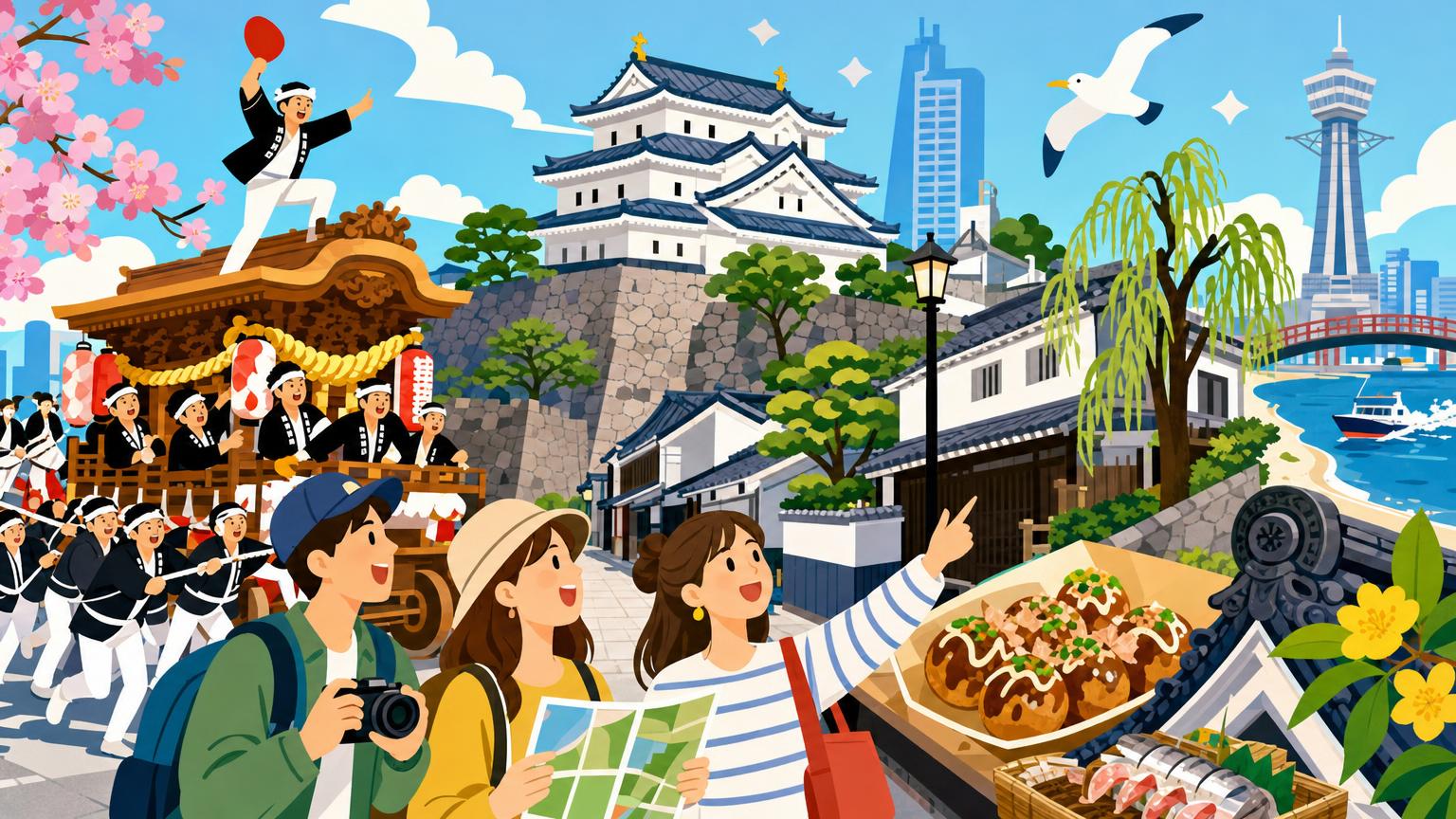
Kishiwada is often described as a castle town, a port-side city, or the home of the Kishiwada Danjiri Festival. All three descriptions are accurate, but none fully explains the city on its own. The more revealing point is that Kishiwada demonstrates how an Osaka-area community can remain strongly local while staying connected to a large metropolitan region.
Tokyo often gives outsiders the impression of a city organized around companies, institutions, and formal public behavior. Osaka is also highly urban, but many interactions feel more personal and negotiable. People may joke with you, comment on what you are doing, or offer practical advice without waiting for a formal invitation. In Kishiwada, this tendency is often even more visible because the city’s neighborhoods retain a strong sense of continuity.
This does not mean that every person in Kishiwada is outgoing, nor does it mean that foreigners will automatically be welcomed into every local circle. A common misunderstanding is to interpret Osaka’s direct speech as instant intimacy. A cashier who jokes with you, a neighbor who asks where you are from, or an older person who comments on your Japanese may be showing interest, but that is not the same as offering a deep friendship.
The best way to understand the local style is this: Osaka communication often reduces distance quickly, but trust still develops over time. People may speak casually before they know you well. They may tease you while still expecting you to follow local manners. They may complain openly and continue helping. For someone living in Osaka, this can feel warmer than the restrained politeness often associated with Tokyo, but it can also seem more intrusive if you come from a culture where personal boundaries are expressed more directly.
Kishiwada makes this pattern easier to see because the city is not trying to present itself as a polished central business district. Daily life is more visible. A person sweeping outside a shop, a child walking home from school, a group preparing for a neighborhood event, or a customer chatting with a restaurant owner can tell you more about the city than a list of sightseeing highlights.
The castle town also helps explain why Osaka is not defined by a single personality. The northern part of Osaka Prefecture, Osaka city center, the bay area, and the southern Senshu region all have different rhythms. Kishiwada belongs to Senshu, and local speech, food, festival customs, and neighborhood relationships reflect that regional identity. You can live within commuting distance of Namba and still experience a very different sense of what makes a place feel like home.
A Weekend in Kishiwada Is Really a Walk Through Layers of Daily Life
A first visit is easy to organize, but it is best approached as a sequence of moods rather than a checklist. Start near Kishiwada Station, walk toward the older central area, continue on toward the castle and Kishiki Jinja Shrine, and allow time for an unplanned stop. The streets are not laid out as one continuous tourist zone, and that is part of their value.
Near the station, the city feels practical and commuter-oriented. People are heading to work, buying food, meeting friends, or transferring to buses. The station is served by the Nankai Line, and Nankai lists express, airport express, local, and other services stopping at Kishiwada Station. It also connects with Nankai Wing Bus services and offers elevators, accessible toilets, escalators, and other facilities useful for everyday travel.
As you walk away from the station, the pace changes. The buildings become lower, road widths vary, and the atmosphere feels less standardized. You may notice signs that are more useful to local residents than to visitors, including small clinics, neighborhood restaurants, repair businesses, classrooms, and shops that do not need a large English-language presence to operate.
This is where foreigners sometimes make a mistake. They may assume that a quiet street has nothing to offer because it lacks a famous landmark. In Japan, particularly in older Osaka-area neighborhoods, quietness can mean the opposite. It may indicate that the street is functioning normally for residents rather than performing for tourists.
A good weekend in Kishiwada includes time to observe how people use public space. Residents may gather outside a store without seeming to be part of a formal group. Children may move through the neighborhood in organized school groups. Older people may sit near a community facility or pause for a short conversation. None of this is a staged cultural experience; it is simply the city continuing its usual routine.
For someone deciding whether Osaka is a good place to live, this matters. The key question is not whether Kishiwada has enough attractions for a visitor, but whether you can imagine yourself building a routine there: commuting by train, shopping locally, greeting neighbors, managing garbage rules, finding a clinic, and becoming familiar with the same streets over several months.
Kishiwada Castle and the Meaning of a Castle Town
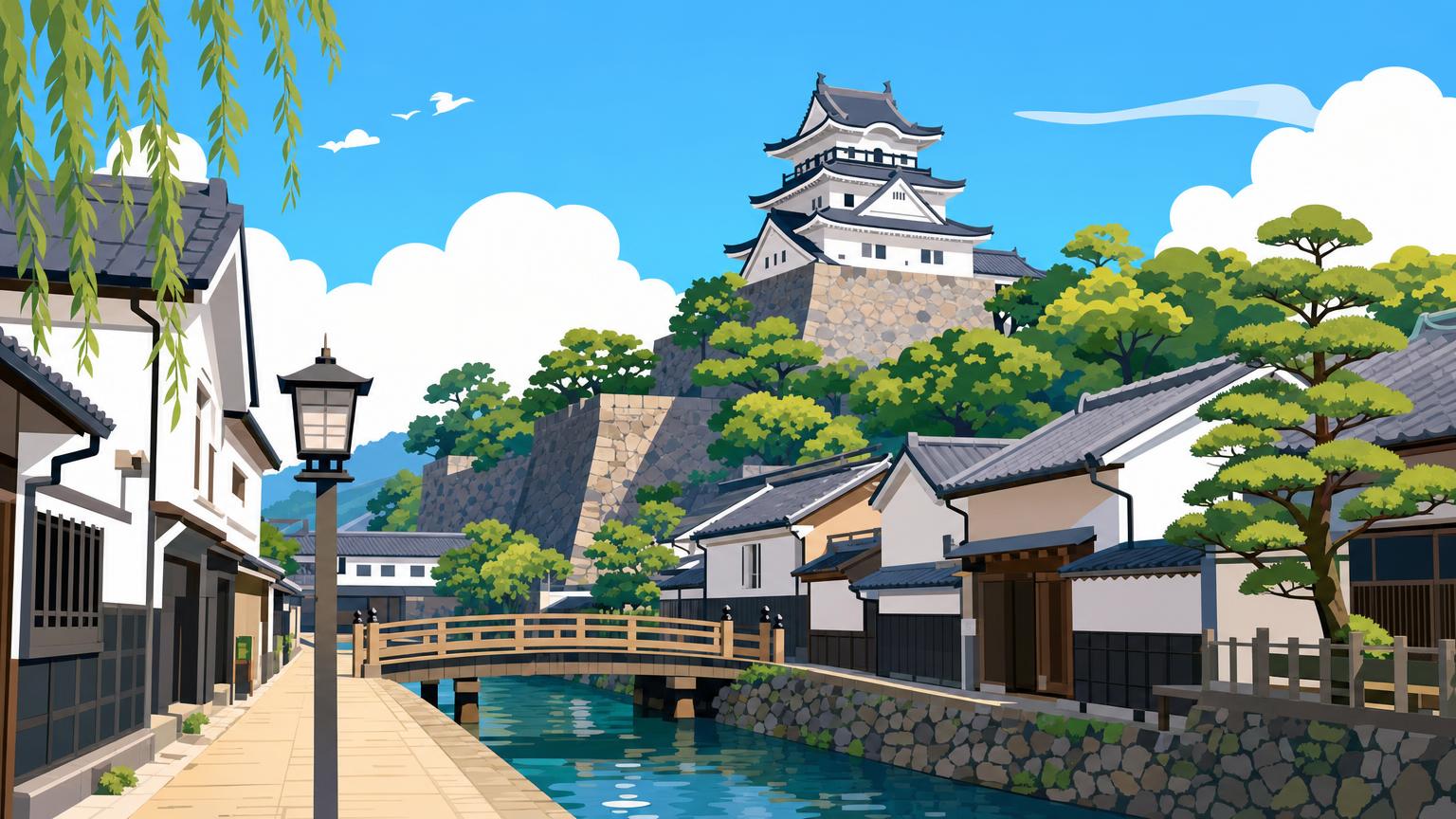
Kishiwada Castle is worth visiting, not only because it is photogenic. Its real importance lies in the way it gives the surrounding city a historical center. The castle forms part of a landscape of roads, shrines, houses, public facilities, and old commercial areas. It helps explain why the city’s identity is not simply residential or industrial.
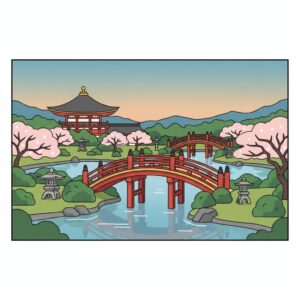
The present keep is a twentieth-century reconstruction rather than an untouched surviving structure. Kishiwada City explains that the earlier keep was destroyed by a lightning strike in 1827, while other castle structures were damaged or dismantled during the transition to the modern era. The current three-story keep was built in 1954. The grounds also include the nationally designated scenic garden known as the Garden of Eight Formations, or Yagura no Niwa, designed by Mirei Shigemori.
This history helps explain an important feature of Japanese towns: a historical place does not need to survive in perfect physical form to remain socially powerful. Today, the castle’s role is partly architectural but also symbolic. It provides residents with a shared reference point. Weddings, events, school visits, local photographs, and city promotion all connect the modern town with the older idea of Kishiwada as a domain and castle settlement.
Foreign visitors sometimes expect a castle to function like a European fortress, with a large, intact complex and a clear boundary between the historic site and the modern city. Kishiwada is different. The castle is located within an active urban environment. You can leave the grounds and quickly return to ordinary streets. That closeness is more informative than a perfectly preserved, isolated monument.
The city government currently lists the keep’s general opening hours as 9:00 a.m. to 5:00 p.m., with admission until 4:30 p.m., although temporary closures and special opening arrangements may occur. Adult admission is listed at 300 yen, while a combined ticket covering Kishiwada Castle, Kishiwada Danjiri Kaikan, and the Kishiwada City Natural History Museum is listed at 700 yen. Check the official city information before visiting, as schedules can change.
The practical advice is simple: do not spend your entire visit looking up at the keep. Take time to notice the moat, stonework, garden composition, and the relationship between the castle grounds and the nearby streets. The castle is most meaningful when understood as part of the town rather than as a separate attraction.
Kishiki Jinja Shrine and the Local Sense of Continuity
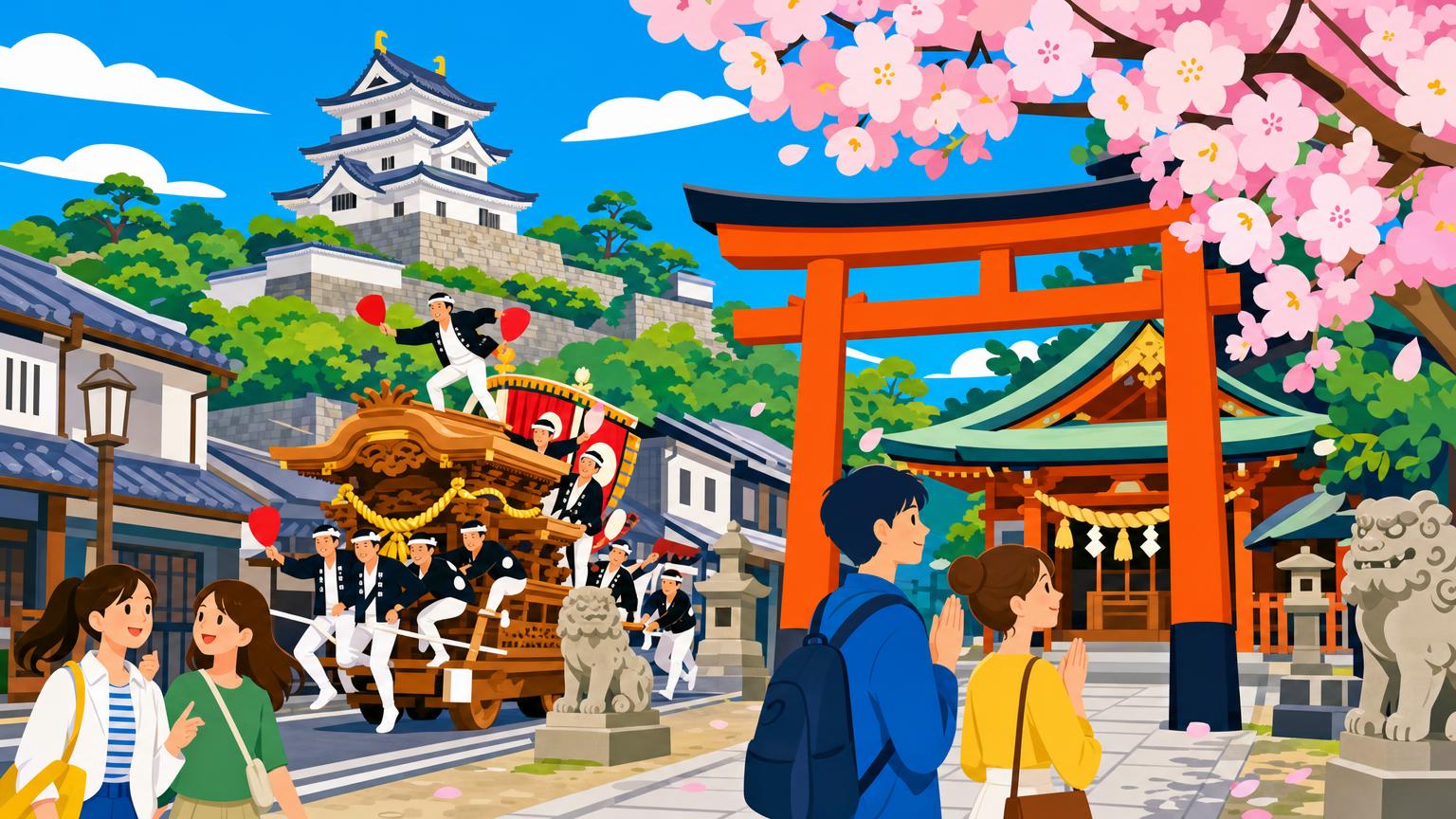
Kishiki Jinja Shrine is located near the castle area and offers another way to understand Kishiwada. To a visitor who does not know what to look for, a shrine may appear quiet and anonymous. In local life, however, shrine grounds can serve as places for seasonal rituals, neighborhood identity, festivals, prayers, family milestones, and informal pauses.
The main misunderstanding is viewing a shrine as a sightseeing object with a fixed meaning. For residents, its meaning may change depending on the day. Someone may visit before an important event, stop briefly while walking through the neighborhood, bring a child for a ceremony, or participate in a community festival. The shrine is not always being “visited” in the tourist sense; it may simply be part of the local geography of life.
At Kishiki Jinja Shrine, its proximity to the castle and danjiri culture demonstrates how historical authority, religious practice, and neighborhood organization overlap. In many Japanese cities, these categories are not clearly separated. A local festival may involve religious elements, family participation, community roles, municipal traffic planning, volunteer work, and business activity all at once.
For foreigners, this can be confusing because Japanese festivals are often described either as religious ceremonies or as cultural performances. In Kishiwada, both descriptions are incomplete. The danjiri tradition has spiritual roots and ceremonial elements, but it is also an intense system of local participation. The same event may be sacred, social, competitive, exhausting, or entertaining, depending on the person involved.
When visiting a shrine, basic behavior is more important than specialist knowledge. Keep your voice low near worship areas, avoid blocking paths, do not treat every local person as part of a performance, and ask before photographing people at close range. There is no need to pretend to understand every ritual. Quiet observation and ordinary consideration are enough.
The Kishiwada Danjiri Festival: What Outsiders See and What Residents Carry
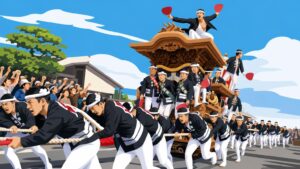
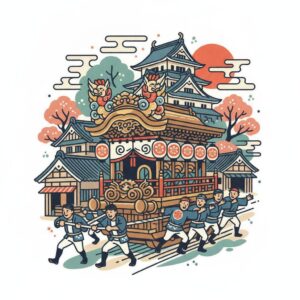
The Kishiwada Danjiri Festival is famous for the startling speed at which its floats move. A danjiri is a large wooden festival float pulled through the streets by teams of people. During the most dramatic moments, the float makes a sharp turn at a corner in a maneuver known as yarimawashi. The ropes tighten, runners shout, the wooden structure swings, and the float seems to slide around the corner under the control of people moving at full force.
From a distance, this may look like pure spectacle. Up close, however, it is also a display of coordination, hierarchy, training, responsibility, and neighborhood pride. The festival is not run by professional performers brought in for a show. Instead, it relies on local organizations and roles passed down across generations. Children, young adults, working-age residents, older people, musicians, carpenters, organizers, safety staff, and supporters all contribute in different ways.
The festival’s intensity is sometimes misunderstood as proof that Osaka people simply enjoy danger or noise. That explanation is too superficial. The danger is real, but so is the discipline behind it. The speed only makes sense because the community has developed an elaborate system for preparing, guiding, monitoring, and maintaining the floats.
The event also reflects a particular Osaka-area attitude toward public participation. A festival is not necessarily something you attend after buying a ticket. It can be something to which your family, neighborhood, or workplace has obligations. You may be expected to help with preparations, contribute money, manage food, wear a particular outfit, follow a route, or support relatives who are directly involved.
This creates pride, but it can also create pressure. Foreigners sometimes romanticize Japanese community traditions without recognizing the labor involved. Festivals require time, money, physical effort, coordination, and a willingness to accept temporary inconvenience. Roads close, noise continues, schedules change, and residents may have strong opinions about how the event should be managed.
The official Osaka tourism information divides the Kishiwada festival into September and October sections. The September festival covers the Kishiwada and Haruki districts, while the October festival involves several other districts, including Higashi-Kishiwada, Minami-Sakamori, Yagi, Yamanae, Yamanae-Minami, and Yamataki. Since the exact dates vary by year and area, anyone planning to attend should confirm the current schedule through official local information.
For 2026, the Kishiwada International Friendship Association’s multilingual danjiri information page lists the main September festival as beginning at 6:00 a.m. on Saturday, September 19, 2026, and ending at 10:00 p.m. on Sunday, September 20, 2026. Festival arrangements may differ by district, and crowd controls or route changes could affect what visitors are able to see.
The best approach is not to chase the most dangerous corner. Stand behind barriers, follow instructions from police and volunteers, keep away from ropes and moving routes, and be prepared for sudden changes. Do not enter private areas or assume that an excited crowd gives you permission to push forward. The festival belongs first to the people who have spent months preparing it.
If you live in Osaka, the festival is also a useful lesson in the difference between being present and being involved. You can watch the spectacle in a few hours, but local residents may experience it as part of their identity, family history, and annual responsibilities. Respecting that difference will help you understand Osaka better than simply describing the event as “crazy” or “wild.”
Kishiwada Danjiri Kaikan: Experiencing the Tradition Without Disrupting the Town
If you want to understand danjiri culture without visiting during the most crowded festival period, Kishiwada Danjiri Kaikan is the more practical option. The facility features real floats, tools, clothing, musical elements, carvings, historical materials, and immersive video displays. The city describes it as a place where visitors can learn about the festival through exhibits and hands-on experiences year-round.
This is not simply a substitute for the festival. It provides information that the festival itself cannot easily convey. During the actual event, noise, movement, crowds, and emotion dominate your attention. At the Kaikan, you can examine how the floats are constructed, see how their decorations communicate identity, and consider the amount of skilled labor behind the visible excitement.
That difference is particularly useful for foreigners. Watching the festival may leave you with an impression of speed and volume. The Kaikan helps add the quieter elements: woodworking, neighborhood history, instruments, clothing, planning, and the fact that each float represents a particular community.
The Kaikan is listed as open from 10:00 a.m. to 5:00 p.m., with final admission at 4:00 p.m. It is generally closed on Mondays unless Monday is a public holiday, as well as during the New Year period. The official city page lists admission at 600 yen for adults and 300 yen for elementary and junior high school students, while a combined three-facility ticket is listed at 700 yen. Confirm the current details before your visit.
According to the city’s access information, the building is about a seven-minute walk from Takojizo Station and approximately thirteen minutes from Kishiwada Station. This short walk also gives you an opportunity to notice the older townscape around Honmachi rather than treating the museum as an isolated stop.
What Kishiwada’s Food Culture Says About Osaka
A weekend in Kishiwada should include food, not because every local dish needs to be turned into a culinary attraction, but because food reveals how Osaka’s everyday culture combines practicality, pride, and direct evaluation.
Osaka has a strong reputation for food, but residents do not necessarily discuss meals in formal or refined terms. They may talk about whether something is worth the price, whether the portion is satisfying, whether the shop has been there for a long time, or whether a particular preparation is the “right” way. Complaining about a restaurant can be part of caring about it. Praise may be brief, while criticism can be detailed.
In Kishiwada, look for local sweets, small restaurants, bakeries, prepared foods, and shops selling regional products. The point is not to find one perfect signature dish, but to observe how people choose. Is the shop full of families, older regulars, workers on a break, or people buying food to take home? Does the owner speak to customers differently depending on how familiar they are? Are people eating quickly, chatting, or treating the place as part of their routine?
Mizunasu, or water eggplant, is one local product associated with the Kishiwada and Senshu area. Its texture and preparation differ from the eggplant many foreigners know, and it is often encountered as a pickled product. A practical tip is to ask how the shop recommends eating it rather than assuming that every unfamiliar food should be handled like a restaurant tasting course.
Eating in Osaka also involves a particular balance between friendliness and efficiency. A shop owner may not provide a long explanation in English, but that does not mean the interaction is cold. Pointing, using short Japanese phrases and gestures, and showing a willingness to try are often enough. If there is a queue, follow the local order. If a shop is small, keep your belongings close and avoid occupying a table longer than necessary during busy periods.
For someone living in Osaka, these habits matter more than knowing every food name. Daily life is built through repeated small transactions. You become familiar with a bakery, learn which supermarket has better produce, recognize the owner of a neighborhood shop, and eventually understand the timing of local crowds. That is how a place becomes livable.
Kishiwada Tourist Farm and the City’s Rural Edge
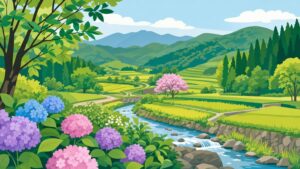
Kishiwada is more than just an old urban center. Its broader area extends into greener, more agricultural landscapes. Kishiwada Tourist Farm, now presented by the city as Kishikan, is one example of how the city’s rural edge remains part of its identity. The facility offers seasonal strawberry-picking experiences, barbecue plans, and locally connected agricultural products, including mizunasu pickles. The city explains that strawberry activities generally run from around January through June, with schedules and reservations varying by season.
This kind of place is valuable for understanding Osaka because it challenges the image of the prefecture as entirely urban. Osaka is a major metropolitan region, yet city life and agriculture exist surprisingly close together. Residents may commute through busy station areas during the week and still spend weekends buying directly from farms, visiting parks, or taking their children to agricultural experiences.
For foreigners, the farm also reveals a less obvious aspect of local social life: the importance of seasonal timing. Japanese leisure is often organized around what is available at a particular time. Strawberry season, summer festivals, autumn harvests, school events, and winter foods create a calendar that shapes family plans and local conversations.
The farm is not located in the castle-town center, so it works best as a separate activity rather than something to fit into a short walk. Depending on the season and your starting point, you may need a taxi, bus, or careful route planning. Reservations are important, and opening days may be limited. The official city information lists the facility in Uchihata and advises checking the latest details for the experience you want.
The larger lesson is that Kishiwada’s identity extends beyond the castle walls. A city can include old urban streets, modern commuters, festival neighborhoods, fishing and port connections, farms, hills, and family leisure facilities. This mixture is common throughout Osaka Prefecture, even if visitors usually see only its most famous central districts.
How to Reach Kishiwada from Central Osaka
The simplest route from central Osaka is to take the Nankai Railway line from Namba Station to Kishiwada Station. Nankai’s station information identifies Kishiwada as station NK24 and lists several services on the Nankai Line, including express, airport express, semi-express, and local trains. Exact travel times vary by service and timetable, so check the current departure information instead of relying on a fixed estimate.
For most visitors, Kishiwada Station is the most convenient arrival point because it connects directly to the main commercial and castle-town area. Takojizo Station may be more convenient for Kishiwada Danjiri Kaikan and parts of the old town. In practical terms, these stations are not interchangeable if you are carrying luggage, traveling with a stroller, or trying to avoid unnecessary backtracking.
Use an IC card as you would elsewhere in Osaka, but keep in mind that local transport is not always as frequent as it is in the city center. If you plan to visit the rural edge or a farm, check the return route before leaving the station area. A destination that appears close on a map may require a long walk, limited bus service, or a taxi ride.
The Nankai Line is one reason Kishiwada works well as a weekend trip for people living in Osaka. You can leave the intensity of Namba without arranging a complicated long-distance journey. That accessibility also makes Kishiwada a realistic option for residents who want more space or a stronger local atmosphere while remaining connected to the metropolitan area.
At the same time, commuting convenience does not erase local differences. If you live in Kishiwada, you may still find that administrative procedures, neighborhood expectations, school-area routines, and local relationships are more visible than they would be in a large, anonymous apartment district near central Osaka. Convenience and community come together, but they also require something from you.
What Foreign Residents May Misunderstand About Kishiwada
The first misunderstanding is that Osaka-style directness means everyone wants to become your friend. In reality, direct conversation can be a social style rather than a promise of closeness. Accept jokes in good humor, but do not assume you can disregard basic respect or local boundaries.
The second misunderstanding is that a smaller or older city must be less international. Kishiwada may have fewer multilingual signs than central Osaka, but that does not mean foreigners cannot live there. It means you may need to take greater responsibility for daily communication. Learn the names of your neighborhood, station, ward or municipal office, trash categories, and local facilities. Keep translation tools available, but do not rely on them as your only strategy.
The third misunderstanding is that quietness means rejection. A local shop owner who does not initiate a conversation may simply be working. A neighbor who offers a brief greeting may still be respectful. Japanese social contact is often situational. Over time, repeated small greetings can matter more than one enthusiastic first meeting.
The fourth misunderstanding is that festivals reveal everything about a city. Danjiri shows one powerful side of Kishiwada: collective energy, pride, tradition, and physical commitment. Ordinary weekdays reveal other sides, including patience, maintenance, commuting, childcare, shopping, paperwork, and the management of limited space.
The fifth misunderstanding is that local traditions are either old-fashioned obstacles or pure cultural treasures. They can be both meaningful and demanding. Some residents may feel deeply proud of danjiri culture. Others may be less involved, tired of the noise, concerned about safety, or simply focused on ordinary life. A city contains different opinions, even when one tradition dominates its public image.
Is Kishiwada a Good Place to Live?
Whether Kishiwada is a good place to live depends on what you are looking for in Osaka. It may suit people who prefer a less crowded environment, value local identity, want access to outdoor and agricultural areas, and do not mind traveling toward central Osaka for certain services or nightlife. It may be less suitable for someone who wants every interaction and service to be available in English or who prefers the dense convenience of Umeda, Namba, or Tennoji right outside the door.
The best way to decide is to visit on an ordinary weekday, rather than only during the Danjiri Festival. Take the train during a realistic commuting period. Walk from the station to a supermarket and a residential area. Check the distance to a clinic, pharmacy, gym, or school if those are important to you. Sit somewhere for a while and consider whether the pace feels comfortable or too quiet.
If you are moving with children, look into school routes, after-school arrangements, parks, and community activities. If you work in central Osaka, calculate the full commute from your actual home instead of measuring only station-to-station time. If you do not drive, consider how easily you can reach the places you need to visit each week.
Housing costs may be one reason to look south of central Osaka, but price alone is not enough. A cheaper apartment can become costly in terms of time, transportation, or convenience. The important question is what you receive in return: more space, a quieter street, access to local shops, or a stronger sense of neighborhood.
Foreign residents should also consider how comfortable they are with being noticeable. In a dense central district, you can often remain anonymous. In a smaller neighborhood, people may notice a new foreign resident more quickly. That attention can lead to helpful connections, but it can also feel uncomfortable. The usual solution is neither to isolate yourself nor to force yourself into every local activity. Start with basic greetings, consistent manners, and participation when an invitation is clear.
A More Useful Way to See Kishiwada
Kishiwada is not valuable because it offers an escape from “real” Osaka. It is valuable because it is part of real Osaka. The castle explains how older political and urban structures remain present, while Kishiki Jinja Shrine shows how sacred spaces continue to shape neighborhood geography. The Danjiri Festival reveals how identity can be organized through generations of collective work, and the Danjiri Kaikan makes that otherwise invisible preparation easier to understand. Local farms show that Osaka’s metropolitan life still extends into agricultural landscapes.
The city also offers foreigners a practical lesson in the Osaka mindset. People may speak more openly than you expect, but openness does not mean unlimited access. They may joke quickly, but trust is earned through repeated interaction. They may complain about their town, festival, neighbors, or public services, yet still defend the place strongly when an outsider dismisses it.
That combination may seem contradictory until you understand that belonging often includes criticism. Osaka people do not always express affection through formal praise. They may show it by arguing over details, remembering old stories, offering blunt advice, or continuing to maintain a tradition that requires hard work.
A weekend in Kishiwada is therefore not simply a trip to see a castle or experience festival culture. It is an opportunity to observe how a city carries its past while dealing with ordinary present-day challenges. Walk through the castle town, visit the shrine respectfully, learn what the Danjiri Kaikan preserves, eat without rushing, and look beyond the station area when possible.
You may arrive expecting one dramatic festival story. You will leave with a more accurate understanding of Osaka: a region where metropolitan life and local identity exist close together, where directness can coexist with reserve, and where the character of a place is often easiest to see on an ordinary day.