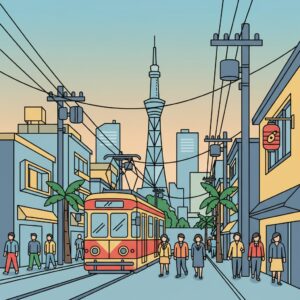
Living in Osaka often feels like being permanently strapped to a neon-lit, fast-moving carnival ride. The city vibrates with a brilliant, chaotic energy that can easily overwhelm a newcomer. We are famously known across Japan for our blunt conversations, our unapologetic love for heavy, sauce-drenched food, and a relentless mercantile spirit that never truly sleeps. If you ask a foreign resident what daily life in Osaka is actually like, they will usually tell you stories about dodging speeding bicycles in Umeda, squeezing into impossibly tiny standing bars in Tenma, or navigating the labyrinthine underground shopping malls of Namba. They will talk about the noise, the crowds, the vibrant fashion, and the sheer, unstoppable velocity of the place.
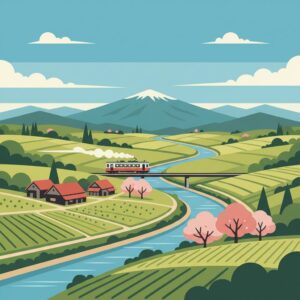
But there is another side to the Osaka character. It is a quiet, deeply rooted, and profoundly historical side that you absolutely cannot discover by walking down the tourist-packed streets of Dotonbori. To truly understand the people of Osaka—to figure out how they maintain their sanity and humor amidst the urban grind—you have to see where they go to breathe. You have to understand their deep connection to the earth, to their ancestors, and to the quiet countryside that wraps around the southern and eastern edges of the prefecture. This is the Minami-Kawachi region. It is the rural, beating heart of southern Osaka Prefecture.
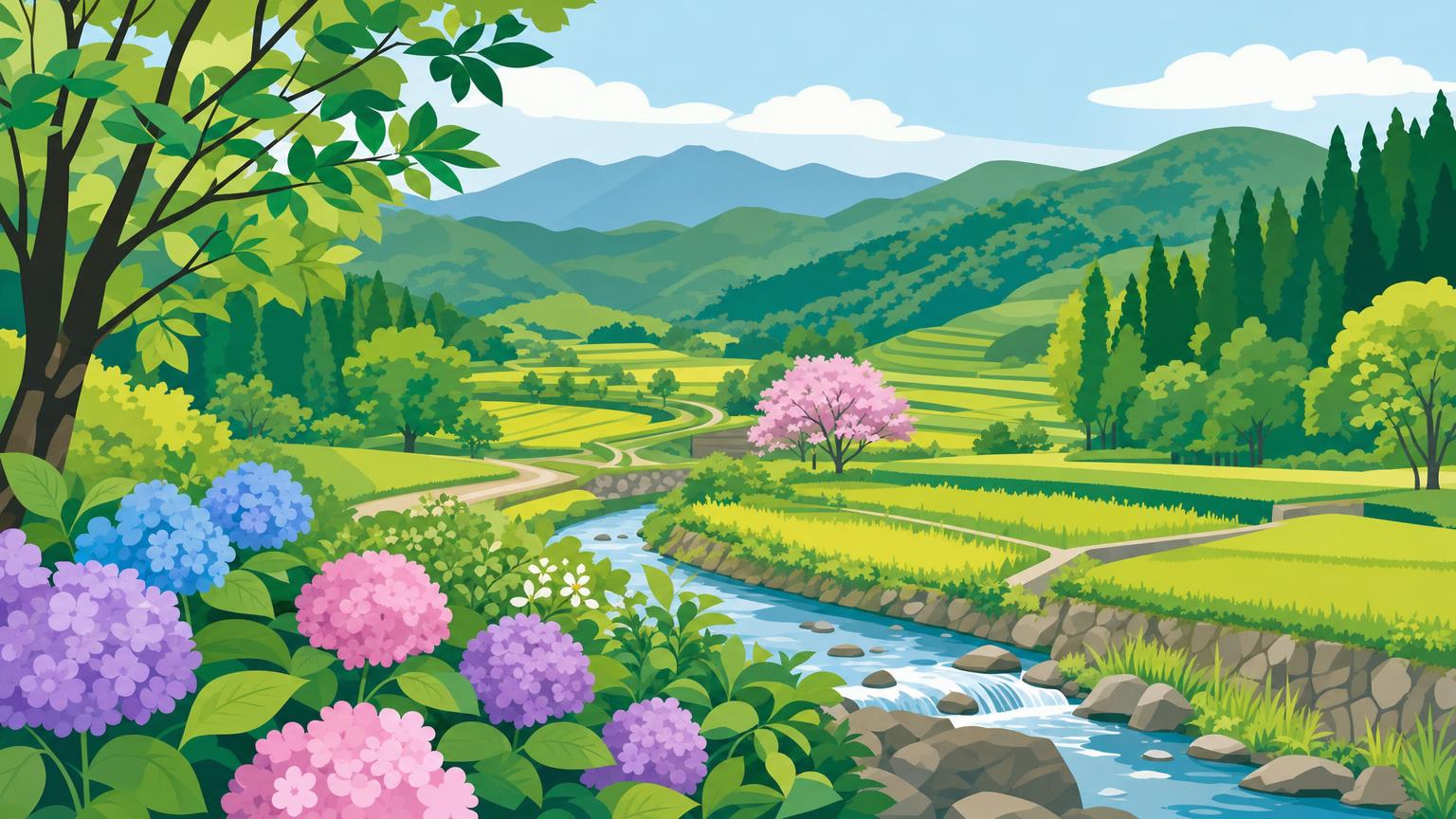
When you move to this city, you quickly realize that locals do not spend every single weekend eating street food under giant mechanical crabs. They pack up their cars, grab their families, and head south. They seek out ancient forested tombs, quiet terraced rice fields, and challenging mountain trails. By exploring Minami-Kawachi, you peel back the thick neon layers of the city and discover the agrarian roots that still shape the straightforward, unpretentious mindset of the modern Osaka resident. It reveals why they value community over hierarchy, and why their hospitality is so famously warm and direct. Let us take a journey into the deep south of Osaka Prefecture and uncover the quiet, enduring strength of the Kansai soul.
Discovering Minami-Kawachi: Osaka’s Hidden Historical Gem
Minami-Kawachi vs. “Minami”: Understanding the Map
One of the earliest sources of confusion for new foreign residents in Osaka is the local geography and naming conventions. If you tell a newly arrived expat that you’re spending the weekend in the south, they will immediately think of the entertainment district around Namba and Shinsaibashi. In everyday conversation, that central downtown area is simply called “Minami,” which means south. It’s the heart of nightlife, shopping, and tourist activity. However, the Minami-Kawachi district is a completely different place. Situated in the true southeastern corner of Osaka Prefecture, it includes several quiet towns, rural villages, and rolling mountain landscapes.
The difference between these two areas perfectly shows the practical nature of the Osaka mindset. Locals don’t feel the need to rely on poetic or elaborate names if a straightforward directional one works. The downtown hub lies south of Umeda, so they call it Minami. The rural area occupies the southern part of the old Kawachi province, so it’s called Minami-Kawachi. This blunt and functional way of naming things is fundamental to their style of communication. They prioritize clarity over decorative language. When you learn to tell apart the neon-lit Minami from the wooded hills of Minami-Kawachi, you’ve taken your first real step toward understanding how a true Osaka local perceives their home prefecture.
How to Get to the Minami-Kawachi District from Central Osaka
The trip to the countryside is a cultural experience in itself. To get there, you generally start at Osaka Abenobashi Station, located right beneath the towering Abeno Harukas building—a gleaming glass symbol of modern commerce. From there, you board the Kintetsu Railway. As the train heads south on a thirty to forty-minute ride, you watch the dense gray concrete canyons slowly begin to fade. Crowded apartment blocks give way to low houses with traditional curved tiled roofs. Eventually, lush green mountains come into view alongside the tracks.
If you observe the locals on the train, you’ll notice their posture literally change. The tense, stiff shoulders of the city commuter relax. Teenagers who were frantically texting glance up from their phones to look out at the passing fields. For Osaka residents, this short commute is more than a physical trip across the prefecture; it’s a psychological decompression chamber. Because Osaka is bordered by mountains and the sea, escaping into nature is relatively quick. Locals use this rapid transition from the dense city center to the open countryside to shed their urban armor and reconnect with a slower, more intentional pace of life.
Top Historical Attractions in Minami-Kawachi
Osaka Prefectural Chikatsu Asuka Museum and Ancient Tombs
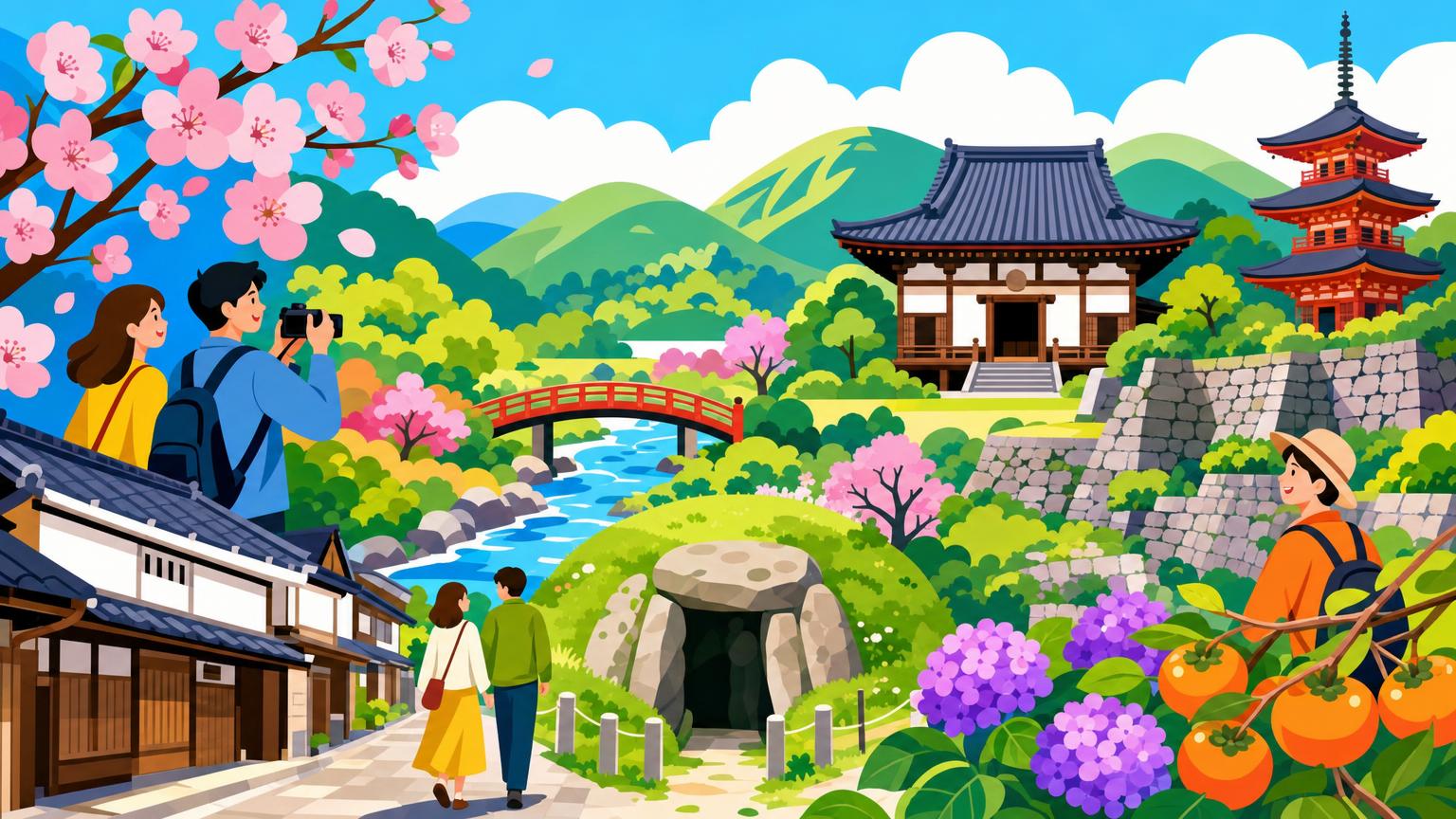
When foreign residents think of Japanese history, their thoughts often turn to the pristine, meticulously maintained temples of Kyoto. Kyoto treats its history like a delicate museum exhibit—beautiful to behold but carefully separated behind velvet ropes. People in Osaka, however, have a very different connection to the past. They believe history is something to be lived upon directly. This attitude is most evident in the town of Kanan, home to the Osaka Prefectural Chikatsu Asuka Museum and the nearby kofun, or ancient burial mounds.
Designed by the renowned architect Tadao Ando, the museum is a striking brutalist structure composed of expansive concrete steps built into the hillside, surrounded by wooded areas containing hundreds of ancient tombs. The way locals engage with this space is distinctively Kansai. Children run up and down Ando’s grand concrete steps while their parents spread out picnic blankets near millennia-old burial mounds. There is a deep respect for the ancestors here, but it is a practical, unsentimental kind of reverence. People in Osaka do not believe sacred spaces must be silent and lifeless; rather, they think history should be seamlessly woven into the everyday joy of family life.
Taishi, Osaka: The Birthplace of Japanese Buddhism
Continuing your exploration leads to a place of great historical significance. A day trip to Taishi, Osaka, reveals another facet of the local identity. This modest, tranquil town is renowned for its association with Prince Shotoku, a pivotal figure credited with helping establish Buddhism in Japan during the sixth century. His tomb lies here, nestled in the peaceful hills of Minami-Kawachi.
What is remarkable is how the locals approach their profound heritage. If this town were near Tokyo or Kyoto, it would likely be heavily commercialized, safeguarded by expensive ticket booths, and enveloped in an air of exclusivity. But Osaka residents take pride without being pretentious. A local farmer in Taishi might casually mention that their backyard is the birthplace of Japanese civilization, and then hand you a freshly picked mikan orange in the next breath. This interaction reflects the secure, grounded identity of the Kansai people. They fully appreciate the importance of their history but refuse to act haughty about it, remaining approachable, conversational, and exceptionally down-to-earth.
The Heroic Ruins of Chihaya Castle
To grasp the modern political and social mindset of Osaka, visiting the ruins of Chihaya Castle in Chihayaakasaka Village is essential. This is where the brilliant 14th-century samurai Kusunoki Masashige mounted one of the most legendary defensive stands in Japanese history. Faced with a massively superior army sent by the central shogunate, Kusunoki eschewed traditional, honorable battlefield charges. Instead, he employed cunning, guerrilla tactics, mud, decoys, and boiling water to repel the invaders. He was the quintessential underdog, relying on street smarts to outwit a far larger, wealthier foe.
This event perfectly reflects the modern spirit of Osaka. Locals instinctively admire the underdog. This is why the city is passionately devoted to the Hanshin Tigers baseball team, often viewing them as the gritty, working-class heroes taking on the wealthy, establishment-backed Yomiuri Giants from Tokyo. The people here deeply respect intelligence, determination, and practical outcomes over rigid pedigree or overwhelming authority. Hiking the steep, forested steps to the Chihaya Castle ruins, you walk through the birthplace of Kansai’s renowned anti-establishment spirit.
Nature and Outdoor Adventures
Hiking Mount Katsuragi for Spectacular Views
Escaping the concrete jungle requires some elevation, and Mount Katsuragi offers one of the region’s most rewarding natural retreats. Located on the border between Osaka and Nara prefectures, it is a popular weekend spot for local families. However, visiting Mount Katsuragi is about more than just the breathtaking seasonal views of azaleas in spring or the golden susuki grass in autumn; it also serves as a fascinating lesson in observing the social behavior of Osaka residents outside their usual urban setting.
In the crowded underground malls of Umeda, a local might brush past you without a word, eyes fixed straight ahead to endure the hectic rush hour. Yet, the moment they step onto the dirt trails of Mount Katsuragi, an unspoken social contract takes effect. Every person you pass on the mountain will make eye contact and greet you with a hearty, booming “Konnichiwa!” They’ll stop to ask where you’re from, offer you candy from their pocket, and share unsolicited yet genuinely helpful advice about the trail. The city’s isolation fades away, replaced by a strong sense of community. This shows that the famously blunt nature of Osaka inhabitants isn’t borne out of rudeness, but urban necessity. Remove the city’s stress, and their natural warmth and eagerness for connection quickly emerge.
The Serene Terraced Rice Fields of Chihayaakasaka
Nestled in the heart of Minami-Kawachi is Chihayaakasaka Village, the only officially designated village remaining in Osaka Prefecture. Here, you’ll find breathtaking, cascading terraced rice fields that seem untouched by time. For an expat seeking to understand the roots of the Osaka work ethic, this agricultural landscape offers essential context.
Osaka is globally known as a merchant city, thriving on trade, negotiation, and commerce. Yet, this bustling merchant culture depends heavily on the steady, dependable, and hard labor of nearby farming communities. The cooperative effort needed to maintain these intricate terraced rice fields—where water management must be carefully shared among neighbors—helped shape a culture of blunt honesty and mutual reliance. You can’t survive in a terraced farming village by being dishonest or overly polite when problems arise; you must speak frankly and collaborate to repair irrigation channels. This agricultural heritage is the true origin of the Kansai dialect’s famed directness. When you gaze over the golden rice fields, you’re witnessing the foundation of the city’s straightforward communication style.
Minami-Kawachi Osaka Restaurants and Local Flavors
Savoring Kawachi Wine and Vineyards
Mentioning wine production in Osaka often surprises foreigners. We are famous worldwide for takoyaki, okonomiyaki, and deep-fried skewers, not for refined viticulture. Yet, the rolling hills of the Minami-Kawachi region hold a surprisingly rich and historic wine-making tradition. Kawachi wine has been produced for over a century, benefiting from the area’s sunny slopes and well-drained soil.
What makes the wine culture here distinctly representative of Osaka is the way locals enjoy it. In Tokyo, a wine tasting might involve hushed tones, swirling glasses, and detailed discussions about tannins and oak barrels. In Minami-Kawachi, the approach is delightfully unpretentious. Locals openly pop open a bottle of the local Kawachi wine and drink it from simple tumblers while savoring sauce-covered okonomiyaki or a hearty local stew. They refuse to let traditional European snobbery dictate how they enjoy their local harvest. This breaks the common foreign misconception that Osaka is solely about cheap, greasy street food. Residents here possess wonderfully refined palates, yet they insist on enjoying high-quality products without any hint of pretension.
Farm-to-Table Dining and Local Eateries
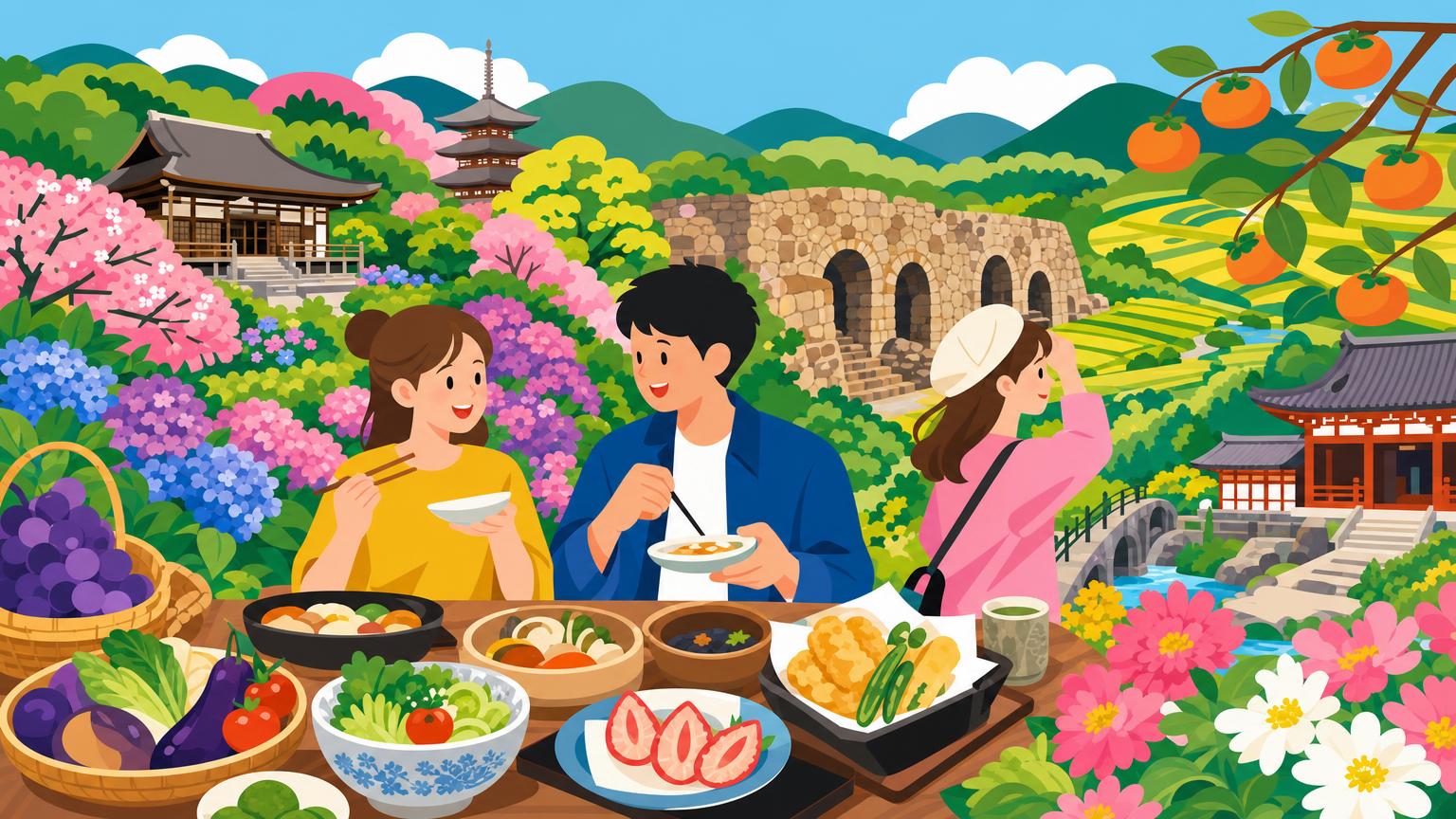
To experience the genuine, unfiltered hospitality of the locals, searching for authentic Minami Kawachi Osaka restaurants will take you away from heavily marketed tourist spots and straight into the community’s dining rooms. In this area, the well-known Osaka motto “kuidaore”—eat until you drop—takes on a healthier, agrarian significance. Instead of greasy late-night noodles, you’ll be served incredibly fresh, locally harvested vegetables, wild boar from the nearby mountains, and carefully prepared tofu.
More importantly, dining at these local mom-and-pop establishments introduces you to the legendary Osaka “obachan.” These affectionately blunt, fiercely caring middle-aged women serve as the region’s unofficial matriarchs. While in a crowded city center, an obachan might rudely cut in line at the supermarket, here in countryside restaurants, she’ll pull up a chair right next to your table. She’ll ask where you’re from, insistently refill your tea before you realize it’s empty, and gently scold you if you don’t finish every last grain of locally grown rice in your bowl.
This intrusive, deeply maternal style of hospitality may surprise foreigners used to the polite, formal distance typically maintained by staff in other parts of Japan. But this is precisely how Osaka people express love and acceptance. They don’t keep polite barriers; they break them down with a plate of homemade pickles and a booming, contagious laugh. When you sit down to eat in Minami-Kawachi, you are no longer just a guest—you are momentarily embraced as part of the neighborhood.
Why Minami-Kawachi Explains the True Osaka Soul
Living and thriving as a foreign resident in Osaka demands more than just mastering the subway system or learning how to order a beer in the local dialect. It calls for a deep sociological insight into the people you share the city with. The neon brightness, endless concrete, and rapid commercial exchanges that characterize downtown life can quickly become overwhelming. If you only see the city through the perspectives of Umeda or Namba, you will only grasp half of the local character.
Osaka’s true essence lies in a carefully balanced duality. The fierce commercial energy of the city center is grounded by the quiet, enduring agrarian strength of the southern countryside. The people of Osaka may be loud, fast, and intensely pragmatic during the workweek because they know the forested trails of Mount Katsuragi, the historic tranquility of Taishi, and the unpretentious dining rooms of Minami-Kawachi await them on the weekend.
A weekend escape to this region is not merely a pleasant nature walk or a simple historical tour. It is a vital lesson in local cultural psychology. By walking the same ancient dirt paths as the locals, tasting the food grown from their soil, and experiencing their warm, mountainous hospitality, you will finally piece together the full picture of the Kansai mindset. On Monday morning, you will return to the noisy, neon-lit city streets with a profound new respect for your neighbors, fully understanding the quiet, historical strength that anchors their vibrant, chaotic world.