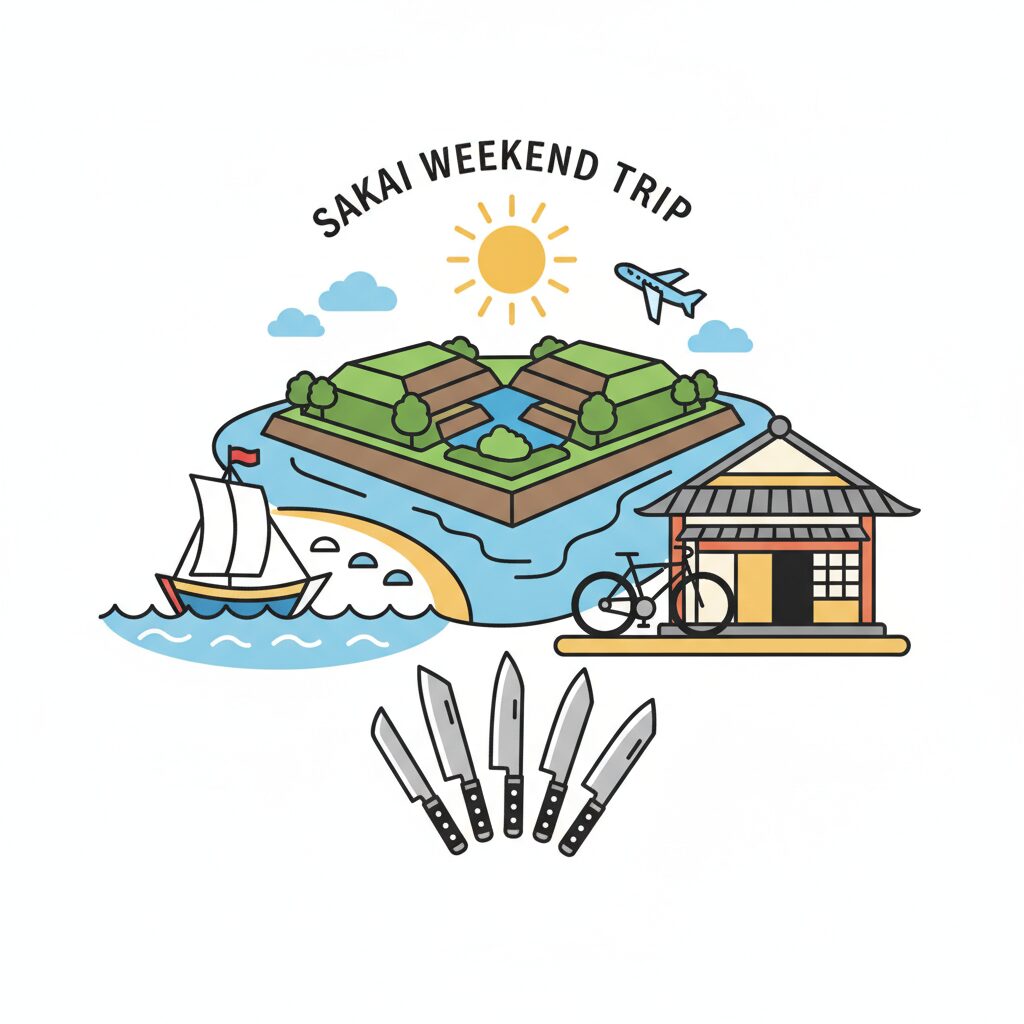
Step onto the Nankai line at Namba Station, and you’re plugging into one of Osaka’s main arteries. The train hums with the city’s kinetic energy, a palpable thrum of commerce, conversation, and ambition. But stay on for just ten minutes, watch the dense urban fabric of Nishinari blur past, and as you cross the Yamato River, you’ll feel a subtle shift in the rhythm. The air seems to quiet down. The buildings spread out, breathing a little deeper. You’ve just crossed an invisible border, a line more cultural than geographic. Welcome to Sakai. For many foreigners living in Osaka, Sakai is that place on the map just south of the city proper, known vaguely for two things: razor-sharp kitchen knives and giant, keyhole-shaped ancient tombs. You might even refer to it casually as part of Osaka. Be prepared for a gentle, yet firm, correction from a local. “Ah, this is Sakai,” they’ll say, with a tone that carries the weight of centuries. It’s not a boast, but a statement of fact, a quiet declaration of a separate identity. This isn’t just a suburb; it’s a city with its own soul, its own history, and a stubborn, independent streak that defines life here. To understand Sakai is to understand that Osaka isn’t a monolith. It’s to discover a deeply ingrained mindset of pride and self-reliance that offers a powerful counter-narrative to the fast-talking, trend-chasing persona of its bigger, louder neighbor. A weekend trip here isn’t about ticking off sights; it’s about decoding the very DNA of the Kansai region.
Embracing Sakai’s distinctive local soul opens the door to exploring even quieter corners of Osaka, such as Sumiyoshi’s hidden gardens, where the city’s enduring heritage thrives in serene green spaces.
Not Just a Suburb: The Sakai State of Mind
In Tokyo, the vast expanse of the metropolis often absorbs local identities. People might say they come from Kichijoji or Shimokitazawa, but the unspoken understanding is that they are, at their core, Tokyoites. The pull of the capital is too powerful to resist. In Osaka, that pull is strong but not all-encompassing. Sakai stands as its most important satellite, a city that firmly resists being reduced to a mere suburban outpost. This isn’t just an impression; it’s a lived experience. When you tell someone in Osaka you live in, say, Suita or Higashiosaka, they’ll acknowledge it as part of the Greater Osaka area. But when someone from Sakai states their origin, it carries a different weight. There’s a definitive pause at the end of the declaration. Sakai. Period.
This intense local pride stems from a history that predates and, for a while, even rivaled Osaka’s. The pride goes beyond knives or tombs; it’s rooted in a tradition of independence. For a Sakai resident, their city isn’t merely an offshoot of Osaka; historically, Osaka’s commercial center was the emerging port next door. This viewpoint reverses the usual power dynamic. They don’t see themselves as living in Osaka’s shadow but as guardians of a richer, more genuine heritage. This attitude subtly shapes daily interactions. There is a groundedness here, a feeling of being firmly planted in a place with profound historical significance. It can sometimes be mistaken for aloofness or provincialism compared to the more outgoing, sociable Osaka persona. But it’s not aloofness; it’s independence. A Sakai native doesn’t seek validation from Osaka or Tokyo. Their identity is crafted from their city’s distinct story, one of autonomy and self-determination.
Echoes of a Merchant Republic
To understand why Sakai feels so distinct, you need to look back to the Sengoku period, Japan’s turbulent era of warring states in the 15th and 16th centuries. While samurai lords and their armies battled across the land, Sakai established itself as a nearly independent city-state. Surrounded by moats and governed by a council of influential merchants called the egoshu, Sakai was often likened to the Venice of Japan. It thrived as an international port, a center for firearm trade, and a hub of great wealth and culture that answered to no daimyo. Rather than being ruled by the sword, the city was led by the abacus and the merchant’s code. This history is the city’s foundational essence.
The spirit of the merchant republic never truly vanished. It fostered a culture that prized independence, shrewdness, and a healthy distrust of outside control. While Osaka Castle stands as a symbol of feudal authority, Sakai’s legacy is embodied by its influential citizens who exercised power through culture and commerce. Consider Sen no Rikyu, the famed tea master who refined the Japanese tea ceremony. He wasn’t a warrior but the son of a Sakai merchant who transformed a simple ritual into a profound art, influencing the nation’s most powerful figures. Or Yosano Akiko, a pioneering feminist poet from the Meiji era whose passionate, rebellious work challenged the strict social norms of her time. These individuals embody the Sakai spirit: innovative, independent, and courageous in forging their own path.
This historical legacy continues today as a quiet confidence. The people of Sakai carry an ingrained awareness that their city once thrived on its own terms. This knowledge isn’t learned in textbooks; it’s felt in the air, in the names of old streets, and in the pride of an elderly shopkeeper maintaining a family business spanning generations. It explains why they don’t simply blend into the broader Osakan identity. They come from a place that once governed itself, and that sense of autonomy remains powerfully alive in the collective consciousness.
The Weight of Craftsmanship
Nowhere is this independent spirit more evident than in Sakai’s tradition of monozukuri, or craftsmanship. The city is renowned worldwide for its hand-forged knives, known as Sakai Uchi-hamono, a craft dating back to the 16th century when artisans made tobacco-cutting knives. Even today, walking through the quiet residential streets near the old city center, you can hear the steady clang of hammer on steel from small, unpretentious workshops. This is not mass production. This is heritage.
For a Sakai artisan, a knife is more than a tool. It represents centuries of handed-down expertise, a tangible symbol of the city’s reputation. Every step—the forging, sharpening, and handle fitting—is performed with a focus and pride approaching the sacred. There is a resolute refusal to compromise on quality for the sake of speed or cost. This attitude contrasts strikingly with the typical Osakan akindo (merchant) spirit, often marked by flexibility, quick wit, and salesmanship. The Osaka merchant is a master improviser; the Sakai craftsman is a relentless perfectionist. One adapts to the market; the other compels the market to meet their standard of excellence.
This commitment extends beyond knives. Sakai is the birthplace of Shimano, the global leader in bicycle components. The precision engineering in a Shimano gear set is a modern reflection of the same spirit that shapes a flawless blade. It’s about mastery, reliability, and an unwavering dedication to quality that has earned international acclaim. This isn’t the flashy, consumer-driven commerce of Shinsaibashi. It’s a quieter, deeper form of economic strength built on substance rather than style. When you purchase a product from Sakai, you’re not just buying an item; you’re investing in a piece of the city’s fiercely protected identity.
Riding the Slow Train: Daily Life on Sakai Time
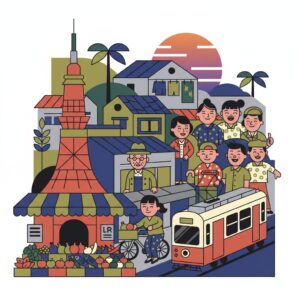
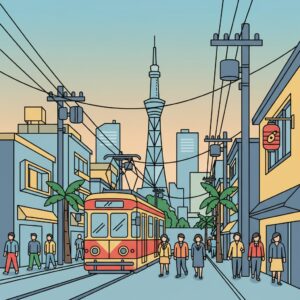
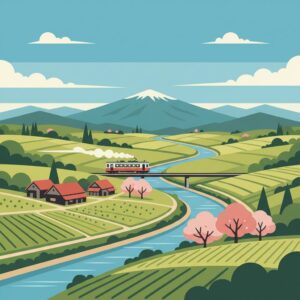
The simplest way to get a sense of Sakai’s rhythm is by riding the Hankai Tramway, affectionately called the Chin-Chin Densha after the sound of its bell. This single-car tramline is among the last of its kind in Japan, rattling along from the southern edge of Osaka deep into the heart of Sakai. It moves at a leisurely pace, a rolling relic that perfectly captures the city’s tempo. Unlike speedy rides through gleaming commercial centers, the tram meanders through quiet neighborhoods, past local shopping arcades, temples, and the expansive, moat-surrounded Kofun tombs.
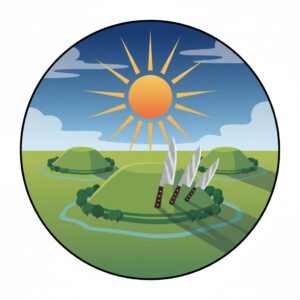
Then there are the tombs. The Mozu-Furuichi Kofungun, a UNESCO World Heritage site, comprises massive burial mounds built for emperors and powerful clans between the 4th and 6th centuries. The largest, the Daisen Kofun (Tomb of Emperor Nintoku), is one of the world’s biggest tombs, covering more area than the Great Pyramid of Giza. In another city, a monument of this magnitude would be a highly commercialized, cordoned-off tourist attraction. In Sakai, it’s simply part of the neighborhood. People jog around its moat. Houses and schools nestle right up against its wooded edge. You give directions using it: “My house is just past the emperor’s tomb.” This casual, everyday coexistence with enormous ancient history is truly unique. It lends daily life a sense of permanence and scale you rarely find in Tokyo or central Osaka—cities defined by constant change and reinvention. In Sakai, the past isn’t confined to museums; it’s the silent, green hill at the end of your street, a constant reminder of the deep, enduring story you belong to.
Life here follows a different rhythm. The frantic pace of Umeda’s underground maze feels worlds away. Shopkeepers take their time chatting. There’s a stronger sense of neighborhood community, where faces are familiar and traditions endure. It’s a city comfortable in its own skin, untroubled by the relentless pursuit of the “new” that drives much of modern urban life.
How Sakai People Talk and Think
Though the dialect is a variation of Osaka-ben, the communication style can feel subtly distinct. The classic Osaka stereotype is one of loud humor, dramatic gestures, and a love for playful verbal sparring. Sakai natives share that Kansai warmth, but often with a quieter reserve. Their pride is more subdued and straightforward. They don’t need to be the life of the party; their confidence is internal, grounded in a deep history of self-reliance.
Imagine this: you ask for a restaurant recommendation. An Osakan from Minami might eagerly direct you to the newest, most talked-about takoyaki stand with the longest line, highlighting its buzz and energy. Someone from Sakai, however, might pause, reflect, and then suggest a quiet, family-run udon shop tucked away in a back alley that hasn’t changed its menu in fifty years. “It’s the only real place,” they’ll say, and in that simple phrase, you hear the essence of Sakai’s values. It’s a belief in authenticity over hype, tradition over trends, substance over flash. They are less impressed by novelty and more trusting of what has endured.
This outlook makes them keen observers. They have watched Osaka’s trends and Tokyo’s declarations come and go for centuries. They adopt what’s useful but resist being swept away by it. There is an unshakable sense of a local standard, a “Sakai way” of doing things—whether crafting a tool, running a business, or simply living day to day. It’s a mindset that honors consistency, mastery, and the quiet dignity of a job well done.
What Foreigners Often Miss
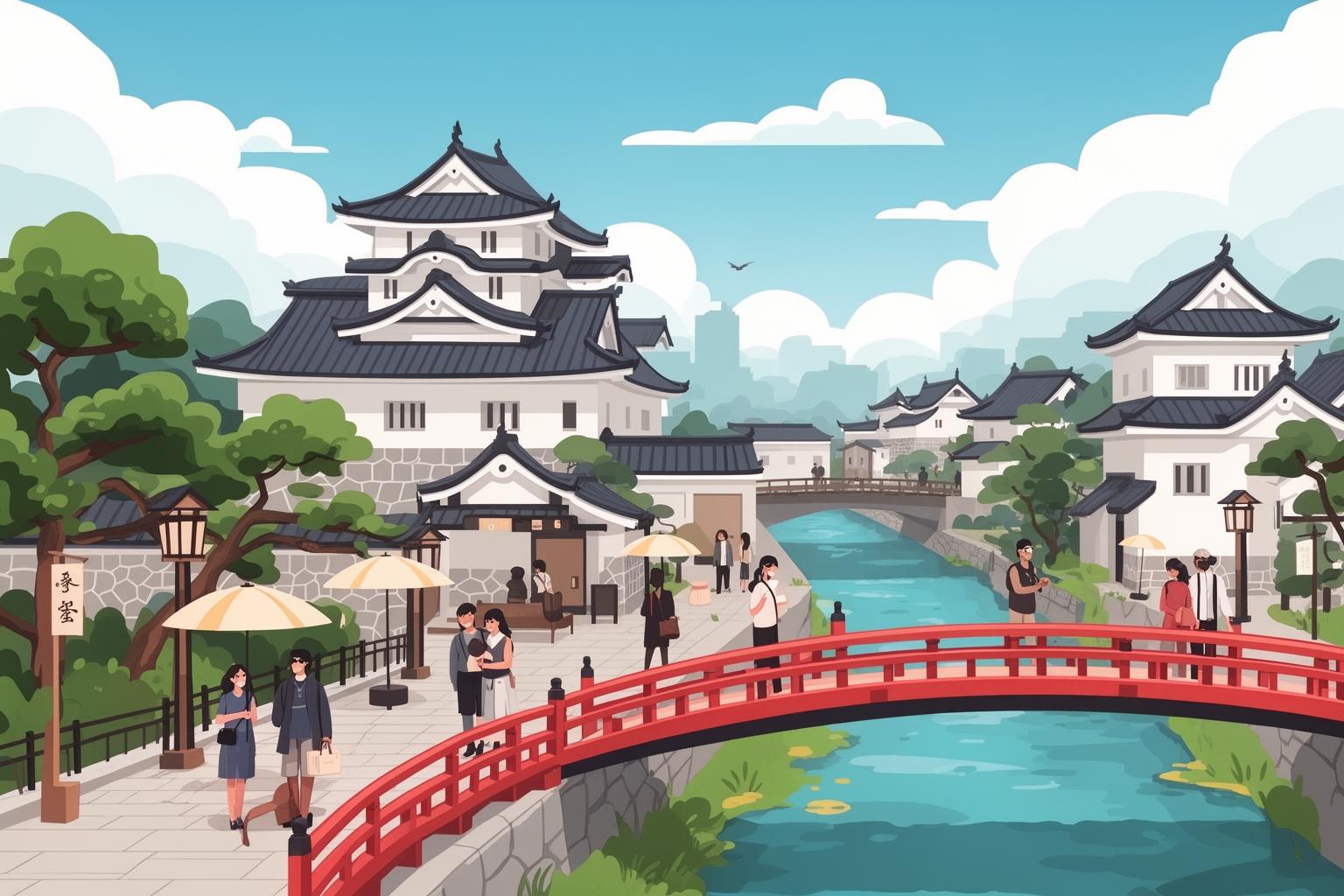
The most common mistake made by foreigners—and even many Japanese—is to view Sakai as merely a footnote in the story of Osaka. Seeing it as simply “South Osaka” overlooks the entire point. It’s like calling a proud Scot “English” or a Catalan “Spanish.” That distinction is everything. By not recognizing Sakai’s unique identity, you miss an essential layer of the rich, complex tapestry of the Kansai region. Kansai is not a single, unified culture; it’s a dynamic ecosystem of proud, distinct city identities that have intermingled for over a millennium.
Sakai presents a unique model of Japanese urbanism. It’s neither the hyper-modernity of Tokyo nor the vibrant, chaotic consumerism of Osaka. It’s a city that exists in dialogue with its past. It demonstrates that a place can be both modern and deeply traditional—that a global industrial powerhouse like Shimano can coexist with a craftsman hammering steel in a centuries-old workshop. It’s a city where a UNESCO World Heritage site doubles as a local park.
So take that weekend trip. Ride the slow tram. Walk around the perimeter of a 1,600-year-old tomb. Speak with a third-generation knife sharpener. Don’t go just to see the sights. Go to feel the rhythm. Go to understand that quiet, stubborn pride. By understanding Sakai, you’ll gain not only knowledge of a neighboring city but also a far deeper, more nuanced appreciation of Osaka itself—recognizing it not as an all-consuming giant but as the bright, central star within a fascinating constellation of fiercely independent neighbors.