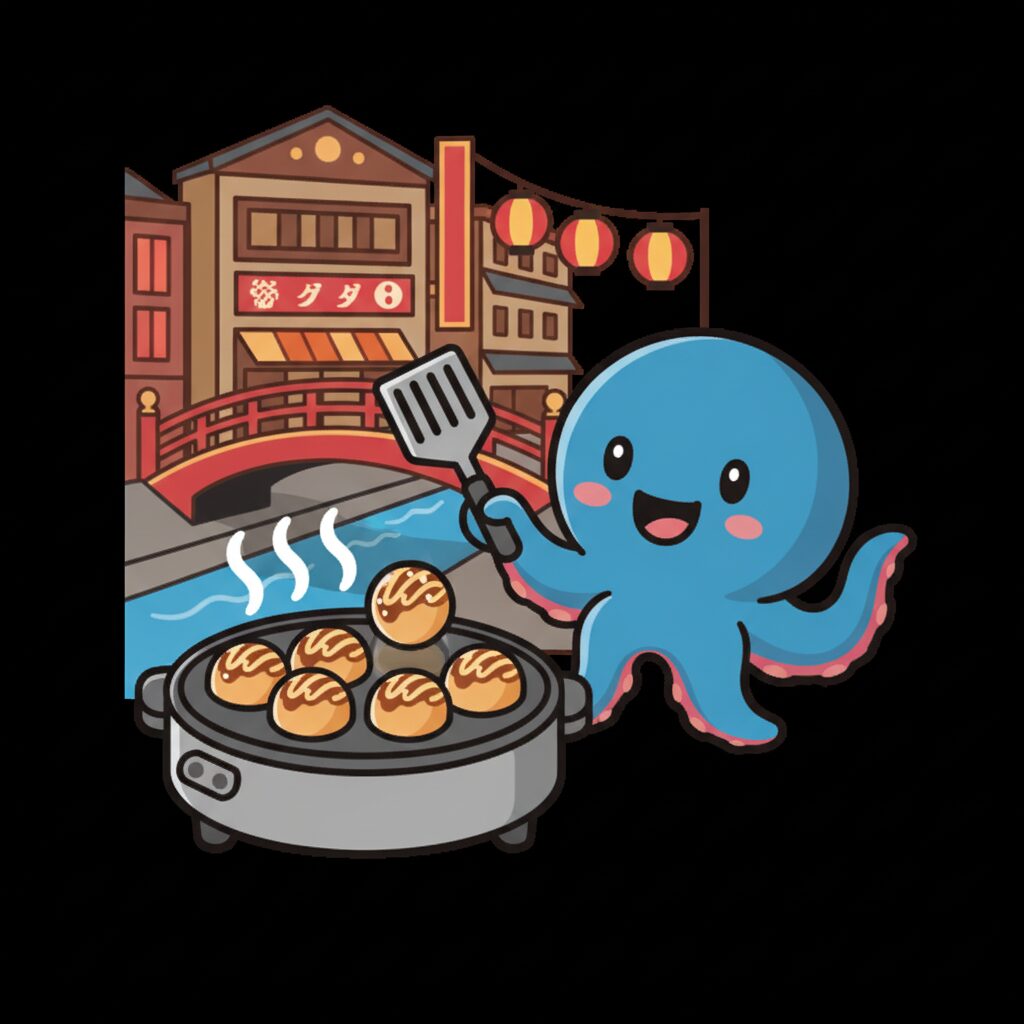
When you first move to Osaka, you notice the little things. The escalators where everyone stands on the right. The startling directness of the humor. The sheer, unapologetic volume of leopard print. But then you’ll stumble upon a mystery that runs deeper, something tucked away in the appliance aisle of every Yodobashi Camera and Bic Camera. It sits there, nestled between the rice cookers and the electric kettles: a dedicated takoyaki griddle. A small, black plate dotted with perfect hemispherical divots. At first, you dismiss it as a novelty. A fun gadget for a one-off party. Then you visit a friend’s apartment, and you see one on their shelf. And another friend’s. Soon, you realize it’s not a novelty at all. It’s standard issue. It’s the Osaka equivalent of a toaster. This raises the fundamental question: why is a piece of equipment for making a single, specific street food an essential household appliance in Japan’s third-largest city? The answer isn’t about food. It’s about connection. It’s about a social ritual so ingrained in the local culture that to understand it is to understand the very heart of Osaka. This ritual has a name: the ‘Takopa’, or Takoyaki Party. And it’s your real key to unlocking the city. Before we dive into the cozy chaos of an Osaka living room, let’s pinpoint the public heart of this culinary obsession, the place where the scent of sizzling batter and savory sauce perfumes the air, day and night.
This cultural mosaic is further illuminated by exploring the enduring influence of Senba’s merchant spirit, where tradition and modern commerce intertwine to shape Osaka’s unique social fabric.
The Sacred Appliance: A Griddle in Every Home
Let’s clear one thing up: the fact that almost every Osaka household owns a takoyaki maker is no exaggeration. It’s a reflection of identity. While Tokyo residents may take pride in discovering the newest Michelin-starred restaurant, Osakans boast something much more grounded—the skill to prepare delicious, perfectly round takoyaki right in their own kitchens. This tradition is embedded in the city’s very DNA, known as ‘konamon bunka,’ or the flour-based food culture. Okonomiyaki, takoyaki, udon—these form the foundation of Osaka’s cuisine. They are affordable, satisfying, and infinitely adaptable. This connects directly to another key Osaka value: ‘kospa,’ short for ‘cost performance.’ Why spend 500 yen for eight takoyaki balls on the street when you can make a hundred at home for a fraction of that cost and enjoy the process? This mindset is not just about thriftiness; it’s about being clever, practical, and resourceful. It rejects extravagance for its own sake and instead values getting the most out of your money—and having fun doing so. The takoyaki griddle stands as the ultimate symbol of ‘kospa.’ It’s a one-time investment that yields endless benefits: food, entertainment, and social connection. In Tokyo, a home appliance might serve as a status symbol, like a high-end Balmuda toaster. In Osaka, status comes from mastering the use of a simple, inexpensive takoyaki griddle to bring people together.
Deconstructing the ‘Takopa’: More Than Just a Meal
A Takoyaki Party is fundamentally unlike a Western-style dinner party. The host doesn’t spend hours slaving away in the kitchen just to serve a completed meal to passive guests. A takopa is interactive. It’s collaborative. It’s a lively, evolving event that happens in real time, with everyone involved. The griddle is placed at the center of the room, usually on a low table where everyone sits on the floor. It acts as the campfire, the central point around which the entire evening revolves. The sizzle of batter hitting the hot plate, the steady click-clack of the takoyaki picks, the steam rising with savory aromas—this is the sensory backdrop of a social gathering in Osaka. It instantly breaks the ice and offers a shared task that melts away awkwardness and hierarchy.
The Anatomy of a Gathering
The division of labor is an unspoken understanding among all participants. The host is the foundation. They provide the venue, the griddle, and the base ingredients: the flour mix for the batter, eggs, the dashi stock, and usually the main filling, traditionally diced octopus, or ‘tako.’ But their primary responsibility ends there. The guests become collaborators. They arrive with contributions that elevate the meal from a simple snack to a feast. One might bring shredded cheese and sliced sausages. Another might bring kimchi and mochi. Others handle the drinks—cases of beer, bottles of chuhai, and soft drinks. Someone else might bring chips, snacks, or dessert for later. This potluck style isn’t just about splitting costs; it’s about sharing ownership of the event. Everyone has a stake in its success. The result is a beautiful, chaotic symphony of flavors and personalities—a meal literally built by the community gathered to enjoy it.
The Ritual of the Flip
The true magic of the takopa unfolds around the griddle. The process itself is a performance. First, the oily griddle is heated to the ideal temperature. Then, the host or a designated expert pours the batter, filling each half-sphere to the brim, forming a single, glossy pool. Next comes the scatter of ingredients: the octopus, tenkasu (crunchy tempura bits), benishoga (pickled red ginger), and green onions, generously sprinkled over the surface. After a few minutes, the critical skill test begins: ‘the flip.’ Armed with small, sharp picks, participants delicately separate the batter and turn the cooking balls 90 degrees, tucking the uncooked batter underneath to form perfect spheres. There’s an art to it. A seasoned veteran moves with the fluid, assured grace of a surgeon, their pick a blur of motion. A novice fumbles, producing lopsided, misshapen blobs affectionately called ‘bombs.’ This is where the social dynamics shine. There is no judgment—only playful teasing. The group’s ‘takoyaki master’ offers tips, guiding beginners. People cheer when a perfect sphere is made and laugh together when a flip goes hilariously wrong. This shared, low-pressure activity fuels conversation. You’re not just sitting and talking; you’re doing something together, and that action naturally sparks dialogue.
Takopa as a Social Code: What It Reveals About Osaka
To understand takopa is to grasp the social fabric of Osaka. It offers a glimpse into the local mindset, revealing a culture that embraces informality, participation, and a straightforward, no-nonsense approach to human connection. This stands in sharp contrast to the more reserved and formal social etiquette often linked with Tokyo, and indeed with many people’s image of Japan as a whole. A takopa is lively, chaotic, and delightfully egalitarian.
Breaking Down Barriers, One Takoyaki at a Time
In many social situations, especially in Japan, there are unspoken rules of hierarchy and politeness that can be intimidating to outsiders. Who should speak first? Is this topic too forward? Am I using the appropriate level of politeness? The takopa breaks down these barriers. When everyone is gathered around a sizzling hot plate, trying not to burn their takoyaki or splash batter on their neighbor, social pretenses dissolve. The focus moves from navigating complex social cues to achieving a simple, shared goal: making delicious food. The activity itself creates an even playing field. Your boss and the new intern are equally likely to create a disastrous ‘bomb.’ This shared vulnerability builds a sense of camaraderie that is hard to achieve through polite, formal conversation alone. Laughter becomes the common language, and the collective effort of cooking and eating bridges gaps in age, status, and even language skills.
The Language of Fillings: Creativity and the ‘Anything Goes’ Attitude
Octopus is traditional, but it’s only the beginning. The true spirit of a takopa lies in its limitless customizability. Someone will inevitably say, “Hey, I wonder how this would taste in takoyaki?” What follows is a tasty experiment. Cheese is a nearly universal favorite, melting into a gooey center. Kimchi and cheese combine to create a spicy, savory Korean-Japanese fusion. Sliced sausage turns them into mini corn dogs. Some daring participants might try avocado, corn, or even pieces of mochi that become soft and chewy when cooked. This extends to dessert takoyaki, where the savory batter is replaced with sweet pancake mix and fillings become chocolate chips, custard, or banana. This playful creativity is quintessentially Osaka. It reflects a mindset less focused on strict tradition and more interested in fun and experimentation. It embraces an “anything goes, let’s just try it and see” attitude that permeates many parts of life in the city. It’s about not taking things too seriously and finding joy in improvisation.
An Invitation to Belong
In Japan, an invitation into someone’s home is a meaningful gesture. It goes beyond the public realm of restaurants and izakayas into a person’s private life. Being invited to a takopa is one of the most sincere signs of acceptance you can receive as a foreigner in Osaka. It means you’ve crossed the boundary from ‘acquaintance’ to ‘friend.’ It signals that your new friends want to share not just a meal with you, but a part of their culture, their home, and their way of life. For anyone trying to build a genuine life in Osaka, this invitation is a golden opportunity. It’s a chance to see the true, unguarded side of the people, to practice your Japanese in a relaxed atmosphere, and to form bonds far stronger than those made over a formal dinner table. It’s in these moments—passing a plate of freshly cooked takoyaki and laughing over a failed flip—that you truly begin to feel like you belong.
A Foreigner’s Guide to Surviving and Thriving at a Takopa
So you’ve received the coveted invitation. What’s next? Navigating your first takopa is simple if you keep a few essential principles in mind. The aim is to participate, contribute, and enjoy yourself. Demonstrating that you grasp the collaborative spirit of the event will quickly earn you respect and appreciation.
What to Bring
Rule number one: Never show up empty-handed. This is a collaborative gathering, and you’re expected to add to the shared feast. Drinks are always a reliable and welcome choice. A six-pack of beer, a bottle of wine, or a large bottle of tea will be appreciated. If you want to make a stronger impression, bring a distinctive filling. It’s a great way to share a piece of your own culture. Think small chunks of chorizo, various cheeses like feta or blue cheese, or even something sweet for dessert. Your hosts and fellow guests will appreciate your thoughtfulness and look forward to trying something new. Bringing a bag of snacks or a simple dessert is also a good option.
The Art of Participation
The worst thing you can do at a takopa is to sit back and wait to be served. The whole point is to get involved. When the griddle comes out, step in close. Observe how others do it. When someone offers you a pick, take it! Don’t be afraid to make a mess or create a few uneven ‘bombs.’ Your willingness to try is what counts. In fact, your awkward first attempts will probably become a source of good-natured fun and an excellent conversation starter. Ask questions. Compliment the expert flipper. Offer to help chop ingredients or clear plates. Be an active participant, not a passive onlooker. This involvement is the currency of connection at a takopa.
Understanding the Flow
A takopa is a marathon, not a sprint. Don’t expect to eat just one round of takoyaki and call it a night. The cooking and eating process is leisurely and often stretches over several hours. The griddle may be fired up multiple times during the evening. In between rounds, people will chat, watch TV, play video games, or simply relax. The takoyaki is the centerpiece, but the main event is the extended time spent together. So settle in, get comfortable, and enjoy the slow, easy pace. It’s less of a meal and more of a social hangout where the food prep is part of the entertainment.
Beyond the Batter: The Takopa Mindset in Everyday Life
The humble takoyaki party is more than just an enjoyable way to eat; it perfectly captures the essence of the broader Osakan character. The lessons learned around that sizzling griddle resonate throughout daily life across the city. The focus on ‘kospa’ is evident everywhere, from the lively shotengai shopping arcades to the all-you-can-eat-and-drink offers, which are far more common here than in Tokyo. The collaborative spirit of the takopa, where everyone contributes, reflects a strong community-oriented mindset. People in Osaka tend to be more direct and open to engaging with strangers, offering help or starting conversations in ways that can initially feel surprising. The playful, experimental approach to wild takoyaki fillings mirrors the city’s vibrant comedy scene and its passion for the bold and unconventional. Ultimately, the takopa teaches that in Osaka, the best things in life are shared. It’s a city that doesn’t hide behind formality but lays its heart bare, right on a hot griddle, inviting you to take a pick and join in. So next time you see that simple appliance in a store, don’t think of it as just another gadget. Recognize it for what it truly is: a tool for fostering community, a symbol of a culture that values fun over formality, and your personal invitation to the heart of authentic Osaka life.