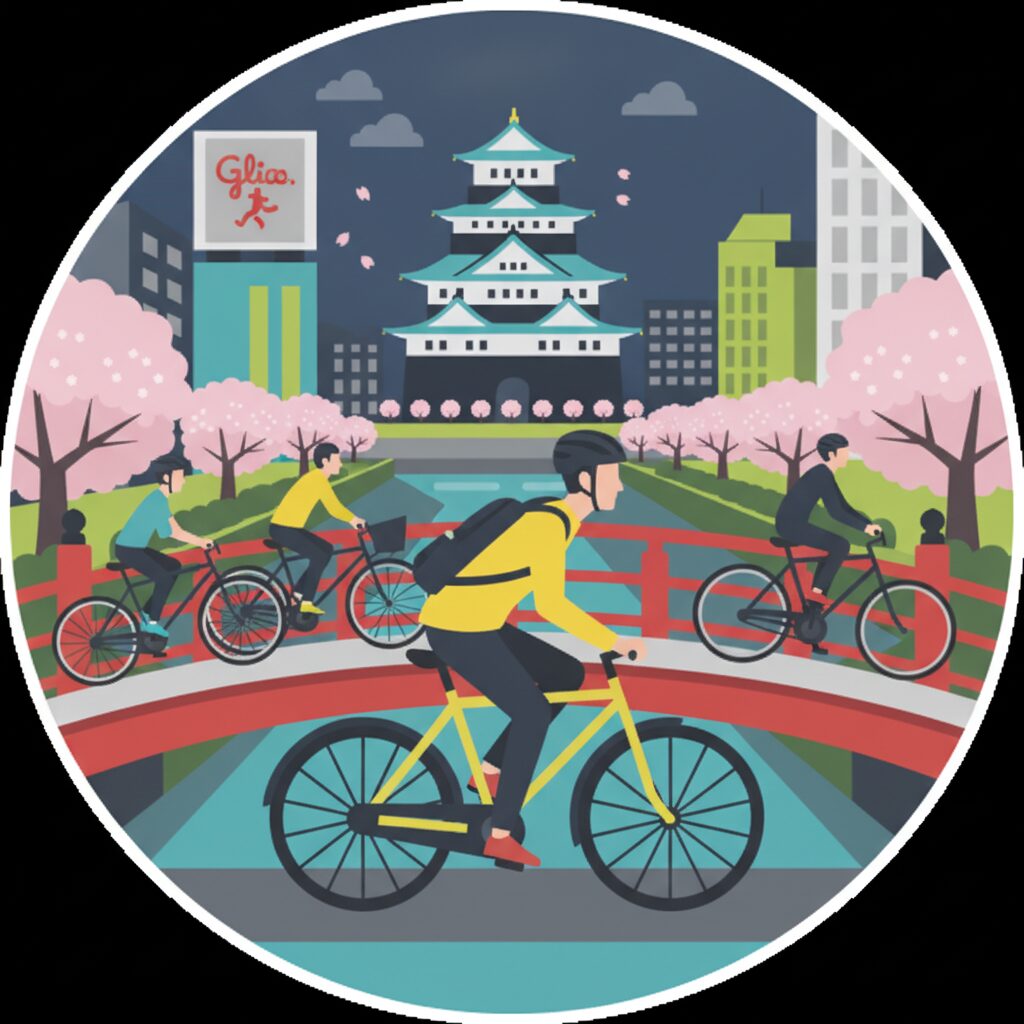
When you first arrive in Osaka, after the initial sensory overload of Dotonbori’s neon glow and the sheer scale of Umeda Station subsides, you start to notice something else. It’s a constant, silent, and wonderfully efficient flow of movement happening at street level. It’s the whisper of tires on pavement, the gentle chirin-chirin of a bell, and the sight of people from every walk of life—students in crisp uniforms, businesspeople in sharp suits, mothers with children in tow, and elderly folks heading to the market—all gliding by on two wheels. Coming from Tokyo, where life is dictated by the precise, relentless rhythm of the JR and Metro lines, this was a revelation. In Tokyo, the city’s pulse is the clatter of trains on tracks deep underground. In Osaka, the pulse is the steady, rhythmic push of pedals on the open street. It begs the question: why is the bicycle not just a convenience here, but the very engine of daily life, in a way that feels worlds apart from the capital?
The answer isn’t just about convenience; it’s woven into the city’s geography, its history, and most importantly, the pragmatic, no-nonsense mindset of its people. To understand Osaka, you have to understand its relationship with the bicycle. It’s a key that unlocks the city’s character, revealing a place built on a human scale, where efficiency is valued, but so is the freedom to live life outside the strict confines of a train timetable. Forget the tourist maps for a moment; the real map of Osaka is an invisible network of bike paths, shortcuts through quiet residential streets, and the well-worn routes to the local shotengai.
Osaka’s modern pulse is mirrored in its evolving urban fabric, where a visit to the city’s historic retro bunka jutaku offers a fascinating glimpse into the blend of tradition and ingenuity that defines everyday life.
The Lay of the Land: A City Built for Two Wheels
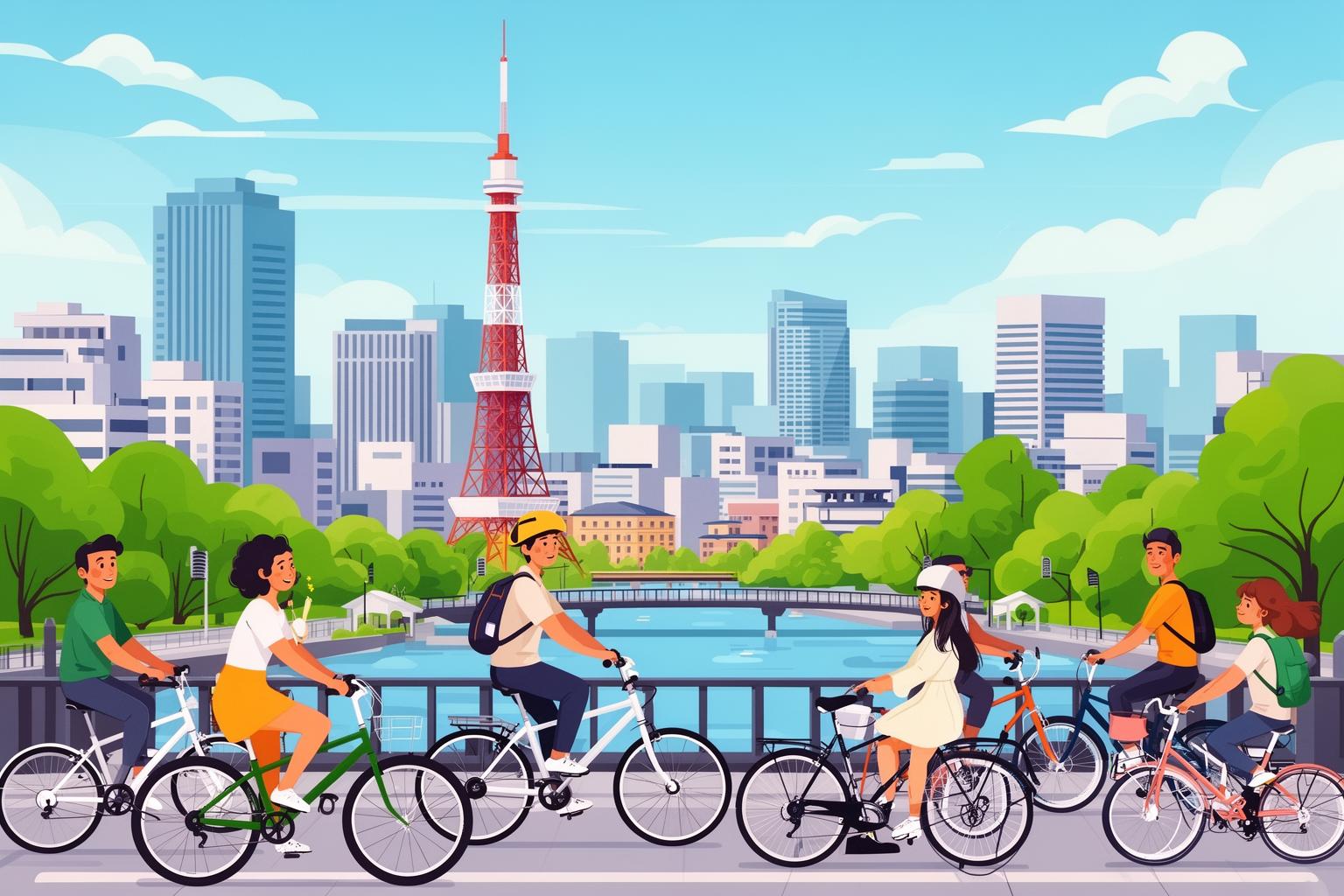
Before understanding the psychology, you first need to consider the geography. The most fundamental reason behind Osaka’s bicycle dominance is strikingly simple: it’s flat. Incredibly, consistently flat. The city stretches across the Osaka Plain, an alluvial area shaped by rivers like the Yodo and Yamato. Unlike hilly neighbors such as Kobe or certain steep parts of Tokyo, getting around Osaka demands very little effort. Cycling here isn’t a sport; it’s a smooth, easy glide.
This geographical advantage has deeply influenced the city’s urban layout. Osaka is less a single giant metropolis and more a sprawling collection of distinct, closely-knit neighborhoods. Each neighborhood is its own world, usually centered around a shotengai, or covered shopping arcade. These lively streets are the core of local life. Within a ten-minute bike ride from your home, you can almost always find a supermarket, a greengrocer, a butcher, a post office, a few clinics, and your favorite takoyaki stand. The bicycle is the ideal mode of transport for this lifestyle. It’s faster than walking but still offers the same level of closeness and spontaneity. You can easily stop at a vegetable sale, chat with the tofu shop owner, or make a quick detour to the dry cleaners. A car is cumbersome on these narrow roads, and the train is too much for a one-kilometer trip to the butcher. The bike is the perfect, elegant solution, designed specifically for the city’s very rhythm.
This creates a different daily flow compared to Tokyo. In Tokyo, your routine often revolves around major train hubs. You commute from home to a huge commercial center like Shinjuku or Shibuya. Life unfolds between stations. In Osaka, life happens within the neighborhood. The bike reinforces this, boosting local economies and nurturing a strong sense of community. It solves the “last mile” problem common in many transit-centered cities. Even if you use the train, your journey doesn’t end on the platform. It finishes when you unlock your trusty bike from the station’s parking area and pedal the final five minutes home, gliding along familiar streets and greeting familiar faces. It’s a smooth transition from public transit to personal freedom.
The Osaka Mindset on Two Wheels
If geography presents the chance, it’s the Osakan character that takes hold of it. The city’s culture is famously pragmatic, grounded, and fiercely independent. This spirit is perfectly captured in their affection for the bicycle.
Pragmatism and Pennies: The Art of Being ‘Kechi’
There’s a well-known concept in Osaka called kechi. Outsiders often translate it as “stingy” or “cheap,” but that’s a major oversimplification. A more accurate translation would be “aggressively practical” or “averse to waste.” An Osakan isn’t trying to be cheap; they aim to get the absolute best value for their money and effort. Spending money on something when there’s a perfectly good, cheaper alternative is considered, frankly, a bit foolish.
Now, consider the economics of a bicycle. You can get a sturdy, second-hand mamachari (more on this urban marvel later) for under 10,000 yen. The maintenance costs are almost nonexistent. Compare that to even the shortest subway ride, which costs at least 190 yen. If you make that trip twice daily, five days a week, that amounts to nearly 4,000 yen a month, or 48,000 yen a year. To an Osakan, spending that much on getting somewhere you could reach in ten minutes by your own effort is madness. The bike is more than a purchase; it’s a long-term investment in financial wisdom. This isn’t poverty; it’s a philosophy. It’s the same mindset that leads people to hunt for bargains at the Kuromon Market or negotiate prices with a grin. It’s about being smart with your resources, and nothing is smarter than free transportation.
A Different Rhythm: Freedom from the Timetable
Life in Tokyo is a masterclass in time management, choreographed by the world’s most punctual public transit system. Your day is divided by train schedules. You leave home at 8:12 to catch the 8:17 express. You plan meetings based on your friends’ train arrivals. It’s a life of remarkable efficiency but also subtle, constant pressure. You are always beholden to the clock at the station.
Osaka’s bicycle culture offers liberation from this tyranny of the timetable. It encourages a more fluid, spontaneous, and ultimately more human pace. You leave when you feel like it. You might take a scenic detour along the river if the weather is lovely. You stop on a whim because a new bakery has opened. This freedom aligns perfectly with the Osakan temperament, which tends to be more adaptable and less rigidly formal than Tokyo’s. The bicycle empowers the individual. It puts you in control of your schedule and your journey. This subtle change in mindset is profound. It transforms the way you engage with your surroundings, turning travel from a stressful necessity into an enjoyable, integrated part of your day.
The Mamachari Brigade: Family Life in Motion
Nowhere is the bicycle’s role more crucial than in the daily life of an Osaka family. The star here is the mamachari—literally “mom’s chariot.” This isn’t a sleek, lightweight road bike. It’s the Swiss Army knife of city transport. A typical mamachari has a low, step-through frame for easy mounting, a sturdy kickstand, a built-in wheel lock, a dynamo headlight, and, most importantly, huge cargo space. A large basket is standard on the front, but the real wonder comes with the addition of child seats. It’s common to see a mamachari equipped with a seat on the handlebars and another on the rear rack. These often come with elaborate transparent rain and wind shields, creating small, mobile cocoons for kids.
Seeing a mother or father navigating the streets with two children and a basket full of groceries is an iconic image of Osaka life. The mamachari is the family minivan, school bus, and shopping cart rolled into one. It transports kids to daycare, then the park, then the supermarket, and back home again. It’s a testament to the incredible resilience and practicality of Osaka parents. It enables families to function efficiently and affordably in a dense urban setting without incurring the cost and hassle of owning a car. It is, simply put, the unsung hero of the Osaka neighborhood.
Navigating the Unspoken Rules of the Road
For a newcomer, the sheer number of bicycles can feel overwhelming. Yet beneath the surface, there is a fluid, unspoken system of rules that keeps the city flowing smoothly. Grasping this is essential to fitting in.
The Sidewalk Gray Zone
One of the first things foreigners notice is bicycles on the sidewalk. This can be surprising if you come from a country where this is strictly prohibited. In Japan, the official rule states that bicycles belong on the road, with some exceptions allowing them on designated sidewalks. In Osaka, the reality is far more flexible. It’s a dance of mutual awareness. Generally, slower riders—especially mamacharis carrying children or elderly cyclists—stick to the sidewalks. They move at a pedestrian-like pace and are expected to yield to people on foot. Faster, more confident cyclists take to the street, riding on the left side with the flow of traffic. The key is predictability and awareness. You don’t weave aggressively through pedestrians, and you use your bell—a gentle chirin-chirin—not as a demand, but as a polite “excuse me, coming through.” It’s a system based on mutual, unspoken trust rather than strict regulation.
The Art of Bicycle Parking
With millions of bikes, where do they all go? Parking is an adventure in itself. Near every train station, you’ll find large, multi-story bicycle parking garages (churinjo). For a small fee of about 150 yen per day, you get a secure, designated spot. These are essential for commuters. For shorter stops, like at supermarkets or local shops, bikes are lined up neatly on the sidewalk. This is generally accepted, as long as you aren’t blocking entrances or obstructing pedestrian flow.
The real problem arises with illegal parking in high-traffic areas, especially around major stations. Leave your bike in an unauthorized spot, and you might return to find a dreaded warning sticker—usually a bright yellow or silver notice—attached to your seat or frame. Ignore it, and your bike will eventually be impounded. Reclaiming it involves a trip to a distant impound lot and paying a fine of a few thousand yen. It’s a rite of passage for many new residents and a quick lesson in the city’s underlying order. Learning the local parking etiquette is just as important as mastering how to navigate the streets.
How Bicycles Shape Osaka’s Social Fabric
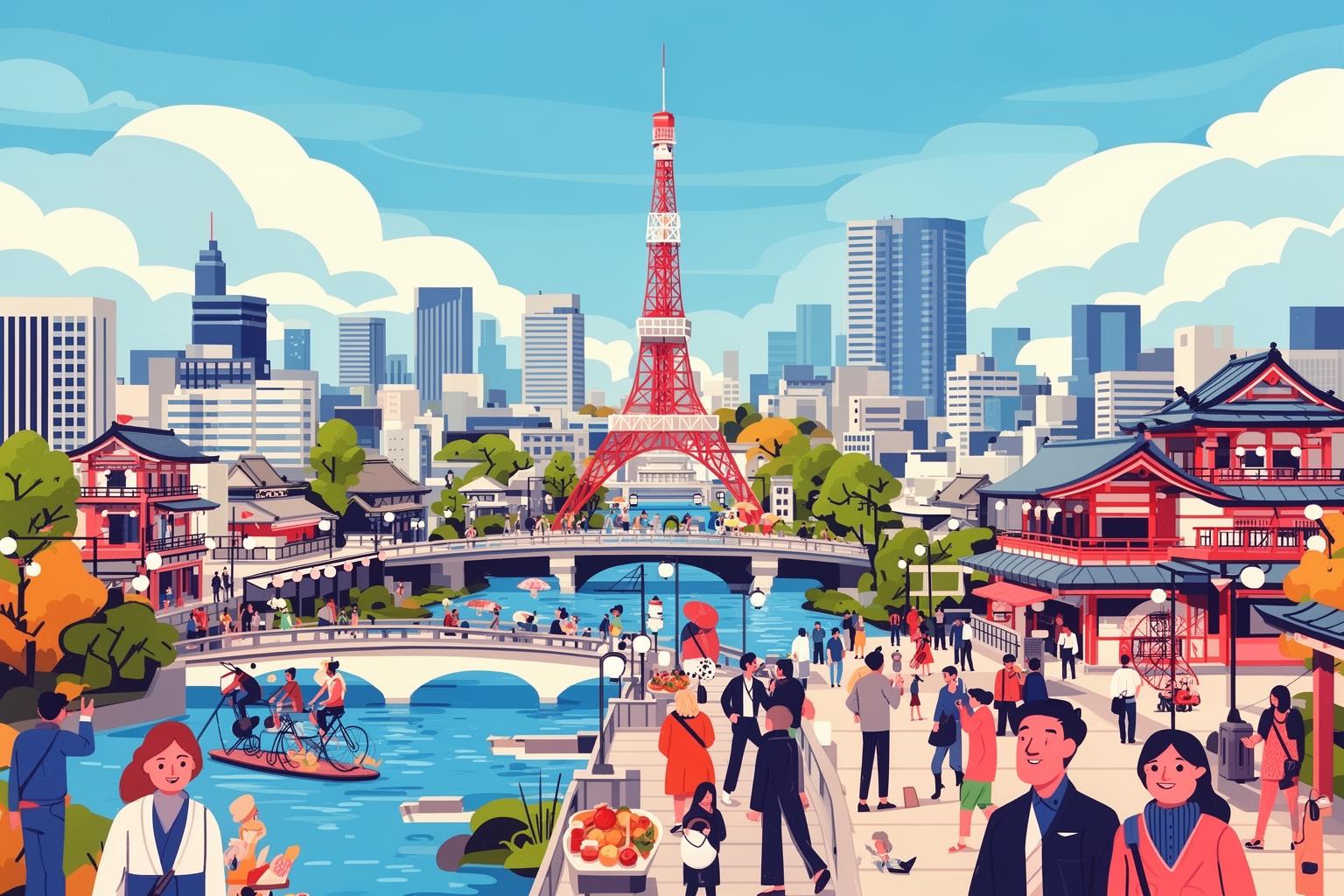
The combined presence of all these bicycles goes beyond merely being a transportation option. It fundamentally influences the city’s social atmosphere, making it feel more connected and accessible.
Community Visibility and Connection
When you travel by bike, you engage with your community in a way that is impossible on a train. You aren’t enclosed in a metal tube, absorbed in your phone. Instead, you’re out in the open, moving at a human pace. You observe the changing seasons in the park, notice new decorations in shop windows, and catch the scents of your neighbors’ cooking. You make eye contact with people. You nod to the elderly man who is always sweeping outside his store. You become a visible, active part of the neighborhood fabric. These everyday, casual interactions build a sense of familiarity and community. They break down the anonymity of city life. You aren’t just a resident of an address; you’re the person on the blue bike who always waves to the cat at the tobacco shop.
This creates a remarkable contrast in scale. Tokyo can feel vast and overwhelming, a web of powerful destinations connected by an invisible subway network. Osaka, when viewed by bicycle, becomes a collection of welcoming, interconnected villages. Your mental map of the city isn’t a transit diagram; it’s a vibrant landscape of backstreets, landmarks, and familiar faces. The bike doesn’t just cover distance; it tames the urban environment, making it feel like home.
In the end, the bicycle is the great equalizer. On Osaka’s streets, you see everyone riding. It’s not just a mode of transport for students or the eco-conscious. It’s for everyone. Watching a salaryman in full suit happily pedaling his single-speed to work highlights the city’s unpretentious, down-to-earth nature. In a world full of status symbols, the simple, practical bicycle remains a symbol of Osaka’s core values: common sense, community, and the freedom to move at your own pace. If you truly want to understand what makes Osaka tick, don’t just ride the Midosuji Line. Borrow a bike, pick a direction, and start pedaling. You’ll soon discover the real rhythm of the city—a rhythm of life lived on two wheels.