
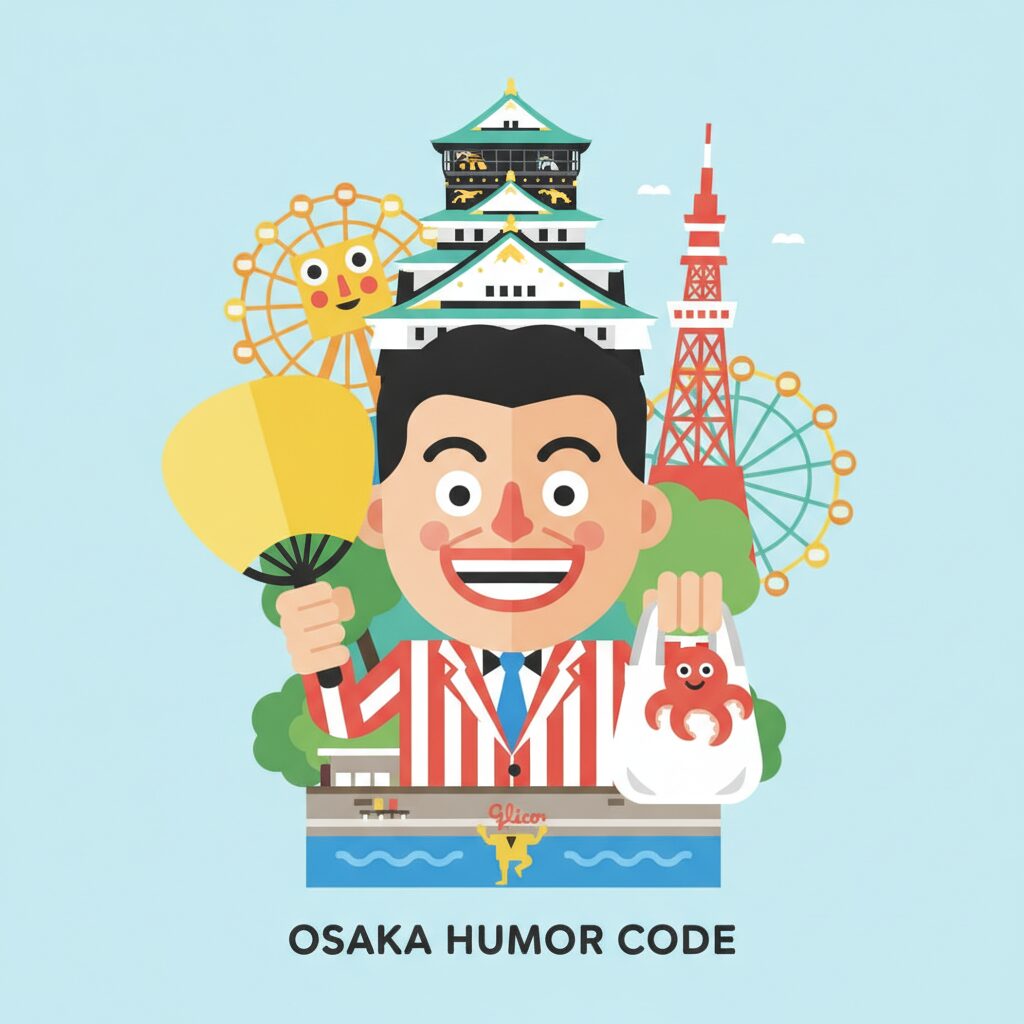
Step off the Shinkansen in Osaka, and the first thing you notice isn’t a landmark. It’s the sound. The city operates at a different frequency, a decibel level tuned to boisterous laughter and conversations that spill out from storefronts onto the pavement. For many foreigners accustomed to the more measured, formal cadence of Tokyo, the initial immersion into Osaka life can feel like a cultural jolt. You might be standing in a queue when the elderly woman behind you taps your shoulder, points at your jacket, and declares, “That’s a nice coat, but the color makes you look pale. You should wear red!” In Tokyo, such a comment from a stranger would be almost unthinkable. In Osaka, it’s Tuesday. This unfiltered directness, often delivered with a mischievous grin, is the city’s most misunderstood and most defining characteristic. It’s a social language built on a foundation of humor, a system where a sharp jab is a sign of affection and a deadpan joke is a form of welcome. To live in Osaka is to learn the grammar of this paradox: how a city can be so breathtakingly blunt yet so incredibly warm. It’s not about being rude; it’s about a different definition of politeness, one forged not in the halls of samurai government but in the bustling markets of Japan’s historical economic engine. Understanding this dynamic is the key to unlocking the true soul of the city, a place where what you see is what you get, and what you hear is probably the prelude to a punchline.
For a deeper look into how these uninhibited exchanges shape local bonds, exploring the kairanban system can reveal even more about Osaka’s distinctive social fabric.
The Historical Roots of Osaka’s Merchant Mentality
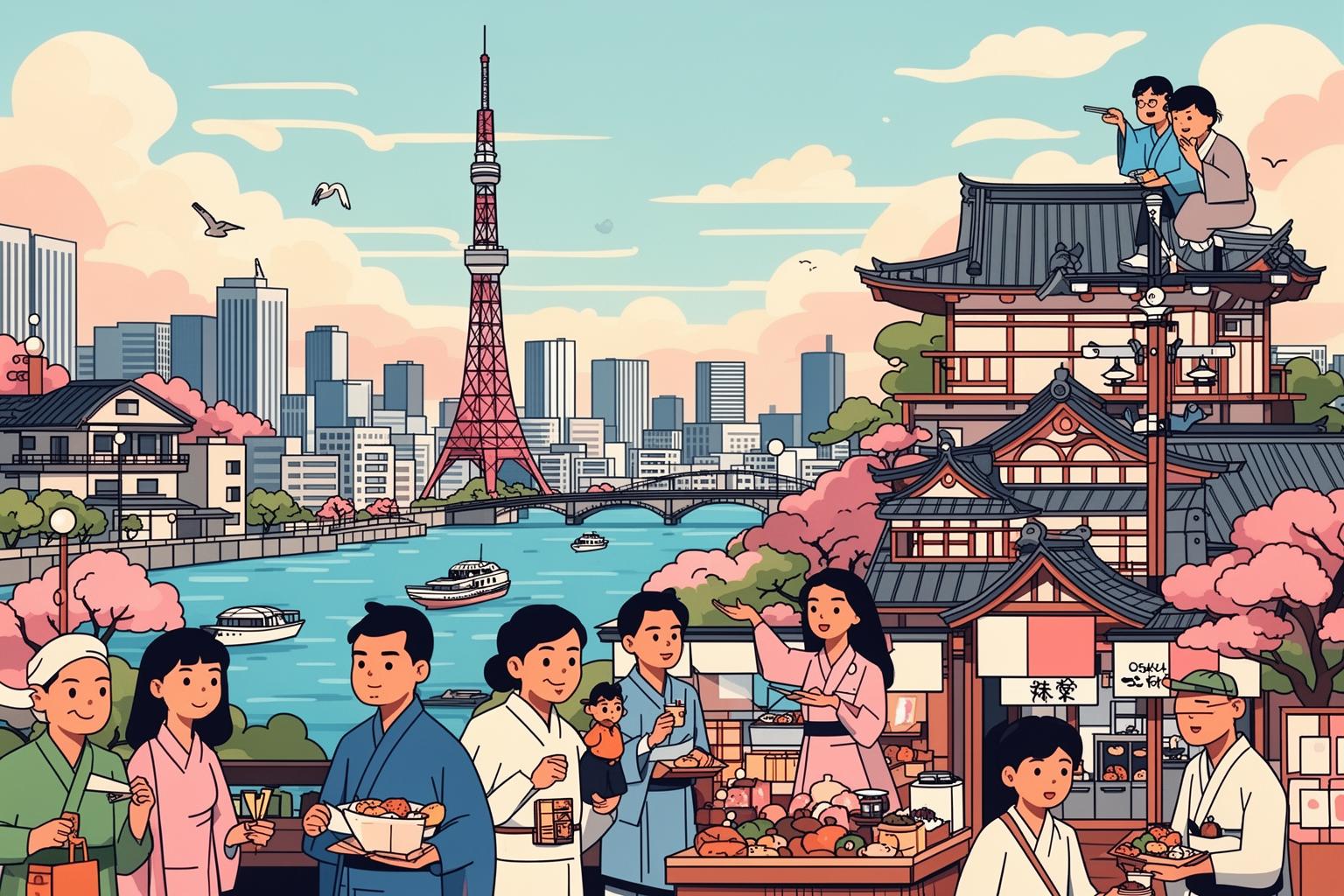
To understand why an Osakan might feel at ease commenting on your complexion, you need to look back centuries. The city’s character was shaped not by warriors and courtiers, but by merchants and artisans. This fundamental difference in origins is the key cultural divide between Osaka and its eastern rival, Tokyo.
A City Built on Commerce, Not Ceremony
While Edo (modern-day Tokyo) served as the political center of the Tokugawa shogunate—a strict, hierarchical society ruled by the stoic values of the samurai—Osaka was the nation’s lively warehouse, famously called Tenka no Daidokoro, or “The Nation’s Kitchen.” Here, rice, sake, and goods from all over Japan were collected, stored, and traded. Life wasn’t governed by protocol and face-saving; it was propelled by the relentless demands of commerce. For an Osaka merchant, or akindo, time equalled money. Lengthy pleasantries and vague, indirect speech were seen as inefficiencies. Negotiations required clarity. Deals demanded direct questions and straightforward answers. This pragmatism became woven into the city’s essence. Directness wasn’t a social flaw; it was a professional advantage. Understanding this historical background is essential for any foreigner navigating daily interactions. When a shopkeeper at Kuromon Market bluntly tells you the other fish isn’t as fresh as the one he recommends, he isn’t criticizing your judgment. He’s following a centuries-old principle of honest, efficient trade. He treats you not as a fragile guest to be pampered, but as a savvy customer who values good advice.
The Birth of the Akindo Spirit
The akindo spirit is a complex mixture of shrewdness, resourcefulness, and a near-religious commitment to securing good value. The classic Osaka greeting, Mokarimakka? (“Making a profit?”), and its typical reply, Bochi bochi denna (“So-so”), capture this worldview. Commerce is the foundation of social interaction. This perspective explains why topics taboo elsewhere in Japan, especially money, are openly discussed in Osaka. Asking “How much did that cost?” isn’t an intrusive question about your finances. It’s a practical inquiry born from the akindo spirit. The underlying questions are: Did you get a good deal? Where did you buy it? Can I find a similar bargain? It’s a way of connecting through the shared pursuit of value. This spirit nurtures a strong dislike for pretense. Osakans prize authenticity and can spot insincerity from afar. Putting on airs or being overly formal often meets with suspicion or, more commonly, a joke intended to bring you back down to earth. This is a city that favors the genuine over the polished, the real over the ideal.
Deconstructing Osaka Humor: It’s More Than Just Jokes
Humor in Osaka is more than just entertainment; it acts as the essential lubricant for all social interactions. It serves as a means to build rapport, offer criticism, express affection, and ease tension. Missing the joke in Osaka means missing the entire point of the conversation. The whole social fabric is woven around a comedic framework that infiltrates every aspect of society.
Tsukkomi and Boke: The Rhythm of Conversation
At the core of Osaka humor is manzai, a traditional form of stand-up comedy performed by a comedic pair. The boke plays the fool, making absurd, illogical, or silly remarks. The tsukkomi acts as the straight man, promptly correcting the boke, often with a sharp comeback or a playful jab. While professional manzai performances are staged in theaters across Namba, the real entertainment happens on the streets. This boke-tsukkomi exchange forms the basic rhythm of everyday conversations. Everyone is expected to master one or both roles. The boke sets up the joke; the tsukkomi finishes it. For foreigners, this can be perplexing. For example, your Osakan friend might gaze at a cloudy sky and deadpan, “Perfect day for a barbecue.” That’s the boke. If you simply agree or appear puzzled, the flow breaks. The proper response is the tsukkomi: “What are you talking about? Are you cooking the food in the rain?” This isn’t a quarrel; it’s a duet. The tsukkomi signals you’re paying attention, understanding the game, and engaging. Failing to return the tsukkomi is akin to leaving a high-five hanging— a small social breach.
Self-Deprecation as a Social Tool
Self-deprecation is another vital tool in the Osakan social toolkit. People readily poke fun at themselves to ease tension and make others feel comfortable. An Osakan business owner might open a meeting by saying, “Welcome to our tiny, messy office. We’re not as fancy as those folks in Tokyo!” This isn’t a genuine appeal for sympathy but a strategic way to disarm the listener, show humility, and demonstrate a lack of pretension. It cultivates an environment where others feel safe to be imperfect as well. For foreigners struggling with the language, this approach is a blessing. Admitting your own mistakes with humor—“I tried ordering coffee and somehow ended up with corn soup”—elicits knowing smiles and encouragement. This kind of vulnerability is highly valued in Osaka’s social dynamics, more so than stoic perfection.
The “Why” Behind the Laughter
Why is humor so deeply ingrained? It ultimately stems from the merchant culture. In a crowded, competitive marketplace, forging trust and rapport quickly was crucial for survival. Humor acts as the fastest route to human connection. It breaks down barriers, levels hierarchies, and transforms a transactional exchange into a personal interaction. When an old man at a standing bar teases you about your favorite baseball team, he’s doing more than making small talk. He’s gauging: “Can you take a joke? Are you one of us?” Responding with a clever comeback solidifies the bond far better than polite, formal conversation. The blunt remark wrapped in humor serves two purposes: it conveys the point efficiently, while the comedy softens the impact and reframes the exchange as playful and equal. That woman commenting on your coat wasn’t being mean; she was reaching out, using the only social tool she has: candid observation paired with an unspoken invitation to laugh together.
Navigating the Line Between Directness and Rudeness
For many newcomers, the greatest challenge is adjusting their own social compass. When is a comment just an “Osaka-style” icebreaker, and when is it truly rude? The boundaries are unclear and highly dependent on context, but there are recognizable patterns that can be learned.
“How Much Did That Cost?” – The Lack of Taboos
As noted, questions about money are frequent. A coworker might openly ask about your salary, or a neighbor might inquire about your monthly rent. In most Western cultures, and in much of Japan, this would be a serious breach of etiquette. In Osaka, however, it’s often viewed as a straightforward, practical matter. Life is costly, and everyone is trying to get by. Sharing cost information is seen as a communal act of mutual support. Your response helps your neighbor understand the local rental market. Knowing your salary helps your coworker assess their own position within the company. This comes from a collectivist, pragmatic mindset where sharing information benefits the group. The intent is rarely malicious or judgmental. The best approach is to answer honestly if you feel comfortable, or deflect with a humorous, vague reply if you don’t: “Enough to eat, but not enough to buy a castle!”
The Structure of an Osaka Compliment
Compliments in Osaka can often resemble insults. This is the art of the negi-home (a blend of haggling and praising). It’s a backhanded compliment that both acknowledges something positive and playfully points out a perceived flaw or room for a better deal. For instance: “That’s a beautiful new bicycle! It must have been expensive. You know, you probably could have gotten it 20% cheaper if you’d gone to that little shop in Tennoji.” To a foreign ear, this sounds like: “You overpaid, you fool.” The Osakan intention, however, is much more nuanced. It communicates: “I noticed your new bike and I approve (praise), but I also want to show my local knowledge and commitment to value, which is central to my identity, and I want to engage with you on this practical level (haggling spirit).” Responding defensively misses the point. The best response is to play along: “Ah, you’re probably right! Next time, I’m taking you with me.”
When Is It Truly Rude?
Despite the relaxed communication style, boundaries do exist. Osakans, like anyone else, dislike genuine malice. The key difference almost always lies in tone and context. Is the comment delivered with a smile? Is there a playful sparkle in the person’s eye? Is it happening in a casual, social setting? If yes, it’s almost certainly a joke. True rudeness lacks humor. It’s a flat, cutting remark without warmth. Insulting someone’s core character, their family, or their professional competence with real contempt is unacceptable. The social contract of Osaka humor requires no real desire to cause pain. The teasing is a performance, a shared fiction both parties understand. When the playfulness disappears, that’s when a boundary has been crossed.
Osaka vs. Tokyo: A Tale of Two Communication Styles
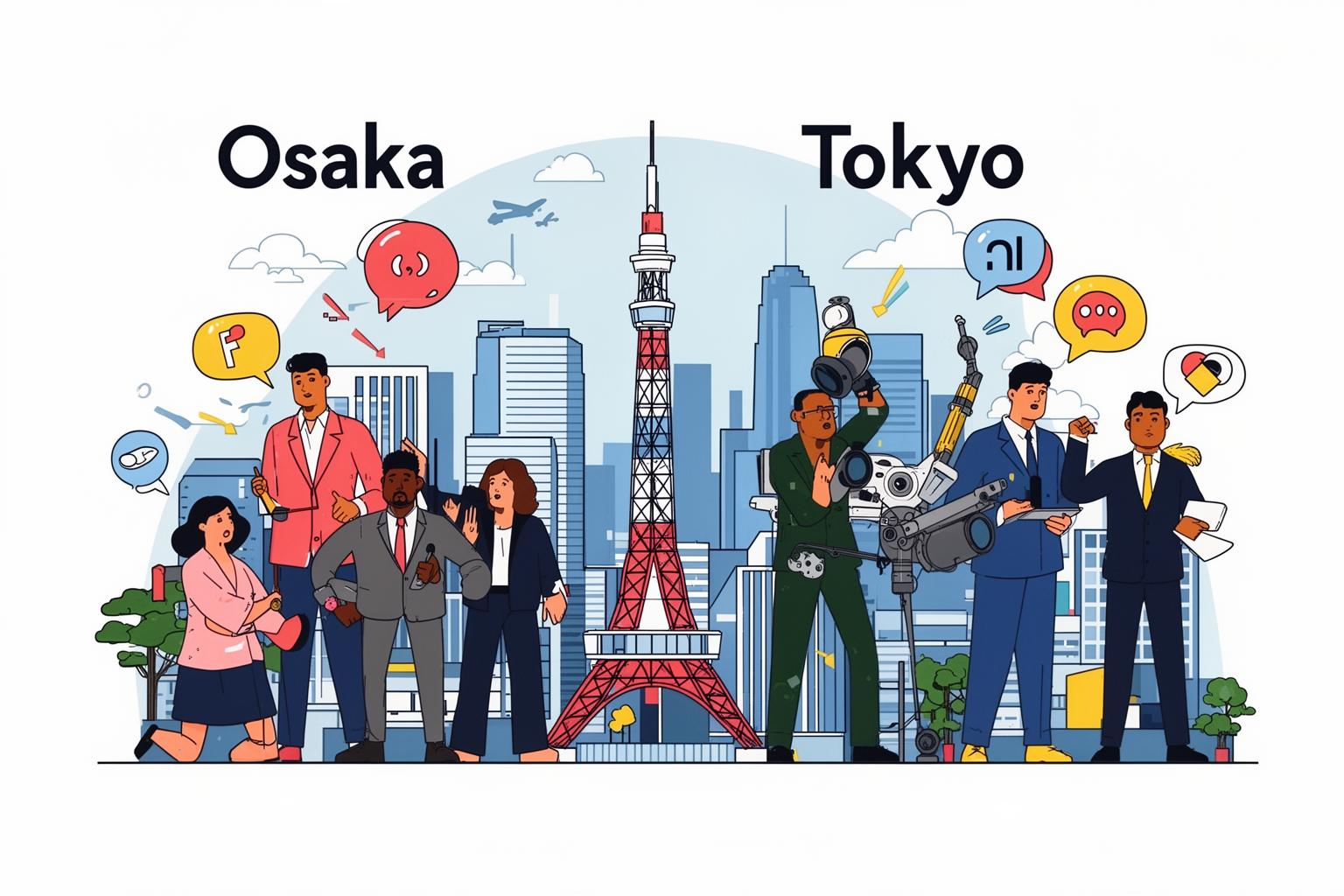
The contrast with Tokyo offers the clearest perspective to understand Osaka’s distinctive social environment. Although both are Japanese cities, their styles of interpersonal communication can seem worlds apart.
Honne and Tatemae on Distinct Wavelengths
The Japanese concepts of honne (one’s true feelings) and tatemae (the public facade) are essential for grasping social dynamics. In Tokyo, maintaining social harmony (wa) is paramount, often resulting in a wide gap between honne and tatemae. People excel at being indirect, requiring you to read between the lines and catch subtle hints. A phrase like “That’s an interesting idea, we should consider it” frequently means “That’s a terrible idea, and we won’t discuss it again.” In Osaka, the divide between honne and tatemae is much narrower. People tend to express what they really think more openly. Their tatemae is a thinner veil, often laced with humor. Instead of saying “we should consider it,” an Osakan might simply laugh and say, “That’ll never work! Are you crazy?” It can be surprising at first, but many foreigners come to value the straightforwardness. In Osaka, you seldom have to wonder where you stand.
Reading the Air vs. Making the Air
Life in Tokyo frequently centers on the skill of kuuki wo yomu, or “reading the air.” This means sensing the unspoken social consensus in a setting and acting accordingly. It is a passive, receptive ability where you align with the prevailing mood. In contrast, Osaka often emphasizes kuuki wo tsukuru—“creating the air.” Osakans actively shape their social surroundings. If a room feels too quiet or rigid, someone will inevitably break the silence with a loud remark or a joke. They bring energy into a space instead of merely reflecting the existing atmosphere. Take a crowded elevator as an example. In Tokyo, a deep, almost reverent silence usually prevails. In Osaka, it’s common for a stranger to initiate conversation, comment on someone’s groceries, or joke about the elevator’s slow pace, creating a brief, shared moment of community.
Practical Advice for Daily Life
Adapting to Osaka’s communication style involves unlearning old habits and relearning new ones. It means letting go of formal politeness and embracing a more direct, playful way of engaging.
How to Respond and Participate
First and foremost, develop a thicker skin. The first comment that seems like a personal attack is usually an invitation to join the conversation. Don’t take it to heart. Next, familiarize yourself with the basics of the boke-tsukkomi routine. You don’t have to be a professional comedian. When someone makes an obvious boke, a simple, exasperated “Nande ya nen!” (“Why?!” or “No way!”) serves as the perfect tsukkomi. It shows you’re part of the joke. Third, embrace self-deprecating humor. If you slip up, be the first to laugh at yourself, and locals will warm to you immediately. Finally, when you get a blunt comment, pause and look for the underlying kindness. The obachan who tells you that you look thin and should eat more isn’t being critical; she’s showing a maternal kind of care. And be sure to accept the candy she is bound to offer afterward.
Where You’ll See This in Action
The vibrant theater of Osaka life is on full display in its public spaces. Spend an afternoon at the Tenjinbashisuji Shotengai, Japan’s longest shopping arcade. Listen to the lively banter between shopkeepers and customers—it’s a crash course in Osaka communication. Prices are negotiated, jokes fly, and unsolicited advice is freely shared. Visit a tachinomi (standing bar) in the evening, and you’ll see strangers from all walks of life—salarymen, construction workers, students—laughing and debating like old friends, their conversations fueled by cheap beer and a mutual grasp of social norms. Even on the subway, the quiet of the Tokyo Metro gives way to a low murmur of chatter and occasional bursts of laughter. This is the soundtrack of a city that refuses to stay silent.
Ultimately, Osaka’s directness and humor are two sides of the same cultural coin. They arise from a city founded on practicality, efficiency, and a strong desire for genuine human connection. This social style can be shocking to outsiders, as it asks you to be both the butt of the joke and the one who dishes out the punchline. The learning curve can be steep, requiring you to set aside the subtle indirectness often linked to Japan. But for those who persist, the payoff is huge. You become part of a community that is straightforward, endlessly amusing, and refreshingly sincere. In Osaka, you always know where you stand, and a good friend is only a clever insult away.








