
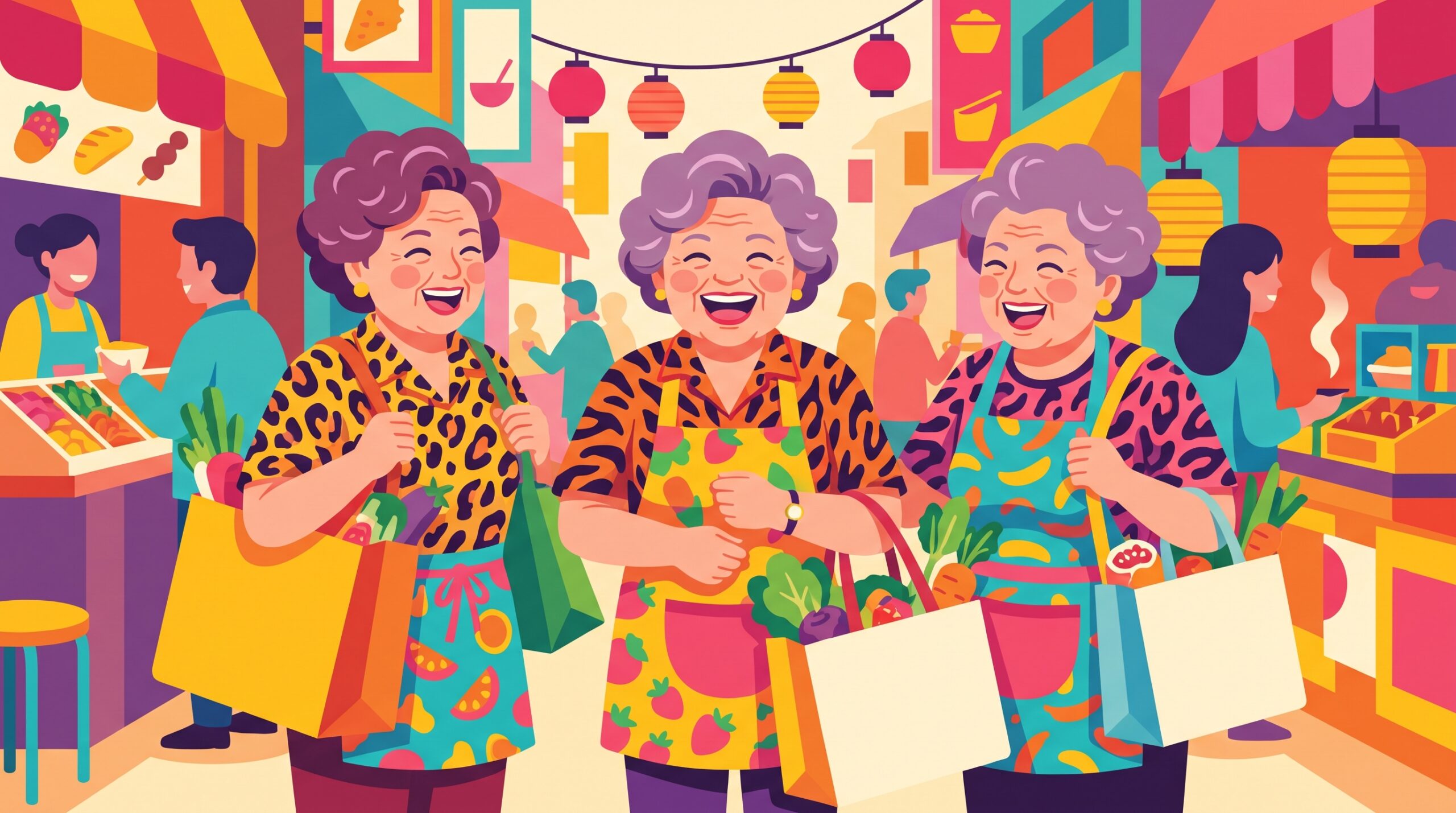
Osaka is a city that breathes. It sweats. It shouts across the street. You step off the Shinkansen from Tokyo, and the atmosphere shifts immediately. The sterile, quiet harmony of the capital dissolves into something intensely raw and deeply kinetic. Voices echo louder against the concrete. The colors of the storefronts scream for your attention. People walk faster, yet they stubbornly linger longer in conversation. And reigning supreme over this vibrant, chaotic ecosystem is a figure you have undoubtedly heard of long before you unpacked your bags. She is the Osaka Obachan. To the uninitiated foreign resident, she first appears as a brilliant, baffling caricature. She is a meme wrapped tightly in leopard print, furiously pedaling a bicycle with a sun-blocking parasol bolted to the handlebars. Television variety shows often deploy her as a punchline. Souvenir shops along Dotonbori sell socks, keychains, and snacks bearing her fierce, comedic likeness. Yet, dismissing her as mere local color is a profound and fundamental mistake. As a British historian who has spent years mapping the socio-cultural topography of Japan, attempting to translate its historical heritage into practical reality for newcomers, I can assure you that the Obachan is not a mascot. She is an institution. She is the matriarchal anchor of a metropolis that aggressively refuses to adopt the cold, sanitized anonymity of modern urban life. Understanding her means finally decoding how Osaka functions at street level. It requires looking past the neon animal prints to see the invisible social contracts that keep this ancient merchant city thriving in the twenty-first century. If you are trying to build a life here, your integration depends not on reading guidebooks, but on understanding the women who truly run the neighborhoods.
Beyond the Leopard Print: The True Identity of the Osaka Obachan
The ‘Ame-chan’ Ritual as a Social Icebreaker
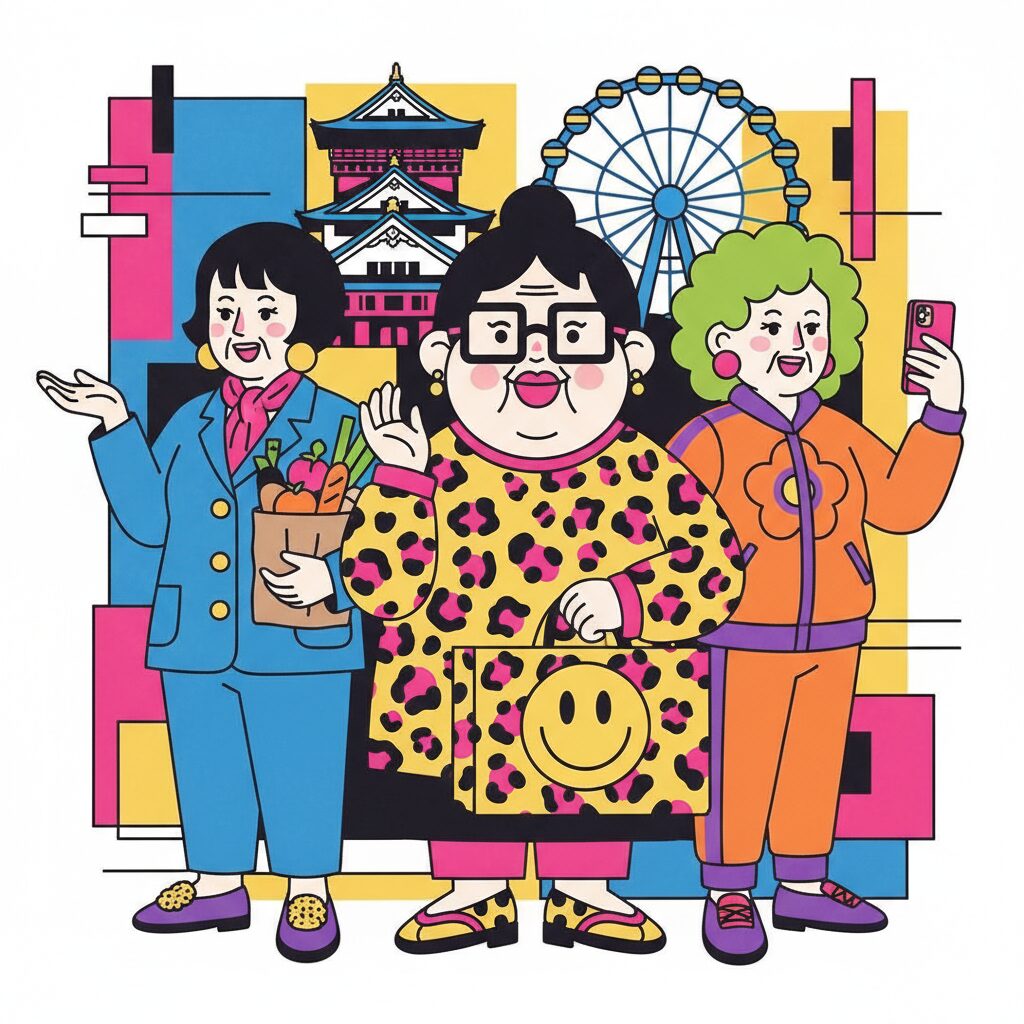
Expatriates and new foreign residents often have their very first genuine encounter with this matriarch on the rattling carriages of the Midosuji subway line or while sitting on a worn park bench. You sit quietly, minding your own business. Perhaps you let out a dry cough. Perhaps you just look exhausted after a long shift. Suddenly, an arm reaches directly into your peripheral vision. Resting in the center of an open palm is a single, brightly colored hard candy. This is the sacred, unwritten ritual of the Ame-chan. First, you must notice the linguistic suffix. In standard, textbook Japanese, a piece of candy is simply called ‘ame’. But in the Osaka dialect, it is vividly personified. It is elevated with the affectionate, diminutive ‘chan’ suffix, instantly transforming a cheap, mass-produced sugary treat into a tiny entity full of goodwill. The Ame-chan is never merely a piece of candy. It acts as a highly effective diplomatic tool. In cities defined by strict, quiet harmony, strangers never invade each other’s personal space under any circumstances. Tokyo operates on a complex system of mutual non-interference. You don’t look at me, I don’t look at you, and together we maintain the pristine, silent peace of the metropolis. Osaka completely rejects this cold premise. Here, silence between two people in close proximity is seen not as polite respect, but as an unnatural, uncomfortable vacuum that must be filled. The Ame-chan brilliantly bridges the daunting gap between two strangers. It is an icebreaker that demands absolutely no effort or awkward small talk. By simply offering the candy, the Obachan initiates a meaningful micro-transaction of civic care. She silently declares: I see you, you exist in my space, and we share this brief moment in time. For a foreigner struggling with the deep isolation that often accompanies expatriate life in Japan, this tiny, unexpected gesture carries enormous psychological significance. It shatters the invisible glass walls of urban isolation instantly.
Loud Fashion as a Declaration of Presence
We must inevitably address the wardrobe. The animal print blouses. The enormous tiger faces roaring across oversized sweaters. The brightly dyed neon purple hair. The sparkling rhinestones catching the afternoon sun. To the Western eye, and indeed to the conservative Tokyo perspective, this explosive sartorial display appears completely at odds with the minimalist, subdued aesthetic commonly associated with traditional Japanese culture. You might wonder why she wears it. Is it merely a lack of taste? The answer is far deeper, firmly rooted in urban sociology and historical defiance. In traditional Japanese social structures, an aging woman is historically expected to slowly fade into the background. She is supposed to transition into a quiet, unassuming grandmother, blending seamlessly into the muted, earthy tones of modesty. The Osaka Obachan aggressively refuses to disappear. Her fashion is a deliberate, joyful rebellion against societal invisibility. It is a loud declaration of physical and cultural presence. By wearing a golden tiger on her chest, she psychologically adopts the fierce, unapologetic energy of the beast itself. Moreover, this bold aesthetic has deep historical roots in Osaka’s post-war textile booms in areas like Semba. The city was a powerful manufacturing hub, a gritty place where bold, inexpensive fabrics were produced and enthusiastically sold in bustling street markets. This fashion remains a living, walking relic of that era, a time when bargaining for flashy remnants was an everyday sport. The loud clothing serves an incredibly practical purpose today as well. It immediately signals her elevated status as a local authority figure. Just as a police uniform commands instant respect, the leopard print tells everyone on the street exactly who she is and what she is fully capable of doing. She is not a shrinking violet. She is a civic force of nature, demanding to be noticed.
The Social Glue of Osaka: 3 Vital Roles of the Obachan
Guardians of the Local ‘Shotengai’ (Shopping Arcades)
To discover the natural, vibrant habitat of the Obachan, you must leave behind the glass skyscrapers and step into the Shotengai. These long, covered shopping arcades serve as the vital vascular system of Osaka. While Tokyo has unfortunately seen many of its traditional market streets demolished to make room for shiny, ultra-modern mega-complexes, Osaka fiercely defends its retro arcades. The Shotengai is a chaotic, glorious sensory assault. Bicycles weave dangerously through dense pedestrian traffic. Vegetable vendors shout their daily bargains until they are hoarse. The heavy aroma of frying beef croquettes blends perfectly with the bitter scent of roasting green tea leaves. Standing watch over this delicate ecosystem is the Obachan. She is not merely a passive shopper; she is the ultimate patron, critic, and regulator. She knows every vendor by their first name. She knows the exact, down-to-the-yen market price of a winter daikon radish and will aggressively haggle if she senses even the slightest price discrepancy. This haggling is rarely about poverty; it stems from deeply ingrained principles. It is a vital form of social engagement, a daily jousting match that keeps the local economy sharp, competitive, and deeply human. By regularly supporting independent butchers, local bakers, and family-owned greengrocers, she single-handedly ensures the survival of small businesses against the encroaching sterile threat of massive corporate supermarket chains. She is the primary reason these traditional arcades continue to thrive while others across the country fade away. Her daily rounds keep lifeblood flowing steadily through the historic commercial arteries of the city.
The Unofficial Neighborhood Watch and Caretakers
Urban planners often cite the sociological concept of ‘eyes on the street’ to explain why certain urban neighborhoods feel remarkably safe and socially cohesive. Osaka elevates this concept to a masterful, almost overwhelming level, with the Obachan acting as the ultimate localized neighborhood watch. Her daily vigilance is constant, unblinking, yet deeply maternal. She knows the intimate rhythm of her street. She knows exactly who leaves for work at what hour, which wandering children belong to which houses, and who the new, slightly confused foreign resident is. This intense scrutiny can initially feel quite intrusive to Westerners accustomed to strict, impenetrable privacy boundaries. You might find her bluntly asking why your plastic garbage was put out on the wrong day or probing deeply personal questions about your marital status while you simply wait at a red light. But this aggressive curiosity is the very mechanism of community care. When a natural disaster strikes—such as a typhoon or an earthquake—or when someone quietly falls ill, this localized network springs into action with breathtaking, life-saving efficiency. The local Sentō, or public bathhouse, serves as her primary intelligence-gathering headquarters. Here, amid rising steam and the sound of scrubbing, crucial neighborhood information is exchanged. Health checks are unofficial but strictly conducted. If a regular patron misses a few days at the Sentō, an Obachan will march down the street and knock loudly on their door. In a rapidly aging nation where solitary deaths are a tragic and growing crisis, her sheer nosiness is quite literally a lifesaving tool. She weaves the neighborhood together with invisible threads of relentless, caring interrogation.
Enforcers of Unwritten Civic Rules
Living in Japan as a foreigner often means navigating a treacherous minefield of unwritten cultural rules. In most major Japanese cities, if you make a mistake—stand on the wrong side of the escalator or speak a bit too loudly on a crowded commuter train—locals will silently endure it. They cast their eyes downward, exuding a quiet, simmering frustration, but they never confront you directly. Social harmony must be preserved at all costs, even at the expense of personal comfort. The Osaka Obachan operates under a completely different, highly confrontational paradigm. She will tell you. If your bulky backpack is bumping someone, she will sharply tap your shoulder. If your bicycle is parked blocking the sidewalk, she will physically move it herself, muttering loudly about your total lack of civic consideration. She fearlessly acts as the ultimate enforcer of civic duty. This blunt directness often shocks newcomers, who may wrongly interpret it as hostility or xenophobia. It is absolutely not. It is, in fact, a profound act of social inclusion. By taking the time to correct you, she treats you as a permanent community member. She expects you to do better because she fully expects you to belong. In Tokyo, you are always regarded as a temporary guest, politely exempt from correction but kept at a cold distance. In Osaka, the moment an Obachan scolds you, you have been officially integrated. You are expected to learn the rhythm of the city, and she is generously taking her valuable time to rigorously educate you.
Cultural Roots: Why Osaka Needs Its Matriarchs
Merchant Culture and the Rejection of Anonymity
To fully grasp this distinctive social phenomenon, we must take a step back in history and examine the origins of the city itself. Tokyo was founded as Edo, the heavily fortified political center of the ruling samurai class. It was a tense city controlled by strict hierarchies, rigid formal protocols, and a constant, underlying fear of offending a superior, sword-wielding lord. Osaka, in contrast, developed as the undisputed kitchen of the nation. It was entirely a merchant city, governed not by inflexible samurai but by pragmatic traders, wealthy wholesalers, and shrewd market operators. In a merchant society, the rigid, silent rules of samurai etiquette are fundamentally detrimental to business. You simply cannot sell large quantities of rice or textiles if you are paralyzed by status anxiety and inflexible protocol. You must be able to speak openly to anyone. You need to be able to negotiate, charm, and build rapport instantly across class boundaries. This rich, historical legacy is permanently ingrained in the mindset of every Osaka resident. Anonymity is the sworn enemy of commerce. If no one knows you, no one trusts you, and consequently, no one will trade with you. The Obachan is the modern, leopard-print-wearing torchbearer of this ancient merchant spirit. She flatly and assertively rejects the modern global trend toward urban anonymity because, culturally, she intuitively understands that human connection is the fundamental currency of survival. Her assertive friendliness, her eager willingness to engage with complete strangers, and her loud, unapologetic laughter are all refined tools of a centuries-old trade culture that highly values open communication over silent obedience.
Honne vs. Tatemae: The Value of Radical Honesty
Anyone studying Japanese culture quickly encounters the dual concepts of Honne and Tatemae. Tatemae is the constructed facade — the polite, socially acceptable face presented to the outside world to avoid conflict and maintain surface harmony. Honne is the true feeling, the inner desire, the unvarnished and sometimes uncomfortable reality. In much of Japan, especially Tokyo, Tatemae dominates public life. It is the essential social lubricant that keeps the densely populated wheels turning smoothly without friction. Osaka, however, is famously biased toward Honne. The people here value radical, sometimes blunt honesty over polite fiction. The Obachan is the ultimate embodiment of Honne. She has no patience for pretense. Having lived through wars, devastating economic bubble bursts, and terrifying earthquakes, she understands deeply that time is short and life is fragile. So, why waste breath on pleasant lies? If a new shirt looks terrible on you, she will tell you to take it off. If a restaurant’s soup is far too salty, she will go straight to the counter and inform the chef directly. This intense dedication to truth creates a surprisingly relaxing environment for foreign residents once they adjust to the initial shock. You never have to guess what an Obachan is thinking. There’s no need to painstakingly decode layers of polite refusal or vague suggestions. The communication is entirely horizontal, direct, and startlingly clear. It is a strong, highly resilient form of socialization that prevents dangerous misunderstandings from growing in the dark.
How Travelers Can Experience and Respect This Local Culture
Where to Find the Heart of Obachan Culture (Tenjinbashisuji & Senbayashi)
If you genuinely want to escape the sanitized, crowded tourist spots of Dotonbori and the restored walls of Osaka Castle to experience this remarkable cultural force firsthand, you must venture deep into the urban core. The undeniable epicenter of this phenomenon is the Tenjinbashisuji Shopping Street. Stretching nearly three kilometers without end, it is recognized as the longest covered arcade in Japan. This street is a chaotic, beautiful, and endless tunnel of commerce, tightly packed with hundreds of small independent shops offering everything from premium matcha tea to heavily discounted leopard-print sweaters. Visit this very street on a Tuesday morning. Step back and witness the intense bargaining at the fishmongers. Listen closely to the rolling, highly melodic rhythm of the Osaka dialect echoing off the high arcade roof. Another essential, untouched sanctuary is the Senbayashi Shopping Street, located further north in Asahi Ward. This area feels even more deeply local and authentic. It is widely known throughout the Kansai region as the prime territory of the most formidable bargain hunters in the city. Here, you’ll observe matriarchal community networks operating at full throttle. Groups of older women can be easily seen lingering outside discount pharmacies, fiercely exchanging neighborhood news, blocking pedestrian traffic, and confidently owning the public space without an ounce of apology. To stroll slowly through Senbayashi is to witness a stunning masterclass in genuine civic ownership. These are not simply commercial streets; they are vast, extended living rooms.
Rules of Engagement: Saying ‘Maido’ and Accepting the Candy
Engaging with this vibrant culture demands active, willing participation. You cannot simply observe it from a safe distance behind a camera lens like an anthropologist. When you enter their domain, you must abide by their unwritten rules. First, you need to learn the word ‘Maido.’ It roughly translates as ‘every time’ or ‘always,’ but it functions fluidly as a universal merchant greeting, a casual thank you, and a vital acknowledgment of an ongoing, reciprocal relationship. When you buy a fresh croquette in the Shotengai, the vendor will invariably say ‘Maido.’ You must smile and respond with ‘Maido’ in return. It is the linguistic password to the city. Secondly, and perhaps most importantly, if you are ever offered Ame-chan, you must accept it. Never, under any circumstances, refuse the candy. Do not say you are on a strict diet. Do not awkwardly wave it away out of a misplaced, Western sense of stranger danger. Accept it warmly with both hands. Bow your head slightly in respect. Say ‘Okini,’ the traditional, deeply rooted Osaka word for thank you. Unwrap it. Eat it. By accepting the candy, you are formally embracing the social contract of the city. You are actively acknowledging their existence, their motherly care, and their unquestioned right to govern the shared public space. You are fundamentally changing your status from a transient, invisible foreigner into a recognized, integrated member of the sprawling Osaka ecosystem. The Obachan holds the literal keys to the true warmth of this vast city. She may be wrapped tightly in fake tiger fur and speak at a volume that makes your ears ring, but she is the undisputed guardian of Osaka’s soul. Respect her, engage with her sincerely, and the entire city will eagerly open its doors to you.








