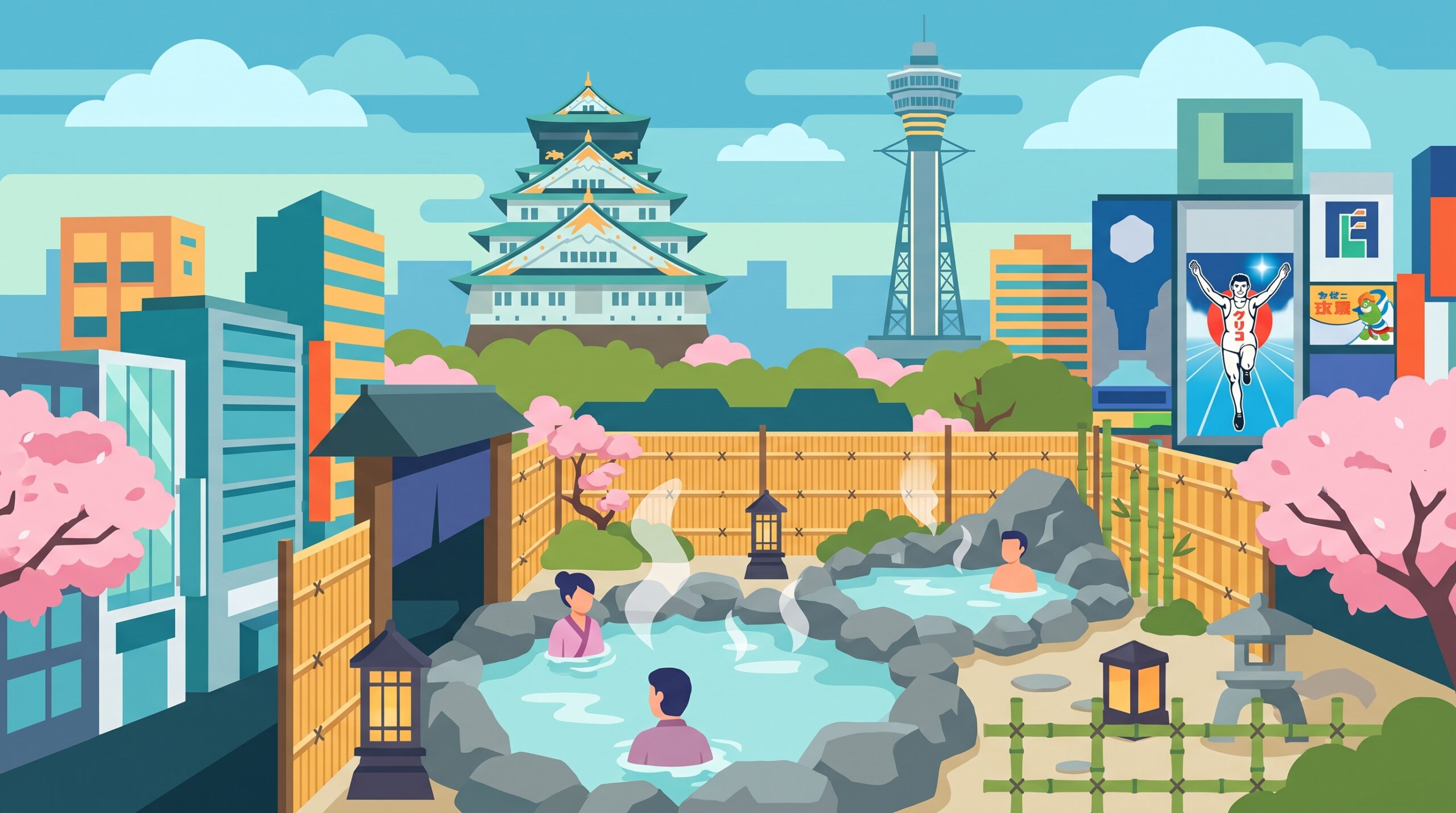
Osaka is a city of overwhelming sensory input. Step off the train at Namba Station, and you are immediately hit by a wall of sound, neon light, and the unmistakable scent of takoyaki batter hitting a hot iron grill. The energy is infectious. But living here, you quickly realize that the constant buzz requires an occasional escape hatch. You need a place to breathe. You need a space where you can close the door on the world.
In my daily life navigating this city, bouncing between anime production meetings and late-night deadlines, I have come to appreciate a very specific Japanese concept: kashikiri. The word literally translates to reserved for private use. In the labyrinthine alleys of Ura-Namba or Nakazakicho, locals frequently pool their money to rent out an entire tiny neighborhood bar for a few hours. You pay a set fee, the master locks the door to the public, and the space becomes yours. You can laugh loudly, talk over each other, and ignore the usual social protocols of sharing a cramped space with strangers. It is a pragmatic, straightforward solution to the lack of space in a sprawling metropolis. Osaka people are fundamentally merchants at heart. They do not suffer in silence to maintain harmony like you might see in Tokyo. If an Osaka resident is uncomfortable, they will find a practical workaround. If they want privacy, they simply buy it.
This exact same mindset applies to one of Japan’s most cherished cultural pastimes. I am talking about the hot spring, or onsen. While public bathhouses are wonderful, they come with a rigid set of rules that can be intimidating, inconvenient, or simply unappealing depending on your personal circumstances. The solution? The kashikiri onsen. Renting a private bath is the ultimate extension of Osaka’s private party culture. It takes the city’s love for shared, intimate experiences and elevates it to a steaming, mineral-rich sanctuary. Whether you are living in Kansai or just passing through, understanding how to navigate the private hot spring system will completely change your relationship with Japanese bathing culture.
Why Choose a Private Onsen (Kashikiri) in Osaka?
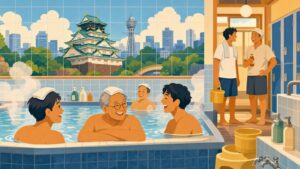
The appeal of a private onsen extends well beyond simple luxury. For many locals and international visitors alike, it is a matter of practicality. Public baths in Japan are communal spaces governed by centuries of unwritten customs. In Tokyo, bathers often sit in complete silence, strictly respecting invisible boundaries of personal space. Osaka bathhouses tend to be more talkative and relaxed, yet the fundamental rules still apply. You must separate by gender. You must conceal your tattoos. You must share the space with strangers. A kashikiri bypasses all of this, providing a personalized experience tailored to your needs.
Perfect for Couples and Families
One of the biggest culture shocks for foreign couples visiting Japan is realizing they cannot actually enjoy a traditional hot spring together. Nearly all public onsens enforce strict gender separation. You part ways with your partner at the changing room curtains, soak alongside strangers for an hour, then reunite in the lobby for cold milk. It is hardly a romantic, shared moment. Additionally, for families with young children, managing toddlers in a slippery, hot, public environment while following proper etiquette can be extremely stressful.
Osaka locals appreciate efficiency and shared enjoyment. They want to experience things together. Renting a private bath allows couples to relax in the same water, savoring the steamy atmosphere and conversation without separation. For families, a kashikiri acts as a private sanctuary where kids can splash around without receiving disapproving looks from elderly bathers. It turns a potentially stressful cultural challenge into a deeply relaxing, bonding experience. You are paying for peace of mind, and in a fast-paced city like Osaka, that is worth every yen.
A Stress-Free Option for Tattooed Travelers
Working close to the creative industries, I know many colleagues and friends who have extensive tattoos. In Japan, tattoos are still widely associated with organized crime, which leads to a broad ban in most public bathhouses, pools, and gyms. Although attitudes are slowly changing, trying to enter a public bath with visible tattoos in Osaka usually results in a prompt, polite, but firm request to leave. No one wants to face that kind of rejection when trying to relax.
This is where the private onsen truly excels as a cultural loophole. Because a kashikiri is a private, locked room hidden from public view, management generally does not mind if you have tattoos. It is the perfect workaround. You get to enjoy authentic Japanese bathing culture, soaking in hot, therapeutic water without any anxiety or stigma. For tattooed locals and tourists, booking a private bath is not just a luxury; it is the most dependable way to participate in onsen culture without hassle.
Best Private Onsens in Central Osaka
Finding an authentic hot spring experience in the heart of a concrete jungle might seem impossible, but Osaka has created some remarkable facilities. These spots are ideal for those who don’t have the time to rent a car or take a long train trip out to the mountains. They provide the full kashikiri experience just minutes from major subway lines.
Solaniwa Onsen (Osaka Bay Area)
Situated directly outside Bentencho Station on the Chuo Line, only a fifteen-minute subway ride from the bustling Namba district, Solaniwa Onsen is a vast hot spring theme park. The facility is designed to reflect the Azuchi-Momoyama period, making it visually stunning. Beyond the Instagram-worthy lantern bridges and yukata-clad visitors, you’ll discover some of the city’s finest private bath facilities.
Their kashikiri rooms resemble private luxury apartments. Renting a space here means more than just having a bathtub. You get a spacious relaxation room, a private changing area, and a beautifully crafted open-air bath overlooking a private garden feature. The water is authentic hot spring water drawn from deep beneath Osaka Bay, rich in minerals that leave your skin feeling exceptionally smooth.
The price for a private room typically ranges from seven thousand to eight thousand yen for a two-hour session, which is an additional charge on top of the base admission fee. Due to its popularity, making advance reservations through their official website is highly recommended. While walk-ins are sometimes accepted on quiet weekday afternoons, securing a room on weekends without a reservation is nearly impossible. This is a premium experience, but for convenience and quality, it is unmatched in central Osaka.
Nobeha no Yu (Tsuruhashi)
Tsuruhashi is well-known as Osaka’s expansive Korea Town. The air is perpetually filled with the scent of grilled meat and kimchi. It is lively, noisy, and full of energy. Just a short walk from the station, about ten minutes from Namba via the Sennichimae Line, is Nobeha no Yu. This venue beautifully combines Japanese hot spring culture with Korean sauna traditions.
Upstairs, away from the large communal baths and the intense heat of the various saunas, is a dedicated floor with private baths. The atmosphere here is rustic and intimate, featuring dark wood and traditional stone. Renting a kashikiri here feels like escaping to a secluded mountain retreat, completely removing you from the city’s sensory chaos below. The pricing is very reasonable, generally around four thousand yen for an hour-long session.
Unlike Solaniwa, Nobeha no Yu primarily operates its private baths on a walk-in basis. You simply check in at the front desk upon arrival, review the availability board, and book your time slot. If there is a wait, you can easily spend the time enjoying cold noodles in their restaurant or getting a massage before your room becomes available. It is a favorite among locals recovering from a night of indulgence in the surrounding area.
Best Private Onsens in the Greater Osaka Area
To fully embrace the kashikiri culture, you need to venture just beyond the urban center. The outskirts of Osaka Prefecture provide facilities with expansive views, natural surroundings, and a more relaxed pace of life. These spots typically involve a bit more travel time, making them ideal for a half-day trip, but the atmosphere you gain in return is truly rewarding.
Nobeha no Yu (Habikino)
This is the sister location to the Tsuruhashi branch, but because it is situated in the sprawling suburbs of Habikino City, it operates on a much larger scale. To reach it, take the Kintetsu Minami-Osaka Line from Tennoji Station to Furuichi Station, followed by a brief bus ride. The entire journey lasts about forty-five minutes.
The main attraction here is space. The private baths at the Habikino site are outdoors, nestled among carefully landscaped gardens and bamboo fences. The air is cleaner, and soaking in a private open-air bath while enjoying the cool evening breeze is a transformative experience. Various styles of private baths are available, including those made of fragrant cypress wood and others crafted from huge natural boulders. Prices are quite reasonable, generally under four thousand yen for an hour. Like its sister branch, reservations are made at the front desk upon arrival, making it a perfect spontaneous retreat for locals wanting to escape the city’s concrete jungle.
Fushioukaku (Ikeda City)
Heading north toward the mountains that separate Osaka from Hyogo Prefecture brings you to Ikeda City. Famous worldwide as the birthplace of instant ramen, Ikeda also hosts Fushioukaku, a classic Japanese ryokan that warmly welcomes day-trippers. From Umeda Station, take the Hankyu Takarazuka Line to Ikeda Station, which takes about twenty-five minutes. The ryokan then provides a free shuttle bus to the property.
Fushioukaku offers a more traditional kashikiri experience. Instead of just renting a bathhouse room, you can book a day-use plan that includes a private tatami-mat guest room plus access to a private open-air bath. You can soak in natural hot spring water while gazing out over the verdant hills, then relax in your private room, nap on the tatami, or enjoy a traditional bento meal. These day-use packages start at around seven thousand yen per person. Since this is a traditional inn, advance booking via their website or phone is essential.
Amami Onsen Nanten-en (Kawachinagano)
For the ultimate atmospheric retreat, you need to travel deep into the southern mountains of Osaka Prefecture, to Kawachinagano. Taking the Nankai Koya Line from Namba Station to Amami Station takes about forty-five minutes. Once you step off the train into the dense forest, the neon lights of Dotonbori seem like a world away.
Amami Onsen Nanten-en is a registered tangible cultural property. Its majestic main building was designed by Kingo Tatsuno, the legendary architect behind Tokyo Station. Primarily a high-end ryokan for overnight guests, they also offer limited day-use access to their exquisite facilities. Their private baths carry rich history, featuring radium-infused mineral waters that have attracted visitors for over a century. Here, kashikiri is less about modern luxury and more about historical preservation and profound, silent relaxation. Access to their private baths on a day trip requires purchasing a special dining and bathing package, which must be arranged well in advance. It is a premium, carefully curated experience showcasing the deep historical roots of the Kansai region.
How to Book and Use a Private Onsen in Japan
Navigating the logistics of a kashikiri can be daunting for foreigners. The language barrier is significant, and the fear of unintentionally breaking cultural rules often discourages people from trying. However, Osaka locals are surprisingly forgiving and eager to assist if you genuinely make an effort to respect their spaces. Understanding the basic process of booking and bathing will help ease your anxiety.
Advance Reservations vs. Walk-ins
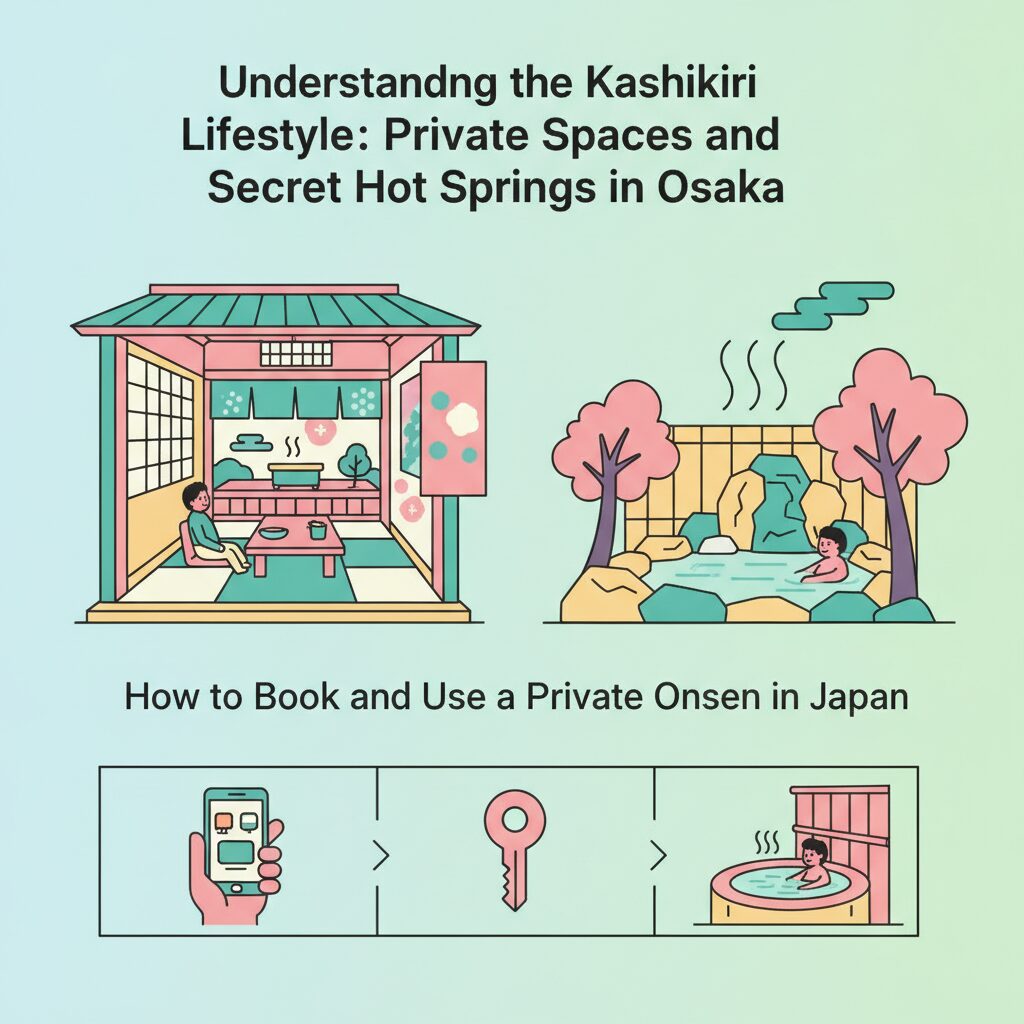
The way to secure a private bath varies depending on the facility. Theme park-style spas and upscale ryokans almost always require advance reservations. If you struggle with a Japanese website, using a browser translation extension usually helps with online forms. Calling by phone may feel intimidating, but speaking slowly and clearly in English and starting with the word kashikiri often connects you to someone who can handle basic scheduling.
For local super-sentos like Nobeha no Yu, the system is strictly walk-in. You approach the counter, point to pictures of the private baths, and the staff will show a clock face indicating the next available time slot. You pay upfront, receive a physical key or barcode wristband, and are instructed to return to a designated waiting area five minutes before your slot begins. The process is very efficient. Just remember that punctuality in Japan is crucial. If you book a bath for two o’clock, the timer starts precisely at that time, whether you are in the room or not.
Basic Etiquette Inside the Private Bath
Although the space is entirely yours behind a locked door, the essential rules of Japanese bathing culture still apply. These are about respecting the facility and the guests who will use the room after you.
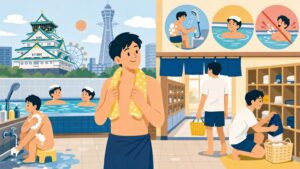
When you enter the private room, remove your shoes at the designated entryway. Undress in the dry changing area. Before stepping into the hot spring water, you must thoroughly wash and rinse your body at the provided shower station. The bath is for soaking and relaxing, not for cleaning off the day’s sweat.
Do not let your towels touch the bathwater. You can fold a small modesty towel and place it on your head or set it on a dry rock nearby, but soaking soap or fabric in the mineral water is a major faux pas. Finally, keep a close watch on the clock. Most facilities will ring a phone in the room ten minutes before your time ends, signaling that you need to dry off, get dressed, and promptly vacate the room. Overstaying your booked time will disrupt the entire schedule and create an awkward situation with the staff.
Conclusion: Enjoying Your Kashikiri Experience in Osaka
Living in Osaka teaches you how to balance the chaos of bustling crowds with the need for private space. The local culture thrives on vibrant energy, loud conversations, and shoulder-to-shoulder dining in smoke-filled alleys. However, it is precisely this intense public life that has given rise to the kashikiri culture. Whether renting a tiny standing bar for a private party or booking a steaming hot spring room overlooking a tranquil garden, the concept remains consistent: creating a sanctuary where you can truly relax on your own terms.
While cities like Kyoto or Nara offer their own beautiful bathing experiences, there is something uniquely satisfying about enjoying private baths within Osaka. It perfectly reflects the city’s personality: practical, unpretentious, and fiercely protective of shared happiness. By bypassing the strict communal rules and embracing the private onsen, couples can connect, families can unwind, and tattooed travelers can finally soak without constantly looking over their shoulders. The next time the neon lights and roaring trains of the city feel overwhelming, remember you don’t have to leave Osaka to find peace. You simply need to know how to rent the right room.