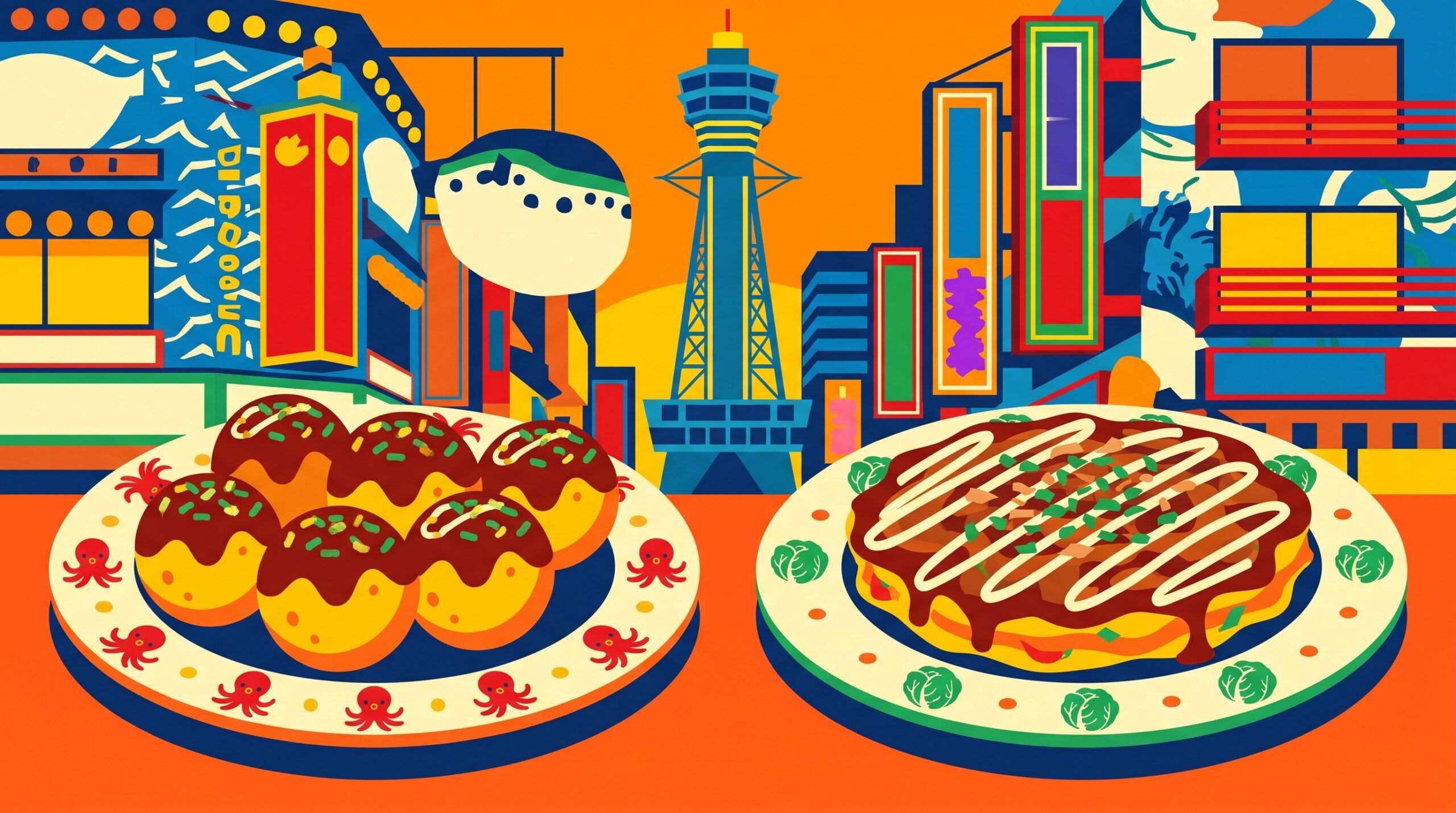
The neon lights of Tokyo pulse with a cold, calculated rhythm. Every festival I plan back in the capital runs like a well-oiled machine, carefully curated for maximum aesthetic appeal and orderly consumption. The lines are straight. The trash is hidden. The food is presented like a delicate work of art, meant to be photographed before it is tasted. But then you step off the Shinkansen at Shin-Osaka Station. You ride the Midosuji Line down into the beating heart of Namba, and suddenly, the rhythm changes. The air grows thick. The soundscape shifts from hushed murmurs to a roaring symphony of clattering spatulas, sizzling iron, and unapologetic laughter. You are in Osaka now. This is a city that does not care about your pristine aesthetic. This is a city that cares about your stomach. As a Tokyo native in my early twenties who spends my days planning polished events, moving through Osaka feels like stepping into a masterclass on raw, unfiltered human connection. The people here do not just eat food. They communicate through it. They build their homes around it. They measure the passing of seasons and the strength of their friendships by the heat of the iron griddle.
When foreigners consider moving to Japan, they often picture the serene temples of Kyoto or the futuristic gleam of Tokyo. They imagine a life of quiet restraint and unspoken rules. But daily life in Osaka defies every polite Japanese stereotype you have ever been taught. Here, life is lived out loud. The rules of engagement are written in savory brown sauce and a dusting of green seaweed. To understand Osaka, you must understand its home kitchen. You must look beyond the flashy tourist brochures that treat Takoyaki and Okonomiyaki as mere street food novelties to be checked off a bucket list. In this city, these dishes are not just snacks. They are the foundational pillars of the local psychology. They are the great equalizers. They are the reason why the people of Osaka walk a little faster, talk a little louder, and laugh with their entire bodies. They represent a mindset that prizes substance over style, warmth over distance, and community over isolation. This is not a travel guide. This is a survival manual for your soul. If you are going to live in this loud, magnificent, chaotic metropolis, you need to understand the philosophy of the flour. You need to know why a simple octopus dumpling holds the key to the Kansai dialect. You need to grasp why the savory pancake tells you everything you need to know about navigating the local real estate of human emotion. You are about to dive into the deep, bubbling core of the Kuidaore culture. Welcome to the real Osaka.
Osaka’s Soul Food: The Konamon Culture You Must Experience
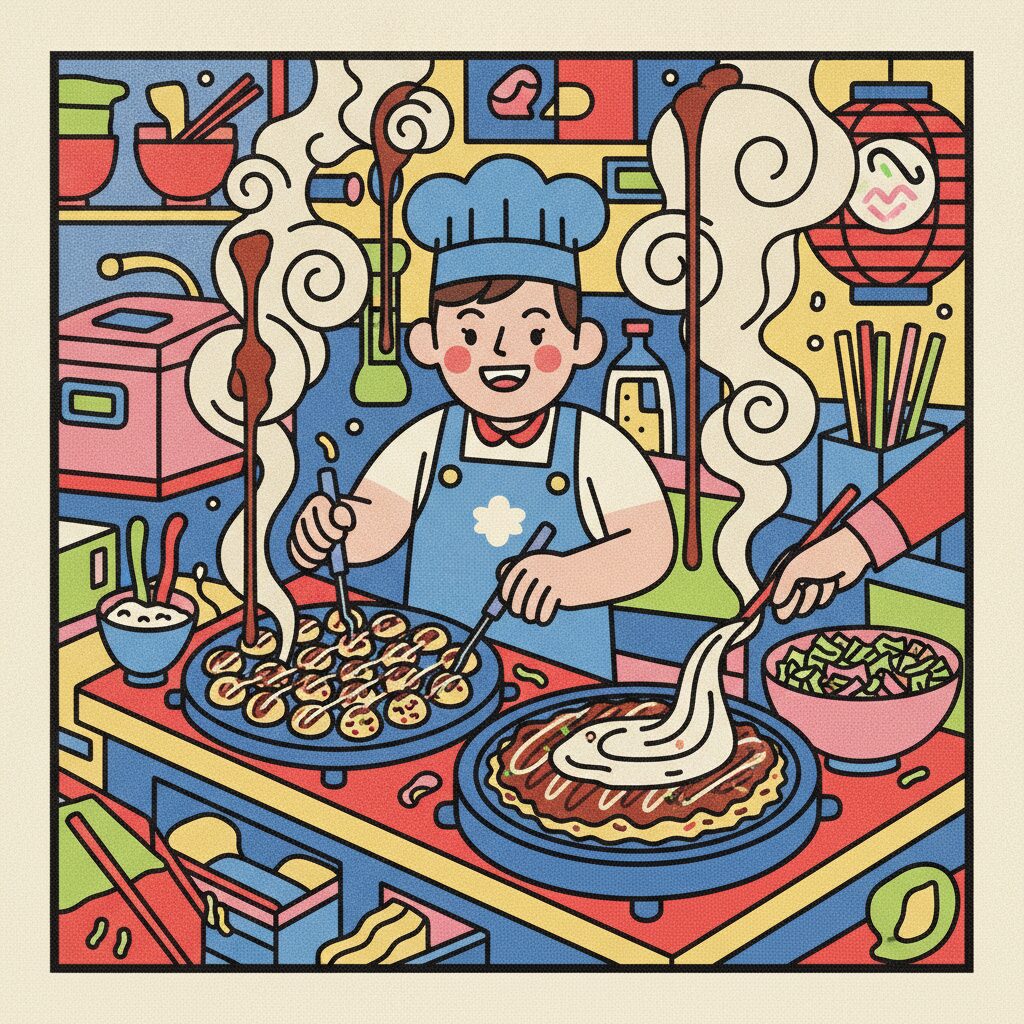
The word you’ll hear repeated endlessly in the back alleys of Tennoji and the bright arcades of Shinsaibashi is Konamon. It literally means flour things. It sounds simple, almost dismissive, yet in Osaka, Konamon is revered with the same respect other cities reserve for fine dining. To an uninitiated expat, the sheer amount of flour-based foods consumed in this region can be bewildering. Tokyo thrives on sushi, soba, and refined washoku, while Osaka seems built on a foundation of wheat, dashi broth, and rich sauces. This contrast is not just culinary—it is deeply socio-economic and fiercely historical.
After the devastation of World War II, food was scarce, and white rice was a luxury out of reach for the working class in Kansai. American relief supplies brought vast amounts of wheat flour to Japan’s ports. While other regions struggled to incorporate this foreign staple into their diets, Osaka’s merchants and hustlers saw opportunity. They mixed flour with water, added whatever cheap scraps of cabbage or seafood they could find, and cooked it on scrap metal over open flames. Born from necessity, the people of Osaka refused to let it taste like despair. They enriched the batter with umami-rich dashi and crafted complex sweet-and-savory sauces to disguise the humble ingredients. They transformed survival food into soul food.
This historical background is essential to understanding the modern Osaka mindset. The people here are famously pragmatic and merchants at heart. They detest waste and value a good deal far more than a brand name. When an Osaka native asks how much you paid for your shirt, they’re not judging your wealth—they want to praise your bargaining skills. The same logic applies to their food. Konamon symbolizes the triumph of flavor over cost, the culinary equivalent of turning lead into gold. Eating Takoyaki or Okonomiyaki connects you to a generational celebration of resilience and creativity. The heavy use of flour is a badge of honor, a reminder that the city rose from hardship and chose to make its struggles delicious.
Kuidaore: The Philosophy of Eating Yourself to Ruin
Living in Osaka means confronting Kuidaore, often translated as eating yourself to ruin or eating until you drop. In Kyoto, people might ruin themselves buying fine clothes; in Osaka, it’s by indulging in good food. This isn’t a catchy slogan on souvenir t-shirts, but a real, tangible lifestyle that shapes how the city functions, breathes, and spends its hard-earned yen.
As an event planner in Tokyo, successful food festivals are orderly, with small portions and clean aesthetics. People come to be seen as much as to eat. In Osaka, Kuidaore turns eating into an aggressive, passionate, full-contact sport. You’ll find businessmen in suits standing shoulder-to-shoulder with blue-collar workers and rowdy students, all gathered around a scorching-hot iron plate on a Tuesday night. Class and status fade away the moment the batter hits the grill.
Kuidaore demands that food be abundant, deeply flavorful, and eaten with pure joy. It rejects the austere, ascetic side of Japanese culture. When you move to Osaka, social interactions revolve around food. Neighbors won’t ask about the weather—they’ll ask if you’ve eaten. They debate fiercely about which local shop makes the best dashi batter. If you try to maintain a strict, carb-free diet here, you won’t just miss the cuisine; you’ll miss the conversation and lock yourself out of the community.
A Tokyo Event Planner’s Culture Shock
The first time I was sent to Osaka to scout locations for a pop-up event, I brought along my Tokyo sensibilities. I searched for pristine spaces with minimalist decor and vendors who could produce perfectly uniform, photogenic dishes. Several meetings ended with polite but firm laughter. Local coordinators looked at my meticulously color-coded spreadsheets and told me I was missing the point.
They took me to a cramped, smoky Okonomiyaki joint under the train tracks near Umeda. The walls were stained yellow with decades of vaporized oil. The tables were sticky, and the roar of overhead trains turned conversation into a shouting match. The owner, an older woman with a raspy voice and sharp wit, placed a bowl of raw batter, shredded cabbage, and thick slices of pork belly on our table. She didn’t cook it for us — we were expected to cook it ourselves.
This was my ultimate culture shock. In Tokyo, service aims to create a frictionless, passive customer experience. Customers are treated like royalty, kept respectfully distant from the kitchen’s messy reality. In Osaka, customers are treated like family, which means you roll up your sleeves and get involved. The barrier between creator and consumer is completely broken down. This is everyday life in Osaka. You’re not allowed to be a passive observer—you’re expected to participate and engage. If you wait for life to be served on a silver platter, you’ll go hungry. But if you grab the spatula and start mixing, the city will embrace you with a warmth unmatched anywhere else in Japan.
Takoyaki: The Iconic Octopus Dumplings
Stroll down any major street in the Minami district, and you’ll hear it: the rhythmic clatter of metal picks scraping iron molds, accompanied by the intense, rapid-fire sizzle as batter transforms into golden spheres of perfection. Takoyaki reigns supreme in Osaka’s street culture, but to label it merely as street food is a significant understatement. It is a form of cultural currency. It is a social lubricant.
For the uninitiated expat, Takoyaki is a ball of wheat flour batter, roughly golf ball-sized, filled with a chunk of boiled octopus, tempura scraps, pickled red ginger, and green onion. It is typically brushed with a sweet and savory brown sauce, drizzled with Japanese mayonnaise, and topped with dried bonito flakes and green seaweed powder. Yet, breaking it down to its ingredients is like saying a painting is just oil and canvas.
What makes Osaka Takoyaki special is the obsession with the dashi—the soul of the batter. Cheap, tourist-trap Takoyaki relies heavily on thick, overpowering sauce for flavor. A true Osaka Takoyaki is a masterpiece of internal craftsmanship. The batter is richly infused with kelp and bonito stock before it even hits the pan. Locals often test a new shop by ordering the dumplings plain, without any sauce or mayonnaise. If the spherical dumpling cannot stand on its own, vibrating with the deep, oceanic umami of the dashi, it is dismissed as amateur work.
What Makes Osaka Takoyaki Special?
The hallmark of a master craftsman lies in the textural contrast. Proper Osaka Takoyaki must be blisteringly hot. The exterior should have a delicate, micro-thin crispness—never hard or bready—but enough resistance to hold its shape. Once your teeth break that fragile shell, the interior should collapse into a molten, creamy, lava-like consistency that coats your palate. This gooey center is not raw batter but a perfectly balanced suspension of dashi and flour steamed from the inside out.
Eating this requires a very specific technique expats must learn quickly to avoid severe burns to the roof of the mouth. You do not bite a Takoyaki in half, as this will cause the superheated molten core to erupt onto your chin and hands. Instead, you use the hufu technique: pierce the dumpling with a bamboo skewer, create a small vent hole with your teeth, and draw cool air into your mouth as you consume the entire sphere at once. It is a delicate dance between pain and pleasure—a rite of passage. When you can stand on a street corner in Dotonbori, perfectly executing the hufu technique without shedding a tear, you have truly arrived in Osaka.
The dish’s evolution also speaks volumes about the city’s innovative spirit. Before Takoyaki, there was Radio-yaki, a similar dumpling filled with beef tendon and konjac. In the 1930s, a vendor was challenged by a customer from Akashi, famous for its egg-based octopus dumplings. Driven by competitive pride, the Osaka vendor adapted the recipe, adding tender chunks of boiled octopus to his savory wheat batter. The modern Takoyaki was born from rivalry and a refusal to be outdone—a competitive, improvisational spirit that still fuels every business transaction in the city today.
The Domestic Reality: The Takopa Phenomenon
To grasp the true depth of this culture, look inside an Osaka home. Nearly every household in the Kansai region owns an electric Takoyaki maker, as essential to the kitchen as a rice cooker or microwave. This appliance is the centerpiece of the city’s most important social ritual: the Takopa, or Takoyaki Party.
When you make friends in Osaka, you will inevitably be invited to a Takopa. It is not a formal dinner but a chaotic, hands-on, collaborative event. The host prepares large bowls of dashi batter and lays out an array of fillings. While octopus is the traditional star, the beauty of a domestic Takopa lies in the sheer anarchy of ingredients—you’ll find cheese, kimchi, mochi, sausages, and even squares of chocolate for a strange dessert round.
The Takopa showcases the collaborative Osaka mindset. Everyone gathers around the table with long skewers, watching the batter bubble. There is a specific rhythm to flipping the spheres—you wait for the bottom to set, then use a swift flicking motion to turn the batter ninety degrees, allowing uncooked liquid to flow into the mold and complete the sphere. It requires coordination and teamwork. In Tokyo, home entertaining is rare and often stressful, fraught with concerns over presentation and perfection. In Osaka, the Takopa is messy, loud, and inherently imperfect. Some dumplings will burn, some will fall apart, but the shared act of creating them, laughing at the misshapen ones, and cheering the perfect spheres, forms a bond beyond language. For a foreigner wanting to integrate, buying a Takoyaki maker and hosting a Takopa is the fastest, most effective way to win over neighbors.
Top Places to Eat Takoyaki in Osaka
Once you’re ready to taste the work of the professionals, know that not all shops are equal. The scene is fiercely competitive, and locals hold fierce loyalties. Finding the right shop is key to learning the city’s geography.
Begin your journey at Wanaka. Once a tiny neighborhood sweet shop, Wanaka has grown into a Takoyaki titan, deeply respected locally. Their batter is legendary for its fine texture, achieved by a specialized, tightly guarded flour blend and generous dashi. While standard sauce is available, true connoisseurs order their Takoyaki with just a dusting of coarse salt. The salt cuts through the richness, elevating the dashi’s complex umami to stunning heights. Standing in the long line outside their Namba branch, you learn that patience is a virtue Osakans exercise only when exceptional food awaits. The line moves with brutal efficiency, and the staff flip dumplings with mechanical precision, hands swirling in a blur that mesmerizes the crowd.
Next, visit Kougaryu in Americamura, the heart of youth culture. Kougaryu popularized the now-ubiquitous mayonnaise addition, but not just any mayo—they use a custom low-acidity blend that perfectly complements their fruity, apple-infused sauce. Their dumplings are smaller, meant to be eaten quickly by fashion-conscious crowds near Triangle Park. Eating Kougaryu’s Takoyaki on the park’s concrete steps, watching vintage clothing fans and street musicians pass by, offers a vivid sense of the city’s restless energy. The mayo balances the heat, adding a rich, creamy layer that transforms the flavor.
For a completely different vibe, head north to Umeda and find Hanadako. Nestled in the bustling, confusing maze of Shin-Umeda Shinokudo-gai, this standing-only counter is always crowded with weary office workers and savvy locals. Their specialty is the Negi Mayo, where perfectly fried dumplings are buried under a mountain of fresh green onions and a generous drizzle of mayonnaise. The sharp, peppery bite of raw scallions beautifully contrasts the rich batter. Dining at Hanadako is a high-speed, shoulder-to-shoulder affair—you squeeze in at the counter, devour your food standing, and leave quickly to make room for others. It exemplifies the unwritten Osaka dining rule: eat passionately, enjoy fully, but never linger when others are waiting.
Okonomiyaki: The Ultimate Savory Pancake
If Takoyaki is the quick, fiery street snack, Okonomiyaki stands as the hearty, comforting centerpiece of the dining table. The name itself perfectly encapsulates the city’s culinary philosophy. Okonomi means what you like or desire, while Yaki means grilled or cooked. In essence, it is the grill-what-you-like pancake—a dish born from complete freedom and practical sensibility.
Calling it a pancake, however, doesn’t do justice to its intricate structure. It’s not a breakfast food. Rather, it is a dense, savory, highly customizable meal built on a base of shredded cabbage, wheat flour, dashi, and grated nagaimo (mountain yam). The inclusion of the yam is vital, acting as a natural leavening agent that traps air in the batter, preventing the heavy ingredients from collapsing into a dense, heavy mass. The cabbage is more than just filler; it provides the dish’s structural integrity. How the chef slices the cabbage—whether into fine ribbons or chunky squares—dictates the entire texture of the final dish.
Understanding the Osaka Style
When living in Japan, you’ll quickly come across the great Okonomiyaki rivalry between Osaka and Hiroshima. Grasping this divide is essential to appreciating local pride. Hiroshima style involves a meticulous, layered approach. The batter is spread thin like a crepe, with cabbage, pork, and noodles piled in distinct layers before being flipped and steamed. It’s a dish that demands architectural precision and patience.
The Osaka style, true to the city’s vibrant, inclusive spirit, is a mixed affair. All core ingredients—the cabbage, batter, tempura scraps, egg, and seafood—are combined vigorously in a bowl before being poured onto a hot iron griddle as one thick, splendid mound. The pork belly slices alone are laid flat on top, allowing their rendered fat to seep into the batter as it cooks, crisping the bottom to a golden brown. Osaka style is less about neat layers and more about complete integration; it’s how different elements come together in one harmonious, delightfully messy whole. In many ways, Osaka Okonomiyaki serves as a perfect culinary metaphor for the city itself, thriving on organized chaos by bringing together loud, distinct ingredients until they coexist beautifully.
The Teppan as a Social Anchor
The Okonomiyaki restaurant offers a unique spatial experience. At its heart is the teppan—a heavy iron griddle built directly into the dining table. In a society that often values personal space and boundaries, the teppan creates a remarkable sense of intimacy. Diners sit around a shared heat source, watching raw ingredients slowly transform into their meal.
This setup fundamentally alters the flow of conversation. Unlike in a typical restaurant where there are awkward pauses while waiting for food, here the cooking process fills every gap. You debate the right moment to flip the pancake, negotiate the application of the thick, sweet-and-sour Otafuku sauce, and carefully arrange the dried seaweed while watching bonito flakes dance and writhe in the heat above. Cooking together breaks down the formalities that often characterize Japanese social interactions—you can’t maintain a rigid, hierarchical composure when you’re struggling to flip a three-pound cabbage pancake without dropping half of it onto the table.
Mastering the hera or kote—small metal spatulas provided to each diner—is essential. Okonomiyaki isn’t eaten with chopsticks from a communal plate. Instead, you chop off a square portion from the main pancake with the edge of your spatula and eat it directly off the sizzling hot iron. This keeps every bite piping hot and demands a certain informality. You will inevitably drop pieces or get sauce on your chin. The teppan experience compels you to drop your guard, set aside your Tokyo-style polish, and embrace the messy reality of the moment.
Best Okonomiyaki Restaurants for an Authentic Experience
With thousands of Okonomiyaki restaurants in Osaka, it can be overwhelming to choose where to go. To truly appreciate the standard of excellence, you should visit the legendary establishments that have honed the craft over generations. These are places where the iron griddles have been seasoned through decades of continuous use, soaking up the city’s history and flavor into the very metal.
Mizuno, situated in the heart of Dotonbori, is a true institution. Recognized by the Michelin Bib Gourmand guide, Mizuno elevates the humble pancake to an artful level. Their signature Yamaimo-yaki eliminates wheat flour entirely, relying on grated mountain yam to bind thick slices of roast pork and large scallops. The texture defies expectation—remarkably fluffy, almost cloud-like, yet rich and satisfying. The line outside Mizuno is legendary, stretching down the bustling arcade regardless of weather. But waiting in that line amid the neon lights and roaring crowds of Dotonbori is part of the experience—a rite of passage for a taste of culinary history.
For a warmer, more chaotic, and deeply local vibe, head to Ajinoya, just a short walk away in the Namba area. Ajinoya, meaning “house of flavor,” lives up to its name with a heavy, comforting style. What distinguishes Ajinoya is their generous use of cabbage—they pile an astonishing amount of finely shredded cabbage into the batter, creating an Okonomiyaki that is both colossal and surprisingly light on the stomach. The staff are masters of the teppan, moving with practiced grace, flipping massive pancakes with a flick of the wrist while shouting orders over the lively dining room. Sitting at the counter here and watching the cooks perform makes it clear that in Osaka, the kitchen is not hidden but the stage, and the cooks are the undisputed stars of the show.
The Ultimate Osaka Food Crawl: Eating Both in One Day
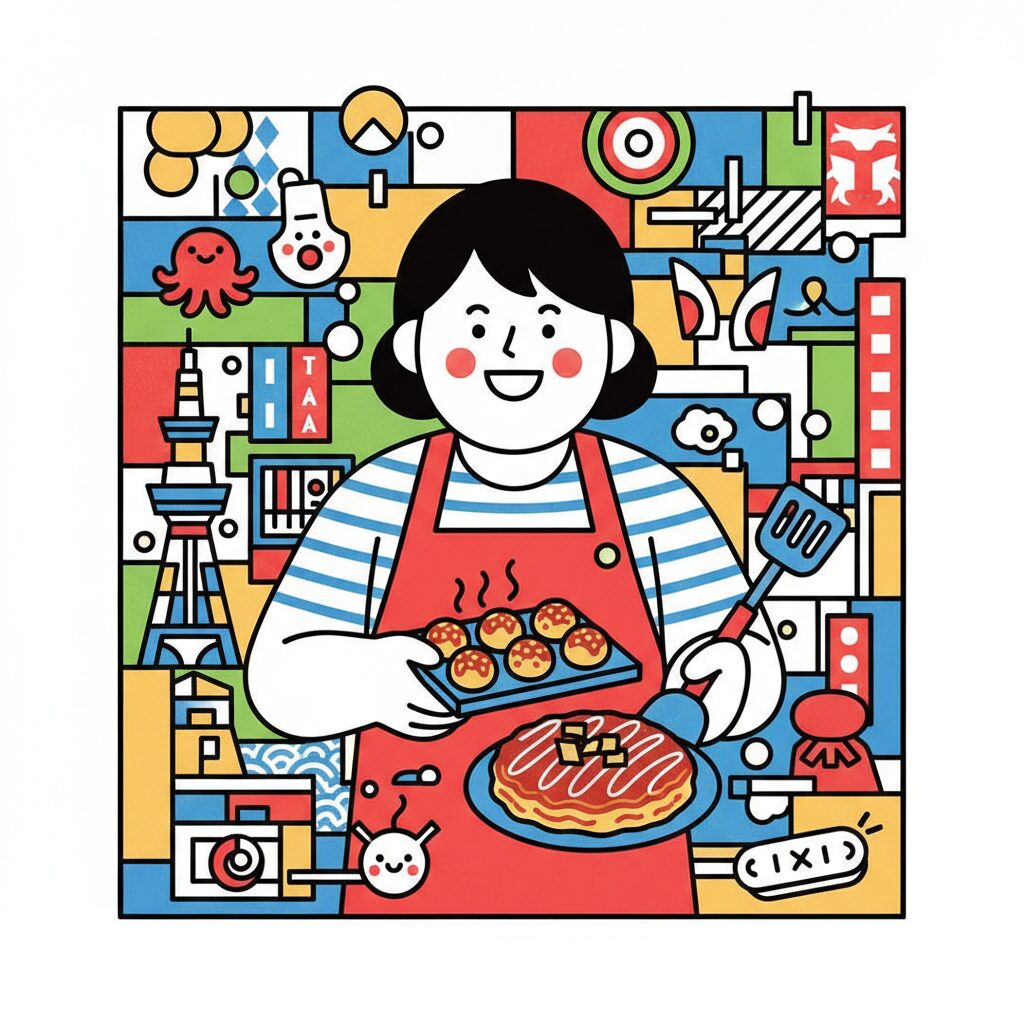
When your friends and family inevitably visit your new home in Osaka, they’ll want to experience everything all at once. They’ll insist on eating both Takoyaki and Okonomiyaki in a single, indulgently caloric day. Pulling this off requires careful planning, a solid grasp of the neighborhoods, and a robust digestive system. You can’t just wander aimlessly—you must explore the city with intent, moving from area to area to feel the distinct energy of each street.
Dotonbori and Namba: The Vibrant Core of Street Food
The most sensible, though intense, starting point is the Minami district, especially the stretch between Namba and Dotonbori. This neighborhood is a sensory overload. Giant mechanized crabs, enormous glowing pufferfish, and the famed Glico running man dominate the skyline. The streets form a maze of arcades, alleys, and bridges crossing the narrow, shadowy waters of the Dotonbori canal. The atmosphere here is frantic, electric, and utterly overwhelming.
Your approach here is all about pacing. Start with Takoyaki as a portable appetizer. Grab a boat of piping hot dumplings from a riverside vendor. Don’t sit down. Stand by the railing of Ebisu Bridge. Let the canal breeze cool the molten batter. Watch the ceaseless flow of people passing by. This is where you soak in the raw, unfiltered energy of the city. The Takoyaki fuels you, supplying the quick carbohydrate boost needed to navigate the dense crowds. You become part of the grand spectacle of Kuidaore, adding your own chewing cadence to the city’s collective heartbeat.
Once night falls and the neon signs ignite, it’s time for the main event. You leave the hectic main street behind and slip into the narrower side alleys, perhaps heading toward Hozenji Yokocho, a small stone-paved lane that feels frozen in time. Here, the air is tinged with moss, incense from the nearby temple, and the rich aroma of rendered pork fat. Secure a seat at a local Okonomiyaki spot, order a massive mug of draft beer, and let the warm, hearty comfort of the teppan envelop you. The contrast between the bustling, on-your-feet Takoyaki experience and the cozy, communal ease of Okonomiyaki perfectly captures the dual spirit of Osaka. You move from the frantic outer world to the inviting inner warmth, tracing the emotional journey of a typical Kansai night.
Hidden Treasures in Umeda and Tennoji
For those looking to escape the intense tourist magnetism of Dotonbori, Osaka offers markedly different scenes for your food expedition. The city’s geography shapes its culinary culture, and stepping away from the center reveals entirely fresh flavors and moods.
Head north to the Kita district, focused around Umeda. Umeda is a sprawling, multi-level maze of underground malls, towering department stores, and sleek corporate offices. It feels closer to the polished efficiency of Tokyo. But beneath this glossy facade, tucked under railway overpasses and deep in the basements of older office buildings, the Konamon culture thrives. Here, you’ll find tiny, counter-only Takoyaki stands serving salarymen who’ve loosened their ties after a grueling ten-hour day. The vibe is calmer but more intense. This is the food of the working class seeking a brief respite before catching the last train home to the suburbs. Conversations are softer, the drinking heavier, and meals are eaten with a grateful, desperate energy.
Alternatively, travel way south to Tennoji and the surrounding Shinsekai neighborhood. This area is Osaka’s retro, gritty, and unapologetic underbelly. The shadow of Tsutenkaku Tower towers over streets filled with cheap standing bars and vividly colorful storefronts. The Okonomiyaki here tends to be cheaper, thicker, and served alongside brusque, no-nonsense hospitality. The local dialect is stronger, the jokes rougher, and social pretenses completely absent. Dining in Shinsekai requires some street smarts, but it rewards you with authenticity that can’t be faked. Here you discover that Konamon isn’t just a trend—it’s the very framework of the neighborhood. The cooks won’t hesitate to scold you if you flip your pancake too soon, treating you not as a customer but as a younger sibling who needs a lesson learned.
Tips for Ordering and Eating Like a Local
Living in Osaka, you quickly learn the unspoken rules of its food culture. Tourists might fumble through the process, pointing at pictures and hoping for the best. But as a local, you need to master the logistics to truly fit in and earn the respect of the neighborhood vendors. The way you order, pay, and handle your utensils all signal your status in the city.
Navigating the Lines and the Chaos
The first rule of dining in Osaka is that lines are a semblance of order. In Tokyo, lines are solemn, quiet queues where people stare at their phones and avoid eye contact. In Osaka, lines are social gatherings. People chat with neighbors and lean over to inspect what those leaving are carrying. You must be ready to assert your spot while staying deeply polite.
When waiting for Takoyaki, you must be prepared to order immediately upon reaching the front. The vendors operate at a dizzying speed and won’t wait for you to hesitate while staring at the menu. Know your order beforehand. Are you getting six or eight pieces? Will you have the standard sauce and mayo, or the ponzu variant? Do you want it to-go, called mochikaeri, or to eat there, known as tennai? You must shout your order clearly over the hiss of the grill. Hesitation is the Takoyaki vendor’s enemy. They admire decisiveness. Order confidently, and they’ll nod approvingly, handing you your blazing hot serving with a broad, toothy smile.
Payment, Etiquette, and the Unspoken Rules
Although Japan is rapidly modernizing, Osaka’s food scene still relies heavily on cash. Many of the oldest, most authentic, and cheapest Konamon stands will politely but firmly decline your foreign credit card. However, since 2020, IC cards like ICOCA or Suica, as well as smartphone payment apps like PayPay, have become common even at smaller stalls. Always keep a few thousand yen in coins and bills handy, but also keep your IC card charged for the swift-paced lines at major hubs like Umeda station. The physical exchange of coins remains part of the rhythm, with the clinking of change matching the spatulas’ clatter.
Etiquette at an Okonomiyaki restaurant centers on the teppan. Never place your phone, wallet, or a cold drink on the iron griddle—though obvious, the chaotic table often leads to melted plastic disasters. When using the metal hera, do not scrape it harshly against the iron. It is a tool of precision, not a weapon. Use it to neatly slice your portion, then slide it underneath to lift the food. Treat the teppan with respect, as it is the sacred altar of the dining experience.
Most importantly, when leaving, don’t just bow politely and slip out quietly. In Tokyo, a simple nod to the cashier suffices. In Osaka, you must announce your departure. Shout Gochisosama deshita, expressing heartfelt thanks for the meal. The staff will roar the phrase back at you. It’s a verbal high-five, an acknowledgment of a transaction that transcends money. You gave them your yen; they gave you their soul on a hot iron plate. This vocal exchange is the final essential ingredient in Osaka’s hospitality.
Why Konamon Defines the Real Osaka Mentality
As my time oscillating between Tokyo events and the reality of Osaka continues, my view of this city has fundamentally transformed. I no longer see the chaos as disorderly; instead, I perceive it as finely tuned for human happiness. The people of Osaka do not live to work; they work so they can gather around the teppan, drink cold beer, and loudly grumble about their bosses while flipping a massive cabbage pancake. Here, food is not a distraction from life—it is the essence of life.
Practicality Meets Unapologetic Joy
The Konamon culture perfectly captures the Osaka mindset: practicality combined with unapologetic joy. Flour, cabbage, and octopus are inherently cheap, utilitarian ingredients—the essentials for survival. But the Osaka spirit refuses to settle for mere survival. It demands flavor. It demands a rich, sweet sauce. It demands the dramatic flutter of bonito flakes. It transforms the mundane realities of daily life by smothering them in mayonnaise and green seaweed. It is a stubborn declaration that life, no matter how tough or exhausting, should taste absolutely delicious.
In Tokyo, people often mask their struggles behind a facade of polite composure. Ask a Tokyoite how they’re doing, and they will almost always say they’re fine, regardless of the truth. In Osaka, if you ask someone how they’re doing, they’ll complain about their aching back, admit they’re broke, and immediately suggest grabbing a beer and some Takoyaki to make it better. Food here is a coping mechanism. It’s a communal hearth where the day’s burdens are cast away on the hot iron. The honesty of the ingredients mirrors the honesty of the people. Nothing is hidden. Everything is out in the open, cooking before your eyes.
The Final Verdict for Future Residents
If you’re considering calling Osaka home, be ready to engage. You cannot remain on the sidelines. You cannot expect the city to cater to your wish for quiet isolation. The city will intrude. The city will question you. The city will hand you a metal spatula and expect you to start cooking. It will challenge your concept of personal space and reshape your understanding of politeness.
The soul of Osaka’s home kitchen isn’t found in Michelin-starred ryoteis or immaculate sushi counters. It resides in the sticky, cramped, deafening Okonomiyaki joints hidden beneath railway tracks. It’s in the blazing hot, perfectly round Takoyaki served by a vendor who calls you brother or sister. These dishes are more than street food—they are the physical embodiment of the Kansai spirit. They are warm, heavy, unapologetically messy, and deeply satisfying.
When you finally master eating a piping hot Takoyaki without burning your mouth, when you can skillfully slice a massive Okonomiyaki with a flick of your wrist, you will realize something profound. You are no longer just an expat living in a foreign city. You’ve been absorbed into the batter. You’ve become part of the mix. You’ve learned the rhythm of the iron and the language of the sauce. And in Osaka, there is truly no better place to be.