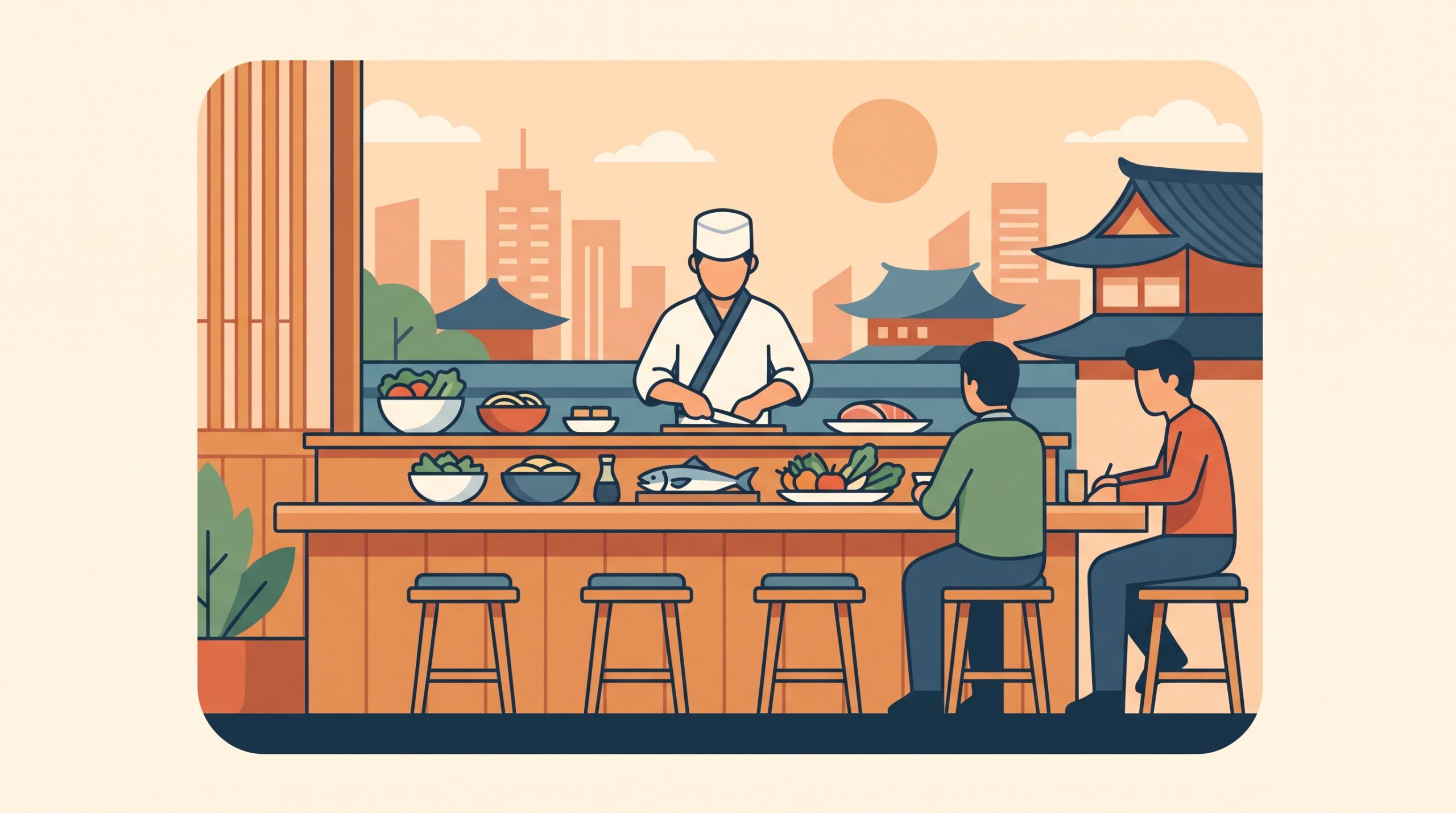
As a Tokyo-based curator, my daily life is deeply entrenched in the quiet, meticulously controlled environments of modern art galleries. In Tokyo, we tend to value distance. We appreciate the pristine, the untouched, the highly formalized structures of social interaction and aesthetic presentation. When you dine at a high-end establishment in the capital, you are often participating in a silent, reverent ceremony. The chef is a master performing on an isolated stage, and you are the grateful audience, receiving perfection on a ceramic plate. But every time I board the Shinkansen and head west, crossing the subtle cultural fault lines of Japan toward the vibrant, pulsating heart of Kansai, I feel a physical shift in the atmosphere. Osaka operates on a fundamentally different frequency. It is a city that rejects the sterile and the silent in favor of the warm, the chaotic, and the deeply human. To understand Osaka—whether you are a newly arrived expatriate trying to decode your neighbors, a prospective resident weighing the cultural differences against Tokyo, or simply a foreign observer fascinated by the unspoken rhythms of Japanese daily life—you must understand how Osaka eats. And to understand how Osaka eats at the highest level, you must look beyond the rigid formality of Kaiseki and step into the intimate, interactive, and thrillingly unpretentious world of Kappo dining.
Foreigners arriving in Japan often carry a monolithic view of Japanese fine dining. The international imagination is dominated by images of hushed sushi counters where a stern, silent master shapes rice with military precision, or sprawling ryokan rooms where kimono-clad attendants serve an endless, predetermined procession of seasonal Kaiseki dishes. These styles are beautiful, but they dictate a passive role for the diner. Osaka, however, is historically a city of merchants. It is a city built not by samurai adhering to strict codes of conduct and feudal hierarchy, but by traders, brokers, and shopkeepers who valued sharp negotiation, quick wit, and practical value over empty ceremony. In Osaka, you do not sit silently and take what you are given. You participate. You converse. You point at a beautifully marbled piece of fish on ice and tell the chef exactly how you want it prepared. This spirit of democratic, highly customized, and intensely interactive fine dining is the absolute core of Kappo. It is an culinary philosophy that strips away the unnecessary theatricality and places the diner and the chef in a direct, conversational relationship across a wooden counter. The word itself translates simply to cut and cook, but the cultural weight it carries is the very essence of the Osaka mindset: direct, honest, uncompromising on quality, and deeply suspicious of pretension.
Walking through the streets of Osaka, you can read the city’s personality in its urban geography. It is a place of stark, beautiful contrasts. You might find yourself navigating the blinding neon chaos of Dotonbori, surrounded by giant mechanical crabs and the thumping bass of street-level commerce, only to turn a corner and slip into a narrow, stone-paved alleyway that feels entirely untouched by the twenty-first century. These quiet enclaves, hidden just behind the roaring main avenues, are the traditional homes of Kappo restaurants. They represent the duality of the Osaka resident: outwardly loud, casual, and wildly energetic, yet inwardly possessing a profound, almost stubborn dedication to historical craft and refined taste. When foreigners express confusion about Osaka—wondering how a city so seemingly brash can also produce some of the most delicate and nuanced cuisine on the planet—they are missing this crucial duality. Osaka people do not view refinement and casual intimacy as mutually exclusive. In fact, they believe that true mastery does not need to hide behind rigid rules and silent reverence. True mastery can crack a joke, pour you a glass of sake, and customize a dish to your exact craving, all without missing a beat with the slicing knife. This is the truth of daily life here. It is a city that demands excellence but refuses to be snobby about it.
What is Kappo Dining? The Soul of Osaka’s Culinary Scene
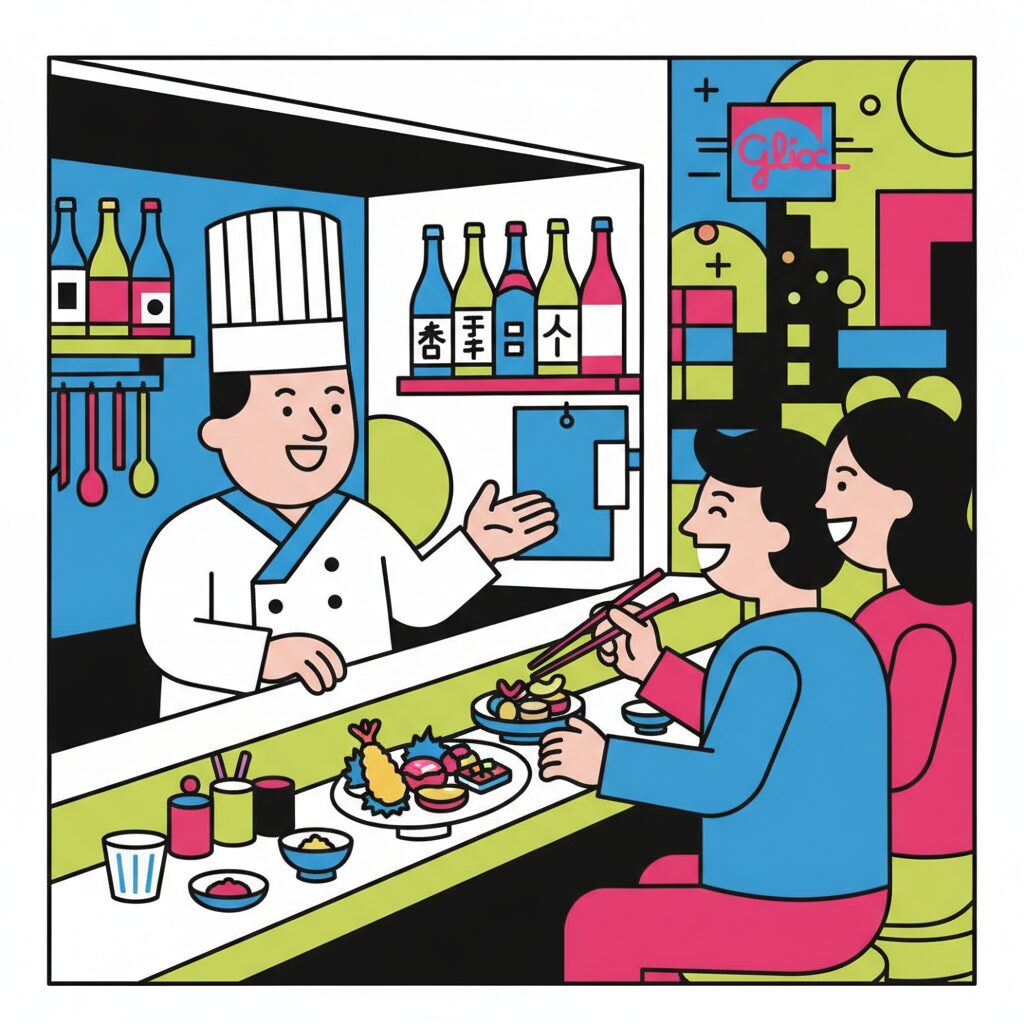
To truly understand Kappo is to unlock the psychological blueprint of Osaka itself. When an expatriate moves to Osaka from Tokyo, the first thing they typically notice is the volume of daily life. People talk on the trains. Shopkeepers engage you in unexpected banter. The invisible social barriers that keep Tokyo functioning like a well-oiled, silent machine are cheerfully ignored here. This same social openness defines Kappo dining. Unlike a traditional restaurant where the kitchen is a hidden, mysterious space separated from the dining room by swinging doors and hierarchical walls, a Kappo restaurant dissolves the boundary between preparation and consumption. The kitchen is the dining room. You sit at a broad, spotless wooden counter, and the chef—the Taisho—stands directly before you, wielding razor-sharp steel and managing roaring charcoal fires within arm’s reach. The entire process of creation is laid bare. You hear the rhythmic staccato of the knife striking the cutting board, you smell the sudden burst of citrus when a yuzu is zested, and you feel the ambient heat of the grill. It is a sensory immersion that demands your attention and invites your participation.
The Birthplace of Kappo: Why Osaka is the Best Place to Experience It
The historical origins of Kappo explain why it could only have emerged in Osaka. During the Edo period, Osaka was known as the Nation’s Kitchen. While political power resided in Edo with the Tokugawa shogunate, the economic engine of Japan roared in Osaka. Vast amounts of rice, seafood, and regional delicacies flowed through the city’s intricate network of canals and merchant houses. The ruling class of Osaka were not sword-wielding samurai bound by strict codes of aesthetic austerity; they were wealthy, fast-paced merchants who valued time, money, and personal satisfaction above all else. These merchants were Japan’s first true food critics. They had the capital to demand the absolute best ingredients, but lacked the patience for the slow, highly ritualized dining ceremonies favored by the Kyoto nobility or the Edo samurai. When an Osaka merchant wanted to eat, he wanted to see the ingredients fresh, to dictate exactly how they were cooked, and to have the food delivered to his palate the moment it was ready. He wanted a dialogue with the craftsman preparing his meal.
This historical merchant mindset remains fully intact in modern Osaka. The contemporary Osaka resident still judges a restaurant by its transparency, speed, value, and the warmth of its service. They are famously unpretentious but notoriously unforgiving when it comes to quality. If a restaurant serves mediocre food wrapped in beautiful, expensive packaging, an Osaka diner will see right through it and never return. This is why Kappo thrives here. The open counter is an arena of absolute transparency. The chef cannot hide behind a closed door. If the fish is not pristine, the diner will notice. If the knife skills are sloppy, the diner will notice. It is a high-wire act of culinary performance, and the chefs of Osaka embrace this pressure with a confident swagger unique to the Kansai region. They are proud of their craft, but also entertainers, reading the mood of the counter, adjusting the pacing of the meal, and engaging in the kind of quick, rhythmic banter that makes dining in this city such an unforgettable joy.
Kappo vs. Kaiseki: Understanding the Difference
Confusion between Kaiseki and Kappo is one of the most common misunderstandings among foreigners trying to navigate Japanese high culture. If you book a Kaiseki restaurant expecting a lively, interactive chat with the chef during a special evening, you will be deeply disappointed. Kaiseki is the poetry of Japanese cuisine. It is a highly structured, philosophical progression of dishes designed to reflect the hyper-specific micro-seasons of nature. It originated from the tea ceremony and noble banquets. When you eat Kaiseki, you are generally seated in a private tatami room. The environment is quiet, contemplative, and isolated. The menu is entirely fixed by the chef. You do not order; you submit. The food is brought out sequentially by attendants, and the chef usually remains unseen until the very end of the meal, when they might briefly appear to offer formal thanks. Kaiseki is a beautiful expression of Japanese aesthetics, but it is fundamentally a passive experience—a monologue delivered by the kitchen.
Kappo, by contrast, is a dialogue. It is jazz compared to Kaiseki’s classical symphony. While Kaiseki focuses on the holistic, poetic progression of a set menu, Kappo emphasizes the immediate, visceral perfection of individual ingredients cooked to the diner’s exact specifications. Although many modern Kappo restaurants offer an Omakase or tasting menu for convenience, the true, traditional spirit of Kappo lies in a la carte ordering, known as Okonomi. You examine the seasonal seafood displayed on ice before the chef. You strike up a conversation. You ask what looks good today. The chef might suggest a beautiful tilefish. You then discuss how you want it prepared—perhaps half served as sashimi and the other half lightly grilled with a touch of salt. The chef nods, turns, and immediately executes your request right in front of your eyes. The atmosphere is energetic. There is the clinking of sake cups, the hum of overlapping conversations, the sudden hiss of water hitting a hot pan. In a Kappo restaurant, you are not a passive recipient of art; you are a co-creator of your own dining experience. For foreign residents trying to understand Osaka’s social fabric, spending an evening at a Kappo counter is a masterclass in local communication. It teaches you that respect in Osaka is not shown through silent distance but through active, enthusiastic engagement.
Top Kappo Restaurants in Osaka for an Unforgettable Meal
Navigating the overwhelming density of dining options in Osaka can be challenging for newcomers. The city’s culinary scene is fiercely competitive, with survival standards incredibly high. While Tokyo may boast more internationally renowned, Michelin-starred culinary landmarks, Osaka offers a broader array of fiercely beloved, neighborhood-level institutions that have honed their craft over generations. The true gems of Osaka’s Kappo scene often remain hidden in plain sight, tucked behind modest wooden sliding doors within the bustling entertainment districts of Minami or the refined grid of Kitashinchi. Choosing a Kappo restaurant means selecting more than just a menu—you are choosing a personality. Each Taisho brings a unique rhythm, philosophy, and aesthetic to the counter. Below are several essential establishments that epitomize the diverse spectrum of the Kappo experience in modern Osaka.
Naniwa Kappo Kigawa: The Traditional Pioneer in Hozenji Yokocho
To grasp the deep historical roots of Osaka cuisine, one must walk down the narrow, rain-dampened cobblestones of Hozenji Yokocho. Situated just steps from the chaotic tourist hub of Dotonbori, this narrow alleyway feels like a gateway to a bygone era. The air carries subtle incense scents from nearby Hozenji Temple, where locals douse a moss-covered statue of the deity Fudo-myo, seeking luck and prosperity. Nestled deep within this atmospheric passage is Naniwa Kappo Kigawa, an institution regarded as the undisputed heavyweight champion of traditional Osaka flavor.
Kigawa is more than a restaurant; it is a cultural conservatory. The term Naniwa refers to Osaka’s ancient name, and Naniwa Kappo embodies a cooking philosophy emphasizing local ingredients and a deeply nuanced approach to dashi, the fundamental soup stock of Japanese cuisine. Tokyo dashi tends to be bold, relying heavily on dried bonito flakes and dark soy sauce—historically necessary to cut through the hard water of the Kanto region and satisfy the salt cravings of laborers and samurai. In contrast, Osaka dashi reveals subtlety. With Kansai’s naturally soft water, chefs primarily use high-quality kombu from Hokkaido to gently coax layered umami flavors without heavy salt or dark soy sauce. The resultant stock is pale, almost golden, with a complex, lingering sweetness that elevates rather than masks the natural flavors of the ingredients.
At Kigawa, this philosophy is practiced with absolute reverence. Seated at the L-shaped wooden counter, you are immediately immersed in the warm, vibrant energy of a kitchen operating at the highest level for decades. The chefs are masters of traditional Naniwa vegetables—heirloom varieties like sweet, vibrant Kintoki carrots or juicy, tender Senshu water eggplants, so delicate they can be eaten raw. The atmosphere feels historically rich yet completely unpretentious. The chefs greet guests warmly and gladly explain the provenance of their ingredients to curious diners. For expatriates or visitors seeking the foundational traditional taste of Osaka’s culinary heritage, Kigawa offers a masterclass in subtlety, history, and the profound depth of Kansai dashi.
Naniwakappo Noboru: Michelin-Starred Excellence and Hospitality
If Kigawa represents the historic heart of Hozenji Yokocho, Naniwakappo Noboru embodies the dazzling, polished modern pinnacle of the craft. Located in a quieter part of the city, Noboru has earned its Michelin star not by catering to international trends, but by elevating the core principles of Osaka Kappo to extraordinary levels of technical perfection. What makes Noboru essential for understanding Osaka is its impeccable balance of world-class gastronomy and genuinely warm, unpretentious hospitality.
In many cities, receiving a Michelin star changes a restaurant’s atmosphere—the dining room becomes hushed, service overly formal, and the joy of eating replaced by clinical observation. Noboru firmly rejects this model. The Taisho here knows the fundamental purpose of Kappo is to make guests feel relaxed, welcomed, and joyful. Despite serving dishes of astonishing complexity and visual beauty, the energy at the counter remains exceptionally warm and conversational.
This represents the essence of the Osaka mindset: the chef approaches the food with absolute seriousness but refuses to take himself too seriously. The knife work is precise and swift; the seasonal seafood sourced impeccably. Yet the chef effortlessly shifts from delicately placing a microscopic garnish with tweezers to sharing hearty laughter with guests across the wooden counter. For foreign diners, this is eye-opening—it shows that respect for sublime art does not require whispers. Noboru’s menu often showcases the aggressive seasonality of Japanese cuisine, with dishes appearing and disappearing within weeks. It is a place that rewards trust. While guests can specify preferences, allowing the Taisho to curate a progression based on the best daily market catch creates an experience that lingers long after the final sip of green tea.
Teruya: A Masterclass in Seafood and Dashi
Delving further into Osaka’s nuanced dining landscape, Teruya commands deep respect among local gourmands for its obsessive dedication to seafood and masterful dashi preparation. Unlike Tokyo’s Edo-mae sushi tradition—focused on Pacific Ocean and Tokyo Bay fish—Osaka’s culinary identity is intimately tied to the Seto Inland Sea. This body of water between Honshu, Shikoku, and Kyushu features complex, swirling currents that yield seafood with extraordinary muscular texture and clean, sweet flavor.
Teruya showcases this regional bounty with pristine elegance. The chefs possess profound knowledge of fish treatment, adjusting aging times, cutting angles, and cooking techniques with scientific precision. What truly distinguishes Teruya—and makes it essential to understanding Osaka Kappo—is the intensity of its dashi preparation. Watching dashi being crafted at a high-level Kappo counter resembles witnessing an alchemist at work. It demands intuitive mastery of temperature, timing, and the moisture content of kombu and bonito used that day. At Teruya, dashi is not a mere background element; it often stars in the dish itself. A simple clear soup, or owan, becomes a moment of profound revelation. Lifting the lacquered lid unleashes a complex aroma, a perfume of ocean and smoke.
For expatriates hosting guests, taking them to Teruya demonstrates Osaka’s concealed sophistication. It challenges the stereotype that Osaka’s cuisine is merely heavy street snacks like takoyaki and okonomiyaki. Teruya’s aesthetic is clean, focused, and self-assured. It does not rely on flashy presentation or trendy ingredients—the chef’s skill speaks entirely through the deep, lingering broth flavors and perfectly yielding fish texture.
Kappo Momen: Exclusive and Highly Sought-After
No exploration of Osaka’s daily culture is complete without acknowledging the concept of the local regular and the subtle social barriers within high-end Japanese dining. Kappo Momen represents the utmost in exclusivity, notoriously difficult to book and often governed by an unspoken system of introductions and longstanding relationships. For foreign residents, understanding how places like Momen function is key to grasping how social capital operates in Japanese society.
In Tokyo, exclusivity often links to money or celebrity. In Osaka, it centers on relationships and loyalty. Momen is small, intimate, and fiercely protective of its atmosphere. The chef isn’t simply serving customers but a curated community who understand his rhythm, appreciate his style, and respect the counter’s harmony. The concept of ichigensan okotowari—politely declining first-time customers without introductions—is frequently misunderstood by foreigners as xenophobic or elitist. In truth, it is a risk management tool that protects the delicate social ecosystem of a small room. With only eight seats, one loud or socially awkward guest can spoil the evening for everyone else.
If you secure a seat at Momen—likely via a well-connected local friend or a persuasive high-end hotel concierge—you will experience Kappo at its most refined and intimate. The atmosphere is quieter than the bustling Hozenji Yokocho joints, marked by deep, unspoken communication between the chef and regulars. The food strips away unnecessary artifice to focus entirely on the pure essence of the ingredients. Dining at Momen is not just a spectacular meal; it is an anthropological insight into trust, loyalty, and the quiet, powerful bonds that hold Osaka’s upper echelons together.
Shimanouchi Ichitaro: A Hidden Gem for Counter Dining
Balancing the high-end exclusivity of Momen is the vibrant, evolving neighborhood Kappo scene, where younger chefs carry the tradition forward with energy and approachability. Shimanouchi exemplifies Osaka’s grittier, more chaotic side—a dense, culturally diverse area filled with late-night bars, small businesses, and extensive culinary options. Hidden in this lively district, Shimanouchi Ichitaro stands out as a hidden gem offering a dynamic, thoroughly enjoyable Kappo experience.
Ichitaro’s appeal lies in the room’s sheer vitality. The Taisho has a magnetic personality, effortlessly handling the kitchen’s intense pace while maintaining lively conversation with guests. This is where Kappo’s interactive spirit truly shines. You might sit next to a local businessman unwinding after a long negotiation or a couple quietly celebrating an anniversary. As the counter is a shared space and the chef acts as a charismatic conductor, the invisible walls between strangers quickly dissolve. It’s common to find yourself raising a glass of sake with the person beside you, bonding over a perfectly grilled piece of seasonal fish.
Ichitaro is practical, honest, and wildly delicious. It lacks the intimidating austerity of formal Michelin temples, making it an excellent entry point for foreigners eager to experience counter dining without strict etiquette anxiety. The chef is highly skilled, especially in charcoal grilling and seasonal vegetable dishes, but the food is always served with joy and casual generosity. This restaurant reveals why so many fall deeply in love with living in Osaka: a city that feeds you well, makes you laugh, and welcomes you like a friend from the moment you enter.
What to Expect: Etiquette and the Kappo Experience
For many non-Japanese residents, the idea of sitting at a Kappo counter can feel quite intimidating. The close proximity to the chef, the lack of a translated menu, and the fear of unknowingly breaking cultural rules often keep foreigners confined to safer, more anonymous dining options. Yet, experiencing a Kappo dinner is deeply rewarding once you grasp the underlying philosophy. Osaka etiquette rarely involves rigid, punishing rules; rather, it centers on harmony, respect for the craft, and a mutual exchange of positive energy. Knowing how to conduct yourself at the counter is key to unlocking the true magic of the city.
Interacting with the Chef (Taisho)
The most important aspect of the Kappo experience is your relationship with the Taisho. The chef is neither your servant nor an untouchable deity. He is a skilled craftsman hosting you in his territory. How you engage with him sets the tone for the entire evening. In Tokyo, interactions at high-end sushi counters can sometimes feel like tense negotiations, marked by curt nods and quiet tones. In Osaka, the Taisho generally prefers engagement. He wants to know if you’re enjoying the food, values your feedback, and often appreciates a good sense of humor.
Upon seating, a simple, warm greeting is essential. A cheerful Yoroshiku onegaishimasu immediately fosters goodwill. As the meal unfolds, don’t hesitate to show your appreciation. The Japanese way of expressing joy through food is often vocal. An enthusiastic Oishii! (Delicious!) when you taste the first drop of dashi or a perfectly sliced piece of sashimi is not considered rude; it is the highest compliment you can give the chef. It acknowledges his hard work and energizes the atmosphere.
However, engaging does not mean dominating the chef’s attention. The Taisho is orchestrating a complex symphony of timing, managing orders and pacing for everyone at the counter. A good diner reads this rhythm. Chat when the chef initiates or when there’s a natural lull, but step back and observe quietly during delicate tasks like butchering a live fish or meticulously plating seasonal appetizers. It is a dance of social intuition. Additionally, avoiding strong perfumes or colognes is an absolute, non-negotiable rule. The flavors of Kappo are incredibly delicate. The scent of freshly grated wasabi, the subtle sea-breeze aroma of kombu dashi, and the bright, fleeting notes of yuzu are easily overwhelmed by synthetic fragrances. Wearing heavy perfume to a Kappo restaurant is deeply disrespectful to both the chef and fellow diners, as it disrupts the sensory environment they have carefully crafted.
Omakase vs. Okonomi Ordering
How you order at a Kappo restaurant reveals much about your confidence and experience. For most foreigners and many younger Japanese diners, the easiest and safest choice is Omakase. Omakase means “I leave it up to you.” You inform the chef of your budget, note any allergies or dislikes, and relinquish control. The chef curates a balanced progression of dishes, usually starting with light, raw appetizers, progressing through grilled and simmered items, and concluding with rice, soup, and a small dessert. Omakase is wonderful. It removes the anxiety of choice and ensures you taste the finest ingredients the chef has sourced that day. For a first visit to a new establishment, it is almost always the recommended approach, as it helps you understand the chef’s vision and rhythm.
Yet, the true, historical heart of Osaka Kappo lies in Okonomi—ordering à la carte, just as you like it. Okonomi demands greater culinary knowledge and social confidence. It requires you to examine the ingredients displayed in the glass case or on the counter, engage the chef in conversation, and collaboratively design your meal. This is where the Osaka merchant spirit truly shines.
If you want to move from Omakase to Okonomi, you don’t need to be an expert in Japanese fish taxonomy. You only need curiosity. You can point to a beautiful silver-skinned fish and ask, Kure wa nan desu ka? (What is this?). The chef will explain. You can then ask, Osusume no tabekata wa? (What is your recommended way to eat it?). The chef might suggest it is best lightly seared or simmered in a sweet soy broth. You agree, the chef prepares it, and the meal unfolds one customized dish at a time. This ordering style transforms the meal from a passive tasting menu into an active, deeply engaging conversation. It shows the chef you value the raw materials of his craft. For foreign residents who invest time learning basic seasonal ingredient vocabulary, ordering Okonomi is a meaningful way to earn an Osaka Taisho’s respect and evolve from a mere customer into a cherished regular.
Practical Tips for Booking Kappo in Osaka
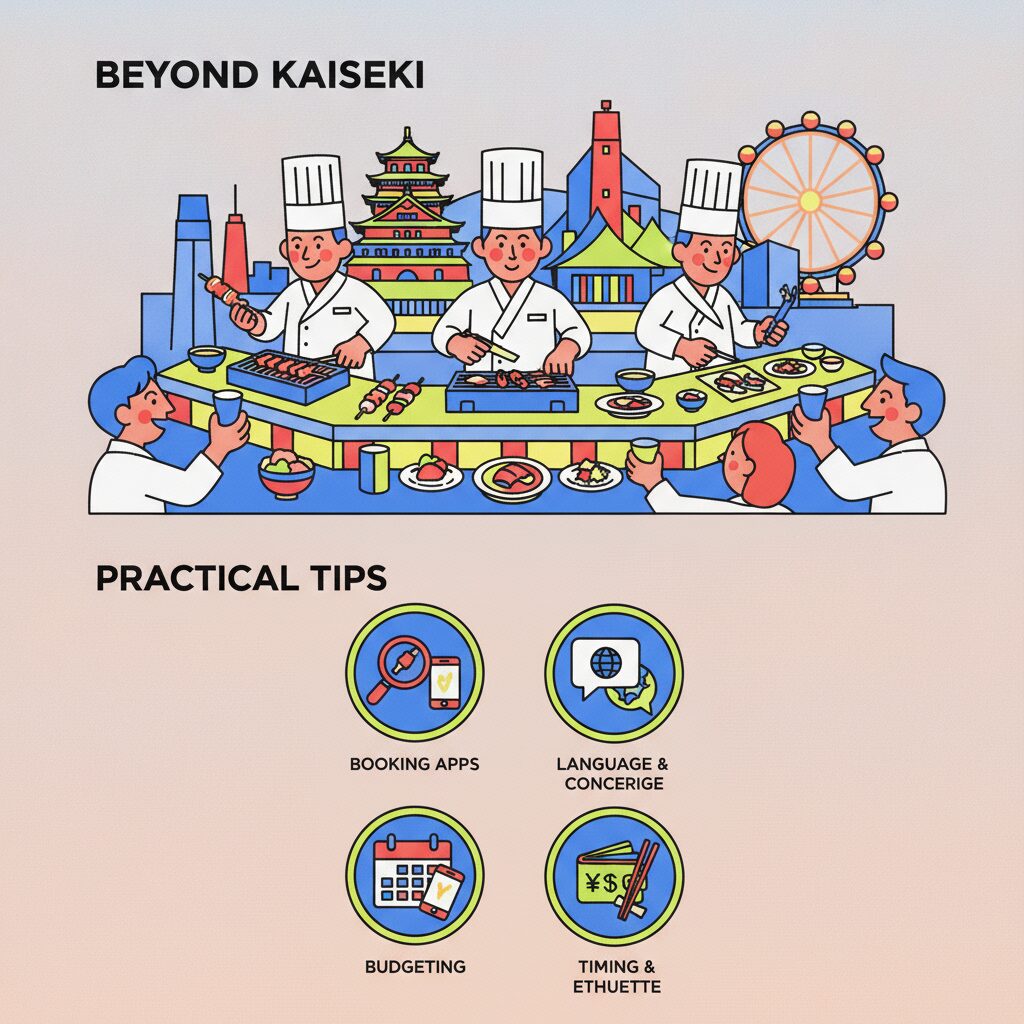
The logistics of securing a seat at a high-end Kappo restaurant can be intricate, but understanding how the system operates offers valuable insight into Osaka’s business culture. The city functions on a blend of modern convenience and deeply ingrained traditional networks. Knowing how to navigate this environment is essential for anyone wishing to fully experience the city’s culinary scene.
Navigating Reservations and Neighborhoods
Unlike casual dining spots where you can simply walk in, Kappo restaurants, especially those mentioned earlier, require advance reservations. The space is too limited, and the ingredients are carefully sourced based on the expected number of guests, making walk-ins impractical. When booking, it’s important to be aware of the geography of your chosen location. Minami, the southern entertainment district encompassing Namba, Shinsaibashi, and Hozenji, is traditionally the heartland of Kappo. The atmosphere there is somewhat more relaxed, deeply rooted in the city’s historical merchant culture. Kitashinchi, situated to the north near Osaka Station, is the city’s premier hostess bar and upscale entertainment district. Kappo restaurants in Kitashinchi often cater to corporate expense accounts. The mood can be more polished, prices significantly higher, and the clientele closely involved in the rituals of business entertaining.
For non-Japanese speakers, using a high-end hotel concierge remains the most dependable way to secure a reservation at elite establishments. Restaurants prefer bookings made through concierges because it adds a layer of accountability. In a city where ingredients are costly and profit margins tight, no-shows can be devastating to small businesses. The concierge serves as a guarantor of your reliability. Punctuality is crucial when you make a reservation; arriving fifteen minutes late disrupts the chef’s meticulously planned workflow and affects the dining experience for all others. If you expect to be delayed, calling ahead is mandatory — this is not merely a courtesy but a fundamental aspect of Japanese social respect.
The Financial Philosophy of Osaka Dining
Finally, it’s important to grasp the economic philosophy that underlies daily life in Osaka, famously captured by the term Kuidaore. Often translated as “eating oneself into ruin,” Kuidaore is actually a profound reflection of the local value system. It does not imply that Osaka residents are gluttonous or reckless with money. Rather, it means that they believe spending on exceptional food, enjoyed with good company, represents the highest and best use of their financial resources. They may haggle over the price of a television or complain about train fares, but they will willingly spend a significant portion of their paycheck at a Kappo counter without hesitation.
However, this readiness to spend is entirely linked to a demand for value. The Osaka diner is highly pragmatic. If a Kappo restaurant charges thirty thousand yen for a meal, diners expect to experience thirty thousand yen worth of extraordinary skill, impeccable sourcing, and genuine hospitality. They will not pay for empty ambiance, pretentious branding, or arrogant service. Substance is demanded. This rigorous, practical insistence on quality is what keeps Osaka’s culinary standards impressively high.
When you sit down at a Kappo restaurant, you are taking part in this ongoing cultural demand for excellence. You are removing formal barriers between people, engaging directly with the master craftsman across the counter, and encountering the warm, vibrant, and fiercely proud spirit of the city. To understand Kappo is to realize that beneath the neon lights and the chaotic energy of the streets, Osaka holds a profound, unbroken dedication to human connection and the quiet pursuit of perfection. For anyone living here, mastering the intimate, interactive world of the Kappo counter is not just a culinary achievement; it marks the moment you truly begin to grasp the brilliant, beating heart of Osaka.