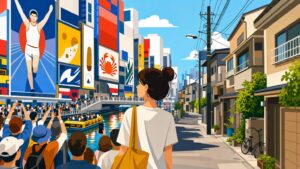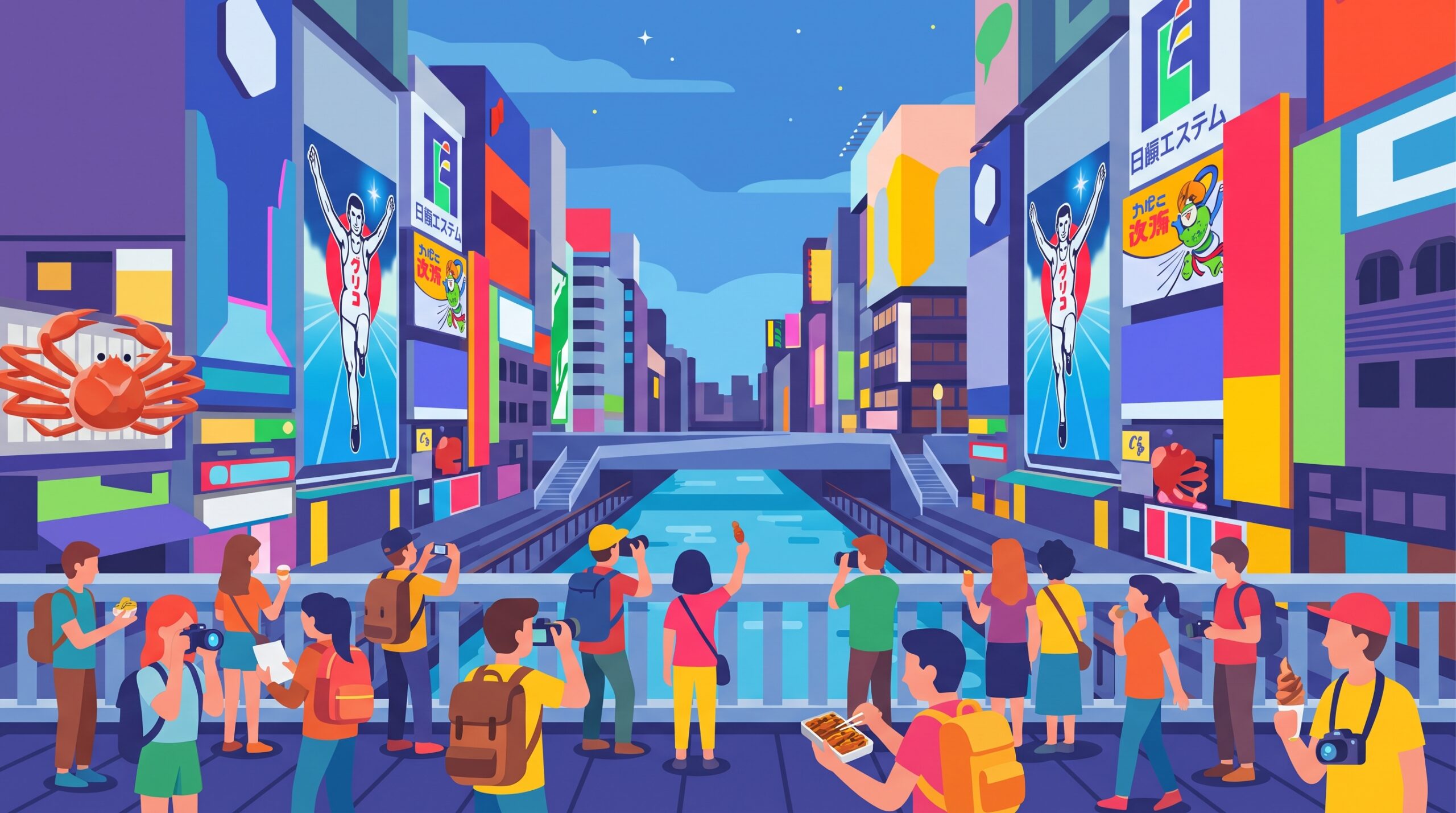
Step out of Namba station on any given Friday night, and you are immediately hit by a wall of sound, color, and motion. The humid air carries the heavy, unmistakable scent of fried batter, sweet takoyaki sauce, and the sharp tang of grilled seafood. As you move closer to the canal, the crowds thicken into an almost impenetrable mass of humanity. You hear English, Mandarin, Korean, Spanish, and a dozen other languages echoing against the massive concrete structures. Towering above you, giant mechanical crabs wave their claws in a slow, rhythmic dance, while equally massive dumplings and sushi pieces jut out from building facades, threatening to swallow the street below. This is Dotonbori. It is loud, it is brash, it is chaotic, and it is undeniably spectacular. For anyone visiting Japan, this neon-drenched corridor is the ultimate visual representation of modern, energetic Osaka. It is the image broadcast around the world, the backdrop for countless travel vlogs, and the mandatory centerpiece of every tourist itinerary.
Yet, as someone who lives, works, and breathes the real Osaka, I have to let you in on a poorly kept local secret. If you stand in the middle of that famous bridge, surrounded by thousands of people snapping photos of the neon signs, you are standing in the heart of Osaka, but you are not surrounded by Osakans. In fact, if you want to understand what daily life in this city is actually like, and if you want to know how the people of Osaka think, speak, and act, Dotonbori is the last place you should look. It is a brilliant, mesmerizing illusion.
My name is Yuki Sato. As a tour planner who spends my days figuring out how to give visitors an authentic experience while managing the realities of urban life in the Kansai region, I spend a lot of time observing the disconnect between what tourists expect and what locals actually do. Foreigners who are thinking about moving to Osaka, or who have recently unpacked their bags in a residential ward here, often experience a profound sense of disorientation when they first try to navigate the southern downtown area known as Minami. They come expecting the friendly, food-obsessed utopia promised by travel brochures, but quickly find themselves overwhelmed by the aggressive commercialization of the main strip. They ask me, often with a hint of disappointment, if this crowded, expensive amusement park is all there is to the famous Osaka food culture.
My answer is always a resounding no. The true essence of Osaka does not exist under the glare of the Glico running man. It exists in the shadowy, narrow alleys just a few blocks away. It exists in the unpretentious standing bars where businessmen loosen their ties and share raw, honest conversations with strangers. It exists in the quiet, cobblestone streets where tradition quietly endures. To truly live in Osaka, you must learn to read the city like a local. You must understand our profound obsession with value, our rejection of superficiality, and our deeply ingrained habit of seeking out the hidden, the authentic, and the genuinely good.
This is not a traditional travel guide designed to show you where to point your camera. This is a reality check. We are going to deconstruct the Dotonbori myth, examine the psychology of the Osaka resident, and map out the stark boundaries between the tourist playground and the actual living, breathing city. By the time we are finished, you will not only know where to find the real Osaka, but you will understand the cultural mechanics of why it is hidden in plain sight. You will understand the unspoken rules, the distinct rhythm of the Kansai dialect, and the pragmatic warmth that separates us from the polished, reserved streets of Tokyo. Let us dive into the reality of life behind the neon curtain.
The Dotonbori Reality: Is It Just a Tourist Trap?
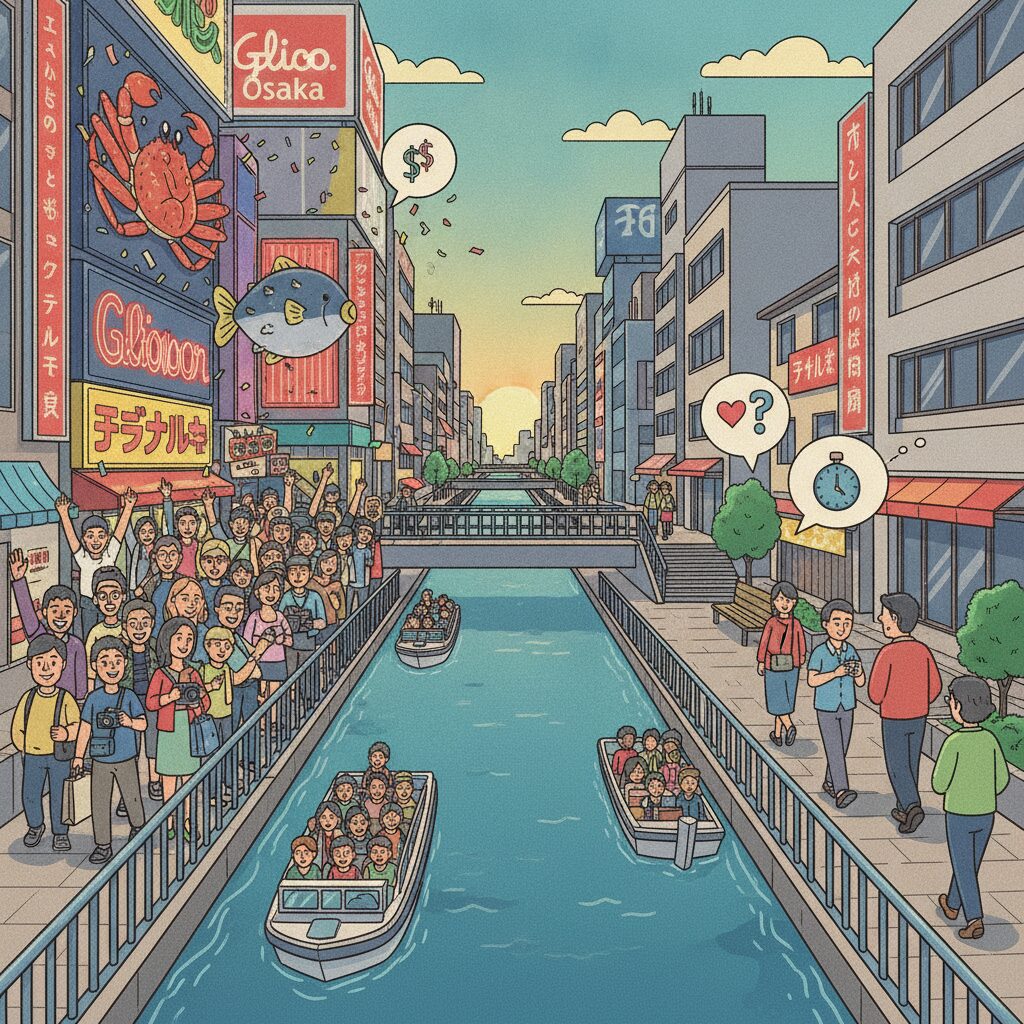
To understand why local residents have largely abandoned the most famous street in their own city, you need to grasp the core philosophy of Osaka. Historically, we are known as the nation’s kitchen, a reputation earned during the Edo period when this city was the central hub for rice and commodity trading. We are a city of merchants. The spirit of the Akindo, the traditional tradesman, remains the guiding principle of the modern Osakan. We view the world through a lens of practical commerce. We value a good deal, respect hard work, and have zero tolerance for being overcharged. This cultural trait is embodied in our obsession with cost performance, a concept locally known as cospa.
When a local evaluates a restaurant or bar, they run a complex internal calculation. They weigh the quality of the ingredients against the price, consider the atmosphere, assess the friendliness of the staff, and decide if the experience is truly worth the hard-earned yen. For generations, the area around the canal lived up to this standard. It was the theater district, the entertainment hub, the place to practice kuidaore—a famous local proverb meaning to eat oneself into ruin. It reflects a passionate, almost reckless love for food. In the past, Osakans came to this district to watch kabuki plays and spend their remaining money on extravagant, delicious meals.
However, the modern reality has shifted drastically. With international tourism booming over the last decade, the economic makeup of the main strip changed. Rents soared. Traditional, family-owned restaurants that had been in business for decades were pushed out by international retail chains, large drugstores catering to bulk-buying tourists, and heavily capitalized restaurant groups designed to serve thousands of visitors a day. The food on the main street became standardized. Menus were translated into multiple languages, which is helpful, but prices were quietly inflated to include a tourist tax.
This is where locals and tourists diverge. An Osakan will see a menu offering six pieces of takoyaki for eight hundred yen, scoff loudly, and walk away. To a local, paying inflated prices just because a restaurant has a giant mechanical octopus on its roof is an insult to their intelligence. It breaks the sacred rule of cospa. While we do not dislike tourists—in fact, their economic contribution is widely appreciated—we refuse to take part in a system that doesn’t offer genuine value.
Today’s Dotonbori is an architectural and cultural spectacle, but it functions mostly as an amusement park. Just as residents of Orlando don’t eat dinner at theme park restaurants every night, Osakans don’t spend their Friday nights on the main canal strip. The street is built for sensory impact, not culinary depth. It is a place of transit, a social media backdrop, and a showcase of modern overtourism. The giant signs that feel so uniquely Osaka are ironically preserved mainly because they meet visitors’ aesthetic expectations. Understanding this distinction is the first crucial step for any foreigner wanting to blend into the city’s daily rhythm. You need to look beyond the flashing lights and realize that the real city thrives quietly behind the illuminated facades.
The Tourist Experience: What You Must Do (And Then Leave)
Accepting that the main strip is a tourist trap doesn’t mean you should avoid it altogether. Living in this city involves recognizing its dual nature. Even the most skeptical, seasoned local feels a surge of civic pride when they catch a glimpse of neon lights reflecting off the dark canal waters at night. There’s an undeniable electric energy pulsing through the crowds. Whether your friends are visiting from back home or you’re just taking a walk to clear your mind after a long day at work, certain rituals are worth experiencing. The key is to engage with these rituals intentionally, understanding exactly what they represent, and having the wisdom to move on before you fall victim to the inflated economy of the main street.
Snapping the Ebisu Bridge and Glico Man
The Ebisu Bridge, spanning the canal and linking the shopping arcades of Shinsaibashi to the entertainment district of Namba, is arguably the most heavily trafficked pedestrian bridge in the country. It is the epicenter of the chaos. Standing on this bridge and taking a photo with your arms raised, mimicking the giant, illuminated Glico running man, is a mandatory rite of passage for anyone visiting the city.
From a sociological standpoint, the Glico sign is fascinating. It’s essentially an advertisement for a snack company, yet it has been elevated to the status of a cultural monument. It has endured wars, economic downturns, and vast urban redevelopment. For tourists, it symbolizes arrival. But how do locals perceive this bridge? In everyday local language, the Ebisu Bridge is often called nampa bashi, which roughly translates to the pick-up bridge. For decades, it was the prime spot for youthful, confident, and sometimes overly assertive local men to try to strike up conversations with passing women.
Today, the sheer density of tourists makes traditional nampa practically impossible, but the bridge remains a vital geographic landmark. Locals use it almost exclusively as a meeting place. If you’re planning a night out with coworkers, you might tell them to meet at the Glico sign. You’ll arrive, find your friends in the crowd, exchange quick greetings, and then immediately leave the area. The local mindset dictates no more than two minutes standing still on this bridge. Lingering means getting bumped by suitcases, photobombing strangers, and enduring the relentless noise of touts. It’s a place to pass through—a navigational waypoint, not a destination.
The Giant Mechanical Food Signs
Walk eastward along the canal, and you’ll encounter the true architectural absurdity of the district: a giant, articulated crab with moving legs, a massive, scowling chef holding a piece of sushi, a colossal dumpling suspended in mid-air. To a foreigner, especially one used to the understated, muted aesthetics of a city like Kyoto or the sleek, hyper-modern corporate glass of Tokyo, these signs can seem jarring, almost cartoonish.
However, these oversized sculptures reveal a lot about the Kansai mindset. In Tokyo, businesses often attract customers through prestige, exclusivity, and subtle branding. You might have to search for a hidden wooden door with a tiny, elegant sign to find a Michelin-starred restaurant in Minato Ward. Osaka, historically, has no patience for such pretense. We are a city of merchants competing in a dense, crowded market. The philosophy has always been unapologetically direct: grab the customer’s attention by any means necessary, make your product completely obvious, and deliver it with overwhelming enthusiasm.
The giant crab doesn’t whisper about its quality; it shouts its existence to anyone within a half-mile radius. This directness carries over into how Osakans communicate. We don’t use the highly layered, indirect social cues found elsewhere in Japan. We value clarity. If an Osakan thinks something is too expensive, they’ll say it’s too expensive. If a food is delicious, they’ll loudly proclaim it. The giant signs are the architectural equivalent of the local personality: bold, impossible to ignore, entirely without snobbery, and focused solely on the immediate transaction. Admire these signs for the cultural artifacts they are, snap your photos, and then be ready to leave the tourist zone behind.
The Local Experience: Where Osaka Residents Actually Go
Once you have paid your respects to the neon runner and the mechanical crab, it’s time to immerse yourself in the real city. The shift from the artificial to the authentic doesn’t require a long train ride. In fact, the geographical divide between the tourist trap and the local refuge is remarkably narrow. The true Osaka is hiding almost in plain sight, nestled in the narrow streets just a few minutes south and east of the main canal. This is where the concept of kuidaore is still sincerely practiced. Here, the cospa is high, the drinks are strong, and the city’s genuine character emerges every night.
Ura-Namba: The Underground Izakaya Heaven
If you want to discover where young professionals, tired office workers, and the creative class of Osaka spend their evenings, head to Ura-Namba. The name literally means hidden Namba or back Namba. Situated in the maze of narrow streets southeast of Nankai Namba Station, this area is the vibrant, gritty core of local nightlife.
Unlike the massive multi-story chain restaurants of the main strip, Ura-Namba is defined by its scale. It’s a dense cluster of tiny, independent venues. The quintessential Ura-Namba experience is the tachinomi, or standing bar. These spots are often no bigger than a typical living room. There are no chairs, just a long wooden counter and a few makeshift tables made from overturned beer crates. The air is thick with smoke, the scent of charcoal, and the rapid-fire rhythm of the Kansai dialect.
Entering a tachinomi as a foreigner can feel intimidating. There are usually no English menus, the staff is busily occupied, and the space is so tight you’re physically brushing shoulders with neighbors. But this lack of physical barriers encourages a lack of social boundaries, which defines Osaka culture. In Tokyo, you might drink for hours at a bar without ever acknowledging the person beside you. In Ura-Namba, ignoring your neighbor is nearly impossible.
It’s common, almost expected, for an Osakan to lean over, ask what you’re drinking, and spark a conversation. This zero-barrier communication is what locals are famous for. They are genuinely curious, endlessly pragmatic, and eager to share their city. They’ll recommend dishes, vent about their boss, and ask blunt questions about your life—all within five minutes of meeting you. The food at these establishments is cheap, quick, and intensely flavorful. You order small plates like chicken sashimi, deep-fried skewers, or slow-simmered beef tendon. You pay per drink, eat until satisfied, and move on to the next bar. It’s a fluid, dynamic, deeply authentic way to experience the city.
Hozenji Yokocho: A Quiet, Traditional Escape
If Ura-Namba embodies the raw, energetic side of local nightlife, Hozenji Yokocho represents its quiet, enduring soul. Just steps away from the chaotic din of Dotonbori, this narrow, stone-paved alley feels like a portal to a different century. You turn a corner, and the neon lights fade, replaced by the soft, warm glow of paper lanterns. The roar of crowds gives way to the gentle sound of water splashing on stone.
At the heart of the alley lies Hozenji Temple, home to a statue of Fudo Myoo, a fierce Buddhist deity. The statue is covered in a thick, vibrant layer of green moss, formed over decades by thousands of worshippers splashing water on it as part of their prayers. Local business owners, hostesses from nearby clubs, and chefs from surrounding restaurants regularly stop here to offer a quick prayer for success before their shifts. It’s a profound example of everyday spirituality seamlessly woven into the city’s commercial fabric.
The alley is lined with upscale kappo restaurants, traditional sushi bars, and quiet, elegant watering holes hidden behind sliding wooden doors and noren curtains. This is not the cheap, chaotic Osaka. It’s where locals go to celebrate an anniversary, impress a business client, or escape the noise of modern life. These establishments zealously protect their quality and atmosphere. They depend on regulars rather than foot traffic. While the main street caters to fleeting tourist attention, Hozenji Yokocho caters to lifelong local loyalty. It proves that Osaka isn’t just about cheap street food; it has a refined, elegant culinary tradition for those who know where to look.
Sennichimae Doguyasuji: Local Kitchen Vibes
To truly understand Osaka’s dynamics, you must visit the source of its obsession: Sennichimae Doguyasuji. This covered shopping arcade, a short walk from Namba station complex, is entirely devoted to restaurant supplies. It’s not a tourist attraction for souvenir shopping—though it has gained popularity recently—it’s a vital, functioning artery of the local economy.
Walking down this street, you encounter the sheer scale of the city’s food industry. Shops sell thousands of types of kitchen knives, massive industrial takoyaki griddles, delicately painted ceramics, commercial deep fryers, and incredibly realistic plastic food models for window displays. The atmosphere is deeply pragmatic. The shop owners are classic Osaka merchants—knowledgeable, efficient, and completely focused on utility.
For a foreigner seeking to grasp the local mindset, Doguyasuji is highly illuminating. It reveals that beneath the city’s playful, food-loving surface lies a serious, fiercely competitive business world. The chefs who buy tools here are artists, but also businessmen calculating margins, durability, and efficiency. When you see a local chef carefully weighing and balancing a custom-forged knife before heading back to his tiny stall in Ura-Namba, you begin to appreciate the deep respect for the craft of cooking that pervades every level of this society. Osaka doesn’t just love to eat; it reveres the business of feeding people with the utmost seriousness.
Food Showdown: Tourist Favorites vs. Local Picks
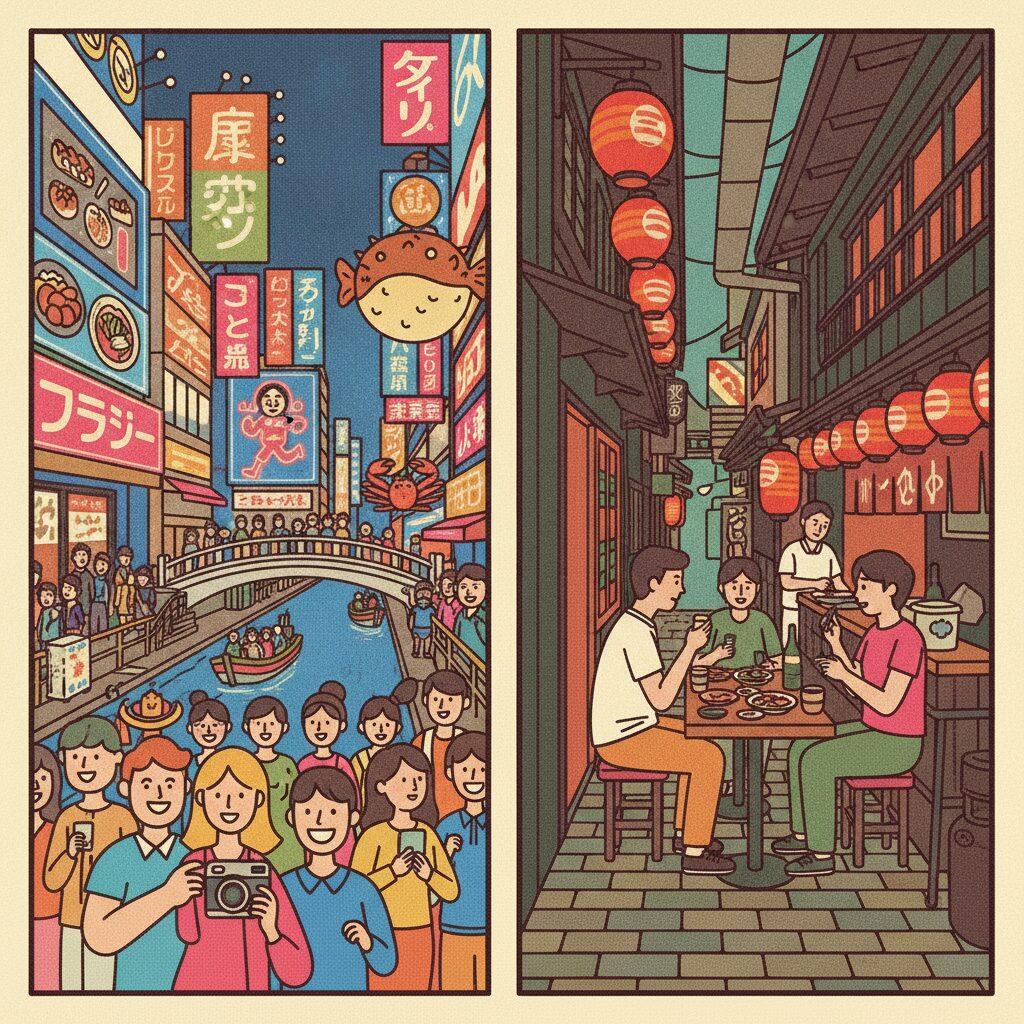
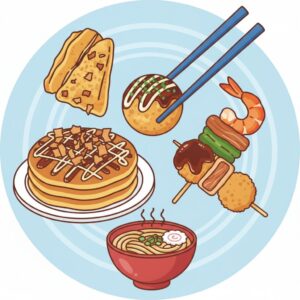
The most apparent clash between tourist expectations and local reality occurs on the culinary front. Visitors arrive in Osaka with a checklist of famous local dishes they feel compelled to try: takoyaki, okonomiyaki, and kushikatsu. The tourist areas gladly accommodate them, featuring numerous brightly lit shops serving these exact items. However, the way tourists enjoy these foods differs fundamentally from how locals do. Grasping this distinction is essential for anyone who wants to eat well and live wisely in this city.
The Takoyaki Line Strategy
On a weekend stroll along the canal, you will inevitably encounter long, winding queues outside several famous takoyaki stands. Tourists willingly wait thirty, forty, or even fifty minutes in either sweltering heat or freezing cold to buy a small boat of these molten octopus balls. They do this because their guidebook recommends it, because the stand sports a huge, eye-catching sign, or simply because a long line suggests the product is outstanding.
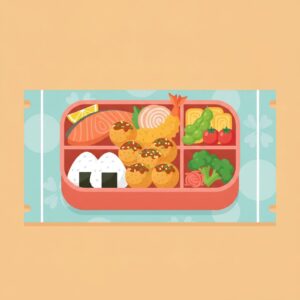
Ask any Osaka local about waiting forty minutes for takoyaki, and they will likely think you’ve lost your mind. Locally, takoyaki is fast food. It’s comfort food—a quick snack eaten on the way home from school or after a few drinks at a local bar. It is not a gourmet experience worth such a lengthy wait. Moreover, from a local perspective of cost-performance ratio (cospa), time is valuable. Waiting nearly an hour for a 600-yen snack is seen as a very poor investment.
A true Osakan never eats takoyaki along the main tourist drag. Every resident has a strong opinion about the best takoyaki spots, which are almost always small, unpretentious neighborhood shops near their local train stations or tucked away on quiet residential streets. These places serve takoyaki that is just as good, if not noticeably better, than famous chain outlets, and they do so instantly. They cater to regular customers who expect consistent quality and fair prices. Living in Osaka teaches you to ignore the long lines and trust the quiet confidence of the neighborhood vendor who has been expertly flipping batter on the same corner for thirty years without the need for a giant flashy sign.
How to Spot (and Avoid) Overpriced Tourist Menus
To navigate the southern district’s dining scene, one must develop an acute sense for spotting the tourist tax. Because visitors come in such large numbers, many establishments realize they don’t need repeat business—just a single tourist visit. This approach significantly impacts food quality and pricing.
So how does a local instantly know which places to avoid? The warning signs are surprisingly consistent. First, check the menu outside. If it features massive, multilingual descriptions with flashy photos but doesn’t clearly list drink prices, that’s a red flag. Honest businesses in Osaka are upfront about costs. Second, locals are wary of overly pushy street promoters. A genuinely good Osaka eatery doesn’t rely on teenagers in cheap suits blocking your way to coax you inside. Good food sells itself, and local word-of-mouth is the best marketing.
Another subtle clue is the presence of the otoshi, a compulsory seating fee accompanied by a small, often uninspired appetizer. While otoshi is common in traditional izakayas across Japan, many tourist-centric spots in Minami exploit this, charging excessive fees for a tiny dish of salted cabbage just to inflate the bill. Locals know which bars charge reasonable seating fees and which ones are simply gouging.
When choosing where to eat, locals look for signs of everyday practicality. They seek handwritten daily specials on whiteboards, indicating the chef buys fresh ingredients from the market rather than relying on frozen goods. They look for other locals, recognized by casual clothing and the fluent, fast-paced use of the local dialect. Living in this city teaches you to be a discerning consumer. You learn to avoid the flashy and appreciate the genuinely good. You discover that the best meals are often tucked behind the most unassuming doors.
How to Perfectly Balance Your Dotonbori Itinerary
If you are an expat hosting family from abroad or a new resident trying to familiarize yourself with the city, you cannot simply overlook the famous landmarks. You need to engage with the tourist areas, but it must be done strategically. The aim is to enjoy the visual spectacle of the main strip without giving up your entire evening to its inflated prices and overwhelming crowds. Mastering this balance is what sets apart a seasoned Osaka resident.
Best Times to Visit to Avoid the Mega-Crowds
The timing of your visit to the canal shapes your entire experience. If you try to stroll down the main street at eight o’clock on a Saturday night, you’re not taking a casual walk; you’re partaking in a slow, claustrophobic procession. The sheer crowd density makes it impossible to stop and appreciate your surroundings. You’re simply swept along in a current of weary tourists and pushy touts.
To enjoy the area without losing your sanity, locals rely on specific timing windows. The absolute best time to take in the scale and architectural madness of the neon signs is late at night, well after the dinner rush ends. Around eleven or midnight, the large tourist groups have retreated to their hotels. Street performers have packed up, and lines for street food stalls have disappeared. Yet, the neon lights remain blazing. This is when the canal takes on a moody, cinematic atmosphere. You can stand on the bridge, gaze at the reflection of the lights in the dark water, and appreciate the city’s strange beauty without being jostled.
Alternatively, visiting early in the morning offers a surreal and contrasting experience. At seven a.m., the street is empty except for delivery trucks and local shop owners sweeping the pavement. The giant mechanical signs are still, resting before the day’s onslaught. The lingering smell of stale beer and fried food serves as a ghost of the previous night’s chaos. In these quiet moments, you can actually see the skeleton of the city—the historical framework of the theater district before being overshadowed by the daily flood of people.
A Seamless Walking Route from Tourist Glitz to Local Grit
To truly grasp Osaka’s dichotomy, I always recommend a specific walking route that physically traces the transition from the artificial to the authentic. It is as much a psychological journey as a physical one.
Start your evening on the Shinsaibashi shopping arcade, north of the canal. Walk south through the brightly lit corridor of international fashion brands and massive drugstores. As you near the canal, the noise level will spike dramatically. Step onto the Ebisu bridge. Take your mandatory photo with the Glico man. Take in the spectacle. Look at the giant crab and the neon lights. Spend exactly five minutes soaking up the chaotic energy that defines Osaka’s global image.
Then, immediately turn your back on the canal and walk south into the narrow streets of the Namba district. Within two blocks, the giant signs vanish. Turn slightly east and make your way into the Hozenji Yokocho alley. Notice the sudden drop in volume. Admire the moss-covered statue and the quiet elegance of the traditional storefronts. Take a deep breath of the incense-scented air.
From Hozenji, continue south and east, crossing the main street of Sennichimae, and delve into the labyrinth of Ura-Namba. The atmosphere shifts once more. It is no longer quiet, but the noise is different. It’s not the overwhelming roar of tourists; it’s the focused, energetic hum of local life. Find a tachinomi with an open spot at the counter. Squeeze in next to a group of local office workers. Order a cheap draft beer and a plate of grilled skewers. Listen to the rhythm of the local dialect around you.
In just twenty minutes, you have moved from the most artificial, heavily photographed tourist trap in the country to the authentic, beating heart of local culture. You have experienced the full spectrum of the city. You have seen the mask Osaka wears for the world and slipped behind the curtain to witness how it truly lives.
Final Verdict: Should You Skip Dotonbori Entirely?
When foreign residents finally come to understand the reality of the local geography, they often ask a reasonable question: should I simply advise everyone to avoid Dotonbori altogether? Is it utterly worthless?
The answer is a clear no. To disdain the tourist area is to misinterpret the essence of Osaka. This city has always been a hub of entertainment, commerce, and a welcoming place for visitors. The neon lights and enormous signs are not a betrayal of the city’s character; rather, they are an exaggerated, hyper-commercialized reflection of its longstanding desire to entertain and feed the masses. The main street fulfills exactly the role it was intended to play in the contemporary global economy.
However, living in Osaka requires you to look beyond this spectacle. It asks that you distinguish between a space designed for consumption and one meant for living. The tragedy is not the existence of a tourist trap; the tragedy is that so many visitors never venture beyond the main street to experience the genuine warmth, sharp humor, and incredible culinary richness of the real city surrounding it.
As you move through life in Kansai, let the main strip serve as a landmark, a meeting spot, and an occasional spectacle. But let the quiet alleys, the smoky standing bars, and the unpretentious neighborhood establishments become your true home. Embrace the local philosophy of cospa. Seek honest value, pursue genuine interactions, and don’t hesitate to squeeze into a crowded counter and strike up a conversation with a stranger. That is how you stop being a tourist. That is how you truly start living in Osaka.