
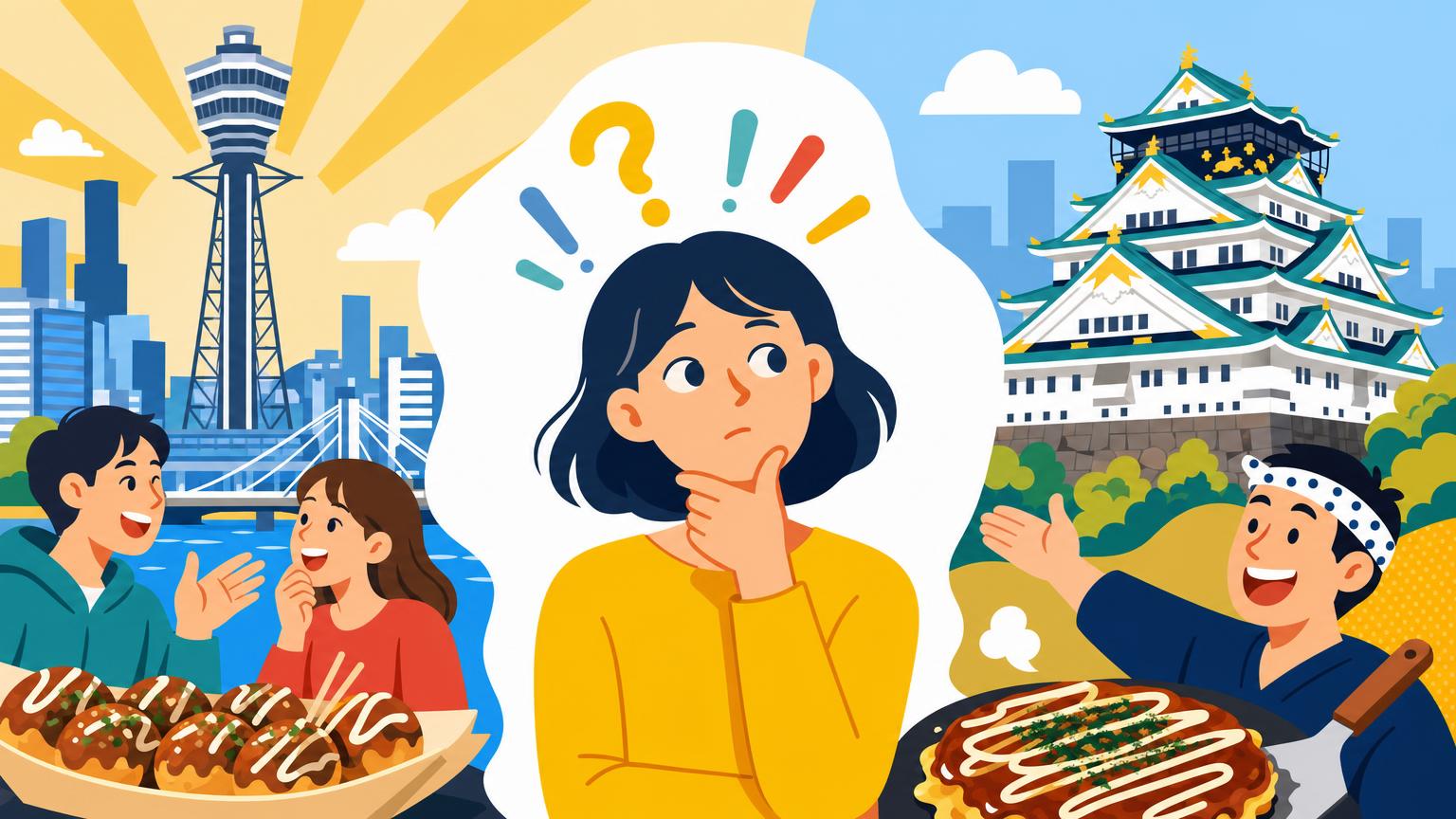
You hear it everywhere. On the commuter train rattling toward Umeda, squeaking over the ancient tracks. In the brightly lit aisles of your neighborhood supermarket, hovering right near the heavily discounted evening bento boxes. Across the sticky, beer-stained wooden counter of a cramped standing bar in the heart of Tenma. It hangs heavily in the air after a deeply passionate speech. It follows the most confident, rock-solid, absolutely certain advice you have ever received in your life. Shiran kedo. Two simple words. Infinite layers of mystery. You ask an Osaka local where the best takoyaki stand is, and they give you a ten-minute theatrical monologue about a secret spot hidden down a narrow alleyway in Namba. They describe the crispiness of the batter with tears in their eyes. They talk about the secret sauce recipe like it is a matter of highly classified national security. And then, right at the very end, just as you are pulling out your phone to drop a grateful pin on the map, they drop the phrase. Shiran kedo. I do not know, though. Wait, what? Did they just completely invalidate their own brilliant advice? Are they messing with you? Welcome to daily life in Osaka. As a Korean-American writer who spends half her life analyzing the rapid-fire dialogue of anime and the other half navigating the wonderfully loud, unapologetically direct streets of the Kansai region, I can tell you a universal truth. Learning standard Japanese from pristine textbooks will only get you so far down here. To truly survive and thrive as a resident in Osaka, you need to understand the rhythm of the city. You need to understand the complex soul behind the slang. You need to thoroughly decode the ultimate conversational safety net. Let us dive into the true meaning of shiran kedo, explore why it perfectly encapsulates the Osaka mindset, and learn how you can use it to navigate your daily life in Japan’s most beautifully chaotic metropolis.
What Does ‘Shiran Kedo’ Mean in Osaka?

When you first relocate to Osaka, the language barrier can feel like an impenetrable wall, even if you have studied Japanese diligently for years. People here speak faster, louder, and use a vocabulary that is entirely different from the polite, highly structured language you learned at your school in Tokyo. At the heart of this linguistic puzzle lies the phrase shiran kedo. To truly understand the shiran kedo meaning that Osaka residents cherish, we must first remove the complex cultural context and examine the raw, literal components of the words. Non-Japanese residents often experience a shock when they hear it for the first time. Why would someone speak with such absolute, overwhelming certainty on a topic, only to immediately retract their own statement? It seems inherently contradictory, almost like a joke played on a foreigner. However, in reality, it is a carefully crafted tool for preserving social harmony.
Breaking Down the Words: ‘Shiran’ and ‘Kedo’
Let’s start with the literal translation. The phrase consists of two distinct, highly functional parts. Shiran is the casual, regional way of saying “I do not know.” Kedo roughly means “but,” “however,” or “though.” When combined into a single breath, the phrase means “I do not know, though” or “but I could be wrong.” If you think about it, we do this all the time in English. Imagine a friend asking you for advice on fixing a broken laptop. You might give a detailed set of instructions based on something you vaguely read on a tech forum years ago, then nervously add “but I have no idea, honestly” at the end. You include that vital disclaimer to avoid being legally or morally blamed if the laptop suddenly crashes. The difference in Osaka is that this phrase is not just used for technical advice or uncertain facts; it’s used for everything. It follows neighborhood gossip, weather predictions, and even passionate opinions about newly released movies. While the phrase translates simply as a verbal disclaimer, its everyday use in Osaka elevates it to an art form.
‘Shiranai’ vs. ‘Shiran’: The Kansai Dialect Difference
To fully appreciate the local flavor of the phrase, you need to understand the mechanical difference between standard Japanese and the Kansai dialect, known locally as Kansai-ben. In Tokyo, the standard casual way to say “I do not know” is shiranai. It is a perfectly functional word. But Osaka, historically a city of merchants, is home to fast talkers with places to be and deals to close. They value rhythm, momentum, and speed in conversation. Words like shiranai—with their long, trailing vowels—are too slow for everyday speech. So, they shorten it relentlessly. Shiranai becomes shiran. The standard negative suffix “nai” is replaced with a sharp, punchy “n” sound. This is a key trait of the Kansai dialect overall. Wakaranai becomes wakaran. Tsumaranai becomes tsumaran. This linguistic shortcut gives Osaka speech its distinctive bouncy, staccato rhythm. When a local says shiran kedo, it flies off the tongue rapidly. It’s less an earnest disclaimer of ignorance and more a rhythmic punctuation mark, keeping conversations flowing smoothly without missing a beat.
The Cultural Nuance: Why is it Osaka’s Favorite Catchphrase?
Grasping raw vocabulary is only half the challenge. Whether you’re planning to live in Osaka or already enduring the humid summers and bracing for the windy, vibrant winters, it’s crucial to understand the psychology behind the words. Language always reflects culture directly. The way Osaka residents speak reveals their deeply rooted local values. People often repeat the tired cliché that “Osaka is friendlier than Tokyo.” While this oversimplification can be unhelpful for navigating daily life, there is a genuine and fundamental difference in how these two mega-cities approach social interactions and personal boundaries. This phrase serves as a perfect microscopic lens for examining the unique, lively mindset of Japan’s commercial capital.
The Ultimate Conversational Buffer
In Tokyo, the dominant, unspoken social norm is to avoid causing trouble or losing face at all costs. When a Tokyoite is asked a complex question and isn’t completely sure of the factual answer, they’ll likely hesitate, apologize profusely, and give a vague response or simply admit they don’t know from the start. Factual accuracy and maintaining social grace are highly prioritized. Osaka, by contrast, operates on a very different social wavelength. In Osaka, conversational silence is nearly a sin. Silence is often perceived as cold, distant, or unfriendly. When you ask an Osaka resident a question, their immediate instinct is to help, entertain, or at least keep the conversation lively. They’ll launch into a lengthy explanation, drawing on wild rumors, half-remembered TV shows, and pure intuition. They genuinely want to connect on a human level. Yet, they’re also aware of the risk of giving bad advice. Shiran kedo acts as the ultimate fail-safe conversational buffer, allowing them to participate enthusiastically while completely absolving themselves of any factual, moral, or social responsibility. It’s their clever way of saying, “I want to join this chat because I like your vibe, but don’t hold me accountable if I’m wrong.” It’s non-committal friendliness at its purest.
Comedy, Rhythm, and the Osaka Spirit
You simply can’t discuss everyday life in Osaka without delving into its comedy culture. The city is the undisputed heavyweight capital of Owarai, or Japanese comedy. The traditional, highly respected stand-up style, known as manzai, is based on a rapid-fire, tightly structured dynamic between a fool who says ridiculous things and a straight man who loudly corrects him. This comedic rhythm permeates every facet of daily life. At a local supermarket, cashiers often engage in rhythmic joking banter. At a local bar, regulars sound like they’re rehearsing for a prime-time comedy show. Within this cultural context, shiran kedo often serves as a brilliant, self-deprecating punchline. A local might passionately rant that the Hanshin Tigers will win the national championship because the manager ate a lucky bowl of udon that morning, fully aware it’s ridiculous and unsupported by evidence. They’ll deliver this fiery monologue, then pause for comedic effect and drop a deadpan shiran kedo. This instantly deflates tension, invites laughter, and signals that the speaker doesn’t take themselves too seriously—and neither should you.
Where You Will Hear ‘Shiran Kedo’ in Japan
While prime-time television and the viral internet have undoubtedly helped this phrase spread to younger, hip generations throughout Japan—from Hokkaido to Okinawa—its true, pulsating spiritual home remains the gritty, colorful streets of Kansai. If you live here as a foreign resident, you will almost certainly encounter it in very specific, highly predictable social situations. Anticipating these scenarios will help you feel much less confused and far more connected to the local community fabric. The phrase skillfully transforms a perplexing linguistic quirk into a warmly reassuring sign that you are experiencing authentic, unfiltered local life.
Late-Night Chats at a Local Izakaya
The most common and undisputed stage for this phrase is the smoky neighborhood izakaya or the standing tachinomi bar. These tiny establishments are the true heart of Osaka’s vibrant social scene. When you manage to politely squeeze into a narrow, shoulder-width space between exhausted salarymen aggressively loosening their ties and local shop owners winding down for the night, you step directly into an arena of wildly unfiltered opinions. Affordable alcohol naturally lowers inhibitions, making people much more talkative and eager to casually share their highly speculative conspiracy theories about the world. You might easily overhear two locals passionately debating the current political climate, the fluctuating economy, or why the spicy ramen shop down the street suddenly closed last week. One patron will confidently claim the owner ran away to Hawaii with a secret lover. The other will gasp in theatrical shock. Then, the grand storyteller will take a long sip of their potent highball and casually mutter shiran kedo. It acts as an instant tension release valve, effortlessly keeping the atmosphere light, breezy, and joyful. No one goes to a standing bar after a long Tuesday for rigorous, fact-checked academic debate. They go to playfully vent, connect with neighbors, and entertain one another. The phrase brilliantly ensures that no matter how heated personal opinions become, everyone remembers they are just blowing off steam and having fun.
Receiving Passionate Local Recommendations (With a Catch)
As a foreign resident trying to build a life here, one of the best ways to uncover hidden, affordable neighborhood gems is simply to ask the locals. People in Osaka love giving recommendations and take immense pride in their rich local food culture and encyclopedic knowledge of neighborhood grocery bargains. If you ask your friendly older neighbor where to buy the cheapest fresh vegetables, they won’t just give you a simple store name. They will offer an intricate, highly detailed map of fluctuating prices across three different supermarkets, varying entirely by the specific day of the week. They will earnestly tell you that the carrots at the corner shop are excellent on Tuesdays but terrible on Thursdays. Their goal is to make sure you get the best deal possible because they see you as part of the neighborhood now. Yet, they also know wholesale prices fluctuate wildly, and the carrot delivery truck might be late next Tuesday. They want to be helpful but flatly refuse to be held responsible if you walk through the rain and find the carrots expensive. So, the detailed recommendation ends firmly with a safety net. They have fully done their noble duty as a helpful neighbor, but the risk has been cleverly transferred back to you. It’s a beautiful, deeply pragmatic way to show genuine care while strongly maintaining personal boundaries.
A Resident’s Guide: How to Respond Like a Pro
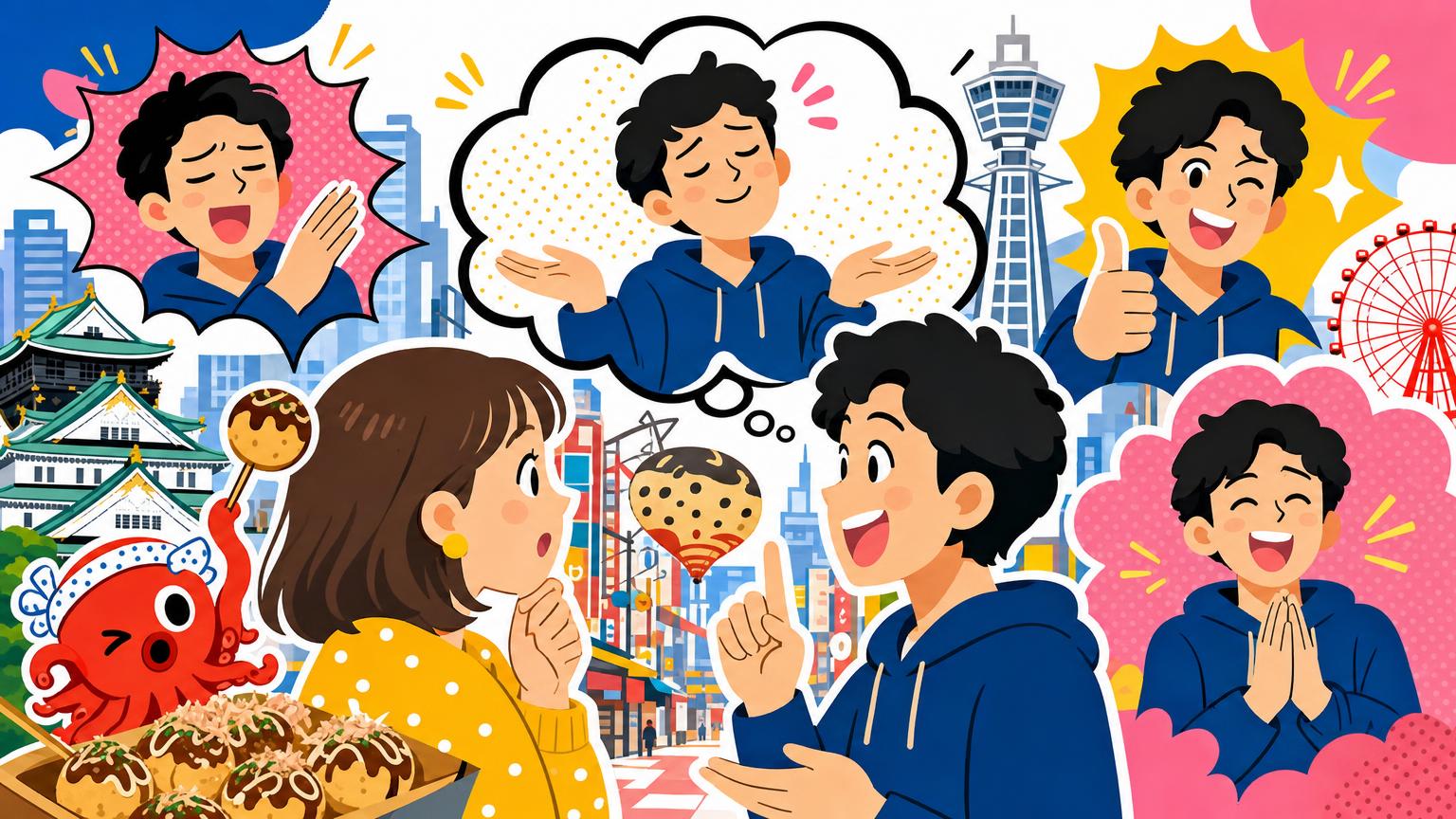
One of the biggest challenges for foreigners moving to Japan is making the difficult transition from passive textbook learning to active, dynamic social participation. Intellectually understanding what a phrase means is certainly helpful, but intuitively knowing exactly how to respond both physically and verbally is what truly transforms you from a polite outsider into a welcomed member of the community. When a local suddenly throws a shiran kedo your way, they are essentially tossing you a brightly colored conversational ball. How you choose to catch and return it determines the entire flow and success of the interaction.
The Art of the Playful Comeback (Tsukkomi)
Remember the rich comedy culture we discussed earlier? When someone uses this phrase, they are actively taking on the role of the foolish character making an exaggerated or unreliable claim. Your role, as the engaged listener, is to confidently step into the straight man’s shoes and deliver the sharp comedic retort famously known as tsukkomi. If you simply nod silently, look confused, and politely say ‘I understand,’ you immediately kill the rhythm of the joke. You let the conversational balloon pop and fall flat. Instead, you need to respond cheerfully and playfully, calling out their obvious lack of accountability. A classic, universally popular response to use is to smile widely and say, ‘Shiran no kai!’ This loosely translates to ‘You don’t know?!’ or ‘You have absolutely no idea?!’ You should deliver it with a light, highly exasperated tone, perhaps a slight chuckle, and maybe even a gentle, theatrical lean forward. The moment you deliver this retort successfully, the whole dynamic in the room changes. You are no longer just a polite, timid foreigner nodding along to things you don’t understand. You instantly become an active, willing participant in their cultural game. The local will almost always burst out laughing, nod appreciatively, and feel an instant, deep sense of camaraderie with you. This shows that you not only understand their complex language but also deeply grasp their heart.
Can Foreign Residents Use ‘Shiran Kedo’?
The short and simple answer is yes, absolutely. However, like any powerful, spicy seasoning, it must be used cautiously and with full awareness of the context. If you use it perfectly, you will instantly win the hearts of your local friends. If misused, you will come across as rude, dismissive, or totally unprofessional. The golden rule here is situational context. Never, under any circumstances, should you use this phrase in a professional or highly formal setting. If your serious boss at your Japanese corporate office asks whether the essential quarterly financial report is finished, and you respond that it is done, casually adding shiran kedo, you will likely face severe reprimand or even dismissal. If you jokingly use it with a tired clerk at the local ward office while registering your new apartment address, they will be utterly confused and annoyed. It belongs exclusively and fiercely to the sacred realm of casual, friendly interaction. Use it freely with friends at a riverside barbecue in Yodogawa. Use it with the bartender who already knows your first name and favorite drink. When sharing a wild rumor you heard on social media or confidently predicting heavy rain tomorrow based purely on your aching left knee, proudly append it to the end of your sentence. It wonderfully demonstrates that you are actively adapting to the local rhythm and embracing the playful, casual nature of your new hometown.
Pronunciation Tips to Sound Like a Kansai Native
If you’re going to boldly use it out in the wild, you might as well sound genuinely good doing it. Precise pronunciation is absolutely crucial for perfecting the subtle comedic timing. When foreign students learn standard Japanese, they are often taught a flat, even, and very polite intonation. Kansai-ben, on the other hand, is a lively dialect built on dynamic, swinging pitch accents and highly varied pacing. It has a unique, musical bounce. When you say the phrase, the word ‘shiran’ should be pronounced relatively quickly and sharply. The ‘ran’ part must be incredibly crisp, with no trailing off or elongating of the vowel. The word ‘kedo’ is where the real atmospheric magic lies. It’s usually spoken at a slightly lower pitch, almost muttered under your breath as a fleeting afterthought. It signals a rapid, heavy deceleration from the loud, confident statement you just made moments before. Confident sentence. Sharp ‘shiran’. Fading, quiet ‘kedo’. It’s honestly less a clearly spoken word and more a physical, verbal shrug. Practice it in your bathroom mirror. Watch local Osaka variety shows on TV to hear exactly how seasoned comedians effortlessly drop the phrase at the end of their wild stories. Mastering this distinct, bouncy intonation will instantly elevate your conversational Japanese and earn you deeply appreciative nods from the tough locals.
How This Phrase Explains the Heart of the City
Living in Osaka is an immensely rewarding and highly entertaining experience, but it demands a significant shift in your personal perspective. If you approach this city with the rigid expectations of silent order, pristine distant politeness, and absolute factual accuracy typical of central Tokyo, you will inevitably end up frustrated and socially drained. Osaka is, at its core, a loud city of genuine human connection. It’s noisy, a bit messy around the edges, and extraordinarily warm. The real meaning of this phrase stretches far beyond a mere casual lack of factual knowledge. It stands as a brilliant testament to a unique local culture that deeply values talking over awkward silence, prioritizes attempts to help over ignoring a problem, and enthusiastically embraces sharing a loud laugh rather than maintaining a flawless, stoic image.
When a lifelong Osaka local utters this exact phrase directly to you, never see it as a sign of ignorance or an unwillingness to take responsibility. Instead, see it exactly as intended: a sincere expression of affection. They genuinely cared enough about your presence to try to answer your difficult question, openly share their unverified opinion, or entertain you with a wild story—even if they lacked solid factual backing. They generously gave you their time and vibrant energy. They warmly invited you into their lively world, shared a moment of conversational vulnerability, and handed you the perfect chance to throw the joke right back at them. Understanding this unspoken, beautiful rule is the key to truly settling in and thriving here. It marks the moment you shift from a confused tourist observing a foreign culture from a distance to an engaged resident actively participating in a vibrant community. So, the next time you’re wandering the neon-lit, crowded streets of Minami late at night, and someone confidently offers you the most baseless piece of life advice you’ve ever heard, you’ll know exactly how to respond. You smile warmly, wait for the inevitable fading disclaimer, and throw the joke back with perfect timing. You’ll fit right in. Shiran kedo.








