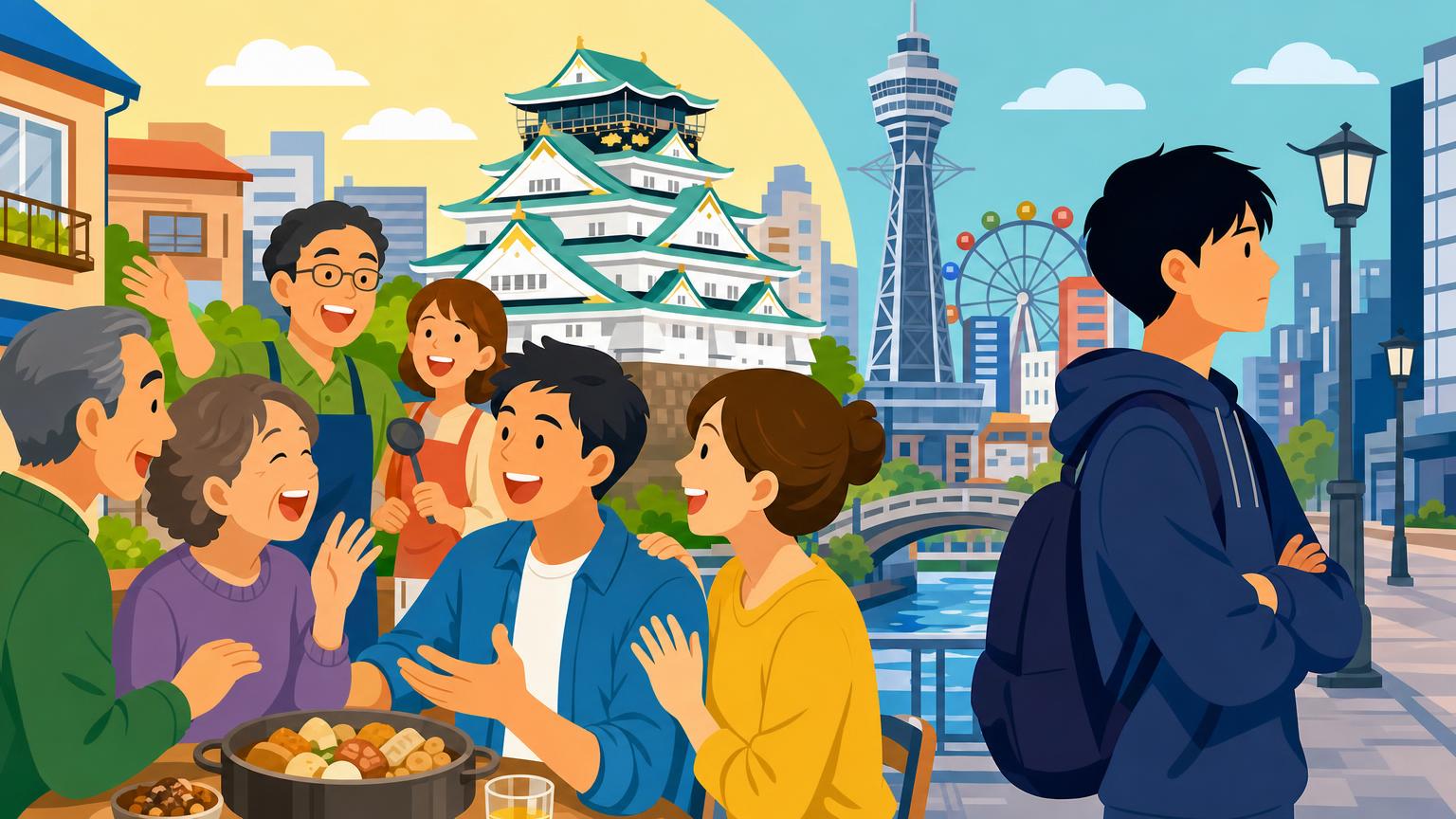
You step off the Shinkansen, walk through the sweeping concourse of Shin-Osaka Station, and almost immediately, the atmosphere shifts. If you have spent any time in other major Japanese metropolises, you have likely grown accustomed to a certain rhythm. It is a rhythm of quiet efficiency, of eyes cast downward toward smartphone screens, of a collective, unspoken agreement to preserve the bubble of personal space at all costs. You move to Japan expecting silent trains and polite bows, an elegant choreography of distance. But then you arrive in Osaka. Here, the air hums with a different frequency. The invisible walls that separate strangers in Tokyo do not exist here, or if they do, they are made of paper, easily punctured by a passing comment, a shared laugh, or a sudden, unsolicited offer of help. As someone who spends long stretches of time exploring the world’s street corners—always looking for the intersection where fashion, art, and raw human behavior meet—I can tell you that navigating Osaka requires an entirely different emotional vocabulary. You are not just a resident here. You are an active participant in a relentless, beautiful, and sometimes overwhelming theater of daily life. At the absolute center of this civic theater is a cultural concept known as Osekkai. It is a word that defies simple translation, often clumsily rendered in English as ‘nosiness’ or ‘meddling.’ But to dismiss it as mere interference is to misunderstand the very soul of the city. Osekkai is the glue that binds the neighborhoods of Osaka together. It is a proactive, unhesitating brand of kindness that refuses to leave you alone in your struggles. For those seeking deep, immediate community, it is a lifeline. For the fiercely independent, the introverted, or those who view anonymity as a luxury, it can feel like a profound challenge. Understanding how Osaka people think, speak, and act requires diving headfirst into this culture of Osekkai, stripping away the clichés, and examining what daily life in this loud, neon-lit, endlessly fascinating city is really like.
What is “Osaka Osekkai”? The Culture of Proactive Kindness
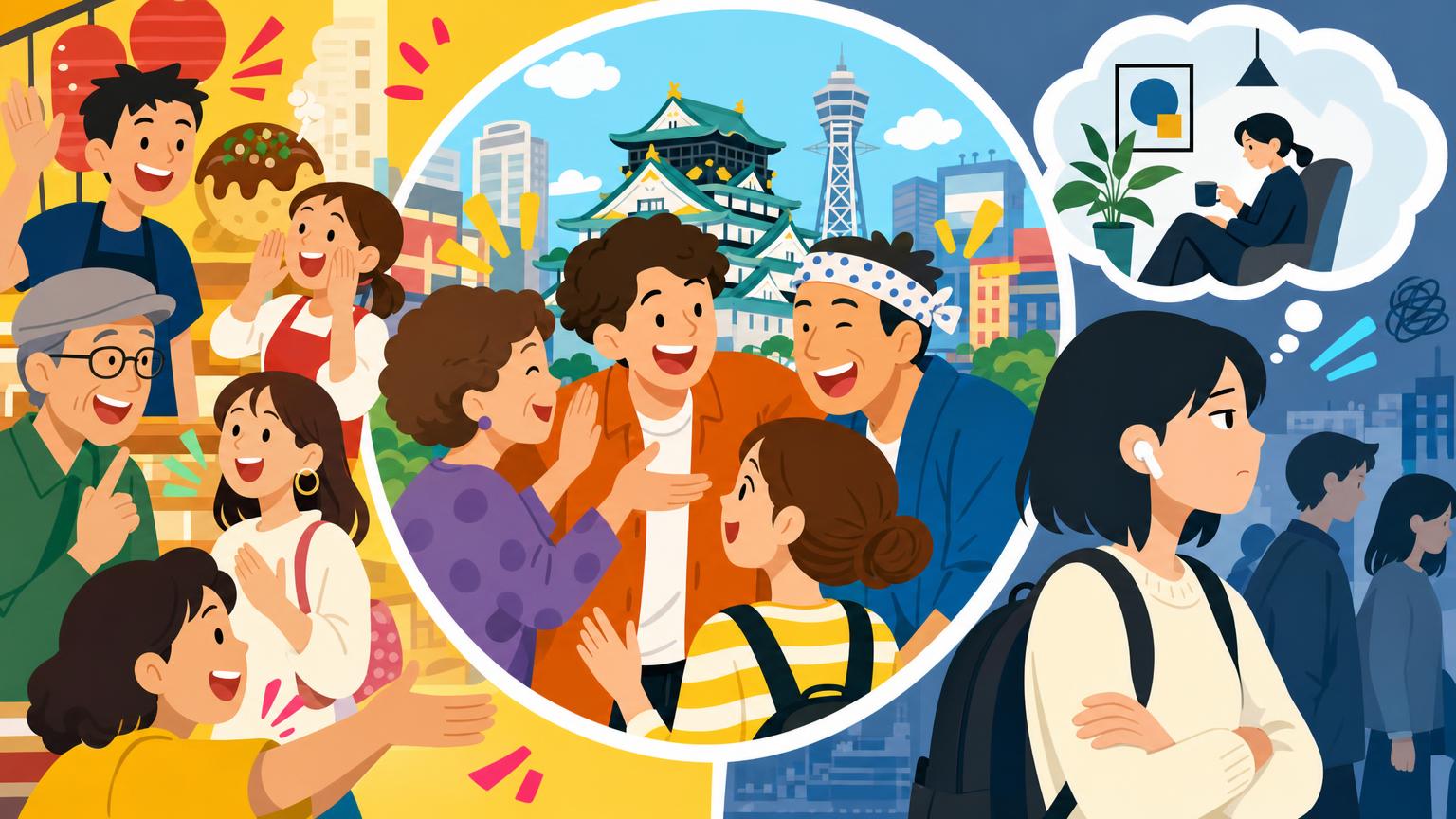
To truly understand Osaka, you first need to shed the Western associations tied to the word nosiness. In many cultures, being nosy is seen as crossing boundaries—a selfish curiosity driven by a desire to pry into private matters for gossip or control. However, in the Kansai region, Osekkai arises from a completely different mindset. It represents a sense of communal responsibility, the belief that if you see someone struggling—whether they are juggling a heavy suitcase on stairs, puzzling over a complicated subway map, or appearing lonely at a local bar—it is your civic duty to step in.
The True Meaning of Osekkai in Kansai Culture
There is an unspoken initiation when you move to this city. It often happens when you look slightly lost, perhaps standing on a street corner staring at your phone while the midday sun beats down on the concrete. Suddenly, an older woman appears beside you. This figure, affectionately known nationwide as the Osaka Obaachan, is a masterclass in fearless self-expression from an apparel perspective. She might wear a boldly patterned blouse—leopard or tiger prints defying the muted, minimalist trends common elsewhere in Japan. Her clothing declares her presence without apology. She won’t ask if you need help; she’ll assume you do. And before you can fully explain your destination in broken Japanese, she will press a brightly wrapped hard candy into your hand. This candy, called an ame-chan in the local dialect, is far more than just sugar. It’s a social contract—a pure, tangible symbol of Osekkai.
The ame-chan serves as a peace offering, an icebreaker, and a small dose of community. The Osaka Obaachan carries these candies specifically to offer to strangers, children, and flustered expats alike. Their mindset is fascinating—they don’t see you as a foreign outsider intruding in their space, but as a guest in their living room who looks a little thirsty. This mentality permeates the city. Osekkai means personal boundaries remain fluid. People will comment on your supermarket purchases, offer unsolicited advice on how to soothe your cough if you clear your throat on the train, and physically turn you around to point you in the right direction if they notice you heading the wrong way. For someone valuing fierce independence, this can feel overwhelming. You might think, “I didn’t ask for your help; I can manage on my own.” But responding coldly rejects a genuine offer of warmth. Osekkai isn’t about making you feel incapable—it’s entirely about reminding you that you are not alone.
Tokyo vs. Osaka: A Contrast in Local Vibe and Hospitality
The contrast between Tokyo and Osaka offers one of the most fascinating sociological studies in urban life. Tokyo is a masterpiece of curated distance—sleek, greyscale, and impersonal. Millions coexist in impossibly dense spaces without truly acknowledging one another. Eye contact is avoided, and conversations on trains happen in whispers, if at all. Tokyo grants the luxury of absolute anonymity: you can wear what you want, act as you please, and fail without anyone noticing.
Osaka strips away that anonymity. If Tokyo is a refined, minimalist runway show with a polite silent audience, Osaka is the busy, chaotic backstage where everyone talks over each other, pins clothing, and shares coffee from a single thermos. Anonymity in Osaka is seen as somewhat tragic. If you sit alone at a counter, it’s only a matter of time before the person next to you asks where you’re from, what you do, and why you’re there. This difference is rooted in history. Tokyo developed from samurai culture, emphasizing rigid hierarchies, strict formality, and maintaining face. Osaka, historically a merchant city, was founded by traders, shopkeepers, and hustlers. In such a city, being shy isn’t an option; communication, negotiation, and building quick rapport are essential for survival. This heritage still pulses through the streets today. Osaka people don’t care about your social rank or perfect grammar; they care if you can share a laugh and sustain a conversation. The polished surface of standard Japanese politeness is replaced by raw, unfiltered human connection.
Osaka Osekkai Lab: Volunteers Bridging the Gap for Tourists and Expats
This ingrained cultural trait of proactive kindness is so deeply embedded in the local identity that it has even inspired organized, grassroots movements. Recently, you might have seen local news reports or heard murmurs about an intriguing initiative called the Osaka Osekkai Lab. For foreigners seeking to understand the essence of the city, this group serves as an ideal example of how Osaka channels its distinctive personality into practical community support.
The Mission Behind the Movement
The Osaka Osekkai Lab is not your typical, rigid tourist information center. It is a volunteer organization founded entirely on the belief that the locals’ natural inclination to be ‘nosy’ can be transformed into a strength to welcome international visitors and expats. The members of this initiative identify a common issue: as tourism grows and more foreigners choose to settle in Kansai, the language barrier often leads to misunderstandings. In many other cities, locals might avoid a confused foreigner out of fear of not speaking perfect English, worried about the embarrassment of miscommunication. The Osekkai Lab strives to eliminate that fear.
Volunteers patrol major areas, actively seeking out people who look lost, confused, or simply curious. Their philosophy is that flawless English is not required. Equipped with translation apps, exaggerated gestures, boundless enthusiasm, and the classic Kansai spirit, they bridge the communication gap through determination alone. They are also training other locals to overcome language anxieties and embrace their inner Osekkai. They teach residents that a warm smile, a confident approach, and a willingness to help are far more important than grammatical accuracy. For an expat living in the city, knowing that groups like this exist completely transforms the urban experience. You realize that the city is not merely passively hosting you; it is actively working to include you.
Safety and Comfort Through Community Eyes
From my viewpoint as a woman who travels extensively and often examines the safety aspects of various global cities, the culture of Osekkai offers a profound, often overlooked benefit. It fosters an exceptional level of street-level security. In urban planning theory, there is a notion called ‘eyes on the street’—the idea that a neighborhood is safe not because of police presence, but because residents constantly watch over, engage with, and take responsibility for their shared environment. Osaka perfectly exemplifies this concept.
Living in a city where people mind their own business to an extreme can make you vulnerable. If you experience harassment or find yourself in a troubling situation, the collective silence of bystanders can be frightening. In Osaka, that silence does not occur. If someone bothers you on a train, or you look distressed late at night near a station, the likelihood of a local stepping in to ask if you need help is remarkably high. The nosiness becomes a kind of neighborhood watch. Older residents sitting outside their shops, bar owners wiping down counters, grandmothers walking dogs—everyone is watching and ready to intervene. For a foreigner moving to a new country, this proactive community involvement offers a deep sense of psychological comfort. You may need to sacrifice a bit of personal space, but in return, you gain a city full of self-appointed guardians.
Best Places to Experience Authentic Osekkai in Osaka
To fully grasp how this mindset influences everyday life, you can’t simply read about it; you need to immerse yourself in the environments where it thrives. Osaka is a city made up of distinctive neighborhoods, each with its own character, yet the spirit of proactive hospitality runs deepest in the areas that maintain the traditional merchant ethos.
Chatting with Locals in Shinsekai’s Retro Izakayas
If you want to plunge straight into Osaka’s social culture, you have to visit Shinsekai. Situated in the southern part of the city, beneath the watchful gaze of the vintage Tsutenkaku Tower, Shinsekai feels like a neon-lit time capsule from the Showa era. It’s gritty, vibrantly colorful, and boldly loud. In terms of fashion and style, it represents a striking mix of working-class practicality and flamboyant retro flair. This isn’t the polished, upscale Umeda district; this is the working-class heart of Osaka.
The real charm of Shinsekai is found in its tachinomi, the traditional standing bars. Upon entering a tachinomi, you must leave your fierce independence at the door. These bars are small, narrow, and packed. There are no private booths. You’ll be standing shoulder-to-shoulder with local laborers covered in paint, sharp-dressed retirees sipping cheap beer, and younger creatives soaking up the vintage vibe. In this cramped space, Osekkai thrives. Drinking quietly is not an option. The bartender will inquire about your meal. The person next to you will urge you to try their favorite brand of shochu. If you hesitate with the menu—which is often handwritten on strips of paper hanging on the wall—someone will promptly lean over and suggest the kushikatsu, the deep-fried skewers the area is known for. You don’t just share the physical space; you share the dipping sauce etiquette, the banter, and the collective energy of the room. For an expat, becoming a regular here is the quickest way to stop feeling like an outsider and start feeling like a local.
Strolling Through Traditional Shotengai
Another cornerstone of Osaka’s community life is the shotengai, the covered shopping arcades. While Tokyo has its share, Osaka’s shotengai truly serve as the living rooms of the neighborhoods. The most renowned is the Tenjinbashisuji Shotengai, proudly holding the title of Japan’s longest shopping street, extending over two kilometers.
Walking down Tenjinbashisuji is a fully immersive theatrical experience. Shop owners don’t just remain quietly behind their counters; they stand out front, energetically announcing their daily specials in a rhythmic, musical tone. This is where the merchant legacy is most alive. If you pause to admire a ceramics display, a shopkeeper will likely come out, recount the full history of the plate, joke about the price, and offer a discount before you’ve even opened your wallet. Buy a bag of oranges from a local grocer, and they might toss in an extra apple simply because they like your jacket or appreciate your efforts to speak Japanese. The transactional aspect of shopping here is completely overshadowed by human connection. You are not a mere consumer; you are a neighbor. Living in Osaka means running daily errands in a shotengai that involve dozens of micro-conversations. It means being recognized, being asked about your day, and feeling the constant, comforting hum of Osekkai.
How to Embrace Osaka’s Unique Hospitality
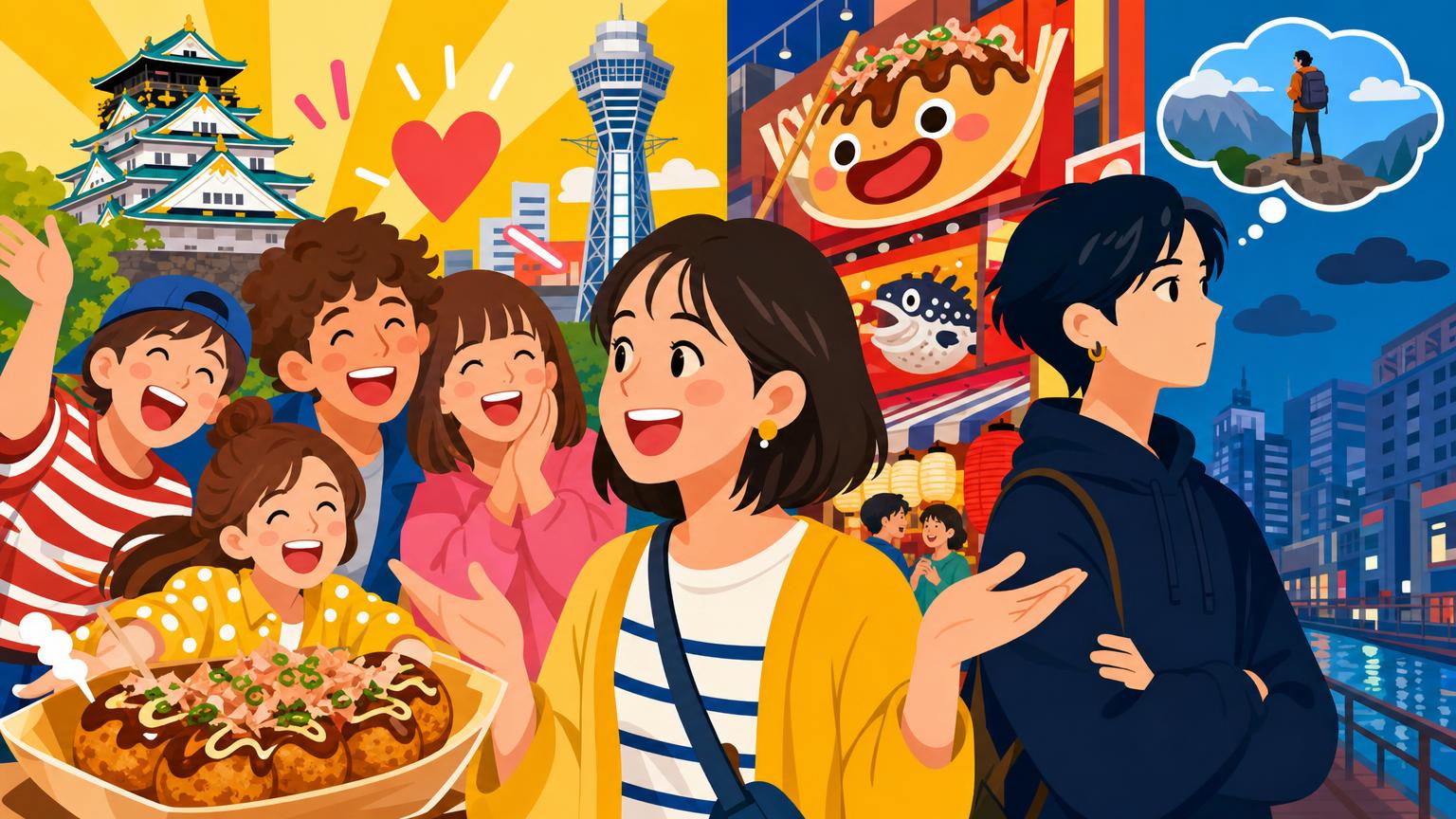
If you are naturally fiercely independent, adapting to this level of constant interaction requires a shift in perspective. You don’t need to change who you are, but you do need to understand the local rules of engagement. You must learn how to catch the conversational ball when it’s thrown your way and how to gently toss it back without causing offense.
Essential Kansai Phrases to Respond to Friendly Locals
Language is the key tool for navigating Osekkai. You don’t need to be fluent in Japanese, but mastering a few essential phrases in the Kansai dialect, known as Kansai-ben, will instantly transform how the city responds to you. Standard Japanese can sometimes sound a bit stiff and formal in the streets of Osaka, while Kansai-ben is musical, emotive, and crafted for comedy and connection.
The most important word to learn is ookini. It simply means thank you, but it carries a warmth and weight that the standard arigatou gozaimasu sometimes lacks. When the Obaachan hands you ame-chan, you say ookini. When the bartender slides your beer across the counter, you say ookini. It softens your presence and shows respect for the local rhythm.
Another vital phrase is maido. Once used by merchants to thank customers for their continued patronage, it has evolved into a casual, all-purpose greeting. When you walk into a familiar shop or izakaya, hearing a loud, enthusiastic maido makes you feel instantly recognized. Responding with a cheerful maido of your own confirms your status as someone who understands.
Finally, there is the art of the tsukkomi, the comedic response. Osaka is Japan’s undisputed comedy hub, and humor is deeply woven into daily interactions. If a shopkeeper makes an obvious joke—like handing you your change and saying, “Here is your one million yen”—a polite, confused smile typical of Tokyo will kill the mood. The right reaction is a lighthearted nande-ya-nen, roughly meaning “you’ve got to be kidding me” or “why the heck would that be?” It’s a playful retort. By using these phrases, you show locals that you’re willing to join in the fun, turning their Osekkai from a possible annoyance into a shared moment of joy.
Navigating Personal Space with a Smile
Even with a deep appreciation for the culture, some days you’ll simply want to be left alone. For the fiercely independent expat, managing personal space in a city that doesn’t naturally respect it is a delicate balancing act. You might be exhausted after a long day, wearing headphones, trying to disappear into a corner on the subway, only to have an elderly man tap your shoulder to comment on the weather.
The key to surviving these moments without losing your temper—or offending the well-meaning local—is mastering the art of soft disengagement. You can’t respond with sharp irritation or cold silence, as this breaks the city’s unspoken social contract. Instead, accept the Osekkai with a brief, genuine smile, acknowledge their effort with a quick nod and a polite ookini, then gently but firmly redirect your attention back to your book, phone, or thoughts.
Osaka people are highly observant. They may be nosy, but they are not usually obtuse. If you offer warm acknowledgment followed by a clear physical signal of withdrawal, they generally understand that you’re not up for a long conversation. They’ll back off, satisfied they’ve done their civic duty by reaching out, and leave you in peace. The key is that the initial contact must never be met with aggression. Allow the brief interaction to occur, then gracefully step away. It’s about setting boundaries without building walls.
The Honest Truth About Living with Osekkai Every Single Day
Deciding if Osaka is the right place for you to live ultimately hinges on your tolerance for human interaction. Living here means accepting that your life will cross paths with strangers every day. It requires relinquishing the illusion of having complete control over your public surroundings.
When Nosiness Feels Like Home
For those seeking community, there is arguably no better city globally. The Osekkai culture ensures you will never truly feel isolated, even if you arrive knowing no one. The city compels you to engage, to converse, to share space, and to lower your defenses. You’ll discover that the local butcher knows exactly which cut of meat you prefer on Tuesdays. You’ll notice the master of the local coffee shop recognizes when you look tired and fills your cup a little more. When you stumble over a cultural hurdle, a helping hand will always be there to guide you, often holding a piece of brightly colored candy.
When You Just Want to Be Left Alone
However, it’s completely understandable to find this overwhelming. If your mental well-being depends on strict boundaries and you recharge by being invisible in a crowd, Osaka’s relentless energy may exhaust you. You will need to work harder to find moments of complete solitude. You’ll have to learn to say no, to shrug off unsolicited advice about your lifestyle, and accept that your neighbors will always know a bit more about your affairs than you’d prefer.
But if you can lean into the chaos, appreciate the beauty in the meddling, and recognize that such proactive kindness is a rare and valuable trait in today’s increasingly isolated world, Osaka will reward you profoundly. It will strip away your fierce independence, not to weaken you, but to reveal that relying on those around you is actually a great strength. You will cease to see the city as merely a backdrop for your life and start seeing it as a large, loud, passionately affectionate family you never realized you needed.