
Have you ever stood in a Japanese supermarket, watched a staff member place a bright sticker on a bento box, and wondered whether you were supposed to grab it immediately, wait politely, or leave it alone?
That small moment captures a surprising amount of everyday life in Osaka.
The sticker may say 半額, meaning half price. It may show 20%引, meaning twenty percent off. It may reduce a ¥598 dinner to ¥299, turning an ordinary evening meal into a small victory. For foreigners living in Osaka, these stickers are not only a way to save money. They are also a window into how supermarkets manage freshness, how shoppers read a room, and how Osaka residents balance thrift, timing, practicality, and pleasure.
This article is about food discount stickers, not stationery or decorative stickers. In Japanese, the general word for a discount is 割引, or waribiki. You will see waribiki stickers on bento boxes, sushi, sashimi, fried chicken, salads, bakery goods, meat, fish, and other foods that need to sell before their selling deadline.
The system is especially useful if you are living in Osaka on a limited salary, studying here, raising a family, or simply trying to understand what daily life costs outside the restaurant districts. It also reveals something important about Osaka compared with Tokyo. Osaka often feels less embarrassed about looking for value. Finding a cheap dinner is not necessarily a sign that you are struggling. It can be a sign that you know how the city works.
The map below points to a real Osaka supermarket location so you can see how this kind of everyday shopping is connected to ordinary neighborhoods, not just tourist areas.
The Secret to Budget Dining in Osaka: Supermarket Discount Stickers
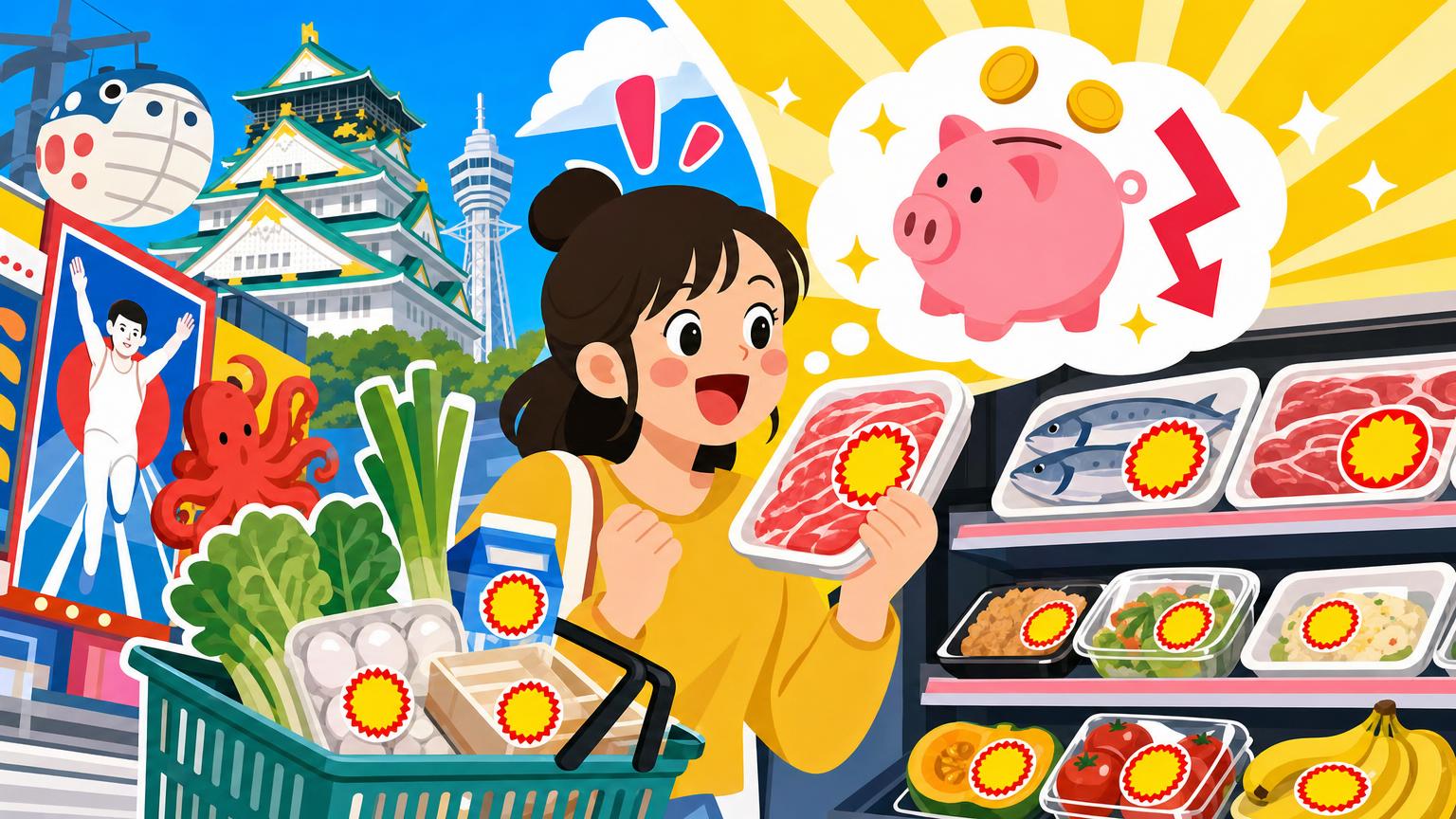
The first misunderstanding to clear up is that a waribiki sticker does not usually mean the food is bad, old, or unsafe. More often, it means the supermarket wants to sell the food before its internal selling deadline. A prepared meal may have been made that morning. A package of sushi may still look perfect, and fried foods may still be warm in the afternoon. The sticker reflects timing and inventory, not necessarily poor quality.
Japanese supermarkets sell a wide range of fresh prepared foods every day. They must estimate how much customers will buy, how many people will come after work, what the weather will be like, and how much food can remain on the shelves without becoming waste. As the selling window gets shorter, the price goes down.
This is part of a broader effort to reduce food loss. Japan’s Consumer Affairs Agency explains that buying discounted food and taking items from the front of the shelf when you plan to eat them soon can help prevent edible food from being discarded. The agency uses the term temae-dori, meaning taking the item at the front instead of reaching behind it for one with a later date.
In Osaka, this practical logic often feels especially visible. People may compare prices without embarrassment, check several supermarkets on the same evening, or choose a discounted bento, add a bag of salad, and eat at home rather than pay restaurant prices. The pleasure comes not only from spending less, but also from making a good decision.
That attitude is one reason Osaka can feel different from Tokyo. Tokyo has plenty of discount shoppers, of course, and Tokyo residents are often highly price-conscious. However, Osaka’s public culture is more comfortable with openly discussing value. People talk about whether something is expensive, whether a shop is worth it, and whether a deal is genuinely good. The idea that you should pay more simply to appear sophisticated has less influence here.
This does not mean every Osakan is looking for the cheapest possible item. It means value is discussed more directly. A ¥500 bento that feeds you well can be praised, while a ¥1,500 dish that feels ordinary can be criticized. In daily Osaka life, price and satisfaction are often treated as part of the same conversation.
How to Read Japanese Supermarket Discount Stickers
You do not need to read every kanji in the supermarket. Begin with a small group of words. Once you can recognize them, the prepared-food section becomes much easier to understand.
First, look for the large red, yellow, pink, or white sticker. The supermarket may use its own colors and designs, so do not rely on color alone. Read the numbers and the key kanji.
Half Price: 半額, or Hangaku
半額 means half price. The first character, 半, means half. The second, 額, relates to the amount or price.
If the original price is ¥600, a 半額 sticker usually means the item now costs ¥300. Sometimes the original price is printed clearly, while the new price may appear next to the discount message. Check both before placing the item in your basket.
Half-price stickers are often the most dramatic and popular markdowns. They may appear later in the evening, especially on prepared foods the store wants to sell before closing. You may see several shoppers waiting near the deli section when staff begin applying them.
Do not assume that every item will eventually reach half price. A popular sushi tray may sell before the final markdown. A store may stop discounting certain products once only a small quantity remains. Staff may also remove items instead of reducing the price further.
Percentage Off: 割引, or Waribiki
割引 means discount. The word is pronounced waribiki. You may see the full word, or a shorter label such as:
- 10%引: ten percent off
- 20%引: twenty percent off
- 30%引: thirty percent off
- 半額: half price, or fifty percent off
The character 引 means to subtract or reduce. In a supermarket, a sticker that says 30%引 usually means that thirty percent has been taken off the marked price.
Be careful to distinguish between a percentage discount and a yen discount. If a bento costs ¥800, a 20 percent reduction is ¥160, making the new price ¥640. A sticker showing 200円引 reduces the price by ¥200, bringing it down to ¥600. Both are useful, but they are not the same.
Sometimes the sticker displays the new price more prominently than the original price. If you are unsure, take the item to the register and ask. A simple phrase is:
これは半額ですか?
Kore wa hangaku desu ka?
Does this have the half-price discount?
Or point to the sticker and say:
これは何割引ですか?
Kore wa nan-wari-biki desu ka?
How much is the discount?
Yen Off: 円引, or En-biki
円引 means a reduction by a specific number of yen. Common examples include:
- 50円引: ¥50 off
- 100円引: ¥100 off
- 200円引: ¥200 off
The word 円 means yen, while 引 indicates that the amount is subtracted. This format is common when the store wants to provide a clear final price without requiring shoppers to calculate a percentage.
For example, a ¥498 salad with a 100円引 sticker becomes ¥398. A ¥1,280 seafood tray with a 300円引 sticker becomes ¥980.
Do not confuse 円引 with a coupon. A sticker attached directly to the product normally applies automatically when the cashier scans the barcode. A separate coupon may require a store app, membership card, paper coupon, or specific payment method.
Other Words You May See
You may also come across several related expressions:
- 値引 (nebiki): price reduction or markdown
- 見切り品 (mikiri-hin): an item being cleared at a reduced price
- お買い得 (okaidoku): good value or bargain
- 売り切り (urikiri): sell-through or clearance until sold out
- 消費期限 (shōhi kigen): use-by deadline, especially important for ready-to-eat foods
- 賞味期限 (shōmi kigen): best-before date, generally associated with quality rather than immediate safety
- 惣菜 (sōzai): prepared side dishes and deli foods
- 弁当 (bentō): boxed meal
The distinction between 消費期限 and 賞味期限 is important. If you are buying a discounted bento, sushi, meat dish, or salad, pay close attention to the use-by information and eat it promptly. A discount is not a reason to ignore storage instructions.
What Time Do Osaka Supermarkets Discount Their Food?
The honest answer is that there is no single timetable covering all of Osaka. Each store makes its own decisions based on staffing, sales patterns, product category, weather, day of the week, and remaining stock.
Many supermarkets begin reducing prices on prepared foods in the late afternoon or evening, but the exact timing can vary. Some stores start with modest reductions, such as ten or twenty percent, and then apply deeper discounts later. Others offer one major discount and stop. Some locations discount certain products early and others much later.
Treat the timetable as a pattern to learn, not a guarantee.
The First Wave: Late Afternoon Reductions
The first wave often appears as the workday starts to wind down. Depending on the store, this may happen around 4 p.m., 5 p.m., or 6 p.m. The store may be preparing for the evening rush while checking how much bento and deli food remains.
This is often the best time if you want variety rather than the absolute lowest price. You may still find several types of sushi, fried chicken, vegetables, noodles, and rice dishes. The discount may be smaller, but the selection is better.
For residents, this can become part of an ordinary routine. You finish work, stop at the supermarket, check the prepared-food shelf, and decide whether to cook or buy something ready-made. It is not a special event, but simply one of the small calculations that organize daily life in Osaka.
Foreign residents sometimes imagine that Japanese people cook every meal from scratch because supermarkets display fresh ingredients so beautifully. In reality, many households combine cooking with prepared foods. A discounted karaage pack, miso soup, rice, and a salad can make a complete dinner without turning the evening into a major project.
The Second Wave: Evening Markdowns
A second wave may appear later, often around 7 p.m. or 8 p.m., although the timing varies considerably by store. If a location closes late, discounts may continue until closer to closing time. If the store is in a busy office district, the timing may reflect commuter patterns. If it is in a residential neighborhood, staff may respond to family shopping habits.
This is when you may see shoppers quietly watching the deli section. The atmosphere can change quickly. A staff member arrives with a roll or stack of stickers. People move closer. They do not usually shout or push; they simply observe, wait, and take the products they want once the sticker has been applied.
You may notice an important local habit: people do not always ask staff to discount an item early. They wait for the store’s process. Politely asking whether discounts will happen later is not necessarily rude, but pressuring an employee to reduce a product for you can be uncomfortable and may not produce a useful answer.
The Final Markdown: Just Before Closing
The deepest discounts often appear near closing time, but this is not guaranteed. The store may have already sold most of the food, decide that further markdowns are unnecessary, or remove unsold items according to its own rules.
Going late gives you a chance to find a half-price bento, but it also carries risks. The best products may be gone. You may find only a few fried items, side dishes, or less popular combinations. If you need dinner rather than a bargain hunt, arriving slightly earlier is usually more reliable.
A good strategy is to visit the same neighborhood supermarket several times. Watch the clock and notice when staff begin checking the shelves. See whether the store places stickers on sushi before fried foods, or discounts bakery items separately. Osaka life rewards familiarity. The person who understands the neighborhood rhythm often saves more than the person who simply searches for the lowest advertised price.
Best Supermarkets in Osaka for Discount Hunting
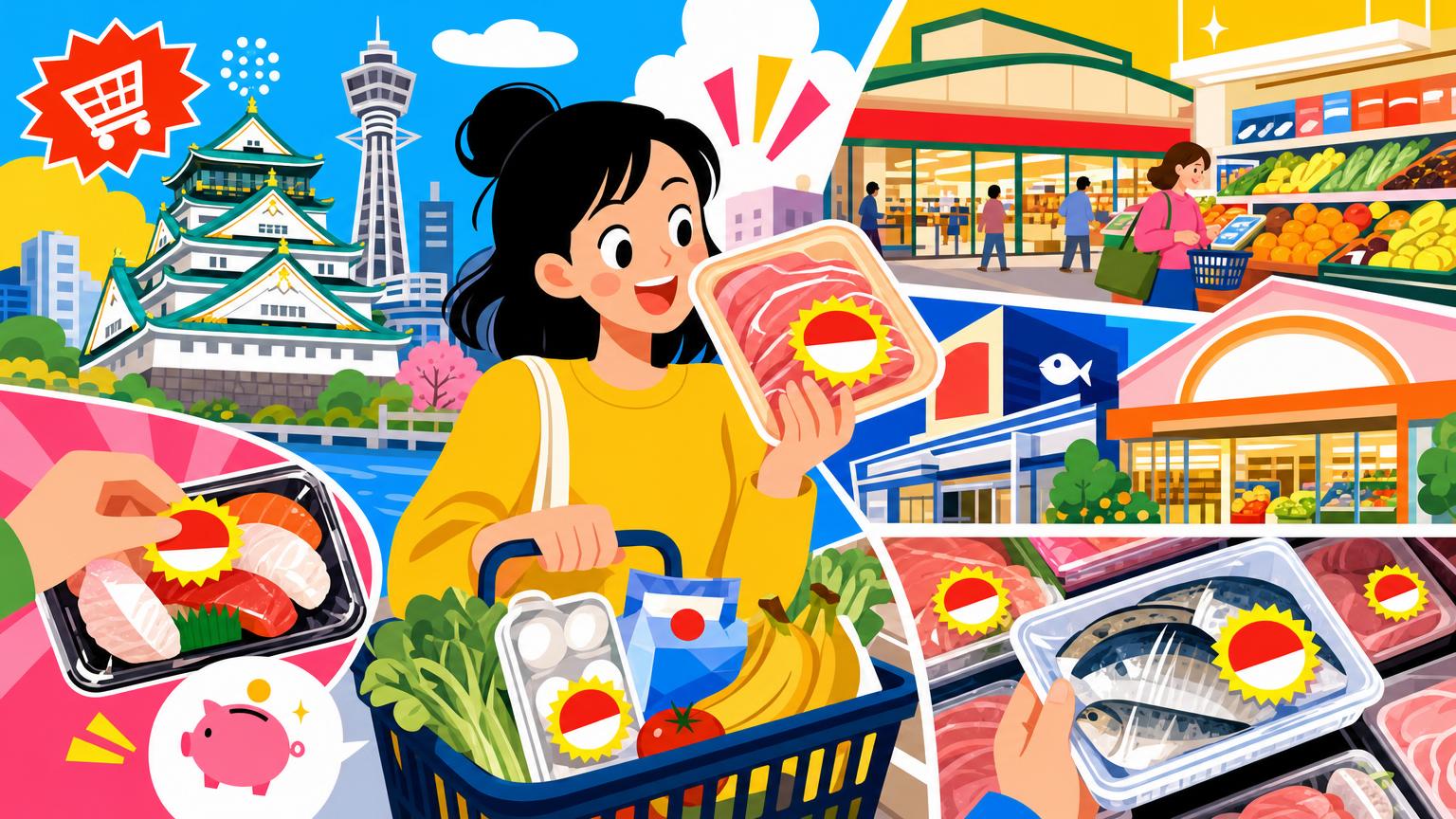
The best supermarket is usually the one you can reach easily, visit regularly, and understand. A well-known chain is not automatically cheaper for every product. Your local branch may have its own customer base, opening hours, staff routines, and markdown habits.
Super Tamade: Osaka’s Famous Budget Kings
Super Tamade is closely associated with Osaka’s low-price image. Its official store listings include numerous branches throughout Osaka, including locations in Nishinari and other neighborhoods, with some stores operating around the clock.
The chain is useful for residents who want to compare prices, buy basic groceries, or experience a very direct version of Osaka’s value-oriented shopping culture. The atmosphere can be visually louder and more energetic than that of a conventional neighborhood supermarket. That is part of the experience, but it does not mean every item is always the cheapest choice.
When shopping there, compare unit prices instead of judging by large signs. A bargain sign may apply to a limited quantity, a specific brand, or a price that is low only compared with a nearby product. Check the size, origin, and date.
Super Tamade is also a good place to understand one aspect of Osaka’s identity: food should be accessible, and a supermarket does not need to appear elegant to be useful. The city’s everyday economy has room for bright signs, strong prices, simple meals, and customers who know exactly what they want.
Life Supermarket: A Practical Neighborhood Standard
Life has a broad presence in Osaka. Its official store directory lists many branches across Osaka Prefecture and Osaka City.
For many foreign residents, Life is an easy place to learn how the supermarket system works because its stores often combine fresh produce, prepared foods, household goods, bakery sections, meat, fish, and basic international products. The layout may feel more familiar than that of a very small local market while still clearly reflecting Japanese shopping habits.
Life is often useful for people seeking a balance between quality and price. You may find good reductions on prepared foods, but the most valuable discovery is usually your own branch’s pattern. One store may begin discounting bento earlier. Another may keep popular sushi at full price until late because it sells quickly.
If you move into an Osaka neighborhood, ask nearby residents which supermarket they actually use. Their answer may not be the chain with the lowest reputation. They may prefer the store with better vegetables, more convenient bicycle parking, a cleaner fish section, or staff who work efficiently during the evening rush. Daily life is built around these small preferences.
KOHYO and Aeon: Convenient Options Near Stations and Residential Areas
KOHYO has stores throughout Osaka Prefecture, including branches in and around Osaka City and neighboring municipalities. Aeon and Aeon Style also operate locations in Osaka and the wider region, with official store listings showing branches across Osaka Prefecture.
KOHYO can be convenient if you live near a station or in a densely populated residential district. Aeon is useful when you need groceries and household items in a single trip. Their prepared-food sections may feature discount stickers, but the timing and style can vary from branch to branch.
A larger supermarket may offer more choice, but a smaller neighborhood location may discount food more quickly because its customer patterns are easier to predict. A station-area shop may sell many bentos to commuters. A residential branch may sell more family-size side dishes. The local rhythm shapes the sticker rhythm.
Do not judge a supermarket solely by its chain name. Compare:
- The prices of rice, eggs, fruit, and vegetables
- The quality and variety of prepared foods
- The time when discounts usually begin
- Whether the store accepts your preferred payment method
- Whether you can carry the food home easily
- Whether the opening hours fit your work schedule
For someone living in Osaka, a five-minute walk to a slightly more expensive supermarket may be better than a thirty-minute trip to a discount store. Time, transportation, and food waste matter as well.
Why Osaka People Treat Discounts Differently
Foreigners sometimes expect Japanese shoppers to follow a strict social script: never reach for discounted food in front of others, never admit that price matters, and never appear too eager. That is not a reliable picture of Osaka.
Osaka residents may be highly strategic. They know the prices of common foods, notice when a supermarket raises or lowers them, and discuss whether a store has become expensive. They may recommend one branch for meat and another for vegetables.
This practical conversation is connected to a broader Osaka style of communication. Osaka speech often leaves room for reaction, humor, complaint, and evaluation. If someone says that a product is expensive, they may be opening a conversation rather than making a formal complaint. If they praise a discounted bento, they may be expressing satisfaction with their own judgment as much as with the food itself.
Compared with Tokyo, Osaka can feel less concerned with maintaining a polished distance around money. Daily life in Tokyo often demands constant efficiency and presentation, especially in crowded commuter environments. Osaka also has pressure and hierarchy, but ordinary conversations can be more openly evaluative. People may ask whether you found a good deal, where you bought it, and whether it was worth the price.
The misunderstanding is to reduce this to the simple claim that people in Osaka are friendly. A more useful explanation is that Osaka often gives everyday interactions more room for directness. People may comment on prices, tease you about your choices, or offer practical recommendations. That can feel warm, but it can also feel intrusive if you are accustomed to more personal distance.
A discount sticker exists within this culture of practical judgment. It is not merely a price reduction; it is evidence that you noticed the timing and made a sensible choice.
Essential Etiquette for Discount Sticker Hunters in Japan
Discount hunting is normal, but how you do it matters. The etiquette is rarely explained in English, so new residents often learn by observing others.
Do Not Harass Staff for a Discount
Staff members usually follow a process. They may need to check the product, confirm the selling deadline, print the correct sticker, and apply it to each package. Do not follow them closely, block their cart, or repeatedly ask them to discount one particular item.
If you need to ask, use a calm question:
値引きになりますか?
Nebiki ni narimasu ka?
Will this be discounted?
The employee may say that they do not know or that it depends on the store. Accept the answer. The final decision may rest with another department or supervisor.
Do Not Touch the Sticker Before It Is Applied
You may see a staff member holding a sticker sheet while shoppers wait nearby. Do not take a sticker, ask for one, or move it from one product to another. The sticker is part of the store’s pricing process.
Never transfer a discount sticker to another package. That is not clever shopping; it is an attempt to change the price and can cause a serious problem at the register.
Take What You Will Actually Eat
If you buy discounted food, plan to eat it soon. Do not fill your basket with more than you can consume simply because the price is attractive. The purpose of the markdown is to sell food before it becomes waste.
This is where waribiki connects to mottainai, the feeling that discarding something that still has value is wasteful. You do not need to treat the idea as a perfect national philosophy. In daily life, it appears through small choices: buying a near-date item for tonight, taking food from the front when you will eat it soon, and not demanding the newest package when the older one is perfectly suitable.
Keep the Aisle Moving
The prepared-food area can become crowded, especially in the evening. Look without blocking the shelf. If you need time to translate a label, move your basket slightly to the side. Let other shoppers reach the products.
You do not have to compete aggressively. If someone takes the last discounted bento before you, that is simply how shopping works. Another product may receive a sticker a few minutes later.
Do Not Open or Squeeze Packages
Inspect the package without damaging it. Avoid opening containers, pressing soft food, or rearranging products. If the food looks damaged or the seal is broken, choose another item or ask a staff member.
Check the Discount at the Register
Most product stickers are scanned automatically, but mistakes can happen. If the cashier announces a price that seems different, politely point to the sticker and say:
すみません、値引きシールがあります。
Sumimasen, nebiki shīru ga arimasu.
Excuse me, there is a discount sticker.
Show the product instead of arguing. The cashier can check the barcode and apply the correct price if the discount is valid.
A Simple Weekly Strategy for Lower Grocery Bills
If you want to make waribiki shopping part of your life rather than a one-time experiment, start by observing.
Choose one supermarket near your home. Visit once in the afternoon, once in the early evening, and once later at night. Notice which products are reduced first, and record the approximate time on your phone. After a week, you will have a more useful guide than any general rule found online.
Build your meals around flexible ingredients. Discounted fried chicken can become dinner with rice and shredded cabbage. A reduced sashimi tray can be paired with miso soup and chilled tofu. A half-price vegetable side dish can complement noodles or a simple omelet.
Do not plan your entire week around finding half-price food, as that can create unnecessary stress. Instead, keep a few reliable staples at home: rice, noodles, eggs, tofu, frozen vegetables, soup stock, and seasonings. Then use waribiki foods as additions.
Think about the final meal, not just the sticker price. A ¥250 discount is not a saving if the product remains untouched in your refrigerator. The best deal is food you enjoy, eat promptly, and would otherwise have purchased at full price.
This mindset also helps you understand a central difference between visiting Osaka and living here. A visitor may notice the dramatic moment when a bento becomes half price. A resident notices the entire system around it: the supermarket’s location, the bicycle ride home, the closing time, the size of the refrigerator, tomorrow’s work schedule, and whether the discounted food can become breakfast or lunch.
What Foreign Residents Often Misunderstand
The first misunderstanding is that every discount follows a fixed schedule. It does not. The timing varies by store, day, product, staffing, and demand.
The second is that the cheapest sticker always means the best purchase. It may not. A smaller package marked 30 percent off can cost more per gram than a larger full-price package. A half-price bento may be less useful than a 20 percent discount on ingredients you can use for several meals.
The third is that discounted food is something only poor people buy. In Osaka, many different kinds of shoppers use these stickers. Students, office workers, families, older residents, and people with comfortable incomes may all buy them. Some are saving money. Some dislike waste. Some enjoy the challenge of finding value. Some simply need dinner after work.
The fourth is that Osaka and Tokyo have completely opposite personalities. They do not. Both cities contain wealthy neighborhoods, working-class areas, international communities, quiet suburbs, crowded stations, and people who dislike small talk. The difference is often a matter of emphasis and atmosphere rather than a clear divide.
Osaka can feel more openly practical. People may show greater interest in whether something is worth the money. They may joke more directly and recommend cheaper options without treating the suggestion as an insult. But Osaka is not a city where everyone is constantly cheerful or available for conversation. Respect personal space, especially on trains, in queues, and during busy shopping periods.
The final misunderstanding is that mastering waribiki is only about learning kanji. Language helps, but observation matters just as much. Watch what other shoppers do. Notice when a staff member arrives. Learn the pace of your branch. Understand which foods you can store and which you should eat immediately.
That is how you begin to read Osaka.
The Everyday Meaning of Waribiki in Osaka
A waribiki sticker is a small piece of paper attached to a plastic container, yet it connects several aspects of urban life: food production, supermarket labor, household budgets, changing work schedules, environmental concerns, and local ideas about value.
It also reveals Osaka at its most ordinary. The city is not only comedy, street food, busy shopping arcades, or bright signs. It is a person choosing a discounted salad after work. It is a student checking the bento shelf before the last train. It is a family buying prepared dishes because nobody has the energy to cook. It is an older shopper comparing prices with quiet concentration.
The sticker does not ask you to perform poverty or pretend that price does not matter. It invites you to pay attention to timing. Buy what you need. Eat what you buy. Respect the staff. Leave room for the next person. Learn the local rhythm.
If you are deciding whether Osaka is a good place to live, this kind of everyday practicality may matter more than a list of famous attractions. Can you manage your food budget? Can you find a neighborhood supermarket? Can you communicate when a price is unclear? Can you adapt to a city where value is discussed openly and small savings can make a real difference over the course of a month?
The answer often begins with one kanji: 割引.
Waribiki.
Discount.
In Osaka, learning to read that sticker also means learning to read the city.