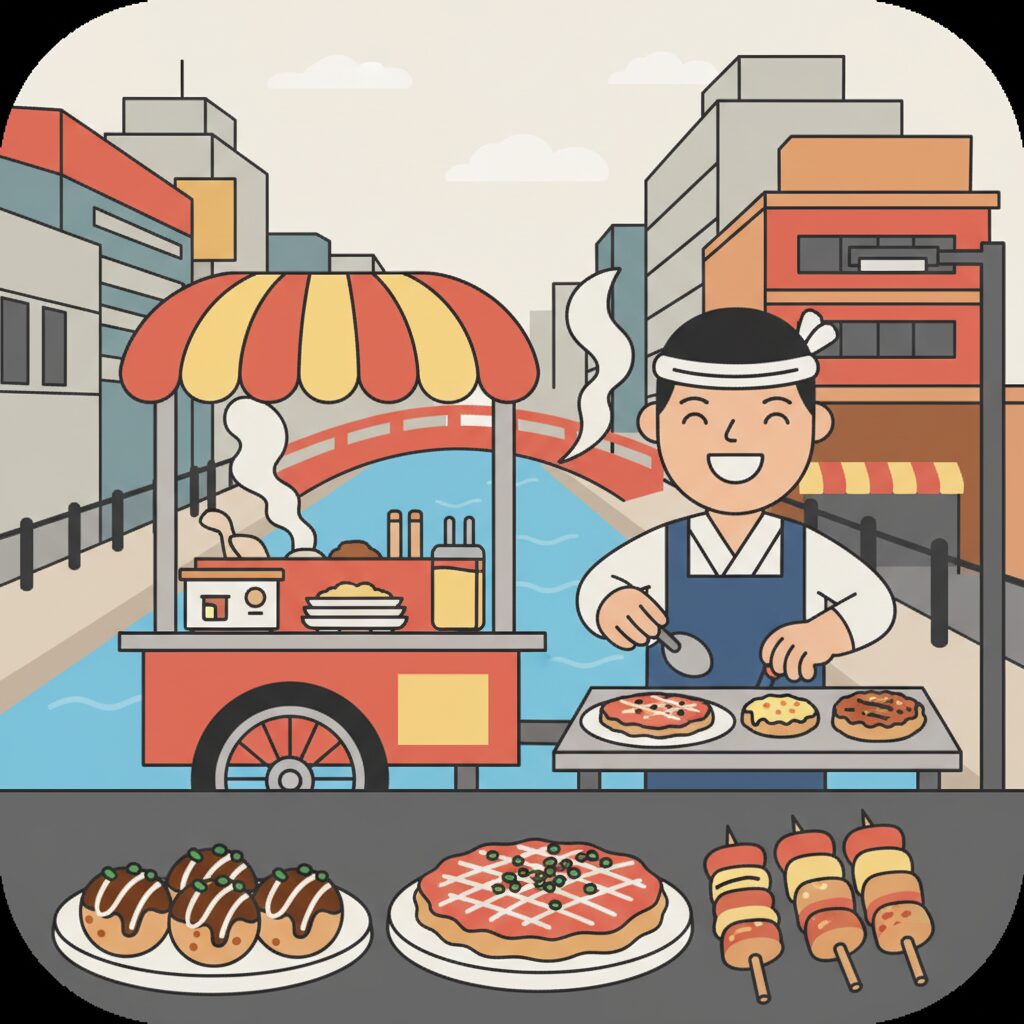
Step off the train at Namba Station, walk towards the canal, and Osaka hits you like a flavor bomb. Neon signs scream for your attention, a mechanical crab waves its claws, and a giant octopus glares down from a storefront. The air, thick with the scent of grilled batter and sweet sauce, practically pulls you down the street. This is Dotonbori. This is the postcard image of Osaka, the city of ‘Kuidaore’—a word that paints a picture of glorious, unrestrained feasting, of eating until you literally drop or until your wallet is empty. It’s a powerful, intoxicating myth. And for anyone thinking of moving here, living here, it begs the question: is this real life? Do Osakans navigate their days in a perpetual food coma, hopping from one takoyaki stand to the next okonomiyaki joint?
The short, simple answer is no. But the long answer, the real answer, is far more interesting. The foreigner often sees ‘Kuidaore’ as an act of consumption, a challenge of quantity. But to live in Osaka is to understand it’s not a behavior; it’s a philosophy. It’s a finely tuned radar for value, a city-wide obsession that dictates not just where you eat out, but how you shop for groceries, how you talk to your neighbors, and how you measure a day’s success. The myth is a feast. The reality is a hunt. It’s a daily, strategic, and deeply satisfying quest for the best possible taste at the best possible price. Before we dive into the real stomach of the city, let’s get our bearings.
This philosophy of strategic value extends beyond the dinner table, influencing even how residents plan a spiritual weekend retreat to Koyasan.
Deconstructing ‘Kuidaore’: More Than Just a Full Stomach
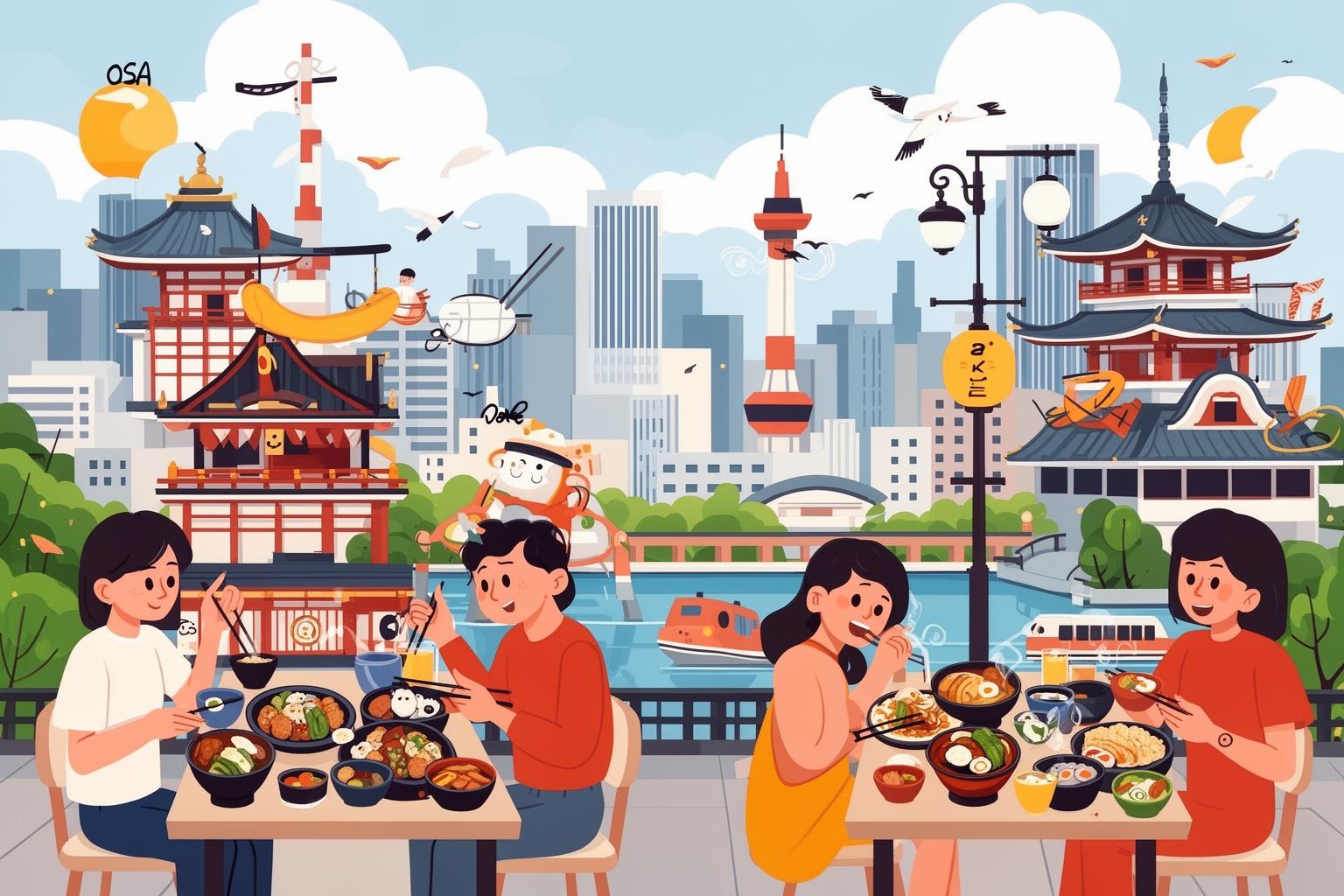
First, we need to redefine the meaning of the word. In Tokyo, a great meal often means a high price, a reservation months in advance, and a certain quiet reverence. It’s about prestige. In Osaka, however, ‘Kuidaore’ turns that idea completely upside down. The heart of Osaka’s food culture isn’t in Michelin-starred temples of gastronomy, but in the joyful, unpretentious pursuit of ‘kosupa’—cost-performance. It’s the art of the bargain, served on a sizzling hot plate.
A Philosophy of ‘Cost-Performance’
For an Osaka local, the highest compliment for a meal isn’t just “oishii” (delicious). It’s the joyful shout, “Yassui! Umai!” (It’s cheap! And it’s incredibly good!). This is the fundamental principle. The excitement comes not only from the flavor but from the triumph of the deal. It’s finding a standing-room-only udon bar under a train track in Umeda that offers noodles with a depth of flavor worth four times the price in a Ginza basement. It’s discovering a 600 yen lunch set with a main dish, rice, miso soup, a small side of pickles, and a fresh, perfectly cooked salad. You don’t just leave full; you leave feeling clever. You feel like you’ve unlocked the city’s secret code.
This way of thinking is a game, played with fierce yet friendly competition. People don’t just recommend restaurants; they present them as proof of their street smarts. A conversation might go like this: “You went for kushikatsu in Shinsekai? Which place? Ah, that’s okay for tourists. Next time, go two blocks west, look for the yellow lantern with no English sign. Tell the old man I sent you. The batter’s lighter there, and they don’t double-dip the sauce.” Recommending a place that’s overpriced or mediocre is a serious social faux pas. It speaks poorly of your judgment. In Osaka, your culinary map reflects your character directly.
Food as Communication, Not Just Consumption
In many cultures, discussing money at the dinner table is seen as rude. In Osaka, talking about the price of the meal at the table is part of the fun. It’s a communal celebration of value. At an izakaya tucked in the backstreets of Tenma, you’ll hear groups of friends loudly debating the merits of the meal before them. “This sashimi is fantastic, but did you see the price? Unbelievable for this quality.” “The highball’s only 350 yen? Let’s get another round.”
This straightforward, transactional approach is woven into the local dialect. The classic Osaka greeting, often taught to foreigners as a quirky phrase, is “Moukari makka?” which literally means “Are you making a profit?” The typical reply is “Bochi bochi denna,” or “So-so, can’t complain.” This isn’t just a phrase; it’s a worldview. Life is a business, value is key, and everyone’s playing the game. Food is the most democratic and delicious playing field. The shop owner isn’t just a cook; they’re a businessperson you respect for delivering such great value. You’re not just a customer; you’re a savvy player who’s discovered the place. This shared understanding builds a connection. Eating is a conversation, and the topic is always, happily, the deal you’ve scored.
The Reality of the Osaka Kitchen: What’s for Dinner Tonight?
If the streets aren’t hosting a 24/7 festival, where does the ‘Kuidaore’ spirit reside during the week? It returns home—to the supermarket, the local shopping arcade, and the family kitchen. This philosophy doesn’t disappear once the restaurant doors close; it grows stronger. The pursuit of value becomes a domestic art form, executed with a level of seriousness and skill that is truly impressive.
The Supermarket Run: A Strategic Mission
To grasp daily life in Osaka, set aside Dotonbori for a moment and imagine this: It’s 4 PM at Super Tamade, a local chain renowned for its flashy neon lights and incredibly low prices. A squadron of ‘obachan’ (middle-aged women), the commanders of the household budget, flood the aisles. They’re not merely browsing—this is a tactical operation.
These women move with a strategic intelligence worthy of a military planner. They have memorized the daily sales schedules of every grocery store within a three-kilometer radius. Tuesday means 100-yen vegetable day at store A; Friday is egg sale day at store B. They navigate with purpose, their eyes sharp for the telltale yellow and red discount stickers that signal a bargain. They will pedal their ‘mamachari’ (mom-bike) an extra ten minutes just to save 30 yen on a block of tofu—not out of necessity, but because it’s a win. The victory isn’t the 30 yen saved; it’s the principle of never overpaying. This is ‘Kuidaore’ in its purest, most practical form: the refusal to accept anything less than maximum value for their hard-earned yen. This spirit shines brightest in the local ‘shotengai,’ the covered shopping arcades that pulse with neighborhood life. Here, the philosophy springs to life, with butchers offering freshly fried croquettes at pocket change prices and fishmongers chatting with customers over the day’s best catch.
‘Konamon’ Culture at Home
What are they buying with all this strategic expertise? Often, it’s ingredients for ‘konamon’—literally “flour things.” This category includes Osaka’s iconic dishes: okonomiyaki (savory pancake) and takoyaki (octopus balls). While tourists queue for street vendors, many Osaka families consider these quintessential home-cooked meals. A takoyaki grill isn’t a novelty gadget; it’s a standard appliance, as common as a toaster. A “tako-pa” (takoyaki party) is a cherished, low-cost social gathering. Family or friends gather around the table, armed with bowls of batter, chopped octopus, green onions, and pickled ginger, spending the evening making and eating countless rounds of takoyaki. It’s affordable, communal, fun, and delicious—perfectly embodying the Osaka ethos: maximum enjoyment for minimal expense. It’s the domestic version of discovering an incredible, budget-friendly restaurant. Here, you create your own amazing deal right at your dining table.
The ‘Daily Grind’ Meals
Let’s be frank. Life in Osaka involves work, commuting, and fatigue just like any major city. The evening meal isn’t always a celebration. Often, it’s simple, efficient, and drawn from the day’s supermarket spoils: a piece of grilled mackerel bought on sale, accompanied by a bowl of rice, instant miso soup, and pickles from the local ‘tsukemono’ shop; a quick stir-fry of discounted vegetables and pork; a humble bowl of kitsune udon, topped with a piece of sweet fried tofu.
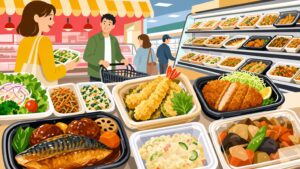
And for those evenings when cooking feels like too much effort, the ‘Kuidaore’ mindset offers a solution: the ‘depachika’ (department store basement) and supermarket deli counters. As closing time nears, a quiet, city-wide ritual unfolds. Staff emerge with sheets of discount stickers: 10% off, 20% off, then the coveted ‘hangaku’ (half-price) sticker. A patient crowd, seemingly appearing out of nowhere, waits for the prime moment to pounce on beautifully prepared bento boxes, salads, and fried foods—all at a fraction of their original cost. It’s not viewed as eating leftovers but as a smart, economical way to enjoy a good meal. Once again, it’s the thrill of the hunt and the satisfaction of scoring a great deal that flavors the meal.
When the ‘Kuidaore’ Spirit Comes Alive: Special Occasions and Going Out
This doesn’t imply that all Osaka residents are homebodies who never dine out—they certainly do. However, the full-on, ‘eat-till-you-drop’ experience is a special occasion, not an everyday habit. It’s a deliberate choice to tap into the accumulated knowledge of the city’s food scene. It takes place on a Friday night with coworkers, a Saturday evening with friends, or when hosting visitors from out of town. This is when the performance of ‘Kuidaore’ truly shines.
It’s Not an Every Day Event, It’s Purposeful
When an Osaka local decides to eat out, their mental database, refined through years of research and tips, springs into action. The question is never just “What should we eat?” but a complex mix of factors: “Who are we with? What’s the budget? Which neighborhood are we in? Do we want to sit or are we fine standing? How late will we stay?”
This is their chance to impress. When a friend from Tokyo visits and wants to try authentic Osaka cuisine, the local’s eyes brighten. “Okonomiyaki? Skip the tourist traps in Namba. I know a family-run spot in Tsuruhashi. It’s been there for fifty years. The grandmother cooks it right in front of you. It’s the best.” They’re not merely suggesting a meal; they’re offering a piece of their identity, proving their status as a genuine Osakan. The ability to navigate thousands of eateries and select the perfect venue for any occasion is a highly valued skill—a public display of a private philosophy lived daily in supermarkets and kitchens.
The Neighborhood Counts: From Umeda’s Upscale to Shinsekai’s Deep-Fried
‘Kuidaore’ isn’t a one-size-fits-all idea. It shifts and adopts different forms depending on the locale. In the sleek commercial areas of Umeda and Kita, it might mean discovering a surprisingly affordable, high-quality sushi lunch in a department store basement, surrounded by office workers. In the neon-lit maze of Namba and Minami, it’s about knowing which of the many takoyaki stalls is truly worth the wait, or which hidden izakaya chefs from fancy restaurants retreat to on their days off.
Heading south to Shinsekai, beneath the iconic Tsutenkaku Tower, ‘Kuidaore’ becomes grittier, louder, and deep-fried. This is the heartland of kushikatsu—skewers of meat and vegetables, breaded and fried to a perfect golden crisp. Here, the game unfolds in crowded, no-frills shops where you stand shoulder-to-shoulder with strangers, dipping skewers into a shared pot of thin, savory sauce. The cardinal rule, posted everywhere, is “NO DOUBLE DIPPING!” This is raw, unpretentious, and incredibly affordable indulgence. Each neighborhood delivers its own flavor of the same core belief: discovering joy, community, and unbeatable value through food.
The Foreigner’s Misunderstanding: Confusing Performance with Daily Life
The disparity between the myth and the reality of ‘Kuidaore’ often arises from a simple misunderstanding. Foreign visitors and new residents witness the grand, loud, public display of Osaka’s food culture and assume it represents everyday life. Unraveling this misconception is essential to truly grasping the city’s rhythm.
Dotonbori is a Stage, Not a Kitchen
Think of Dotonbori as Osaka’s Broadway—a dazzling, expertly produced spectacle created for an audience. The giant moving crab, the enormous gyoza sign, the long queues—it’s all part of the show. And like Broadway, it’s not where the performers go to eat once the curtain falls. While most Osaka residents hold Dotonbori dear as the city’s emblem, they don’t treat it as their personal pantry. They may visit for special occasions or to entertain guests, but their everyday meals take place elsewhere—in quieter, more affordable, and more intimate settings.
The comparison with New York’s Times Square is apt. You might visit Times Square for the lights, but you understand that the city’s real life and best food are found in the Village, Brooklyn, or other neighborhoods. Similarly, Osaka’s true ‘Kuidaore’ is scattered throughout its numerous ‘shotengai,’ neighborhood izakayas, and family-run restaurants. The spectacle on the Dotonbori stage is underpinned by a city-wide foundation of a deeper, more practical food philosophy.
“It’s Just Food” vs. “It’s a Measure of a Person”
For many outsiders, Osaka’s intense focus on food value can be perplexing. “It’s just a cheap meal, what’s the big deal?” Yet in Osaka, it’s a big deal. It isn’t only about the food; it’s about being smart, resourceful, and attuned to the city’s pulse. Paying too much for a meal, even slightly, feels like a failure—it means you were fooled, you didn’t do your homework, you weren’t paying attention.
On the other hand, discovering a new, hidden gem of a restaurant and sharing it with friends is a significant social triumph. It bolsters your reputation, showing you as a savvy operator, a true ‘naniwa no shounin’ (merchant of Naniwa, the old name for Osaka). This contrasts sharply with Tokyo, where status might be linked to exclusivity and high prices. In Osaka, status comes from achieving outstanding quality at an unbelievably low price. The passion here is not just culinary; it’s a celebration of economic cleverness.
How to Eat Like a Local (Without Going Broke)
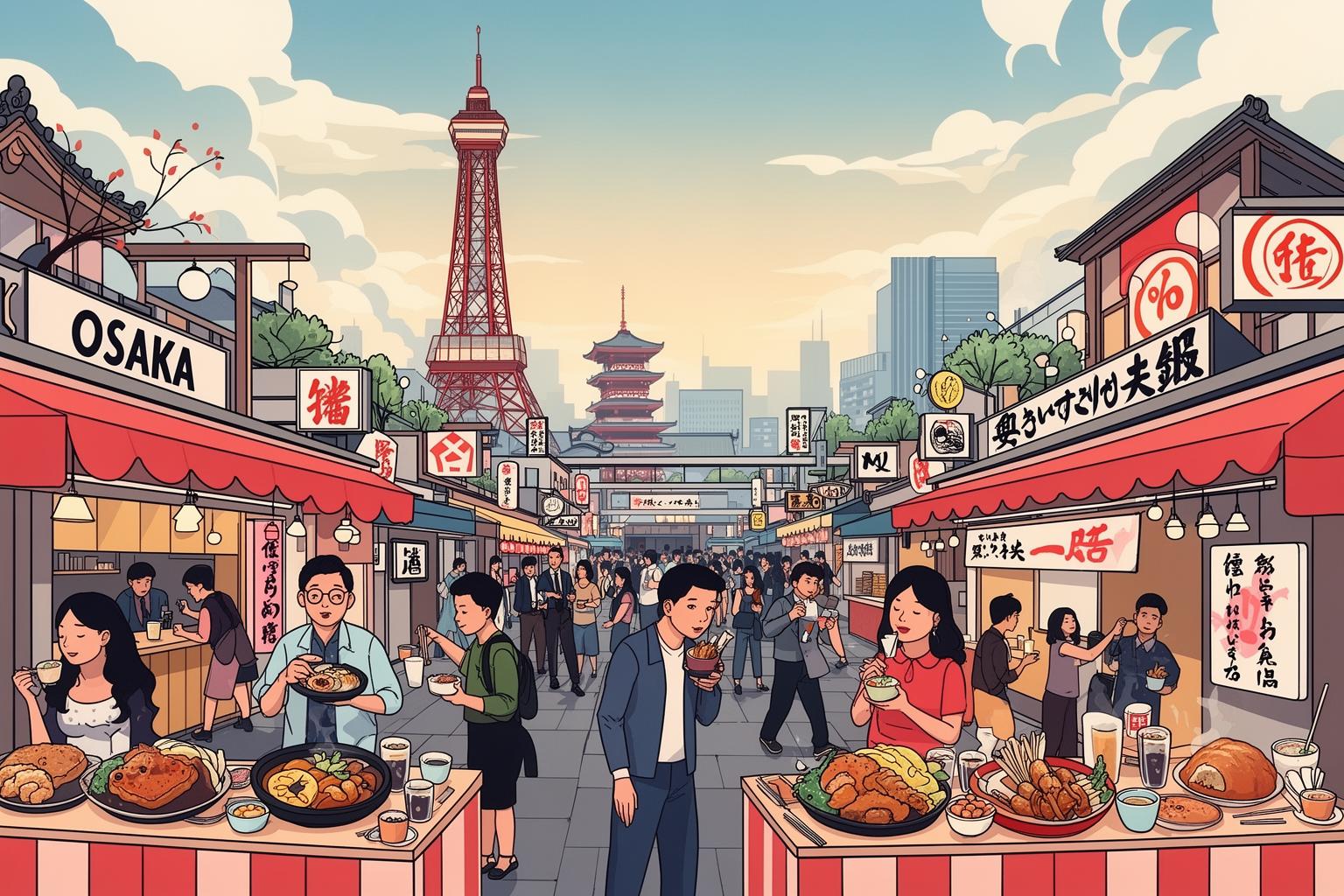
Grasping the philosophy is one thing; truly living it is another. For any foreigner aiming to genuinely settle into life in Osaka, embracing the ‘Kuidaore’ mindset is the quickest way to feel at home. It’s a practical approach that not only helps you save money but also deepens your connection to the city.
Master the Lunch Set
Your first lesson in ‘kosupa’ is the daily lunch set, or ‘teishoku.’ Between 11 AM and 2 PM, restaurants throughout the city offer fantastic set meals at a fraction of their dinner prices. This is the energy that fuels Osaka. Make it your goal to find the best lunch set in your area. It’s the simplest and most rewarding way to start playing the game.
Befriend the ‘Shotengai’
Don’t limit yourself to shopping at large, impersonal supermarkets. Immerse yourself in your local ‘shotengai.’ Chat with the shopkeepers. Grab a warm croquette from the butcher for a quick snack. Get your vegetables from the greengrocer who knows what’s in season. This is where the city’s daily life is most vibrant and where the best deals are discovered—not through flashy signs, but through relationships and local insight.
Learn the Magic Words
Language is your key to unlocking the culture. Go beyond “Arigato” and “Oishii.” When a vendor offers a good price, respond with a genuine “Yassui!” (So cheap!). When you savor something amazing at a standing bar, look the owner in the eye and say “Umai!” (a more masculine, punchy way to say delicious). Ask a vendor, “Kore, nanbo?” (How much is this?) using the local dialect. Using these expressions shows you’re more than a passive consumer. It signals that you understand the game, appreciate the value, and are part of their community. You’ll be surprised by the smiles and warm welcomes it brings.
Ultimately, the grand myth of ‘Kuidaore’ isn’t false; it’s just the cover of a much richer, more complex story. The true story of Osaka’s food culture isn’t written in neon lights but seen on discount stickers in supermarkets. It’s heard not in the roar of tourists but in the quiet nod shared between a regular customer and a shop owner who knows their order. Living in Osaka means learning that the greatest feast isn’t one that leaves you stuffed and immobile. It’s the one that fills your stomach, keeps your wallet happy, and gives you the thrilling certainty that you’ve just scored the best deal in the entire city. That, right there, is the authentic, unbeatable flavor of life in Osaka.