There’s a specific energy that hums through Osaka on a Friday afternoon. It’s not just the winding down of a work week; it’s the revving up of something else. You hear it in the clipped conversations in the Umeda underground, see it in the quickening pace of people cutting through Namba Parks. They’re not just going home; they’re getting ready to go out. And increasingly, if you listen closely, you’ll catch the same two syllables over and over again in offices, cafes, and izakayas: Awaji. For anyone living in Osaka, Awaji Island has become more than just a destination. It’s a reflex, a solution, the default answer to the question, “What are we doing this weekend?” It’s the city’s collective exhale. To an outsider, this might seem odd. Why this specific island, a pleasant but perhaps unremarkable piece of land floating in the Seto Inland Sea? The answer has almost nothing to do with tourist brochures and everything to do with the core programming of the Osaka mindset. This isn’t a travel guide about what to see on Awaji Island. This is an explanation of what Awaji Island reveals about living in, and escaping from, the vibrant, relentless, and utterly unique city of Osaka.
The vibrant escape of Awaji Island is only part of Osaka’s dynamic allure, as even the city’s morning rituals reveal their own energetic charm through plant-based breakfast trends that redefine everyday routines.
The Psychology of the Escape: Ditching the Concrete Jungle
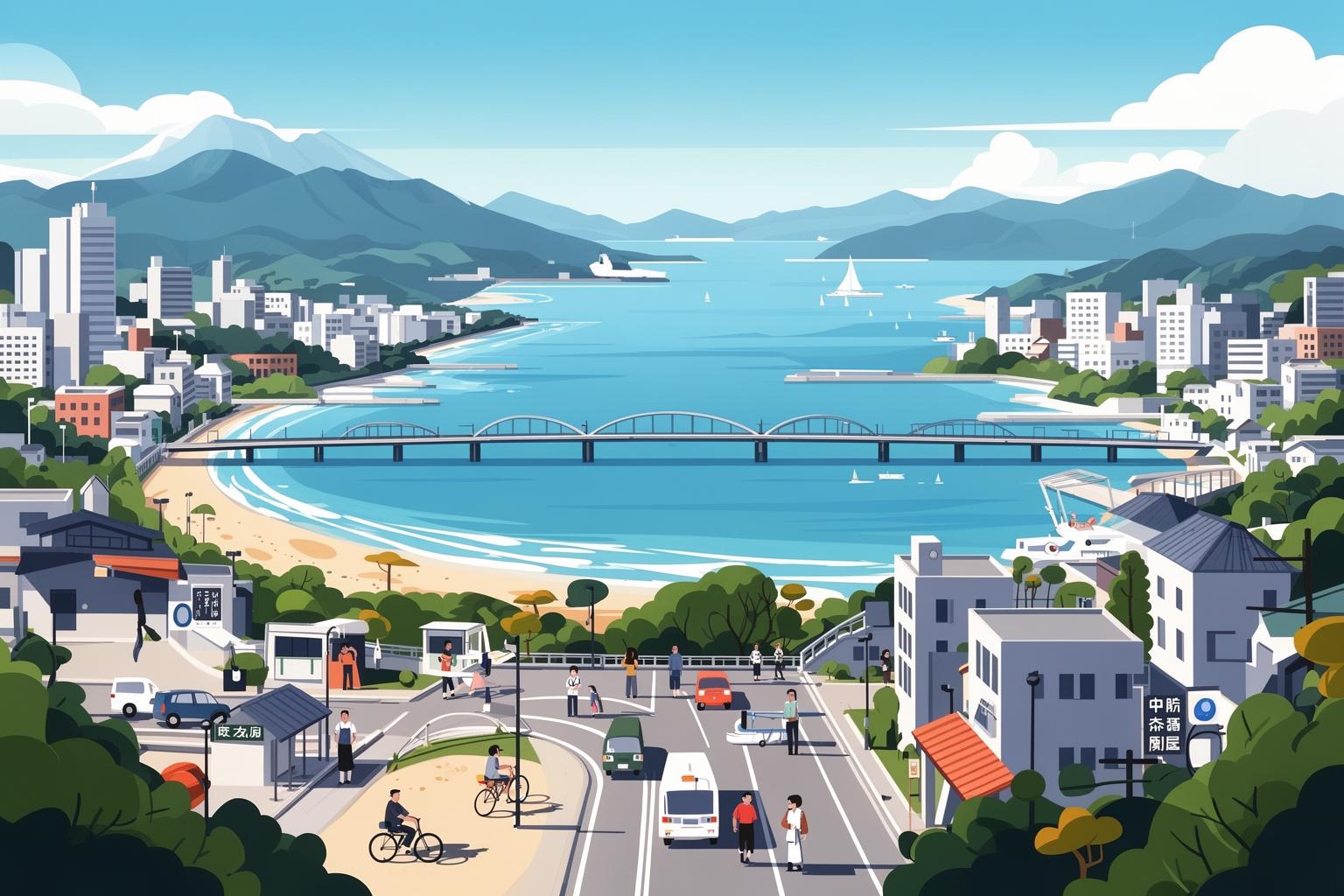
To grasp the appeal of Awaji, you first need to understand the intensity of Osaka. Life here is a full-contact sport—loud, fast, and packed tightly. The city is an impressive maze of concrete, steel, and neon, fueled by an unceasing flow of human energy. People in Osaka work hard and play harder, often sharing the same crowded, shoulder-to-shoulder spaces. It’s exhilarating, but also exhausting. The weekend isn’t merely a break; it’s a vital pressure release valve. This is where Awaji’s primary, most essential charm comes into focus: its ideal location.
Osaka’s “Close-Enough-Far-Enough” Mentality
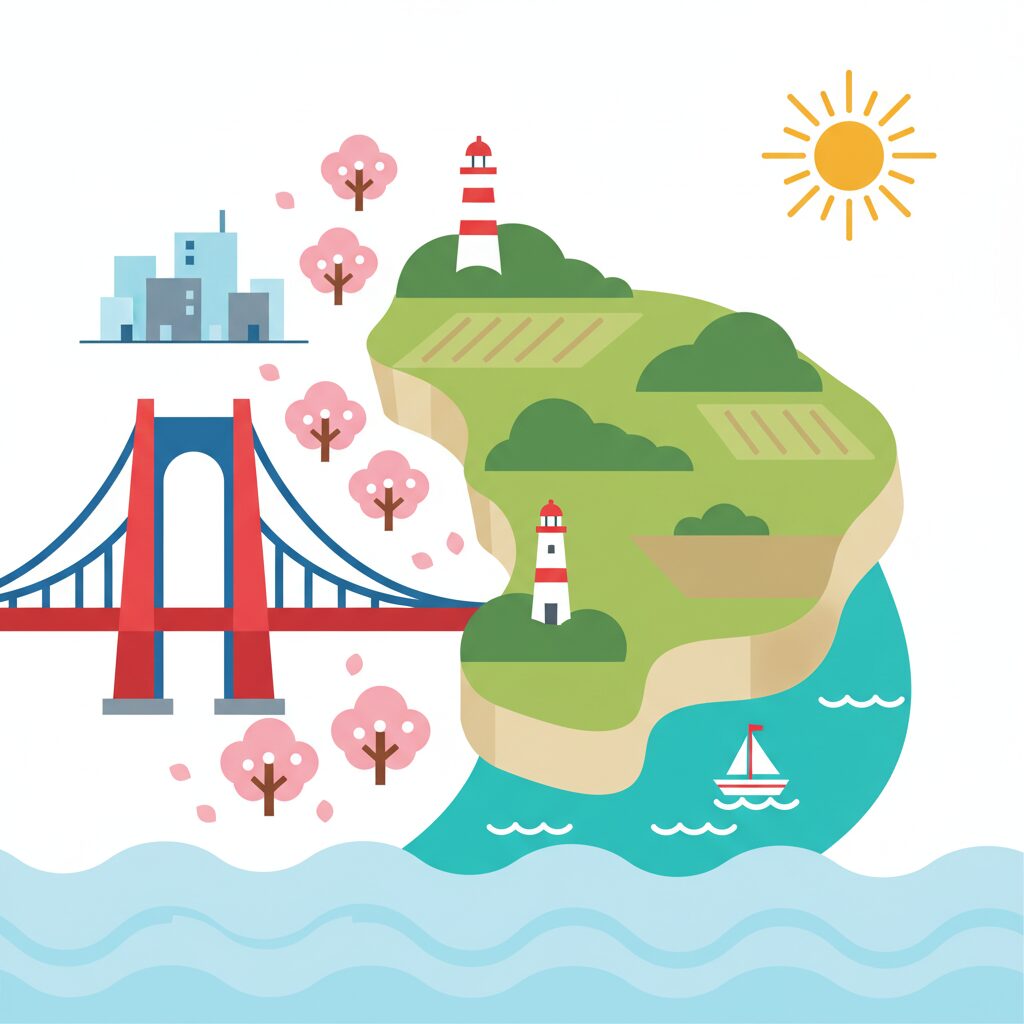
Osakans are essentially practical people, skilled in balancing costs and benefits in every part of life. This mindset extends to money, food, and most critically, time. A weekend trip must offer maximum rejuvenation for a reasonable effort. Tokyoites might plan an intricately timed shinkansen journey to a well-known mountain onsen town—a multi-hour trip that becomes part of the experience. That’s not the Osaka approach for a casual weekend. Awaji’s charm lies in its easy accessibility. From central Osaka, you can be crossing the Akashi Kaikyo Bridge, the world’s second-longest suspension bridge, in roughly an hour. That’s the perfect balance. It’s just distant enough to truly feel removed from the city—the air shifts, the buildings disappear, the sky opens wide. Yet it’s close enough to avoid feeling like a major expedition. You can decide Saturday morning to go and be enjoying seafood by the ocean at lunchtime without any prior planning. This hassle-free escape perfectly suits Osaka’s craving for spontaneity and efficiency. It’s a genuine getaway without the travel fatigue—a vacation that doesn’t require recovery from the trip itself.
A Breath of Fresh Air, Literally and Figuratively
As someone who loves the outdoors, I start to feel overwhelmed by Friday. The constant noise, visual chaos, and sheer crowds create a low-grade stress hum. Awaji offers relief. Once you cross that bridge, you swap the roar of the Midosuji Line for the sounds of wind and waves. Cramped city blocks give way to broad coastal roads and rolling green hills. This is more than just scenic beauty; it’s mental decompression. Osaka’s work and social culture is famously direct, high-energy, and always ‘on.’ Business moves quickly, conversations are candid, and social events are lively. People give their all, nonstop. Awaji’s quiet, slower pace provides a crucial counterpoint. It’s a place to switch off the part of your brain that’s always managing crowds and social signals. You can simply drive, gaze out at the ocean, and breathe air free of city grit. This profound change in sensory experience is what recharges you for another week in the urban bustle.
Awaji Through an Osaka Lens: It’s All About the ‘Kospa’
To truly understand Osaka, you must grasp the concept of `kospa`. While it’s a blend of “cost performance,” its significance goes far beyond simply meaning “good value.” `Kospa` is a philosophy centered on achieving the greatest satisfaction—in taste, enjoyment, convenience, or happiness—for the money and effort you invest. A genuine Osaka native can detect good `kospa` like a bloodhound. Awaji Island exemplifies a `kospa` paradise in every way, which is likely the biggest reason it holds the title of Osaka’s favorite getaway spot.
The ‘Cost Performance’ of Happiness
Consider a typical Awaji road trip through the lens of `kospa`. Four friends cram into one car, splitting gas and bridge tolls four ways, keeping transportation costs very low. Instead of spending a fortune on theme park tickets, the fun comes from the drive itself, the freely accessible beaches, and the breathtaking views at a coastal café where a 600-yen coffee offers a priceless sea panorama. Lunch isn’t a pricey, touristy meal but a ridiculously fresh seafood bowl (`kaisendon`) at a local fishing port costing 1,800 yen, which in the city would be twice as expensive and far less fresh. The whole outing offers an impressively high return on investment. It feels indulgent—the open road, ocean breeze, gourmet local cuisine—but all on a modest budget. This isn’t about being cheap; it’s about being clever. It’s about maximizing joy from your resources, a refined skill perfected in Osaka’s merchant culture.
From Takoyaki to Terrace Cafes: A Culinary Excursion
Osaka is famously called `Tenka no Daidokoro`, or “The Nation’s Kitchen.” Here, food is more than just nourishment; it’s a hobby, a passion, and a major topic of conversation. Any trip, whatever the purpose, is judged heavily by its culinary offerings. Awaji delivers abundantly, serving as a natural extension of Osaka’s food-loving culture. The island’s mild climate and fertile land make it an agricultural powerhouse. For Osaka residents, visiting Awaji is like a pilgrimage to the source.
The Onion Obsession Explained
You can’t talk about Awaji and Osaka without mentioning onions. Yes, onions. To outsiders, the local devotion to Awaji onions might seem odd. But in Osaka, knowing the origins of your food and valuing its quality marks a true connoisseur. Awaji onions are famously sweet and tender, symbolizing the island’s abundance. You’ll find them everywhere: raw in salads, deep-fried as ‘onion flowers,’ featured in burgers, and even as an ice cream flavor. At the end of a trip, it’s customary to stop at a roadside station (`michi-no-eki`) and purchase a large bag of onions to take home. This isn’t merely grocery shopping; it’s bringing back a trophy—a tangible token of the weekend’s deliciousness, a `kospa` triumph to share with family or boast about to colleagues. It reinforces that the trip wasn’t just enjoyable but also productive and savvy—you acquired premium goods right at the source.
The Social Fabric of the Weekend Road Trip
The way people travel reveals much about their culture. In the Tokyo metropolitan area, featuring a world-class public transport network, the train reigns supreme. Social outings are frequently scheduled around train timetables and station meeting spots. While Osaka also boasts an excellent train system, car culture for leisure is more deeply ingrained here. The road trip to Awaji has become a social ritual that captures the true Osaka spirit.
Cars, Friends, and the Freedom of the Open Road
A trip to Awaji is seldom a solitary event; it is a communal experience. Climbing into a friend’s car marks the beginning of the adventure. There’s a shared playlist, snacks from the `konbini`, and an ongoing conversation uninterrupted by station announcements. This style of travel offers a unique kind of freedom—the freedom to be spontaneous. Spot an interesting side road? Take it. See a beach perfect for a quick stop? Pull over. This flexibility reflects the less rigid, more adaptable nature of Osaka’s social life. Plans are often treated as loose suggestions rather than fixed schedules. The journey itself, with its many possible detours, becomes as significant as any destination. It’s a shared environment where group dynamics can naturally evolve, standing in sharp contrast to the more structured experience of sitting in line on a train.
Instagram vs. Reality: The Rise of the ‘Bae’ Spot
In recent years, Awaji has embraced its growing popularity, with a number of stylish and photogenic spots appearing along its coastline. Sleek white terrace cafes, modern art installations, and expansive, colorful flower gardens have drawn a younger generation of Osakans. These places are crafted for the social media era, providing the perfect backdrop for an Instagram post—a trend known as `insta-bae`. This represents an aspect of Osaka’s character: an affinity for things that are new, shiny, and a bit flashy. There’s a longing to be seen and to join the latest trends (`medachitai`, the desire to stand out). However, it’s important to realize that even this trend is viewed through the `kospa` lens. An Osaka native won’t visit a spot just because it looks good in photos. If the coffee tastes bad, the cake is overpriced, or the view falls short of expectations, the place will be ruthlessly criticized. The `insta-bae` spot must also deliver genuine value. A great photo is a bonus, not the main reason. The essential elements—quality food, a pleasant atmosphere, and a fair price—are non-negotiable.
What Foreign Residents Misunderstand
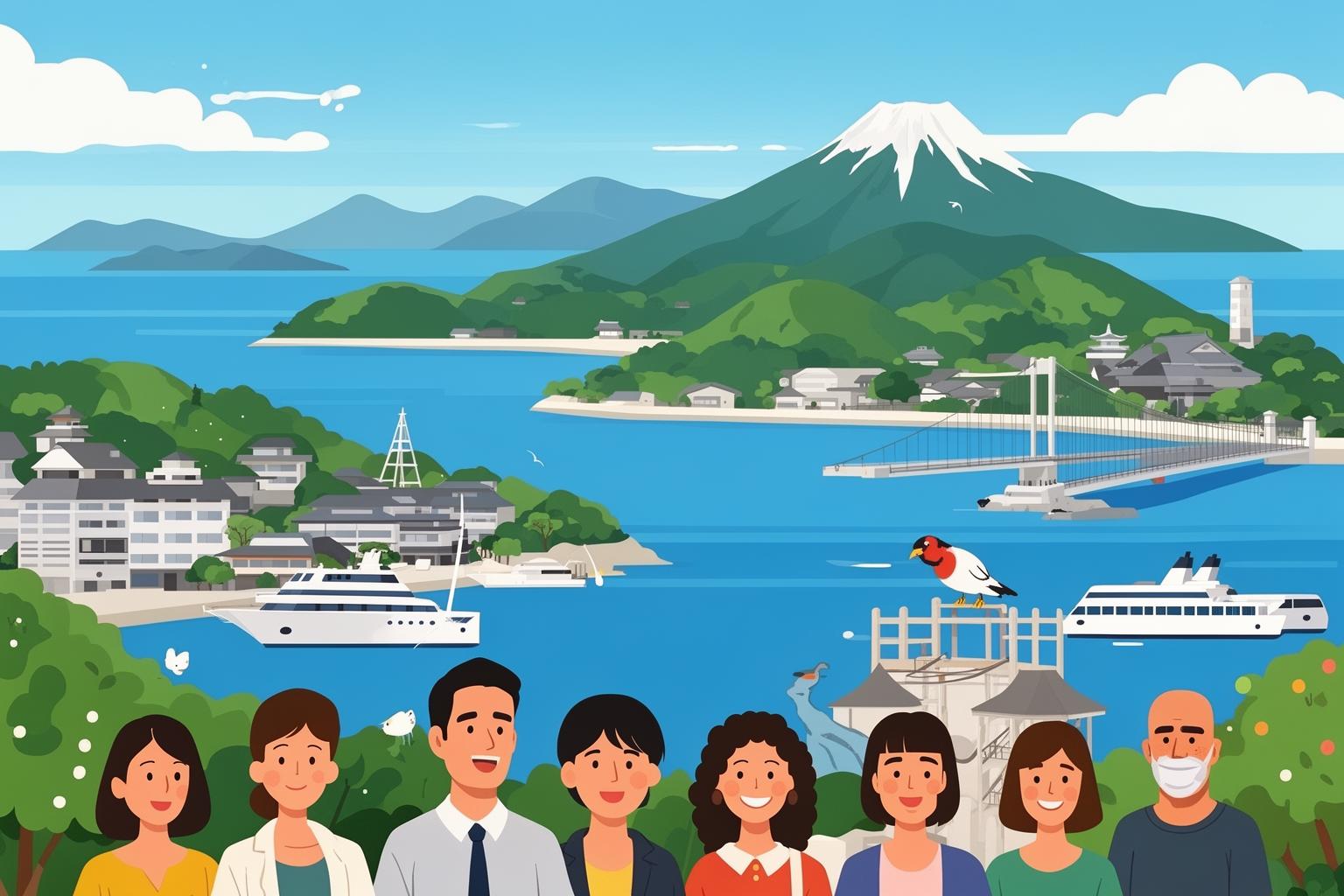
When I first moved to Osaka, I frequently heard my colleagues and friends talking about Awaji. My initial reaction, influenced by a more tourist-focused perspective on Japan, was one of confusion. I’d look at a map and wonder, “But what’s there?” There are no famous castles, no iconic temple complexes like in Kyoto, no expansive entertainment districts. This is where many newcomers make a mistake.
“Is it Just a Boring Island?”
The most common misconception is approaching Awaji with a sightseeing checklist. The island’s charm doesn’t lie in individual attractions but in the overall experience—the vibe. The aim isn’t to rush from a temple to a museum to a park. It’s about the leisurely drive along the western coastal road at sunset. It’s about discovering a small, unnamed cafe and spending two hours doing nothing. It’s the simple, profound joy of eating fresh-from-the-ocean sea bream while gazing at the water it came from. For people from Osaka, this defines a successful trip. It’s an active rejection of the itinerary-driven, box-ticking tourism common in many other places. Understanding this is key to grasping a large part of modern Japanese leisure culture: it’s about the atmosphere and feeling, not a list of sights.
“Why Not Go to Kobe or Kyoto?”
This is another reasonable question from a newcomer’s point of view. Kobe and Kyoto are world-renowned, culturally rich, and even closer to Osaka. So why drive to Awaji? The answer lies in their fundamentally different purposes. Kyoto offers a specific kind of cultural immersion. You go there for history, beauty, and a taste of classic Japan. It’s inspiring but can feel like a cultural excursion that requires a certain mindset. Kobe is a sophisticated port city, ideal for shopping, fine dining, and a more polished urban experience. Both are fantastic, but they remain cities. They are accessible by train and feel like part of the same vast Keihanshin megalopolis. Awaji represents a deliberate and clear break from all of that. It requires a car, which immediately shifts the dynamic. It encourages a slower pace. It replaces urban scenes with natural landscapes. It fulfills a different psychological need—the desire to escape the urban environment entirely, not just visit another part of it.
How Awaji Reflects the Real Osaka
Ultimately, the island of Awaji serves as a mirror, reflecting the core values of those who visit it every weekend. It acts as a living case study of the Osaka mindset.
Practicality Over Prestige
People in Osaka are well-known for being down-to-earth and unpretentious. The city’s culture was shaped by merchants rather than aristocrats, and that practical spirit still persists. A trip to Awaji perfectly exemplifies this mindset. It’s not about prestige. Saying you visited Awaji doesn’t carry the same social status that, for a Tokyo resident, a weekend at a luxury `ryokan` in Hakone might. And that’s exactly the point. It’s not meant for showing off. It’s about genuine, accessible enjoyment. The aim is to discover the most delicious bowl of `shirasu-don` (whitebait rice bowl) for 1,200 yen, not to share photos from the most exclusive restaurant. This happiness is rooted in simple, high-quality, and reasonably priced experiences.
A Community of Shared Experience
Since Awaji is such a common destination, it has become embedded in the local cultural vernacular. Mentioning to an Osaka colleague on Monday morning that you visited Awaji is more than just stating a fact; it opens the door to a shared narrative. The follow-up questions come quickly and specifically: “Oh, which coast did you drive along? Did you check out that new cafe near Nojima? How were the onions at the Uzu-no-Oka market?” It acts as a powerful social connector, reinforcing a sense of local identity and shared knowledge. Much like bonding over a Hanshin Tigers victory, discussing your latest Awaji experience signals, “We’re part of the same club. We understand.” It strengthens community bonds through a common, cherished experience.
The relationship between Osaka and Awaji continues to evolve. The island is becoming more developed and stylish, catering to the changing tastes of a new generation. Yet its fundamental charm remains timeless and deeply tied to the spirit of its neighboring city. Awaji is Osaka’s pause button. It’s where the city’s relentless energy dissolves into the sea breeze, where its love of good value finds its purest form, and where its people can take a collective, satisfying breath before diving back into the vibrant, wonderful chaos they call home.