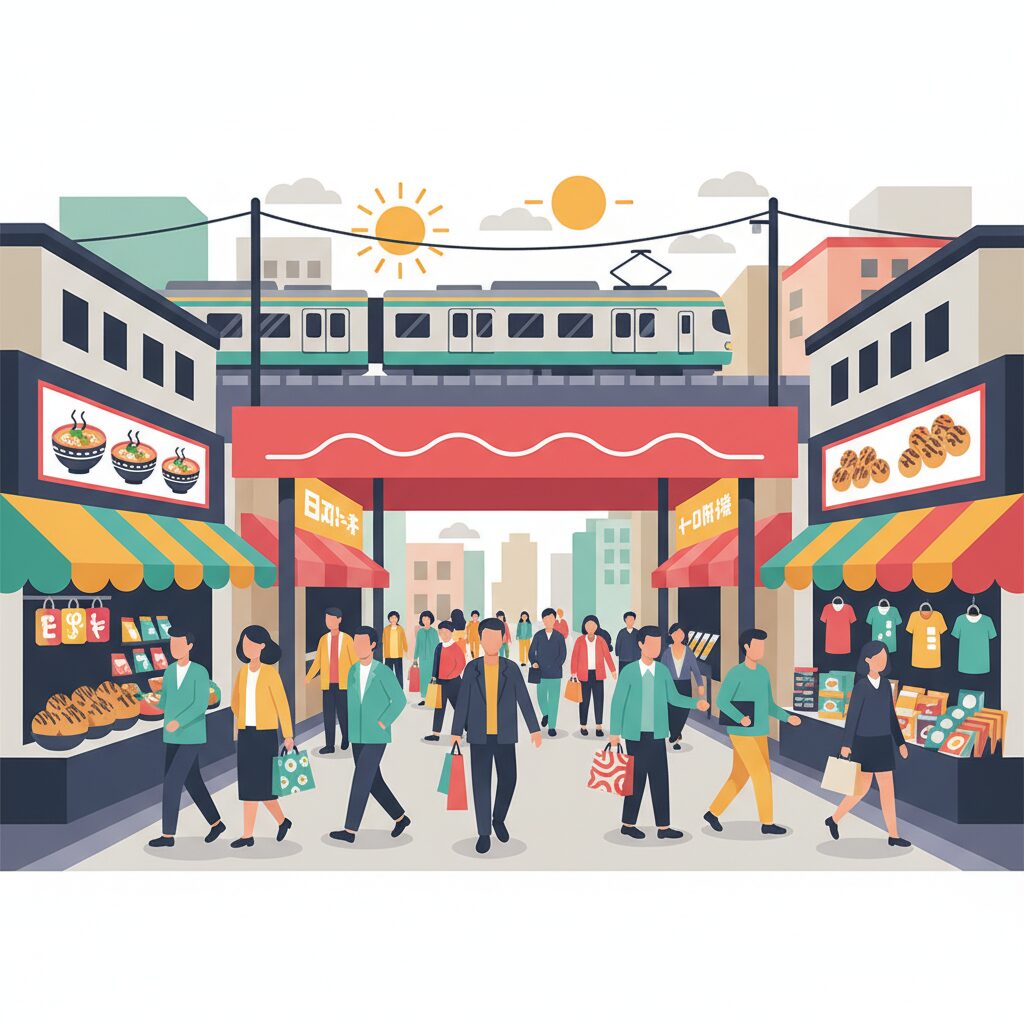
When you first start hunting for an apartment in Osaka, you’ll be buried in the usual specs. Square meters, distance from the station, whether the toilet and bath are separate. Standard stuff. But there’s another, unlisted feature that defines daily life here more than any floor plan: your proximity to a shotengai. These covered shopping arcades aren’t just quaint relics or tourist photo-ops. They are the roaring, clattering, deliciously chaotic veins of the city. Choosing to live near one isn’t just a logistical decision; it’s a full-on lifestyle commitment. It’s the difference between observing Osaka from a quiet balcony and diving headfirst into its bustling, gossiping, bargain-loving heart. In Tokyo, you might prize a quiet side street near a pristine, silent park. In Osaka, the prime real estate is often a stone’s throw from the glorious racket of a thriving market street. This choice reveals a fundamental truth about the city’s personality. Osaka doesn’t whisper; it bellows with life, and the shotengai is its megaphone. For anyone trying to decode this city, understanding the arcade is your first, most important lesson. It’s where the city’s famous merchant spirit, its deep-seated love for community, and its unapologetically pragmatic approach to life are all on display, every single day, under one long, covered roof.
To truly understand the daily rhythm and unique challenges of this lifestyle, consider reading about the ups and downs of living by a shotengai.
The Upside: Where Everybody Knows Your Name (and Your Usual Order)
Living next to a shotengai is like combining the world’s most well-stocked pantry with a vigilant neighborhood watch. The immediate and undeniable convenience is the first thing you notice. Yet, it’s the human element—the texture of everyday interactions—that truly characterizes the experience. It’s a world apart from the impersonal efficiency of a sprawling supermarket in a sterile suburb.
The Convenience Factor: Your Pantry Extends for a Block
Forget about the weekly bulk shopping. Life on the arcade is a daily flow of culinary spontaneity. You don’t plan meals a week ahead; you decide dinner as you stroll down the street. The air is rich with possibilities—the smoky, sweet aroma of grilled eel from the unagi shop, the sharp, salty bite of pickles at the tsukemono stand, and the sight of perfectly marbled beef at the butcher who greets you warmly with a “Maido!” (“Thanks for your business!”) asking if you want your usual thin slices for sukiyaki. You stop by the fishmonger to see the morning’s catch, selecting a few gleaming pieces of tuna while the owner shares tips on how best to prepare it. Your grocer, a wizened woman with incredibly strong hands, points out today’s perfect tomatoes and throws in an extra one just because. Your kitchen pantry extends far beyond your apartment door; it stretches for hundreds of meters, staffed by experts who have perfected their craft over generations. This rhythm transforms how you live: it’s less about stockpiling and more about engaging with the daily flow of goods and the seasons. Cooking becomes less of a chore and more of a community collaboration.
The Human Connection: Beyond a Simple Transaction
Here lies the heart of the Osaka difference. In a Tokyo chain store, the aim is a quick, silent, and flawless transaction. You scan your items, pay with a tap, and leave. Efficiency is paramount. But in an Osaka shotengai, the purchase is often just an excuse to chat. The shopkeepers are characters, performers, and guardians of the community’s social fabric. They don’t merely sell you goods; they weave you into the neighborhood. They remember your name, wonder why you weren’t around yesterday, and comment on the weather, the latest Hanshin Tigers game, and the absurd price of lettuce this season. This is the famous omake culture in its natural setting—the culture of the freebie. It’s not a marketing ploy but a gesture that says, “I see you. You’re one of us.” Buying a few croquettes might earn you a free extra to take home. A regular visit to the fruit stand might mean bruised but perfectly good peaches slipping into your bag. This constant, low-key conversation and generosity foster a strong sense of belonging. It’s a marked contrast to the deliberate anonymity found in many other large cities. In Osaka, business is personal, and buying your daily bread is an opportunity to strengthen social ties.
The Price is Right: The Art of the Osaka Bargain
Osaka was built by merchants, and the spirit of the deal runs deep in its veins. The shotengai serves as the grand stage where this spirit thrives. Prices here are often noticeably lower than those in department stores or national supermarkets. These small, family-run shops have lower overhead and compete fiercely on both price and quality. But it’s not just about low prices; it’s about the dynamic nature of commerce. As evening falls, a new energy ripples through the arcade. Calls become louder: “Yassui de!” (“It’s cheap!”), “Mokari-makka?” (“Making money?”). That’s when true bargains emerge. Bento boxes get discount stickers slapped on, the fishmonger bundles up the remaining daily cuts, and the baker sells off the last loaves at a fraction of the original price. For the savvy shopper, it’s a daily treasure hunt. It taps into a deep-seated Osakan love for value—not about being stingy or kechi, as stereotypes suggest, but about being smart—understanding market flows and securing the best quality at the best price. Taking part in this daily ritual feels like sharing a city-wide secret.
A Built-in Social Scene: Festivals, Events, and Everyday Dramas
A shotengai is more than just a cluster of shops; it’s the neighborhood’s living room and town square. Life unfolds openly here. Throughout the year, the arcade transforms. In summer, lanterns hang for the obon festival, filling the air with traditional music and the scent of festival foods. There are seasonal sales, raffles offering prizes from bags of rice to bicycles, and local musicians spontaneously setting up performances. Even on ordinary days, the street is a stage for countless small dramas. You’ll see children chasing one another, elders sharing stories on benches, and shopkeepers engaged in good-natured debates. You become an involuntary spectator to the life of your community. This constant buzz of activity provides a powerful antidote to the isolation that often creeps into big-city living. When you live on the arcade, you’re never truly alone. You are part of a living, breathing organism—both witness and participant in its daily story.
The Downside: When the Charm Wears Thin
For all its vibrant appeal, living amidst a shotengai is far from a tranquil experience. The very elements that bring it to life—the people, the noise, the constant activity—can also wear you down. It’s a fully immersive sensory environment, and sometimes, you just want to lower the volume.
The Noise: An Endless Soundtrack
Silence is nonexistent. Your day begins not with a gentle alarm but with the metallic clatter of steel shutters rolling up, a sound that reverberates through the arcade like an industrial reveille. Then come the voices: the butchers calling out their morning greetings, the vegetable sellers advertising their daily specials. And soon after, the music starts. Every shop has its own jingle, a relentlessly cheerful, looping tune designed to embed itself in your mind. These jingles play repeatedly throughout the day, creating a noisy symphony that filters through your windows. Layer on the constant murmur of thousands of shoppers, the squeal of bicycle brakes, the rumble of delivery carts, and occasional announcements over the central PA system. It’s a wall of sound that rarely fades. If you work from home or are noise-sensitive, the experience can be maddening. The relentless energy that’s exhilarating for a quick visit becomes an exhausting, unavoidable soundtrack to your daily life.
The Crowds: Navigating the Human Flow
On a Saturday afternoon, the shotengai can feel less like a street and more like a human traffic jam. Moving through it becomes a contact sport. You learn the “Osaka shuffle,” a technique for weaving and dodging through dense crowds, asserting your way without seeming aggressive. Pushing a stroller or riding a bicycle through this mass is a herculean effort. The flow is unpredictable. People stop suddenly to check out a display. Groups of friends walk five abreast, blocking the whole path. Tourists, amazed, move at a snail’s pace. This can turn a simple five-minute trip to the bakery into a frustrating fifteen-minute ordeal. The sensation of being constantly boxed in, of having to fight for your personal space, is deeply draining. The lively atmosphere that once charmed you now feels like a chaotic obstacle course you have to navigate every time you leave your home.
The Lack of Anonymity: Living in a Goldfish Bowl
The flip side of the close-knit community is a total lack of privacy. You are always being observed. Not in a hostile way, but in a casual, matter-of-fact, “that’s just how we do things here” manner. The woman at the tofu stand knows you buy soy milk on Mondays, Wednesdays, and Fridays. If you miss a day, she’ll ask if you’re feeling alright the next time you visit. The butcher notices you’ve switched from pork to chicken and might teasingly question if you’re on a diet. They observe what time you arrive home at night and who you’re with. Your life becomes neighborhood public property, an ongoing soap opera. For some, this is reassuring—a safety net of watchful eyes. For others, it’s stifling. The freedom to be anonymous, to be unseen, is a luxury you sacrifice living on the arcade. Every outing is a social performance, and you’re always in the spotlight.
The Old-School Factor: Cash is King and Hours Are Limited
While endearingly old-fashioned, the shotengai often follows a slower, less convenient pace. Many small, family-run shops operate on a cash-only basis. Your hopes of a smooth, card-tapping experience end here. You quickly learn to always carry cash, a habit that feels outdated in a digital payment world. Also, these businesses aren’t open around the clock. Each shop has its own hours. The fishmonger might close by mid-afternoon after selling his fresh catch. The bakery might run out of your favorite bread by noon. Many places shut down one day a week, usually Wednesday or Thursday, disrupting your routine. You can’t just assume everything will be open. You have to learn the unique rhythm of your arcade, a puzzle of opening times and closure days that can be frustrating when all you want is a late-night snack or an early-morning coffee. A 24-hour konbini may be a few blocks away, but its sterile convenience feels worlds apart from the charmingly authentic, though often closed, shops right outside your door.
The Osaka Mindset: Understanding the Shotengai Spirit
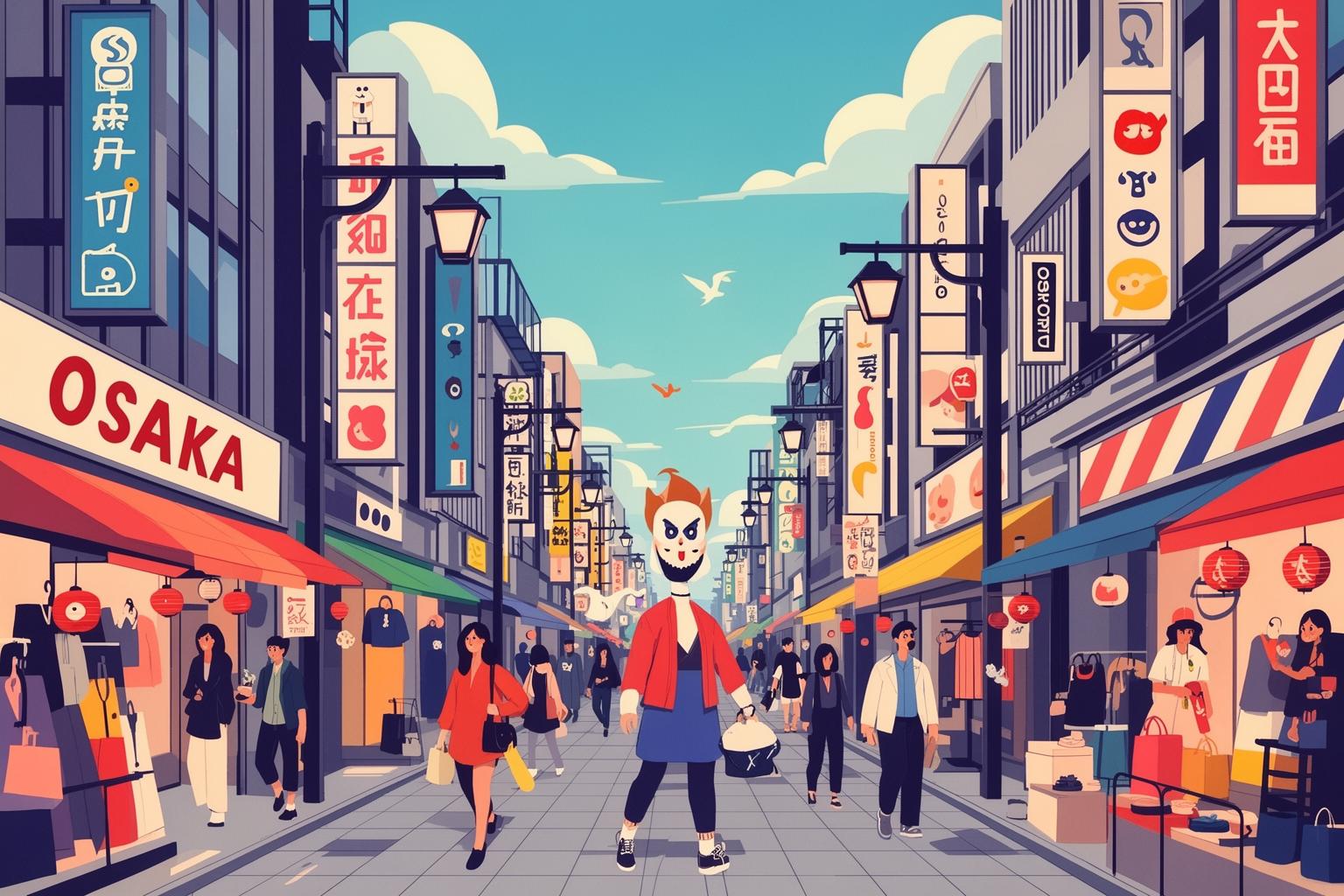
To truly understand life near a shotengai, you need to grasp the distinctive Osaka mindset it both nurtures and mirrors. This culture, shaped by centuries of commerce, blends pragmatism, community, and good-natured theatricality. It stands in stark contrast to the more reserved and formal culture typical of Tokyo.
It’s All About “Kechi” vs. “Shoubai”
Outsiders often stereotype Osaka people as kechi, or stingy. This is a deep misunderstanding. The true concept at play is shoubai, which means business or trade. In Osaka, shoubai is a source of pride, not a dirty word. A good merchant (akindo) is one who offers excellent quality at an unbeatable price, while a smart customer recognizes that value. The entire shotengai acts as a stage for this principle. The haggling, discounts, and omake—it’s all a performance showcasing the merchant’s dedication to good shoubai. They aren’t merely selling vegetables; they’re selling their reputation, expertise, and relationship with you. The emphasis on getting a good deal isn’t about penny-pinching; it’s about respecting the craft of the transaction. Squandering money is viewed as foolish, an insult to the hard work involved in earning the money and producing the goods. Living here, shopping is seen not simply as consumption but as a sophisticated game of value—a daily celebration of the city’s commercial spirit.
The Blurring of Public and Private Space
Throughout much of Japan, especially Tokyo, public spaces are treated with reverence and distance; they are for passing through, not lingering. The shotengai disregards this convention. Here, the boundaries between shop and street, public and private life, are delightfully, messily blurred. Shopkeepers extend their goods far into the walkway. Neighbors pull up stools and chat for hours, treating the arcade as an extension of their living rooms. Children use it as their personal playground. To outsiders used to clear separation, this may seem chaotic or intrusive. But in Osaka, the community itself defines the space. The street belongs to those who use it, its purpose is to encourage interaction—not merely to facilitate movement. That’s why the arcade feels so vibrantly alive. It isn’t a sterile corridor; it’s a shared backyard where the messy, unpredictable business of life spills out for all to witness.
Why Clichés Like “Friendly” Miss the Point
Osaka people are often described as friendly, but branding their demeanor as simple friendliness misses the complexity involved. The outgoing, chatty shotengai shopkeeper’s style is a professional tool, refined over generations. It’s a kind of performative warmth crafted to build rapport, create a welcoming atmosphere, and ultimately encourage customers to open their wallets. The jokes, teasing, and personal questions are all part of the shoubai toolkit. This doesn’t mean it’s insincere. The relationships formed here are genuine, but they are grounded in commerce. It’s a practical, unsentimental social glue. Understanding this is essential. The Osakan isn’t friendly just to be kind—they’re friendly because that’s the way to build community, and community is how you build business. It’s a deeply pragmatic philosophy valuing human connection as the most effective and enjoyable route to getting things done. It’s less about abstract kindness and more about a tough, street-smart humanity.
So, Is Shotengai Life for You?
Choosing to live by a shotengai is a reflection of how you want to experience Osaka. It involves a clear trade-off: you give up peace, privacy, and modern, impersonal convenience. In exchange, you gain a vibrant, built-in community, unparalleled access to fresh food, and a front-row view of the daily theater of Osaka life. It’s a choice between a life of quiet observation and one of lively participation. There is no right or wrong answer, but the question itself captures the essence of what makes this city so unique. Do you prefer living in a quiet residential bubble, commuting into the city’s energy on your own terms? Or do you want to live immersed in that energy, with it greeting you first thing in the morning and the last thing at night? Living near a shotengai means constantly being reminded that you are part of something bigger than yourself: a noisy, complex, bargain-hunting, and deeply human neighborhood. It’s not always easy or comfortable, but it is undeniably one of the most authentic ways to experience the true, unfiltered spirit of Osaka.