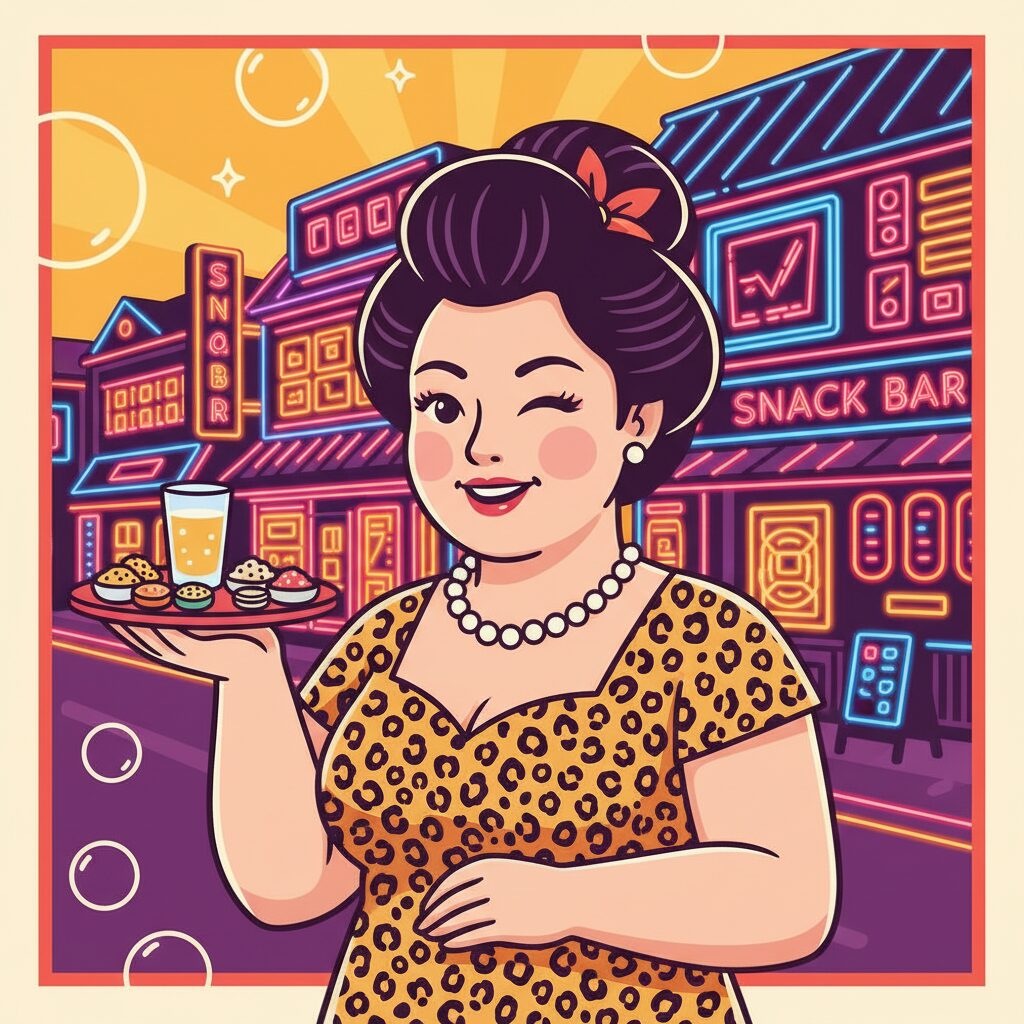
You see them everywhere, once you know what to look for. Tucked into the ground floor of a weathered apartment block in Tenma. Hiding in plain sight on a side street just off the glittering chaos of Shinsaibashi. A soft-glowing sign, a name that sounds like a person—Yuki, Jun, Akiko—and the simple, intriguing word: スナック (Snack). The windows, if there are any, are usually obscured. The door is almost always closed. From inside, you might hear a wavering but heartfelt karaoke ballad, followed by a ripple of warm applause. It’s not a club. It’s not quite a bar. It feels like a secret, a private party you weren’t invited to. For many foreigners trying to build a life in Osaka, these little spots are one of the city’s most persistent and charming mysteries. What exactly is a snack bar? Is it okay to go in? And what will you find if you do? Forget the tourist traps and the polished cocktail lounges for a moment. If you want to understand the true pulse of this city, the rhythm of its neighborhoods and the candid soul of its people, you need to understand the snack bar. It’s Osaka’s community center, its therapist’s office, and its living room, all rolled into one. And at the heart of it all is the indomitable figure who runs the show: the Mama-san.
For those looking to dive even deeper into Osaka’s local lifestyle, our guide to sentō etiquette offers a fascinating perspective on community rituals that extend well beyond the walls of a snack bar.
What a ‘Snack’ Is… and What It Isn’t
Before you open that door, let’s clear the air. The word ‘snack’ can be misleading. While you’ll almost certainly be served some small bites, no one comes here simply because they’re hungry. A snack bar, or ‘sunakku’ in Japanese, is a uniquely Japanese style of neighborhood bar, built on the foundations of intimacy, loyalty, and performance. Understanding what it isn’t is just as crucial as knowing what it is, as this is where newcomers often get confused.
Deconstructing the ‘Snack’ Bar
Imagine this: you step inside and the world seems to shrink. The space is small, typically seating no more than ten or fifteen people. The focal point is a long wooden counter, behind which the owner—the Mama-san or, less commonly, a male ‘Master’—presides. Opposite the counter, there might be a few plush, low-slung booths upholstered in worn velvet or vinyl. The lighting is soft, warm, and forgiving. The décor is deeply personal, not designed by an interior decorator but accumulated over decades. Photos of regulars on fishing trips, vintage whisky posters, a child’s drawing taped to the register, a collection of porcelain cats—it feels less like a commercial venue and more like someone’s slightly kitschy, yet incredibly cozy basement den.
Your first experience with the system might be puzzling. You’ll be asked to pay a ‘charge,’ a cover fee that usually includes a small, simple appetizer called ‘otoshi’ or ‘tsukidashi.’ This isn’t an optional starter; it’s your rent for the seat, securing your place in this intimate theater for the evening. After that, you order your drinks. But pay attention to the shelves behind the bar. You’ll see dozens of bottles of whisky, shochu, or brandy with paper tags hanging from their necks. This is the ‘bottle keep’ system, the lifeblood of the snack bar. Regulars buy a full bottle, which is stored for them behind the counter. On future visits, they only pay for ice, water, or mixers. A kept bottle is more than economical—it’s a statement. It says, ‘I belong here. This is my place.’
It’s Not a Hostess Club, and It’s Not Your Local Pub
This is the key distinction, and a frequent source of misunderstanding for foreigners. The presence of a charming woman pouring drinks and chatting may cause some to mistake a snack bar for a ‘kyabakura,’ or hostess club. But they are fundamentally different. A hostess in a kyabakura is an employee, paid to provide flattering, sometimes flirtatious attention at a high hourly rate. The interaction is deliberately transactional.
In contrast, the Mama-san in a snack bar is the owner, the proprietor, the queen of her own small realm. Her warmth and conversation are part of the hospitality extended to all her guests, not a service you pay for by the minute. She’s creating a community, not simply a customer base. The relationship is one of mutual respect. You are a guest in her home, and you behave accordingly. This also distinguishes it from a Western-style pub or a Japanese ‘tachinomi’ (standing bar). You don’t just stop by for a quick, anonymous drink. The expectation is that you will engage—you talk to the Mama-san, you talk to the person next to you, becoming part of the evening’s fleeting, unscripted performance.
The Heart of the Snack: Meet the Mama-san
To discuss a snack bar without highlighting the Mama-san is like describing a symphony without acknowledging the conductor. She is the central force around which the entire microcosm of the bar revolves. She’s the reason people return, night after night, year after year. Her role goes beyond that of a simple bartender; she is a cornerstone of the community, a living archive of neighborhood history and gossip.
The Matriarch of the Neighborhood
The Mama-san is a master of social orchestration. She possesses an almost uncanny ability to read the room, to know who needs a quiet listener, who seeks a lively debate, and who just wants to be left alone with their thoughts and a glass of Suntory Kakubin. She remembers everything: your favorite drink, your dog’s name, the project you were anxious about at work two weeks ago. She’ll ask you about it and genuinely care about the answer.
Her true brilliance is in her talent for weaving her diverse customers into a unified social fabric. She is the ultimate connector. She’ll effortlessly introduce the quiet accountant in the corner to the boisterous owner of the local dry-cleaning shop. ‘Sato-san, you should talk to Mike-san here. His company is looking for a new accounting firm!’ or ‘Oh, you like fishing? You have to see the photos from Yamamoto-san’s trip last weekend!’ She transforms a group of strangers into a temporary family. For a few hours, everyone at the counter belongs to the same club. She’s a business networker, a part-time therapist, an occasional matchmaker, and the steadfast, non-judgmental anchor in the lives of her regulars.
The Unspoken Rules of Her House
As a guest in her domain, there is an unspoken etiquette one quickly learns. This is not a place for loud, boorish behavior, unless the entire bar has collectively agreed it’s that kind of night. You don’t ignore your fellow patrons; a slight nod or a quiet ‘Konbanwa’ (Good evening) upon entering is customary. You read the room. Is the mood somber and reflective? Or is it a lively karaoke free-for-all? You adjust yourself to the prevailing atmosphere.
When karaoke is available, it has its own set of rules. You don’t monopolize the microphone. You sing a song, then pass the book. You applaud for everyone, especially those who sing with more passion than talent. This is a stage for shared vulnerability, not competition. From my perspective as a woman, a well-run snack bar is one of the safest places in the city to have a drink alone. The Mama-san fiercely protects her space and patrons. Any sign of unwelcome attention or inappropriate behavior is shut down with breathtaking speed and finality. She is your guardian, and in her bar, you are safe.
Osaka’s ‘Snack’ Culture vs. The Tokyo Standard
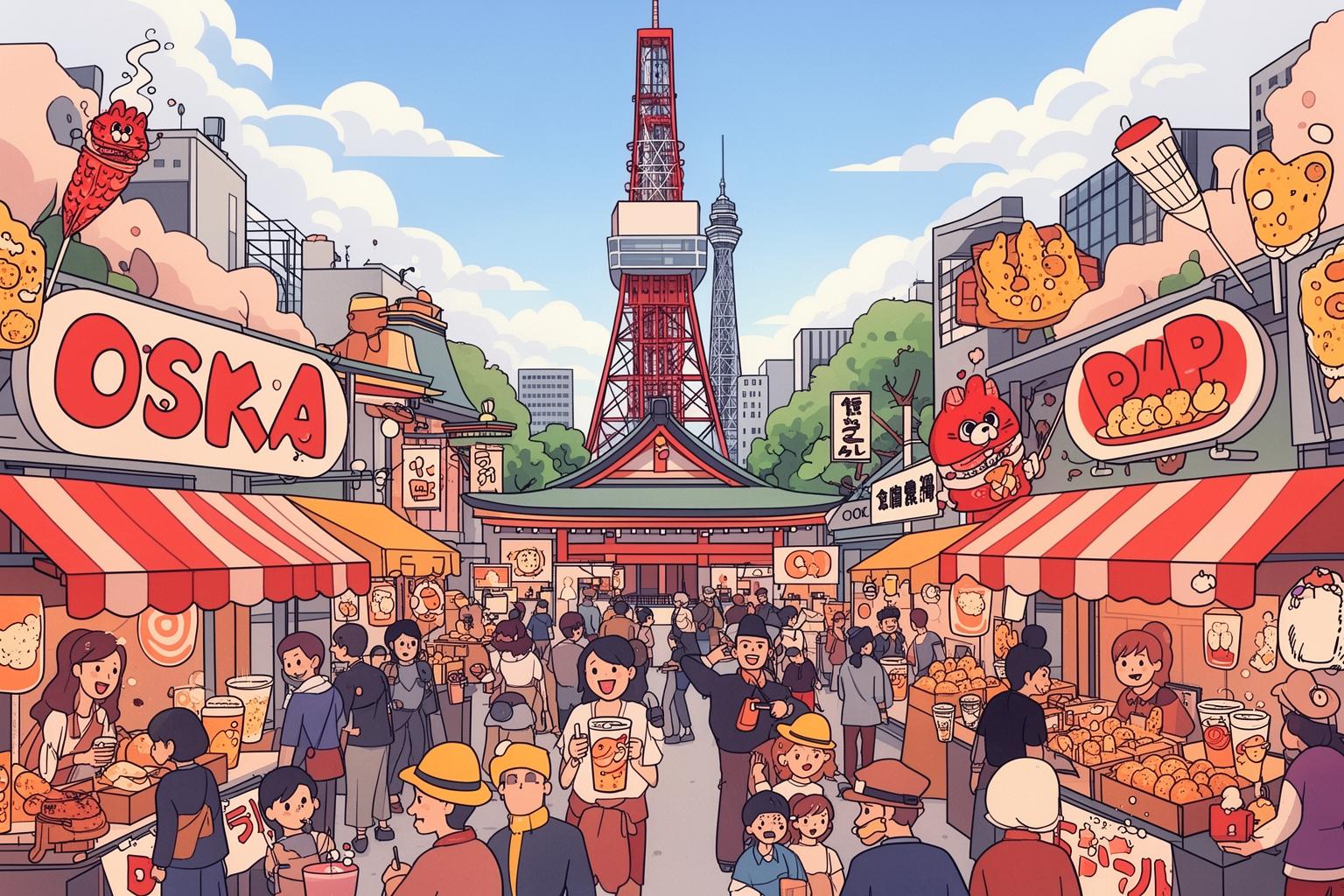
The prevalence and nature of snack bars are among the key cultural elements that make life in Osaka feel distinctly different from living in Tokyo. While Tokyo certainly has snack bars, they don’t hold the same central role in the city’s social fabric. Osaka’s identity is rooted in close-knit, neighborhood-level connections, with the snack bar serving as the ultimate expression of that spirit.
Community Over Anonymity
Tokyo’s nightlife often feels more specialized and anonymous. You might visit a bar for its award-winning mixologist, its rare selection of Japanese whisky, or its stylish, cutting-edge design. The emphasis is usually on the product. In Osaka, however, the focus is firmly on the people. You don’t go to ‘Snack Keiko’ for the artisanal gin; you go for Keiko-san herself. The bar is simply the stage for the main event: human connection.
This creates a distinctive social dynamic. In Tokyo, socializing typically happens within well-defined groups—colleagues, college friends, climbing partners—with little overlap. Osaka’s snack bars are more like social mixers. On any given night, you might find a construction worker, a university professor, a young couple on a date, and a retired grandmother all singing karaoke together. It’s a place where social and professional hierarchies are left outside. Your title and company don’t matter as much as your storytelling ability or your willingness to laugh at a bad joke. This forms the foundation of Osaka’s legendary friendliness—it’s not just a cliché but an active social practice carried out in thousands of these small bars every night.
The Art of the ‘Tsukkomi’ at the Counter
Nowhere is Osaka’s famous style of communication—a rapid back-and-forth exchange of jokes (‘boke’) and sharp retorts (‘tsukkomi‘)—more evident than at a snack bar counter. The conversation is a performance, and everyone is encouraged to join. The Mama-san usually acts as the tsukkomi grandmaster, teasing her regulars with a sharp wit that reflects deep affection.
A regular might grumble about his boss. In a quieter Tokyo bar, he might get sympathetic murmurs. In an Osaka snack bar, the Mama-san might fire back, “Well, if you worked a bit harder, maybe there’d be nothing to complain about!” Everyone bursts out laughing, including the complainer. The underlying message is clear: “We know you work hard. We’re with you. Let’s laugh about it together.” This direct, familiar, and playful style can surprise outsiders, but it’s the language of intimacy here. It constantly reassures you that you are known, seen, and part of the in-group.
A Foreigner’s Guide to Finding Your ‘Ibasho’ (A Place to Belong)
Despite their charm, snack bars can feel quite intimidating to non-Japanese residents. The closed door acts as a barrier, and the unspoken ‘regulars only’ atmosphere is often palpable. However, mastering the snack bar culture is one of the most rewarding ways to integrate into local life and discover a true sense of belonging, or what the Japanese refer to as ‘ibasho’.
Breaking the Ice: The First Visit
Stepping into a snack bar alone for the first time takes bravery. If possible, bring along a Japanese friend or colleague who can make the introductions. If you’re on your own, opt for a place with a glass panel in the door or a sign outside listing prices, which signals a welcome to newcomers. Glancing inside to see if it’s busy or empty can help you assess the vibe.
When you enter, offering a clear, friendly greeting is crucial. Make eye contact with the Mama-san and say ‘Konbanwa’. You can ask, ‘Hajimete desu ga, ii desu ka?’ (This is my first time; is it okay?). Her response will reveal everything you need to know. A warm smile and a gesture toward a seat means you’re accepted. Be ready to be the center of attention—you are a novelty. Expect questions like: Where are you from? Why are you in Osaka? What do you do? Respond with patience and humor. Your willingness to engage is your entry ticket. Don’t hesitate to ask questions in return. This initial curiosity isn’t an interrogation; it’s an audition—and one you want to pass.
From Stranger to ‘Jouren’ (Regular)
Becoming a regular—a ‘jouren’—is a gradual process. It’s a transition from being a guest to becoming part of the furniture. It doesn’t happen instantly; it happens through consistency. Visit on the same day each week. Let the Mama-san learn your routine. Start remembering the names and stories of other regulars. Offer to pour someone a drink from your bottle. Sing a karaoke song, even if you’re nervous. Your genuine effort will be valued far more than your singing ability.
Eventually, you may choose to purchase your own bottle. This marks a rite of passage. The moment the Mama-san takes a marker and writes your name on a bottle of Iichiko shochu is the moment you’ve crossed into belonging. The next time you walk in, you’ll be greeted not as a customer, but by name. A seat will be saved just for you. You’ll be asked about your week. Conversations will resume as if no time has passed. You will have found it: your ibasho. This is the real experience of living in Osaka beneath the surface. It’s not about famous landmarks—it’s about having a place where, when you enter, someone is genuinely happy to see you. It’s the feeling of coming home.
The Economics and Future of the Snack Bar
The golden age of the snack bar may have already waned. These establishments are difficult to keep running. The women who manage them tend to be older, and with demanding hours and modest financial rewards, younger generations often hesitate to take over. The polished, impersonal efficiency of chain izakayas and the growth of online social communities pose a challenge to this distinctly analog way of life.
A Fading Tradition?
In many regions of Japan, the local snack bar is indeed a fading tradition, a vestige of the Showa Era. Increasing costs, shifting drinking habits, and demographic changes away from small neighborhoods have forced many to shut down permanently. The pandemic especially hit these intimate, poorly ventilated venues hard, pushing many seasoned Mama-sans into reluctant retirement. The concern that a fundamental part of Japan’s social fabric might vanish is very real.
Why It Endures in Osaka
Yet in Osaka, the snack bar remains surprisingly resilient. It persists because it perfectly embodies the city’s core values. Osaka has always been a city of merchants and artisans, rooted in face-to-face relationships, trust, and community bonds (‘jiban’). People here often prefer to do business with those they know, like, and share a drink with after work. The snack bar acts as the hub of this intensely local social and economic network.
More importantly, it offers a vital counter to the isolating loneliness of modern urban life. It functions as a low-cost social club for the aging population and a friendly refuge for young newcomers. It’s a place to toast small wins or mourn bitter losses among people who truly understand. It’s a tribute to the Osakan belief that a life rich in human connection holds greater value than one full of material goods or passing fads. So next time you pass by that enigmatic, closed door, don’t just see it as a bar. See it as a stronghold of community, a repository of local stories, and an open invitation to experience the warm, witty, and profoundly human spirit of Osaka. All you need is the courage to knock.