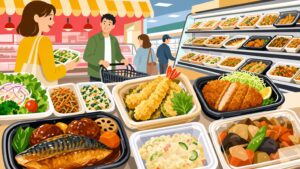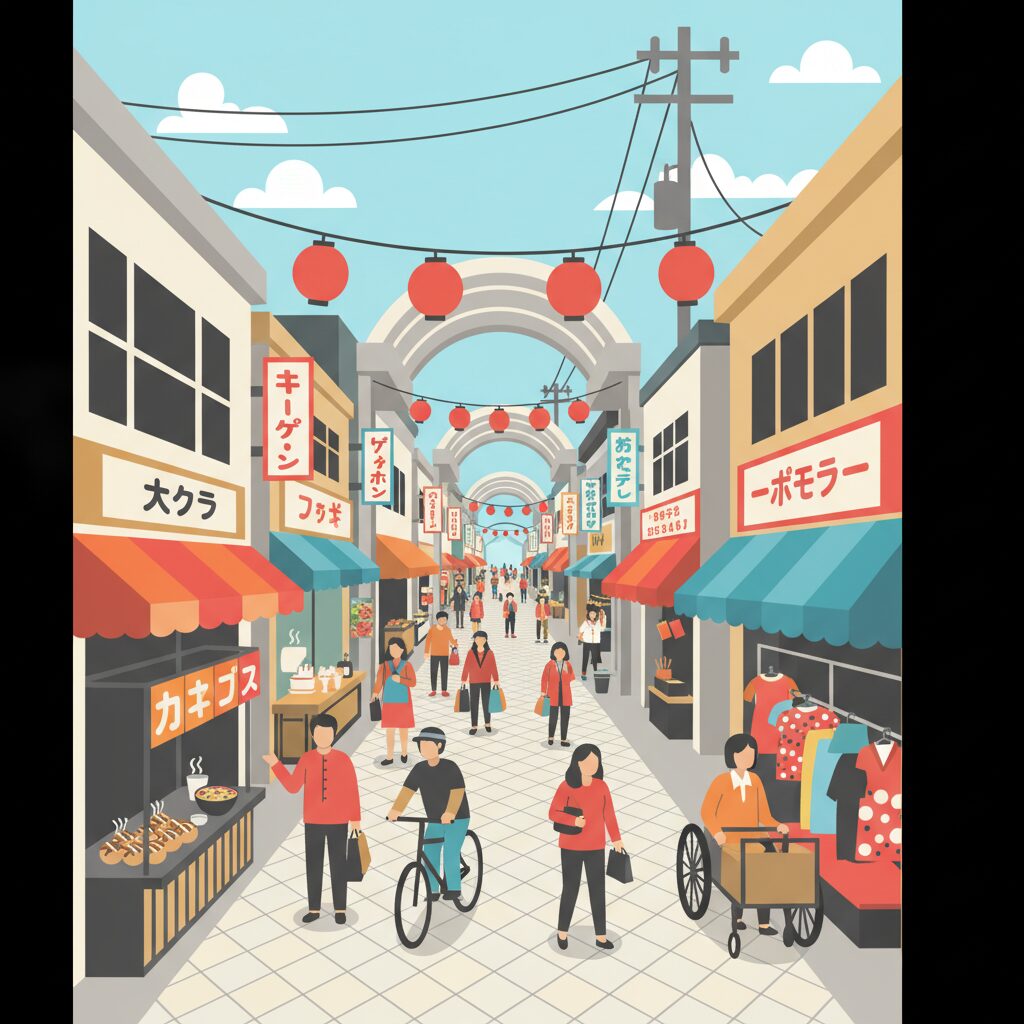
Walk out of any train station in Osaka, turn left or right, and you’ll probably find one. A long, covered street, humming with a particular kind of energy. Bicycles weave through crowds of shoppers. Banners with faded characters hang from the ceiling. The air is a mix of fried croquettes, fresh fish, and roasted tea. This is the shotengai, the local shopping arcade, and it’s the unofficial main street of countless Osaka neighborhoods. The first time you experience it, it can feel like chaos. It’s a sensory overload, a world away from the silent, polished aisles of the 24-hour supermarket. You see people not just shopping, but stopping, talking, laughing with the vendors. You hear a language of commerce that’s fast, direct, and full of personality. And you might ask yourself the same question I did: Is this just a charming relic, or is it a viable way to live?
In Osaka, where you buy your groceries is more than a chore; it’s a statement about how you want to connect with the city. It’s a choice between the sterile efficiency of a modern chain store and the vibrant, messy, human world of the shotengai. This isn’t a guide to the best arcades for tourists. This is a look under the roof, an exploration of the rhythm, the mindset, and the unspoken rules that govern these vital arteries of Osaka life. This is about helping you decide if you want to make that rhythm your own.
Embracing the dynamic pulse of Osaka can also spark a desire for tranquility, as seen in a temple retreat in Koyasan, where peaceful traditions offer a counterpoint to urban energy.
What a Shotengai Really Is (And Isn’t)
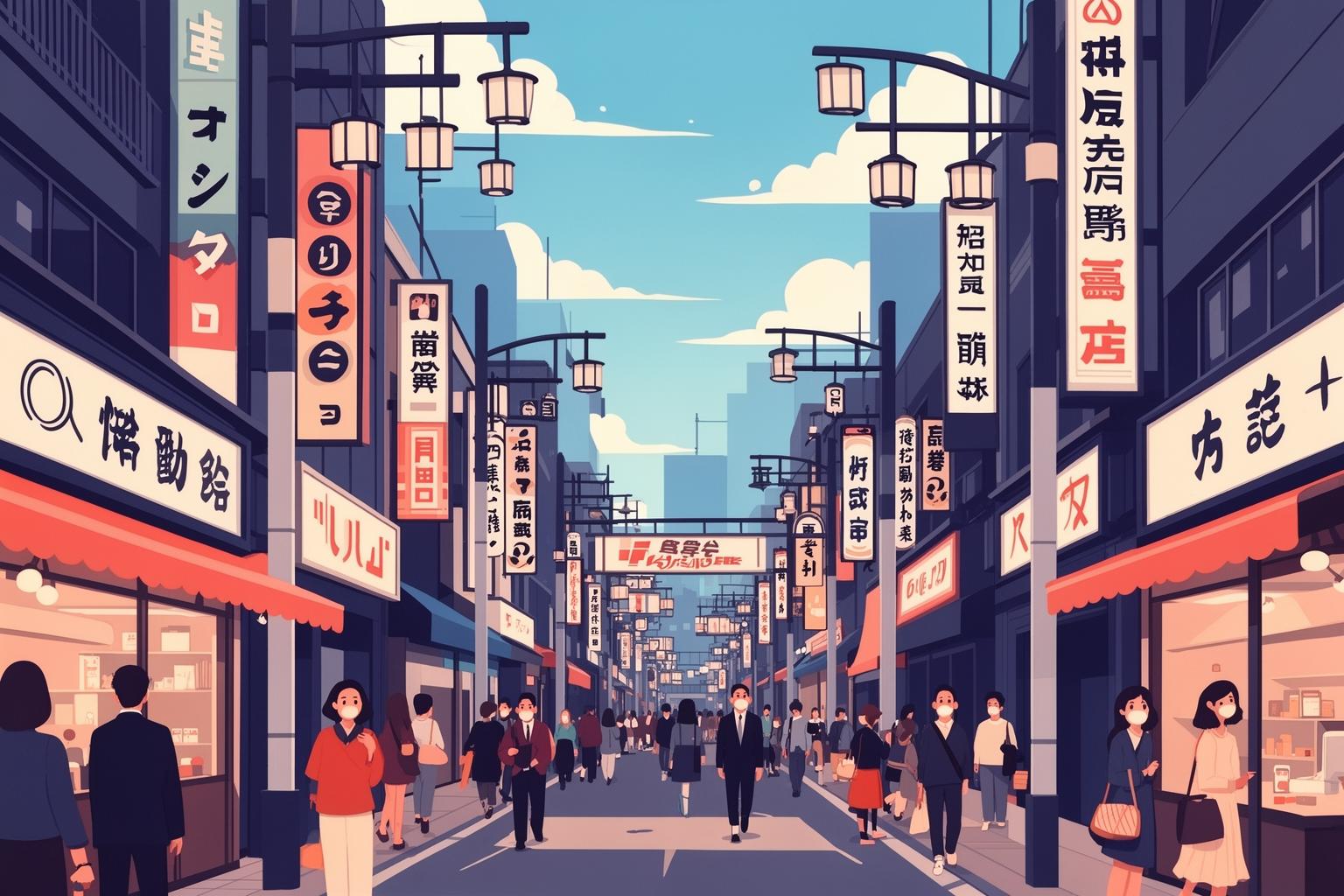
Let’s clarify one point: a shotengai is not a mall. A mall is a carefully planned and curated retail space, owned by a single developer, where every store is selected to fit a cohesive brand image. In contrast, a shotengai is the opposite. It’s an organic, sometimes chaotic, collection of independent businesses that have evolved over decades. It functions as a living ecosystem. You might find a third-generation fishmonger with saltwater tanks bubbling in front, right beside a brand-new, minimalist coffee shop. Nearby, an old-fashioned pharmacy selling mysterious herbal remedies shares a wall with a loud, flashing pachinko parlor. There are tiny clinics, dusty bookstores, barbershops with spinning poles, and fruit stands where the owner’s cat naps on a box of mandarins.
A shotengai isn’t just a spot for shopping. It serves as the neighborhood’s living room, kitchen, and bulletin board. It’s where you get your bike’s flat tire fixed. It’s where you pick up a bento for lunch. It’s where you find posters for the local summer festival. In many ways, the shotengai captures the true character of its neighborhood far more authentically than any manicured shopping mall ever could. It’s a little worn around the edges, fiercely independent, and stubbornly, wonderfully human. It represents a cross-section of real life, not an idealized version of it. For many Osakans, especially older generations, the shotengai is the cornerstone of their daily routine, a constant amid a rapidly changing world.
The Osaka Rhythm: Shopping as a Conversation
In a supermarket, your main interaction is with a barcode scanner. You quietly fill your cart, pay, and leave. The priority is efficiency. In a shotengai, the aim is connection, with the transaction being only one part of a broader conversation. This is where Osaka’s renowned directness and pragmatism—often mistaken for brusqueness—truly shine. This style of communication stems from a merchant culture that values clarity and substance above all else. Here, you’re not just a customer; you’re a neighbor, and the shopkeeper is not simply a vendor but a knowledgeable expert.
The Art of the Recommendation
Visit a butcher in a shotengai and ask for minced pork. He might glance at what you’re carrying, inquire about your dish, and say, “No, no. For gyoza, you want this blend. It has more fat. It will be juicier.” This isn’t an attempt to upsell; it’s a service. He’s a professional, and his reputation depends on you making delicious gyoza. The vegetable seller might point to a pile of spinach and say, “This arrived this morning. It’s the best here. The cucumbers are so-so today; maybe wait until tomorrow.” This blunt honesty can be surprising if you’re used to Tokyo’s polite ambiguity, but in Osaka, it’s a mark of respect. They respect you enough not to let you buy subpar goods. They’re building trust to ensure you’ll return tomorrow and beyond.
“Maido!” and “Omatase!”: The Soundtrack of Daily Life
Listen closely in the shotengai, and you’ll catch a steady chorus of “Maido!” and “Maido ookini!” Often translated as “Thank you,” their true meaning is closer to “Thank you for your continued business.” It signifies an ongoing relationship, a greeting among regulars—a verbal acknowledgment meaning, “I see you, I know you, and I appreciate you.” You’ll also hear “Omatase!” (“Sorry to keep you waiting!”), even if your wait was only ten seconds. It’s a gesture of respect for your time, recognizing the fast-paced, no-nonsense tempo of the city. These expressions are the lubricant that keeps the social engine of the shotengai running smoothly.
The Price is the Price… Usually
Don’t expect to haggle over a single apple. This isn’t a Marrakech souk. However, the Osaka sense of value is more flexible than a fixed price tag. The culture of omake—receiving a little something extra—is alive and well. Buy a few items from the fruit stand, and the owner might throw in an extra orange. Become a regular at the tempura shop, and you might find an extra piece of fried shrimp in your bag. This isn’t a discount; it’s a gift and a way of strengthening the bond. It’s the merchant’s way of saying, “I appreciate you.” This unspoken economy of goodwill is at the heart of the shotengai experience and a vivid expression of Osaka’s merchant spirit, where a good deal is about far more than just numbers.
Shotengai vs. Supermarket: Choosing Your Daily Battle

Living in Osaka involves a daily decision: do you choose the curated convenience of the supermarket, or the chaotic charm of the shotengai? There isn’t a right or wrong answer—only the choice that suits your lifestyle, personality, and priorities. It’s a fundamental decision about how you want to shape your daily life in the city.
The Case for the Shotengai
Opting for the shotengai means embracing a life of routine and connection. Instead of doing a big weekly shop, you buy what you need for the next day or two. Your morning walk might include stops at the tofu maker for fresh tofu, the fishmonger for salmon for dinner, and the greengrocer for vegetables. You’re constantly eating fresh. You know the faces of those who sell your food. You build a sense of place and community that’s impossible to find in a large, anonymous store. You actively support the local economy, helping to keep small, family-run businesses alive. It encourages you to slow down, be present, and engage more meaningfully with your surroundings.
The Case for the Supermarket
Let’s be honest: the shotengai lifestyle isn’t always practical. If you work long, unpredictable hours, the butcher who closes at 6 PM isn’t helpful. If you need laundry detergent, toilet paper, cheese, bread, and cat food, visiting five different specialty shops can be exhausting. The supermarket offers unmatched convenience. Everything is under one roof. It stays open late. You can pay by credit card. You can be in and out in fifteen minutes without talking to anyone if you’re not in a social mood. It’s efficient, predictable, and perfectly suited to a busy, modern life. For many, especially those balancing demanding jobs or families, the supermarket isn’t just a preference; it’s a necessity.
Why Osaka’s Arcades Feel Different
Tokyo has its own shotengai, naturally. Places like Yanaka Ginza or Sugamo Jizo-dori are charming and well-loved. However, they often feel more like special destinations—quaint pockets of old-world charm preserved for nostalgic locals and curious tourists. In contrast, in Osaka, the shotengai feel less like attractions and more like the everyday norm. They are longer, livelier, and more deeply integrated into the city’s fabric. Take Tenjinbashisuji, for example, the longest shotengai in Japan, stretching an impressive 2.6 kilometers. Its vast scale highlights the city’s dedication to this lifestyle.
This distinction is rooted in history. Osaka has always been Japan’s commercial center, known as the “nation’s kitchen” (tenka no daidokoro). It was a city established by merchants, not samurai. That pragmatic, deal-making, no-nonsense akindo (merchant) spirit is ingrained in the city’s DNA, and the shotengai is its clearest expression. The interactions are more straightforward, the emphasis on value for money (kosupa) is stronger, and the atmosphere is more vibrant. In Tokyo, you might speak softly. In an Osaka shotengai, you speak loudly. It reflects a culture that has always been a bit louder, more direct, and much more focused on the bottom line, both financially and socially.
Is the Shotengai Life for You? A Practical Guide
So, should you embrace the shotengai? It ultimately depends on what you want from your life in Osaka. It’s a highly personal decision that reflects your own rhythm and priorities.
You’ll Love It If…
You enjoy establishing daily routines. You find comfort in familiar faces and small, everyday interactions. You want to feel a deeper connection to your neighborhood. You are a foodie who values fresh, seasonal ingredients and expert advice. You’re learning Japanese and want a low-pressure place to practice your “Kore, kudasai.” You believe in supporting local, independent businesses and want your money to stay within the community. You prioritize human connection over sheer convenience.
You Might Struggle If…
Your work schedule is unpredictable and you can’t get to the shops before they close. The idea of managing multiple bags from different stores feels overwhelming. You prefer the efficiency and anonymity of a one-stop shop. You find unsolicited advice from shopkeepers more intrusive than helpful. You are on a tight budget and need to carefully compare prices, which is easier in a supermarket. You find the noise and crowds of the shotengai overstimulating or exhausting after a long day.
A Hybrid Approach
For most Osaka residents, the answer isn’t all or nothing. It’s a mix. This is likely the most realistic and enjoyable path. You rely on the shotengai for what it does best: incredibly fresh fish from the fishmonger, high-quality meat from the butcher, and seasonal vegetables from the grocer. You enjoy chatting with vendors and being part of the community. Then, you visit the supermarket for everything else: milk, pasta, cleaning supplies, and that specific brand of curry roux you prefer. This approach offers the best of both worlds—the connection and quality of the shotengai combined with the convenience and practicality of the supermarket.
Final Thoughts: Beyond the Shopping Bags
Choosing where to shop in Osaka involves more than simply obtaining goods. It’s about selecting your connection with the city. The shotengai serves as a window into the soul of this place. It reflects Osaka’s history as a merchant city—not as a museum story, but as a vibrant, living reality. It stands as a testament to a way of life that cherishes community, expertise, and personal relationships in an increasingly impersonal world.
Strolling through a shotengai reveals Osaka in its most raw and authentic form. It’s practical, personal, sometimes a bit noisy, and always, without fail, human. Whether you become a regular or just an occasional visitor, taking time to tune into the rhythm of the shotengai brings you closer to the heart of Osaka itself. It’s about more than just what you put in your shopping bag; it’s about the feeling of belonging when you walk down that long, covered street and hear a familiar voice call out, “Maido!”