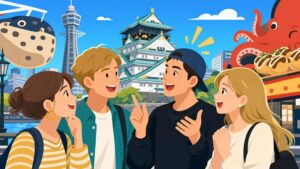
Live in Osaka long enough, and you start to notice the rhythm. The city has a pulse, a thrumming beat that runs from the packed trains at Umeda Station to the glowing Glico sign in Dotonbori. It’s a city of constant motion, of delicious, deep-fried smells, of loud laughter and even louder sales pitches. It’s intoxicating. It’s energizing. And by Friday afternoon, it can be utterly exhausting. That’s when you hear the whispers start in the office, the plans being made over LINE messages. It’s not about a boozy night in Shinsaibashi or a temple run in Kyoto. The word you hear over and over is “Awaji.” For the uninitiated, it’s just a name on a map, a teardrop-shaped island floating between Honshu and Shikoku. But for those of us living in the Kansai concrete jungle, Awaji Island is more than a place. It’s an exhale. It’s the collective pressure valve for Osaka’s two-and-a-half million souls, a destination that perfectly encapsulates the city’s pragmatic, pleasure-seeking, and deeply misunderstood character. To understand why Osakans flock to this specific patch of land is to understand the soul of Osaka itself.
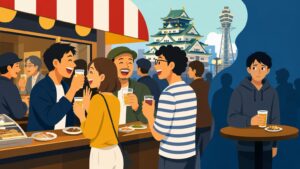
This pragmatic, pleasure-seeking character is perfectly embodied in the city’s unique social hubs, such as its vibrant tachinomiya.
The Gospel of ‘Just Far Enough’: Osaka’s Pragmatic Pursuit of Rest
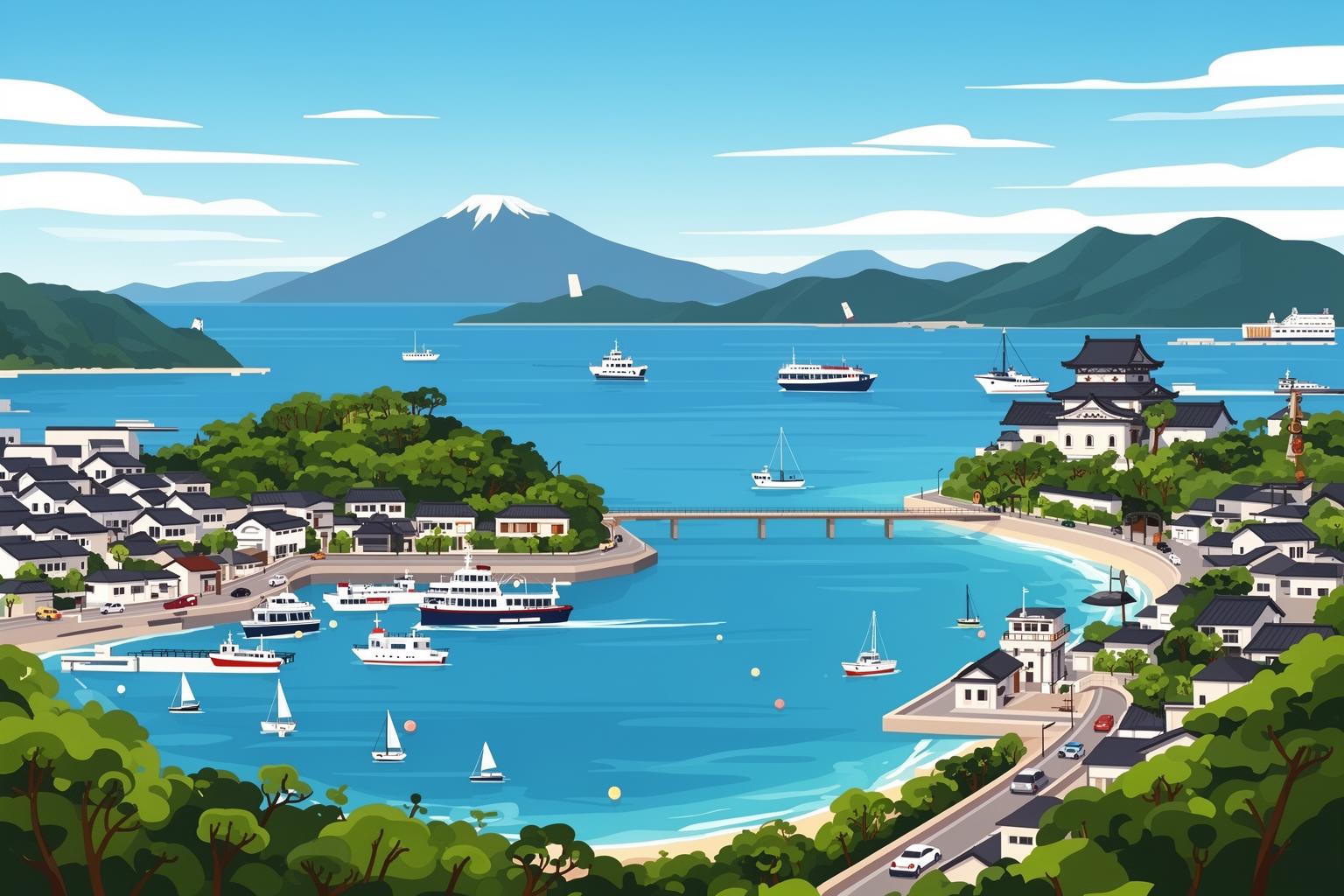
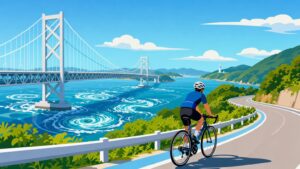
In Tokyo, weekend getaways often resemble a performance. Conversations revolve around carefully curated trips to Karuizawa, the mountain resort town known for its old-money charm, or a precisely arranged visit to a Hakone ryokan boasting a Michelin star. It’s certainly about the destination, but equally about the impression it conveys. The process involves navigating Shinjuku Station, securing expensive Shinkansen tickets months ahead, and packing the perfect understatedly luxurious weekend bag. The getaway itself becomes a project, another endeavor to optimize and perfect. Osaka stands in stark contrast. The dominant mindset here isn’t about prestige; it’s about kosupa, or cost performance. This goes beyond mere frugality—a common, simplistic stereotype of Osakans. It reflects a deeper philosophy of maximizing value and extracting the most enjoyment with minimal hassle. Awaji Island exemplifies kosupa applied to relaxation. From central Osaka, you can reach the Akashi Kaikyō Bridge, the world’s second-longest suspension bridge, in less than an hour. There are no bullet trains to reserve, no airports to navigate. You simply drive. This is a key distinction. Car ownership is more common for the typical Osaka family than for those in Tokyo, where parking can cost more than a small apartment. The car symbolizes freedom, spontaneity, and the ability to carry kids, coolers, and inflatable beach toys effortlessly. The journey itself adds to the appeal. Driving over that vast, graceful bridge is a rite of passage. The city’s dense, vertical skyline fades in the rearview mirror, replaced by the vast, sparkling blue of the Seto Inland Sea. It’s a tangible, visible shift from work-week stress to weekend liberation. You’re not just traveling; you are deliberately leaving the city behind. The island is “just far enough” to feel like a true escape, yet “just close enough” that the trip isn’t a tiring ordeal. An Osakan family can decide on Friday morning to head to Awaji for the weekend and be there by lunchtime. This practicality, this emphasis on efficiency to enhance pleasure, epitomizes Osaka.
An Economy of Space: Trading Concrete for Sky
To truly understand why Awaji’s open spaces are so essential, you need to experience the sensory reality of daily life in Osaka. This isn’t a city of expansive parks and broad boulevards. It’s a delightfully chaotic, human-scale city founded on commerce. Life unfolds in tight quarters. You live in a small apartment, your balcony maybe just big enough for a single drying rack. You weave through crowded shopping arcades where the smell of takoyaki and vendors’ calls fill the air. You squeeze onto packed Midosuji Line trains during rush hour. Your view often consists of another building, a web of power lines, or a slice of sky. We cherish this energy. It is the source of the city’s vitality. But it also creates a deep, almost primal craving for the opposite: open sky, a horizon unbroken by skyscrapers, and the simple luxury of seeing green in every direction. Awaji offers this abundantly. The island is a mosaic of rolling hills, terraced fields, and breathtaking coastline. Places like Awaji Hanasajiki feel less like manicured gardens and more like a vast canvas of seasonal flowers spread across a hillside overlooking the sea. For an Osaka family, this is paradise. It’s watching children run at full speed through a field of poppies, their laughter not bouncing off concrete but carried away by the sea breeze. It’s a place where you can have a barbecue on the beach without breaking a dozen unspoken rules about noise and smoke. This isn’t about a profound, spiritual connection with nature in the way a mountain ascetic might seek. It’s more immediate and practical. It’s about resetting the senses. It’s about allowing your eyes to rest on a distant horizon. It’s about breathing air that doesn’t carry the taste of asphalt and industry. The relief is tangible. Outsiders often see Osaka’s intense urban density and assume its residents are numb to it. The truth is, they’re keenly aware of it, which is exactly why they’ve mastered the art of quick, effective escape. They don’t need to venture deep into wilderness; they just need a place where the sky feels larger than the buildings, and Awaji delivers that perfect dose of accessible openness.
The ‘Kuidaore’ Detour: Where the Kitchen of Japan Goes on Vacation
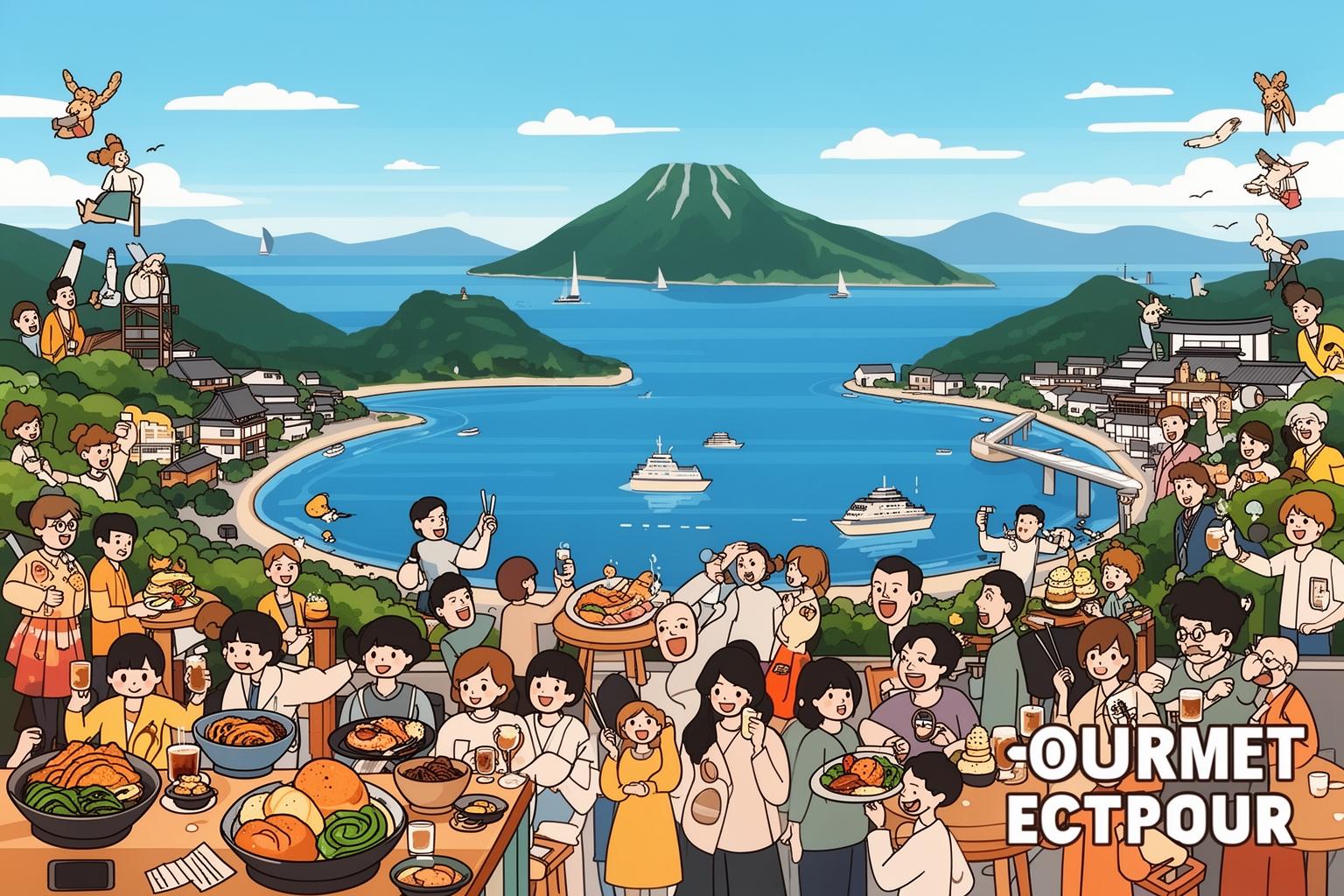
Osaka’s identity is deeply intertwined with food. The city’s unofficial motto is kuidaore, roughly meaning “eat until you drop.” This philosophy puts culinary enjoyment above all else. However, this passion for food extends beyond the city’s borders. An Osakan’s palate is always active, constantly seeking the freshest, most delicious, and best-value ingredients. A trip to Awaji is thus as much a culinary pilgrimage as it is a scenic getaway. The island is a rich source of agricultural treasures, the most famous being the Awaji onion. This is no ordinary tear-inducing vegetable. Awaji onions are renowned for their sweetness, juiciness, and mild flavor, with a sugar content comparable to some fruits. Locals even claim they can be eaten raw like an apple. For an Osakan, driving an hour and a half to procure the “real” Awaji onion is perfectly reasonable—a logical weekend pursuit. The journey centers on finding the best products. This mindset applies to everything the island offers: succulent Awaji beef, extremely fresh seafood such as sea bream (tai) and octopus (tako), and an abundance of fruits and vegetables. The experience isn’t focused on upscale restaurants, though there are a few excellent options. Rather, the main activity takes place at the michi-no-eki (roadside stations) and local farmers’ markets. These spots are lively hubs where Osaka families arrive with coolers, stocking up to bring produce back to the city. It’s both a social outing and a treasure hunt. People excitedly compare onion sizes and debate the best way to grill the fresh squid they’ve just purchased. The emphasis is on the raw ingredient and its story. This sets it apart from food culture in Tokyo, which often highlights the chef, the brand, or the coveted reservation. In Osaka, and by extension on Awaji, the star is the product itself. People will gladly enjoy a world-class sea bream rice bowl at a simple seaside shack, served on a plastic tray, because the fish is incredibly fresh. It’s a democratic, unpretentious approach that values substance over style. Escaping to Awaji allows Osakans to reconnect with the origins of their beloved cuisine, reaffirming their identity as Japan’s most passionate and knowledgeable eaters.
Godzilla vs. Naruto: Embracing Pop Culture Without Irony
As a writer focused on the anime world, I find Awaji’s modern transformation truly captivating. For decades, it was a quiet, agricultural island known primarily for onions and flowers. However, in recent years, it has become something entirely different: a vibrant playground of Japanese pop culture. This shift is largely due to Nijigen no Mori, or the “2D Forest,” an extensive theme park devoted to anime, manga, and video games. This isn’t a subtle, art-house display; it’s a full-throated, joyful celebration of some of Japan’s most prominent cultural exports. Visitors can zip-line into the jaws of a life-sized, roaring Godzilla, run through an authentic recreation of the Hidden Leaf Village from Naruto, or embark on a real-world RPG based on Dragon Quest. The presence of this park on a traditionally serene getaway island reveals much about the Osaka mindset. There’s a marked lack of pretension here, with a playful embrace of blending the old with the new, and the natural with the fantastical. A similar project in Tokyo might feel compelled to be more curated, more “cool,” perhaps featuring a Ghibli-inspired aesthetic. Nijigen no Mori is pure, unfiltered fun—loud, colorful, and hugely popular. This reflects Osaka’s character as a merchant city, historically skilled in entertainment and commerce alike. The park is a shrewd business enterprise but is also genuinely beloved. It addresses a classic family challenge: how to enjoy the outdoors with kids who’d rather be glued to screens. Here, they get to do both. The park is thoughtfully integrated into the island’s natural surroundings, with attractions dispersed throughout the forest. Parents get their fill of fresh air while children live out their ninja dreams. It also attracts a new demographic to Awaji: young couples and groups of friends seeking the perfect geek-chic Instagram shot. Posing before a giant monster’s head or practicing hand seals at Hokage Rock has become a vital part of modern Awaji. Osaka has always been a pop culture hub, from manzai comedy to its lively music scene. The city embraces entertainment without the intellectual overthinking found elsewhere. Awaji’s growth into an “anime island” feels like a natural extension of this identity—pragmatic, fun, and extremely good for business.
The Unspoken Rules of the Island Getaway
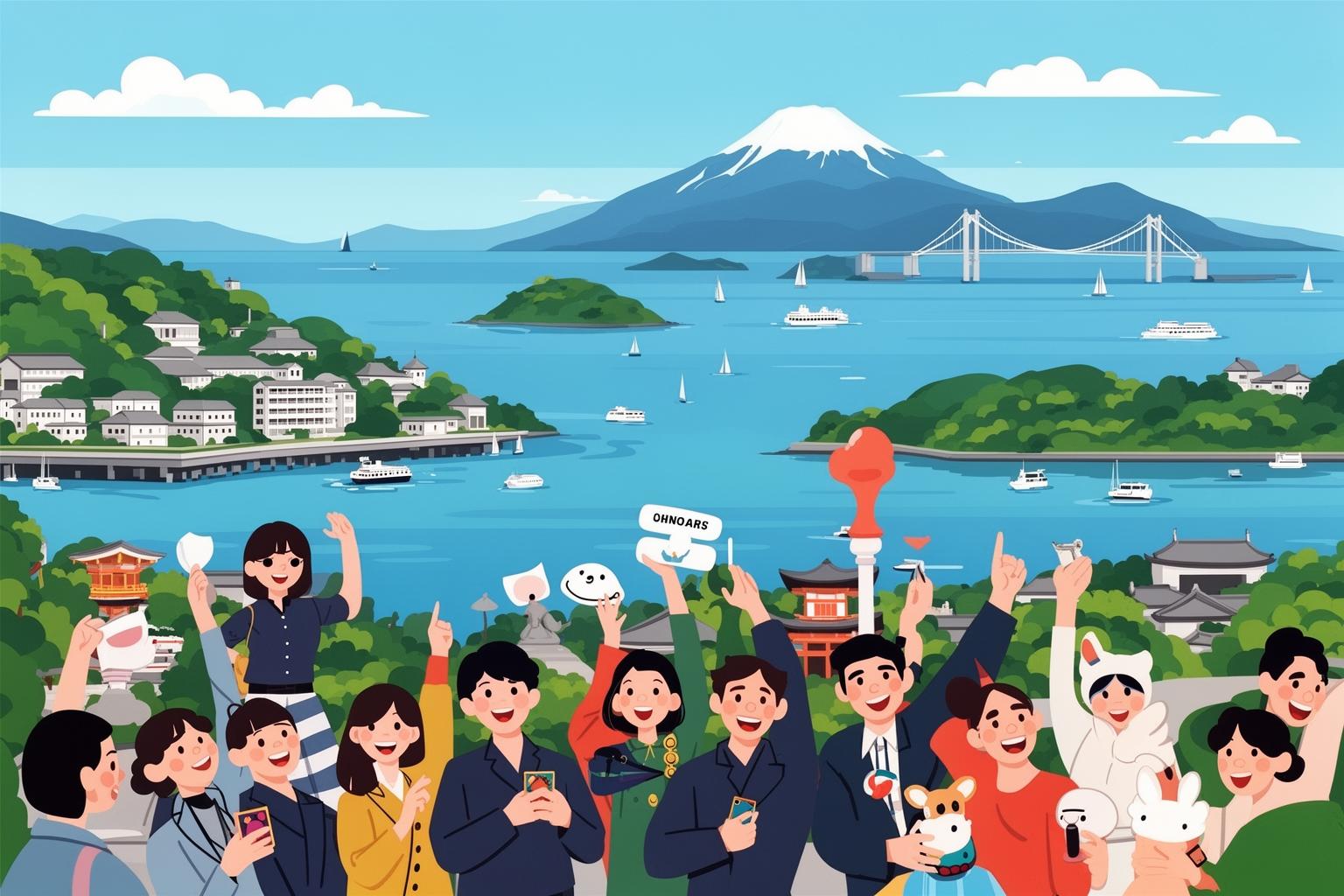
Like any ritual, the Osaka-to-Awaji trip has its own unspoken rules and social dynamics that might not be immediately clear to outsiders. The foremost aspect is the importance of the group. Awaji is not a place for solo soul-searching; it’s a destination you visit with others. The entire experience revolves around shared activities: piling into the car, admiring the bridge together, cooking barbecue, chasing kids around the park. It’s about strengthening social bonds—family, partners, close friends. The conversations during the drive, the shared meal, and the collective sigh of relief at the sight of the ocean—these are the true essence of the trip. The beautiful scenery serves merely as a backdrop for this social reconnection. This contrasts with a more Western idea of “getting away from it all,” which often suggests solitude. For Osakans, escaping city stress means drawing closer to their core group of people. Another unspoken rule is embracing a certain kind of curated nature. Visitors to Awaji don’t expect a rugged, off-the-grid wilderness experience. Instead, they anticipate clean facilities, well-kept parks, and plenty of convenient places to eat and shop. They seek nature, but with the comforts of civilization readily available. This is sometimes misunderstood by foreigners who might be looking for a more “authentic” rural experience. But that misses the point. Awaji is a product designed for the urban consumer. It offers a “countryside-lite” experience, perfectly balanced to provide the maximum natural beauty with minimal discomfort. You can spend the morning on a beautiful, secluded beach and the afternoon at a stylish, modern café with ocean views and flawless Wi-Fi. This blend of nature and convenience is not seen as contradictory, but as ideal. It’s the Osakan kosupa principle applied to the environment itself: the most relaxation with the least rustic hardship.
More Than a Vacation: Awaji as an Osakan State of Mind
Ultimately, the weekly journey to Awaji Island represents more than just a traffic flow on the Hanshin Expressway. It reflects Osaka’s core values, highlighting a profound pragmatism and an unwavering pursuit of value and joy that prioritize experience over status. It reveals a community deeply connected to their food—not as a trend, but as an essential part of their identity. It celebrates a playful spirit and an unpretentious love for pop culture that harmonizes with an appreciation for natural beauty. Most importantly, it emphasizes the significance of community—the belief that life’s best moments are those shared with family and friends. Foreigners often focus on superficial clichés about Osaka: the friendly people, the tasty street food, the slightly aggressive dialect. But to truly grasp the essence of the city, you have to see where its people go when they need to unwind. They choose Awaji, an island that isn’t especially famous, lacks ancient temples, and doesn’t appear on any international tourist’s bucket list. And that is precisely the point. It belongs to them. It’s an island that provides exactly what they seek—space, flavor, enjoyment, and connection—without asking for much in return. It offers a simple, honest, and deeply satisfying escape. In this way, it perfectly reflects the city it serves.