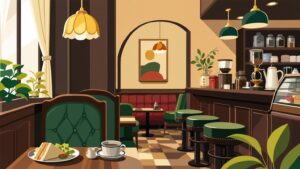
When I first moved to Osaka, the signs felt like a riddle. All over the city, tacked onto the awnings of old-school coffee shops, were the characters for “モーニングサービス” – mōningu sābisu. Morning Service. My American brain, conditioned by years of Sunday school, pictured pews and prayers. Or, at best, a special deal on a muffin. I’d walk by, peer into the hazy, smoke-filled interiors, and see old men reading newspapers, ladies chatting animatedly, and a lone proprietor—the “Master”—moving with quiet efficiency behind a dark wood counter. It looked comfortable, but impenetrable. The biggest puzzle was the price. For the cost of a single cup of coffee, around 400 or 500 yen, these places were offering a full breakfast set: thick toast, a boiled egg, a small salad, and sometimes more. It defied economic logic. In a world of razor-thin margins, what was the catch? This wasn’t a limited-time promotion; it was an institution, a daily ritual as ingrained in the city’s rhythm as the rumbling of the Midosuji line. The truth, I came to understand, is that there is no catch. Instead, that plate of toast and that cup of coffee are your entry ticket into the beating heart of Osaka’s community life. It’s a transaction that’s about so much more than food. It’s about value, loyalty, and a deeply held philosophy of what a neighborhood should be. It’s one of the clearest expressions of what makes Osaka so profoundly different from the relentless, transactional efficiency of Tokyo. This isn’t just breakfast; it’s a daily lesson in the city’s soul.
To further appreciate how seemingly simple neighborhood rituals reveal Osaka’s deeper community ties, consider exploring our guide to local neighborhood customs for more insights.
The Unspoken Contract: Value, Volume, and Loyalty
To grasp the logic behind the Osaka morning service, you must set aside the Western business model focused on maximizing profit per transaction. Here, the philosophy is different—it centers on fostering long-term relationships, a concept deeply rooted in Osaka’s history as a merchant city. The remarkably low price is not a loss leader in the modern marketing sense; it’s an investment in community and a reflection of a core Osaka value: keizai kouritsusei, or economic rationality, understood through a uniquely human perspective.
It’s Not a Giveaway, It’s a Handshake
The owner of the kissaten isn’t losing money on that slice of toast; instead, they’re making a carefully considered offer. The unspoken understanding is this: “I will provide you with a comfortable space and a reasonably priced, hearty start to your day. In return, you will become my jōren, my regular customer.” This mutual agreement is the engine behind the entire system. That 500-yen morning set is merely the start of the relationship. The customer who comes for the morning service is likely to return later for a 700-yen coffee. They might bring friends for a lunch of Napolitan spaghetti or curry rice. On a hot day, they may stop by for a cream soda. The morning service acts as the anchor, the daily connection that solidifies the kissaten’s role as a vital neighborhood hub. It’s the ultimate expression of shōnin konjō, Osaka’s merchant spirit. Business here is not merely about figures on a ledger; it’s about cultivating a loyal network of customers who feel a sincere connection to the establishment. This contrasts sharply with Tokyo, where efficiency and convenience often result in more anonymous, transient encounters in chain cafes designed for rapid turnover.
The Composition of a Classic Osaka “Morning”
Forget the sad, thin slice of pre-packaged toast you might imagine. The foundation of an authentic Osaka morning service is a thick slab of shokupan (Japanese milk bread), typically at least an inch and a half thick. It’s toasted to a perfect golden brown on the outside while remaining incredibly fluffy and soft on the inside, served with a pat of butter or margarine and occasionally a small pot of jam. Accompanying it is almost always a yude tamago, a hard-boiled egg that you peel yourself at the table. A small heap of shredded cabbage salad, drizzled with iconic sesame or wafu dressing, adds a fresh, crunchy balance. This basic trio—toast, egg, salad—is the holy trinity. From there, variations are numerous: some places offer a small cup of yogurt, a few slices of orange, or a banana. Others might replace the toast with a hotto sando (a toasted sandwich with egg salad or ham) or even a small bowl of udon noodles or an onigiri rice ball. It’s a proper, balanced meal—not a light snack, but substantial fuel. This is Osaka’s pragmatism at its most delicious. Why settle for just coffee when, at the same price, you can enjoy a full breakfast that will sustain you until lunch? It’s a logic that’s both generous and highly practical.
The “Third Place”: Your Other Living Room
Beyond the economics and the food itself, the true purpose of the kissaten is to act as a “third place”—a social environment distinct from the two usual social settings of home (“first place”) and work (“second place”). This concept feels increasingly rare in today’s world, yet in the backstreets of Osaka, it remains vibrant and thriving. These establishments function as the living rooms of the neighborhood, informal community hubs where the social fabric is woven and maintained daily over cups of siphon-brewed coffee.
The Master, the Regulars, and the Flow of Information
The person behind the counter, known as the “Master,” is the cornerstone of this entire ecosystem. They are much more than a barista or cook. They serve as a confidant, neighborhood watch captain, local historian, and subtle conductor of the social orchestra. The Master knows who prefers their coffee black, who is recovering from a cold, and whose daughter just passed her university entrance exams. Rather than a corporate-mandated “Welcome!,” regulars are greeted with a familiar, gruff “Maido!” (a traditional Osaka merchant greeting meaning roughly “Thanks for your continued patronage”). The clientele represents a perfect cross-section of the neighborhood. In one corner, elderly men in flat caps study horse racing forms in the sports newspaper, their conversation a low, gravelly murmur. In another booth, two women in their sixties, neighbors for decades, exchange gossip and share photos of their grandchildren. A local salesman may be holding a quiet meeting, using the kissaten as his unofficial office. The air is filled with the gentle clinking of ceramic on saucers, the rustle of turning pages, and the steady, low murmur of conversations in the warm, direct rhythm of Osaka-ben. This is not the hushed, solitary workspace of a modern café; it is a living, breathing social space.
“Here, This is For You”: The Culture of Sharing
One aspect that can initially surprise foreigners is the casual intimacy that defines these spaces. The boundaries between strangers are more permeable here than in Tokyo. Don’t be surprised if the elderly woman at the next table suddenly offers you an ame-chan, a hard candy from her purse. This classic Osakan gesture is a small act of connection that says, “I see you. We share this space.” A man might finish a newspaper section and slide it over to your table silently. It is an offering, not an intrusion. This culture of casual sharing and interaction directly reflects the city’s renowned friendliness. But it’s not merely about being chatty. It is a proactive form of community building and a rejection of urban anonymity. In the kissaten, you are not just a customer; you are a temporary member of the neighborhood, expected to participate, even if only with a nod and a smile.
The Aesthetic of Showa Nostalgia: A Deliberate Choice
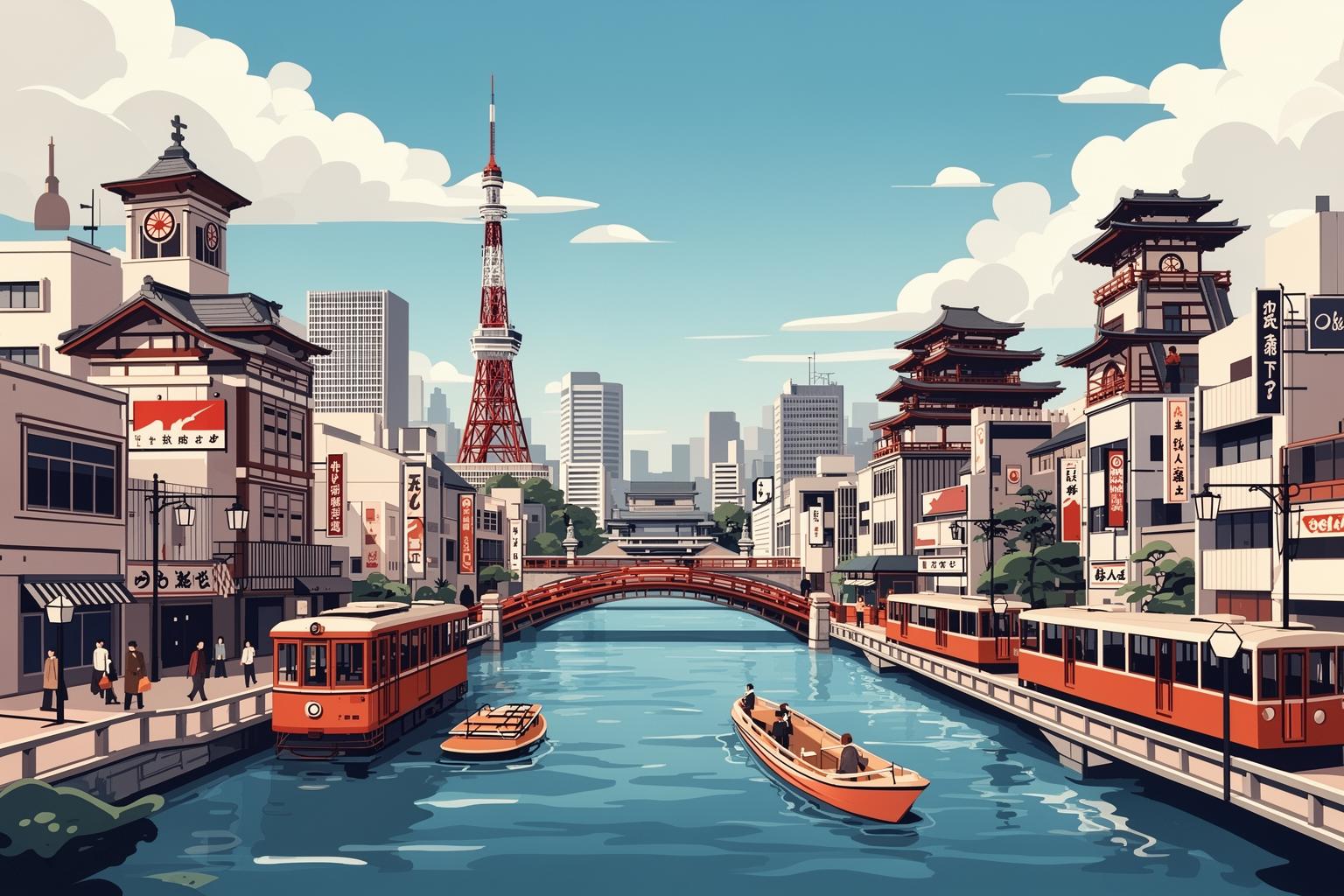
Entering a classic Osaka kissaten can feel like stepping back into a different era. The décor typically showcases a rich blend of textures and styles from the Showa Era (1926-1989), a time of significant economic growth and cultural confidence in Japan. This is not a sign of neglect, but rather a carefully maintained aesthetic with deep cultural significance.
Velvet Chairs, Stained Glass, and the Comfort of the Unchanged
Many kissaten embody mid-century comfort. You’ll discover dark wood-paneled walls, plush booths upholstered in burgundy or forest green velvet, ornate brass lamps casting a warm yellow glow, and perhaps stained-glass panels in a window or divider. The air may carry a faint, sweet scent of old tobacco smoke, even if smoking is now prohibited. This atmosphere is deliberately chosen. It stands in stark contrast to the minimalist, brightly lit, and often disposable design of global coffee chains. The Showa aesthetic symbolizes permanence, stability, and a profound comfort in the familiar. In a city like Tokyo, where the old is often demolished to make way for the new, Osaka’s kissaten quietly preserve history. They provide physical reassurance that some things deserve to be cherished and need not be constantly updated or optimized. They offer a refuge from the relentless pace of modern life, spaces designed for lingering rather than efficiency.
The Symphony of Sounds: Jazz, Classical, and the Absence of Pop
The soundscape of a kissaten is as thoughtfully curated as its interior. You will seldom, if ever, hear Top 40 hits. The background music is almost always instrumental: the cool, intricate melodies of a jazz piano trio, the soaring strings of a classical symphony, or the melancholic tones of old enka ballads. The music is selected to support, not overpower. It fosters a mood suited to reading, quiet reflection, or soft conversation. It contrasts sharply with the high-energy, pop-driven soundtracks common in many retail spaces, which aim to subtly rush customers along. The Master’s choice of music is another part of the service—another layer in the unique atmosphere crafted for regular patrons. It signals that this is a place to slow down, to think, and simply to be.
Kissaten as a Reflection of the Osaka Mindset
Ultimately, the lasting appeal of the kissaten morning service offers a perfect glimpse into the Osaka mindset. It is where the city’s defining qualities—pragmatism, humanity, and a healthy skepticism of authority—come together in one satisfying meal.
Pragmatism Meets Humanity: The Osaka Formula
Osakans are well known for their focus on kosupa (cost performance). They are savvy consumers who can recognize a bad deal from afar. The morning service speaks directly to this mindset. It is, without a doubt, one of the best value-for-money offers you’ll find anywhere. However, this pragmatism is neither cold nor ruthless. It is closely linked to ninjō, a feeling of human empathy, obligation, and warmth. The kissaten perfectly balances these elements. You get excellent value, appealing to your practical side, but also a warm welcome, a sense of belonging, and community connection, satisfying your human side. This mix of sharpness and kindness defines the Osaka character. Something being cheap is not enough; it must also have heart.
A Quiet Rebellion Against Tokyo-Style Efficiency
In many ways, the kissaten culture is a subtle rebellion against the dominant Tokyo-centric model of modern Japanese life. In Tokyo, time is often viewed as a limited resource to be managed, optimized, and converted into productivity. Cafes frequently double as workspaces where individuals focus intently on their laptop screens. The Osaka kissaten resists this. Here, time is meant to be experienced, not controlled. Lingering is not discouraged; it’s encouraged. The experience embraces deliberate inefficiency. Coffee might be slowly brewed in a siphon. The Master may pause for a ten-minute chat with a regular. No one rushes.
Your Seat is Your Castle (For a While)
A common worry for foreigners in Japan is knowing how long it’s appropriate to occupy a table in a busy spot. In an Osaka kissaten, the rule is refreshingly straightforward: once you’ve ordered, your seat is yours for a reasonable time. There are no subtle glares from staff trying to flip the table. As long as you are courteous, you can read your book, finish your newspaper, or simply watch the world go by. This is based on mutual trust. The owner trusts you won’t overstay for hours on a single coffee, and in return, you gain a temporary refuge from the outside world’s demands. This represents a striking cultural contrast to the time-is-money mentality found in many other major cities globally.
Finding Your Own Morning Sanctuary
While iconic kissaten like Marufuku Coffee or American in Dotonbori are definitely worth visiting, the true charm is found in uncovering the nameless, neighborhood gems that embody the heart of this culture. Finding your own regular hangout is a rite of passage for anyone genuinely living in Osaka.
Beyond the Main Streets: The Neighborhood Search
To discover the best kissaten, you need to stray from the main roads and explore the local shōtengai (covered shopping arcades) and quiet residential backstreets. Keep an eye out for signs of a rich history: a faded plastic food model of melon soda in the window, a well-worn noren curtain hanging over the door, or a simple, hand-painted sign that reads “Coffee” (珈琲). These spots have endured for decades, not through flashy marketing, but by faithfully serving their community day after day. Don’t be put off by the lack of English or a seemingly reserved atmosphere. A polite nod and a smile are your universal pass.
How to Be a Good “Jōren” (Regular)
Becoming a regular takes time and is deeply fulfilling. It means showing up consistently. Try to visit around the same time each day. Greet the Master with a simple “Ohayō gozaimasu” (Good morning) and leave with a sincere “Gochisōsama deshita” (Thank you for the meal). As you become more comfortable, sprinkle in some Osaka-ben, such as saying “Ōkini” (Thank you) instead of the standard “Arigatō“. Ask the Master for their recommended coffee bean. Pay attention to the little things. By demonstrating genuine and steady appreciation, you move beyond being just a customer. You become woven into the fabric of the place, participating in the unspoken bond of value and loyalty that defines the Osaka kissaten and, in many ways, the city itself.