You’ve seen it, right? You’re walking home from the station, maybe cutting through a small park or past a local shrine, and suddenly there’s… life. Red and white paper lanterns are strung between trees, swaying in the evening breeze. There’s the sizzle and sweet, smoky smell of yakisoba on a massive flat-top grill. You hear the tinny, cheerful music blasting from a portable speaker, punctuated by the laughter of kids and the low, rumbling chatter of adults. A makeshift stage might be set up, or maybe just a few foldable tables are laden with plastic cups of beer and tea. It’s a neighborhood festival, a hyper-local event that wasn’t on any tourist map or blog. It feels private, intimate. Your first instinct is to keep walking, maybe steal a curious glance but ultimately decide it’s not for you. You feel like an outsider looking in on a family party you weren’t invited to. This is where the misunderstanding begins, and where your life in Osaka can take a profound turn if you just take one step in a different direction.
Forget the massive, spectacular festivals for a moment. The Tenjin Matsuri with its river processions, the Kishiwada Danjiri Matsuri with its heart-stopping speed and danger—those are magnificent spectacles, designed for crowds and cameras. They are amazing, but they are largely a passive experience. You watch. You take photos. You are part of an audience. But the real heartbeat of Osaka’s community isn’t found in the grand performance; it’s tucked away in these tiny, unpretentious gatherings organized by the local jichikai, the neighborhood association. These events are not a show. They are the city’s social fabric being woven in real-time. They are an open-door invitation to stop being a resident and start being a neighbor. And in Osaka, the difference between those two words is everything. This is your guide to crossing that threshold, from spectator to participant, and discovering the soul of the city one paper plate of fried noodles at a time.
Embracing Osaka’s warm, neighborly vibe can be even more rewarding when you explore the nuances of its community banter through local humor insights.
What Even Is a Neighborhood Festival? Decoding the Jichikai Vibe
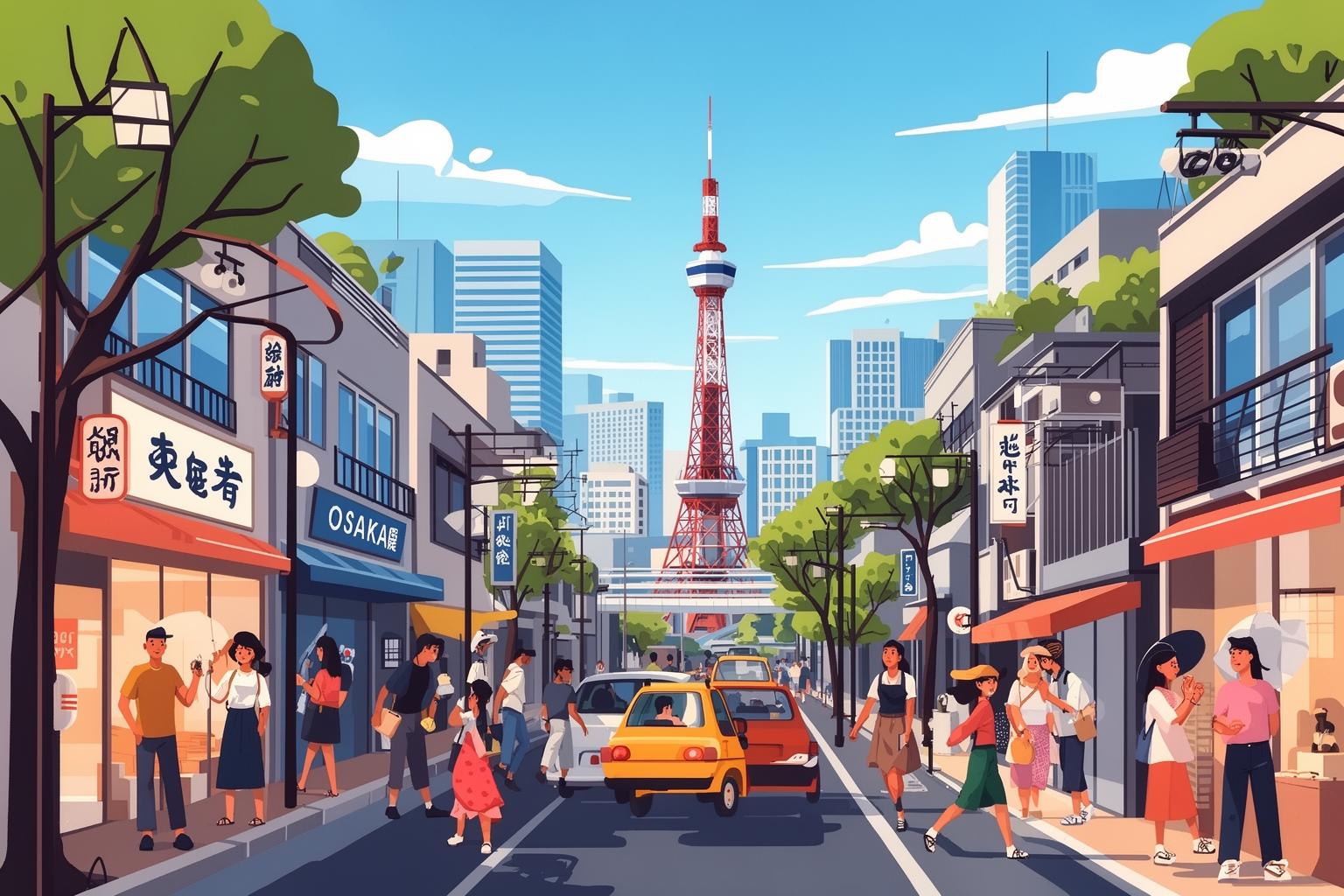
Before joining the party, you need to know who’s hosting it. These events are almost always organized by the local jichikai or chonaikai—the neighborhood association. This isn’t a corporation or a professional event planning firm; it’s a volunteer group made up of residents living nearby, usually within a few blocks. Think of them as the neighborhood’s operating system. They manage everyday tasks like scheduling recycling duty, maintaining the local garbage collection site, and posting public health notices. But their other vital role is building community spirit, and that’s where the festivals come into play.
The Anatomy of a Jichikai Event
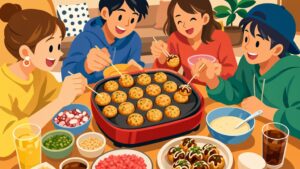
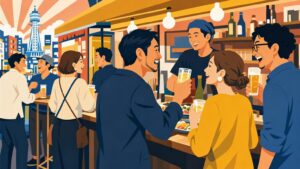
The style is purely functional rather than decorative. You won’t find gourmet food trucks or carefully curated craft stalls. Instead, there are folding tables borrowed from the local community center, staffed by your neighbors. That person expertly flipping takoyaki? He’s Mr. Sato, who owns the small appliance shop down the street. The women serving cheap draft beer in plastic cups? They’re the ladies who chat every morning while walking their little dogs. The atmosphere is a blend of a school fair, a family barbecue, and a town hall meeting—but with more beer and less red tape.
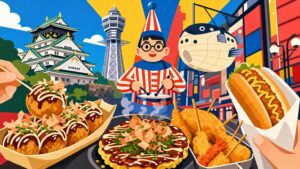
The menu features a classic lineup of Japanese festival foods, pared down to the basics. Yakisoba, grilled frankfurters on a stick, kakigori (shaved ice) with bright syrup, maybe some fried chicken or edamame. Everything is priced for quick sales, usually in tidy 100 or 200 yen increments. This isn’t about making a profit; it’s about covering costs and making it affordable for everyone—from kindergartners spending their allowance to pensioners—to join in. There are games for kids, like super ball sukui (scooping bouncy balls from water) or a simple ring toss, with small candies or inexpensive toys as prizes. It’s charmingly, genuinely low-fi.
The Osaka-Tokyo Divide in Community Spirit
This highlights a crucial difference between Osaka and Tokyo. While Tokyo certainly has neighborhood associations and local festivals, the city’s sheer size and transient nature can weaken their impact. In many Tokyo neighborhoods, you might not know your neighbors’ names, and the community can feel more anonymous and compartmentalized. Your relationship with the neighborhood often feels purely functional: somewhere to sleep, a station to commute from.
Osaka is different. Its identity was shaped by commerce and tight-knit merchant communities where reputation and relationships were key. Neighbors weren’t just next-door residents; they were business partners, customers, and your safety net. That spirit endures. Osakans inherently understand that community is a practical asset. A strong community means safer streets, support in emergencies like earthquakes, and, frankly, a more enjoyable life. These festivals aren’t just for entertainment; they are deliberate acts of community upkeep. They serve as the city’s immune system, reinforcing connections to keep the social fabric strong. This practical, almost businesslike view of community is quintessentially Osaka. It’s not about sentimental feelings; it’s about mutual benefit, which, paradoxically, creates genuine warmth.
The Unspoken Invitation: Are You Really Welcome?
This is the biggest challenge for most foreigners. You stand at the edge of the park, observing this lively scene, while a voice in your head says, “This is a local affair. They all know each other. I’d be intruding.” This fear is understandable, but in Osaka, it is almost completely unfounded. The invitation isn’t a written one; it’s inherent in the open nature of the event itself. If it’s taking place in a public space and you can see it, you are implicitly welcome.
Reading the Osaka Room
An Osakan’s default attitude is curiosity, not suspicion. When they spot a foreign face at their neighborhood festival, their initial thought isn’t “What is this person doing here?” It’s more likely “Oh, cool, a foreigner! I wonder where they live. Do they like takoyaki?” They’re genuinely glad that someone outside their immediate circle is interested in their community. It validates their neighborhood, signaling that they’ve created something worth noticing.
However, they won’t roll out the red carpet for you. The welcome is passive rather than active. No one will rush over to pull you in. This isn’t because they’re unfriendly; it’s because they respect your personal space and don’t want to make you uncomfortable. They’re waiting for you to signal your interest. You have to take the first small step. Standing on the sidelines with a big camera makes you a mere tourist. Taking one step inside and checking out the food stalls makes you a potential participant. That single step changes your status entirely.
The Misunderstanding of Osaka “Friendliness”
Everyone says “Osaka people are friendly.” While this is true, it’s an easy cliché that misses the nuance. It’s not a bubbly, in-your-face kind of friendliness. It’s a practical, direct, and straightforward friendliness. They won’t engage in polite but empty small talk. Instead, they’ll get straight to the point with questions like “Where are you from?” or “Can you use chopsticks?” This can feel abrupt if you’re used to more indirect communication, but it’s their way of quickly speeding up the getting-to-know-you process. At a festival, this directness works in your favor. It means you don’t have to guess what people are thinking. Their interest is sincere, and their questions open the door to genuine conversation. The key is to view this directness not as rudeness, but as an efficient way to build connections.
Your First Mission: How to Engage Without Being Awkward
Alright, you’ve made up your mind to go for it. You take a deep breath and step into the organized chaos. What’s next? Don’t worry. There’s a straightforward, proven approach to navigating this social scene and turning potential awkwardness into genuine connection. The aim is to smoothly transition from being an observer to becoming an active participant.
Step 1: The Approach – Body Language Matters Most
Forget your phone and tuck it away. Your mission is to be fully present. As you enter, make brief eye contact with the people at the first stall you encounter. A slight nod and a quiet “Konnichiwa” will do. Smile—not a big, exaggerated grin, but a gentle, relaxed smile conveying, “I’m friendly and peaceful.” Keep your body language open: don’t cross your arms or hunch your shoulders. Stroll slowly, as if you’re browsing. Your demeanor should express relaxed curiosity, not nervous intrusion. You are signaling that you’re here to join in, even if only in a small way.
Step 2: The Economic Icebreaker – The Magic of 100 Yen
This is the single most important step. Buy something. It doesn’t matter what—a can of tea, a stick of grilled chicken, a paper cup of beer. Approach a food stall, point to what you want, and make a simple purchase. This act is transformative. In one move, you stop being just a bystander. You become a customer, a participant, and a supporter of the event’s success. You have a purpose for being there.
Consider the social dynamics: the person serving you is often a volunteer, a neighbor. By buying something, you recognize and appreciate their effort. You’re saying, “Thank you for doing this.” This simple exchange of money for a snack creates a small social bond. It’s the perfect, low-pressure way to spark a conversation. The entire event revolves around these friendly economic exchanges. Embrace it. This is the cultural key that opens everything else.
Step 3: The Conversation Starter – Keep It Simple and Positive
Now that you’re holding your food or drink, you have a natural prop. This gives you a reason to linger without feeling awkward. It’s your opportunity to chat with the people at the stall or those nearby. Don’t try to dive into deep conversations. The goal is simple, positive recognition. Here are some reliable lines, even if your Japanese is limited:
- While pointing at your food: “Oishisou!” (Looks delicious!) or after tasting it, “Oishii!” (It’s delicious!). This is a direct compliment to the person who prepared it and always works.
- Looking around at the scene: “Nigiyaka desu ne.” (It’s lively, isn’t it?). A neutral, positive comment about the shared atmosphere.
- Asking a question: “Kore wa nan desu ka?” (What is this?) if you come across unfamiliar food. People enjoy sharing details about their culture.
- Expressing thanks: “Arigatou gozaimasu. Tanoshii desu.” (Thank you. I’m having fun.).
The key is to keep it brief and upbeat. You’re planting a seed, not trying to hold a half-hour chat. You’re making a small, friendly deposit in the community bank. The person is likely to smile, thank you, and perhaps ask where you’re from. Answer simply: “America desu.” “I live nearby.” Just like that, you’ve had a positive interaction.
Step 4: The Secret Weapon – Your Children (If You Have Them)
If you have kids, you possess a social superpower in Japan. Children are a universal language and an unbeatable icebreaker. Bring your child to a game stall. As they try to scoop a bouncy ball or toss a ring over a bottle, they become the focus of warm, encouraging attention. The older women running the stall will cheer them on; other parents will smile at you. It’s a shared, joyful experience. You shift from being just a foreigner to a fellow parent, enjoying the simple pleasure of watching your child have fun. This often leads to natural conversations: “How old is your son?” “My granddaughter is the same age.” The barriers just dissolve.
From Small Talk to Real Connections: The Osaka Way
You bought some yakisoba, said it was delicious, and exchanged a few pleasantries. You might think, “Okay, that was nice, but it’s not exactly a deep friendship.” However, you’d be missing the point. In Osaka, these small, seemingly insignificant interactions serve as the foundation of all relationships. It’s about planting seeds that will be harvested later.
The Power of Face Recognition
Osakans, especially in established neighborhoods, have an impressive memory for faces. The next day, while walking down the street, the man who sold you beer at the festival will notice you and nod. He might even say, “Ah, kinou wa doumo.” (Ah, thanks for yesterday.) Just like that, you are no longer an anonymous face in the crowd. You become “the foreigner who came to the festival.” You’ve been entered into the neighborhood’s social database. This recognition is the first step toward belonging. It’s a subtle but powerful shift—you are now a known quantity.
Breaking Down the “Uchi-Soto” Barrier
Japanese culture has a strong concept of uchi-soto, meaning “inside” and “outside.” Uchi refers to your in-group (family, company, close friends), while soto describes everyone else. Communication style and obligations differ greatly between the two. In many parts of Japan, especially Tokyo, the wall between uchi and soto can be very high and hard to cross.
A neighborhood festival in Osaka temporarily suspends the usual uchi-soto rules. For those few hours, in that particular park or shrine, everyone taking part is considered uchi. The shared experience of organizing the event, eating the same food, and enjoying the atmosphere creates a temporary “in-group.” By stepping in and buying that sausage, you crossed the barrier. And once you’ve been inside, even briefly, it becomes much easier to be seen as part of the group in the future. The barrier is more permeable in Osaka to begin with, and a festival dissolves it almost entirely.
The Anecdotal Payoff
Imagine this: you attend the summer festival in July. A month later, a typhoon approaches Osaka. The same woman who gave your child extra candy at the ring toss game notices you taping your windows. She comes over and advises you to bring your potted plants inside because her husband’s cousin’s prize-winning bonsai was destroyed in the last big storm. Six months later, you see an ad for a local pottery class on the community bulletin board. You go, and the instructor turns out to be the son of the man who was grilling sausages. He recognizes you and goes out of his way to help. This is how it works. Community isn’t built on grand gestures; it’s built on a thousand small, ordinary moments of recognition and mutual support that all began with a simple hello at a local festival.
Common Pitfalls and How to Sidestep Them
Though the atmosphere at these events is incredibly welcoming, a few common mistakes can unintentionally create distance. Avoiding them is simple once you recognize what they are.
The Passive Photographer: Avoid being the person who only experiences the festival through a camera lens. This immediately marks you as an outsider, a tourist who has wandered off the beaten path, creating a barrier between you and the experience. The best approach is to participate first, document second. Buy some food, engage in conversation, and then, if the moment feels right, politely ask, “Shashin, ii desu ka?” (Is it okay to take a photo?). They will almost always agree, and the photo will be more meaningful because it captures a moment you were part of, rather than just observed.
Fear of Imperfect Japanese: Many foreigners hesitate to speak Japanese for fear of making mistakes. At a local festival, grammatical errors aren’t a liability; they’re an asset. Your imperfect Japanese shows you’re trying, which is endearing. It demonstrates respect for their culture and a willingness to engage on their terms. Sometimes, a simple, broken phrase with a smile bridges more distance than a perfectly phrased, formal sentence. Don’t let the fear of errors keep you quiet.
Refusing Hospitality: Sharing lies at the heart of these events. If an obachan (older lady) offers you a piece of candy or a slice of pickled cucumber she brought from home, accept it with a smile and a “Itadakimasu.” Refusing may be seen as rejecting her goodwill. Of course, if you have allergies, a polite explanation is appropriate. But generally, accepting small offers of food or drink plays a vital role in the social harmony that keeps the community connected.
Ignoring the Ame-chan Culture: This is a unique aspect of Osaka hospitality. Older women, especially, are known for carrying a stash of candy (ame-chan) at all times. They share it with children, friends, and sometimes strangers they feel an affinity for. When an obachan gives you an ame-chan, it’s more than just candy—it’s a small token of affection, a gesture meaning, “I see you. You’re welcome here.” Treasure it.
Finding These Hidden Gems: Your Guide to Going Hyper-Local
So, where can you discover these genuine, hyper-local festivals? The answer is straightforward and delightfully old-fashioned: you won’t find them on Google Maps or TripAdvisor. You have to seek them out with your own two feet and eyes, right within your own neighborhood.
The Community Bulletin Board: Every neighborhood has a kairanban, a bulletin board where the jichikai posts announcements. It might be a simple wooden frame with a plastic cover near the garbage collection area or a more formal board outside the community center. This is where you’ll find flyers for upcoming events. They are often basic, perhaps printed in black and white or even hand-drawn, listing the date, time, and location (your local park, shrine, or elementary school playground). Start paying attention to these boards during your daily walks.
Listen to the Neighborhood Sounds: In the days before a festival, you might catch the distant, rhythmic beat of taiko drums as a local group rehearses. On the event day, you’ll hear faint music and announcements over a simple PA system. Follow your ears—sound travels, and within Osaka’s dense urban environment, the noise of a celebration is an audible invitation.
Watch for Visual Clues: The clearest sign is the appearance of paper lanterns, or chochin. When you see volunteers on ladders hanging these between telephone poles or trees in a park, you know something is about to happen. You’ll also notice tents being set up or tables arranged. These preparations signal that it’s time to free your schedule for the evening.
Beyond the Festival: The Ripple Effect on Your Osaka Life
The ultimate reward for stepping out of your comfort zone and joining your local festival isn’t merely an enjoyable evening and an affordable meal. The true benefit lies in the deep and lasting influence it has on your entire experience of living in Osaka. It serves as the catalyst that reshapes your connection with the city.
Before the festival, you were an anonymous resident of an apartment building. Afterward, you become “Michael-san from the third floor, the one who loves beer.” You no longer remain invisible. The faces you encountered at the festival will reappear in your daily life: at the supermarket, the post office, and the train station. But now, these encounters are met with a nod of recognition, a smile, and a simple greeting. This network of small acknowledgments creates a powerful sense of belonging, transforming a vast, sprawling metropolis into a small town.
This sense of community is more than a pleasant feeling; it’s a crucial support system. When you’re ill, it’s the neighbor you met at the festival who might offer to pick up groceries for you. When you’re struggling to understand a confusing piece of official mail from city hall, the person who served you takoyaki is there to help you decipher it. And when a natural disaster like an earthquake—a very real possibility in Japan—occurs, these are the people who will check on you. This is the fundamental purpose of the jichikai and its events: to foster a resilient, interconnected community capable of supporting itself.
By participating, you’re doing more than making friends. You’re integrating yourself into this human-powered safety net. You’re investing in your own well-being and strengthening your adopted home. You stop living in Osaka and start living with Osaka. And that is a feeling no tourist guide can ever provide.