You see it happen around 6 PM. The rhythmic clatter of keyboards slows, the low hum of the office air conditioner suddenly seems louder, and your boss, Tanaka-san, walks over to your desk. He doesn’t have the usual stack of papers. Instead, he has a slightly mischievous grin. “Tonight, we go for a drink. All of us.” Your heart does a little flip. Is this an order? A suggestion? A test? Welcome to one of the most crucial, confusing, and ultimately rewarding aspects of working life in Osaka: the world of nommunication. The word itself, a clever portmanteau of the Japanese verb nomu (to drink) and the English word “communication,” is your key to unlocking the city’s professional soul. This isn’t just about unwinding with a cold beer after a long day. It’s a complex ritual, a performance, and the primary arena where workplace relationships are truly forged. Forget everything you know about happy hour mixers or casual after-work pints. In Osaka, the izakaya—that warm, noisy, food-filled haven—is an extension of the office, but one where the rules are completely rewritten. It’s where your reserved manager might reveal a passion for 80s rock music, where the quiet accountant tells the loudest jokes, and where you, the foreign colleague, can transition from a name on an org chart to a genuine member of the team. Understanding this flow is understanding Osaka. It’s about learning to read the air, share a plate of fried chicken, and laugh at a joke you only half-understand. This is your guide to navigating that lively, essential space where business cards are put away and true connections are made.
As you settle into the dynamic rhythm of Osaka’s post-work culture, you’ll notice that even an affectionate grumble can reveal the rich, unspoken layers of local communication.
The Soul of the After-Work Gathering
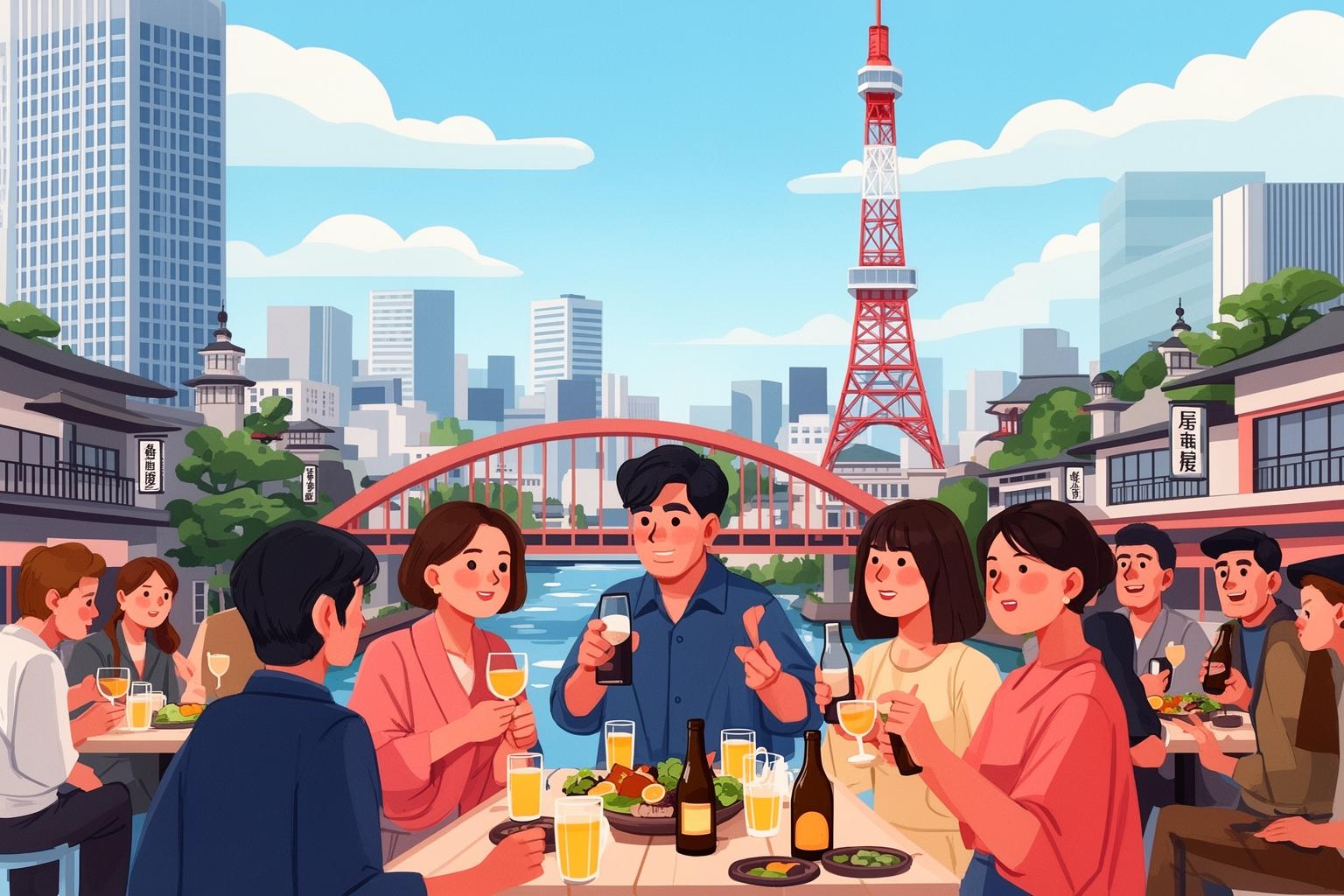
The Osaka nomikai, or drinking party, is deeply embedded in the fabric of corporate life. It functions like a living entity with its own rhythm and energy. Walk into a typical izakaya in Umeda or Namba on a Friday night, and you’re immediately enveloped by a wave of sound—not from blaring music, but from human connection. It’s a harmony of clinking glasses, hearty laughter, and overlapping conversations brimming with lively energy. This isn’t a quiet, reflective gathering. It’s loud, lively, and inherently communal. The essence of the nomikai is sharing. You share food from small plates scattered across the table—crispy karaage (fried chicken), savory edamame, and delicate dashimaki tamago (rolled omelet). You share bottles of sake and pitchers of beer. Most importantly, you share stories and reveal parts of yourself hidden behind the professional facade worn during office hours. In Osaka, this sharing happens with a distinct enthusiasm. The city’s reputation for being straightforward and unpretentious shines here. The aim isn’t just to spend time together outside work; it’s to actively tear down the walls created in the office. It’s a collective exhale, a shared moment of release where the stresses of deadlines and targets dissolve under the warm light of paper lanterns and the steady flow of drinks. This is where you discover your stern department head is a huge Hanshin Tigers baseball fan, or that the intern is surprisingly talented at magic tricks. These small revelations are the foundation of trust and camaraderie you’ll bring back to the workplace on Monday morning.
Osaka vs. Tokyo: A Deep Dive into Drinking Dynamics
To genuinely understand the distinctive character of Osaka’s nommunication, one must appreciate its sharp contrast with Tokyo’s. Although both cities engage in after-work gatherings, their methods, ambiance, and ultimate objectives differ vastly. A foreigner familiar with a Tokyo nomikai might be completely perplexed by the Osaka version, and vice versa. The difference goes beyond regional accents; it represents a fundamental divergence in social philosophy expressed over plates of grilled skewers and glasses of shochu.
Tokyo’s Boardroom Extension
In Tokyo, a nomikai often feels like a formal continuation of the workday. Office hierarchy is carefully maintained and sometimes even heightened. The concept of kamiza (upper seat) and shimoza (lower seat) dictates that the most senior person, generally the highest-ranking boss, occupies the seat of honor farthest from the door. Junior staff sit closer to the entrance, prepared to summon servers and manage orders. The ritual of pouring drinks, known as o-shaku, is a precisely choreographed display of respect, with juniors attentively refilling their superiors’ glasses using both hands. Conversations tend to be more reserved, focusing on work-related subjects, corporate strategies, or polite inquiries about hobbies. The main purpose of a Tokyo nomikai is to reinforce the existing team hierarchy, show respect for authority, and build consensus within the established structure. It’s about smoothing the workings of the corporate machine, not dismantling it for the evening. The rules are clear, etiquette takes precedence, and the aim is a more harmonious, hierarchical team.
Osaka’s Living Room Vibe
Entering an Osaka nomikai feels less like stepping into a boardroom and more like joining a lively family gathering. The strict attention to seating arrangements like kamiza is noticeably missing. While showing some respect for senior colleagues is customary, the mood is intentionally egalitarian. The boss is more likely to be found in the middle of the table, eliciting boisterous laughter, rather than presiding from a seat of honor. The central aim here is not to uphold hierarchy but to temporarily suspend it. The Osaka mindset values honne—a person’s genuine feelings and thoughts—over tatemae, the public facade maintained in daily life. The nomikai serves as the space for honne to surface. An Osaka manager might casually slap a subordinate on the back and say, “Man, that client was a real pain today, wasn’t he? Let’s just forget it!” Such blunt, honest remarks would be rare in the more formal Tokyo context. While o-shaku is still observed, it feels less like an obligation and more like a gesture of mutual friendship. You refill your neighbor’s glass simply because it’s empty, and they do the same for you. It’s a shared act of camaraderie. The atmosphere is filled with jokes, self-deprecating humor, and playful teasing. It’s loud, somewhat chaotic, and deeply human. Here, the goal is to see colleagues as people first, and job titles second.
Mastering the Rituals: Your Nomikai Playbook
Navigating your first few Osaka nomikai can feel like trying to solve a puzzle with unwritten rules. Although the atmosphere is relaxed, there is a certain rhythm and etiquette that, once grasped, will make the experience smoother and more enjoyable. Think of it less as a strict set of rules and more as a shared choreography that everyone intuitively follows. Learning a few of the steps will show your colleagues that you’re making an effort to connect with their culture on a deeper level.
The First Pour: A Sacred Start
The evening almost always begins with a collective first drink. Don’t be surprised if, as everyone sits down, a quick consensus forms around beer. The phrase you’ll hear is “Toriaezu biiru,” which roughly translates to “For now, beer.” This isn’t about limiting choice; it’s about efficiency and unity. Ordering the same drink allows everyone’s glass to arrive simultaneously, setting the stage for the evening’s most important opening moment: the kampai. Once everyone has their glass, someone—usually the most senior—will say a few words and then raise their glass, shouting “Kampai!” (Cheers!). Everyone joins in. It is a crucial rule of etiquette not to take a sip before this group toast. It’s the official signal to start the evening. When clinking glasses, try to keep the rim of your glass slightly lower than those of your superiors. This subtle but meaningful gesture of humility and respect will be noticed and appreciated.
The Never-Ending Glass: The Art of O-shaku
One of the first things you’ll notice is that people rarely pour their own drinks. This is the custom of o-shaku. Your main task is to watch out for the glasses of those around you, especially your seniors. If you see a glass running low, pick up the beer pitcher or sake bottle and offer to refill it. When pouring for a superior, it’s customary to hold the bottle with your right hand while steadying it with your left hand underneath. Conversely, when someone pours for you, you should lift your glass with both hands and hold it up to them. As mentioned, the Osaka style is more relaxed and reciprocal. It’s less about a strict hierarchy and more about fostering a communal flow of generosity. Don’t worry about doing it perfectly. The key is to be attentive and engaged. Keeping others’ glasses full shows you are involved and part of the group dynamic.
The Language of the Table
The real magic of the nomikai happens in the conversation, which ebbs and flows, shifting in tone and topic as the night progresses. Understanding its unique characteristics, especially Osaka’s famous humor, is essential.
Riding the Conversational Waves
The evening’s talk will likely start with “safe” subjects related to work—a recent project, an upcoming business trip. But as food arrives and drinks flow, the conversation will naturally shift into more personal topics. This is your chance to learn about your colleagues’ lives outside the office. Ask about their hometowns, hobbies, favorite foods, or families. Osakans are generally open and willing to share. This move from professional to personal is the whole point of nommunication. It’s how you build rapport that makes working together smoother and more enjoyable. Showing genuine curiosity is much more important than speaking perfect Japanese.
The Comedy Duo Act: Boke and Tsukkomi
You can’t talk about Osaka communication without mentioning its distinctive humor, often structured like a comedy routine. It involves two roles: the boke, who says something silly, absurd, or foolish, and the tsukkomi, who promptly points it out with a quick, witty retort, sometimes accompanied by a light tap on the arm or shoulder. This dynamic is everywhere in Osaka, and the nomikai is its natural setting. Someone might dramatically complain about the boss, and another colleague will immediately respond, “He’s sitting right there, you idiot!” This isn’t aggressive; it’s performance. As a foreigner, you’re not expected to master the tsukkomi. However, understanding and appreciating it is key. Laughing along, even if you don’t catch every nuance, signals that you’re in on the joke and part of the convivial atmosphere.
The Graceful Exit: Wrapping Up the Night
As the evening winds down, a few more customs come into play. The first party is often followed by an invitation to a nijikai, or second party, held at a different venue such as a karaoke bar or small pub. This is typically where the group is smaller and conversations become more personal. It’s perfectly fine to bow out politely at this point. Simply say you have an early start the next day or need to catch the last train. No one will take offense. When the bill arrives, it’s often split evenly, a practice called warikan. However, it’s also common for the highest-ranking person to cover the entire tab as a gesture of generosity. Be prepared for either scenario, and always make a gesture to take out your wallet. If your boss insists on paying, thank them sincerely. It’s a sign of their leadership role and generosity toward the team.
Debunking the Myths: What Nommunication Isn’t
For many foreigners, the concept of nommunication is clouded by misconceptions driven by exaggerated stories and cultural misunderstandings. It’s often viewed as a minefield of social obligations and enforced drinking. However, the reality in Osaka is much more nuanced and humane. Dispelling these myths is essential to approaching these events with the right mindset: one of curiosity instead of anxiety.
Myth 1: Forced Drinking is the Aim
The most widespread myth is that a nomikai is a test of your capacity to drink large amounts of alcohol and that your career depends on matching your boss drink for drink. This is fundamentally false. While alcohol helps social interaction, the real purpose is communication and involvement. What matters is your presence and engagement, not your blood alcohol level. It’s perfectly fine to drink slowly or stick to non-alcoholic options. Ordering oolong tea (ūron-cha) is a common choice for non-drinkers and is available at every izakaya. No one will pressure you to drink alcohol if you politely say you’re not drinking. The goal is to share the experience. Simply by being there, laughing at jokes, and joining the conversation, you fulfill your role in the nommunication ritual.
Myth 2: Casualness Means Contempt
The direct, informal, and often teasing style of Osaka communication can be surprising for those from more reserved cultures. A colleague might joke at your expense, or a boss might speak bluntly, which can feel unprofessional. It’s easy to misread this as disrespect or a personal insult. In truth, it often means the opposite. In Osaka culture, this casual interaction shows acceptance. It signals that your colleagues are comfortable enough to drop the formal tatemae barriers. They see you as part of the group, someone they can joke with openly. It’s a sign of inclusion. Though it takes some adjustment, learning to interpret this informality as a compliment is a key step toward fitting into an Osaka workplace.
Myth 3: Bar Talk Has No Consequences
There’s a common saying that what happens at a nomikai, stays at a nomikai. To a large degree, this is true. Minor complaints aired after a few drinks are usually forgotten by morning, and personal confessions are handled discreetly. The event is meant as a space for letting off steam. However, it’s a mistake to think it has no lasting effects. The bonds you build, the trust you establish, and the positive impression you make by being engaged and friendly absolutely carry over to the office. A colleague you connected with over a shared movie is more likely to assist you with a tough task. A boss who sees your sincere effort to participate will regard you more favorably. While the nomikai is a ‘safe’ space, it also serves as a powerful tool for creating the social capital that enhances your professional life.
From Outsider to Insider: Your Seat at the Table
Embracing Osaka’s nommunication culture is a journey rather than a destination. It won’t happen instantly, but each nomikai you attend offers a chance to learn and connect. The best advice is simple: just go. When you receive that first invitation, accept it with a smile. Your initial attendance sends a strong message that you want to be part of the team. Once there, don’t withdraw into a corner. Be proactive. Ask your colleagues about themselves. Compliment the food, which Osakans take great pride in. Try to use the few Japanese phrases you know—a simple “Oishii!” (It’s delicious!) or “Tanoshikatta desu” (I had a great time) at the end of the evening makes a big difference. Share a bit about your own culture and hobbies. Let them see you as a person, not just a foreign employee. The nomikai offers a glimpse into the heart of Osaka—a city that values warmth, humor, and genuine human connection above all. It may feel intimidating at first, but beyond that hesitation lies a world of camaraderie and friendship. It’s at a lively, crowded izakaya table, sharing takoyaki and trying to catch a rapid joke, that Osaka stops being just a city you work in and starts to feel like home.