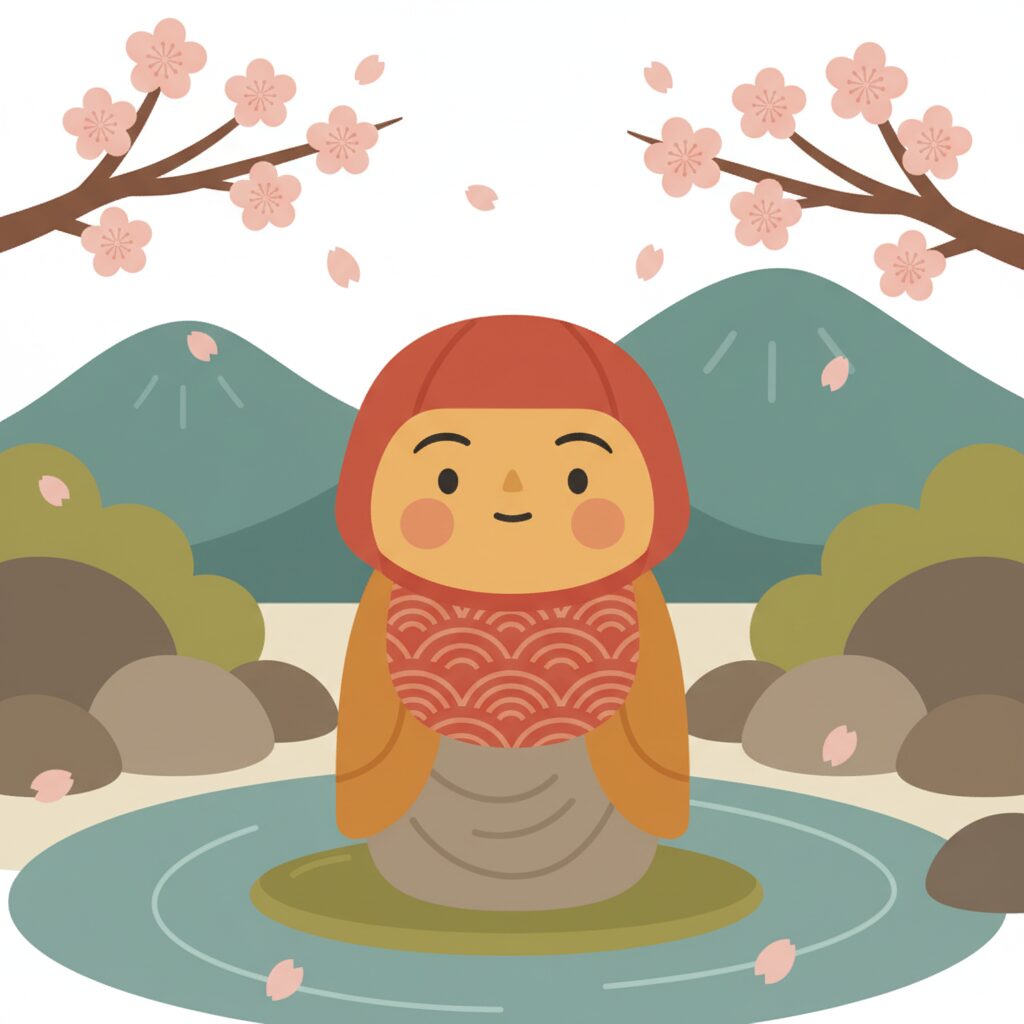
You see them tucked into alleyways, standing guard on street corners, nestled between a vending machine and the entrance to a Showa-era kissaten. They’re small stone figures, often wearing a bright red bib and a hand-knitted cap. You might walk past a dozen on your way to the station. To the casual observer, they’re just part of Osaka’s dense urban scenery, a piece of Buddhist iconography that blends into the background noise of bicycles, delivery scooters, and the distant rumble of the Loop Line. But then one morning, you see it. An elderly woman, bucket and ladle in hand, carefully pouring water over the statue’s head. She scrubs the moss from its base with a small brush, straightens its little hat, and replaces the wilted flowers in a small vase with a fresh spray of chrysanthemums. She’s not just cleaning; she’s tending. It’s a quiet, deliberate ritual. You wonder, is that her personal statue? Is she praying for something? The truth is far more interesting and speaks volumes about how community works—or doesn’t—in modern Japan. That little stone figure, a Jizo Bodhisattva, isn’t just a religious symbol. In Osaka, it’s a social anchor, a neighborhood switchboard, and your unspoken invitation to become part of the local fabric. It’s one of the clearest, most tangible lines dividing the social DNA of Osaka from the cool anonymity of Tokyo. Understanding the Jizo isn’t about theology; it’s about understanding your neighbors.
This unique devotion mirrors the communal spirit seen in local takoyaki parties, where sharing a meal transforms everyday rituals into neighborhood celebrations.
More Than Just a Statue: Jizo as a Neighborhood Hub
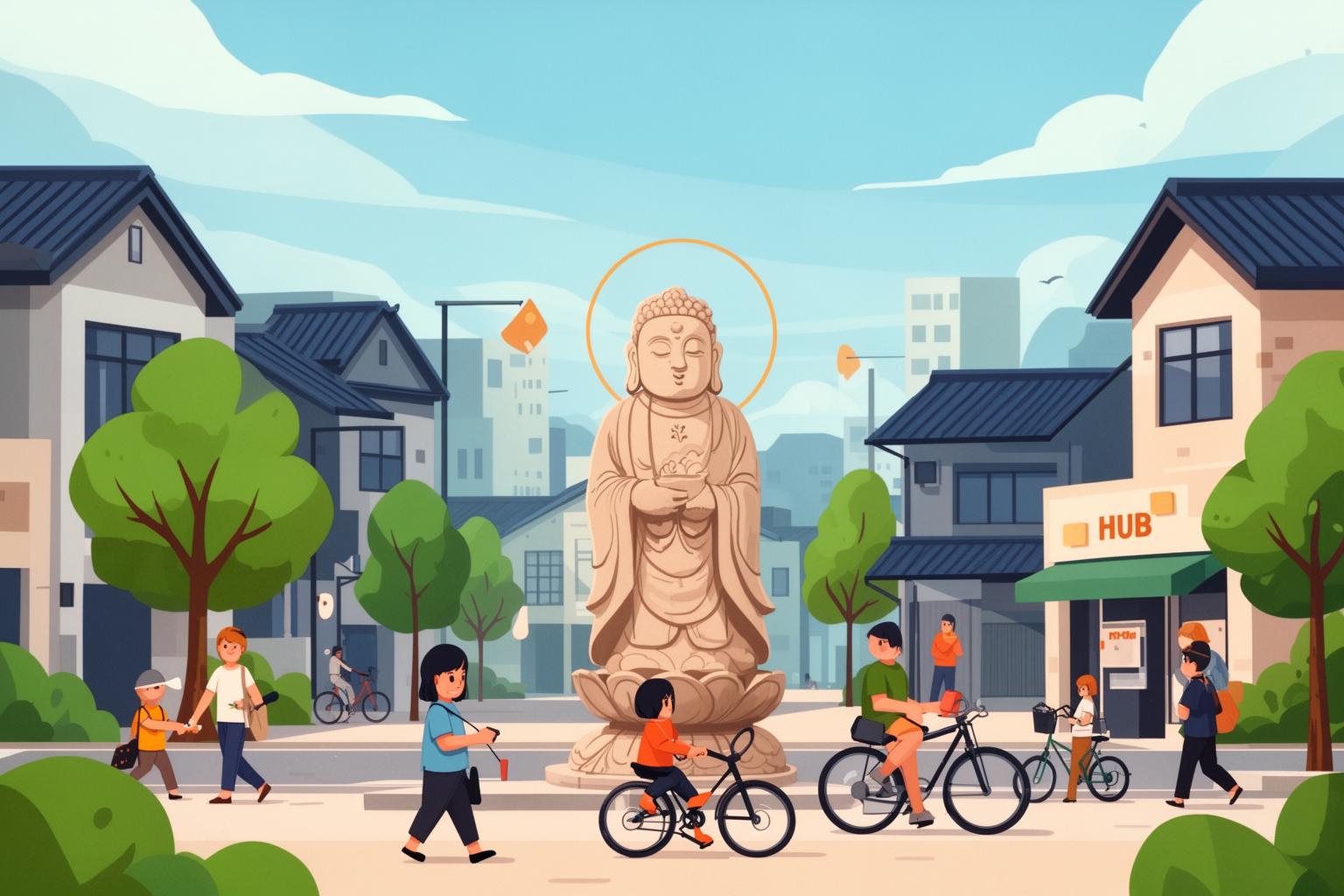
Stroll through the polished, quiet corridors of a new Tokyo skyscraper apartment, and you’ll encounter a community managed from the top down. Rules are displayed on spotless bulletin boards by a faceless management company. Neighborly interaction is optional and often minimal. Life here is vertical, segmented, and private. Osaka, especially in its older, well-established neighborhoods, functions differently. It’s horizontal. Life spills onto the streets from ground-floor shops, small factories, and tightly clustered wooden houses. The Jizo statue stands as the definitive symbol of this street-level social fabric. It’s a tangible, physical object that demands collective, hands-on care, establishing a rhythm of shared responsibility that high-rise living simply can’t match. It serves as the anchor for a community’s identity.
Who is Jizo, Anyway? A Quick Primer
Before exploring these social dynamics, let’s cover the basics. In Buddhism, Jizo (or Kṣitigarbha) is a bodhisattva, an enlightened being who delays their own nirvana to aid others. Specifically, Jizo protects children, especially the souls of those who died prematurely, as well as travelers. The iconic red bib, or yodarekake, is an offering from parents seeking protection for their children or mourning a loss. Statues are often placed at crossroads or boundaries, highlighting Jizo’s role as a guardian on life’s journeys. But set aside the textbook definition for a moment. For the average Osakan caring for the statue in their neighborhood, the profound Buddhist meaning is usually secondary. The Jizo is simply O-Jizo-san, an affectionate and familiar figure. It’s the little guardian on the corner we look after. It’s less about abstract salvation and more about the practical, everyday act of keeping our little part of the world safe, clean, and orderly.
The “Toban” System: A Shared Responsibility
At the heart of this community connection is the toban (当番) system. It’s a core concept in Japanese group dynamics, a simple rotating duty roster. You see it in schools for classroom cleaning and in offices for making tea. When it comes to the neighborhood Jizo, the toban system is a carefully organized yet delightfully informal schedule for the statue’s care. The neighborhood association, or chonaikai, usually manages a roster. When your household’s name comes up, the Jizo becomes your responsibility for that week or month. The tasks are straightforward but significant. You sweep the area around the statue, removing fallen leaves and litter. You gently wash the statue, perhaps using a soft brush to reach grime in the stone crevices. You replace the water in a small cup offered to the statue. You might change the flowers. The most emblematic duty is swapping out the bib and hat, which fade from sun and stain from rain over time. A clean, bright red bib signifies a cherished Jizo. Some neighborhoods keep a supply of new bibs, while in others, a resident sews fresh ones every few years. This is not a volunteer duty you take on if you wish; it’s a fundamental expectation of residency. It’s a social contract inscribed in water and stone.
Osaka’s Jizo Culture vs. The Tokyo Approach
It’s through these subtle, everyday practices that the profound cultural differences between Osaka and Tokyo become apparent. It’s not merely about dialect or cuisine; it concerns the very fabric of society and how people relate to the shared spaces around them. The Jizo serves as an excellent example of this divergence, illustrating a core difference in how communities are formed and sustained. In Tokyo, the focus often lies on privacy and reducing friction. In Osaka, however, it centers on engagement and recognition of shared territory. The city’s history as a merchant hub, built upon networks of trust among shopkeepers and artisans, fostered a unique social cohesion. It embodies a pragmatism that says, “We’re all in this together, so let’s get on with it.”
Street-Level Community vs. High-Rise Anonymity
Imagine a typical residential block in Tokyo’s newer neighborhoods. It is dominated by towering manshon—sleek apartment complexes with auto-locking doors and front desks. Your primary community, if you have one, consists of your fellow residents, overseen by rules set by the management association. You might participate in an annual fire drill or attend a meeting about recycling guidelines, but day-to-day interaction with the wider neighborhood can be almost nonexistent. You enter the building, take the elevator to your floor, and withdraw into your private space. Now, compare this to a neighborhood in Osaka’s Tennoji or Fukushima wards. The environment is a mix of two-story houses, small apartments, local shops, and the occasional Jizo shrine. Life here is much more public. The Jizo stands on the sidewalk as a constant, visible symbol of shared space and collective responsibility. When it’s your turn on the toban roster, you are pulled out of your private world into this communal space. It’s a reason to be outside and to engage with the physical environment of your neighborhood. This simple act transforms your relationship with your surroundings. You’re no longer just an anonymous resident of Unit 302; you’re the person responsible for looking after the Jizo, a recognized figure within the neighborhood’s ecosystem.
The Art of Practical Conversation
This street-level engagement, prompted by the Jizo, fosters Osaka’s distinctive communication style. It is often described as direct, pragmatic, and somewhat nosy. While cleaning the statue, an elderly woman from across the street might come over. In Tokyo, she might offer a polite, distant bow and a quiet “Gokuro-sama desu” (Thank you for your hard work). In Osaka, the interaction is likely to be much more involved. She might say, “Ah, it’s your turn this week! The bib is looking a bit faded, isn’t it? Tanaka-san’s wife was going to sew some new ones.” Or, “Be sure to clean behind his ear; it tends to get mossy there.” This isn’t criticism; it’s connection. It’s a practical, task-focused conversation that acts as social glue. It acknowledges your shared investment in the neighborhood. The Jizo offers an ideal, neutral setting for these exchanges. It’s an excuse to talk, exchange information, and gently uphold community standards, all without the stiff formality that often characterizes social interactions elsewhere. This is how you learn who’s who, what’s happening, and where you fit in. It’s the city’s renowned friendliness at work—not just a cheerful greeting, but a sincere, practical engagement with the people around you.
What Foreigners Often Miss: The Unspoken Social Contract
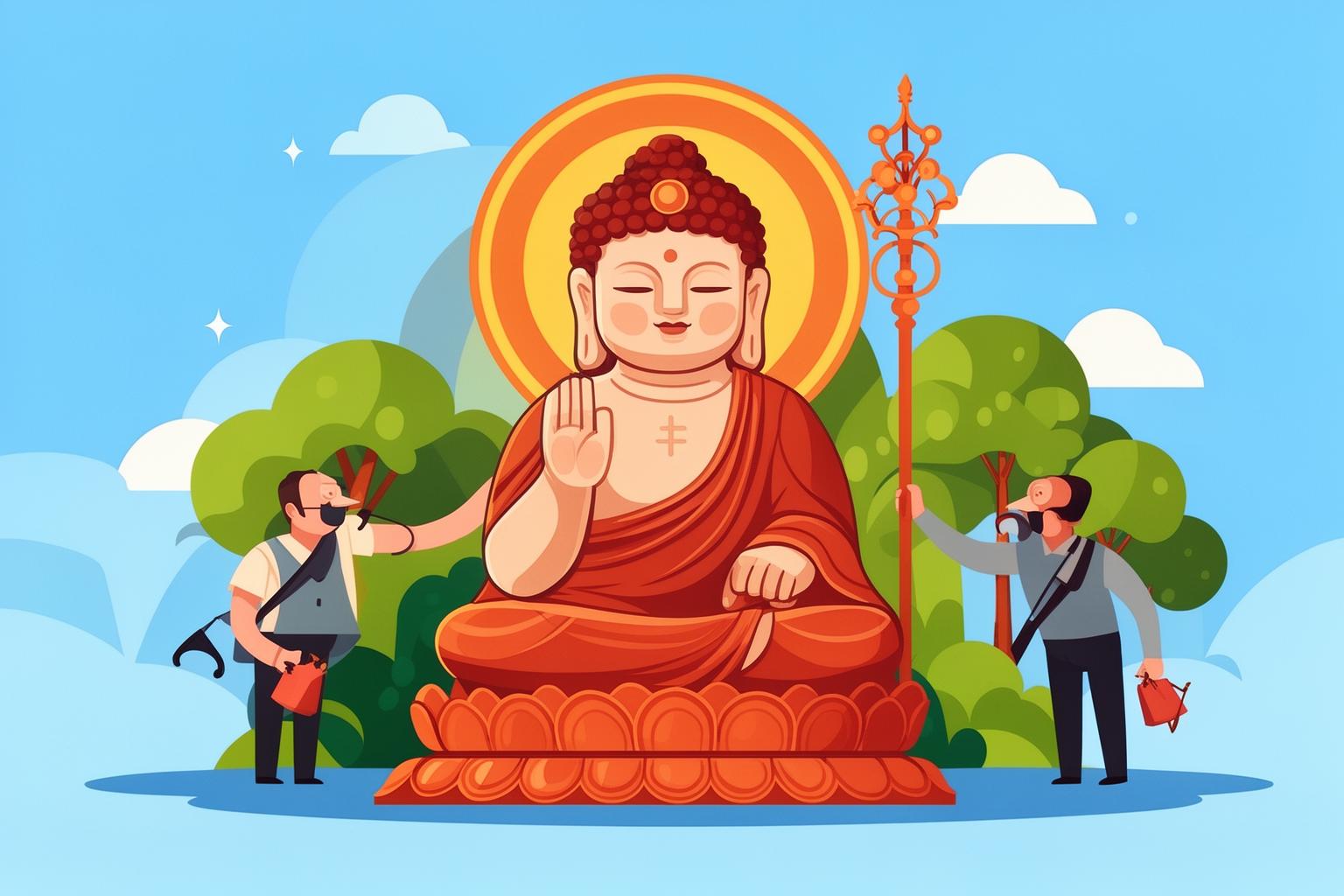
For someone who isn’t a Japanese resident, the local Jizo statue can be a source of confusion. Is it a religious site? Am I allowed to touch it? What if I’m not Buddhist? What if I make a mistake? These are valid questions, but they often overlook the bigger picture. In many ways, the Jizo’s social role is more important than its religious significance in the everyday life of the community. Taking part in its care is less about expressing faith and more about showing your willingness to be a good neighbor. It’s a subtle yet powerful way to demonstrate your integration into the local social fabric. Understanding this unspoken agreement is crucial for navigating life in an Osaka neighborhood and fostering genuine relationships.
It’s Not (Just) About Religion
This represents perhaps the greatest challenge for foreigners. Upon seeing a statue that clearly represents a Buddhist deity, the immediate assumption tends to be that caring for it is a religious practice. While its origins are sacred, maintaining the neighborhood Jizo has developed into something closer to a civic responsibility. Think of it like tending a community garden or taking part in a neighborhood cleanup event. No one is checking your religious background. Your neighbors don’t expect you to chant sutras or light incense. They simply hope you’ll contribute to keeping the shared space tidy. When your turn on the toban comes, your role is to clean, not to pray. Your contribution is practical and physical. Showing up with a bucket and a cloth is a sign of respect for the community itself. Conversely, refusing to participate can be seen as antisocial. It’s not viewed as a religious offense but a social one. It sends a message that you consider yourself separate from the community—an outsider who enjoys the clean and safe environment without giving back.
The Jizo as a Neighborhood Watch
The daily and weekly rituals around the Jizo serve another, more subtle function: they create an informal surveillance system. Those primarily responsible for toban duties tend to be retired residents, especially elderly women, who have time, community knowledge, and a strong commitment to the neighborhood. While caring for the Jizo, they are also observing their surroundings. They notice children on their way to school, unfamiliar cars parked too long, and which houses have their lights on or are dark. They act as the eyes and ears of the block. A well-maintained Jizo, adorned with fresh flowers and a clean bib, signals an active, engaged community that is paying attention. It warns potential troublemakers that this is not a place where one can go unnoticed. On the other hand, a neglected Jizo, grimy and overgrown with weeds, sends the opposite message: that nobody is watching, and nobody cares. In this way, the simple act of washing a stone statue becomes an essential part of preserving neighborhood safety and security.
A Gateway to Deeper Connections
For a foreigner trying to break through the polite yet sometimes impenetrable barrier of Japanese society, the Jizo toban is a golden opportunity. It provides a structured, low-pressure way to initiate contact and show goodwill. It’s the perfect icebreaker. Imagine your first time on Jizo duty—you’re a bit unsure of what to do. A neighbor notices and comes over to help. They show you how to tie the bib’s strings just right or where the community bucket and brushes are stored. This simple shared task opens the door to conversation. They might ask where you’re from or how you’re finding life in Osaka. The next time you see them on the street, you’re no longer strangers. You share an experience. That small interaction can lead to another—perhaps an offer of extra vegetables from their garden or an invitation for tea. This is how you move from being the anonymous “foreigner in that apartment” to “Chris-san, our new neighbor who takes good care of O-Jizo-san.” It’s a powerful, grassroots form of integration that no language class or international club can match. It’s real, rooted in place, and deeply Osakan.
How to Participate (Even If You’re Shy)
Alright, so you’re convinced. You want to be a good neighbor, and you see the local Jizo as your entry point. But how do you actually get involved? The process is usually quite simple, designed to be accessible to everyone living nearby. It doesn’t require fluency in Japanese or deep cultural knowledge, just a willingness to observe and participate. The key is realizing that the system is already in place; you just need to find your role within it. It’s a welcoming structure for newcomers eager to show they belong.
Finding Your Local Jizo and the “Toban” List
When you move into a new apartment or house, take a stroll around your immediate block. You will almost certainly find a Jizo statue, either a single figure or a small group. Look nearby for a small, weatherproof bulletin board, the keijiban. This is the neighborhood’s information center, where you’ll find announcements about recycling days, local festivals, and likely the Jizo toban list. This is typically a simple chart with household names and assigned dates. If you’ve just moved in, your name or address might already be listed by the chonaikai head or your landlord. If it’s not, don’t hesitate to ask. Your real estate agent, landlord, or a friendly local shopkeeper can probably guide you in the right direction. Simply asking, “Kono o-jizo-san no o-sewa wa, dou sureba ii desu ka?” (How can I participate in caring for this Jizo?) will be met with appreciation and helpful advice. They’ll be glad to see you making the effort.
The “Jizo Bon” Festival: The Annual Community Celebration
The year-round care of the Jizo culminates in a wonderful, very local festival called Jizo Bon. Held in late August, it’s an event dedicated to the neighborhood’s children, honoring the community’s protector. This is not a grand, city-wide event like the Tenjin Matsuri. It’s an intimate, block-party-style gathering. The area around the Jizo is decorated with paper lanterns displaying the names of local families and businesses. Adults organize simple games for the kids—ring toss, yo-yo fishing, maybe a small lottery for snacks and toys. A large rosary (juzu) might be arranged in a circle, and everyone—children and adults alike—sits and passes it around while a priest or community elder chants. It’s a moment of shared gratitude and enjoyment. For a foreign resident, Jizo Bon is the ultimate community event. It’s where all the small connections made throughout the year—the brief chats during Jizo duty, the greetings on the street—come together. Helping to set up lanterns or run a game stall is a great way to cement your place in the neighborhood. You’ll see your neighbors relaxed and festive. It’s the reward for all those quiet mornings spent cleaning a stone statue, a joyful confirmation that you truly belong to the community.
The Jizo as a Symbol of Osaka’s Soul
Ultimately, the humble Jizo statue is far more than just a piece of religious art. It is a living, breathing element of Osaka’s social fabric. It serves as a node in a network, a tangible object that fosters human connection. It reflects the city’s character: pragmatic, unpretentious, somewhat inquisitive, and deeply dedicated to the belief that a community is something you construct through small, consistent, collective actions. It stands in marked contrast to a top-down, impersonal model of urban life. Caring for the Jizo rejects the notion that we can coexist without connection, that we can share a space without sharing responsibility for it. It demands a human-scale world where neighbors know and look out for each other and, once a week, take turns ensuring the little figure on the corner has a clean bib. So next time you stroll through your Osaka neighborhood, notice those small stone statues. They are not just background. They are invitations— the quiet, steadfast heartbeat of a community, offering a profound lesson in belonging.