
Walk down any shotengai, those covered shopping arcades that are the arteries of Osaka, as the sun begins to dip. The air, thick with the scent of takoyaki and grilling fish, starts to change. The frantic energy of commerce softens into the low, rumbling hum of evening leisure. And that’s when you see them. The warm glow of a single red lantern, a condensation-fogged sliding door, a sliver of an opening revealing a room packed shoulder-to-shoulder with people. No chairs, no tables, just a long wooden counter and a symphony of clinking glasses, hearty laughter, and the rhythmic sizzle of a teppan grill. This is the tachinomi, the standing bar, and in Osaka, it’s not just a place to drink. It’s a cultural institution, a social barometer, and for any long-term resident hoping to understand this city’s soul, it’s an essential, if sometimes bewildering, classroom.
From a distance, it might look like pure chaos. A simple transaction of yen for beer and bites. But spend enough time here, and you realize you’re watching a complex dance, a performance with unwritten rules and unspoken cues. As someone who has spent years observing the intricate tapestries of East Asian social dynamics, I see Osaka’s tachinomi as a fascinating microcosm of the city itself: pragmatic, efficient, fiercely communal, and disarmingly direct. It’s a world away from the hushed, formal izakayas of Kyoto or the sleek, transient standing bars of Tokyo. Here, the counter is a stage where the real Osaka performs every single night. For a foreigner, breaking into this scene offers a ticket to genuine local connection, a feeling of belonging that’s hard to find elsewhere. But it’s also a social minefield, where well-meaning newcomers can easily misinterpret the signals, mistaking playful banter for aggression or situational camaraderie for deep friendship. This isn’t a guide to the best tachinomi for tourists. This is a roadmap for the resident, a deep dive into the social mechanics of standing your ground and finding your place in the heart of Osaka.
Beyond the vibrant camaraderie of Osaka’s tachinomi culture, locals also foster deep community ties by finding a home in Osaka’s public housing as an alternative expression of the city’s enduring social spirit.
The Allure of the Counter: Why Tachinomi Are Osaka’s Social Glue

To truly understand why tachinomi are so deeply embedded in Osaka’s culture, you must grasp the city’s key philosophy: kosupa. This term, a blend of “cost” and “performance,” is heard everywhere, but it goes beyond just wanting things to be inexpensive. It represents a near-religious commitment to value, a deeply ingrained instinct shaped by centuries as Japan’s merchant capital. Osakans don’t simply seek low prices; they insist on high quality at those prices. Tachinomi embody kosupa perfectly — with no chairs to buy, no tables to maintain, and a compact space, overhead costs are minimized, and savings are passed straight to customers. Picture draft beers costing just 300 to 400 yen, a fraction of the price at trendy Tokyo bars, alongside freshly prepared dishes like doteyaki (slow-cooked beef sinew in miso) or sashimi for just a bit more. The business thrives on volume and speed, a steady stream of patrons enjoying maximum satisfaction for minimal expense. This is not merely thrift; it is a shared cultural ideal and a point of civic pride. Discovering a fantastic tachinomi with delicious food under 1,500 yen is a story you’ll boast about to friends for days.
The Great Equalizer: Breaking Down Social Barriers
The social brilliance of a tachinomi lies in its physical design. Private booths and secluded tables are absent. There is only The Counter — a single, communal space, often a well-worn wooden slab stained with decades of spilled beer and hushed conversations. Here, you find yourself shoulder to shoulder with a cross-section of Osaka society: a sharply dressed salaryman loosening his tie beside a dust-covered construction worker; a young university student debating politics with a retired shopkeeper; a freelance designer sharing tempura with an off-duty chef. In this shared space, titles, status, and wealth temporarily fade away. The counter acts as a great social leveler. Your value here isn’t judged by your business card but by your ability to engage in conversation, respect the space, and enjoy a good, affordable drink. This stands in stark contrast to Tokyo, where social circles tend to be more rigid and spaces more segregated. Every night in an Osaka tachinomi, a transient, lively, and profoundly human community forms, united by the simple act of standing together. I once witnessed a spirited yet amusing debate about the Hanshin Tigers baseball team between a man who looked like a CEO and another who seemed freshly off a fishing boat. They didn’t know each other’s names, but for twenty minutes, they were equals, bonded by their shared passion. That’s the magic of the counter.
A Welcome Mat for the Weary: Designed for Openness
Walking into a high-end restaurant in many parts of Japan can bring a wave of anxiety: Am I dressed properly? Do I understand the etiquette? The tachinomi offers the perfect antidote. Its barrier to entry is nearly nonexistent. Few have cover charges or the mandatory appetizer, otoshi, that inflates many izakaya bills. There are no reservations needed; you simply have to find a spot at the counter. Menus are often posted on the walls, straightforward and easy to read. The entire setup prioritizes accessibility and efficiency. This reflects a core principle of Osaka’s merchant spirit: get the customer inside, give them what they want swiftly and without fuss, and make them eager to return. For foreigners, this can be incredibly freeing. You can come in, have a single drink and plate, spend 700 yen, and be out the door in twenty minutes with no judgement. It’s the city’s social front porch — always open, always welcoming — offering a moment of relaxation and connection to anyone who walks through.
The Unwritten Code: Mastering Tachinomi Terroir
For all its seeming openness, the tachinomi operates within a complex web of unspoken rules. It’s a delicate ecosystem where your enjoyment—and acceptance—depend on your ability to read the room and honor the local customs. Breaking these rules won’t get you kicked out, but it will mark you as an outsider, putting an invisible barrier between you and the authentic experience you seek. Learning this code is essential to unlocking the true social potential of the standing bar.
The Rhythm of Ordering: Beyond Simply Pointing
Many traditional tachinomi use a trust-based cash system that can be confusing at first. You’ll usually be given a small bowl, tray, or even just a designated spot on the counter. This serves as your bank. You place a 1,000 yen bill or some coins there. When you order, the staff—often the bar master himself—will bring your drink and food, then take the exact amount from your pile of cash, sometimes leaving change. This kyasshu on (cash on) system is remarkably efficient. It removes the hassle of a final bill, keeps transactions smooth, and fosters a subtle sense of community and trust. When ordering, don’t shout or wave your arms wildly. The bar master has an almost uncanny awareness of the counter. Wait for a quiet moment, make eye contact, and give a slight nod. Order your first drink and perhaps one or two food items. The pace is a series of small, quick rounds—not one big feast. It’s a steady rhythm, a pulse that keeps the bar’s energy flowing. Trying to order five items at once during a busy time is a cardinal sin.
“Saku-nomi” and the Art of a Graceful Exit
The concept of saku-nomi lies at the heart of tachinomi culture. It literally means “quick drink.” The idea is to drop in, enjoy a beer or two and a few snacks, then move along. A typical visit lasts anywhere from 20 to 60 minutes. This is not the place to set up with a laptop for three hours. Overstaying, especially when there’s a line forming outside, is a major faux pas. It violates the shared understanding that this is a communal, high-turnover space. The beauty of saku-nomi lies in respecting everyone’s time and allowing more people to enjoy the bar’s offerings. Knowing when to leave is an art. You read the room. Is it getting crowded? Have you finished your last plate? Has the initial burst of conversation with your neighbor died down? That’s your cue. A simple “gochisousama deshita” (thank you for the meal) and a nod to the master, and you’re on your way. This efficient, respectful timing is pure Osaka.
Reading the Counter’s Current
Beyond ordering and leaving, there is another layer of physical etiquette. When you arrive at a crowded bar, you don’t push your way in. Instead, find a spot near the back, order a drink, and wait patiently. Often, as someone leaves, the regulars will subtly shuffle to create space for you at the counter. Accept it with a grateful nod. Your bag and coat don’t belong on the counter; hang them on a hook underneath or keep them tucked close to your feet. Keep your personal space tight. You’re sharing a very small area, and being mindful of your neighbors’ elbow room is crucial. These small gestures of social awareness distinguish the awkward tourist from the savvy local.
The Jōren Ecosystem
In every tachinomi, you will encounter the jōren-san, the regulars. They are the heart and soul of the place, the living fixtures of the bar. They often have their own designated spot at the counter and their preferred drink served without having to ask. They are the bar master’s trusted confidants and the unofficial guardians of the atmosphere. As a newcomer, your relationship with the jōren is key. Don’t try to force your way into their conversations. For your first few visits, the best strategy is to be a quiet, respectful observer. Listen. Smile. Offer a small nod. Over time, they may start to include you. A regular might ask where you’re from or recommend a dish. That’s your opening. Answer honestly, be humble, and show genuine interest. Earning the quiet, gradual acceptance of the regulars is the most important step in transforming from a mere customer into part of that bar’s unique family.
Culture Shock at the Counter: Navigating Osaka’s Social Labyrinth
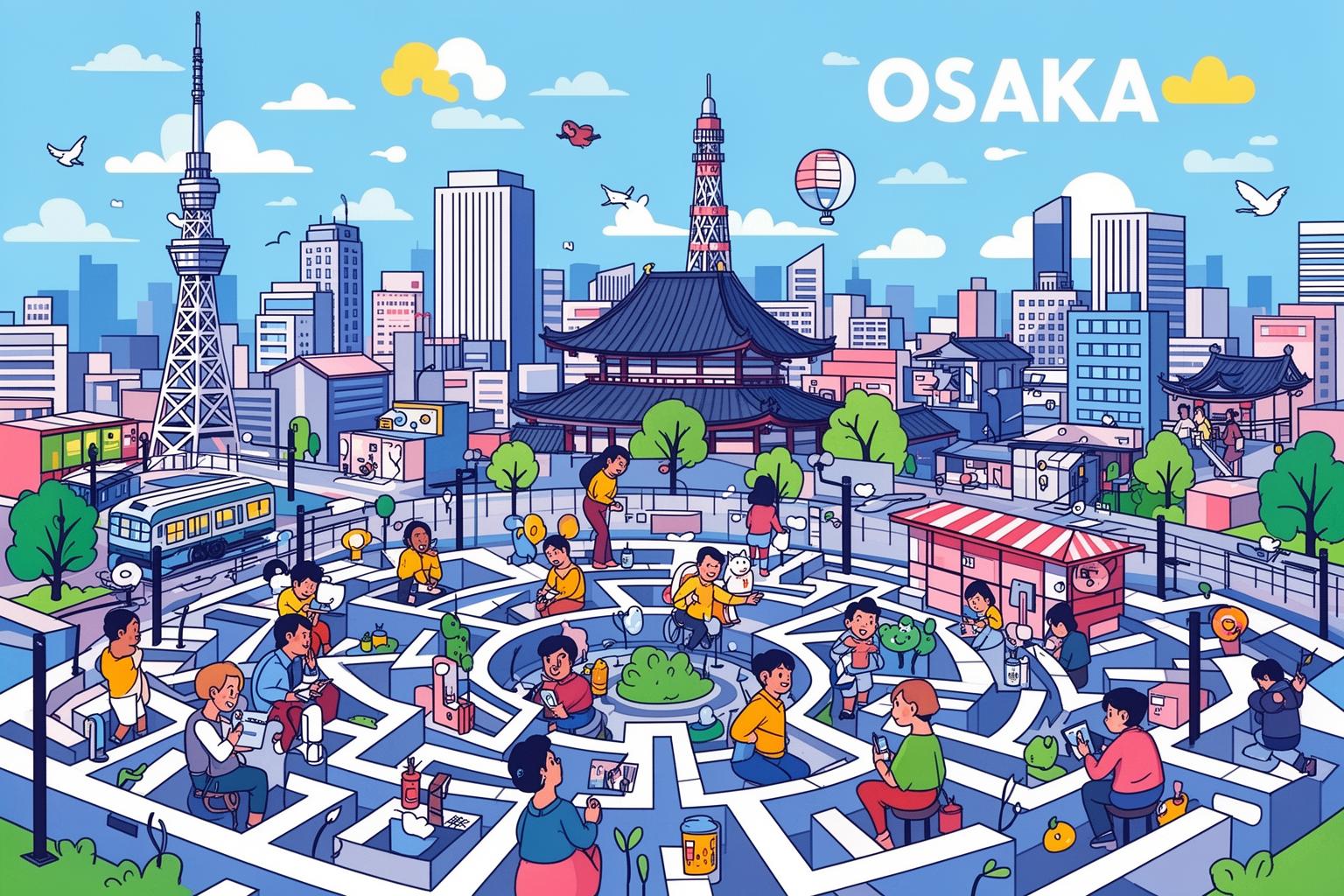
The very elements that give Osaka’s tachinomi scene its vibrancy—its straightforwardness, its humor, and its brief intimacy—are also what can make it challenging for newcomers. Many long-term residents falter here, misinterpreting cultural signals and ending up feeling puzzled or even offended. Being aware of these potential misunderstandings is essential for navigating the social environment without getting lost.
The “Friendly” Facade and the Reality of Situational Socializing
There’s a common stereotype that “Osaka people are friendly.” While partially true, it comes with a significant caveat. The friendliness you encounter in a tachinomi is often highly context-dependent. Picture this: you strike up a great conversation with the man standing next to you. You laugh, share your favorite foods, and complain about the humidity. He buys you a drink. You feel a genuine connection, a spark of real friendship. Leaving the bar, you’re warmed by the thought of having made a new close friend. The following week, you spot the same man on the train platform. You approach him with a big smile, ready to continue where you left off. He barely acknowledges you with a nod, then immediately buries himself in his phone. You feel crushed. Was he pretending? Is he upset with you? Almost certainly not. This highlights the essential difference between “on-stage” and “off-stage” social behavior. The tachinomi is a stage, where social rules shift. People are open, talkative, and communal. Off that stage, in the anonymity of the wider city, usual social norms prevail. The connection was real, but only for that time and place. It wasn’t an invitation to lifelong friendship. Understanding this distinction is crucial to avoid feeling personally rejected and to appreciate these interactions as what they are: delightful, fleeting moments of shared humanity.
Decoding the Banter: When a Joke Isn’t Just a Joke
Osaka’s communication style is deeply shaped by its well-known manzai comedy tradition, a rapid-fire duo act featuring a comic (boke) and a straight man (tsukkomi). The tsukkomi’s role is to deliver a sharp, witty comeback to the boke’s absurdity. This dynamic extends beyond the stage; it forms the rhythm of everyday conversation. In a tachinomi, you will almost certainly be on the receiving end of a tsukkomi. It often takes the form of a playful jab or teasing, called ijiri. For instance, you might struggle with chopsticks to pick up a tricky bite, and a regular might laugh and say, “Niichan, daijoubu ka?” (You okay there, buddy?). Or if you order something unusual, the owner might grin and say, “You can actually eat that?” To a Westerner, this could seem like a personal affront or rude criticism. It is not. It’s an invitation to join in. It shows they feel comfortable enough to engage you in their verbal play. The worst reaction is to become defensive or withdrawn. The right response is to play along, laugh at yourself, and offer a self-deprecating comment in return. This signals you understand the game. You’re not just a passive participant but an active player in the bar’s social theater. This direct, teasing style is one of the clearest differences from the more indirect, harmony-focused communication often found in Tokyo.
The Invisible Fence: Personal Space and Privacy
Although the physical space is shared and conversations may seem open, there remain firm, invisible boundaries around privacy. The intimacy of the tachinomi lies in the shared present moment, not in deep personal disclosure. It’s generally considered rude to ask probing questions about someone’s salary, employer, marriage, or other private matters unless they bring them up first. If you ask what someone does for a living, a vague reply like “I’m a salaryman” is a polite signal not to press further. Osakans excel at using humor to deflect questions that go too far. If the conversation turns too personal, it will be skillfully and playfully redirected. The key is to keep topics light: food, sports, weather, amusing stories from the day. It’s about fostering a light, enjoyable connection—not conducting a therapy session.
From Patron to Part of the Place: The Long-Term Payoff
Navigating the intricacies of the tachinomi is a gradual process, but the benefits for a regular are priceless. It’s a path from being an anonymous face in the crowd to becoming a recognized and welcomed member of a small, close-knit community. This shift is one of the most profound ways to truly feel at home in Osaka.
The Gradual Journey to Becoming a “Kao-najimi”
Belonging comes in stages. At first, you are an ichigen-san, a first-time visitor. With consistency, you progress to become a kao-najimi, a “familiar face.” The master begins to greet you with a warmer “Ah, doumo!” and might recall your usual drink. Regulars will acknowledge you with a nod. This phase can take weeks or months of steady, respectful visits. The ultimate stage is becoming a true jōren. This is when the magic unfolds. A regular saves you a spot as you arrive, the master offers a small, off-menu dish to try, and you join in the inside jokes. You are no longer just a customer; you become part of the bar’s unique ecosystem. This status isn’t purchased but earned through patience, attentiveness, and a genuine understanding of the bar’s culture. It’s a sense of acceptance deeper than any casual conversation with a stranger.
Your Third Place, Your Urban Living Room
For many long-term residents, including expats, a favorite tachinomi becomes their “third place”—an essential social refuge that is neither home nor work. In a city where living spaces are often small and private gatherings less frequent than in the West, the tachinomi serves as an informal living room. It’s a spot to unwind after a long day, share a small success, or vent about a frustrating email. It’s a low-pressure setting to practice Japanese, where mistakes are usually met with friendly correction instead of judgment. Here, amid the familiar murmur of conversation and the comforting presence of other regulars, the overwhelming anonymity of a vast city fades away, even if only for an hour.
Beyond the Beer: A Gateway to Deeper Community
Though many tachinomi connections remain within the bar’s walls, some grow into something more. The counter acts as a social filter. By becoming a trusted regular, you prove a certain cultural fluency and social grace. This can open unexpected doors. A fellow regular might tip you off about a great apartment nearby, invite you to a weekend cherry blossom viewing, or connect you with a potential business client. The tachinomi is a hub for local information. It’s where you learn about the new ramen spot with the best broth or a neighborhood festival unknown to tourists—long before anyone else. It serves as a gateway to the authentic, lived-in city, far removed from the polished facades of tourism.
Finding Your Stand in the City of Merchants

The tachinomi perfectly embodies Osaka itself. It can feel loud, chaotic, and somewhat rough around the edges. It demands your attention and engagement. It shows little patience for foolishness but rewards sincere effort with warmth, humor, and fierce loyalty. To an outsider, it may seem like just a cheap place to grab a drink. But to a local willing to learn the rhythm, it’s an essential thread in the city’s social fabric. It’s where you pick up the local dialect—not from a textbook, but from a lively fishmonger. It’s where you come to understand the city’s passions, from baseball to the craft of a perfectly fried skewer. Stepping up to that counter, ordering your first drink, and finding your place in the crowd is more than a night out. It’s an act of integration—learning to stand tall, both literally and figuratively, in the vibrant, challenging, and deeply rewarding city you’ve chosen to call home.