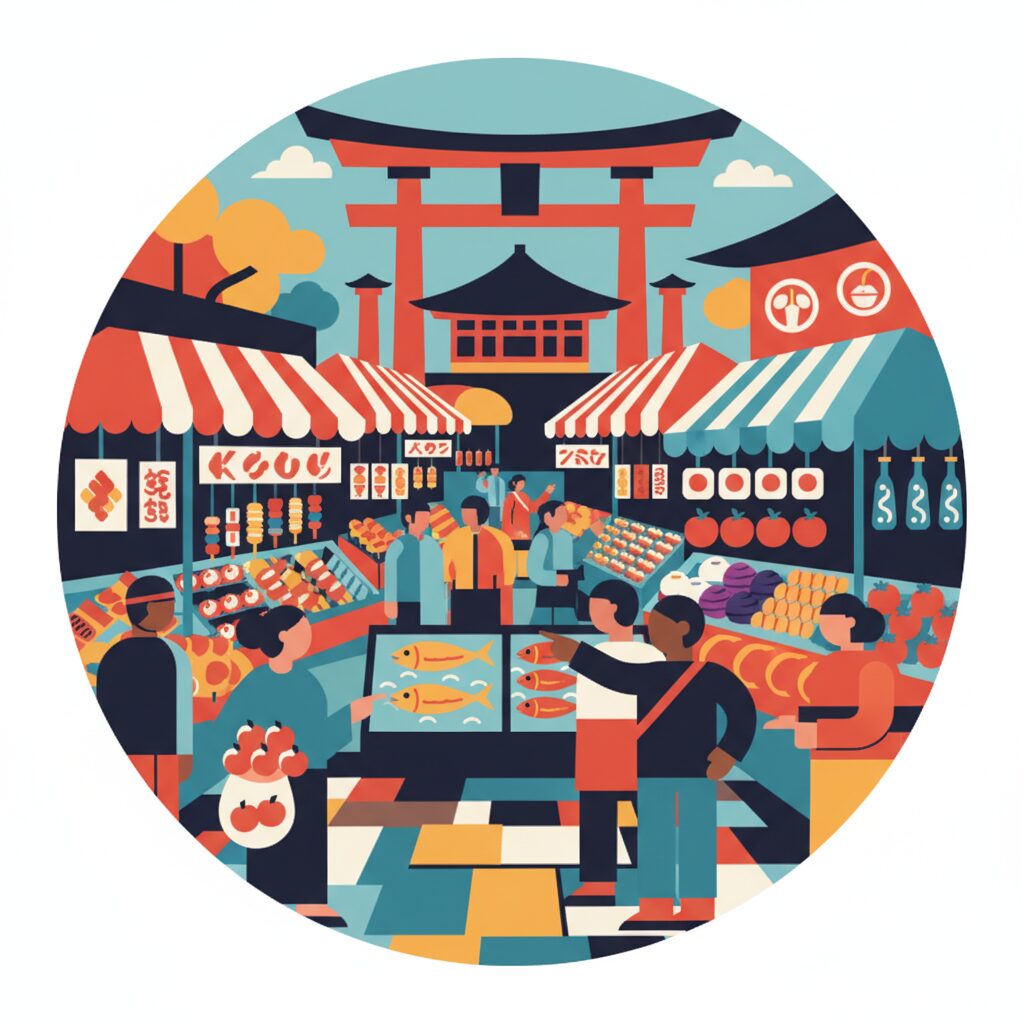
Walk into Kuromon Ichiba Market on any given day, and the first thing that hits you isn’t a smell, but a sound. It’s the sizzle of wagyu on a hot plate, the crackle of crab shells under a grill, and the constant, multilingual chatter of a thousand different journeys converging in one chaotic, covered arcade. Your eyes try to keep up, darting from glistening tuna belly to perfectly symmetrical strawberries to skewers of tiny, candied octopus, their lacquered heads staring into the middle distance. For the first-time visitor, it’s a sensory overload, a whirlwind of food designed to be photographed first and eaten second. This, you’re told, is Osaka no Daidokoro—the Kitchen of Osaka. But as you shuffle shoulder-to-shoulder with tourists, clutching a five-thousand-yen stick of grilled king crab, a question bubbles up: Is anyone here actually cooking? Is this a kitchen, or is it just a restaurant with no tables? The truth is, it’s both. Kuromon today exists in a superposition of states—a world-famous tourist attraction laid directly over the ghost of a neighborhood market. And to understand Osaka, you have to learn to see both at once.
To further appreciate how the market echoes a living culinary tradition, consider exploring the region’s kuidaore culture for a deeper perspective.
The Two Faces of Kuromon: Tourist Spectacle vs. Local Lifeline
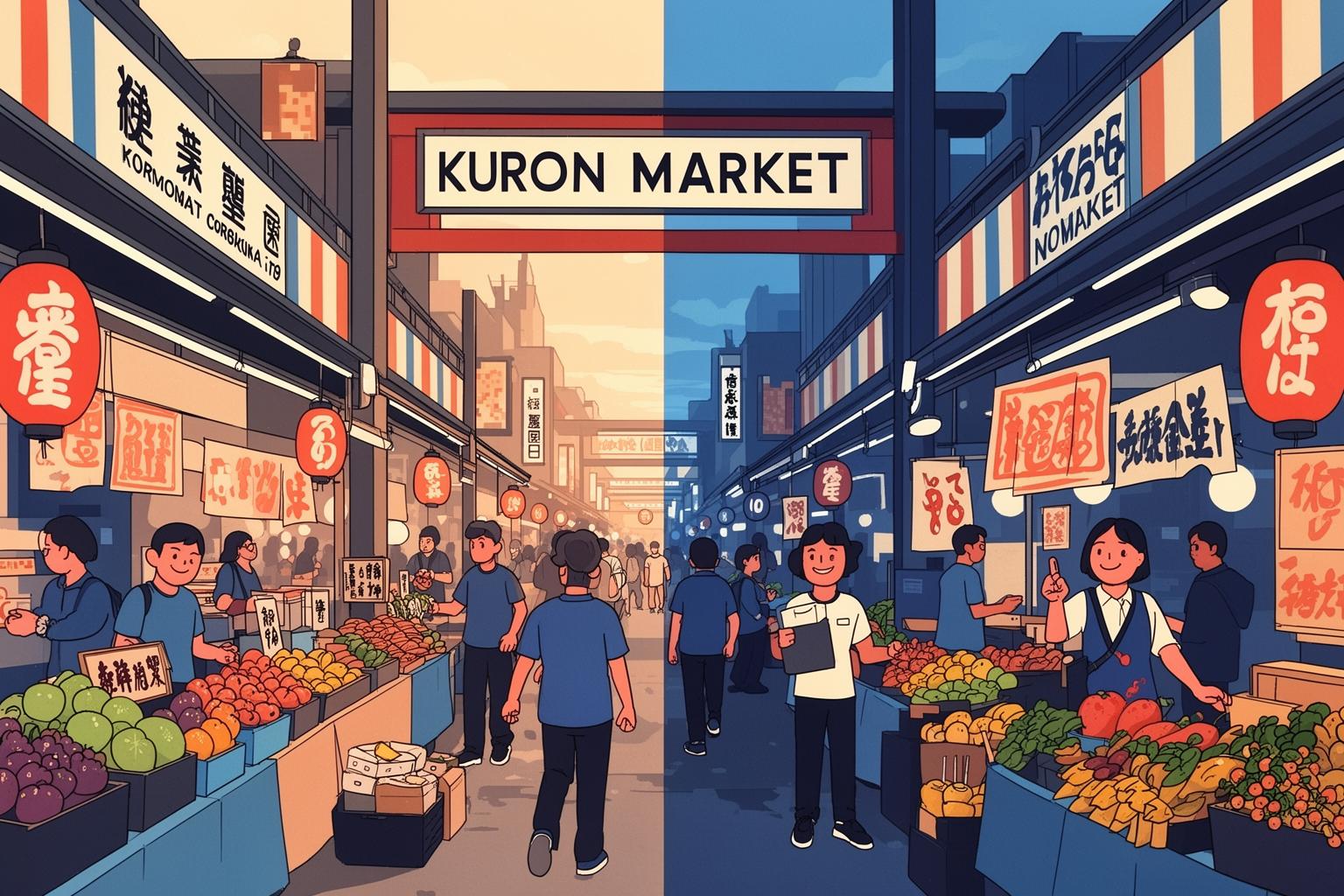
To understand what Kuromon signifies, you need to mentally divide the market into two distinct entities that share the same physical space. There’s the market you see, and the market you have to seek out. One is a performance, a grand spectacle for a global audience. The other is a quiet, ongoing conversation among people who have known each other for decades.
The Main Drag: A Theater of Kuidaore
The main street of Kuromon is pure spectacle. It embodies Osaka‘s famous slogan, kuidaore—to eat oneself into ruin. Here, food is turned into an immediate, high-impact experience. It’s not about ingredients for a future meal; it’s about the excitement of the moment. You’ll find vendors blowtorching scallops still in their shells, shucking palm-sized oysters, and slicing fatty tuna with the dramatic flair of a samurai swordsman. This isn’t how groceries are sold; this is how memories are crafted, one costly skewer at a time.
This theatricality is distinctly Osaka. The city has a long tradition as an entertainment hub, from Bunraku puppet theater to boisterous comedy clubs. Osakans appreciate the power of a good show, and the vendors at Kuromon have become expert performers. They’ve evolved, turning their stalls into stages. They understand that tourists aren’t aiming to buy an entire daikon radish. They want a story, an experience, a photo that proves they were truly there. And Osaka, with its practical merchant spirit, is more than willing to sell it.
The Fading Echo of ‘Osaka no Daidokoro’
Naturally, this shift comes with a cost, beyond the prices on the menu. Speak with Osakans who grew up nearby, and you’ll often hear a tone of nostalgic resignation. “Ah, Kuromon,” they’ll say with a sigh. “I used to come here every week with my mother. Now? It’s too crowded, too pricey. It’s become a tourist spot.” This isn’t necessarily a complaint but a statement of fact. It reflects a core Osaka characteristic: a pronounced lack of sentimentality when it comes to commerce.
In Tokyo, there may be a stronger effort to preserve a place exactly as it was, protecting tradition for tradition’s sake. In Osaka, the merchant spirit, or akindo精神, commands that a business must adapt to its market. The Kuromon market shifted from local housewives to international tourists, and those businesses that survived were the ones that adapted. Locals don’t resent their success but are pragmatic. If the supermarket down the street sells fresher fish at half the price, loyalty has its limits. Osaka’s spirit lies not in preserving the past but in securing the best deal today. So many have moved on, leaving Kuromon’s main stage to the visitors.
Finding the Local Pulse: How Osakans Still Use the Market
But that’s not the entire story. If you step a few feet away from the main street, or if you know exactly which doorway to slip into, you’ll discover that the old Kuromon still exists. It’s simply hiding in plain sight. The locals who continue to visit the market aren’t just browsing; they have a purpose. They move with an intent that starkly contrasts with the leisurely pace of the tourists.
Shopping with a Purpose: The Art of the ‘Otsukai’
These shoppers are running an otsukai, an errand. They aren’t there for the market experience; they seek a particular product from a specific vendor. They bypass the grilled eel and wagyu stands and head directly to the shops that don’t provide instant gratification. They visit the old tsukemono (pickle) store where the owner knows exactly how sour they like their plums. They stop by the tofu maker whose silky-smooth tofu is the only kind their family consumes. They drop in at the fugu specialist who has carefully prepared pufferfish for their family’s New Year’s feast for three generations.
This is where the concept of ‘Osaka’s Kitchen’ remains true. It’s not about raw ingredients for just any meal, but the essential components for culturally significant ones, bought from a trusted source. This shopping is grounded in relationships. The transaction is almost secondary to the ritual of the visit, the brief chat about the weather, a family member’s health, or the quality of this year’s catch.
The Language of the Market: Beyond ‘Irasshaimase’
The difference is audible. At the tourist-oriented stalls, you hear the universal, slightly impersonal call of “Irasshaimase!” (Welcome!). But listen carefully at the older, more traditional stores. The greeting changes. It’s a warm “Maido!” which roughly means “Every time!” or “Thanks for your continued patronage!” It acknowledges a shared history. The customer’s reply is often a friendly “Okini!” a gentle, melodic “Thank you” in the Osaka dialect.
This is the soundtrack of the authentic Kuromon. The conversations differ too. They are strikingly direct. An Osaka shopkeeper won’t hesitate to tell you what you should or shouldn’t buy. “Don’t get that one, it looked better yesterday. Take this instead; it just arrived.” In Tokyo, such bluntness might be seen as rude, breaking the unspoken rule of polite, deferential service. But in Osaka, it’s the highest form of customer care, a sign of trust and expertise. The vendor is not just a seller; they are a consultant, a partner in your culinary success. This frank honesty forms the foundation of the merchant-customer relationship here. They’re not trying to sell you something; they want to ensure you get the eemon—the best stuff.
What Kuromon Teaches Us About the Osaka Mindset
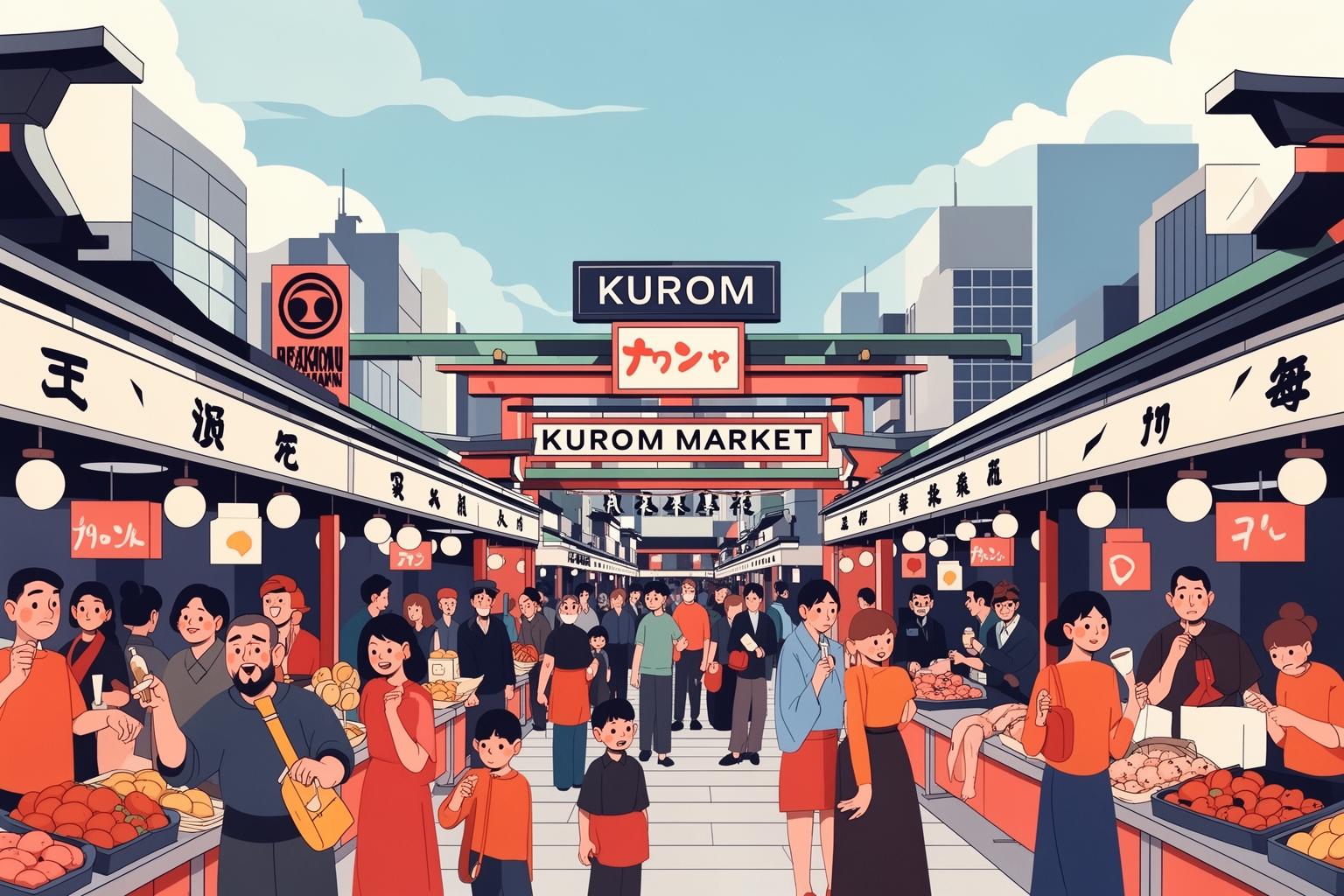
By observing these two parallel worlds within the market, you begin to grasp the core principles of Osaka culture. It’s a city founded on a distinctive mix of pragmatism, performance, and personal connection.
Pragmatism Over Prestige
Osaka prioritizes substance over style. While a visitor admires the flawless, jewel-like presentation of a sea urchin tray, a local is searching for value. They might opt for the slightly misshapen vegetables sold at a discount in a bag or the fish heads and bones used to make a rich soup stock. They understand where true quality lies, and it isn’t always in the most attractive packaging. This contrasts with the aesthetic perfectionism of Kyoto or the brand-conscious formality of Tokyo. Osaka’s culture is deeply rooted in the principle of getting your money’s worth. A purchase should be logical, satisfying, and wise. Spending money solely on aesthetics is viewed as unwise.
The ‘Akindo’ Spirit: Everyone’s a Merchant
At its core, Osaka is a city of merchants, and the akindo spirit permeates Kuromon. It’s a mindset that blends business savvy with a genuine love of human interaction. The vendors excel not only in butchering fish or pickling vegetables but also in reading people. They possess remarkable social intelligence, knowing when to joke, when to offer a sample, and when to give customers space. They create a lively, inviting atmosphere that feels less like a sterile retail environment and more like a community gathering.
This spirit extends to the customers as well. They are expected to be active participants, not passive consumers. You’re expected to know what’s in season, to ask questions, and to appreciate the quality of what you’re buying. It’s an ecosystem of knowledgeable sellers and discerning buyers, a dynamic that makes shopping feel like a collaborative experience.
A Note on Bargaining
A common misconception about Osaka is that you can haggle for everything. While the city is known for being price-conscious, Kuromon isn’t a flea market. You don’t bargain over the price of a piece of tuna. Negotiation is more subtle and based on relationships. The real ‘discount’ comes in the form of omake—a little something extra. The vegetable seller might throw in a few extra spring onions. The fishmonger might give you a small piece of a different fish to sample. This isn’t a transaction; it’s a gesture of goodwill, a recognition of your loyalty. The value lies not in cutting a few yen, but in strengthening a human connection that ensures you’ll keep returning.
How to Experience Kuromon Like a Resident (Even If You’re Not)
So, how can a visitor or new resident see past the tourist market façade and catch a glimpse of the authentic Kuromon? It requires shifting your mindset from passive consumption to active observation.
Timing is Everything
First, adjust when you visit. Avoid the busy midday period from 11 a.m. to 2 p.m. at all costs. Arrive early, around 9 a.m., to watch local chefs selecting their ingredients for the day. The atmosphere is more professional and focused. Alternatively, visit later in the afternoon, after 4 p.m., when the crowds thin, vendors begin packing up, and you might find end-of-day bargains. The pace slows down, and vendors have more time for genuine conversations.
Look Beyond the Skewers
Make a deliberate effort to explore shops that don’t sell ready-to-eat street food. Seek out the store that sells only katsuobushi (dried bonito flakes) and breathe in its deep, smoky aroma. Find the kombu specialist offering dozens of types of dried kelp, a foundational ingredient in Japanese cooking. Visit the small, family-run shops selling handmade tofu and yuba. These establishments are the market’s pillars, serving Osaka’s kitchens, not just tourists’ appetites. These shops are what give Kuromon its true spirit.
Engage, Don’t Just Consume
Lastly, change how you interact. Instead of simply pointing at what you want, try asking questions. Even basic Japanese can go a long way. Point to an unfamiliar vegetable and ask, “Kore wa nan desu ka?” (What is this?). Or, “Oisii desu ka?” (Is it delicious?). A better question is, “Dou yatte taberu no?” (How do you eat it?). This shifts your role from a mere customer to an eager learner. Vendors are skilled artisans proud of their expertise. Showing sincere interest is the key to unlocking the generosity and warmth beneath their sometimes gruff, businesslike exteriors. Suddenly, you’re not just another face in the crowd—you’re someone worth engaging with.
Conclusion: The Market as a Mirror
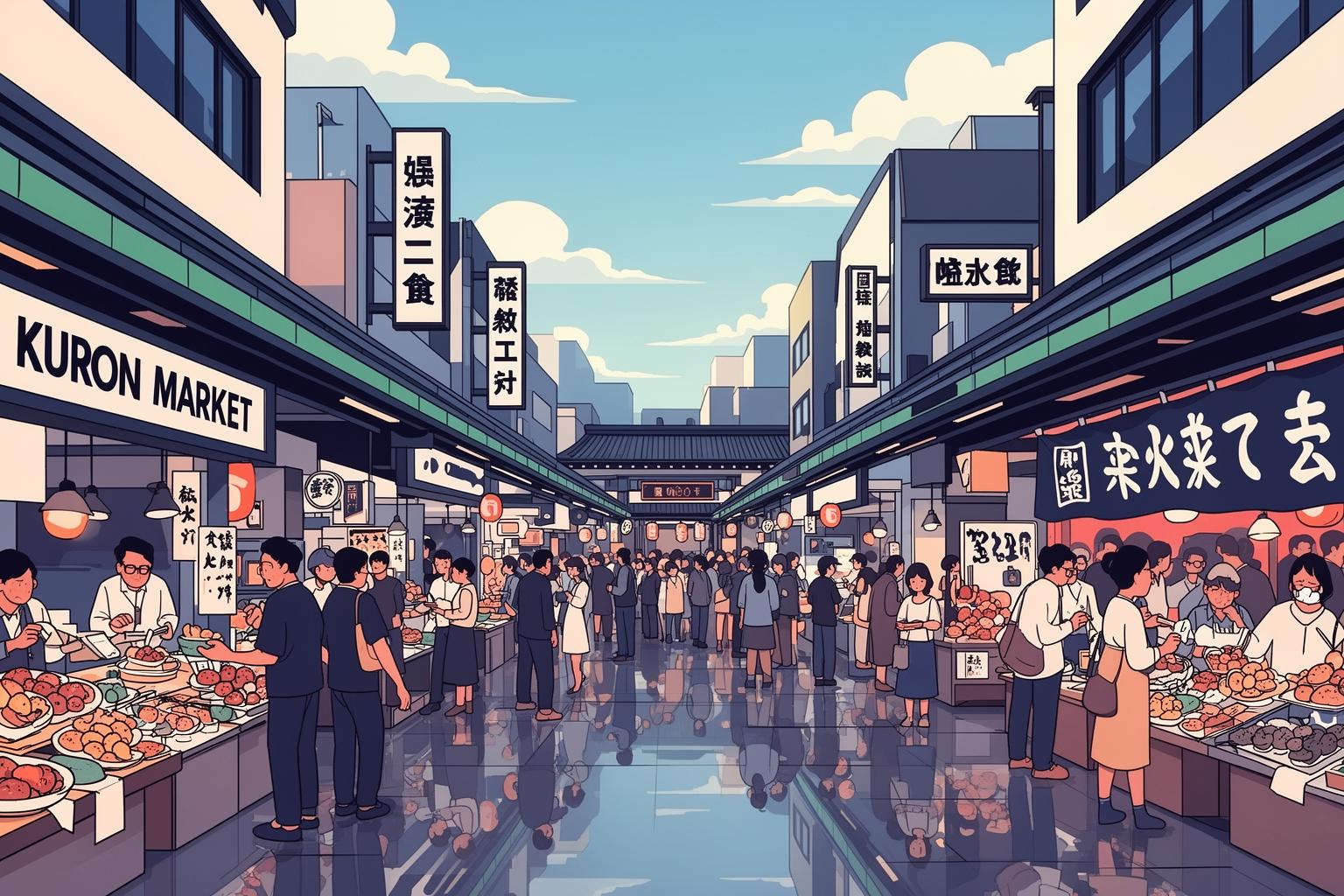
Kuromon Market, in its current form, perfectly reflects Osaka itself. It’s loud, a bit flashy, and openly commercial on the surface. It puts on a spectacular show and knows exactly how to appeal to a crowd. It has adjusted to the economic demands of the 21st century with sharp pragmatism. Yet beneath that loud, sparkling exterior, the city’s true spirit continues to thrive. This spirit lives in long-standing relationships, a deep respect for quality, straightforward honesty, and the quiet exchange of an “Okini” between a shopkeeper and a customer who knows they’ll return next week.
To view Kuromon simply as a tourist trap completely misses the point. It’s a living lesson in how Osaka culture functions—by skillfully balancing performance and substance, valuing relationships over strict tradition, and by always, always looking out for the eemon. The next time you pass through that bustling arcade, look beyond the selfie sticks and grilled scallops. Seek out the grandmother on a mission for the perfect pickles. Listen for the “Maido!” cutting through the noise. That’s where you’ll discover the true Kitchen of Osaka.