You’ve seen it, smelled it, probably even tasted it. The sizzle of batter hitting hot iron, the rhythmic click-clack of metal picks, the sweet and savory aroma of browning dough and caramelized sauce hanging thick in the air. This is the takoyaki of Dotonbori, the takoyaki of tourist posters and street food guides. It’s a delicious, steaming hot introduction to Osaka, served in a flimsy boat-shaped tray. But it’s just that—an introduction. To truly understand this city, to get past the flashing lights of the Glico Man and into the warm, chaotic heart of its homes, you need to look beyond the vendor stall. You need to get yourself invited to a ‘takopa’.
A takopa, or takoyaki party, is the real deal. It’s where this humble octopus ball transcends its status as a mere snack and becomes a tool for social bonding, a canvas for culinary creativity, and the very essence of Osaka’s ‘konamon’ (flour-based food) culture. While tourists line up for a taste, Osakans are at home, gathered around a whirring, spitting electric hot plate, laughing as they butcher the first batch. It’s a foundational piece of the social fabric here, so ingrained that an urban legend persists: every Osaka household is issued a takoyaki maker by the government. That isn’t true, of course, but the reality isn’t far off. Walk into any electronics store, and you’ll find not just one or two models, but an entire section dedicated to them. They are a standard wedding gift, a common housewarming present, a non-negotiable kitchen appliance. Because in Osaka, the ability to host a takopa isn’t just about food; it’s about community.
The energy that transforms an ordinary takopa into a vibrant community event is similarly reflected in modern spaces like Osaka coworking spots where work and socializing seamlessly intersect.
The Konamon Kingdom: Flour, Friends, and the Art of the Flip
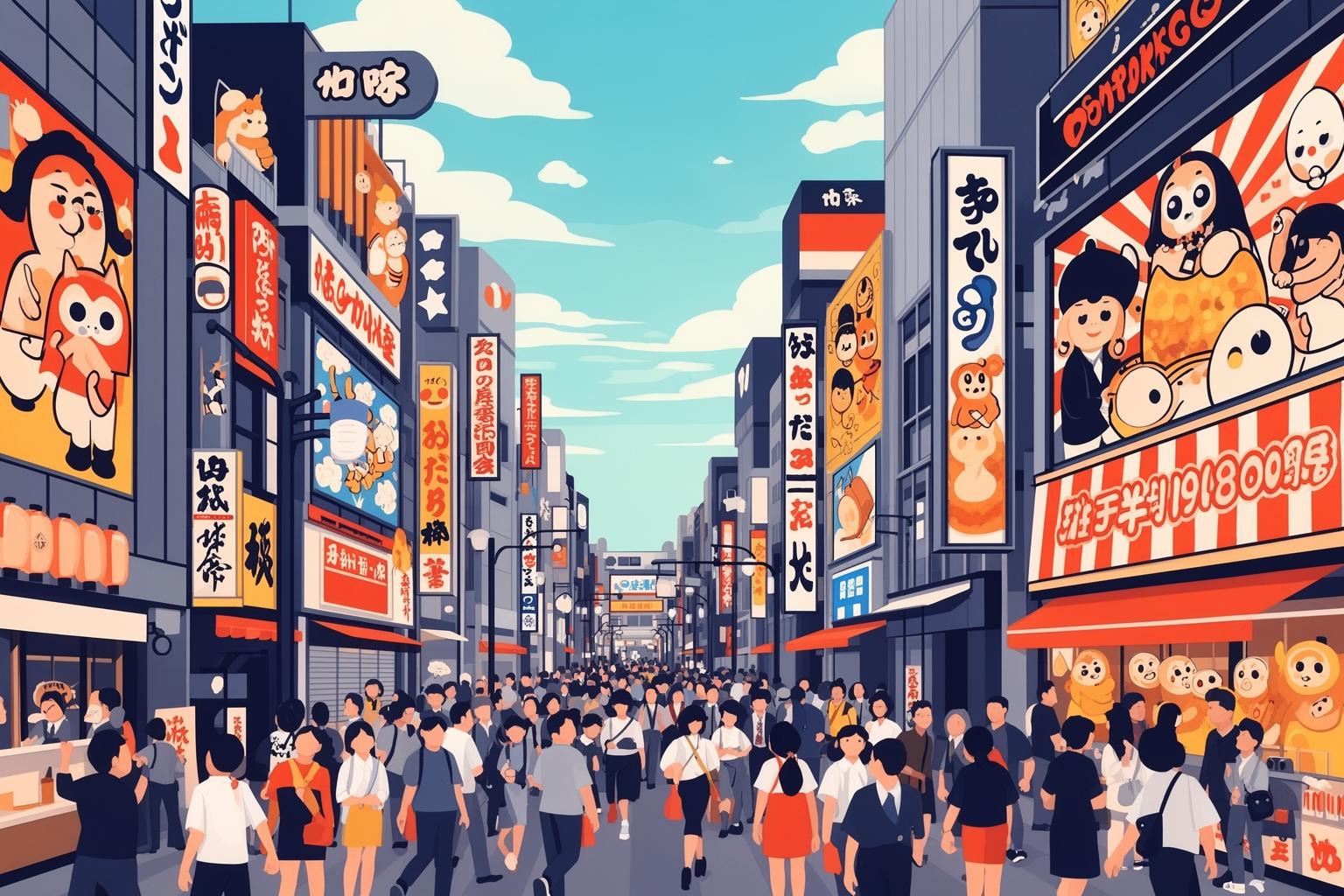
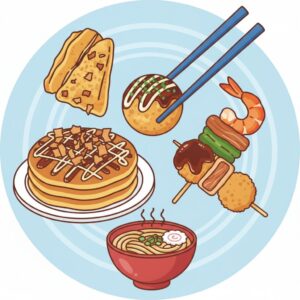
To truly appreciate the significance of takopa, you first need to understand the philosophy of konamon. The term literally means “flour things,” a deceptively simple label for a culinary category that lies at the heart of Osaka’s identity. This goes beyond just takoyaki; it also encompasses okonomiyaki (savory pancakes), negiyaki (scallion pancakes), and kushikatsu (deep-fried skewers). What ties them together is a spirit rooted in Osaka’s history as ‘tenka no daidokoro’—the nation’s kitchen. This was a city of merchants, not samurai—a place where pragmatism, value, and shared enjoyment were paramount.
Not Just Food, It’s a Philosophy
Konamon culture epitomizes this merchant mindset. It’s about transforming inexpensive, humble ingredients—flour, water, cabbage, eggs—into something deeply satisfying, delicious, and sociable. It’s culinary magic for the everyday person. This sharply contrasts with the more formal, refined culinary traditions often linked to Tokyo or Kyoto, which evolved from aristocratic or samurai backgrounds. While an Edo chef might have sought perfection in a single, exquisite piece of nigiri sushi, the Osaka cook mastered feeding a crowd, bringing joy, and keeping costs low.
This isn’t to suggest one is superior; each simply reflects a different cultural history. Tokyo’s food culture often feels presentational, a showcase of skill to be admired. Osaka’s konamon culture is participatory. It’s food that welcomes you in, often cooked right at the table, meant to be shared amid lively conversation and laughter. Takoyaki, especially in its home party form, is the ultimate expression of this spirit. It’s affordable, enjoyable, and its success depends entirely on teamwork.
The Takoyaki Maker: A Household Essential
The importance of the takoyaki maker cannot be overstated. It’s not a novelty gadget like a waffle cone maker that gets used once and then hidden away. In Osaka, it’s a staple appliance. Visiting a friend’s new apartment, you’re more likely to find a takoyaki plate than a fancy espresso machine. The variety is impressive. There are simple, round electric plates for casual weeknight use. There are long, rectangular Iwatani models fueled by cassette gas, favored by purists for their high, even heat that creates the perfect crispy crust. There are even cast-iron plates designed for use directly on a stove burner. Opinions run strong. People debate copper versus iron, the ideal depth of the wells, and the best non-stick coating. These are the kinds of gear discussions North Americans might reserve for barbecue grills or stand mixers. It shows this is serious business—a beloved and cherished part of home life.
Anatomy of a ‘Takopa’: More Than Just Octopus Balls
A takopa is a wonderfully casual event, a harmonious blend of relaxed collaboration. It follows a set of unspoken rules that reveal much about Osaka’s social interactions. Forget the rigid manners of a formal Japanese dinner; this is an entirely different experience.
The Invitation and the Unspoken Rules
The invitation to a takopa seldom arrives in a formal way. Instead, it’s usually a text on a Friday afternoon: “Uchi de takopa se-hen?” (Wanna have a takoyaki party at my place?). This invitation assumes a certain level of comfort and friendship. You’re not being invited as a formal guest; you’re invited to take part. The unspoken understanding is that it’s a collective effort. The host provides the main elements—the batter, the octopus, the takoyaki plate—but everyone else is expected to contribute. Typically, this means bringing drinks, snacks, or, most importantly, interesting ingredients to add to the mix. Arriving empty-handed is a significant faux pas, not out of stinginess, but because it shows a lack of appreciation for the event’s communal spirit. You’re there to cook together, not to be served.
The Ritual of Preparation
The party truly begins not when the food is ready, but when the preparation starts. The kitchen counter turns into a shared workspace. Someone finely chops green onions, another dices bright red pickled ginger (beni shoga), and another opens bags of tenkasu, the crunchy tempura scraps essential for texture and flavor. The host mixes the batter, often following a family secret. The base is always a special takoyaki flour mix, but the real magic lies in the liquid. A true Osakan batter isn’t made with water; it’s made with chilled dashi broth, which imbues each ball with a rich, savory umami. The consistency is crucial—too thick and the takoyaki become dense and doughy; too thin and they won’t hold their shape. This is a quiet point of family pride, a recipe handed down and perfected.
The Main Event: Flipping, Failing, and Finding Your Rhythm
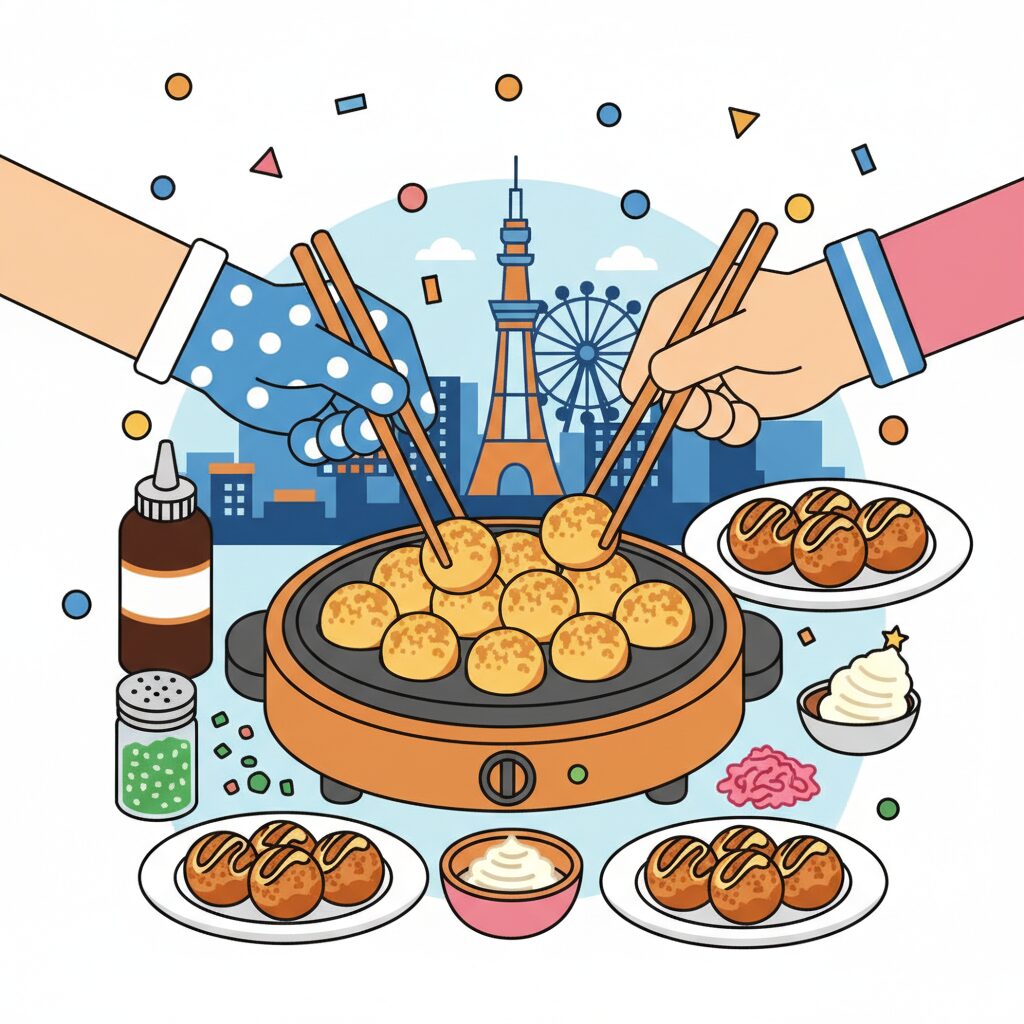
Once everything is ready, everyone crowds around the hot plate. The host oils the molds, and the first pour of batter sizzles as it touches the iron. Then begins the dance. A piece of boiled octopus drops into each mold, followed by a generous sprinkle of ginger, onion, and tenkasu. More batter is poured over the top, covering the entire plate. Then comes the wait. This is the moment of anticipation. The edges begin to cook, filling the air with a toasty, delicious aroma. Then, the flipping starts.
Armed with small, sharp metal picks, the task of turning the takoyaki begins. An expert makes it look effortless, using two picks to skillfully score the batter and flick the half-cooked ball a perfect 90 degrees, tucking uncooked batter underneath. A beginner’s attempt is often a humorous mess, a clumsy stabbing that results in scrambled, misshapen spheres. This is intentional. The initial awkwardness is a great equalizer, an icebreaker that sparks laughter. No one is expected to master it immediately. The goal is to try. Usually, one person naturally emerges as the ‘takoyaki bugyo,’ the takoyaki magistrate. This isn’t about authority; it’s a role of gracious leadership. They offer tips, skillfully rescue mangled takoyaki, and keep the pace, ensuring a steady flow of perfectly round, golden-brown spheres for the eager crowd.
The Social Code Written in Batter
It may seem like a simple dinner party, but the dynamics of a takopa provide a deep insight into the Osaka mindset. This event is a microcosm of the city’s social values, showcasing a preference for egalitarianism, straightforward communication, and collaborative fun rather than strict formality.
Why Takopa is the Quintessential Osaka Experience
In a society known for its social hierarchies, the takopa offers a radically flat environment. At a traditional Japanese dinner or drinking party, seating arrangements such as ‘kamiza‘ (the seat of honor) and ‘shimoza’ (the humble seat) subtly reinforce status. But around a takoyaki plate, there is no head of the table. Everyone is equally close to the action, everyone holds a pick, and everyone has an equal chance of crafting a masterpiece or a disaster. The boss and the new intern, the professor and the student—they are all just takoyaki flippers for the evening. This shared activity breaks down barriers. You get to know people not through formal introductions, but by observing how they handle their pick. Are they patient? Impulsive? Natural teachers? A chaotic mess? The activity itself sparks conversation, eliminating awkward silences. It’s connection built through shared effort and sizzling batter.
The “Osaka vs. Tokyo” Divide, Explained with a Hot Plate
Contrasting a takopa with a typical Tokyo gathering highlights a key cultural difference. A home party in Tokyo, when it happens, may be a more curated event. The host might present a dish they have perfected, like a beautifully made homemade curry or an elaborate dessert. It can feel more performative, with a clear distinction between host and guest. The Osaka takopa breaks down that barrier. It’s messy, slightly chaotic, and the emphasis is on the collective process rather than a flawless final product. This reflects a broader stereotype about the two cities. Tokyo is often viewed as polished, refined, and valuing aesthetic perfection and adherence to protocol. Osaka is seen as practical, direct, and more focused on the substance and enjoyment of the interaction. A Tokyoite might be horrified at the thought of a guest seeing their messy, failed first cooking attempt. An Osakan wears that failed first batch of takoyaki as a badge of honor—it’s part of the story, part of the fun. Foreigners often misread Osaka’s directness as abruptness, but the takopa reveals its true spirit: a impatience with formality, a wish to reach genuine human connection as quickly as possible. Why waste time on pleasantries when there are octopus balls to flip?
Beyond the Classic: The Evolution of the Home Takoyaki
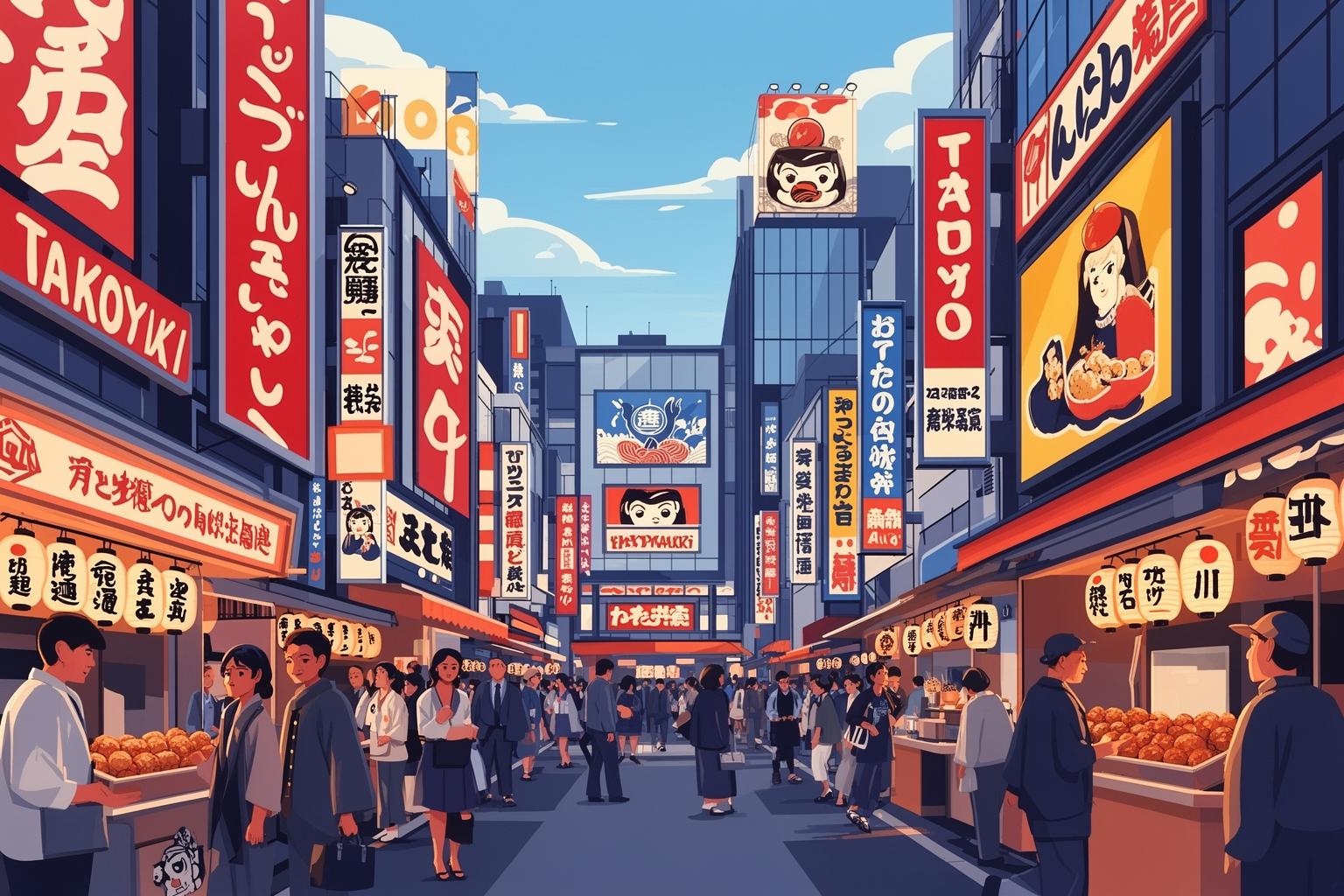
While the street food version remains faithful to tradition, the home takopa serves as a space for experimentation. This is where Osaka’s inventive and playful spirit truly comes alive. The basic recipe acts as a canvas, and anything in the refrigerator can become potential paint.
A Canvas for Creativity
Octopus is the classic ingredient, but it often serves just as a starting point. The second or third batch is when things start to get interesting. Pieces of cheese are a popular addition, melting into a gooey center. Small sausages or bacon bits are common choices. Kimchi and cheese is a beloved Korean-inspired combination. Adventurous hosts may try shrimp, corn, mochi, or even unconventional fillings like avocado or mentaiko (spicy cod roe). This is not viewed as a betrayal of tradition but rather as a joyful expression of it. The konamon spirit isn’t about strict rules; it’s about creating delicious food with whatever you have on hand. There are even dessert takoyaki, made with pancake batter and filled with chocolate chips or fruit pieces. This ongoing, low-pressure innovation is quintessentially Osaka.
The ‘Ajipon’ vs. ‘Sauce’ Debate
Another layer of insider knowledge appears in how the finished takoyaki is eaten. The iconic style, seen at every street stall, is to coat the takoyaki with a thick, brown, sweet-and-savory takoyaki sauce, drizzle it with Japanese mayonnaise, then sprinkle with green aonori seaweed and dancing katsuobushi (bonito flakes). This is undeniably delicious. But at home, you’ll often find a second option, considered by many to be a more ‘adult’ or refined way to enjoy them. This method involves skipping the heavy sauces and instead dipping the plain, piping-hot takoyaki into a light broth. This might be a simple dashi with some green onions or, more commonly, ponzu, a tangy soy sauce infused with citrus. Eating takoyaki this way lets the flavor of the dashi in the batter and the fillings shine through. It’s a subtle difference but an important one. It’s like knowing that a local at a pub might ask for a specific ale while tourists go for the lager on tap. Being aware of the ponzu option shows a deeper appreciation of the dish, moving beyond the public face of takoyaki into its private, domestic heart.
If you find yourself living in Osaka, eventually you’ll receive an invitation to a takopa. When that happens, your answer should be an enthusiastic yes. Don’t worry about your lack of skill with the picks. Don’t stress about what to bring—a bottle of something to drink and an open mind is more than enough. The greatest gift you can offer is your willingness to join in, laugh at your own mistakes, and share in the simple, profound joy of making and eating food together. As you gather around that hot plate, shoulder to shoulder with new friends, you’ll realize that the true warmth of this city isn’t found beneath the neon glow of its famous landmarks. It’s found in the imperfectly round, slightly charred, incredibly delicious dough balls that you helped create. In Osaka, receiving a pair of takoyaki picks isn’t just an invitation to eat. It’s an invitation to belong.