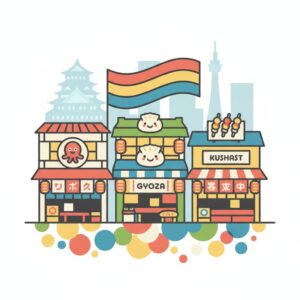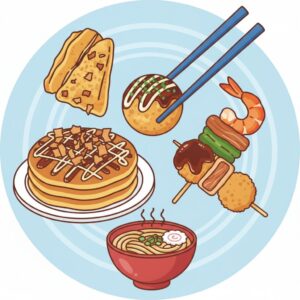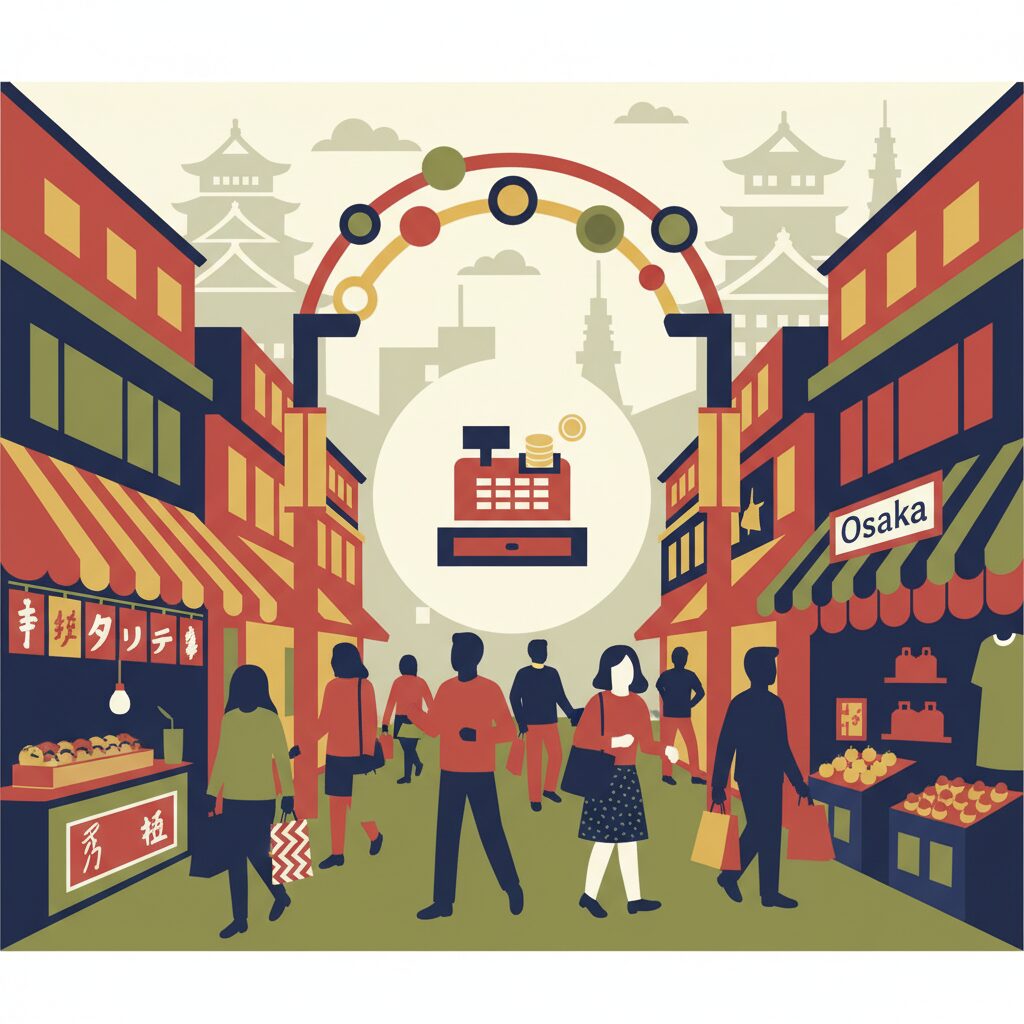
Step off the train in Tokyo, and you’re immediately swallowed by efficiency. Gleaming station malls, silent convenience stores, perfectly curated department stores where the only sounds are the gentle chime of an elevator and the hushed tones of impeccable service. It’s a world of smooth, frictionless commerce. Then you come to Osaka, and you wander into a shotengai, one of the city’s covered shopping arcades. The experience is a full-frontal assault on the senses. The air is thick with the smell of sizzling takoyaki, savory dashi broth from an udon shop, and the sweet perfume of fresh fruit from a grocer’s stand. The noise is a chaotic symphony: the gravelly shouts of a fishmonger advertising the day’s catch, the rattle of a shop’s metal shutter opening late, the cheerful, incessant jingle of a pachinko parlor, and the laughter of old women gossiping over pickled vegetables. This isn’t frictionless. This is life, with all its messy, vibrant, and utterly human textures. A shotengai is far more than a collection of stores; it’s the city’s living room, its public square, and for the people who work there, it is the entire universe. As a Tokyo transplant, it took me a long time to understand that to grasp the soul of Osaka, you have to understand the lifeblood that flows through these covered streets and the people who are its beating heart: the shotengai shop owners.
For those wishing to dive even deeper into the vibrant energy of these bustling streets, exploring the shotengai code reveals the intricate customs and community spirit that define Osaka’s local heart.
The Spirit of the Akindo: It’s Not Business, It’s Personal
In Tokyo, you are simply a customer. In an Osaka shotengai, however, you become a neighbor, a sparring partner, and a potential friend. The people running these shops are not just workers; they are akindo, a term that translates to ‘merchant’ but carries much deeper cultural significance. An akindo is a master of their craft, a shrewd entrepreneur, and a pillar of the community all at once. Their entire identity is intertwined with their shop, and their interactions embody a philosophy that is uniquely Osaka: business is personal. This often confuses outsiders, especially those used to the polite distance found in Tokyo. The brusque vegetable seller isn’t being rude when he shouts, “Ojou-chan, you’re looking a bit pale today! You need to eat these spinach, they’ll put iron in your soul!” He is engaging; he’s showing that he sees you as more than just a source of money. He performs a role that blends salesman, entertainer, and caring uncle. This performance lies at the heart of the akindo spirit. It’s about building relationships, one loud, nosy, and often humorous interaction at a time. The aim isn’t merely to complete a sale today but to make you a regular customer for the next twenty years.
Mokkari Makka? The Secret Handshake of Osaka Commerce
You’ll often hear it, a rhythmic call-and-response among shopkeepers. One owner, sweeping the sidewalk outside his store, will spot another and call out, “Sato-san, mokkari makka?” (Mr. Sato, are you making a profit?). Sato-san will invariably chuckle and wave dismissively, replying, “Bochi bochi denna.” (Just so-so, getting by). To a foreigner, this might sound like a nosy and slightly pessimistic exchange. But it isn’t a genuine inquiry about financial status; it’s a ritual. “Mokkari makka?” is the Osaka businessperson’s way of saying “How are you?” It’s a greeting that acknowledges their shared identity as akindo, their common struggles, and their collective mission. The response, “Bochi bochi denna,” is just as important. Boasting about success would come across as arrogant and break the communal bond. The humble reply reinforces their solidarity, reminding everyone that they’re navigating the highs and lows of small business together. It’s a performance of unity, a subtle verbal handshake reaffirming their place within the shotengai community.
The Sacred Art of Omake
Another cornerstone of the akindo philosophy is omake, the custom of giving a little something extra free of charge. Buy five croquettes, and the woman at the butcher shop might throw in a sixth. Buy a bag of oranges, and the fruit vendor might add a couple of extra mikans. This isn’t simply a discount; it’s a potent social gesture. In Tokyo, a freebie might appear to be part of a calculated marketing strategy. In Osaka, omake feels like a gift. It’s a way of saying, “I appreciate you. Thanks for choosing my shop over the supermarket down the street.” It fosters warmth and personal connection. It also, cleverly, creates a subtle sense of social obligation. You feel good about shopping there and are more likely to return, not just for the prices but for the relationship. The akindo understands that the value of that extra croquette is far less important than cultivating a loyal customer who feels acknowledged and valued.
A Day in the Life: The Unseen Grind
The vibrant, theatrical atmosphere of the shotengai conceals the reality of relentless, exhausting labor. The life of a shop owner is not a typical 9-to-5 job; it’s a dawn-to-dusk, all-encompassing commitment. For many, it’s a legacy handed down through generations, a weighty mantle of family pride and responsibility. The easy smiles and quick jokes you see in the afternoon come from hours of unseen work that begins while the rest of the city is still asleep. Many shop owners, especially those selling fresh goods like fish, vegetables, or flowers, are up by 3 or 4 AM. They’re not waiting for a delivery truck; they are heading to the Osaka Central Wholesale Market themselves. There, in a sprawling, chaotic complex, they engage in another daily ritual: the intense, high-stakes negotiation for the day’s stock. They must be experts, able to identify the freshest fish, the sweetest fruit, and the best cuts of meat. They haggle, inspect, and build relationships with wholesalers—all to ensure they can offer the best possible products to their customers at competitive prices. This pre-dawn hustle is where their reputation is built.
The Never-Ending Shift
Once they have secured their goods, the real work begins. It’s a marathon of physical and mental effort. They unload heavy boxes, carefully arrange their displays to be as attractive as possible, and prepare for the first customers. Then, for the next ten to twelve hours, they are fully engaged. They stand, talk, calculate, pack, and clean. There’s no escape to a break room. The shop is their stage, and they are the lead actor. They greet regulars by name, inquire about their children, and remember their favorite pickles. They have to be a walking encyclopedia of their own products. And when the last customer leaves and the metal shutter is pulled down, the work is far from over. There’s cleaning, bookkeeping, and preparation for the next day’s pre-dawn market run. It’s a six, sometimes seven-day-a-week commitment. This level of devotion is what distinguishes a shotengai from a chain store. The person selling you the fish isn’t a teenager on a part-time shift; they’re the one who got up at 3 AM to buy it for you. That depth of ownership and pride is something you simply can’t replicate.
The Shotengai Ecosystem: A Symphony of Cooperation and Competition
A shotengai is a delicate ecosystem governed by a complex network of unwritten rules. On the surface, it appears to be pure competition. Two rival fishmongers might stand just meters apart, each shouting louder than the other to draw in customers. But beneath this noisy rivalry lies a profound, unspoken understanding of mutual dependence. The success of the entire arcade relies on the wellbeing of its individual shops. If one store fails, it creates a dead space—an empty storefront that diminishes the overall appeal of the street. This awareness fosters a unique mix of fierce competition and unexpected cooperation. The two fishmongers compete on price, quality, and the charisma of their sales pitch, but they would never openly disparage each other in front of customers. There is a boundary. In fact, if one runs out of a specific fish a regular customer wants, it’s common to hear, “Ah, I’m sold out, but Tanaka-san across the way might still have some. Tell him I sent you!” They understand that keeping the customer happy and within the shotengai is the ultimate aim, even if it means losing one small sale to a rival. The favor will be returned another day. This intricate dance is invisible to casual observers but is essential to the shotengai’s survival.
The Invisible Governance: The Shopkeepers’ Association
This ecosystem is not left to chance. It is overseen by the shotengai shinkō kumiai, the local shopkeepers’ association. This aspect of work-life is far removed from a typical job. Membership is essentially compulsory and comes with duties and responsibilities. The association acts as the shotengai’s collective brain and muscle. It handles everything from maintaining the arcade’s roof and lighting to organizing seasonal events like summer festivals, tanabata decorations, and New Year’s sales. They pool funds to print flyers, hang banners, and run lottery promotions. They also function as a quasi-governmental body, mediating disputes between shop owners and presenting a unified voice when addressing the city government. Participation is mandatory. It means attending regular meetings after a long day’s work, paying dues, and volunteering time for community events. It’s an added layer of work, but one accepted as a necessary part of the job. It reinforces the core principle of the shotengai: you are not an island. You are part of a collective, and your fate is intertwined with that of your neighbors.
An Uncertain Future: Tradition in a Modern World
Despite their resilience and charm, the future of many shotengai remains uncertain. The most significant challenge is demographic: both the loyal customer base and the shop owners themselves are aging. The demanding lifestyle once accepted as normal is often unappealing to their children, who have grown up witnessing the long hours and modest financial rewards. Many have pursued university degrees and stable office jobs in city skyscrapers, leaving no successor to inherit the family business. Walking through any shotengai reveals signs of this struggle: an increasing number of permanently closed storefronts, their faded signs serving as ghostly reminders of once-thriving enterprises. The emergence of large, air-conditioned supermarkets and the unmatched convenience of online shopping poses another existential threat. Why visit multiple shops in the shotengai for vegetables when you can get everything in one place or have it delivered with a single click? For younger generations accustomed to efficiency and variety, the personal touch offered by the akindo can sometimes seem like an inconvenient bother. The shotengai model depends on a community and daily routine that is gradually disappearing from modern Japanese life.
The New Blood: A Glimmer of Hope
However, the story is far from over. In recent years, a new trend has revitalized some of these aging arcades. Young entrepreneurs, priced out of prime real estate and attracted by the retro appeal and low rents of the shotengai, are launching new types of businesses. Now, specialty coffee roasters stand alongside 80-year-old seaweed shops, craft beer bars sit next to traditional tofu makers, and fashionable vintage clothing boutiques face old-fashioned tatami mat weavers. This new wave injects fresh energy and draws a younger clientele to the shotengai. Using social media to promote themselves, these businesses attract customers from beyond the immediate neighborhood. This can create a fascinating—and sometimes tense—dynamic. The old guard, who built their enterprises on face-to-face relationships, may be cautious of the newcomers with their unfamiliar business models. Yet they also acknowledge that the increased foot traffic brought by these new shops benefits everyone. The young coffee shop owner who thrives is the one who understands they are not merely renting a space; they are becoming part of a community. They must learn the unspoken rules: greet their neighbors, participate in association events, and respect the traditions of the place. When this synergy succeeds, it’s a beautiful thing. It creates a shotengai that honors its history while embracing the future—a place where you can buy hand-whisked matcha and a flat white within the same 10-meter stretch. This delicate fusion might be the key to their survival. Working in a shotengai, then, is more than just a job. It is a commitment to a way of life, a belief in the power of community, and a daily effort to preserve the vibrant, chaotic, and deeply human soul of Osaka.