Step off the train at Ginza station in Tokyo, and you emerge into a world of curated perfection. The air feels different, filtered. The sidewalks are wide, impossibly clean, and the buildings stand like monuments to global luxury. Chanel, Dior, Cartier—they’re not just stores; they are temples of commerce, their windows displaying artifacts of desire. The people move with a quiet, deliberate grace. Every interaction is polished, every surface gleams. It’s a beautiful, breathtaking performance of what a city could be. It is commerce as high art.
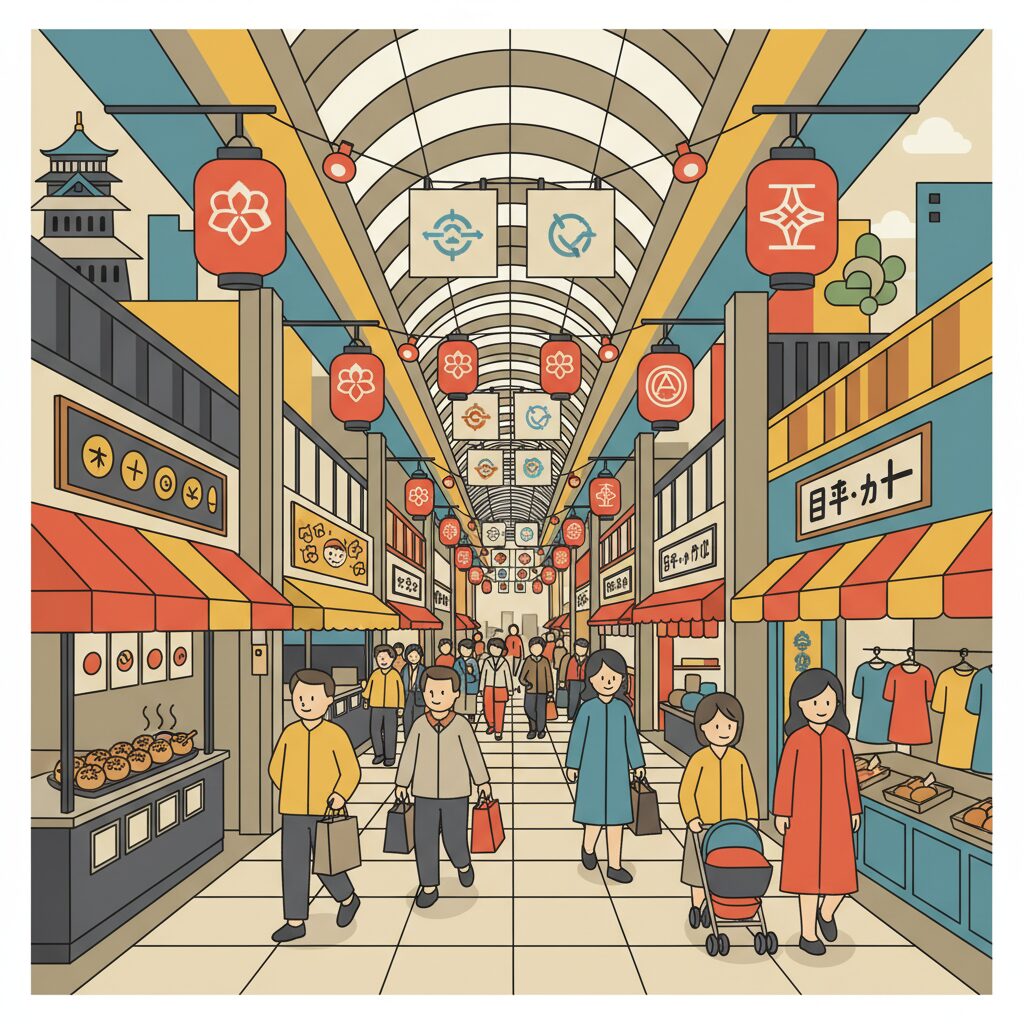
Now, step off the train at Tenma station in Osaka. You’re immediately swallowed by the Tenjinbashi-suji Shotengai, a sprawling, covered shopping arcade that feels less like a street and more like the city’s circulatory system. The air is thick with the smell of dashi broth, grilled eel, and sweet soy sauce. The noise is a symphony of chaos: the rumble of bicycles bumping over tiled floors, the high-pitched calls of vendors hawking fresh tuna, the tinny jingle of a pachinko parlor, and the constant, overlapping chatter of a thousand conversations. Storefronts are a chaotic collage of handwritten signs, flashing lights, and mountains of merchandise spilling onto the walkway. This isn’t a performance. This is life, unfiltered and unapologetic. It is commerce as a contact sport.
To the newcomer, the contrast is jarring. Tokyo’s Ginza feels like the Japan you see in glossy magazines, while an Osaka shotengai feels like a Japan that’s too busy living to pose for a picture. And this is where the real understanding of Osaka begins. It’s a city that reveals itself not in its monuments, but in its markets. To grasp the soul of Osaka, you have to look beyond the department store and walk the worn tiles of its shotengai, because these covered streets are more than just places to shop. They are the living, breathing heart of the city’s identity.
For remote workers curious to dive deeper into Osaka’s vibrant neighborhoods, exploring Osaka’s dynamic third place provides an authentic counterpoint to the glitzy allure of Tokyo’s Ginza.
The Ginza Equation: Perfection as a Product
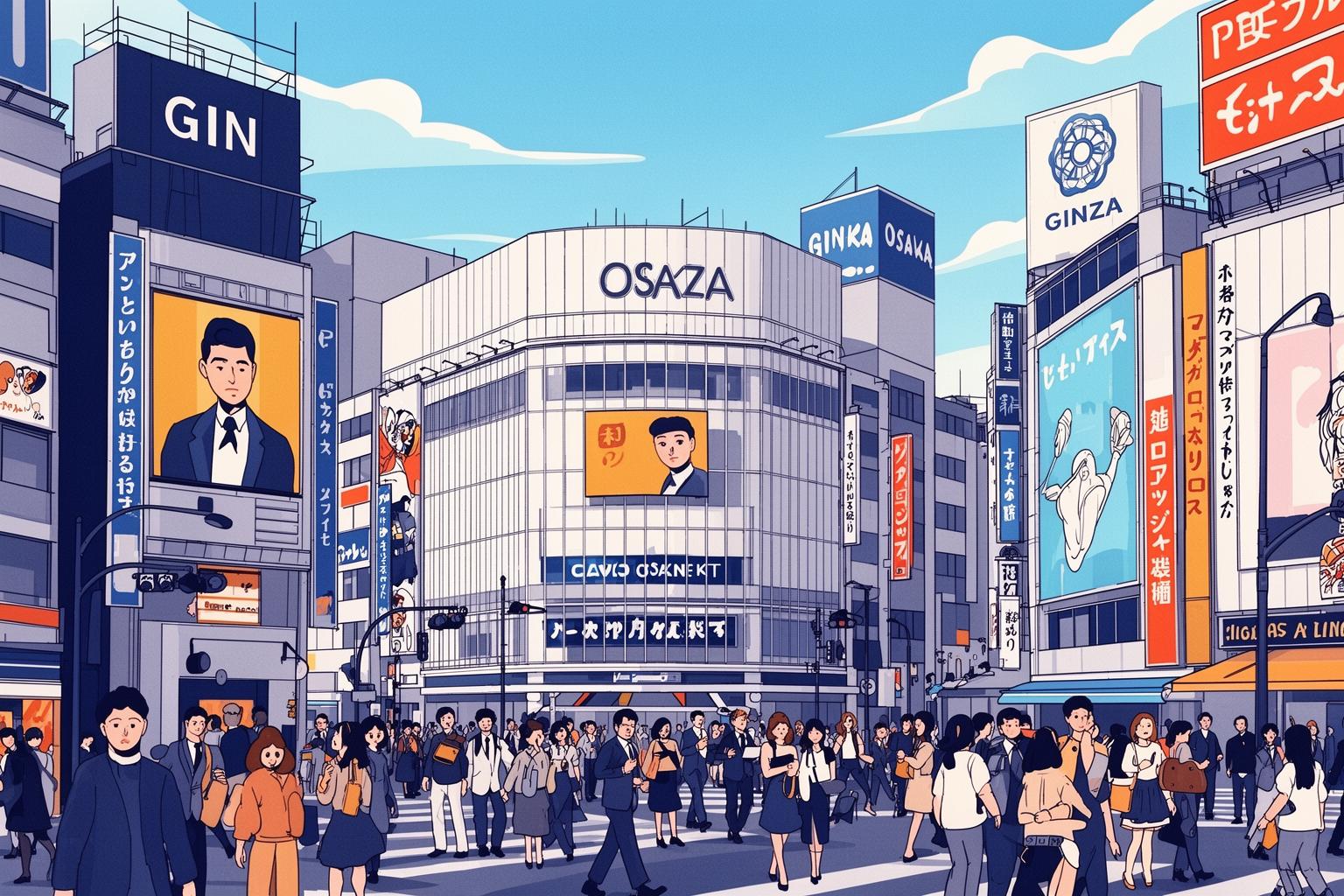
To truly grasp what makes an Osaka shotengai so distinctive, you first need to understand what it isn’t. And what it isn’t, is Ginza. Shopping in Ginza is an exercise in aesthetics. It’s a deliberate, almost ceremonial act. You don’t simply “pop into” the flagship Louis Vuitton store; you step inside. The doors are opened for you by staff in pristine uniforms. The interior is quiet, spacious, and air-conditioned to an exact temperature. The products are showcased with the reverence of museum artifacts, each perfectly lit and spaced.
Here, the service exemplifies `omotenashi`, the Japanese concept of hospitality. It is flawless, anticipatory, and thoroughly discreet. Staff speak softly. They foresee your needs before you even express them. The entire experience is crafted to make you feel elevated, special, and part of an exclusive world. Yet it is inherently impersonal. The relationship exists between you, the consumer, and the brand, the symbol of luxury. The salesperson is a highly-trained, impeccably courteous mediator, facilitating the transaction. You’re purchasing an idea, a piece of global identity. The price tag covers more than just the leather or stitching; it includes the pristine bag, the hushed store, the silent bow of the staff. You’re paying for perfection.
This also reflects a wider aspect of Tokyo’s culture. The city often seems to emphasize form, presentation, and maintaining a public facade—the concept of `tatemae`. There is a proper way to do things, a correct form to follow. This results in a city that is extremely efficient, clean, and visually striking. But it can also create a sense of distance. The flawless surface can sometimes feel impenetrable. Ginza is the ultimate embodiment of this philosophy. It’s a retail space scrubbed clean of the messiness of everyday life. You don’t see the stock being unloaded. You don’t hear the owner arguing with his cousin in the back. You only see the finished, perfect product. It’s magnificent, but it’s a stage.
The Shotengai Symphony: Life on Display
An Osaka shotengai stands in stark contrast. It’s always all about what’s happening behind the scenes. The clutter isn’t hidden; it takes center stage. Stroll down a street like Sennichimae Doguyasuji, the kitchenware arcade, and you’ll find teetering stacks of ceramic bowls piled high. You’ll weave around crates of professional knives and giant plastic food replicas of ramen. The shop owners won’t silently wait for you; they’re busy sharpening blades, answering phone orders, or chatting with the neighbor next door. The line between storefront, workshop, and living space is beautifully blurred.
This embodies the philosophy of `seikatsu`, or daily life, realized. The shotengai isn’t a place for special occasions; it’s the heart of everyday life. It’s where you buy fish for dinner, get your watch battery changed, pick up cheap socks, and grab a croquette for a snack. Many shops are hyper-specialized, reflecting generations of expertise. There’s a shop dedicated solely to kombu seaweed. Another sells just buttons. One deals exclusively in plastic food models displayed outside restaurants. These aren’t sleek, modern enterprises. Many are family-run businesses that have existed for fifty, sixty, or even a hundred years. The paint may be peeling, signs faded, but the expertise and products remain impeccable.
The aesthetic isn’t minimalist elegance but overwhelming abundance. Every inch is utilized. Colorful banners hang from ceilings announcing sales. Handwritten signs plaster walls. Music from one store blends into another, creating a unique, dissonant soundtrack. It’s a full sensory onslaught, yet a warm one. It’s like the visual and auditory experience of a bustling family kitchen—a bit chaotic, a bit loud, but vibrantly alive and welcoming.
The Currency of Connection: It’s More Than Just the Yen
In Ginza, transactions are clean and swift. You choose an item, it’s beautifully wrapped, you pay, and leave. But in an Osaka shotengai, the transaction is only the beginning of an interaction. This is where the famed Osaka friendliness, often misunderstood, truly shines. It’s not just a vague cheerful attitude; it’s a specific, functional form of communication born from the city’s history as Japan’s merchant capital.
This is the `akindo seishin`, or merchant spirit. A shopkeeper in a shotengai isn’t merely a salesperson but a neighborhood institution. They know customers by name. They remember you prefer the fattier tuna cut, that your son just started university, or that you were complaining about the summer heat last week. Conversations begin long before any money is exchanged. “`Maido!`” they’ll call out, the traditional Osaka merchant’s greeting meaning “Thanks for your continued patronage!” Then, “`Okusan, kyou no sakana ee no haitteru de!`” which means “Ma’am, we got some great fish in today!”
This isn’t mere small talk; it’s the currency of the relationship. By engaging, they build trust. They position themselves not just as vendors but trusted advisors. You, in turn, become a regular, or `jouren-san`. That status comes with benefits. You might receive an extra potato or a handful of scallions for free—called `omake`, a physical symbol of goodwill. You’re not just buying vegetables; you’re part of a micro-community built on reciprocity. This contrasts sharply with the anonymity of a Tokyo department store or Ginza boutique, where loyalty is to a brand, not a person.
Price, Pragmatism, and the Osaka Wallet
This merchant spirit also cultivates deep pragmatism, especially in financial matters. Osaka residents are famously, and proudly, price-conscious. The stereotype of the bargain-hunting Osakan holds some truth but is more nuanced than mere frugality. It’s about a sophisticated sense of `neuchi`, or value. `Neuchi` goes beyond just the lowest price. It’s a complex blend of quality, durability, service, and yes, price. An expensive item that lasts a lifetime can offer excellent `neuchi`. A cheap item that breaks within a week offers poor `neuchi`.
The shotengai is the grand stage where `neuchi` is examined, debated, and found. Shoppers can be seen meticulously inspecting produce, asking shopkeepers pointed questions about freshness and origin. They aren’t being difficult; they’re discerning. They expect sellers to justify prices and stand by their goods’ quality. In Ginza, a high price signals luxury, exclusivity, and status. Questioning it would be a social faux pas. In Osaka, an unjustified high price is simply a bad deal, and walking away carries no stigma. This mindset is woven into the city’s fabric. It was built by merchants who understood that lasting success depended on providing genuine value, not just selling an image.
This explains why discount stores like the iconic Super Tamade, with its flashy neon lights and one-yen sales, coexist with century-old knife shops. Both deliver a form of `neuchi` to their distinct customers. The shotengai embraces the full spectrum of value, from rock-bottom bargains to expertly crafted tools. The common thread: customers leave feeling they got their money’s worth. There’s honesty to it. The price is what it is, the product is what it is, and the transaction is an open negotiation of value between two people.
Beyond the Arcade: How Shotengai Shape the City’s Rhythm
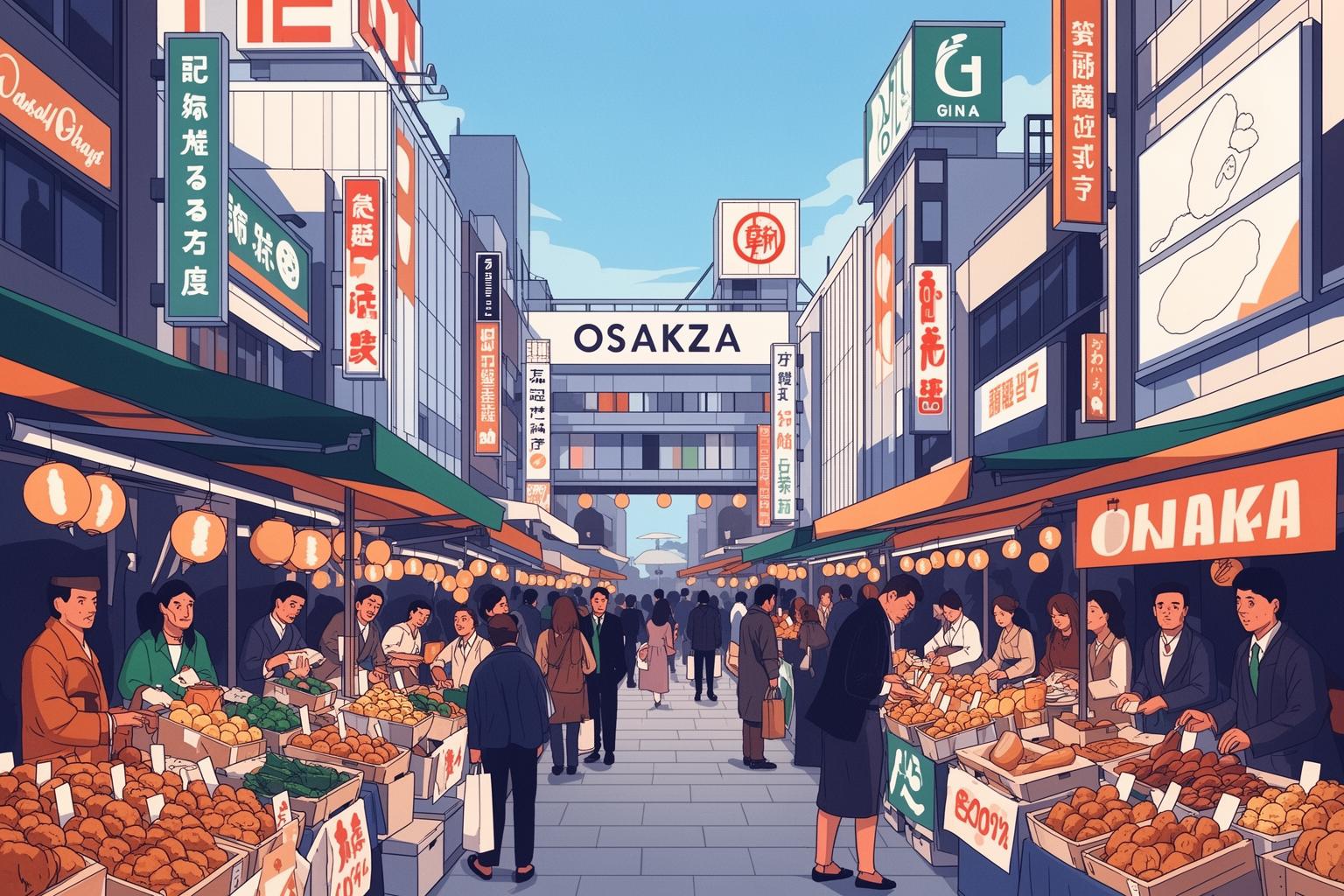
The influence of the shotengai reaches well beyond the point of sale. These covered arcades serve as the main arteries of their neighborhoods, shaping the very tempo of everyday life. In many areas of Tokyo, daily life centers around the train station—a vast, often underground complex of shops and eateries that functions as both the commercial and social hub. In Osaka, especially in more traditional neighborhoods, that role is taken by the shotengai.
It acts as the local thoroughfare for pedestrians and cyclists, a sheltered passage protecting from the intense summer sun and sudden rains during the wet season. It’s the place you turn to for everything. Your day might begin with a stop at the bakery in the shotengai for breakfast. Later, you could visit the small clinic, the post office, or the bank, all situated within the arcade. Lunch might be enjoyed at a tiny, family-run udon shop nestled between a fishmonger and a bookstore. In the evening, you might pick up groceries for dinner on your way home from work. The shotengai is a one-stop ecosystem for daily life.
This concentration of daily necessities nurtures a strong sense of place and community. Life unfolds on a human scale, at a walking or cycling pace. You regularly encounter neighbors—the elderly men gathered for a game of shogi, children rushing home from school, shopkeepers sweeping their storefronts—they form the familiar cast in your daily interactions. This fosters a casual intimacy that is harder to find in more fragmented, car-dependent urban settings. The shotengai functions as the neighborhood’s public square, its living room, and its pantry, all rolled into one. It’s the adhesive that binds the local community together.
What Foreigners Often Misunderstand
To an outsider, the shotengai can feel like an intimidating place, and its cultural nuances are often easily misunderstood.
A common misconception is that the visual disorder indicates neglect or poverty. Visitors familiar with the immaculate order of Ginza might interpret the cluttered storefronts, handwritten signs, and lack of uniformity as signs of decline. This, however, is a fundamental misunderstanding. The apparent “mess” is not carelessness; it reflects vibrant, ongoing commercial and social activity. It prioritizes function over form, substance over style. The aesthetic embodies practical, lived-in energy rather than curated minimalism. The true value lies in the goods and the people, not in the decor.
Another significant source of confusion is the straightforward, informal communication style. A shopkeeper in Osaka might promptly ask where you’re from, what you’re doing, and why you’re buying a particular item within the first thirty seconds. For someone accustomed to the reserved politeness of Tokyo, this may seem intrusive or even rude. But within Osaka’s merchant culture, it is quite the opposite. It serves as a way of engaging, quickly bridging the gap between stranger and customer, and establishing a human connection. Here, silence and formality are often seen as coldness. The playful banter and teasing indicate that you are being treated as a person, not merely a walking wallet. They are inviting you into their world, on their terms.
Lastly, there is the misunderstanding that all shotengai cater primarily to tourists. It is true that major arcades like Shinsaibashi-suji and adjacent Dotonbori are now dominated by global brands, tax-free shops, and tourist-focused restaurants. These represent the shotengai as spectacle. However, these are the exceptions rather than the rule. For every Dotonbori, there are many smaller, local shotengai—in Kyobashi, Nakamotocho, and countless residential neighborhoods—that remain deeply committed to serving the daily needs of local residents. To experience the real Osaka, you must explore these areas, where the only foreigners are those who have chosen to make their homes there.
Living the Shotengai Life: A Practical Guide
So how can you, as a foreign resident, bridge the gap and truly become part of this world? You don’t need to master haggling or adopt a thick Kansai accent. The key is simply to engage. Don’t treat the shotengai like a museum or just a photo spot—see it as a valuable resource.
Start small. Choose a local shotengai close to where you live. Instead of heading to the big supermarket, try buying your vegetables from the small greengrocer in the arcade. Pick up your bread from the neighborhood baker. Locate the butcher shop. At first, you’ll be just another face, but if you keep returning, they’ll begin to recognize you. A nod will turn into a “Konnichiwa,” which will eventually become a friendly “Maido!”
Use simple Japanese. Fluency isn’t necessary. Learn to ask “`Kore wa nan desu ka?`” (What is this?) or “`Osusume wa?`” (What do you recommend?). Let them guide you. Ask the fishmonger how best to cook the fish you just bought. Ask the fruit seller which oranges are the sweetest today. Show sincere interest. This small act of seeking advice transforms the interaction from a mere transaction into a personal connection. It shows respect for their knowledge and opens the door to genuine conversation.
Observe the rhythm. Notice how people behave. Pay attention to the casual greetings exchanged between shoppers and vendors. Watch how people navigate crowded aisles courteously. This is the unspoken dance of shotengai life. By watching, you begin to grasp the flow, and by understanding it, you can move with it rather than against it.
Embracing your local shotengai is the quickest path to integrating into life in Osaka. It will become your anchor and your guide. It’s where you’ll discover local festivals, get tips on the best new eateries, and hear neighborhood gossip. It’s how a vast, impersonal city starts to feel like a network of villages. It’s how you transition from living in Osaka to truly belonging as a local.
Ultimately, the contrast between Ginza and the Osaka shotengai reflects two different visions of Japan. Ginza offers a polished, aspirational image of the country—beautiful and carefully crafted. It’s impressive and admirable. But the shotengai reveals the everyday reality of Japan—practical, resilient, noisy, deeply human, and sustained by a web of personal relationships.
If you want to admire Japan from a respectful distance, Ginza is the ideal place. But if you want to experience its messy, vibrant, and utterly captivating heart, find a neighborhood shotengai in Osaka. Buy some fish, chat with the owner, and simply listen to the symphony of the street. You’ll learn more about this city in one afternoon than in a lifetime of visiting its famous castles and temples.