The first time a coworker in Osaka asked me what I had for lunch, I gave a lazy, noncommittal answer. “Oh, just some noodles or something,” I mumbled, expecting the conversation to move on. It didn’t. He stopped, looked me dead in the eye, and with the intensity of a detective interrogating a key witness, pressed further. “What kind of noodles? Udon? Soba? Was the broth light? Did you get any tempura with it? Where did you go? Was it crowded?” I was taken aback. Back home, and even during a brief stint in Tokyo, “What did you eat?” was conversational fluff, a simple placeholder in the rhythm of daily greetings. Here, in Osaka, it was an inquiry of profound importance, a genuine quest for data. It was my first real lesson in the city’s operating system: a philosophy known as kuidaore.
The word translates, quite dramatically, as “to eat until you fall down” or, more financially, “to eat yourself into bankruptcy.” But to dismiss this as mere gluttony is to fundamentally misunderstand Osaka. Kuidaore is not about excess for its own sake. It is a deeply embedded cultural ethos, a worldview that places the pursuit of delicious, high-value food at the very center of existence. It dictates social hierarchies, shapes urban planning, drives the local economy, and choreographs the daily dance of life for its residents. This isn’t a hobby for foodies; it’s the civic religion. To live in Osaka is to learn that your next meal is not just sustenance, but an opportunity—for joy, for connection, for discovery. It’s the thread that weaves the entire social fabric together, turning every street corner into a potential treasure map and every conversation into a sharing of sacred knowledge. Forget the castles and the skyscrapers; the true soul of this city is found in a steaming bowl of kitsune udon, a perfectly grilled skewer of yakitori, and the passionate debate over which takoyaki stand reigns supreme. This is the heartland of kuidaore, and to understand it is to understand everything about life here.
Osaka’s vibrant street food scene is only one facet of its cultural tapestry, with local residents also navigating complex community customs such as apartment living etiquette that shape daily interactions.
The Currency of Conversation: Why “What Did You Eat?” is Osaka’s Real Greeting

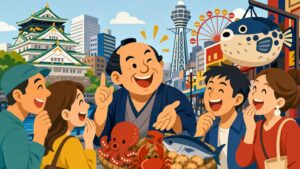
In most cities, social currency revolves around careers, connections, or cultural interests. In Osaka, it centers on your palate. The intense, detailed questioning I encountered about my lunch was not unusual; it is the typical way people communicate. Conversations about food are the city’s main form of connection—a vital channel of information exchange that far surpasses casual talk about the weather. When someone inquires about your meal, they are actively gathering insights. Was that new ramen shop worth the buzz? Did the local diner’s daily special live up to its reputation? Is there a hidden gem I should know about? Your response contributes to a collective, constantly evolving culinary knowledge base that flows through the city’s offices, bars, and neighborhoods.
Beyond Small Talk: Food as a Social Barometer
Having extensive food knowledge gives you a certain status in Osaka. Being known as the person who can recommend the best doteyaki (slow-cooked beef sinew) in Tennoji or the ramen shop with the richest tonkotsu broth near Umeda makes you a valued member of any social group. It shows you are connected to the city and a discerning individual who understands the essence of Osaka life. This sharply contrasts with Tokyo, where conversations often focus on one’s company, recent work, or the latest trendy exhibition in Omotesando. In Tokyo, social standing might be indicated by your suit brand or neighborhood; in Osaka, it’s signaled by your passion for defending your favorite okonomiyaki spot with a detailed, three-point argument. Success on a weekend isn’t defined by a productive shopping spree but by the thrilling discovery of a new favorite restaurant that delivers incredible flavor at an unbeatable price.
This dynamic fosters a uniquely egalitarian social environment. Whether you are a high-powered executive or a part-time student, if you can recommend a fantastic 600-yen teishoku lunch set, you’ve earned your place at the table. This constant sharing of information builds community. Offering a tip about a great eatery is a gesture of goodwill that strengthens social ties. It’s a way of saying, “We’re all in this together, and we all deserve to eat well.”
The Language of ‘Kuidaore’: Expressions You’ll Only Hear in Osaka
To truly appreciate the city’s food obsession, you need to pay attention to how people speak. The Japanese language is rich with terms for deliciousness, but the Osaka dialect elevates this to a higher level of precision and passion. The standard “oishii” (delicious) is often replaced by the more forceful and earthy “umai!” Yet, the real meaning lies in the details. A common expression of approval, especially for soups and broths, is “dashi ga kiiteru,” meaning “the dashi is really working” or “the dashi is effective.” This says a lot about the local palate, which is rooted in a deep respect for a perfectly balanced soup stock—the invisible soul of Kansai cuisine.
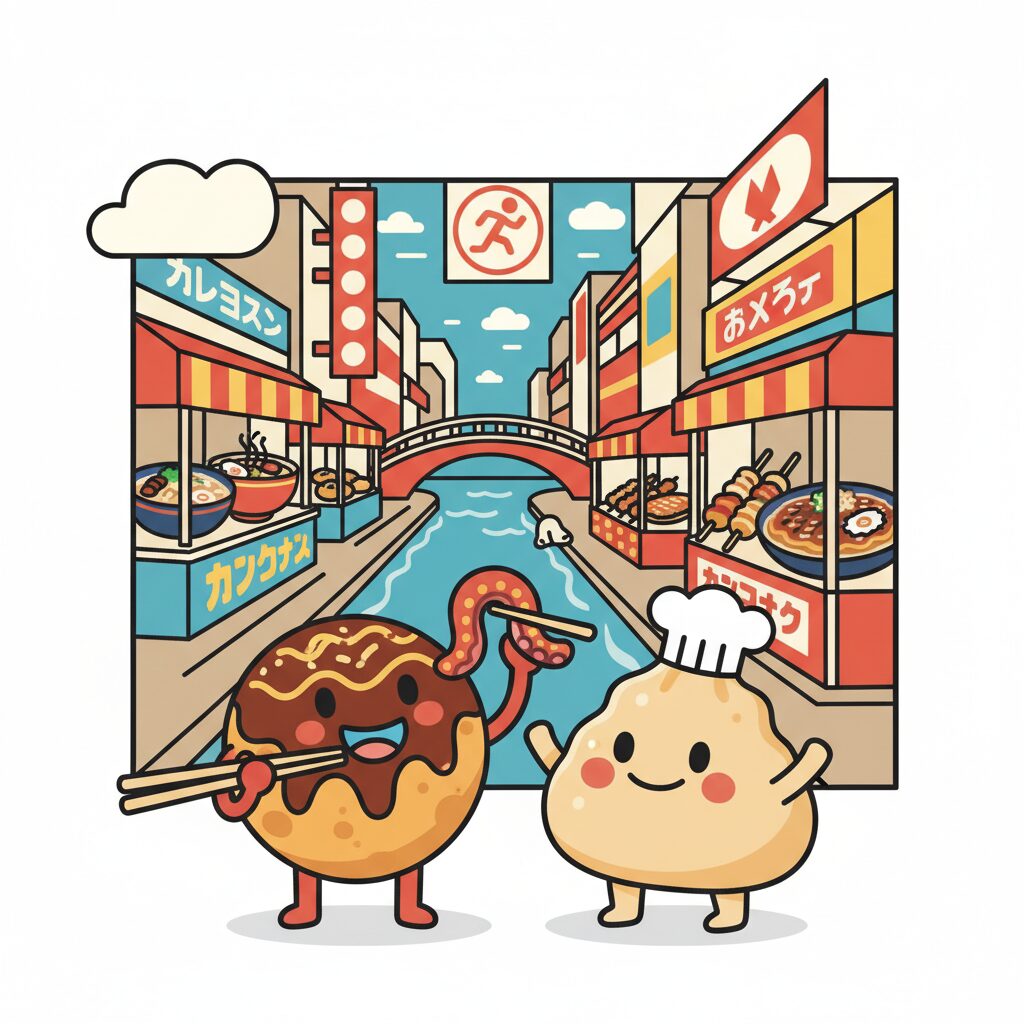
The city’s identity is deeply tied to konamon, a broad category of affordable and satisfying flour-based dishes. This includes the revered trio of takoyaki (octopus balls), okonomiyaki (savory pancake), and ikayaki (grilled squid pancake). To outsiders, these might seem like simple street foods. To Osakans, they are culinary masterpieces, each governed by fiercely debated schools of thought on batter texture, sauce application, and topping distribution. Debates about these dishes are far from casual; they carry the weight of philosophical discourse. Every resident has their favorite stall, trusted craftsman, and story to justify their choice. The language used to describe these foods is vivid and emotional, painting a sensory picture that goes well beyond basic menu descriptions. This shared language and collective passion for detail unite the city in a cohesive, flavor-centric culture.
Designing Your Day Around Your Stomach: Food and the Rhythm of Daily Life
In Osaka, daily schedules are frequently planned around meal times. Food is not merely a routine pause in the day’s activities; it is the central focus around which every other task is organized. This approach fundamentally changes the rhythm of life, turning ordinary routines into culinary adventures and shaping the very landscape of personal experience. The question is never simply “What are we doing today?” but rather “What, and where, are we eating today?”
The Midday Quest: Lunch Isn’t Just a Break, It’s a Mission
The ninety-minute lunch break in an Osaka office is a cherished ritual. The idea of a lonely desk lunch, a hurried sandwich eaten in front of a computer, is almost taboo here. Exactly at noon, entire departments mobilize, pouring into the streets with clear intent. The pre-lunch conversation is a crucial stage, a serious negotiation considering factors like location, cuisine, cost, and potential wait times. This is not a culture of casual indifference. Having no opinion is viewed as a lack of character. Everyone is expected to offer a suggestion, advocate for a choice, or at least express a particular craving.
The ultimate goal of the Osaka lunch is supreme kosupa, or cost performance. The city is renowned for its “one-coin lunch,” a full meal for a single 500-yen coin. The pursuit of the best one-coin lunch is a widespread competitive sport. It reflects the kuidaore philosophy: it’s not about being cheap, but about achieving maximum value. Scoring an incredible, multi-course meal for 500 yen is a triumph, a story to share, and a trophy to flaunt in conversation. People will walk fifteen minutes in the rain, passing dozens of other perfectly decent restaurants, to reach the one spot famous for generous portions and high-quality ingredients at an unbeatable price. Office workers act as scouts, reporting new openings, daily specials, and changes in quality. This daily quest transforms lunch from a simple break into an engaging, dynamic, and rewarding part of the workday.
Weekend Itineraries and Neighborhood Identity
For locals, weekend plans and travel are almost always driven by food. A trip to a nearby city or another area of Osaka is seldom defined by its landmarks but by its iconic dishes. People don’t just “go to Kobe.” They go to Kobe to eat world-class beef, visit a legendary Chinatown for pork buns, or explore the bakeries in the Kitano district. The destination is the restaurant, and the journey is a pilgrimage. Similarly, a weekend outing might be centered entirely around visiting a specific fish market for the freshest sushi breakfast or traveling to a distant suburb because a TV show featured its unique udon noodles.
This food-focused understanding of the world extends to the city’s neighborhoods, each boasting a distinctive culinary identity that shapes its character. Tsuruhashi reigns as the kingdom of yakiniku (grilled meat), its streets filled with the rich aroma of numerous Korean barbecue eateries. The Tenma district is a lively, bustling maze of stand-up bars and izakayas, offering an endless array of small plates and drinks. Shinsekai is the historic home of kushikatsu, deep-fried skewers with their own strict etiquette (absolutely no double-dipping in the communal sauce!). Choosing where to live in Osaka can be as much about food as practicality. Living in a particular neighborhood means pledging loyalty to its culinary scene, becoming a regular at its local favorites, and absorbing its unique gastronomic culture. Your address doesn’t just indicate where you sleep; in Osaka, it reveals what you eat, and that matters far more.
Socializing on a Full Stomach: How Friendships are Forged Over Food
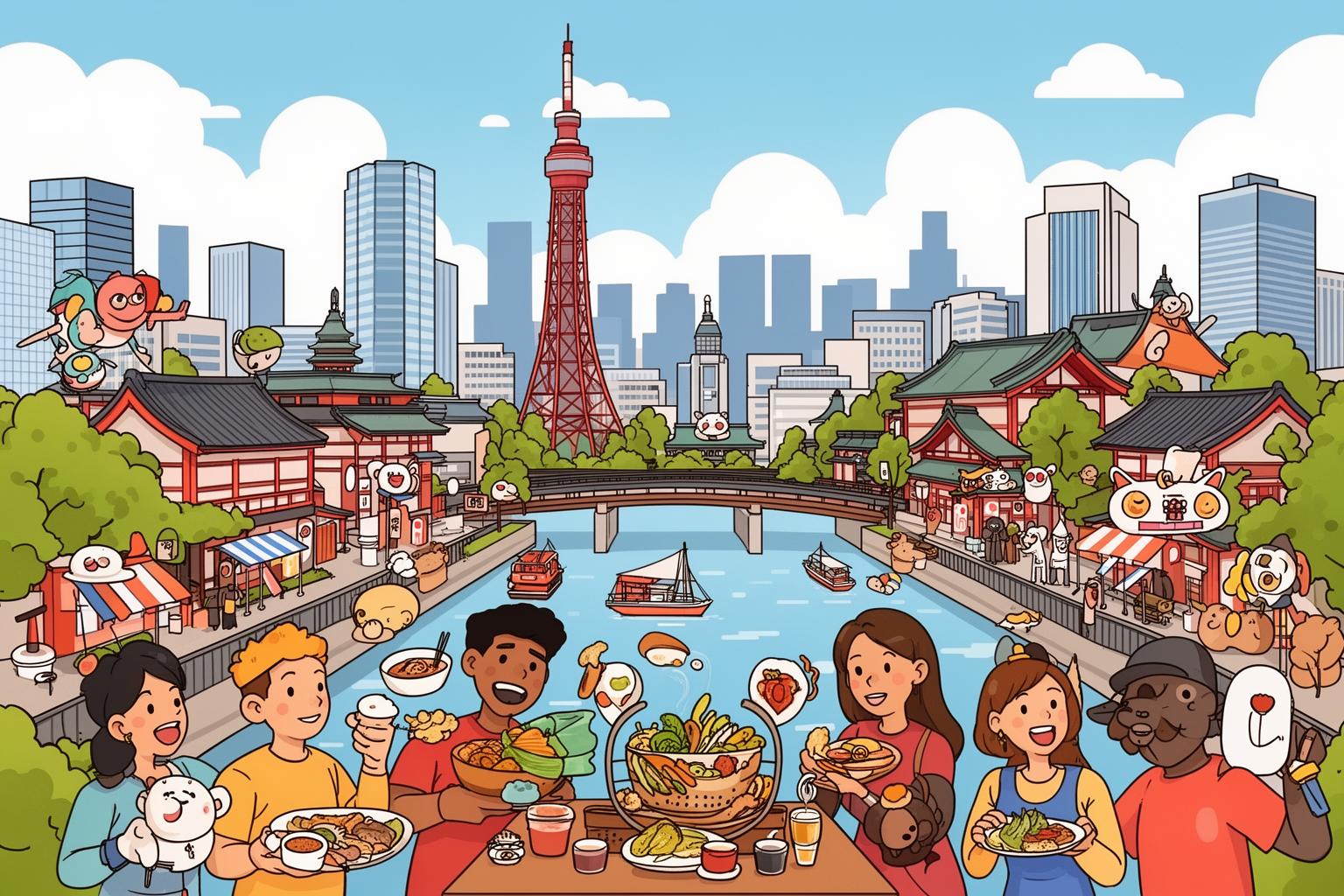
If food is Osaka’s language, then sharing a meal is its most profound form of communication. Here, social bonds are not only maintained despite eating; they are strengthened because of it. Eating together serves as the primary means through which friendships, business relationships, and romances develop. It provides the setting, the topic, and the shared experience essential for connections to thrive. The city itself is designed to support this, with an incredible concentration of eateries meant for communal, informal, and affordable gatherings.
‘Tachinomi’ and the Art of Casual Connection
The culture of tachinomi, or standing bars, perhaps best embodies Osaka’s social spirit. These modest, no-frills spots have patrons standing side by side at a counter, enjoying inexpensive drinks alongside surprisingly high-quality food. The layout naturally encourages social interaction—there are no private tables or walls to create separation. You find yourself inevitably close to strangers. What might feel uncomfortable elsewhere is instead freeing in Osaka.
The shared counter transforms into a communal table. It’s very common for conversations to ignite between complete strangers. Someone might inquire about what you’re eating, you might recommend a dish you’ve just enjoyed, and soon enough you’re swapping stories with a local salaryman or a fellow traveler. The food and drink serve as perfect icebreakers. This is where the stereotype of the “friendly Osakan” becomes real. The warmth isn’t random; it’s sparked by the shared, informal atmosphere of a tachinomi. In this setting, typical Japanese reserve fades away, eased by beer and united by mutual appreciation for a well-crafted plate of food. Many enduring friendships and business ties have started over a shared plate of grilled giblets in a bustling Tenma standing bar.
The Home Party Hierarchy: What You Bring Defines You
The kuidaore spirit also extends into private home parties. Events like takopa (takoyaki party) or nabepa (hot pot party) are staples on the social calendar. These gatherings come with their own unspoken etiquettes focused on the quality of each guest’s contribution. Showing up with a generic bag of chips from the nearest convenience store would be a major social faux pas. It signals lack of effort, poor taste, and a failure to grasp the occasion.
Guests are expected to bring something that showcases their culinary knowledge. This might be seasonal fruit purchased from a renowned department store basement, a cake from a patisserie famous enough to have a queue outside, or a bottle of craft sake from a specialty brewer. What you bring reflects your social value, conveying, “I am informed. I have good taste. I care enough to contribute something special.” Hosts often ask where your contribution came from—not merely out of politeness, but to expand their own mental food map. In this way, even a casual gathering becomes a collaborative exhibition of taste and insight, reinforcing how central food is to asserting social standing and deepening community ties.
The Kuidaore Budget: Investing in Your Palate
To an outsider, the Osaka resident embodies a fascinating economic paradox. They are famously frugal, known for haggling relentlessly and hunting for bargains with an almost obsessive passion. The local greeting is often “Mokari makka?” (“Are you making a profit?”). Yet, these same people appear to spend a disproportionately large portion of their income on food. This isn’t a contradiction; it epitomizes the kuidaore budget. It’s a financial philosophy that shifts resources away from material possessions and toward fleeting, experiential pleasures. In Osaka, you don’t own your status; you consume it.
Prioritizing Pennies: Where the Money Goes (and Where it Doesn’t)
Walking through Osaka’s residential areas reveals different priorities compared to Tokyo. There’s less focus on owning the latest luxury car, living in a brand-new architect-designed apartment, or dressing head-to-toe in designer fashion. People are practical. An older, slightly smaller apartment in a convenient location is perfectly acceptable if the money saved can be redirected into the food budget. A functional, second-hand bicycle is a wiser choice than a flashy car with expensive parking fees. The money saved on rent, transportation, and clothing isn’t hoarded; it is happily reinvested in dining out, discovering new restaurants, and purchasing high-quality ingredients.
A typical budget for a young Osaka resident might allocate considerably less to fashion and more to their “social food” category than their Tokyo counterpart. The joy from finding an amazing new izakaya with friends far surpasses the fleeting thrill of a new handbag. This is a philosophy of life that values sensory experiences over status symbols. The common attitude is, “Why spend 50,000 yen on a coat when that could fund a month’s worth of incredible lunches and several unforgettable dinners?” This practicality is often misinterpreted as stinginess or cheapness (kechi). But it’s not about being cheap; it’s about being smart. Osakans hate wasting money, and to them, spending on a mediocre or overpriced experience is the greatest waste of all. A delicious, memorable meal, no matter the price, is never a waste. It is a wise investment in one’s happiness and well-being.
The ‘Cost-Performance’ Obsession: The Science of a Good Deal
At the heart of the kuidaore budget lies the concept of kosupa (cost performance). This is the standard by which all food experiences are measured. It is a carefully balanced ratio of quality, quantity, and experience relative to price. It’s not just about finding the cheapest food, but the most value. A 15,000-yen sushi dinner can have excellent kosupa if the quality of the fish, the chef’s skill, and the ambiance feel like they should cost 30,000 yen. Conversely, an 800-yen bowl of ramen can have poor kosupa if the broth is bland and the noodles are soggy.
Osakans are experts in this calculation. They possess an innate ability to gauge a meal’s value with remarkable precision. They’ll travel across the city on the subway to save 100 yen on a lunch set that’s slightly better than the one nearby. They share news about a new bakery’s half-price sale after 7 p.m. with the urgency of stock traders spreading hot tips. This relentless pursuit of high kosupa is not just about saving money; it’s a game, a challenge, and a source of great satisfaction. Outsmarting the system and landing a fantastic deal on a fantastic meal is a victory that tastes even sweeter. It’s the ultimate affirmation of the Osaka way of life: living richly, not by spending more, but by spending smarter.
Navigating the Culture: A Foreign Resident’s Guide to Fitting In
For any non-Japanese person residing in Osaka, grasping the kuidaore culture isn’t optional; it’s essential to truly understanding the city and its inhabitants. Merely watching this food obsession from afar will keep you on the outskirts. To genuinely belong and feel part of the community, active participation is necessary. Embracing the local passion for food is the quickest and most effective way to forge authentic connections and feel at home.
How to Participate, Not Just Observe
Fitting in begins with changing your mindset. Start treating food with the same seriousness and curiosity as a local. This involves forming opinions. When a colleague asks for a restaurant recommendation, have one ready. Build your own mental map of the city through your culinary adventures. Keep track of your favorite ramen spots, the best takoyaki stand in your area, or the café with the most satisfying morning set.
The key step is to engage in the conversation. When someone asks about your lunch, share the details they’re eager to hear. Describe the texture of the noodles, the richness of the sauce, or the crispiness of the gyoza. Then, turn the question back to them. Ask for their recommendations and show you appreciate their expertise. When a colleague suggests a place, make sure to try it and, importantly, follow up with your impressions. This simple follow-through closes the social loop. It demonstrates that you listened, trusted their judgment, and are now part of the city-wide exchange of culinary knowledge. This is how relationships grow, meal by meal. Showing that you “get it” — that you recognize the central role of food — is more valuable than perfect Japanese grammar or deep historical knowledge.
What to Avoid: Common Food Faux Pas
Just as there are ways to connect, there are also ways to unintentionally create distance. The biggest error is indifference. Responding to “What do you want to eat?” with “Anything is fine” or “I don’t care” kills the conversation. It can be read as a lack of interest, not just in the food, but in the company. It’s better to have a specific, even quirky, craving than no opinion at all.
Respect local pride. Complimenting a famous Tokyo-based restaurant chain while in Osaka may receive a polite but chilly response. The rivalry between these two cities is real, most notably in the culinary scene. Always show deference to local institutions. Likewise, take time to learn the small but meaningful rules of local food etiquette. Understanding the sacred rule against double-dipping your skewer in the communal sauce for kushikatsu is essential. Knowing you should sip the broth before touching the noodles in a bowl of ramen demonstrates respect for the chef’s craft. These subtle gestures signal that you’re not just a tourist passing through, but a resident who honors local culture.
Ultimately, living the kuidaore lifestyle is about more than enjoying delicious food. It’s about embracing a philosophy that finds great joy in the everyday, the accessible, and the communal. It’s a mindset recognizing that a simple meal shared with others and savored with passion can be the most meaningful experience of the day. To live and thrive in Osaka, you must learn to think with your stomach and speak from the heart about what you’ve eaten. Once you do, you’ll discover that you haven’t just found a great place to eat; you’ve found a place to belong.