Hola, fellow adventurers! It’s Sofia. When I first landed in Osaka, my mind was buzzing with visions of neon-drenched streets, sizzling takoyaki stands, and a whirlwind of vibrant energy. I found a perfect, sun-drenched apartment near Shinsaibashi, ready to embrace the city’s famous chaos. I figured, I’m a cheerful, respectful person—how hard could it be? I quickly learned that the real rhythm of Osaka isn’t just found in its bustling markets or lively nightlife; it’s in the quiet hum of a shared apartment building, governed by a set of unspoken rules that can make or break your life here. It’s a subtle dance of community living, and nobody hands you the instruction manual when you get the keys. This isn’t Tokyo, where silent, anonymous living in massive towers can be the norm. Osaka is a city of neighborhoods, and your apartment building is your micro-neighborhood. Getting it right means a peaceful life; getting it wrong means becoming ‘that foreigner’ who just doesn’t get it. So, let’s pull back the curtain on the secret etiquette of Osaka apartment life, the stuff you need to know to truly live like a local and not just reside here.
For further insight into how Osaka’s vibrant shotengai scene shapes neighborhood etiquette, consider exploring shotengai culture.
The Symphony of Silence: Decoding Osaka’s Noise Culture

One of the initial culture shocks for many expats in Japan is the concept of sound. In Spain, life is loud. We gesture vividly, our voices carry, and the noise from neighbors blends into the typical home ambiance. In Osaka, however, while the streets buzz with boisterous laughter and friendly shouting, that liveliness halts at the apartment lobby door. Inside, a different set of rules applies, and understanding them is essential.
The Myth of Thin Walls
It’s common to hear that Japanese apartments have “paper-thin walls.” While this may be true for older wooden buildings called `apaato`, modern concrete structures known as `manshon` are usually well-constructed. The issue is often less architectural and more cultural. The expectation for quietness is on a whole different level. What you might consider normal household noise could be viewed as a major disturbance here. This isn’t about being anti-social; it reflects a deep-rooted cultural value of not imposing on others, known as `meiwaku wo kakenai`. Your right to make noise ends where your neighbor’s peace begins.
Everyday Sounds, Amplified
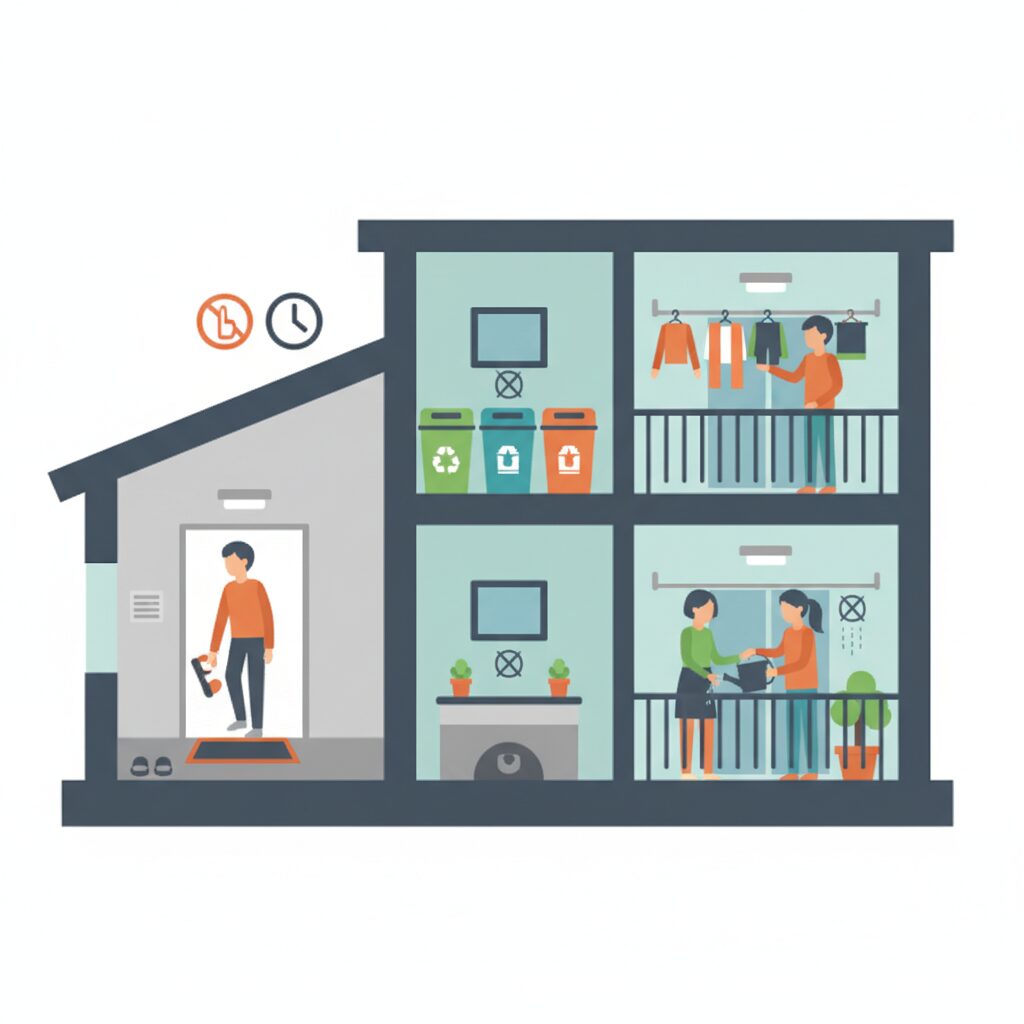
So, what counts as “noise”? The list is longer than you might expect. Running your washing machine or vacuum late at night (generally after 9 or 10 PM) is a major no-no. The low-frequency hum and vibrations travel surprisingly well. Loud music or TV is an obvious issue, but even things you might normally ignore back home can cause trouble. Heavy footsteps, especially children running around, can sound like a herd of elephants to those below. Slamming doors, dragging furniture across the floor, and even loud, lengthy phone calls on your balcony can lead to complaints. The golden rule is to imagine your apartment as a library. You can live in it, but you should always be mindful of the ‘patrons’ living above, below, and beside you.
The Osaka Paradox: Louder in Public, Quieter at Home
This is where Osaka differs from Tokyo. In Tokyo, a quiet reserve pervades nearly every aspect of life. People tend to be more reserved on trains and in public spaces. Osakans, in contrast, are known for being more expressive, open, and, well, louder. They’ll chat with strangers, laugh heartily, and create a lively, warm atmosphere in restaurants and bars. This can lead foreigners to mistakenly assume that this relaxed attitude carries over to home life. It doesn’t. The expectation for domestic tranquility is just as strong, if not stronger, due to the close-knit nature of the communities. However, there is a subtle Osakan difference. There seems to be slightly more tolerance for everyday sounds—a baby crying, sudden laughter during a weekend dinner party, or the occasional dropped pot. The key lies in pattern and intent. An occasional accidental noise is understood as part of life, but a consistently loud TV every night at 11 PM is regarded as a deliberate act of disrespect.
The Garbage Gauntlet: A Ritual of Sorting and Timing
If there’s one aspect of daily life that truly distinguishes the experienced resident from the newcomer, it’s garbage. In many countries, you simply toss your trash into a bag, place it in a large bin, and forget about it. But in Osaka, garbage disposal is a complex, non-negotiable ritual embodying the community’s shared commitment to cleanliness and order. Learning to navigate it is a rite of passage.
More Than Just Burnable and Recyclable
First, forget all you know about simple sorting. You’ll receive a detailed, color-coded calendar from your ward office that resembles a complex puzzle. This becomes your bible. Specific days are designated for burnable trash (`moeru gomi`), plastics (`pura`), cans and bottles (`kan/bin`), PET bottles, paper, and non-burnable items (`moenai gomi`). Putting out the wrong type of trash on the wrong day is a serious violation of the unwritten rules. Your perfectly sorted bag of plastics will be left behind, marked with a conspicuous bright-yellow warning sticker (`ihan shiiru`) for all your neighbors to see. It’s a small public shaming that proves surprisingly effective.
The Sacred Hours of Disposal
Timing is just as important as sorting. Trash must be placed out on the morning of collection, typically between sunrise and around 8 AM. Leaving it out the night before is one of the biggest errors you can make. It’s seen as unsightly, can attract pests like crows notorious for ripping bags open, and can cause unpleasant odors. It signals that you don’t respect the shared space. You’ll observe your Japanese neighbors arriving at the designated garbage spot like clockwork early in the morning, dropping off their bags, and promptly leaving. Follow their example.
The `Gomi-Tōban`: A Shared Burden
In some smaller buildings or traditional neighborhoods, you may encounter the `gomi-tōban` system, or garbage duty. This is a rotating responsibility among residents to oversee the collection point. Tasks may include unlocking the caged area, making sure protective nets are properly placed over the bags to deter crows, and tidying any messes. If your building has this system, participation is mandatory. It’s a fundamental part of being a community member. While Osakans might good-naturedly complain about the rules’ complexity or whose turn it is for `tōban`, everyone takes part. It reinforces the idea that neighborhood cleanliness is not someone else’s job—it belongs to all.
The Art of the Encounter: Navigating Neighborhood Greetings
In the West, especially in large cities, it’s common to live next to someone for years without ever knowing their name. You might share an elevator in complete silence, deliberately avoiding eye contact. In Osaka, however, this behavior would be considered cold and even somewhat suspicious. Building a sense of community, even through small gestures, is essential for a harmonious life.
The Elevator Nod and the Hallway Hello
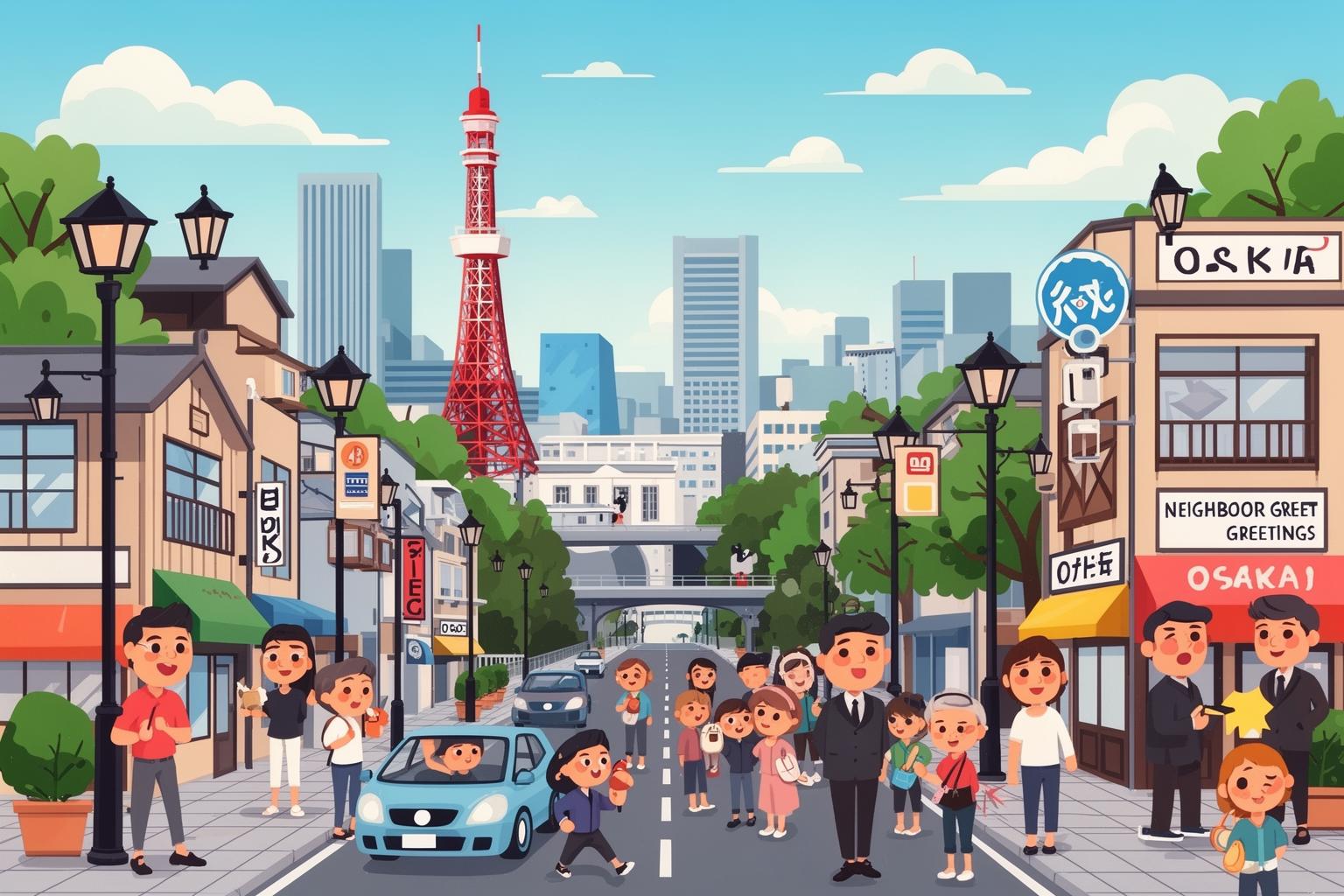
The most fundamental rule is to greet your neighbors. Whether you pass someone in the hallway, step into the elevator, or see a familiar face from your building on the street, a simple greeting is expected. It doesn’t have to be a lengthy conversation. A friendly `Ohayō gozaimasu` (Good morning), `Konnichiwa` (Hello), or even just a nod and a smile will do. This small gesture serves an important purpose: it creates a web of familiarity and trust. It shows that your neighbors know who you are, that you belong there, and it helps make the environment safer for everyone. It conveys, “I see you, you see me, we’re in this together.”
The `Aisatsu` Ritual: Your Diplomatic Mission
This leads us to the most significant greeting of all: the moving-in introduction, or `hikkoshi no aisatsu`. Within the first few days of moving into your new apartment, it’s customary to visit your immediate neighbors—the units to your left, right, above, and below. This is more than just a friendly suggestion; in many buildings, it’s a firmly established expectation. You knock on their door, introduce yourself, and offer a small, inexpensive gift (`temiyage`). The gift is symbolic—it’s not about its monetary value but the gesture itself. Popular choices include a neatly wrapped box of soap, a high-quality hand towel, or a small package of cookies or coffee. You can find pre-packaged `aisatsu` gifts at any department store or supermarket for around 500 to 1,000 yen. Your introduction can be simple: “Hajimemashite, tonari ni hikkoshite kimashita [Your Name] desu. Yoroshiku onegaishimasu.” (Nice to meet you, I’m [Your Name] and I’ve just moved in next door. Please be kind to me.) This simple gesture serves as a preemptive apology for any noise from unpacking and establishes you as a considerate community member from day one. It’s your first and most important diplomatic act.
Unseen Boundaries: Rules for Common Spaces
When you rent an apartment in Osaka, you’re not only leasing the space within your four walls but also taking on the responsibility of caring for the shared common areas. How you treat these spaces reflects your respect for your neighbors and the community.
The Balcony is Not Your Backyard
While your balcony might feel like a private outdoor retreat, it is officially part of the building’s exterior and subject to strict rules, both explicit and implied. Using it for a charcoal barbecue is strictly prohibited due to fire hazards and smoke concerns. Hanging laundry is allowed, but you should use a discreet rack to avoid blocking your neighbor’s view or having items blown away by strong winds. When watering plants, be careful to prevent water and soil from dripping onto the balcony below. Shaking out dusty rugs or bedding over the railing is also considered inappropriate. In short, your balcony should remain tidy and not disturb the peace, safety, or view of others.
The Hallway is Not Your Storage Unit
The hallway outside your door serves as a shared passageway for the entire floor and must be kept clear. It is not appropriate to store bicycles, strollers, umbrellas, or boxes there. Besides creating clutter and inconveniencing neighbors, this violates fire safety regulations. Emergency responders need unobstructed access in case of an emergency. Keeping the area outside your door clean demonstrates respect and acknowledges that this shared space belongs to everyone equally.
The Language of Displeasure: When Rules are Bent
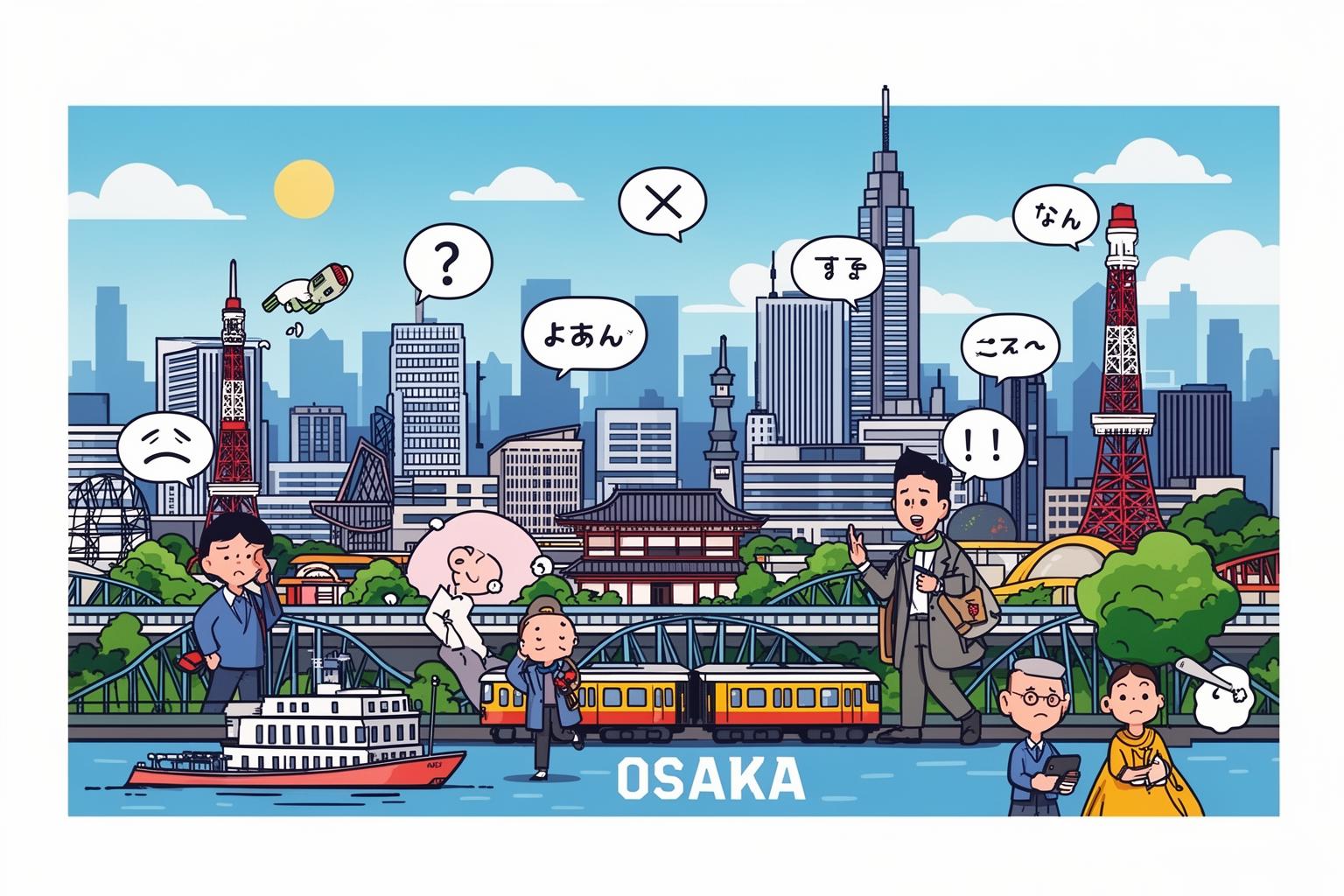
So what happens when someone breaks these rules? You might expect a straightforward, confrontational “Can you keep it down?” from your famously direct Osaka neighbors. However, dealing with conflict is actually much more subtle and indirect. The main aim is to resolve the problem while maintaining surface-level harmony (`wa`).
The Bulletin Board of Gentle Reprimand
Direct confrontation is uncommon and usually a last resort. The first step is almost always the building’s management company (`kanri gaisha`). If a neighbor is disturbed by your noise or your improperly sorted garbage, they are more likely to contact the management company rather than approach you directly. The management company will then respond in a characteristically indirect Japanese manner: by posting a notice on the communal bulletin board in the lobby. This notice will be a polite, general reminder addressed to all residents. “Dear Residents, Please be mindful of noise levels late in the evening.” Or, “A friendly reminder to please sort your plastics and burnable trash correctly.” The notice is meant for you, and you know it. Your neighbors understand it’s directed at you. But this approach allows you to save face and adjust your behavior without a direct, awkward confrontation. It’s a passive-aggressive art form, and it works remarkably well.
The Osaka Jab: A Hint of Directness
If the indirect method fails, you might encounter the distinct Osaka style of conflict resolution. Whereas a Tokyoite might endure quietly, an Osakan neighbor might eventually offer a sharp, pointed comment cloaked in humor or casual remark. If your music is too loud, they might catch you in the hallway and say with a sly grin, “Wow, you have great taste in music! I can hear every song perfectly from my living room!” The tone is light, but the message is unmistakably clear. It’s less aggressive than a direct command but much more pointed than a bulletin board notice. It serves as their final subtle hint before possibly taking stronger measures.
Embracing the Community: Life Beyond Your Doorstep
Living in an Osaka apartment building is a practice in mindfulness. It demands that you constantly consider how your actions impact those around you. It may seem like a daunting array of rules and restrictions, especially if you come from a more individualistic culture. However, these are not arbitrary regulations meant to complicate your life. They are the threads that create the fabric of a safe, clean, and peaceful community. By learning this unspoken language of consideration, you are doing more than just avoiding trouble. You are earning the respect of your neighbors and becoming a genuine part of the local community. You are shifting from being a temporary visitor to a resident who understands the subtle rhythm of life in Osaka. And that, I assure you, is where the true magic of this city lies.