
You see them everywhere, from the neon-soaked alleys of Namba to the gritty, train-tracked underbellies of Kyobashi. They’re called tachinomi, standing bars, and they are the pulsating heart of Osaka’s social life. Through the steam-fogged glass, you see a jumble of bodies, a cacophony of laughter, the clinking of glasses. It looks like a private party you weren’t invited to. Everyone seems to know each other, packed in tight, a wall of chatter and cigarette smoke between you and them. The thought of pushing through that curtain of camaraderie can feel daunting, almost impossible. It’s a scene that screams “locals only.” You might think, “How could I ever fit in there?” That question, that hesitation, is exactly where your journey into the real Osaka begins. It’s not a club with a secret password. It’s a puzzle, and the pieces are cheap beer, grilled skewers, and a willingness to step into the beautiful, chaotic flow of the city. Forget the polite distance of Tokyo or the reserved nature you might associate with Japan. This is Osaka, and the rules are different. Here, the closeness isn’t a threat; it’s an invitation. This is where you stop being a tourist observing the city and start actually living in it.
After sharing laughs over clinking glasses at a tachinomi, you might also want to explore Osaka soul food options that offer creative, gluten-free, and plant-based twists on traditional okonomiyaki and takoyaki.
The Tachinomi Ecosystem: More Than Just a Standing Bar
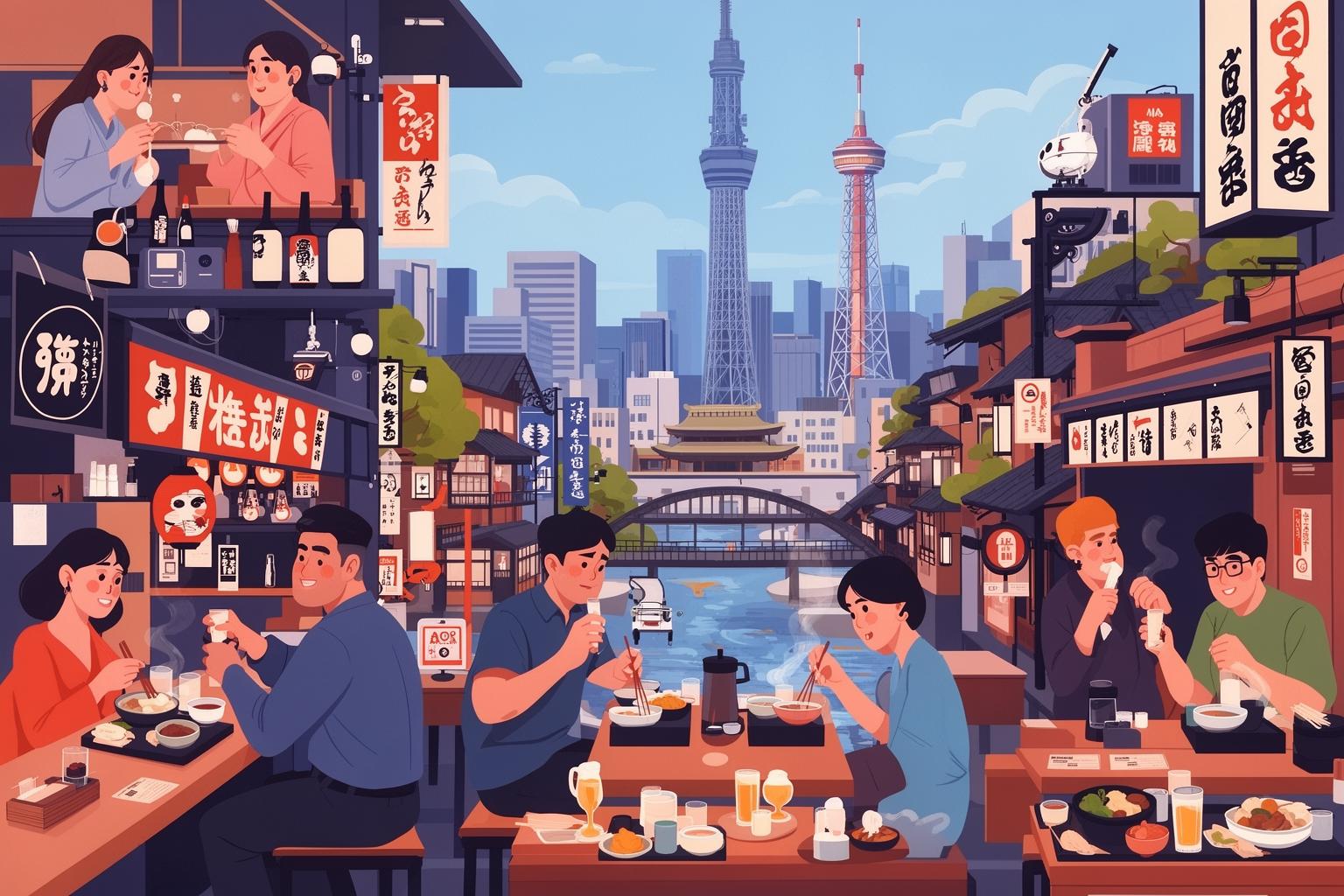
Let’s break it down. At its core, a tachinomi is incredibly straightforward. No chairs, just a counter, and a small kitchen producing quick, delicious, and surprisingly affordable food. You stand, drink, eat, pay, and leave. Efficiency is at the heart of its identity. This isn’t a place for a lengthy dinner; it’s a pit stop for the soul, a social recharge between the office grind and the quiet of home. But to see it merely as a bar misses the entire point. A tachinomi is a living, breathing microcosm of Osaka society. On any given night, you’ll find a seasoned old-timer in his work jacket sipping shochu next to a group of young, sharp-suited office workers celebrating a small victory. A couple on a budget date might be squeezed in beside a solo university student grabbing a quick bite. There’s no velvet rope, no dress code, no pretense. Your status outside those doors dissolves the moment you step inside. Here, you’re simply another person seeking a good drink, a tasty snack, and a moment of human connection.
The air is thick with the scent of grilled fish, simmering dote-yaki, and aged beer. The soundscape is a constant hum of conversation, punctuated by staff calling out orders and the hiss of the deep fryer. It’s sensory overload in the best way. The menu is usually plastered on the walls, a cryptic mosaic of kanji that can seem impenetrable at first. But don’t worry about that. The true menu is what the person next to you is eating. The tachinomi is crafted for low-commitment interaction. It’s transient by nature. People flow in and out like the tide. You might stand beside someone for fifteen minutes, share a laugh, and never see them again. And that’s perfectly fine. It’s not about forging lifelong friendships in one night. It’s about engaging with the city’s public life, feeling the community’s pulse—one beer and one conversation at a time.
Cracking the Code: The Unspoken Rules of Engagement
So, how do you get started? It seems like there are invisible rules, and you’d be right. But they’re not about exclusion; they’re about flow and mutual understanding. Once you catch the rhythm, the whole experience opens up. It’s less about following a script and more about learning the dance steps— a dance of closeness, observation, and quick-witted banter.
Physical Space is Social Space
The first thing you’ll notice is the lack of personal space. In a Tokyo subway, people twist their bodies to avoid contact. In an Osaka tachinomi, you’re shoulder-to-shoulder, elbow-to-elbow. This isn’t rude; it forms the basis of the entire social structure. The physical closeness erases social distance. You can’t ignore the person next to you because you’re literally sharing the same square foot of floor. Finding a spot is your first challenge. Don’t hover awkwardly. Find a gap, make eye contact with someone nearby, give a slight nod and a quiet “sumimasen” (excuse me), and slide in. You’re not interrupting; you’re joining the flow. Once inside, be mindful of your space. Keep your bag at your feet. Don’t spread out. You are part of a delicate, crowded ecosystem. The magic of the tachinomi is that this shared inconvenience creates a sense of unity. You’re all in this crowded, noisy, wonderful boat together.
The Opening Line is All Around You
Forget clever pickup lines or deep philosophical questions. The key to starting a conversation in a tachinomi is to be direct, simple, and observant. The environment provides all the material you need. Your neighbor gets a plate of something that looks amazing. Lean over slightly and ask, “Sore, oishii desu ka?” (Is that delicious?). This isn’t a weird or intrusive question. It’s a standard, friendly opener. It compliments their taste and invites them to share their knowledge. They will almost always respond with a big smile, tell you what it is, and probably encourage you to order it. The television in the corner, almost always showing a Hanshin Tigers baseball game, is another treasure trove. A cheer, a groan, or a simple “Ah,惜しいな” (Ah, so close!) after a missed play can instantly bond you with everyone watching. Your best ally in a tachinomi is your curiosity. Ask the staff for their `osusume` (recommendation). This signals to those around you that you’re open, engaged, and ready to be part of the scene. The barrier to entry is very low. All it takes is one simple question.
The Currency of Conversation: Tsukkomi and Banter
This is where Osaka sets itself apart from the rest of Japan. The primary mode of communication isn’t polite, deferential exchange. It’s a fast-paced game of conversational catch, built on the concepts of `boke` (the silly, funny comment) and `tsukkomi` (the quick, sharp retort). In a tachinomi, you’ll see this constantly. It’s the rhythm of the city. Someone might loudly declare the Tigers are the best team in the world. A perfect stranger next to them will immediately reply, “Ani-yan, kinou no shiai mitenai no ka?” (Dude, did you not watch yesterday’s game?). This isn’t an argument. It’s verbal sparring that shows affection and engagement. As a foreigner, you’re not expected to master `tsukkomi`, but you need to understand it. If you accidentally stumble or spill a drop of your drink, and an old man laughs and says, “Ni-chan, you’re already drunk!”, he’s not criticizing you. He’s inviting you to join the game. The right response is a self-deprecating laugh and a playful retort like, “It’s this beer’s fault!” Getting offended is the only way to lose. Embracing the banter, even by simply laughing along, is how you win. This is the heart of Osaka’s famous friendliness. It’s an active, participatory friendliness, not a passive, polite one. It demands engagement.
Osaka vs. Tokyo: A Tale of Two Bar Cultures
The contrast between a night out in Osaka and one in Tokyo perfectly exemplifies the cultural divide between the two cities. To truly appreciate what makes the tachinomi unique, you first need to understand what it isn’t. It’s not a Tokyo izakaya. While both serve as places to eat and drink, their social purposes are almost entirely opposite.
The Tokyo Izakaya: A Private Experience
In Tokyo, you visit an izakaya with a predetermined group—work colleagues, old classmates, or a planned date. You’re seated at a private table or in a semi-private booth, and your world narrows to that limited space. The main social rule is to avoid disturbing other tables. You keep your voices low, avoid eye contact with strangers, and certainly don’t start a conversation with the group next to you. The evening’s objective is to strengthen the bonds you already share with your companions. It’s a closed environment. Polite and orderly, it can feel like an impenetrable fortress of private social bubbles to outsiders seeking new connections. It’s a setting for reinforcing existing relationships, not for forging new ones.
The Osaka Tachinomi: A Public Gathering
The Osaka tachinomi turns this dynamic on its head. Going alone isn’t just acceptable; it’s often the best way to enjoy the experience. There are no tables to separate you, no booths to hide behind. The counter acts as a great equalizer. The main social rule isn’t “don’t disturb others”; it’s “engage with others.” The goal is to create fleeting, spontaneous interactions with whoever happens to be standing beside you for a brief twenty-minute moment. It’s a space built for serendipity. Instead of reinforcing old bonds, you’re weaving new, temporary connections into the city’s social fabric. This fundamental difference in social structure is why people say Osaka feels friendlier than Tokyo. It’s not that people there are genetically more outgoing. Rather, their social spaces are intentionally designed to encourage—and even require—interaction. Daily life in Osaka carries this same energy, where the line between public and private is more fluid, and the tachinomi stands as the ultimate expression of that mindset.
A Practical Field Guide for Your First Tachinomi Adventure
Alright, theory is great, but now you’re ready to jump in. It’s time for a practical, step-by-step guide to your first solo mission. Think of it as a gentle nudge out of the nest. You’ll be fine, I promise. The water’s warm and full of cheap beer.
Choosing Your Spot
Not all tachinomi are alike. For your first time, pick one that’s already lively. An empty, quiet bar can feel more awkward than a busy one. Look for the glow. Areas like Tenma, with its maze-like covered market street, or Kyobashi, beneath the elevated train tracks, are perfect hunting grounds. Umeda’s Whity and Hankyu Sanbangai underground malls also conceal some real gems. The best spots usually have no doors, just vinyl flaps, letting the energy spill onto the sidewalk. Look for handwritten menus, timeworn wooden counters, and a diverse crowd. Stay away from places that seem too polished or clearly geared toward tourists. You want a spot that feels lived-in, with history etched into its sticky counters.
Your First Order
This is where nerves often kick in. Don’t worry. Keep it simple. Once you’ve found your place at the counter, catch the staff’s eye. They’re busy, so be ready. The universal first order is, “Nama hitotsu!” (One draft beer!). It’s easy, quick, and gives you time to take in your surroundings. For food, start with classics. Spot the `dote-yaki` (rich miso-stewed beef sinew) bubbling in a big pot on the counter? Just point and say, “Kore, kudasai” (This, please). Another excellent choice is `kushikatsu` (deep-fried skewers). You’ll see a stainless steel container of dark dipping sauce nearby. The one and only rule here, the most sacred in all of Osaka, is NO DOUBLE DIPPING. Dip your skewer only once, when it’s fresh and clean. Break this rule, and you might get a playful scolding from the owner or a patron. It’s a rite of passage.
The Art of the Quick Exit
A tachinomi isn’t a spot to linger all night. Its charm is in its brevity. The concept of `senbero` (getting tipsy for 1000 yen) is key. Have one or two drinks, sample a couple of dishes, and move on. You can always `hashigo-zake`, or bar-hop, to another tachinomi nearby. This keeps the vibe fresh and lets more people enjoy the limited space. When it’s time to pay, many traditional places operate on a cash-on-delivery basis. You’ll have a small tray or bowl in front of you where you leave your money, and the staff takes payment as each item is served. In other spots, you pay at the end. Just observe what others do. When you’re ready to leave, catch the staff’s eye and say, “Okanjo, onegaishimasu” (The bill, please). After paying, a hearty “Gochisousama deshita!” (Thank you for the meal!) to the staff is essential. Give a small nod or wave to the folks you were chatting with, then slip back into the city night. No long goodbyes, no exchanging numbers. Just a simple, clean exit.
What It All Means: Understanding Osaka Through Its Bars
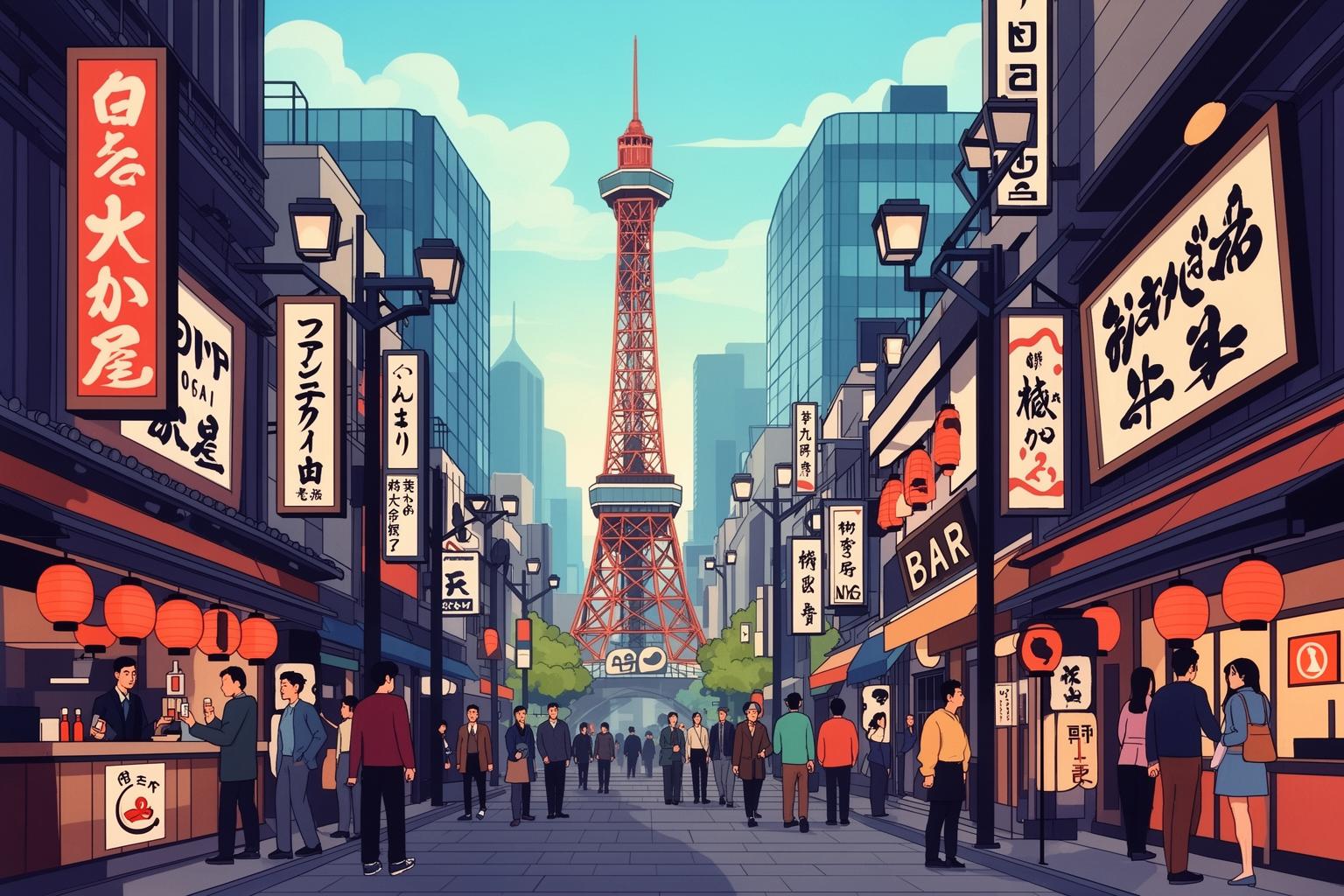
Ultimately, the tachinomi is more than just a spot for an inexpensive drink. It serves as a classroom for grasping Osaka culture. It’s a miniature reflection of the city itself—pragmatic, efficient, and straightforward. It prioritizes directness over formality and community over privacy. It shows you that talking with a stranger is not something to fear, but rather a small gift, a fleeting moment of shared humanity that makes urban life richer and less isolating. Living in Osaka means learning to cherish these brief, transient connections. It means understanding that friendliness isn’t about a permanent smile, but about the willingness to engage, joke, and share a little piece of your day with the person beside you. This is what sets daily life here apart from Tokyo. It’s not just a place to live; it’s a conversation you take part in. So next time you pass by one of those brightly lit, bustling doorways, don’t hesitate. Take a deep breath, slip into an open spot, order a beer, and listen. You’ll hear the true sound of Osaka. And before long, you’ll be part of the chorus.