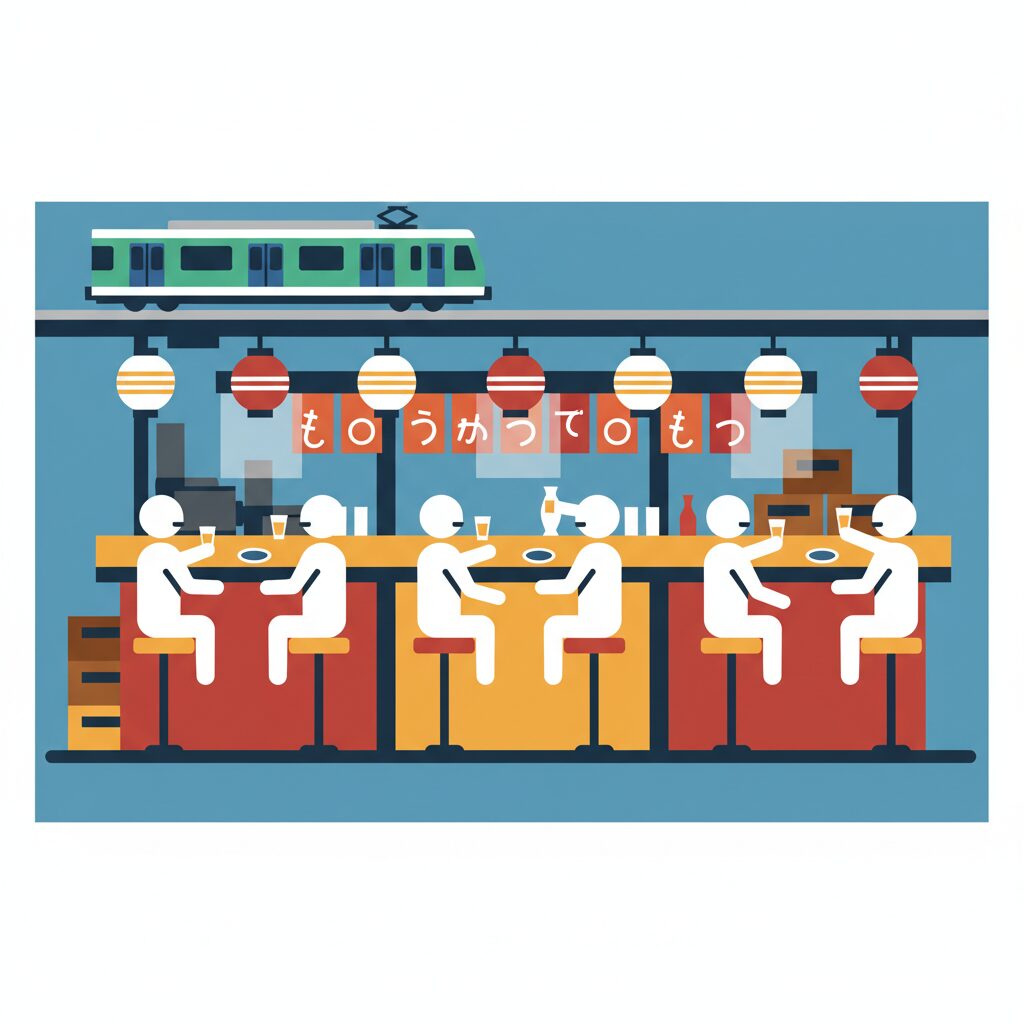
The workday’s final bell tolls, not with a chime, but with the clatter of keyboards going silent. In Tokyo, this might signal a coordinated march to a pre-booked izakaya, a formal affair of seating charts and pouring drinks for superiors. But here in Osaka, the energy shifts, becoming more fluid, more spontaneous. As you walk through the neon-lit canyons of Umeda or under the rumbling train tracks of Kyobashi, you’ll see them: small, brightly lit storefronts, their doors wide open to the street, steam fogging the windows. Inside, a crowd of people are packed shoulder-to-shoulder, not sitting, but standing. They’re laughing, gesturing with chopsticks, clinking glasses of beer and highballs. This, my friend, is the beating heart of Osaka’s after-work life. This is the world of tachinomi, the standing bar. For the uninitiated, it can look chaotic, maybe even a little intimidating. A blur of motion and noise that seems impenetrable. But what you’re really seeing isn’t just a bar; it’s Osaka’s social fabric woven in real-time. It’s a cultural institution disguised as a cheap place to drink. It’s where deals are informally struck, where friendships are forged over grilled skewers, and where the city’s fast-paced, pragmatic, and deeply human spirit is on full display. Forget the stiff formalities you might associate with Japanese work culture. The tachinomi is a world away from that, offering a raw, unfiltered glimpse into how Osakans truly connect. It’s a space where hierarchy melts away, replaced by the simple, democratic act of sharing a counter. So, let’s push past the hesitation, step through that curtain, and dive into the brilliant, buzzing world of the standing bar. Your real education in Osaka life starts here.
As you immerse yourself in Osaka’s vibrant after-work scene, exploring how engaging joke-filled banter fuels genuine connections can further illuminate the city’s dynamic social fabric.
The Soul of Tachinomi: More Than Just a Cheap Drink
To truly grasp tachinomi, you need to understand the Osakan mentality. This city, shaped by merchants, values pragmatism, economy, and efficiency as integral parts of its people’s nature. A tachinomi isn’t merely a trend; it embodies this mindset physically. It’s a streamlined mechanism for socializing, crafted to achieve maximum impact with minimal fuss. You don’t visit for plush seats or elaborate service but for the essence: a good drink, delicious food, and human connection, all served with lightning speed.
Efficiency and Economics: The Osakan Mindset on Display
The first thing that strikes you is the tempo. People move through a tachinomi like a current, staying roughly thirty to forty-five minutes. This is intentional. The absence of chairs is more than a space-saving measure; it promotes turnover. The unspoken agreement is to enjoy a few drinks and small dishes, then yield your spot to the next visitor. This isn’t impoliteness but a shared respect for efficiency that benefits everyone. The bar accommodates more customers, and you enjoy a quick, fulfilling break from the day without committing to a long stay.
This approach also influences the payment system, a clever aspect of Osakan culture. Many traditional tachinomi use a daikin hikikae system, or cash-on-delivery. You order a beer and place coins or a 1,000-yen bill on the counter or a small tray before you. Staff then serves your drink, takes the exact amount, or returns change from the tray, completing the transaction. No tabs, no waiting for a bill. It’s fast, transparent, and efficient. This method reflects local values—it’s based on trust and individual responsibility but also on a merchant’s practical mindset: pay as you go. This keeps the process simple and fluid, mirroring Osakans’ disdain for unnecessary complexity.
The Great Equalizer: Where Hierarchy Fades
Enter a formal corporate dinner in Tokyo, and you immediately notice silent hierarchies. There’s the kamiza, the honored seat for the highest-ranking guest, and the shimoza, the least desirable spot by the door for the junior members. The ritual of pouring drinks is a delicate choreography of respect and status. Now, discard all that. At a tachinomi, there’s no kamiza. Only the counter exists. The company president (shacho) might be standing right beside a fresh new hire (shinsotsu), both leaning on the same worn wooden bar, ordering the same 400-yen highball. Standing together in a small, crowded spot acts as a social equalizer. It removes titles and formalities. Conversations become more direct, honest, and truly human. You’re not talking to your boss; you’re talking to Tanaka-san, who also happens to be a devoted Hanshin Tigers fan. This setting creates a unique form of networking—not based on exchanging business cards but on sharing laughs over a plate of doteyaki (slow-cooked beef tendon). These moments foster genuine mentorship and candid advice, free from the burden of corporate hierarchy.
Tachinomi vs. Tokyo’s Nomikai: A Tale of Two Cities
The term nomikai (drinking party) is well-known across Japan, yet its practice reveals a significant cultural divide between Osaka and Tokyo. This contrast underscores Osaka’s preference for flexibility and authentic social interaction over strict, performative rituals. It’s a difference you can sense in the atmosphere, in the evening’s pace, and in the very reason for gathering.
Spontaneity over Structure
In many Tokyo companies, a nomikai is a scheduled event. An email is sent out, and attendance is often expected. The restaurant is reserved weeks in advance for a fixed two-hour period. It serves as an extension of the workday, a setting to strengthen team bonds through structured—and sometimes tense—socializing. Osaka, however, follows a different approach. The after-work drink is seldom formal. It starts with a casual question as people pack up: “Chotto ippai, dou?” (How about a quick drink?). There’s no pressure or obligation. Someone might break away from the group to visit their favorite tachinomi alone, knowing they’ll encounter a familiar face or strike up a new conversation. Small groups of two or three might spontaneously decide to stop by a bar for a single drink before catching their train. This spontaneity defines the Osakan social scene. It treats socializing not as a scheduled duty but as a natural, flowing part of everyday life. It’s about relaxing and connecting on one’s own terms, not fulfilling a corporate obligation.
The Art of the ‘Hashigo-zake’ (Bar Hopping)
Because a tachinomi visit tends to be brief, it’s often just the first stop on a longer night out. This is the culture of hashigo-zake, or ladder drinking—moving from one bar to another. A typical Osakan evening might involve a multi-stage tour through a neighborhood’s bars. This isn’t about getting excessively drunk; it’s about sampling the distinct character of various spots. The night might begin in a gritty, Showa-era tachinomi under the train tracks in Kyobashi, sharing cheap beers with seasoned salarymen. Stop two could be a stylish, modern standing bar in nearby Temma that specializes in natural wine and cheese. The final stop? Perhaps a standing sushi bar for a few pieces of fresh tuna to round off the evening. This ritual of bar hopping highlights the incredible density and diversity of Osaka’s culinary scene. But more importantly, it reflects a restless, curious spirit. Osakans relish novelty, love exploring, and excel at making the most of their night. Why settle for one place when you can experience three? This adventurous night-out style stands in sharp contrast to Tokyo’s approach of sticking to one venue for a set, all-you-can-drink course meal.
Navigating the Unspoken Rules: Your Tachinomi Etiquette Guide
For a first-timer, the bustling energy of a packed tachinomi can be intimidating. There are unwritten rules—an intuitive social dance that locals naturally follow. However, mastering this etiquette is essential to fully enjoying the experience. It’s easier than it seems and revolves around embracing the communal, fast-paced vibe of the place.
Entering and Finding Your Spot
Confidence matters. Don’t linger uncertainly at the entrance. Push the door open, glance inside, and look along the counter for a gap. It may be just a narrow space between two patrons—that’s your place. Move over carefully without bumping anyone. A slight nod or a soft “Sumimasen” (Excuse me) to your neighbors is a courteous way to acknowledge their space as you settle in. Keep personal belongings minimal. Carrying a large backpack or bulky shopping bags is a serious faux pas. Hang your bag on a hook under the counter if there is one or keep it tucked neatly between your feet. The golden rule is to occupy as little space as possible. You’re now part of a temporary, close-knit community, and being spatially aware shows respect.
Ordering and Paying Like a Local
Don’t wait for staff to approach you. They’re constantly moving, so you need to signal for their attention. Make eye contact, raise a hand lightly, and clearly state your order. “Nama-chu hitotsu!” (One medium draft beer!) or “Hai-booru kudasai” (A highball, please). If unsure, simply point to what the person next to you is drinking and say “Are, onegaishimasu” (That one, please). Food is usually displayed in refrigerated cases along the counter or listed on paper strips taped to the wall. Point and order accordingly. When your order arrives, if it’s a cash-on-delivery bar, have your money ready in the tray. This smooth, quick exchange keeps the rhythm going. Searching for your wallet afterward disrupts the flow. Observe what the regulars do and follow their example. It’s a language best learned through watching.
The Social Contract: Interacting with Strangers
This is the heart of the experience and what truly distinguishes Osaka from other cities. In many places, striking up a conversation with a stranger at a bar can be hit or miss. In an Osaka tachinomi, it’s almost part of the service. The shared counter acts as an invitation to connect. Osakans are well known for being curious and open. Don’t be surprised if the person next to you asks where you’re from or comments on your dish. It’s not nosiness—it’s friendliness. Respond in kind. A simple compliment is a good way to start: “Sore, oishisou desu ne. Nan desu ka?” (That looks delicious. What is it?). You can ask about their job, their favorite baseball team (be ready for an enthusiastic Hanshin Tigers sermon), or recommendations on what to order. Conversations tend to be lighthearted, humorous, and filled with the playful banter called nori-tsukkomi. Someone makes a slightly exaggerated or silly remark (boke), and another quickly fires back with a witty correction or jab (tsukkomi). Don’t hesitate to join in. Being willing to laugh, even at yourself, is the best currency in a tachinomi.
A Woman’s Perspective: Safety and Comfort
For women, walking into a crowded bar full of men after work might feel daunting, and it’s wise to be cautious. Traditionally, tachinomi were male-dominated. However, the culture has changed significantly. Although some old-school, gritty spots still exist, many tachinomi today are bright, clean, and welcoming to all. My advice is to start at the newer places, often called ‘neo-tachinomi’. Look for venues with a younger crowd and more female patrons—you’ll find many in areas like Fukushima, Ura-Namba, and Tenma. Going with a friend on your first few visits can also boost your confidence. Regarding safety, the transient nature of a tachinomi is actually an advantage. People are constantly coming and going, and staff are always attentive and watchful. The cash-on-delivery system means you’re never tied to a tab; if you feel uncomfortable, you can finish your drink, leave your cash, and leave. In my experience, the atmosphere is overwhelmingly respectful and focused on shared enjoyment, but as with any bar anywhere in the world, staying alert and trusting your instincts is always best.
Beyond the Salaryman: The Evolution of Tachinomi
The image of tachinomi as smoky retreats for middle-aged men in suits is outdated. While those classic spots remain beloved institutions, a new wave has transformed Osaka’s standing bars for a new generation. This change showcases the city’s ability to honor tradition while boldly embracing innovation, creating a diverse and vibrant scene for after-work socializing.
From Gritty to Gourmet: The ‘Neo-Tachinomi’
Enter the ‘neo-tachinomi’. These venues build on the core principles of the standing bar—speed, value, and a casual vibe—while adding modern style and culinary flair. Instead of yellowed walls and beer special posters, you’ll find sleek industrial-chic interiors, curated playlists, and carefully crafted high-quality offerings. There are bars dedicated to craft gin, French wine paired with refined pâté, or Spanish tapas served with sherry. Italian tachinomi offer fresh pasta and prosecco, and some fusion spots break conventional categories entirely. These ‘neo-tachinomi’ attract a younger, more diverse crowd: creatives, tech entrepreneurs, university students, and significantly more women. They provide an ideal introduction for foreigners, presenting the tachinomi experience in a format that feels fresh, accessible, and exciting. They demonstrate that the standing bar concept is not a thing of the past but a versatile format adaptable to any taste.
The Micro-Community Hub
Whether a classic or a modern newcomer, a neighborhood tachinomi at its heart serves as a vital third place—neither home nor work. For regulars, it’s a community hub, an unofficial town square. The bar master, or taisho, often becomes a key figure, a confidant who knows not only your usual drink but also your recent work challenges or family news. Fellow regulars become a familiar cast of characters. You celebrate small wins together, grumble about the weather, and share ramen tips. Here you tune into the city’s hyper-local rhythm. You’re no longer just an Osaka resident; you’re part of the ‘Tanaka Saketen’ community on a particular corner in Tenma. For foreigners seeking genuine roots, becoming a regular at a local tachinomi is one of the fastest ways to integrate. It’s a commitment to a place and its people, and in Osaka, that loyalty is noticed and warmly reciprocated.
What This Tells You About Osaka’s Soul
So, the next time you hurry past one of those brightly lit, bustling standing bars, don’t just view it as a spot for a quick, inexpensive drink. Recognize it for what it really is: a classroom for understanding the Osakan character. It serves as a living museum of the city’s merchant heritage and a laboratory for its social future. Every detail, from the cash-on-delivery system to the chats with strangers, narrates a story about what this city holds dear.
It reflects a deep-rooted pragmatism. Osakans are experts at getting straight to the point. They seek great value, high quality, and no wasted time. The tachinomi perfectly embodies this spirit—it offers a premium social experience without the unnecessary frills of time and formality. It’s a system crafted for maximum enjoyment and minimum inefficiency.
It reveals a fundamental preference for human connection over strict formality. In a society that can often feel hierarchical and reserved, the tachinomi is a space of radical equality. By having everyone stand together in a compact area, it breaks down the barriers created by titles and status. It celebrates the raw, unscripted, and often humorous interactions between people. This is why Osaka feels so approachable and friendly—its social institutions are designed to nurture that very essence.
Finally, it highlights a culture of genuine openness. The ease with which conversations flow among strangers at the counter mirrors the city’s personality. Osaka does not hide behind a veil of polite distance. It is curious, engaging, and sincerely interested in who you are. The tachinomi isn’t just a place that permits this; it actively fosters it. It’s a training ground for the art of conversation, Osakan-style. So, take a chance. Step inside. Order a highball. And get ready to uncover the true, unfiltered soul of this remarkable city, one standing drink at a time.