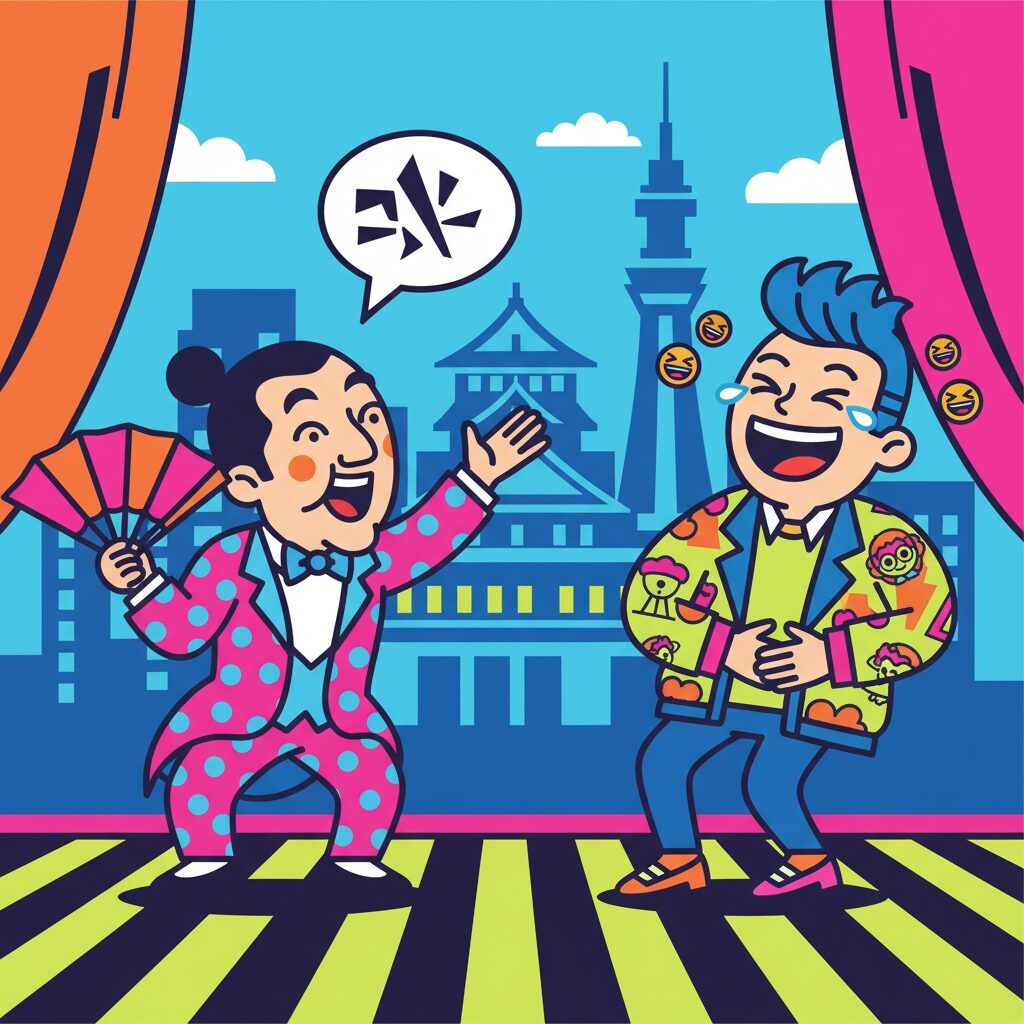
The first time it happened, I was genuinely confused. I was at a tiny, family-run okonomiyaki spot tucked away in the Tenma neighborhood. I pointed to a picture on the menu and ordered in my best, carefully practiced Japanese. The old woman behind the grill, the okasan, looked at my selection, then looked at me, and said with a perfectly straight face, “Ah, that one. No good. Tastes terrible. You should pick something else.” My brain short-circuited. Was she serious? Was I about to be served a bad meal? I stammered, trying to ask what she recommended instead, and that’s when her poker face cracked. A huge grin spread across her face, followed by a hearty laugh. “Just kidding, son! It’s the best thing on the menu. Coming right up!”
That was my real introduction to Osaka. Not the glittering signs of Dotonbori or the historic castle, but a five-second interaction that completely rewrote my understanding of Japanese communication. In Tokyo, a city I’d known for its impeccable, almost frictionless service, such a comment would be unthinkable. It would be a business-ending offense. But here, in Osaka, it was a handshake. It was a test. It was an invitation. It was the entire spirit of the city packed into a single, deadpan joke.
Living in Osaka means learning a new language that exists on top of Japanese. It’s a language of timing, of playful jabs, of reading the air not for tension, but for the opportunity to create a shared laugh. It’s a city where conversation is a sport, and everyone is expected to play. This isn’t just a city that’s “friendly”; it’s a city that’s interactive. Understanding this dynamic is the key to unlocking the true rhythm of daily life here, to moving from a visitor on the outside to a participant on the inside. It’s the difference between seeing Osaka and truly living it.
Embracing the local spirit doesn’t stop at playful banter—explore Osaka’s cherished kissaten culture to gain a richer perspective on the city’s vibrant social tapestry.
The Unspoken Rules of Manzai in Daily Life
To truly understand Osaka, you first need to grasp manzai. This traditional style of Japanese stand-up comedy, usually performed by two people, dominates the local airwaves. But manzai is more than just entertainment; it serves as the fundamental framework for social interaction. Every conversation—whether chatting with a neighbor or buying groceries—can become a manzai routine, based on a simple yet universal partnership: the funny one and the straight man.
The ‘Boke’ and the ‘Tsukkomi’: A Social Contract
In manzai, there’s the boke, the fool. This person says or does something ridiculous, absurd, or plainly wrong. They might point at a poodle and say, “Look at that fluffy sheep!” or ask the price of something then dramatically faint upon hearing it. The boke’s role is to create an opening by deliberately introducing a flaw into the flow of normal conversation. This isn’t an error; it’s an invitation, a softball gently tossed into the air.
Then there’s the tsukkomi, the reactor. This is the straight man whose job is to quickly and sharply call out the absurdity. They respond with remarks like, “That’s a dog, you idiot!” often accompanied by a light, theatrical tap on the head. The tsukkomi’s remark is the punchline. Their role is to complete the circuit, to catch the softball. The most classic tsukkomi phrase—practically the city’s motto—is Nande ya nen! — a versatile expression ranging from “What the heck?!” to “No way!” or “Why on earth would you say that?!”
This dynamic extends far beyond a stage in Namba; it’s the heartbeat of the city. When the okonomiyaki chef told me her food was terrible, she was playing the boke. My confused silence was like dropping the ball. The expected comeback was a tsukkomi: “Don’t be ridiculous!” or a playful “Hey, I’m the customer here!” That would have completed the routine and we’d have shared a laugh together.
Reading the Invitation to Play
So how do you know when you’re being drawn into a routine? How can you distinguish a genuine comment from a boke’s opening line? It’s all in the delivery. There’s a sparkle in the eye, a slight exaggeration in tone, a pause hanging in the air, waiting for you to jump in. The intent is never malicious. A good boke isn’t trying to deceive or embarrass you. They’re seeking to create a moment of connection. A successful tsukkomi isn’t about aggression; it’s a gesture of affection. It signals, “I’m paying attention. I get the joke. I’m with you.”
In Tokyo, conversations often glide over a smooth, polished surface. The aim is harmony, avoiding conflict, and showing respect through politeness and distance. In Osaka, the goal is to ignite sparks. Conversation is a living, breathing thing you build together, moment by moment, joke by joke. Failing to respond with a tsukkomi when one is expected can seem cold, distant, or simply clueless. It’s the social equivalent of leaving a high-five hanging.
Decoding Osaka Compliments and Insults
This conversational style presents a challenge for outsiders, especially regarding praise and criticism. What might sound like a compliment in Tokyo can come across as cold in Osaka, while what seems like an insult in Osaka often expresses deep affection. This is a complete reversal of the usual Japanese social code of tatemae (public face) and honne (true feelings).
The Backhanded Compliment as a Sign of Affection
If you live in Tokyo and your Japanese improves, a colleague might say, “Nihongo ga jouzu desu ne,” or “Your Japanese is very good.” This is polite, encouraging, and maintains a clear, professional distance. In Osaka, however, you’re more likely to hear something like, “Your accent is still a total mess, but I can finally understand what you’re trying to say. Keep it up!” Although it sounds harsh, this is actually a much warmer and more engaged compliment. The Tokyo version acknowledges your skill from afar, while the Osaka version draws you into a close, teasing relationship. It suggests, “I’ve been paying attention to you all along, and I care about your progress.”
This approach applies to everything, especially shopping, which is the city’s lifeblood. Compliment someone’s new bag in Tokyo, and they’ll probably respond politely but reservedly. In Osaka, if you admire someone’s new bag, the conversation quickly shifts to price. “Nice bag! How much did you pay for it? What?! Too much! I know a spot in Tenjinbashi where you could’ve gotten it for half that!” This isn’t meant as a criticism of your shopping sense. It’s a gesture of camaraderie, reflecting the city’s identity as a community of savvy shoppers and sharp merchants. The right response is to engage—complain about the price and ask for their secret spot. You’ve now bonded over the shared value of scoring a good deal (eemon).
When a Joke is Just a Joke
This cultural difference is most evident in the use of the word aho. In most parts of Japan, especially in the Kanto area around Tokyo, the common word for “idiot” is baka. Depending on tone and context, baka can range from a mild tease to a truly hurtful insult. In Osaka, baka is a harsh, rarely used fighting word. The local equivalent is aho, but its meaning is almost the opposite. Here, aho is nearly a term of endearment. When a friend messes up, you laugh and say, “You’re such an aho.” It’s a warm, familiar expression acknowledging a shared moment of silliness. If an Osaka native calls you an aho with a smile, congratulations—you’re officially part of their inner circle. They feel close enough to drop formalities and be genuine with you.
The Participation Sport of Everyday Conversation
In many cultures, the typical way to engage in conversation is through passive observation. You listen, wait your turn, and contribute politely. In Osaka, however, you’re expected to be actively involved and ready to join in at all times. Politeness doesn’t mean silence; it means participation. Plus, there are a few classic, city-wide games whose rules you’re expected to know.
The “Bang!” Test: Your First Lesson
It will catch you off guard. You might be strolling through a shotengai (covered shopping arcade), minding your own business, when an elderly person makes eye contact. They’ll smile, raise their hand like a pistol, point at your chest, and say, “Bang!” This isn’t a threat—it’s a surprise test. It distills the boke-tsukkomi dynamic, with your reaction under scrutiny.
The wrong response is to stare blankly, offer a puzzled smile, or simply walk away. That means you’ve broken the game’s reality and failed the test. The only correct response is to play along as the tsukkomi. Clutch your chest in mock agony, stumble backward dramatically, let out a final groan, or even fall against a wall if there’s space. The more exaggerated, the better. Your “death” is the punchline. If you do this, the “shooter” will break into a satisfied laugh, perhaps give you a thumbs-up, and carry on. You’ve just affirmed a shared understanding of how things work—you passed. For that moment, you were a true Osakan.
Your Role as the Tsukkomi (It’s Easier Than You Think)
You don’t have to be a comedy expert to join in. The great thing is, the boke does most of the work. Your job is simply to recognize the setup and respond with something basic. The takoyaki vendor is your practice ground. After handing you your hot octopus balls, he might suddenly say, “Alright, that’ll be one million yen.”
Your instincts, shaped by countless real transactions, might make you panic. Don’t. This is a boke. He’s tossed you the ball. Your role is to catch it. A simple, loud “Takai wa!” (“Too expensive!”) is a perfect tsukkomi. A well-timed “Nande ya nen!” earns top marks. A laugh and shake of the head works just as well. Anything that shows you get the joke is a win. The vendor will laugh, you’ll laugh, he’ll give you the real price, and you’ll leave with more than just a snack. You’ll walk away with the satisfaction of a successful human interaction.
Why is Osaka Like This? A Peek into the Culture
This distinctive conversational style didn’t emerge spontaneously. It is deeply rooted in the city’s unique history as a hub of commerce and entertainment, a background that distinguishes it from the political and military centers of Tokyo (Edo) and Kyoto.
The Merchant’s Mindset: Efficiency and Connection
For centuries, Osaka was known as tenka no daidokoro, the “nation’s kitchen.” It was a city of merchants, artisans, and dealmakers. While Tokyo’s culture developed around stoic samurai and strict bureaucrats who prioritized protocol and hierarchy, Osaka’s culture was shaped in the marketplace. For a merchant, quickly building rapport is crucial to making a sale. Humor is the most efficient social lubricant ever created. A joke breaks down barriers, fosters instant intimacy, and builds trust far more rapidly than any formal bow or polite inquiry.
This mindset endures today. Osakans value directness, practicality, and a good-natured hustle. They want to get straight to the point, engage in genuine conversation, and connect with the person on the other side of the transaction. Banter is the tool they use to achieve this. It serves as a way to quickly gauge someone and establish a relationship on an equal, human level.
Owarai (Comedy) as a Regional Identity
Osaka is undeniably the capital of Japanese comedy (owarai). The country’s largest comedy talent agency, Yoshimoto Kogyo, was founded here and remains a cultural powerhouse. On any given weekend, televisions throughout the city are tuned to manzai programs and comedy specials featuring local talent. Children grow up watching these routines, absorbing the rhythm of boke and tsukkomi as if it were a second language.
In Osaka, being called omoshiroi (interesting, funny) is among the highest compliments, often valued more than being labeled serious, smart, or capable. A sense of humor is not merely a personality trait; it’s a vital skill. It reflects social intelligence and the ability to connect with others. To belong to the community is to share a laugh and create one when the chance arises.
A Foreigner’s Survival Guide to Osaka Banter
Navigating this can feel intimidating, but it doesn’t have to be. It’s a skill that can be developed, and Osakans are generally very patient teachers, especially with foreigners who clearly make an effort. Here are a few basic rules to help you get started.
Rule One: Don’t Take It Personally
This is the golden rule. The teasing, the backhanded compliments, the deadpan jokes—they are almost never meant to be hurtful. In fact, quite the opposite. If an Osakan is teasing you, it’s a sign of acceptance. It means they feel comfortable enough to drop formal barriers and engage with you as a person. The real cause for concern is when they’re relentlessly and formally polite to you. That’s the wall. The joke is the welcome mat.
Rule Two: A Smile and a Laugh Go a Long Way
You don’t always need to have the perfect, witty tsukkomi comeback ready. If you’re caught off guard or unsure what to say, just laugh. A genuine laugh shows you appreciate the effort and understand the spirit of the interaction, even if you can’t come up with the perfect verbal response. It’s a universal sign that you’re happy to play along.
Rule Three: Start Small
Don’t feel pressured to become a manzai master overnight. Begin in low-stakes settings. The next time you buy takoyaki or get coffee from a local shop, be prepared. Listen for the opening. The vendor might exaggerate the weather or ask a silly question. Try a simple comeback—even a playful eye roll works. The goal is simply to close the loop.
Rule Four: Observe and Learn
Sit in a local izakaya and listen to the conversations around you. Walk through a shopping arcade and watch how vendors interact with customers. Notice how friends greet each other on the street. You’ll see the boke-tsukkomi pattern unfold countless times every day in many different ways. It’s the city’s background music. Once you learn to hear it, you can’t unhear it.
Ultimately, mastering the art of Osaka banter isn’t about memorizing lines. It’s about a shift in mindset. It’s about seeing everyday communication not as formal transactions, but as continuous opportunities for play. It’s about realizing that beneath the blunt talk and endless jokes lies a deep desire for genuine human connection. This is the true texture of life in this city. It’s loud, a little chaotic, and always ready with a punchline. Once you start playing along instead of just listening, you’ll find Osaka isn’t just one of Japan’s friendliest cities—it’s one of the most fun.