When you first arrive in Osaka, the initial sensory overload is a given. The flashing lights of Dotonbori, the savory smell of takoyaki hitting a hot griddle, the layered dialects that crash and echo through the shotengai. But once the tourist buzz fades and you settle into the rhythm of daily life, you start to notice something else. Something quieter, more fundamental. A constant, whirring, clicking presence. Bicycles. They are everywhere. Not just sleek road bikes or weekend cruisers, but an overwhelming tidal wave of sturdy, basket-equipped, often slightly rusty workhorses known as mamachari. They are chained to every available railing, overflowing from designated parking lots, and piloted with terrifying precision by everyone from high school students to grandmothers with a full load of groceries. My first thought, coming from a world where cycling is either a sport or a leisure activity, was simple confusion. Why this city? Why this bike? The answer, I soon learned, wasn’t just about convenience. It was about economics, freedom, and the very soul of Osaka’s pragmatic, no-nonsense culture. Getting a bike here isn’t a lifestyle choice; it’s the smartest financial decision you’ll make. It’s your key to unlocking the city and understanding how Osaka people truly think.
Navigating Osaka on two wheels offers a glimpse into the city’s pragmatic lifestyle, much like exploring tachinomi etiquette reveals the deeper social codes that underpin its vibrant street culture.
The Financial Freedom Machine: Why Osaka Runs on Two Wheels
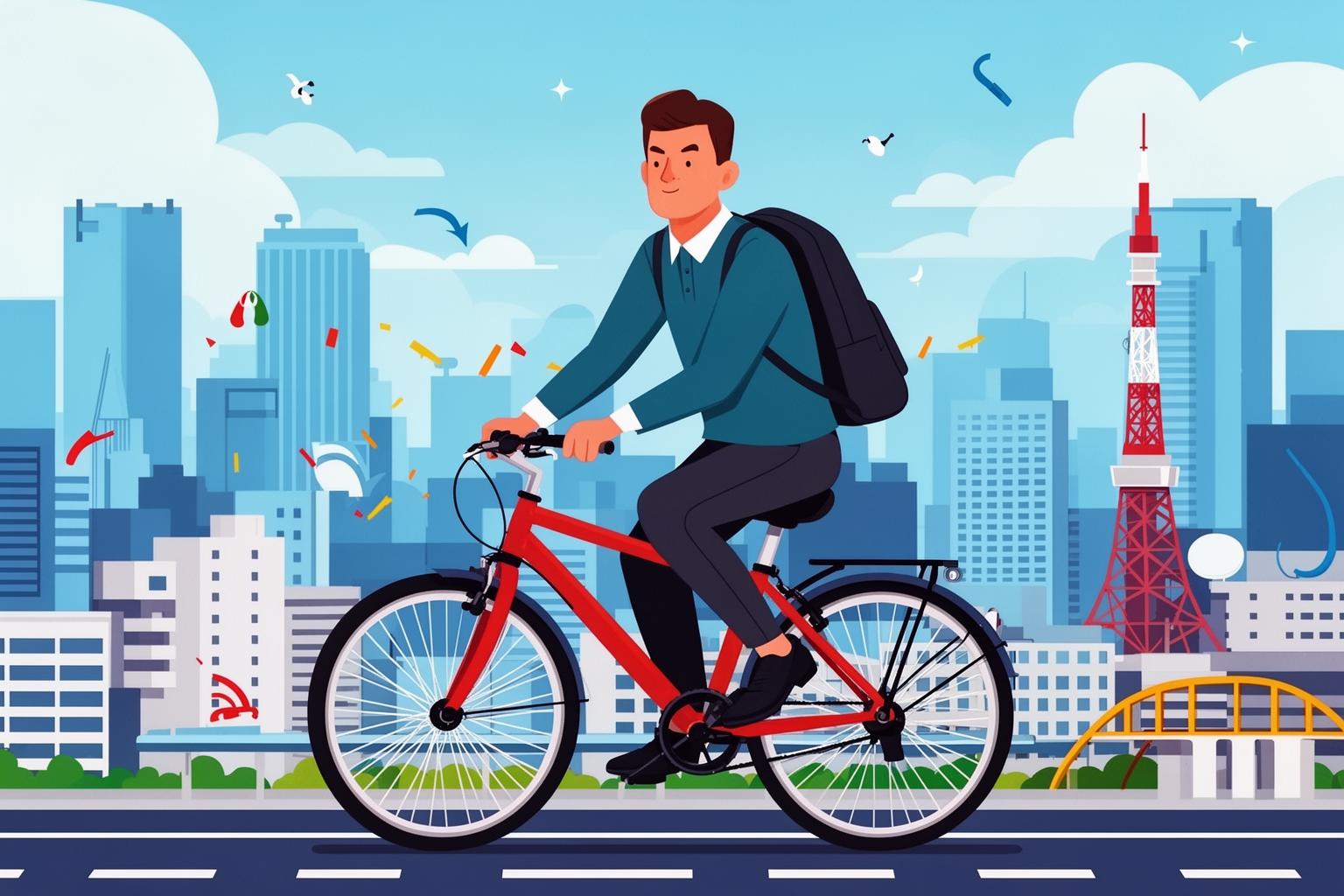
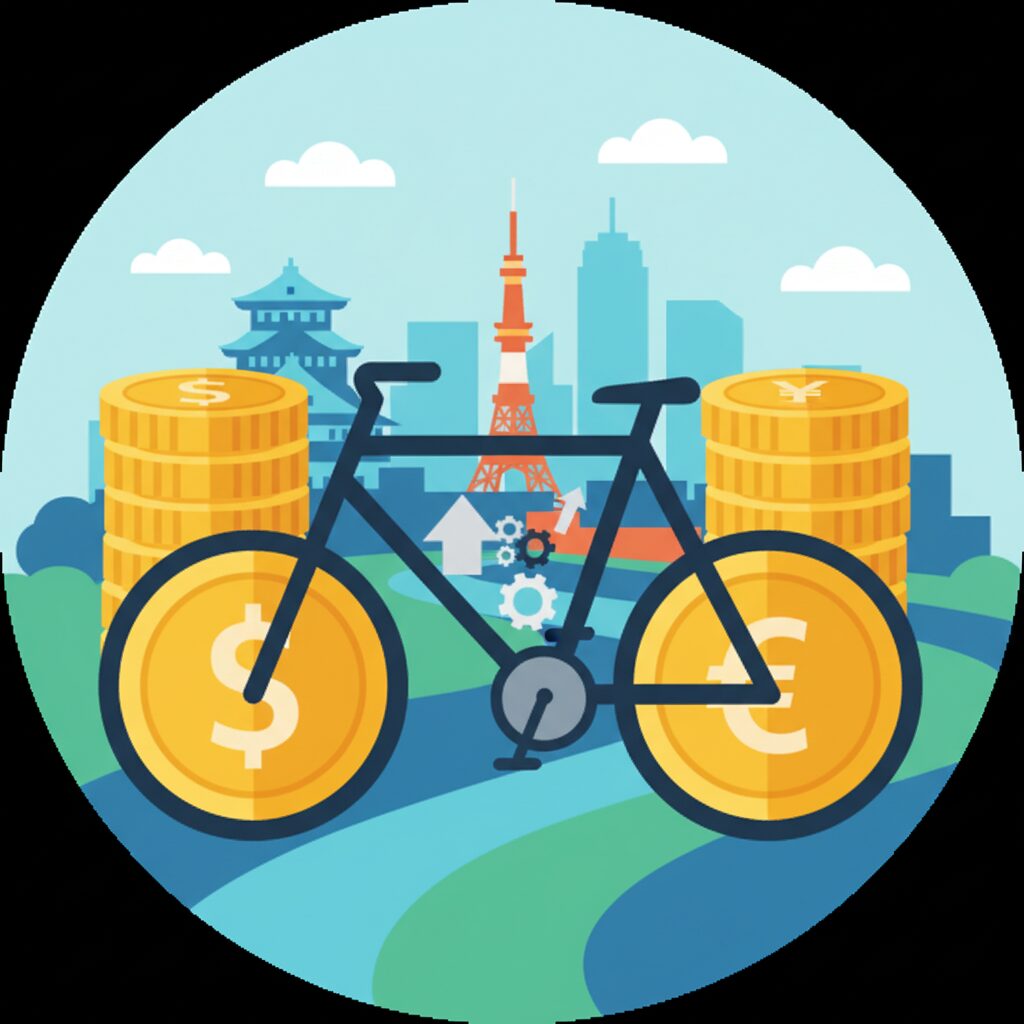
Let’s talk numbers, because people in Osaka love a good bargain. They have an almost religious dedication to the idea of kospa, or cost performance. Why pay more when you can pay less? This mindset fuels the city’s bicycle culture. Aside from rent, your biggest monthly expense is almost always transportation. In Tokyo, the vast, intricate train network is an unavoidable part of daily life. You get your SUICA or PASMO card, load it up, and accept the cost. A monthly commuter pass, or teiki, can easily range from ¥5,000 to ¥15,000 depending on your route. That’s a significant portion of your budget disappearing every month.
Now, consider the alternative: the Osaka approach. A dependable, second-hand mamachari can be bought for a one-time payment of about ¥8,000 to ¥15,000. It’s straightforward math, and it’s a calculation every Osakan has already made. Your hefty recurring transportation expense is instantly wiped out and replaced by a single, modest purchase. Suddenly, you have an extra ¥10,000 in your pocket each month. That’s ten great lunches. That’s a new pair of sneakers. That’s a weekend trip to a nearby city. The subway, especially the Osaka Metro, is locally known for being expensive for short distances. You’ll hear people say, “chikatetsu, takai naa” (the subway is expensive, isn’t it?). This isn’t just a gripe; it’s a reason to hop on their bike for just two or three stations away. The bicycle isn’t simply a mode of transport; it’s a tool for financial freedom. It frees up your disposable income, letting you enjoy the city’s amazing food scene and vibrant culture without the constant drain of transit costs. This isn’t about being cheap; it’s about being smart. That’s the Osaka way.
Navigating the Urban Jungle: The Unspoken Rules of the Osaka Road
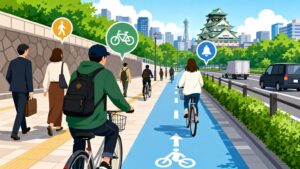
If your only experience with Japanese traffic is the almost unnervingly orderly flow of Tokyo, prepare yourself. Osaka’s streets are a completely different ecosystem, where the bicycle reigns supreme. While Tokyo cyclists tend to be more cautious, sticking to designated lanes when available, Osaka cyclists move with a confident fluidity that can appear chaotic to outsiders. The key to understanding this is the sidewalk. Technically, cycling on the sidewalk is illegal in most cases, but in practice, it is the norm. This creates a complex, unspoken dance between pedestrians and cyclists.
Pedestrians generally keep to one side, effectively creating a bicycle lane. Cyclists, in turn, weave through, adjust their speed, and use their bell (a gentle chirin-chirin) to announce their approach. It’s a system built on mutual awareness rather than strict regulations. The queen of this domain is the Osaka obachan on her electric-assist bicycle. She moves with a purposeful speed that belies her age, often carrying a basket overflowing with daikon radishes and leeks. Give her plenty of room. She has places to be, and she won’t yield.
Then there’s parking, the other side of bicycle freedom. Finding a spot to leave your bike can be a challenge. Supermarkets and train stations have designated parking lots, but they fill quickly. As a result, bicycles are often creatively locked to guardrails, fences, and signposts. Beware: the city frequently sends teams to seize illegally parked bikes. If your bike disappears, it has likely been taken to a municipal depot, and you’ll need to pay a fine of about ¥2,500 to retrieve it. Savvy cyclists invest in spots at paid monthly parking areas (churinjo) near their station or apartment, offering security and peace of mind for a reasonable fee. This organized chaos reflects the city’s personality: fiercely practical, a bit rough around the edges, and governed by a set of unwritten rules you learn by watching closely.
More Than Just a Commute: How a Bike Unlocks the Real Osaka
Beyond the significant cost savings, owning a bicycle fundamentally transforms your connection with the city. On a train, you experience Osaka as a series of isolated points on a map: Umeda, Namba, Shinsaibashi. You emerge from the underground station without a true sense of the space between them. A bike links those points together, revealing the city’s real texture.
Suddenly, you’re not merely traveling from Point A to Point B. You’re gliding through the quiet residential streets of Nakazakicho, discovering a tiny hidden coffee shop tucked inside an old wooden house. You’re exploring the entire length of the Tenjinbashisuji Shotengai, Japan’s longest covered shopping arcade, able to pause at any stall that catches your eye without worrying about train schedules. You can decide on a whim to visit Osaka Castle Park, not as a tourist spot, but as a beautiful green space to cycle through on a sunny afternoon. The bicycle solves the “last mile” issue that challenges so many urban residents. Your favorite bakery is a 15-minute walk from the station? Now it’s a 4-minute bike ride. That large, affordable supermarket is just a little too far to carry groceries from? The sturdy basket on your mamachari easily holds a week’s worth of shopping.
This new mobility connects you to your neighborhood and city in a much more intimate way. You learn shortcuts, back alleys, and the best routes to avoid traffic lights. You become a participant in the city’s daily rhythm, not just a passenger passing through. The incidental exercise is an added bonus, a gentle way to offset all the delicious okonomiyaki and kushikatsu. It’s a sense of self-sufficiency and freedom that public transport, despite its efficiency, can never quite provide.
Choosing Your Steed: A Practical Guide to Getting Your First Osaka Bike
Convinced? Getting your own set of wheels is simple. Your first major choice is whether to buy new or used, each offering benefits suited to different needs.
New vs. Used: The Cost-Benefit Analysis
Used bikes deliver the best kospa. Recycle shops and community Facebook groups for departing foreigners are treasure troves for secondhand bicycles. You can snag a fully functional single-speed mamachari for under ¥10,000. The most important step when buying used is transferring the anti-theft registration, or bouhan toroku. This sticker on the bike frame carries a unique registration number. The seller should give you the transfer documents, which you bring to any bike shop to re-register in your name for a small fee of about ¥600. This is non-negotiable as it serves as your proof of ownership.
Buying new offers peace of mind and more choices. Large retailers like Don Quijote or home centers like Cainz sell brand-new basic bikes starting at around ¥20,000. Local bike shops (jitensha-ya-san) provide higher quality and expert service. When purchasing new, the shop will handle the bouhan toroku registration for you immediately.
The Holy Trinity: Mamachari, City Bike, and the Electric Assist
Most bikes you see are mamachari. With their step-through frames, upright handlebars, built-in locks, dynamo lights, and most importantly, large front baskets, they are the unbeatable champions of urban practicality. They’re heavy and slow but designed to withstand rough use and carry cargo.
For those seeking more speed and efficiency, a kurosubaiku (cross bike) or city bike is an excellent choice. They are lighter and equipped with gears, making it easier to traverse the city’s numerous bridges over rivers and canals. You’ll give up the built-in basket but gain a more enjoyable, sporty ride.
The final option is the electric-assist bike, or denki ashisuto jitensha. These bikes are revolutionary. They resemble sturdy mamachari but come with a battery and motor that provide a powerful boost when pedaling. They make hills vanish and carrying heavy loads effortless. Though significantly more expensive, they are the preferred choice for parents transporting children and anyone living in hillier areas.
Essential Gear and Maintenance
No matter which bike you pick, a few accessories are must-haves. First, a reliable lock. Most bikes include a ring lock on the rear wheel, but you’ll need a second, heavy-duty cable or U-lock to secure your bike frame to a fixed object. Bike theft isn’t widespread, but it does occur. Second, ensure your lights are functional. Finally, find your local jitensha-ya-san. These small, often cluttered shops are run by mechanics who can fix a flat tire for about ¥1,000, perform tune-ups, or assist with any issues. They are a vital community resource.
The Osaka Mindset on Two Wheels: Pragmatism Over Polish
Ultimately, the bicycle serves as a perfect metaphor for the Osaka mindset. In Tokyo, you might find more high-end, stylish bicycles, meticulously maintained as a status symbol or an extension of a carefully crafted lifestyle. In Osaka, however, a bicycle is simply a tool. A slightly rusty frame doesn’t indicate neglect; it’s worn as a badge of honor. It signifies that the bike is used, cared for, and fulfilling its purpose. It stands as a testament to functionality over appearance, substance over style.
This practical outlook is deeply embedded in Osaka culture. It’s evident in how people prioritize tasty, affordable food over fancy, costly dining. It’s reflected in their straightforward, honest communication that goes straight to the point. It’s seen in their constant hunt for a good deal. The humble mamachari perfectly embodies this spirit. It’s neither beautiful nor fast, but it works, saves you money, and gives you the freedom to navigate the city on your own terms. Understanding why half the city rides these simple machines is to grasp the core values of Osaka itself: practical, independent, and exceptionally smart.