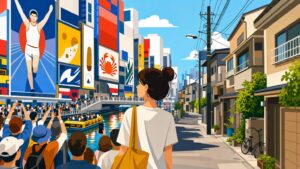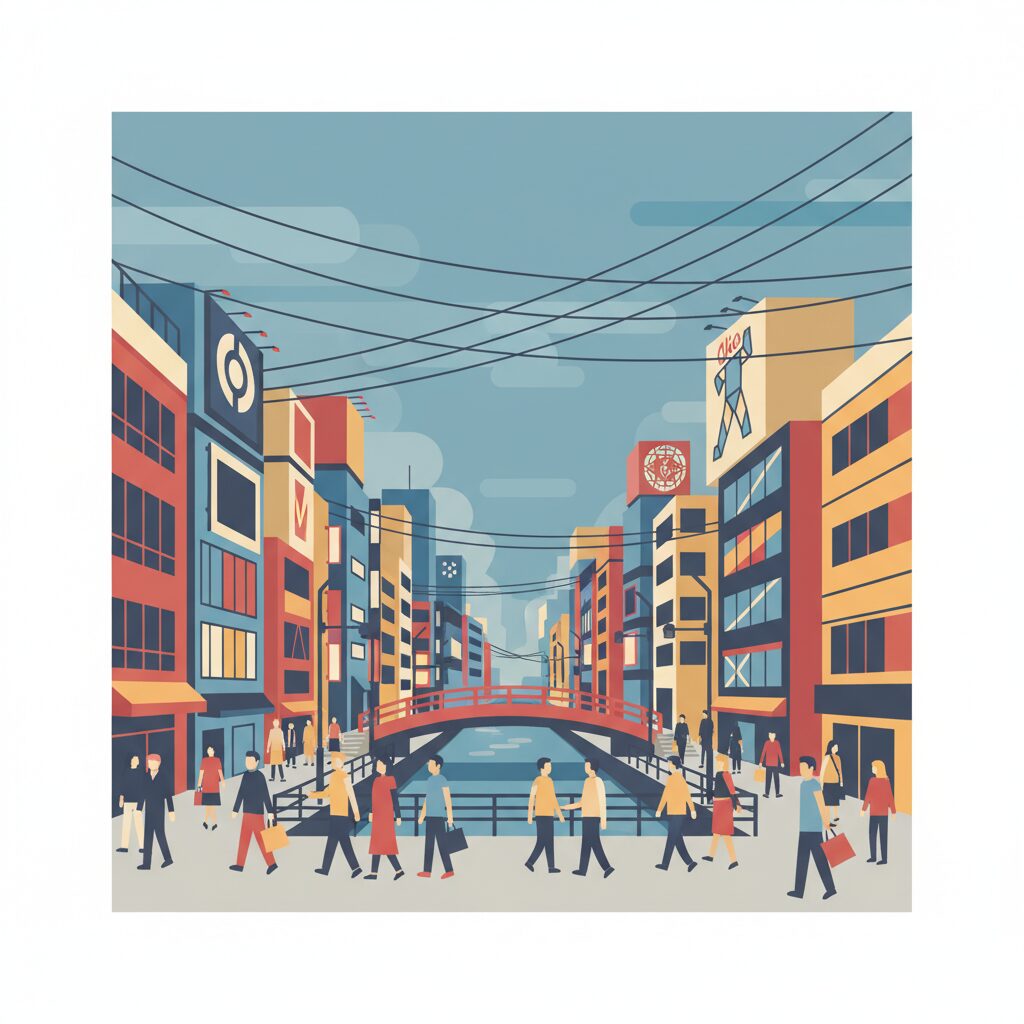
To the newcomer, the slice of Osaka known as Minami—the sprawling, electric ecosystem encompassing Shinsaibashi and Namba—is pure sensory overload. It’s the Glico Man, arms raised in perpetual victory over a river of neon. It’s the thunderous march of feet through the Shinsaibashi-suji shopping arcade, a human river flowing under a permanent roof. It’s the scent of takoyaki batter hitting a hot griddle, a smell so pervasive it feels like it’s part of the air you breathe. This is the Osaka of postcards, the one beamed across the globe. But to live here, to move through this space not as a visitor but as a resident, is to learn a different language. It’s about understanding that this district isn’t a theme park; it’s a fiercely practical, deeply human, and wonderfully chaotic stage for everyday life. The real question isn’t what to see, but how to see it. How do you decode the rhythm of a place that never seems to sleep, and what does it tell you about the soul of Osaka itself? You learn to look past the giant crab sculptures and listen to the city’s real heartbeat, found in the narrow alleys and the subterranean passages, where the true character of Osaka unfolds.
The vibrant energy of Osaka continues even after dusk, as locals engage in a distinctive form of after-work socializing that reveals the deeper spirit of the city.
The Minami Mindset: A Theatre of Everyday Life
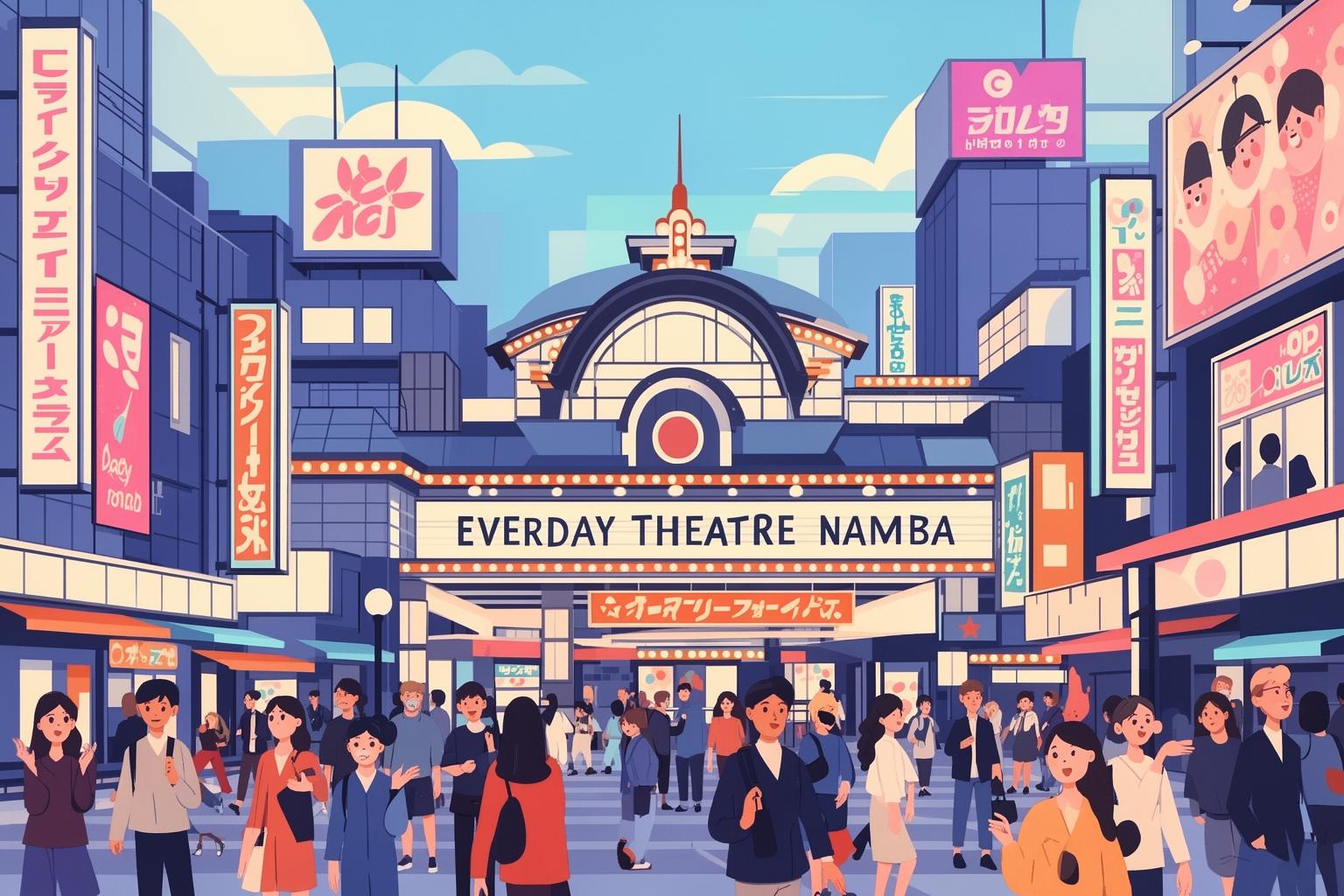
First, you need to grasp the fundamental divide in Osaka’s urban identity: Kita (North) and Minami (South). Kita, centered around the sleek, towering structures of Umeda and Osaka Station, serves as the city’s brain. It’s where deals happen, where businesspeople in sharp suits navigate crisply through pristine department stores and underground mazes that resemble corporate corridors. Kita is polished, professional, and composed. Minami, on the other hand, is the city’s heart and stomach. It’s visceral, loud, and vibrantly alive. It’s a place for performance—not only in its theaters but also on its streets. This is the key difference from Tokyo. While Shibuya boasts its scramble and Shinjuku its neon canyons, they often come across as vast, branded stages for global trends. Minami’s energy feels more grassroots, more bottom-up. It’s a chaotic tapestry woven from generations of small family businesses, independent shop owners, and street performers, all competing for your attention.
The mentality here is fundamentally theatrical. People in Minami aren’t merely passing through; they’re actively participating. Fashion is a statement, not just a preference. You’ll notice styles here that are louder, more experimental, and less concerned with the quiet consensus of taste common elsewhere. A conversation between friends on a street corner carries a certain performative volume, a richness of gesture that transforms a simple chat into a public spectacle. This isn’t rudeness or inattentiveness; it’s quite the opposite. It’s a form of social engagement, a way of recognizing that in Minami, the street itself is a shared living room. In Tokyo, the city often feels like a backdrop to your private life; in Minami, the city is a conversation partner, and everyone is welcomed to speak up.
Decoding the Shotengai: The Arteries of Local Commerce
The Shinsaibashi-suji Shopping Arcade serves as an ideal example of this duality. To a tourist, it is a 600-meter-long retail journey, lined with drugstores, clothing chains, and souvenir shops. For a local, however, its main purpose is much simpler: it functions as a highway. It is the city’s most essential covered thoroughfare, providing a route from the Shinsaibashi subway station to the heart of Namba that shields one from both rain and the blazing summer sun. Observe the purposeful crowd. They aren’t shopping. Their eyes are fixed far ahead, their bodies skillfully weaving through leisurely tourists with the instinct born of countless daily commutes. They are heading to a specific restaurant, meeting spot, or the train station at the far end. The arcade is infrastructure first, shopping destination second.
There is an unspoken etiquette to this flow of people. Typically, you keep to the left, but you must be ready for the unexpected. A delivery person pushing a cart full of goods will part the crowd with a polite yet firm call. An elderly woman, an Osaka obachan, might zip by on her bicycle, navigating through the throng with an almost impossible grace. The crowd’s rhythm is alive and ever-changing. It’s a hectic rush during morning and evening commutes, a slow amble on weekend afternoons, and a surprisingly quiet, echoing space late on a Tuesday night. This practical use of space reflects something fundamental about Osaka’s character. The city values what works. The arcade endures not only because of its history but because of its exceptional practicality. It is a solution to the challenge of the weather. Within its span, you’ll find the city’s essence in miniature: a centuries-old shop selling traditional kombu seaweed stands side by side with a shiny, three-story emporium dedicated to the latest Korean cosmetics. There is no tension here—only commerce, history, and a sheltered path forward.
Beyond Dotonbori’s Glare: Finding the Real Flavor
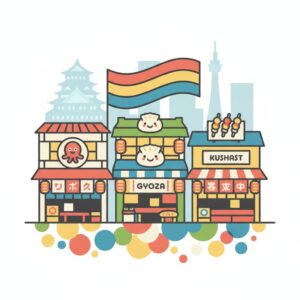
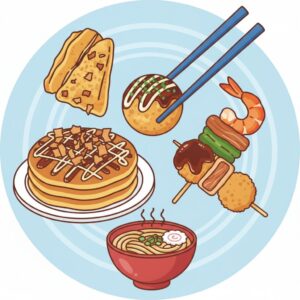
Dotonbori is, for many, both the start and end of Osaka’s culinary tale. The enormous mechanized crab, takoyaki stands adorned with octopus motifs, and the endless queues for a single bowl of ramen—it’s a dazzling food festival. And yes, Osakans cherish it. They bring their cousins from rural areas, might treat themselves after a baseball game, but this isn’t where the city’s deep, everyday bond with food is formed. The idea of kuidaore—to eat oneself into ruin—is often mistaken for simple gluttony. In truth, it represents a relentless quest for quality and value, a culture that values substance over appearance. That substance is found in the side streets, away from the bright lights of the main canal.
The Whisper of Hozenji Yokocho
Just a short walk from Dotonbori’s noise lies Hozenji Yokocho, a narrow, stone-paved lane that feels like stepping back in time. Lanterns cast a gentle, warm light on the facades of historic restaurants, with the moss-covered Fudo Myoo statue at Hozenji Temple as the focal point. Worshippers splash the statue with water while praying, a quiet, ongoing ritual that has nourished its green coating for decades. This alley isn’t hidden, but it serves a different purpose. It’s a place for quieter, more thoughtful dining. It’s where you go for a special occasion or a conversation that calls for a softer tone. Its presence so near the chaos highlights Osaka’s appreciation for contrast. The city can be loud, but it also knows how to be quiet. It recognizes that a truly great city needs both the shout and the whisper.
The Social Fabric of Ura-Namba
To experience modern, everyday Osaka nightlife, you should explore Ura-Namba. The name means “behind Namba,” and that’s exactly what it is: a maze of backstreets behind the Namba Grand Kagetsu Theater and the big electronics stores. This is where salarymen, creatives, and service workers gather after work. The area is packed with tachinomi (standing bars), tiny izakayas seating only half a dozen people, and specialized restaurants devoted to a single perfect dish. Here, the flashy signs of Dotonbori give way to simple paper lanterns and handwritten menus. The value offered is different. You’re not paying for a view or fancy décor; you’re paying for perfectly grilled skewers, a fresh plate of sashimi, and most importantly, human connection. Squeezed into a crowded standing bar, you are almost compelled to chat with neighbors and the bar owner. This is where the city’s renowned friendliness is truly born. It’s not an abstract warmth; it’s a practical outcome of shared, intimate spaces. The direct, often playful banter over a shared counter forms the social glue of the city. An Osakan would prefer an incredible meal in a place that looks like a storeroom than a mediocre one in a palace. This is the heart of kuidaore.
The Art of Navigation: Side Streets and Subterranean Worlds
A tourist follows the main roads, while a resident discovers the shortcuts and hidden layers. To master Minami is to understand that its most captivating aspects often lie just off the beaten path or directly beneath it. The city is made up of layers, and learning to navigate them is a rite of passage.
The Enduring Spirit of Amerikamura
West of Midosuji boulevard lies Amerikamura, or “Amemura.” To newcomers, it might resemble a slightly grittier, more compact version of Tokyo’s Harajuku, known for youth fashion. Yet, its spirit is uniquely its own. Amemura’s identity was shaped in the 1970s when warehouses began selling imported goods from the U.S., which inspired its name. Today, that legacy continues in a dense cluster of vintage clothing shops, record stores, and independent boutiques. The atmosphere centers less on following the latest trends and more on cultivating a distinct personal style. It serves as a hub for Osaka’s subcultures—skaters, musicians, artists. Hidden within its buildings are small art galleries, rehearsal spaces, and numerous live houses, the intimate venues forming the foundation of Japan’s independent music scene. Amemura feels more do-it-yourself, more approachable, and less commercially polished than its Tokyo equivalents. It stands as a testament to Osaka’s role as a refuge for creative spirits who favor a raw edge over a slick finish.
The Underground City
To truly live like a local, you need to master the underground. The extensive network of subterranean passages like Namba Walk is more than just a route to the subway—it is a city beneath the city. On a scorching August day or a freezing January afternoon, this is where Osaka thrives. This underground world possesses its own climate and ecosystem of shops, affordable and cheerful eateries, and public squares. It links multiple train and subway lines—Nankai, Kintetsu, Hanshin, along with the Midosuji, Yotsubashi, and Sennichimae subway lines—into one unified organism. You can walk from Namba all the way to Shinsaibashi without ever surfacing. This network symbolizes Osaka’s practicality. Why endure the elements when you can create a fully functional, climate-controlled world just meters below the surface chaos? While Tokyo has impressive underground networks of its own, Namba’s feels different—less a series of station linkages and more a single, cohesive, slightly vintage neighborhood with its own distinct, unpretentious charm.
People Watching: The Unspoken Language of Minami
Ultimately, the character of Shinsaibashi and Namba is shaped by its people. Spend an afternoon at a coffee shop overlooking the street, and you’ll receive a masterclass in the Osaka disposition. Fashion is a key indicator. There’s a boldness here, a readiness to embrace color and pattern that often feels muted in other Japanese cities. The quintessential flashy young man, with his carefully styled hair and designer logos, carries a different energy here than his Tokyo counterpart—it feels less about aloof coolness and more about approachable swagger.
This approachability is the most often misunderstood aspect of Osaka’s character. A foreigner, accustomed to Tokyo’s more reserved public atmosphere, might interpret the directness of an Osaka shopkeeper or the volume of a conversation as aggressive or intrusive. But this is usually a misunderstanding. In Osaka, directness is a form of efficiency and honesty. A shopkeeper might bluntly tell you that a different item offers better value—not out of rudeness, but to save both of you time and create a moment of genuine connection. Laughter is loud and frequent. Strangers are more likely to comment on the weather or your interesting bag. It’s a culture that aims to close social distance, not maintain it.
This is the origin of the famous ame-chan culture, where middle-aged women are said to always carry candy in their purses to share. While somewhat of a caricature, it stems from a genuine place: the desire to use a small gesture to forge a brief, positive connection with someone else. It acts as social lubricant, a micro-transaction of goodwill. In the dense, anonymous crush of a modern city, these small acts of recognition are what hold the social fabric together. In Minami, you are never just an anonymous face in the crowd. You are a potential conversation, a fleeting connection, a fellow participant in the grand, ongoing performance of the city.