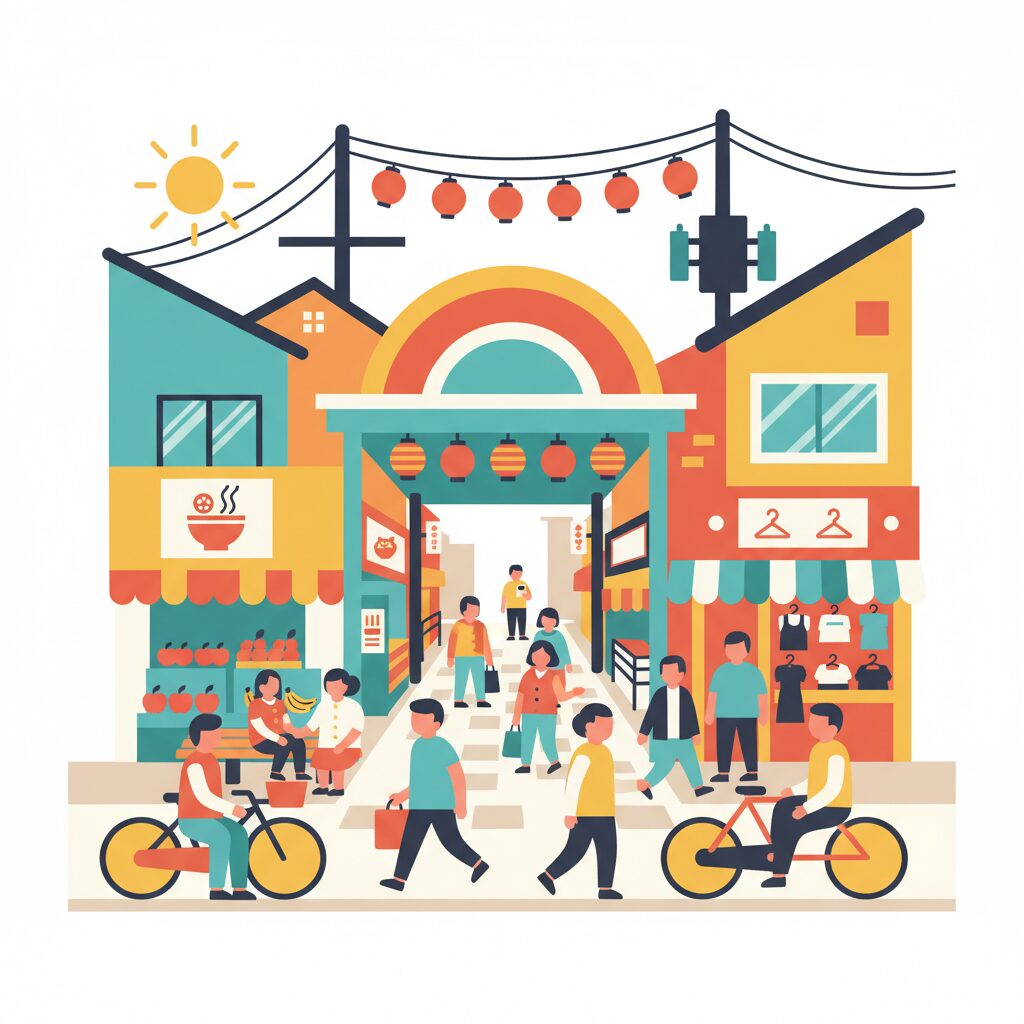
To the uninitiated, the Japanese shotengai, or traditional shopping arcade, might appear as a quaint relic, a charmingly chaotic corridor of commerce that time forgot. It’s a postcard image of Japan, vibrant with red lanterns, handwritten signs, and the energetic calls of vendors. It feels like a living museum, a stark contrast to the gleaming, silent efficiency of a modern department store or the sterile aisles of a 24-hour supermarket. The immediate question for any foreigner considering a life in Osaka is whether this picturesque setting is truly a viable foundation for a modern existence. Is it practical to build your daily routine around a place that seems to operate on a logic from a different era? The answer, like Osaka itself, is complex, deeply human, and reveals the fundamental character of this merchant city. It’s a choice that pits the predictable convenience of the new against the rich, demanding texture of the old. As a historian, I see the shotengai not merely as a marketplace, but as the pulsating heart of a community’s social grammar, a place where the unwritten rules of Osakan life are performed daily. Choosing to live near one is not just a decision about where you buy your groceries; it is a declaration of what you value in a community and what you are willing to sacrifice for it. It’s an immersive dive into a lifestyle that is rapidly vanishing elsewhere in Japan but persists with a stubborn, brilliant vitality here in Osaka. Before we dissect this choice, let’s ground ourselves in a prime example of this urban phenomenon, the longest shotengai in Japan.
For those intrigued by how traditional community hubs inspire authentic local connections, our Osaka tachinomi guide for making friends offers practical insights for newcomers seeking to integrate into the city’s vibrant social scene.
The Soul of the Neighborhood: Understanding the Shotengai’s Social Fabric
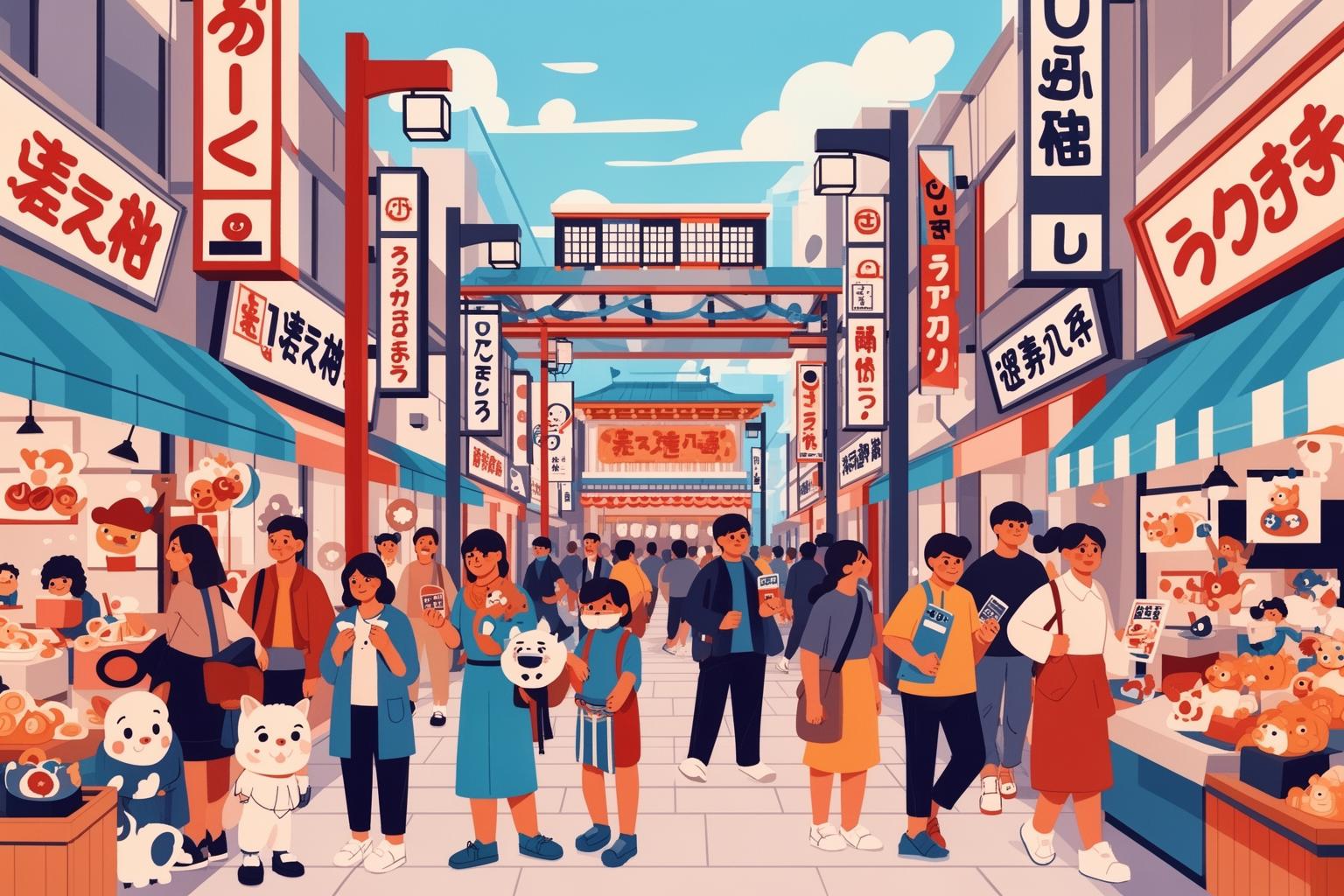
To truly understand the essence of a shotengai-centered life, one must first let go of the modern, Western idea of shopping as a cold, transactional activity. In Osaka, especially within these covered arcades, commerce has always been deeply connected to communication. It’s a performance, a negotiation, a relationship. It serves as the social glue that binds the neighborhood, following a logic that confounds those used to the silent anonymity of a Tokyo supermarket, where efficiency reigns and personal interaction is often reduced to polite but impersonal exchanges.
More Than a Market: The Unspoken Social Contract
A shotengai is not just a collection of shops; it’s a living social ecosystem. The first thing you notice is that your presence is recognized. Walking through the arcade involves a continuous exchange of greetings. It’s the butcher, wiping his hands on his apron, calling out a hearty “Maido!” (Always, thank you for your business!), a traditional Osakan merchant greeting that feels both familiar and respectful. It’s the elderly woman at the vegetable stand who says “Oki ni!” (Thank you!) with a sincerity that suggests she truly means it. These are not rehearsed pleasantries. They mark recognition. You are not a faceless customer; you are Tanaka-san’s new neighbor, the young foreign man who buys tofu every Tuesday, the mother with the little boy who always begs for a croquette.
This is the principle of kao-najimi, literally a “familiar face.” In the shotengai, becoming a familiar face is a kind of social currency. Shopkeepers don’t just know what you purchase; they know you personally. They understand your habits. They remember when you mentioned your son had a cold and will ask about him a week later. They’ll set aside the last good piece of tuna because they know you’ll come after work. This creates a subtle but powerful social contract. You offer your loyalty and steady patronage, and in exchange, you receive more than just goods. You gain a place in the community. This stands in sharp contrast to Tokyo, where convenience and choice are provided with flawless professionalism and politeness but accompanied by a clear emotional distance. In Tokyo, you are a valued customer. In an Osaka shotengai, you become part of the scenery, a character in the daily drama.
The Rhythms of Daily Life: A Human-Paced Existence
Living by a shotengai means aligning your life with a more human, less industrial rhythm. The day follows a clear, audible cadence. Morning begins not with the quiet hum of a refrigerator but with the clatter of metal shutters rising, a sound echoing down the arcade like a communal alarm clock. This is followed by the gentle murmur of early shoppers, mostly elderly locals, who come for the freshest produce and a bit of gossip. The air fills with the sharp, clean scent of daikon and the earthy aroma of fresh bread from the neighborhood bakery.
The lunchtime rush brings a different energy—a hectic, focused hunt for bento boxes, fried cutlets, and quick bowls of udon. The sounds grow sharper: the sizzle of tempura frying, the rapid chatter of people on a brief break. The afternoon settles into a slower pace before the final rush arrives in the evening. This is when parents with children in tow and workers arriving from the train station converge to pick up dinner ingredients. The fishmonger’s calls grow more urgent, advertising the last catch of the day. The tofu maker sells out of his fresh, silken blocks. By seven or eight o’clock, the shutters begin to close again, and quiet falls, broken only by the hum of drink machines and the footsteps of late-night stragglers. This rhythm is a stark contrast to the 24/7, on-demand world of convenience stores and online delivery that defines much of modern urban life. The shotengai does not conform to your schedule; rather, you, in some measure, must adapt to its.
The Practical Pros: Tangible Benefits of Living Arcade-Adjacent
Beyond its romantic and sociological appeal, a shotengai-centered lifestyle provides tangible, measurable benefits. These advantages often fall into areas that modern consumers have been conditioned to undervalue: hyper-local economics, non-digital convenience, and analog social security. For those willing to embrace this way of living, the rewards are significant, influencing not only your budget but also your overall sense of well-being.
Economic Advantages: Freshness, Value, and the Art of the Deal
One of the most immediate perks is the excellent value for money. While supermarkets create the illusion of low prices through bulk deals and weekly specials, the shotengai often delivers superior quality at a lower price, particularly for fresh, perishable items. You’re purchasing directly from experts. The greengrocer has close ties with local farmers. The fishmonger was at the central market before dawn. Their produce quality is central to their reputation. A supermarket apple might be perfectly shaped and waxed to a glossy shine, but the slightly irregular fruit from a shotengai stall often bursts with flavor that reflects its recent connection to the tree.
Moreover, pricing is more flexible and personal. This is where Osaka’s merchant spirit, the akindo soul, truly shines. Although overt haggling is uncommon, a subtler form of negotiation occurs—one founded on relationships. As a regular customer, you gain access to the unspoken economy of the omake—a small extra gift. Buy a few potatoes, and the shopkeeper might add an onion. Purchase a nice cut of fish, and you could receive a handful of clams for your miso soup. This is not a calculated marketing ploy; instead, it’s a gesture of gratitude, a way to strengthen the bond between seller and buyer. Later in the day, vendors often want to clear their remaining stock, leading to spontaneous discounts called out across the arcade. This dynamic, responsive pricing stands in stark contrast to the fixed, barcoded certainty of supermarket chains.
Unparalleled Convenience, Redefined
In modern life, convenience is often equated with speed and digital access. Amazon Prime is convenient. A 24-hour convenience store is convenient. The shotengai provides a different, more grounded form of convenience. It’s the convenience of proximity and integration. Everything you need for daily living is gathered in one pedestrian-friendly, weather-protected area. Your butcher, baker, fishmonger, and tofu maker—they’re all neighbors. The pharmacy, small clinic, dry cleaner, shoe repair shop, and post office often sit within the same arcade or just off a nearby side street.
This arrangement makes the car largely unnecessary for everyday errands. Craving tonkatsu for dinner? The pork cutlets, panko breadcrumbs, and special sauce are all a three-minute walk away. Need to fill a prescription and mail a letter? You can do it in a single trip beneath a roof that shields you from the blazing summer sun or a sudden rainstorm. This represents a human-scale convenience, a real-life model of the “15-minute city” that urban planners now champion, which has existed naturally in Osaka for centuries. It minimizes the hassle of everyday tasks, replacing the stress of traffic and parking with a pleasant stroll and a series of familiar exchanges.
A Built-in Support System: The Community Safety Net
Perhaps the most significant yet least obvious advantage of living in a shotengai ecosystem is the informal safety net it provides. In the anonymous, vertical living environment of modern apartment complexes, you might not even know your next-door neighbors’ names. In a shotengai neighborhood, the shopkeepers act as the community’s unofficial guardians—the eyes and ears of the street.
They notice details. They know the daily habits of elderly residents. If Mrs. Sato, who buys a block of tofu every morning at 9 AM, doesn’t appear, the tofu maker might become concerned. He could mention it to the fishmonger, who might then ask another neighbor to check on her. This web of casual observation weaves a powerful layer of social security that no high-tech surveillance system can match. For families with children, this is a tremendous comfort. Kids can walk to and from school or run small errands through the arcade, never truly alone. They are watched over by a hundred familiar faces who know who they are and where they belong. This fosters a sense of collective responsibility and trust that has become increasingly rare in major metropolitan areas, including much of Tokyo, where privacy and non-interference often take precedence over community involvement.
The Unvarnished Cons: Where Nostalgia Clashes with Modernity

For all its appeal and tangible advantages, the shotengai lifestyle is not without significant drawbacks. To ignore these would be to romanticize a way of living that requires genuine compromises. These are not mere inconveniences; they represent fundamental tensions between a pre-modern system and the demands of a 21st-century globalized world. For many, particularly those with demanding careers or a strong need for privacy, these challenges can feel insurmountable.
The Tyranny of the Clock: Inconvenient Hours and Limited Selection
The biggest practical obstacle is the operating hours. The shotengai follows the shopkeeper’s schedule, not the consumer’s. Most individual stores—the butcher, fishmonger, vegetable stand—are family-run businesses. They typically open mid-morning and, crucially, close early. By 6:00 PM, many are already packing up. By 7:00 PM, metal shutters begin to come down. For anyone working a typical office job with a commute that gets them home after dark, the shotengai is essentially useless for weekday dinner shopping. The lively market you experience on a weekend visit is a ghost town by the time you’re free to shop.
Moreover, many shotengai have a designated closing day, a teikyūbi, when a large portion of shops remain shut—often on Wednesdays. This demands a level of meal planning and foresight unfamiliar to those used to supermarkets offering 24/7 availability. The selection is also a double-edged sword. While it offers remarkable specialization and expertise, it means losing the convenience of one-stop shopping. You can’t buy laundry detergent at the fishmonger or batteries at the baker. A complete grocery run requires visiting four or five different shops, each with its own queue and social interaction. What might be a quick ten-minute supermarket trip can easily turn into a 45-minute social outing at the shotengai. In today’s time-pressed world, this is a luxury not everyone can indulge in.
The Price of Community: A Lack of Anonymity
The very community that fosters a sense of belonging can also feel deeply stifling. The flip side of being a kao-najimi, a familiar face, is constant visibility and observation. Your comings and goings, purchases, and habits are all public knowledge. There’s no such thing as a quick, anonymous run to the store in pajamas for a pint of ice cream. Your visit will be noticed and quite possibly commented on.
This gentle, communal surveillance can feel intrusive. The greengrocer might tease you about buying pre-packaged curry from the small supermarket at the end of the arcade instead of making it fresh with her vegetables. The butcher may ask why your husband is working so late again. For foreigners still learning Japanese social cues, this can be particularly stressful. What is meant as friendly concern can feel like judgment. In Tokyo, you might live years in an apartment building without ever speaking to neighbors—your life is your own. In an Osaka shotengai neighborhood, your life becomes, to some extent, a shared story. For those who treasure privacy and the freedom of anonymity, this constant, low-level social scrutiny can be deeply uncomfortable and ultimately exhausting.
The Challenge of Aging Infrastructure and Demographics
Beneath the vibrant facade of many shotengai lies a subtle sense of decay. These are not new structures. The arcades themselves can be drafty, dimly lit, with uneven pavement. Shops are often aged, passed down through generations, with plumbing and wiring left untouched for decades. This is far from the sleek, climate-controlled perfection of modern shopping malls.
More concerningly, the shopkeepers themselves are aging. The friendly old man running the tea shop is in his late seventies. The woman at the pickle stand has been there for fifty years. Their children, educated and with opportunities their parents never had, have often moved away to other cities to pursue careers. Few are interested in taking over the family business, which demands long hours and yields modest profits. This results in the rise of the shattā-gai or “shutter street,” where more storefronts remain permanently closed. This gradual hollowing-out casts a melancholic shadow over once-bustling arcades, a tangible sense of a fading world. Committing your life to such a neighborhood can feel like boarding a beautiful, historic ship that is slowly, gracefully taking on water.
The Shotengai Mindset: How It Shapes the Osakan Character
Living within a shotengai ecosystem doesn’t just alter the way you shop; it attunes you to the fundamental mindset of Osaka’s people. The daily interactions and the very layout of the market reveal the city’s core values, which often contrast sharply with those of Tokyo or other regions of Japan. It’s a culture shaped by commerce, one that emphasizes pragmatism, personal connections, and a certain acceptance of functional disorder.
Pragmatism and Personal Relationships
At its core, the Osakan character is that of the akindo, the merchant. This spirit infuses the shotengai. Everything is seen through a lens of practicality and mutual benefit. Osakans are known for their directness and appreciation of a good deal. This isn’t about being cheap; it’s about being wise and recognizing true value. A relationship with a shopkeeper is more than a courtesy; it is a pragmatic investment that results in better service, higher-quality products, and the occasional omake. Business is personal. A transaction is not simply an exchange of money for goods; it’s another thread woven into a longstanding relationship.
This stands in stark contrast to the Tokyo ethos, which often emphasizes form, presentation, and strict adherence to procedure. In Tokyo, the brand, packaging, and impeccably polite, scripted service take precedence. The personal identity of the clerk or customer is secondary to the smooth run of the transaction. In Osaka, the opposite is often true. The personality of the shopkeeper, the quality of the product stripped of fancy packaging, and the rapport you have with them are what really matter. Osakans trust people before they trust brands—a mindset nurtured and reinforced with every visit to the shotengai.
A Different Definition of “Clean” and “Orderly”
For a newcomer, especially one from the almost unnervingly pristine streets of Tokyo, an Osaka shotengai can seem messy, even chaotic. Boxes of produce spill out from shops, spilling into the walkway. Signs are often hand-painted, sometimes faded and askew. The air is filled with a cacophony of sounds: vendors calling out their wares, the tinny music of a pachinko parlor, the chatter of shoppers. It is neither quiet nor orderly in the conventional Japanese sense.
A common misunderstanding among foreigners is to interpret this as neglect or a lower standard. This is mistaken. It is, rather, a different aesthetic—one that values functional vitality over visual calm. The clutter is not neglect; it is evidence of thriving business. The overflowing boxes indicate fresh, abundant produce. The handwritten signs signal a personal touch, not corporate uniformity. The noise reflects a community interacting, commerce in motion. Osaka’s version of order is not about straight lines and silent spaces. It is a dynamic, self-regulating order of a living ecosystem—where everything serves a purpose, even if it’s not immediately obvious. To appreciate a shotengai is to learn to see the beauty and logic in this functional, human-centered chaos.
Finding Your Fit: Is the Shotengai Lifestyle for You?
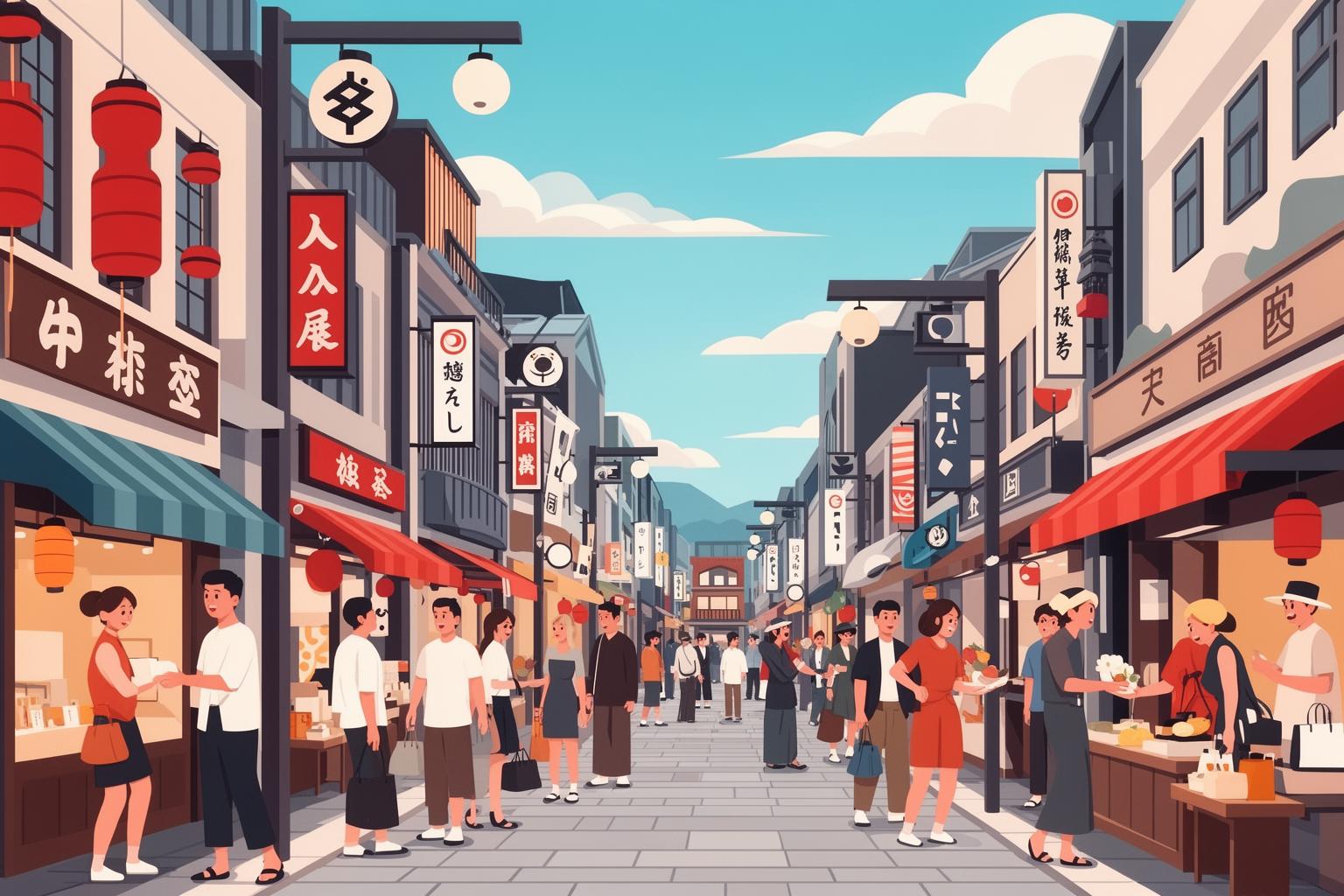
Ultimately, choosing to live a shotengai-centered life is a highly personal decision. It is neither objectively better nor worse than other lifestyles; rather, it is simply different, with its own unique rewards and challenges. This choice calls for a sincere evaluation of your personality, daily routine, and what you genuinely want from your life in Japan.
Who Thrives Here? The Community-Seeker and the Flexible Worker
This way of life suits certain people especially well. Those who work from home, have flexible hours, or run their own businesses can fully take advantage of the shotengai’s lively daytime atmosphere. They can shop when the produce is freshest and the arcades are at their busiest. Stay-at-home parents gain a valuable support system and a safe, stimulating space for their children. Language learners find an immersive, real-world classroom where trying to buy fish from a fast-talking Osakan fishmonger provides a better Japanese lesson than any textbook. Above all, this lifestyle appeals to those who feel disconnected or isolated in the modern city. If you seek connection, want to feel rooted in a community, and be known by your neighbors, the shotengai offers a ready-made network waiting to be embraced.
Who Might Struggle? The Privacy-Focused and the Time-Pressed Professional
On the other hand, this lifestyle may not suit everyone. If your job involves long, inflexible hours in a downtown office, you will likely be out of sync with the shotengai’s rhythms. You’ll be dependent on less appealing supermarkets and convenience stores that stay open late. If you are an introvert who needs solitude to recharge, or if you value the anonymity found in big cities, the shotengai’s constant, subtle social expectations might feel less like a community and more like a daily performance you must put on. For those who prefer sleek modernity, digital convenience, and the smooth efficiency of app-based services for everything from food delivery to transportation, the analog, relationship-driven nature of the shotengai may seem outdated and frustratingly inefficient.
Conclusion: The Enduring Heartbeat of a Merchant City
Choosing to live near a shotengai in Osaka is much more than a practical choice. It is a philosophical one. It involves a deliberate trade-off, swapping the 24/7 anonymous convenience of the modern world for something older and more tangible: a sense of place, a human rhythm, and a network of real, daily connections. It means embracing a life that is sometimes inefficient, occasionally intrusive, but also profoundly grounding and rich with human texture.
These arcades are the lifeblood of Osaka, the living channels of its merchant spirit. They are where the city’s identity is enacted, preserved, and passed along. To walk through one is to experience a masterclass in Osakan pragmatism, humor, and the deep belief that business—and life—is best conducted face-to-face. While some arcades may be fading, the spirit they embody—of community, resilience, and the enduring value of human relationships—remains the true, beating heart of this extraordinary city. Understanding this choice, this tension between old and new, is the first and most vital step to truly grasping what it means to live in Osaka.