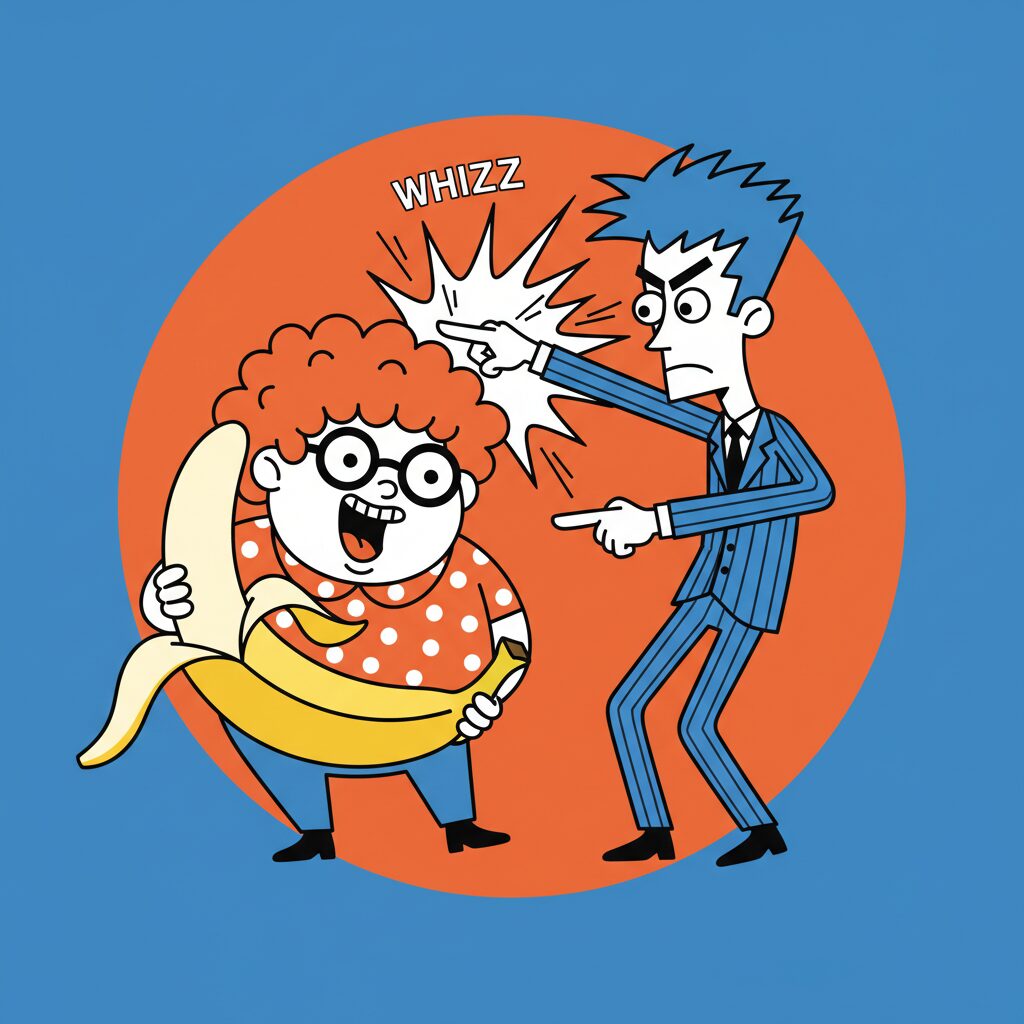
You’re standing in a local shotengai, a covered shopping arcade humming with the rhythm of daily life. You pick up a daikon radish. It’s a perfectly normal, respectable daikon. The shop owner, a woman with a smile etched into her face by decades of friendly haggling, looks at your selection, then at you, and says with a perfectly straight face, “Planning to build a snowman with that?” You pause. Your Japanese is decent, but this isn’t in any textbook. Is she questioning your cooking skills? Your sanity? Welcome to Osaka. You’ve just been handed a conversational ball, and everyone, including the old man buying fish next to you, is waiting to see what you do with it. This isn’t rudeness. It’s an invitation. This is the heart of Osaka’s communication style, a world built on the comedic duet of “boke” and “tsukkomi.”
Forget the neon lights of Dotonbori and the grand silhouette of Osaka Castle for a moment. The true character of this city isn’t found in its landmarks but heard in its cadence, in the playful back-and-forth that turns a simple transaction into a micro-performance. For anyone moving here, especially from the more reserved atmosphere of Tokyo or from overseas, this can feel like landing on another planet. The common refrain is that “Osaka people are friendly,” but that’s a lazy summary. It’s more accurate to say that Osaka communication is built on participation. It demands engagement, and the primary tool for that engagement is a shared sense of humor rooted in a specific, almost ritualistic, structure. Understanding this structure is the key to not just surviving in Osaka, but truly connecting with its vibrant, chaotic, and deeply human soul.
Embracing the natural spontaneity of daily exchanges, this vibrant communication style reveals how deeply Osaka humor is woven into local life.
The Unspoken Rules of Conversational Comedy
To outsiders, Osaka might seem like a city full of aspiring comedians. However, the reality is more complex. This isn’t about delivering jokes with a setup and punchline. It’s a conversational flow, a rhythm learned from childhood. At its heart lies the dynamic of manzai, the traditional Japanese stand-up comedy style refined in Osaka. But you don’t need any knowledge of stage comedy to appreciate its everyday use. You just need to understand two roles: the boke and the tsukkomi.
It’s Not About Being Funny; It’s About Connection
First, let’s clear up a common misconception. The aim of a boke-tsukkomi exchange in daily life isn’t necessarily a big laugh. It’s about establishing an instant, low-pressure connection. It acts as social glue. In Tokyo, bonds often form through layers of politeness, formal introductions, and a gradual warm-up. It’s a slow, cautious dance of avoiding imposition. Osaka throws that rulebook aside. Here, connection happens in a flash of shared absurdity. By engaging in this playful exchange, you’re signaling, “I’m on your wavelength. We can skip the formalities. We’re good.” The shopkeeper’s “snowman” comment about the daikon isn’t a masterpiece of comedy. It’s an olive branch, a test to see if you’re game. Replying correctly—even with just a laugh and a quick comeback—closes a social gap that could take weeks to bridge in other parts of Japan.
The Anatomy of a Daily Boke
The boke is the person who says something absurd, incorrect, or silly, often with a straight face. Think of it as a deliberate, gentle break in reality. The boke’s role is to create a small, harmless tear in the fabric of normalcy, opening the door for the tsukkomi to respond. It’s not about being dumb; it’s about being clever enough to convincingly play dumb. You’ll see it everywhere.
- The Obvious Misstatement: Your friend looks up at the pouring rain and says, “Great day for a picnic, huh?”
- The Exaggeration: You’re carrying one small grocery bag, and a neighbor sees you and says, “Whoa, stocking up for the apocalypse?”
- The Literal Interpretation: At a restaurant, the server says, “Enjoy your meal,” and your Osaka-born friend seriously replies, “I will try my best.”
These aren’t attempts to deceive. They’re conversational softballs, tossed out expecting to be hit back. The boke takes a small risk, making themselves momentarily look foolish to invite someone else into the interaction. It’s a surprisingly vulnerable and inclusive gesture.
The Art of the Tsukkomi: Your Role in the Duet
The tsukkomi is the person who corrects the boke, pointing out the absurdity with a quick, sharp, and often playful remark. This is the role you, as a resident, will most often be expected to play. The tsukkomi’s reaction is the punchline. It restores order to the conversation and affirms the boke’s attempt at humor. The key is the tone. A tsukkomi isn’t a serious correction or angry outburst; it’s a performed exasperation, delivered with warmth underneath.
Here are typical responses to the boke examples:
- To the picnic comment: A sharp, “It’s pouring!” or the classic Osaka phrase, “Nande ya nen!” (What the heck! / Why!).
- To the apocalypse comment: A quick, “It’s just dinner!” with a roll of the eyes.
- To the “I will try my best” line: A light smack on the arm and a, “Just eat it!”
The worst response to a boke is no response at all. A polite nod or a serious, straightforward agreement kills the rhythm instantly. It’s like leaving someone hanging for a high-five. It creates an awkwardness far deeper than any failed joke because you haven’t just ignored humor; you’ve denied a chance for connection.
When the Punchline Doesn’t Land: Common Misunderstandings
For newcomers, this constant back-and-forth can be tiring and perplexing. What counts as a joke? What’s a sincere question? Is that person being rude, or simply trying to be friendly? Learning to navigate this gray area is essential for adapting to life in Osaka.
Is Everyone a Comedian? Not Quite.
One of the biggest stereotypes is that all 5.5 million people in Osaka are comedians. They aren’t. However, almost everyone has humor literacy. They grasp the structure, rhythm, and social role of the boke and tsukkomi dynamic. It’s a cultural language as deeply embedded as the local dialect. While not everyone excels as the witty boke, nearly everyone can perform a basic tsukkomi. It’s a conversational responsibility. So, don’t feel pressured to be a comedic genius. Your main role is to be a good audience and a dependable partner in this dialogue. A simple, well-timed tsukkomi is far more appreciated than an awkward, forced effort to out-funny someone.
“Nande ya nen!” – More Than Just Words
This phrase serves as the Swiss Army knife of Osaka tsukkomi. Although it literally means “Why?!” or “What gives?!”, its meaning depends entirely on context and tone. It acts as a rhythmic punctuation that signals, “I see your ridiculous comment, and I’m playfully calling it out.” It’s seldom a genuine question. If your colleague says, “I’m so tired, I think I’ll just sleep under my desk tonight” (a classic boke), the right response is a quick “Nande ya nen!” — not a concerned, “Oh, are you okay? Should I call someone?” The latter shows you’ve missed the joke. You’ve taken the bait but haven’t recognized it as bait.
The Fine Line Between Banter and Rudeness
This tends to be the biggest challenge for foreigners and even Japanese from other regions. Osaka communication feels very direct and personal. A shopkeeper might comment on your clothes. The person next to you at a ramen counter might ask about your job. An elderly woman might frankly remark that you’re buying beer at 11 a.m. In Tokyo, such comments would be seen as intrusive. In Osaka, they often serve as icebreakers.
The trick is to look beyond the literal words and perceive the intent. Is the person smiling? Is there a playful sparkle in their eyes? Is their body language warm and open? Ninety-nine percent of the time, the answer is yes. They’re not judging you; they’re trying to include you. The best response isn’t defensive, but lighthearted — a tsukkomi to their observational boke. To the woman commenting on your morning beer, a cheerful reply like “It’s my day off!” or “Research!” will likely earn a laugh and a new, temporary friend.
Navigating the Rhythm: A Practical Guide for Residents
So, you grasp the theory. But how do you apply it in practice without constantly feeling like you’re performing? It’s about having a few simple tools handy and learning to pick up on the cues.
Your Three Response Options
When a boke comes your way, you typically have three choices. Mastering the first is really all you need.
- Option 1: The Simple Tsukkomi. This is your go-to move. You don’t have to be witty. Just acknowledge the absurdity and correct it plainly. Phrases like “Chigau yo!” (That’s wrong!), “Akan!” (No good!), or even a laugh with a playful wave of the hand are perfectly fine. The aim is to close the loop. You’ve shown you understand the game, and that’s what counts.
- Option 2: The Double-Down Boke. This is the advanced technique. If you’re feeling bold, you can respond to a boke with an even bigger boke. If a shopkeeper says your daikon is for a snowman, you might reply, with a straight face, “No, it’s the nose for the giant troll I’m building in my apartment.” This demonstrates a high level of cultural fluency and is often met with delight and respect.
- Option 3: The Foreigner Card (Use Sparingly). A polite but slightly puzzled smile. This is your emergency exit. Most people will recognize that you’re not a local and kindly let the moment slide. However, relying on this too much can be isolating. It marks you as an outsider, someone who can’t—or won’t—join the local rhythm. Using it is okay when you’re new, but the goal should be to gradually replace it with Option 1.
Where You’ll Encounter It Most
Although this dynamic can appear anywhere, it thrives in certain places. Be especially prepared in environments where informal, community-based interactions are common. The shotengai are ground zero. Shop owners and longtime customers engage in this kind of banter throughout the day. Local izakayas, standing bars, and okonomiyaki restaurants are also hotspots where the lines between staff and customers often blur into a shared, friendly atmosphere. Even in some workplaces, especially smaller, locally owned companies, this informal style can seep into meetings and office chatter, often confusing new hires from Tokyo.
Why Tokyo Finds It… A Lot
To understand Osaka’s humor, you need to understand what it isn’t: Tokyo. Tokyo’s communication culture is based on tatemae (public face) and honne (true feelings), with a strong emphasis on maintaining surface harmony (wa). The default approach is to be polite, indirect, and avoid confrontation. An Osakan’s direct, joke-filled style can seem aggressive, loud, or unsophisticated to someone from Tokyo. Conversely, an Osakan may see Tokyo’s polite distance as cold, standoffish, or insincere. One system prioritizes avoiding conflict; the other prioritizes building connection through friction. Neither is better—they are simply fundamentally different social operating systems.
Beyond the Joke: What Boke and Tsukkomi Reveals About Osaka
This conversational style is more than just a quirky habit; it offers insight into the core values and history of Osaka. It reveals a city that is inherently collaborative, efficient, and deeply human.
A Culture of Participation
The boke-tsukkomi dynamic cannot function with only one person. By its nature, it is a duet, requiring one person to initiate and another to complete the thought. This reflects a broader cultural ethos in Osaka. You are not meant to be a passive observer of life; you are expected to actively participate. Whether in conversation, at a festival, or during a business negotiation, there is an expectation that you will contribute, engage, and play your part. Sitting silently on the sidelines is the most unfamiliar behavior of all.
Efficiency and Warmth Combined
Osaka’s roots lie in its history as a city of merchants. In business, quickly building trust and rapport was an essential skill. The boke-tsukkomi style is, in many ways, a highly efficient social tool. It bypasses layers of formality and establishes an immediate friendly, human connection. It’s a shortcut to familiarity. This warmth is not just for appearance; it is a functional aspect of how the city operates, smoothing the wheels of commerce and community and enabling people to work together and live alongside each other with minimal pretense.
Embracing Imperfection
Perhaps most importantly, the boke role celebrates imperfection. To willingly play the fool, to say something silly or absurd, is to admit that you don’t always have to be right, polished, or perfect. It creates a social space where it’s safe to be a little goofy, to make mistakes, and to be laughed with, not at. In a country that can often impose immense pressure toward conformity and perfection, Osaka’s embrace of the lovable fool is a breath of fresh air. It’s a daily reminder that we are all just people, fumbling through life, and it’s much more enjoyable to do it together, with a good-natured jab and a shared laugh.