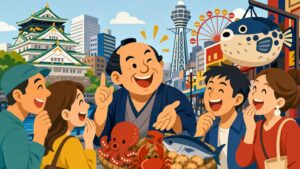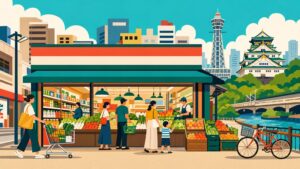
When I first moved to Osaka, I had this romantic vision of myself. I’d be in my tiny Japanese kitchen, gracefully preparing intricate meals I’d seen in glossy magazines. I imagined mastering the art of the dashi, perfectly searing a piece of sanma, and arranging colorful tsukemono pickles just so. My friends back home would be impressed. I would be living the authentic Japanese culinary life. Then I told my new Osakan coworker my grand plan. He listened patiently, a slow grin spreading across his face, before letting out a hearty laugh. “Why would you do that?” he asked, not unkindly, but with genuine bewilderment. “Just go get sozai.”
Sozai. The word was new to me. I soon discovered it referred to the vast, glittering, and slightly overwhelming universe of pre-cooked dishes found in every supermarket and department store basement. It wasn’t just a few sad-looking salads in plastic containers. It was an entire ecosystem of food: golden-brown mountains of karaage fried chicken, shimmering fillets of grilled mackerel, deep-purple eggplant stewed in miso, and dozens of other dishes, all neatly packed and ready to go. My initial, slightly snobbish reaction was to see it as a shortcut, a convenience for those too busy to cook. But living here, I’ve come to understand that in Osaka, the sozai aisle is something much more. It’s the engine room of daily life, a battleground for bargains, and the most honest expression of the city’s core philosophy: achieve maximum satisfaction for minimum cost. Forget the Michelin stars for a moment; if you want to understand the soul of Osaka, you need to understand the strategy behind buying a 78-yen croquette.
To further appreciate Osaka’s everyday charm, consider exploring morning service culture that reveals another facet of the city’s vibrant lifestyle.
The Sozai Aisle is Not a Sad Last Resort, It’s an Osaka Battleground
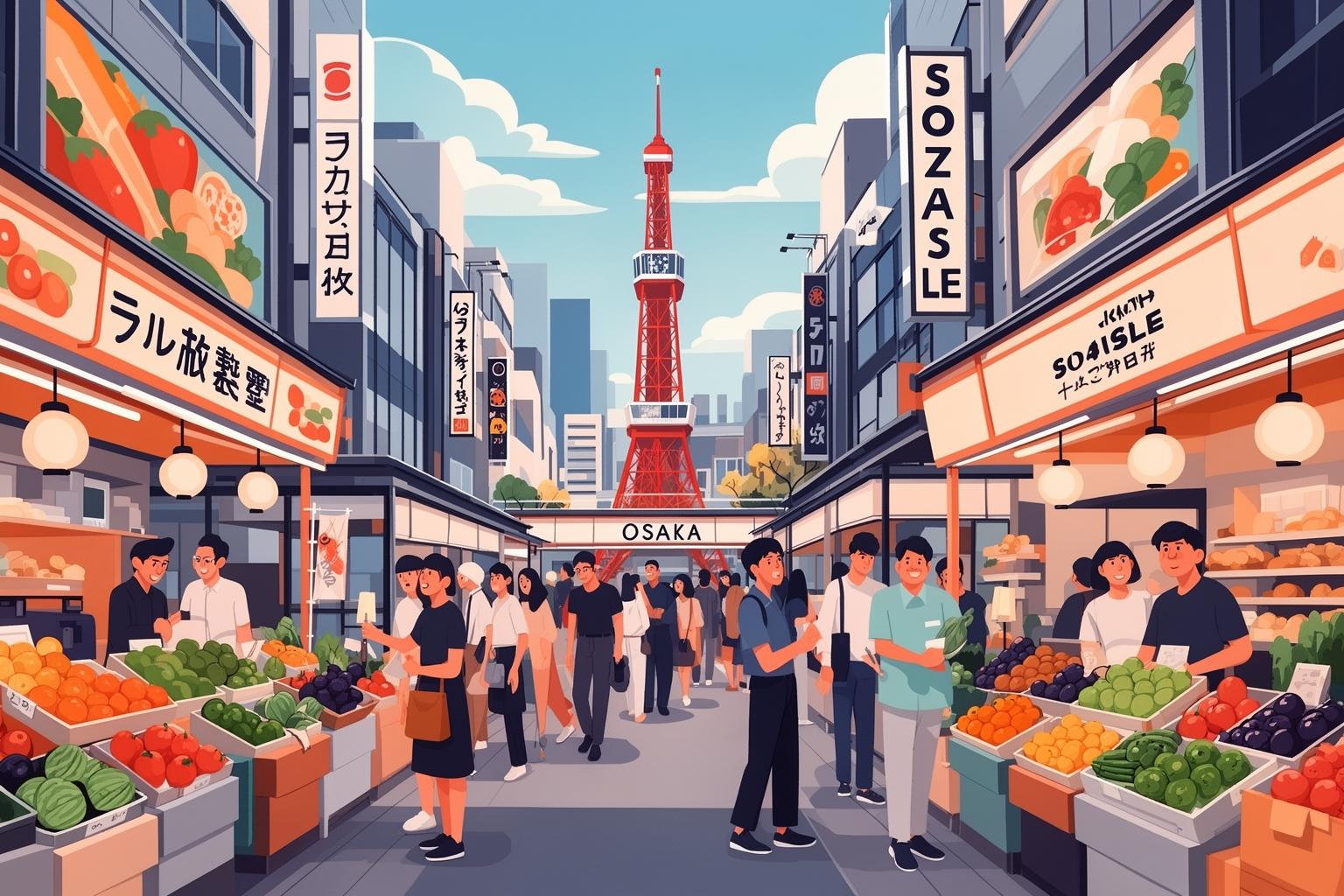
In many parts of the world, depending on ready-made supermarket food carries a faint sense of defeat. It implies you’re overworked, uninspired, or simply can’t be bothered. But in Osaka, the opposite holds true. Embracing sozai isn’t a sign of failure; it’s a mark of smartness. It’s a deliberate choice based on a worldview that values pragmatism, efficiency, and above all, value. This isn’t just about saving time. It’s about optimizing your life, a concept the people of Osaka have turned into an art form.
Decoding the “Kuidaore” Mentality on a Budget
Every travel guide will mention kuidaore, Osaka’s famous motto, which means “eat until you drop” or “eat yourself into ruin.” Tourists take this as permission to indulge in takoyaki, okonomiyaki, and premium wagyu beef. But for locals, kuidaore carries a much deeper, more practical significance. It’s not about spending extravagantly; it’s about a passionate, relentless quest for the best possible taste at the lowest possible price. It’s about value, or as they say locally, securing a good kosupa (cost performance).
This is where sozai becomes the ultimate expression of the kuidaore spirit. Consider it from an Osakan viewpoint. You could buy potatoes, ground meat, onions, panko breadcrumbs, and a large bottle of oil to make your own croquettes. You’d spend over a thousand yen, fill your small apartment with frying smells for three days, and then face the messy, hazardous cleanup of hot oil. Or you could walk ten minutes to the local Life supermarket and buy a perfectly crispy, professionally crafted croquette for less than a hundred yen. The choice is clear. Choosing sozai isn’t laziness; it’s kashikoi—it’s clever. It’s a strategic use of your time, money, and energy.
This mindset feels notably different from Tokyo’s. In the capital, there’s often a stronger focus on aesthetics and presentation. Tokyo’s grand department stores’ basement food halls, the depachika, are temples of culinary artistry. A beautifully packaged bento from Isetan or Mitsukoshi is a status symbol, a small luxury reflecting your taste and refinement. In Osaka, bragging rights come from the opposite side. Nobody is impressed that you spent 2,000 yen on a fancy bento. They are, however, deeply impressed when you reveal you grabbed a delicious, family-sized pack of chicken nanban for 250 yen by perfectly timing the half-price sticker at Super Tamade. That’s more than just a meal; it’s a victory. A story to share. Proof of your skills as a savvy urban hunter-gatherer.
The Unspoken Hierarchy of Sozai
At first glance, the sozai corner appears to be a chaotic assortment of plastic containers. But spend enough time there, and you begin to discern the underlying logic—a hierarchy of dishes designed to address specific household needs. It’s a carefully curated library of flavors and textures, with each category serving a distinct function in the city dweller’s daily life.
The undisputed champions of the aisle are the agemono, or fried foods. This section forms the heart and soul of the sozai experience. It’s a glorious array of golden-brown delights: heaps of juicy karaage (fried chicken), thick slices of tonkatsu (pork cutlet), perfectly oval korokke (croquettes, both potato and cream varieties), and torpedo-shaped ebi-fry (fried shrimp). These are the items most troublesome to make at home. The convenience of outsourcing your deep-frying cannot be overstated. It’s the main attraction, the reason the aisle exists.
Next up are the nimono, or stewed dishes. These provide the comforting, soulful side of the meal. Here you’ll find classic home-style dishes that taste like they’ve been simmering for hours. There’s hijiki, a savory black seaweed cooked with carrots and fried tofu; kiriboshi daikon, dried shredded radish stewed in a sweet and savory broth; and the beloved nikujaga, a hearty blend of meat, potatoes, and onions that serves as Japan’s version of classic beef stew. These dishes offer nourishment and tradition without the long cooking times.
Then come the yakimono, the grilled and pan-fried items. This section is dominated by fish. Thick, oily fillets of mackerel (saba) or salmon (sake), grilled with salt until the skin is blistery and crisp, are staples. This is another problem-solver. Grilling fish in a small Japanese apartment without a strong ventilation fan is a recipe for lingering odors. The supermarket handles that for you. You’ll also find neat stacks of tamagoyaki, the slightly sweet rolled omelet tricky to perfect at home but essential for a balanced bento.
Finally, there are the salads and aemono (dressed dishes). Here you find the Japanese-style potato salad, heavy on mayo and sometimes mixed with ham and cucumber, along with its cousin, macaroni salad. There are also healthier options like goma-ae, boiled spinach dressed in a sweet sesame sauce, and various seaweed and cucumber salads dressed with vinegar. These complete the meal, offering a fresh, cool contrast to the richness of the fried and stewed dishes.
Mastering the Clock: The Art of the Half-Price Sticker
Grasping the different types of sozai is just the beginning. To truly conquer the aisle and earn the respect of your Osakan neighbors, you must master the art of spotting the discount sticker. This is no casual task; it’s a city-wide, unspoken sport played every evening in every supermarket. It’s a game of timing, observation, and quiet determination. And the ultimate prize is the coveted hangaku—the 50% off sticker.
The “Hangaku” Hunt is an Osaka Sport
The sticker system is elegantly simple. As the evening wears on and food nears its sell-by time, staff emerge from the kitchen armed with a sticker gun. The first round of discounts, typically 20% or 30% off, might appear around 4 or 5 PM. This stage suits the amateurs, the early birds who need to get home soon. The real game starts later, usually between 7 PM and 9 PM, depending on the store’s closing time. This is when the final markdown takes place: the glorious, bright red hangaku (半額) sticker that cuts the price in half.
Witnessing this for the first time is eye-opening. A quiet, knowing crowd gathers around the sozai aisle. There’s no pushing or shouting; it is Japan, after all. Yet there’s a palpable tension in the air. People wandering the aisles moments before now move with purpose. They aren’t focused on the food itself—they are watching the sticker person. They know the staff’s routes. They know which items get stickered first. They arrange their carts with the strategic precision of chess masters.
When the staff member finally appears, a silent dance unfolds. Shoppers discreetly follow, keeping a respectful distance but never losing sight of the sticker gun. As soon as a sticker is applied, a hand is likely to reach out swiftly and gracefully to claim the prize. The key is to be present and ready without being aggressive. It’s a delicate balance. Arrive too early, and you’ll wait for ages. Arrive too late, and you’ll be stuck with nothing but a few lonely packs of pickled ginger. The thrill of grabbing the last pack of discounted tonkatsu just as someone else had their eye on it is a small but deeply satisfying victory that fuels you through the rest of the evening.
What the Stickers Tell You About Osaka Society
What’s most intriguing about the hangaku hunt is the breadth of participants. This practice isn’t limited to struggling students or pensioners on fixed incomes. It’s everyone. You’ll see salarymen in sharp suits, their briefcases resting in their carts, patiently waiting alongside mothers trying to get their kids home. You’ll see young couples planning dinner and elderly folks who have been doing this daily for decades. It’s a great equalizer.
This shared ritual reveals much about local culture. First, it reflects a deep-rooted aversion to waste. The concept of mottainai—a feeling of regret over waste—is strong throughout Japan, but in Osaka, it’s combined with a robust economic pragmatism. Why pay full price for something perfectly good today but destined to be thrown out tomorrow? It’s illogical. Paying half price isn’t cheap—it’s smart. It’s a rational choice.
In Tokyo, there might be subtle social pressure to appear affluent and not rely on discounts. Waiting for markdowns can carry a slight stigma. In Osaka, the stigma is reversed. The person buying a full-price bento at 8 PM is the one who will be judged—seen as either a tourist or someone who’s bad with money. The shopper proudly carrying a basket full of hangaku items is viewed as a savvy consumer, a winner in the daily game of urban living. You share a knowing nod with fellow hunters, a silent recognition of your shared victory over the system. You are all part of the same club.
Building Your Perfect, Imbalanced, Glorious Osaka Meal
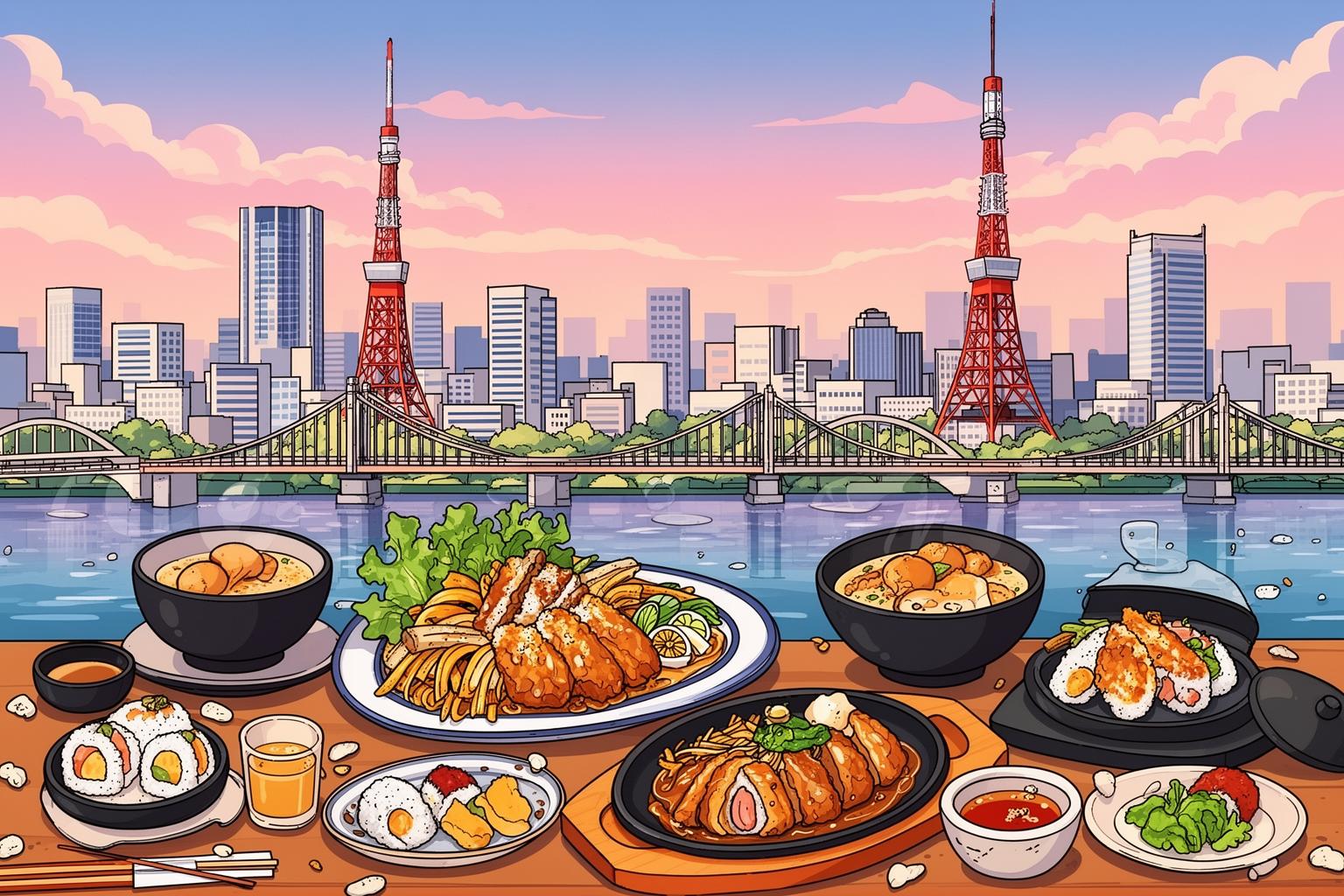
Once you’ve skillfully navigated the social dynamics and perfectly timed your hunt, you head home with your bounty. Now comes the final, essential step: putting together the meal. This is where the true, unvarnished reality of everyday Osaka dining comes to light. It often differs greatly from the refined, multi-course ichiju-sansai (one soup, three dishes) ideal of Japanese cuisine. It’s something more straightforward, more genuine, and frequently, more brown.
The “Brown Food” Doctrine
The cornerstone of any sozai meal is a bowl of freshly cooked white rice. This is non-negotiable and almost always prepared at home in a reliable rice cooker. A simple bowl of instant miso soup, made by adding hot water to a paste, often accompanies it. The rest of the plate serves as a canvas for your sozai finds. More often than not, that canvas is painted in various shades of brown. A typical weeknight dinner might include a piece of karaage, a potato croquette, and perhaps a small piece of grilled fish. It’s a celebration of fried and savory delights.
Let’s be honest: it’s not the height of healthy eating. Vegetables sometimes feel like an afterthought—a small serving of vinegared cucumbers or a scoop of potato salad. This reality sharply contrasts with the international image of Japanese food, often seen as light, delicate, and centered around vegetables and seafood. Osaka’s food culture is heartier, more robust, and distinctly working-class. It’s fuel. It’s meant to be deeply satisfying and comforting after a long day. It’s delicious, unapologetic, and practical without pretense. This is the true taste of home for countless city residents.
The Local Supermarket Showdown: Tamade vs. Life vs. Gyomu
Not all supermarkets are alike, and your choice of sozai hunting ground says a lot about your priorities. The supermarket you pick is a key part of your identity as an Osaka resident, with three major players dominating the scene, each boasting its own unique character.
First up is the legendary Super Tamade. Instantly recognizable by its garish, neon-lit exterior and loud in-store jingles, Tamade is an institution. It reigns supreme as the king of budget shopping. Walking into Tamade is a full sensory rush; it’s chaotic, a bit gritty, and utterly thrilling. They’re famous for their near-mythical “1 yen sales,” where you can buy select items for a single yen if you meet a minimum purchase. Their sozai section is huge and unbelievably cheap. The quality can be hit-or-miss, and items are often unapologetically greasy, but the prices are so low they defy reason. You visit Tamade for the thrill of the bargain and the pure, unfiltered Osaka experience of getting an astonishing amount of food for your money.
Next is Life, the dependable, mid-range champion. Life supermarkets are the city’s workhorses. They are cleaner, brighter, and more organized than Tamade. Their sozai selection is reliably good, with a balanced variety of fried foods, stews, and fresh salads. This is where most families do their routine shopping. The hangaku hunt at Life is a more civilized affair, though no less competitive. Life represents the steady, everyday choice. It’s less of an adventure than Tamade, but you always know you’ll get something solid and tasty.
Finally, there’s Gyomu Super (Business Supermarket). As a wholesale store, its focus is somewhat different. While they carry some fresh sozai, their main strength lies in the freezer aisles. This supermarket suits the advanced budget strategist. Here, you can buy giant bags of frozen karaage, gyoza, spring rolls, and croquettes at extraordinarily low prices. You’ll have to handle the final cooking step yourself—frying, baking, or microwaving—but it lets you stock up for weeks. A well-stocked freezer of Gyomu Super goods, paired with freshly cooked rice nightly and a few fresh sozai items from Life or Tamade, is the holy grail of Osaka budget dining.
Beyond the Supermarket: The Sozai Ecosystem
While the supermarket serves as the primary stage for sozai, it isn’t the only place to engage with this culinary tradition. The entire city forms a complex ecosystem of ready-made food designed to cater to its fast-paced, value-conscious population. To truly grasp the culture, you need to look beyond the large chains and delve into the essence of Osaka’s neighborhoods.
The Shotengai’s Specialists
At the heart of many Osaka neighborhoods lies the shotengai, the covered shopping arcade. These vibrant pedestrian streets are filled with small, independent, often family-run shops that have operated for generations. Among the butchers, fishmongers, and greengrocers, you’ll always find the osozai-ya-san—a store devoted entirely to selling homemade sozai.
These shops offer a different kind of experience. While their selection may be smaller than that of supermarkets, the quality tends to be much higher, featuring recipes handed down through generations. The butcher on the corner sells freshly fried menchi-katsu (minced meat cutlets) far superior to mass-produced alternatives. The local tofu shop creates unique side dishes using fresh tofu and soy milk byproducts. Here, transactions feel more personal. The obaachan (grandmother) running the shop knows her regular customers, chatting about the weather and asking how your day has been as she packs your order. The emphasis here is less on dramatic half-price discounts and more on trust and community. You may pay a little extra, but you’re supporting a local business and receiving something made with genuine care. This is where the “friendly Osaka” stereotype becomes real—not through loud greetings but through quiet, consistent daily interactions centered around a shared love of good food.
What It All Means for You, the Foreign Resident
So, why is all this important for someone building a life in Osaka? Because mastering the sozai aisle—and the wider ecosystem it represents—is one of the quickest ways to tune into the city’s unique rhythm. It’s a practical skill that extends far beyond simply saving money on groceries.
Once you start learning the hangaku schedule at your local supermarket, you stop being just an anonymous foreigner and become part of a local ritual. You share a silent nod of acknowledgment with fellow shoppers, and in that moment, you belong. You become woven into the neighborhood’s fabric.
Embracing sozai also lifts the veil on the often-intimidating world of Japanese cooking. It relieves the pressure to become a master chef overnight and allows you to enjoy authentic, home-style Japanese meals every night simply by assembling them. You cook your rice, add your sozai, and have a complete, satisfying meal. It’s a wonderfully simple system.
Most importantly, it offers a straightforward glimpse into the Osaka mindset. It teaches that value is crucial, waste is a serious no-no, and there is immense pride in being a savvy, practical consumer. It reveals that the spirit of kuidaore isn’t found in pricey restaurants but in the daily, relentless, joyful pursuit of the tastiest meal at the best price. This philosophy is served every day in humble plastic containers, waiting for you in the bright, busy aisles of the local supermarket.