You’ve heard that Osaka is Japan’s Kitchen, the place where the nation comes to eat. But have you ever wondered where this city gets its cash? Where does it forge the deals and hustle the goods that fuel all that feasting? The answer isn’t in some gleaming, futuristic skyscraper district. It’s in a grid of streets that feels more gritty than glamorous, a place called Semba. To the tourist, it’s just a blur of wholesale textile shops and nondescript office buildings between the neon hubs of Umeda and Namba. But to understand Osaka, to really get what makes its people tick, you have to understand Semba. This isn’t just a business district; it’s the 400-year-old engine room of Osaka’s commercial spirit. This is where the city’s DNA was coded—a unique blend of pragmatism, speed, and a relentless focus on the bottom line. Forget the formal rituals of Tokyo business. Here, work is a contact sport, and the rules are written in the unshakeable logic of profit and loss. If you want to know why Osaka people seem so direct, why they talk about money so openly, and why the line between work and play is so wonderfully blurred, you need to walk these streets. This is your guide to the work culture and after-hours rituals of Osaka’s historic merchant center, the place where the real soul of the city clocks in every morning.
The dynamic energy of Semba not only fuels Osaka’s relentless work ethic but also invites you to explore the cultural nuances of mastering nebiki kosho in the neighboring shotengai.
The Semba Standard: More Than Just Business
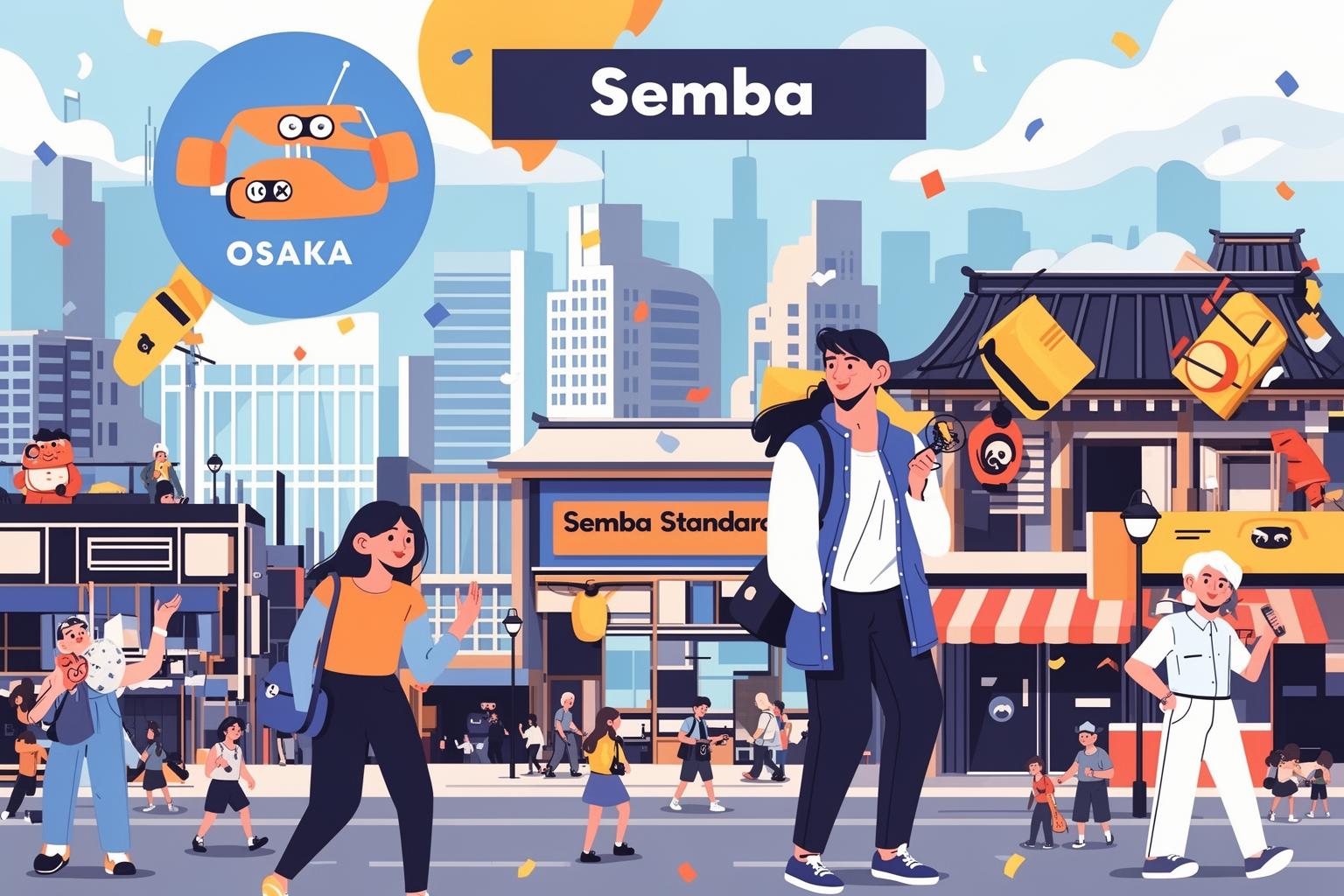
In Tokyo, business often feels like a carefully choreographed performance with scripts to follow, bows to execute, and a strict hierarchy guiding every interaction. Semba discards that script entirely. Here, business is a conversation—usually loud and fast—shaped by a philosophy that has defined this neighborhood for centuries. It’s more focused on function than form, emphasizing what you bring to the table rather than who you are. This is the domain of the akindo, the Osaka merchant, whose mindset influences every office, shop, and back-alley deal.
“So, What’s the Bottom Line?” – The Akindo Mindset
The term akindo means merchant, but in Osaka, it carries respect and signifies a particular kind of intelligence. The akindo mindset is rooted in extreme pragmatism. The first, and often the final, question always revolves around the bottom line: “Sonde,なんぼなん?” (Sonde, nanbo nan? – So, how much is it?) or “それで儲かるんか?” (Sore de mokarunka? – Is there any profit in that?). This isn’t seen as rude or blunt; rather, it’s the most effective way to decide if a discussion is worthwhile. Time is money, and wasting it on vague ideas without a clear profit potential is the biggest offense.
This sharply contrasts with Tokyo’s corporate culture. In a Tokyo meeting, hours might be spent discussing corporate philosophy, long-term vision, and the precise steps to reach a goal, with actual numbers often only mentioned by the third or fourth meeting. In Semba, the process is reversed: you lead with the numbers, demonstrate value first, and then address the details. I once witnessed a massive textile shipment deal sealed on a handshake in a cramped office near Sakaisuji-Honmachi. The buyer—an experienced man in a well-worn suit—cut off the seller’s polished presentation mid-sentence, scribbled a figure on a notepad, slid it across the desk, and said, “This price, this delivery date. Can you do it or not?” There was no formal proposal or PowerPoint. Just a number. The seller nodded, they shook hands, and the deal was done. Trust and relationship had already been built; the rest was just logistics. That’s the akindo approach: foster trust over years, close deals in minutes.
Speed is Everything, and Lunch is on the Go
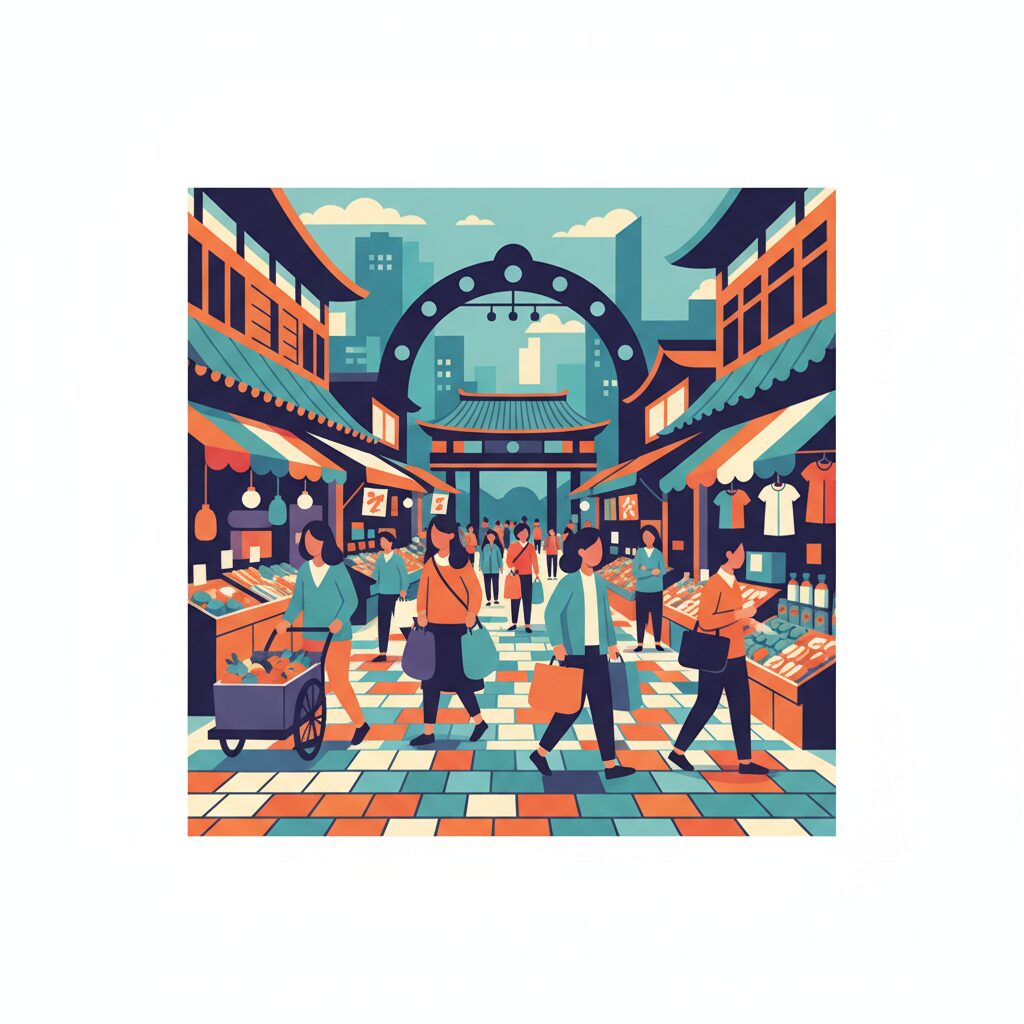
The pace of a Semba workday is unrelenting. Mornings are a blur of phone calls, negotiations, and deliveries. The streets resemble a chaotic dance of delivery vans, bicycles piled with boxes, and businesspeople power-walking between appointments. Such a rhythm demands efficiency in every aspect—especially lunch. The idea of a leisurely one-hour lunch break is alien here. Instead, there’s a vibrant culture of quick, inexpensive, and surprisingly tasty “salaryman” lunches.
Walk down any side street between Honmachi and Yodoyabashi around noon, and you’ll be greeted by the aromas of grilled fish, simmering curry, and fried chicken. Small, family-run eateries serve set meals—a main dish, rice, miso soup, and pickles—for just 500 yen or 1,000 yen. The objective isn’t to savor the meal; it’s to refuel swiftly and affordably. Men and women in suits come in, order, eat, and leave in less than fifteen minutes. They often dine alone, hunched over counters, scrolling through phones or staring ahead, mentally gearing up for the afternoon’s challenges. This isn’t anti-social—it’s practical. The real socializing and relationship-building happen after the official workday ends.
Decoding the Osaka Work-Speak
Communicating in a Semba office can be a culture shock for anyone used to the layered, indirect language that characterizes much of Japan. The Osaka dialect, or Osaka-ben, is known for its unique rhythm and vocabulary, but in a business setting, its most notable feature is its directness. People say exactly what they mean and expect the same in return. This frankness is often softened with a generous dose of humor, creating a communication style that is blunt yet surprisingly warm.
Joking Your Way to a Deal
In Osaka, humor is not a distraction from business; it is an integral part of it. A timely joke can ease tension during difficult negotiations, quickly build rapport with a new client, and demonstrate that you don’t take yourself too seriously—an attribute highly valued there. Self-deprecating humor is particularly effective. An Osaka salesperson might begin a pitch with, “いやー、うちは貧乏な会社でんねん” (Iyaa, uchi wa binbou na kaisha dennen – Well, we’re just a poor little company), accompanied by a smile. This isn’t a sign of weakness but a strategic tactic. It disarms the other party, helps them relax, and paves the way for a more honest and cooperative conversation. It conveys the message, “We’re all just people trying to make a living, so let’s skip the corporate formalities and work together.” Foreigners who enter with a rigid, overly formal presentation can be met with suspicion, as they’re seen as hiding something. The ability to laugh, especially at oneself, signals confidence and trustworthiness.
The Beautiful Brutality of “Chau Chau”
One of the most common and initially startling phrases you’ll encounter is “ちゃうちゃう” (chau chau – no, no, that’s wrong/different). While in Tokyo a disagreement might be diplomatically phrased as, “That is an interesting perspective, however, have we considered…,” the Osaka counterpart is a quick and unequivocal “chau.” It’s not intended as a personal attack but is simply the most efficient way to correct a misunderstanding or reject a poor idea. There’s no time to beat around the bush. If a figure is incorrect, a deadline is unattainable, or a proposal doesn’t make sense, it will be pointed out immediately and without apology.
Similarly, the term “あかん” (akan) is a definitive, non-negotiable “no” or “it’s no good.” There’s no room for ambiguity. For foreigners, hearing this can feel like hitting a brick wall, but understanding it is crucial to grasping the local mindset. It saves everyone time by making clear exactly where things stand so they can move on to finding an acceptable solution. The honesty may sting briefly, but it stems from a deep respect for efficiency and a strong desire to get things done. In Semba, clarity always takes precedence over comfort.
The 5 PM Shift: Where Real Business Begins
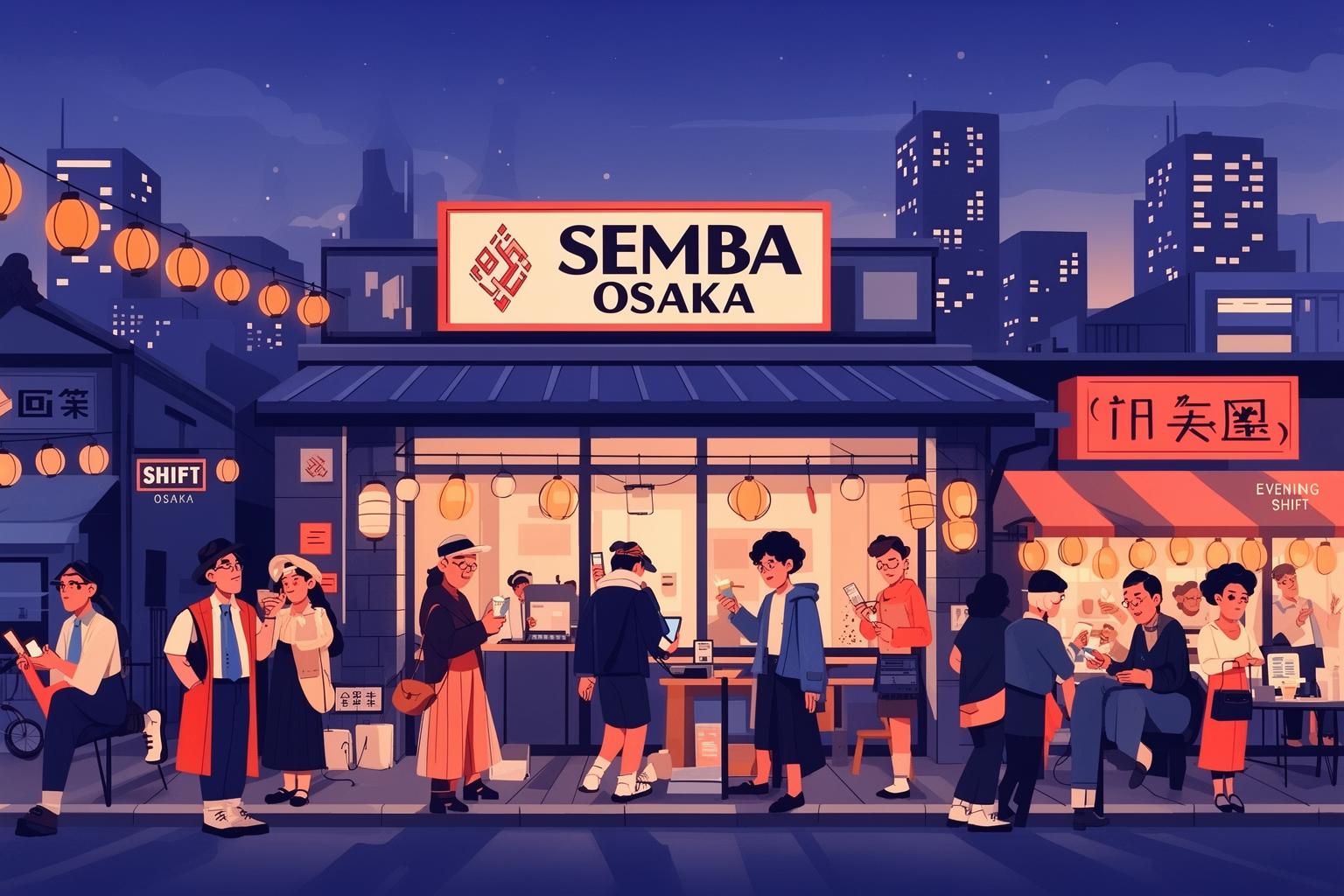
When the office lights dim at the end of the day, the work doesn’t stop—it simply shifts location. The after-hours scene in and around Semba isn’t just about unwinding; it’s a vital part of the business ecosystem. This is where relationships are strengthened, information exchanged, and the deals initially outlined in the office are finally sealed. The formal, sterile meeting room transforms into the warm, lively, and much more productive environment of the local bar. Each type of venue fulfills a distinct role in this complex interplay between work and leisure.
The Tachinomi Debrief: Quick, Loud, and to the Point
The tachinomi, or standing bar, represents Osaka’s efficient approach to socializing. These small, no-frills spots, often hidden in the narrow alleys of Ura-Semba, have patrons standing shoulder-to-shoulder, mingling with both strangers and colleagues. The entry barrier is minimal—simply walk in and order a beer. A visit to a tachinomi is usually the first stop after clocking out. It’s a place for a quick team debrief, a chance to vent about the day’s challenges, or to casually connect with someone from another company. Conversations move swiftly and naturally—you might be discussing a difficult client one moment and laughing about a baseball game the next. This is networking in its rawest, most organic form. Deals rarely close here, but the groundwork is laid. Information is the currency, and a casual chat over an inexpensive highball can uncover gossip or business leads far more valuable than any formal report.
Izakaya Diplomacy: Building Trust Over Yakitori
When deeper conversations are needed, the group migrates to an izakaya. These casual pubs, featuring private or semi-private tables, serve as Osaka’s real boardrooms. Here, with ties loosened and spirits raised by sake and beer, the true work of building trust unfolds. A boss might take their team to an izakaya not just to reward them, but to hear their honest opinions, free from office politics. Competitors might sit together to discuss industry trends, forging alliances that would be impossible in a rigid corporate setting. This is where the essential Japanese practice of nemawashi (laying the groundwork) takes place. Ideas are floated, reactions gauged, and consensus built informally so that the official meeting’s outcome is already decided. Over shared plates of yakitori and karaage, colleagues become friends, and business contacts turn into trusted partners. This human element of business is what Osaka excels at, and it cannot be replicated through email or in conference rooms.
The Kissaten: The Unofficial Office
Not all after-hours business involves loud conversation and alcohol. The modest kissaten, a traditional Japanese coffee shop, holds a deeply important role. These quiet, dimly lit spaces with dark wood paneling and worn velvet seats act as the city’s unofficial offices. In the morning, bosses often have low-key one-on-one meetings with key staff before heading to work. Throughout the day, they provide salespeople a sanctuary to write reports, make calls, or take a breather between client visits. In the late afternoon, they become ideal neutral spaces for sensitive negotiations or serious discussions needing discretion. Unlike bustling cafes, a kissaten offers privacy and a timeless atmosphere. The pace is slow, the coffee strong, and the environment conducive to focused dialogue. It’s in these quiet corners, over a cup of siphon coffee and a thick slice of toast, that some of the most delicate and important business in Semba quietly unfolds.
How Semba Explains Osaka
The frantic energy, straightforward communication, and seamless blend of work and life—it’s not merely a business style, but the very essence of Osaka itself. The spirit of the Semba merchant has flowed from this central district to shape the character of the entire city. Osaka feels distinct from Tokyo because it follows a different set of principles, refined over centuries of trade in these very streets. It’s a city founded on the strength of human connections, common sense, and the relentless pursuit of a good deal.
A City Built on Relationships, Not Rules
Ultimately, the Semba work culture shows that Osaka thrives on relationships, not just regulations. In Tokyo, the system is paramount. There’s a proper protocol for everything, and deviating from it is discouraged. In Osaka, if the official route is inefficient, people find a better way. They’ll call a friend of a friend, cash in a favor, or make a direct appeal based on a long-established personal connection. This is why the city can feel chaotic yet function so effectively. There’s an underlying network of trust and mutual obligation that keeps everything together. The akindo learned long ago that strong relationships are more valuable than any contract. Contracts can be broken, but bonds of trust—built over countless beers in a smoky izakaya—are assets that pay lifelong dividends.
What Foreigners Often Miss
For outsiders, this culture can be difficult to navigate. The directness may be mistaken for aggression. The constant joking might seem unprofessional. The expectation to socialize after work can feel like a burden. But what foreigners often overlook is the warmth and loyalty beneath it all. The blunt feedback is meant to help you improve, not to put you down. The humor is an invitation to connect on a human level. And the after-work drinks are a sincere effort to build a team that feels more like family than a group of employees. To succeed in Osaka, whether in business or daily life, you must embrace this mindset. Forget formal titles and rigid hierarchies. Focus on being reliable, practical, and personable. Show that you understand the bottom line but also that you can share a laugh. In the world of the Semba merchant, your character is your credit. And in Osaka, that’s the only currency that truly matters.