You’ve been in Osaka for a few months. You’ve got your apartment sorted, you’ve figured out the Midosuji Line, and you’re starting to feel at home. Then you look at your bank account. The culprit isn’t the rent or the train pass. It’s the groceries. You walk through the pristine, brightly lit aisles of the local Life, Kohyo, or Aeon supermarket, picking up perfectly shaped vegetables in plastic trays and neatly packaged cuts of meat. The total at the register always feels… a little steep. You find yourself wondering, “Is this just how much it costs to live in Japan?” You’ve heard the legends of Osaka being the cheaper, more down-to-earth city, but your wallet isn’t feeling it. The truth is, you’re shopping in the wrong place. You’re playing by Tokyo rules in a city that runs on a completely different operating system. The real economic heartbeat of Osaka, the secret to its celebrated affordability, isn’t found under fluorescent lights. It’s pulsing under the covered rooftops of its sprawling, chaotic, and intensely human shopping arcades—the shotengai. To understand the difference between these two worlds is to understand the soul of Osaka itself.
While the bright supermarket aisles may initially suggest a costly living standard, examining Osaka’s value-for-money approach reveals unexpected efficiency in the city’s unique economic landscape.
The Supermarket Illusion: Convenience at a High Price
The All-in-One Trap
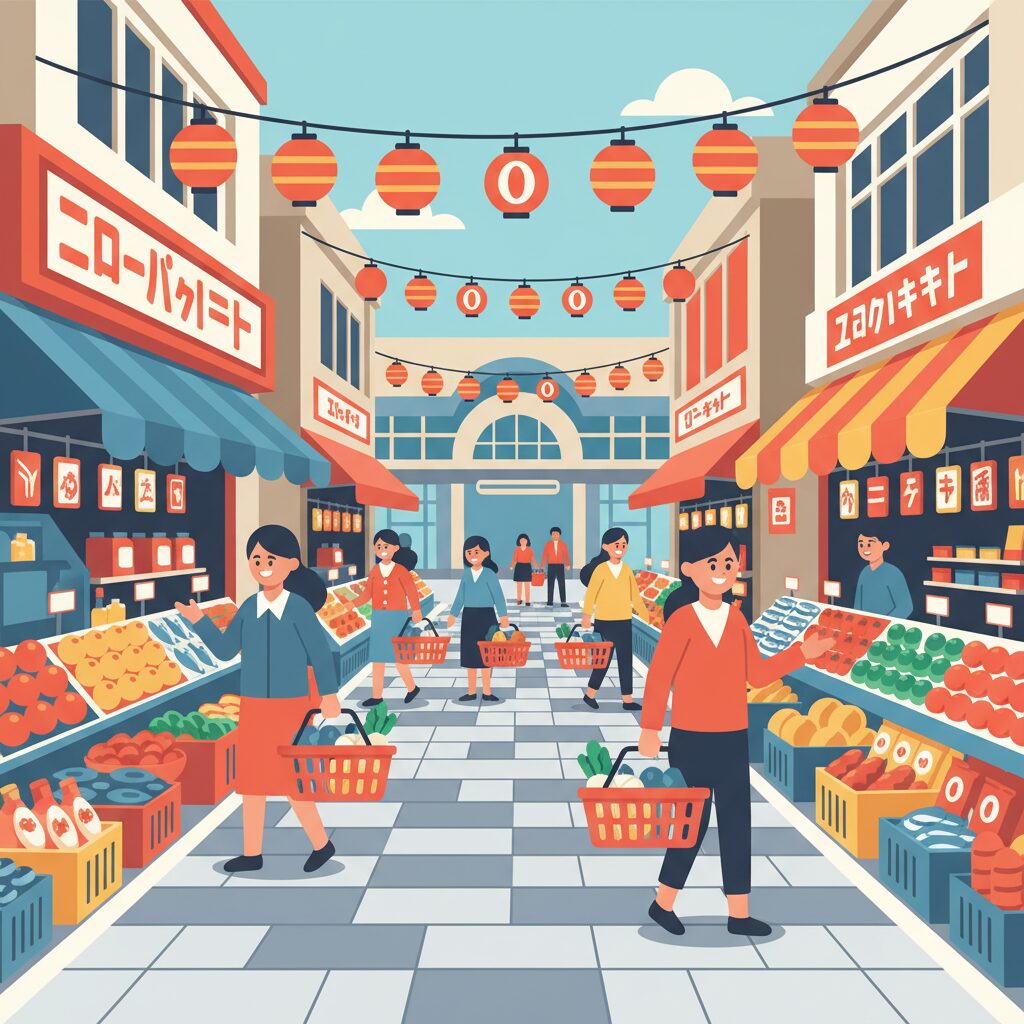
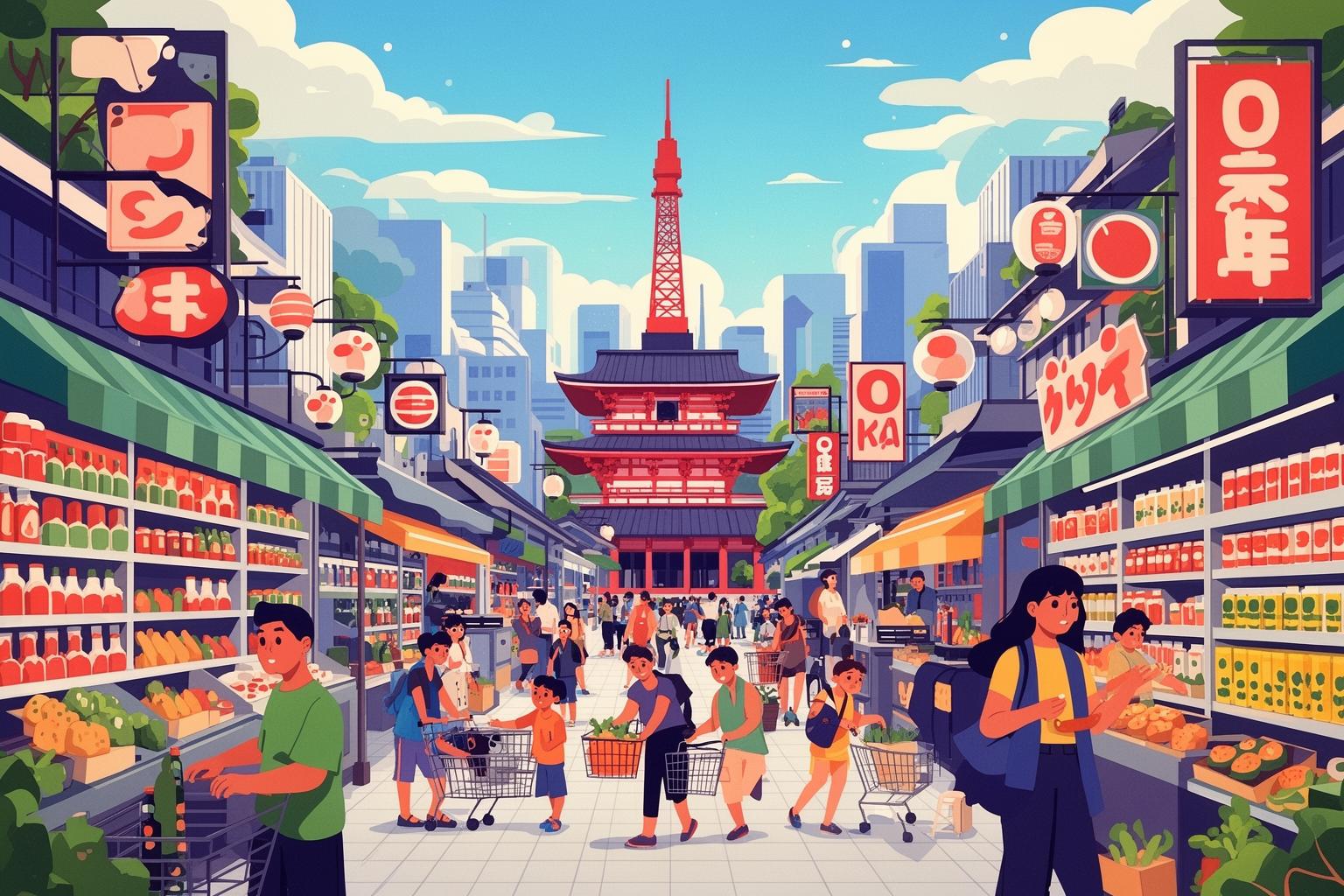
Step into any major supermarket in Osaka, and you enter a world of carefully curated perfection. It’s clean, quiet, and overwhelmingly convenient. You can pick up everything in one trip: milk, bread, pre-cut stir-fry vegetables, laundry detergent, and even a new pair of socks. For many foreigners, this feels familiar and comforting, resembling the grocery stores back home. The produce is flawless—round tomatoes, straight cucumbers, and apples polished to a shiny gleam. Everything is hygienically wrapped, portioned, and labeled. There are no surprises. It’s a seamless, efficient, and entirely impersonal experience.
The Price of Perfection
However, that perfection comes at a steep cost. You’re not just paying for the food; you’re paying for the entire system that delivers it so flawlessly. You cover the expenses of sophisticated logistics, a massive marketing budget, rent for a large space, the 24-hour electricity bill, and the vast amount of plastic packaging needed to present everything so attractively. A single, perfect bell pepper wrapped in plastic might cost ¥150. A small tray of neatly trimmed chicken thighs could be ¥600. These costs accumulate, making your weekly grocery run a notable expense. The supermarket sells you a product, but it also sells you an idea: the idea of effortless, modern living.
The Tokyo Standard
This approach essentially represents the Tokyo standard. In a city where time is the most precious currency, convenience takes precedence. People are willing to pay extra to save a few minutes and have everything available under one roof at any hour. The transaction is quick, predictable, and requires no social effort. This mindset has spread to cities across Japan, including Osaka. Yet for Osakans, with their deep-rooted merchant-class heritage, paying solely for convenience often feels like a bad deal. They understand there’s a smarter way. They recognize that value comes not just from what you buy, but also from how and where you buy it.
Welcome to the Shotengai: Osaka’s Economic Soul
More Than Just a Market
Leaving the sterile supermarket behind and stepping into a local shotengai feels like moving from a black-and-white film to a vibrant, chaotic Technicolor scene. These covered arcades are the lifeblood of Osaka’s neighborhoods. They are noisy, crowded, and alive with an unfiltered, raw energy. Instead of background instrumental music, you hear vendors calling out the day’s bargains in gravelly voices: “Yasui yo, yasui yo!” (“It’s cheap, it’s cheap!”) or the steady chopping sounds from the butcher’s block. The air carries a rich blend of aromas—the sweet smell of roasting sweet potatoes, the salty scent of grilled fish, and the earthy fragrance of fresh daikon radishes piled high. This isn’t a place for quiet reflection; it’s a place of activity, community, and life unfolding openly.
The Specialists Rule
The key distinction of a shotengai is its rejection of the all-in-one store concept. Here, specialization reigns supreme. Instead of shopping in one massive store, you navigate a series of small, often family-run, independent shops. You buy your vegetables from the yaoya, a store dedicated exclusively to produce. You get your fish from the sakanaya, where the owner can tell you precisely when and where that mackerel was caught. For meat, you visit the nikuya; for freshly made tofu from that morning, the tofuya; and for rice, the okomeya. Each proprietor is an expert in their field. They possess deep knowledge about their products, and their reputation is founded on quality and trust rather than a flashy logo or a nationwide advertising campaign.
The Language of the Deal
In a supermarket, you are just an anonymous shopper. In a shotengai, you are recognized as a person. The currency here isn’t just yen; it’s relationships. The first time you come, you’re a stranger. But if you return to the same vegetable stand, the owner will begin to recognize you. A polite nod might turn into a “Maido!” (“Thanks for your business!”), a common Osakan greeting for regulars. Before long, you become a joren-san, a regular customer. That’s when the magic takes place. The elderly woman at the fruit stand might slip an extra mikan into your bag as an omake (a small gift). The butcher might share tips on how to cook a certain cut of pork. They learn your preferences. This is the famous Osaka “friendliness” you hear about—not an abstract warmth, but a practical, relationship-based friendliness built on mutual benefit. They want your repeat business, and you want their quality products at fair prices.
A Practical Price Showdown: A Week’s Groceries

Let’s make this concrete. Picture a simple shopping list for a few days’ worth of meals: two chicken breasts, some minced pork, salmon fillets, onions, potatoes, carrots, a head of cabbage, a block of tofu, and a dozen eggs.
The Supermarket Cart
At a typical supermarket, here’s an approximate total for your purchase:
- Chicken Breasts (2): ¥650
- Minced Pork (200g): ¥400
- Salmon Fillets (2): ¥700
- Onions (3-pack, perfectly sized): ¥250
- Potatoes (3-pack, washed): ¥280
- Carrots (3-pack, washed): ¥250
- Cabbage (half head, wrapped): ¥150
- Tofu (packaged, long-life): ¥120
- Eggs (10-pack, brand name): ¥300
Estimated Supermarket Total: ¥3,100
The Shotengai Haul
Now, take that same list to a shotengai.
- Vegetables: You visit the yaoya. Instead of flawless, plastic-wrapped produce, you find heaps of loose items. You pick your own bag. A large bag of onions costs ¥300. A sack of slightly irregular but perfectly edible potatoes is ¥200. Carrots with the greens still attached are ¥150 per bunch. A whole, large head of cabbage is ¥100. The idea here is embracing the fuzoroi—the imperfect ones. They taste just as good but are much cheaper.
- Meat & Fish: At the nikuya, you ask the butcher directly for two chicken breasts. They’re often bigger and less expensive, around ¥500 for both. The minced pork is freshly ground there for ¥300. At the sakanaya, two beautiful salmon fillets, likely fresher than at the supermarket, cost about ¥500.
- Tofu & Eggs: You drop by the tofuya, where a large block of fresh, silky tofu made just hours ago in the back sells for only ¥80. At a general food store or sometimes the yaoya, a pack of 10 local eggs is ¥220.
Estimated Shotengai Total: ¥2,050
The Final Tally and the ‘Shimarisu’ Mindset
You’ve saved over ¥1,000—approximately 34%—on a single shopping trip. Multiply that over a year, and the savings add up considerably. This isn’t about being kechi (stingy), a term with negative implications. It’s about being shimarisu, an Osakan expression of praise meaning thrifty, clever, and resourceful. A shimarisu person takes pride in spotting the best value. They treat it like a game, a skill. Spending money on overpriced, over-packaged goods is foolish, not classy. The shotengai is the arena where this game unfolds every day.
The Unspoken Rules of the Shotengai Game
To truly succeed, you need to grasp the local etiquette. This isn’t a simple transactional free-for-all; there are unwritten rules to follow.
Timing is Everything
The pace of the shotengai is key. Visit in the morning for the best selection, especially when it comes to fish. However, the real bargains come in the late afternoon, typically after 4 PM, during the yuugata no seru—the evening sale. Vendors must clear out their perishable goods for the day. You’ll hear their calls change and see prices drop dramatically. Vegetables that were ¥200 in the morning may suddenly be ¥100. Prepared foods (souzai) from deli shops often get discounted by 30% or even 50%. Planning your shopping trip for the day’s end is a fundamental part of the shimarisu strategy.
Cash is Still King
Although Japan is gradually moving toward a cashless society, many small, independent vendors in the shotengai still prefer cash. Trying to pay by credit card or scanning a QR code might earn you a disapproving look. Come equipped with coins and small bills to keep transactions smooth, quick, and in line with the norms of many of these establishments.
Build Your Reputation
This is the most important rule. Don’t treat the shotengai like an anonymous vending machine. You’re entering a social environment. Learn a few simple phrases, such as a morning “Ohayo gozaimasu” or an afternoon “Konnichiwa.” When you pay, a clear “Ookini” (Osaka’s way of saying “thank you”) goes a long way. Make eye contact. Smile. Don’t hesitate to ask, “Kyo no osusume wa nan desu ka?” (“What do you recommend today?”). This shows you respect their expertise. This is not a place for aggressive haggling. Discounts are earned through loyalty and friendliness, not confrontation. The omake is a reward for good customers, not tough negotiators.
What Foreigners Get Wrong
Many newcomers, familiar with different market customs, either stay shy and transactional or haggle too aggressively. Both miss the point. The quiet, efficient shopper gets a fair price but never becomes part of the joren-san inner circle. The aggressive haggler is seen as rude and unlikely to be welcomed back. The Osaka way is a gentle, social negotiation over time, building social capital that pays off with better deals, higher-quality products, and a true sense of belonging.
So, When Should You Use a Supermarket?
This is not a declaration of war on supermarkets. They certainly hold an important place in the life of a modern Osakan.
The Case for Convenience
Supermarkets are your reliable option for many items that the shotengai lacks. If you need specific international ingredients, such as a particular brand of Italian pasta, coconut milk, or exotic spices, the supermarket is your best choice. Dairy products like milk, cheese, and yogurt typically have a broader selection and more competitive prices in large supermarkets. And, naturally, for pantry staples like cooking oil, soy sauce, flour, and cleaning supplies, a single supermarket trip is much more efficient. Plus, if it’s 10 PM and you’ve run out of milk, the 24-hour supermarket is a true lifesaver.
The Modern Hybrid Strategy
The truly savvy Osaka resident doesn’t choose one over the other. They use a hybrid strategy. They visit the shotengai two or three times a week for essential perishables—the fresh fruits, vegetables, meat, and fish that form the core of their meals. This guarantees high quality at a low cost. Then, once a week or every two weeks, they do a larger shop at the supermarket to stock up on everything else—the household goods, dry pantry items, and specialty products. This two-pronged method offers the best of both worlds: the outstanding value and community of the shotengai alongside the convenience and variety of the supermarket. This is the true secret to living well and affordably in Osaka.
Beyond the Bill: Why the Shotengai Defines Osaka
Ultimately, choosing the shotengai is about more than merely saving money. It’s about connecting directly to the city’s cultural core. Osaka’s identity was shaped by its merchant heritage as the “nation’s kitchen” (tenka no daidokoro). The shotengai stands as a living, breathing testament to that history. It embodies the city’s ongoing pragmatism, its skepticism toward pretension, and its strong belief in substance over style.
Shopping in a sleek Tokyo supermarket can feel like visiting a gallery—everything is beautifully arranged but somewhat detached. Shopping in an Osaka shotengai feels like being in a workshop. It’s a bit messy, a bit noisy, but it’s where the real work happens. It mirrors the Osakan spirit: straightforward, unpretentious, and always searching for a fair, honest deal.
So next time you’re about to head to the supermarket, pause for a moment. Take a detour down that covered arcade you usually pass by. Bring cash, bring a smile, and bring an open mind. Buying a bag of misshapen carrots for a hundred yen might not seem like a bold act. But in Osaka, it’s a statement. It’s you, learning the local language of value. It’s your first genuine step from merely living in the city to truly becoming part of it.