The first time you get swept up in the human river that is Umeda Station during rush hour, you learn a fundamental truth about Osaka. This city moves. It moves with a purpose, a rhythm, and a set of unwritten rules that can feel baffling to an outsider. It’s not the quiet, single-file order you might associate with Japan; it’s a form of controlled chaos, an urban ballet where millions of people navigate impossibly tight spaces with an instinctual grace. You see, life in Osaka isn’t just lived; it’s navigated. And mastering that navigation is the first step to feeling less like a visitor and more like you actually belong here. Forget what you think you know from trips to Tokyo or Kyoto. Osaka operates on its own frequency, a broadcast of pragmatic energy that dictates everything from how you walk on the sidewalk to which side of the escalator you stand on. This isn’t about being rude or pushy; it’s about a collective, unspoken agreement to keep the city’s heart pumping efficiently. Understanding this flow is understanding the soul of Osaka itself—a city built on commerce, speed, and a surprising amount of situational awareness. It’s a dance, and if you don’t know the steps, you’re going to get your toes stepped on. So, let’s break down the choreography of the Osaka shuffle.
For those eager to dive deeper into Osaka’s vibrant rhythm, exploring an insider guide to Osaka shotengai reveals another layer of the city’s unique neighborhood culture.
The Sidewalk Symphony: A Masterclass in Urban Mobility
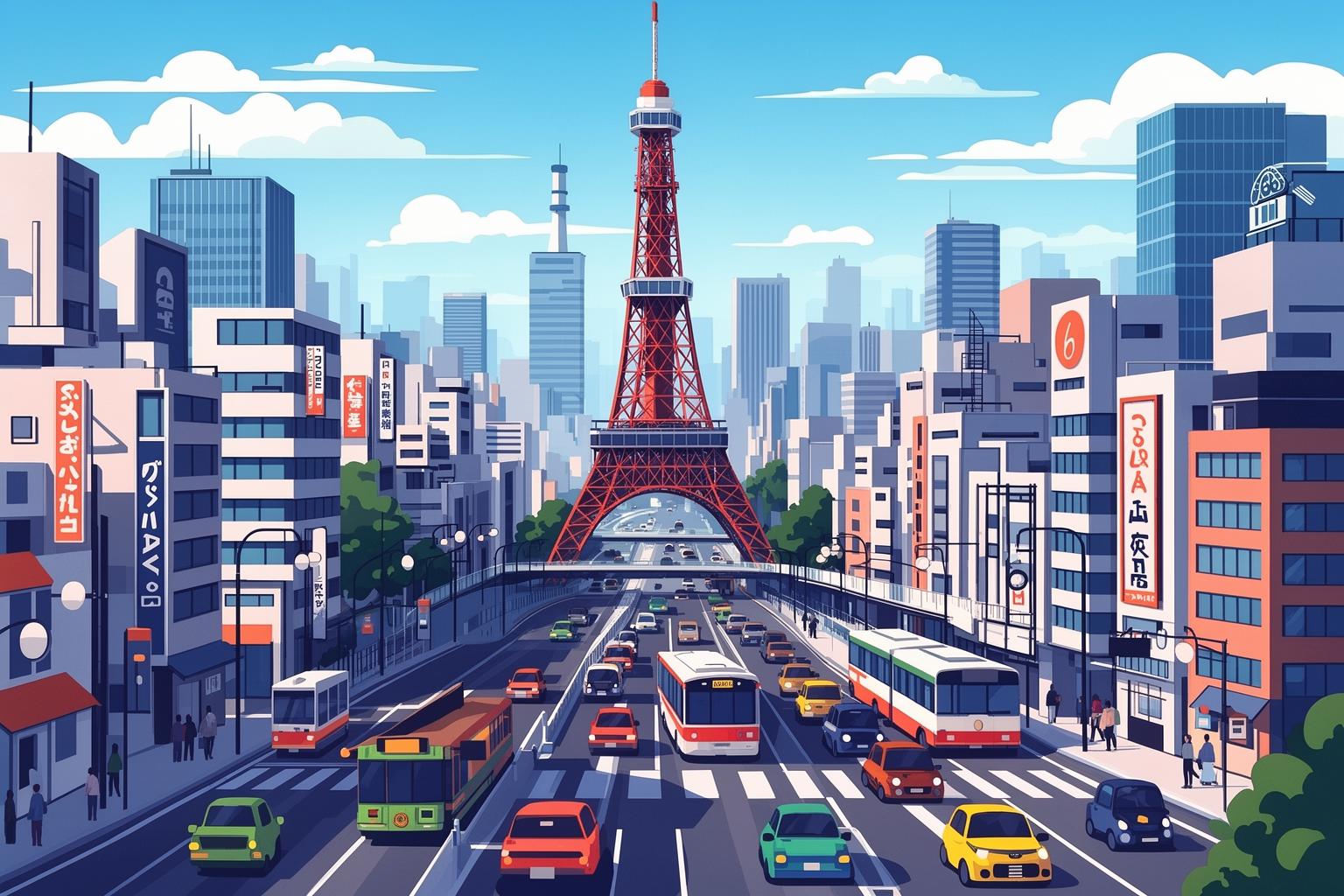
In many countries, pedestrian traffic follows a clear set of rules, often reflecting the flow of cars—keep right or keep left. It’s straightforward. In Osaka, however, the sidewalk functions less as a space with fixed rules and more like a dynamic system. It behaves like a living organism, and your role is to find your place within its currents. There’s no official mandate to “walk on the left,” and trying to cling to one side like a tourist with a guidebook will only slow you down. The true rule is to gauge the environment—or in this case, the pavement—and move along with the prevailing stream of people.
The Human River of Umeda Station
To truly understand this, you need to witness a major transit hub like Umeda or Namba Station at 5:30 PM on a Tuesday. It’s a mesmerizing sight. Thousands of people pour out of train cars, funnel into massive corridors, split into various lines, and cross paths at complex intersections—all without traffic lights or signs directing them. They do it with an almost supernatural awareness of their surroundings. Collisions don’t happen because everyone is simultaneously calculating the movements of dozens of others. They find the gaps, adjust their speed by fractions of a second, and slip through. Foreigners often mistake this for chaos, a free-for-all scramble. But it’s actually the opposite. It’s an incredibly advanced, high-speed sorting algorithm run by millions of individual processors. The assumption is that you are part of this system, expected to stay alert, keep up, and move purposefully. Stopping abruptly in the middle of a corridor to check your phone is the worst offense. It’s like tossing a log into a swiftly flowing river; you don’t only stop yourself, you create a tangled jam behind you.
The Power of the Wordless Rebuke
If you disrupt the flow, you won’t likely receive a New York-style verbal reprimand. Osakans are generally too busy to waste words on you. Instead, you’ll face silent social pressure. You might hear a sharp intake of breath, a subtle “tch” sound, or feel a wave of impatience from those forced to dodge around you. You could get the infamous Osaka glare—it’s not hostile but very heavy. It conveys, “I have a train to catch, a meeting to get to, and you’re a standing obstacle in my way.” This powerful, non-confrontational signal is a vital aspect of daily life. It’s how the city enforces its unspoken rules without constant conflict. The system polices itself through shared understanding and a collective drive for efficiency.
Sidewalk Apex Predators: The Mamachari Brigade
Adding another layer to this complex dance are bicycles—especially the mamachari, the sturdy, basket-equipped “mom’s bike” that’s Osaka’s unofficial vehicle. In many cities, sidewalks are reserved for pedestrians. In Osaka, sidewalks become a shared battleground, and bicycles reign as apex predators. They often approach at surprising speeds, possibly carrying a child in front, a toddler in back, and a week’s groceries in the basket. Their warning isn’t a gentle, melodic bell but a sharp, insistent ring-ring! saying, “I’m not slowing down; find a way out of my path.” Walking here means relying on both ears and eyes, developing a sixth sense for the hum of an approaching tire. This isn’t chaos; it’s a practical response to a city with narrow streets and a populace that needs to keep moving. The bicycle is the peak tool for efficiency in local neighborhoods, and pedestrians must simply adapt. Complaining about it is like complaining about the rain—it’s just part of the city’s climate.
The Great Escalator Divide: A Right-Handed Mystery
If there’s one Osaka etiquette rule every visitor eventually learns—often through experience—it’s the escalator rule. In Osaka, you stand on the right and walk on the left. This is the exact opposite of the custom in Tokyo and most of eastern Japan, where people stand on the left. This isn’t merely a suggestion; it’s an unyielding social norm, a cultural hallmark that distinguishes Osaka and reflects its unique character.
The Efficiency of the Open Lane
The reason behind this rule, like many aspects of Osaka, lies in practicality and a deep-seated impatience, or sekkachi nature. The city is bustling with people constantly in a rush—businessmen late for meetings, students hurrying to catch trains, shoppers aiming to avoid crowds. The open lane on the left acts as a crucial express lane for those who can’t afford to move at the escalator’s steady pace. Blocking this walking lane is a social faux pas, a disruption to the city’s flow. The unspoken agreement is that everyone’s time is precious, and the system is designed to serve both those who stand and those who walk. It maximizes the escalator’s efficiency. Tokyo’s system works the same way, just reversed. This difference fuels ongoing regional pride and friendly rivalry.
A World Expo Legacy?
Why the right side? The most popular explanation traces back to the 1970 World Expo in Osaka. As the city prepared to welcome international visitors—many from countries where standing right was customary—Hankyu Railway, a major local operator, reportedly launched a campaign to promote the practice. The goal was to make navigation easier for guests. While the historical accuracy of this story is debated, it captures the spirit of Osaka as an international port city and a merchant hub. Osaka has always been more outward-looking and less bound to the traditions of the old capital (Kyoto) or the political center (Tokyo). Embracing a global standard for something as simple as escalator etiquette feels distinctly Osakan: practical, somewhat flashy, and oriented toward international trade.
The Gentle Tap of Correction
What happens when a tourist or visitor from Tokyo absentmindedly stands on the left? The response is a perfect example of Osakan communication. You won’t be shouted at. Instead, there’s likely a gentle tap on your shoulder. Someone behind you will lean in and say, with a slightly apologetic tone, “Sumimasen” (Excuse me). That single word, in that context, is a polite but firm instruction: “You’re on the wrong side, please move.” Some might simply try to squeeze past with a soft sigh. The correction is courteous but clear. You’re expected to immediately recognize your mistake and shift to the right. It’s another example of the city’s self-regulating social system. The aim isn’t to embarrass you but to keep the flow moving. Once you move aside, the incident is forgotten, and the system returns to smooth operation.
The Rhythm of the City: Hurry Up and… Have a Chat?
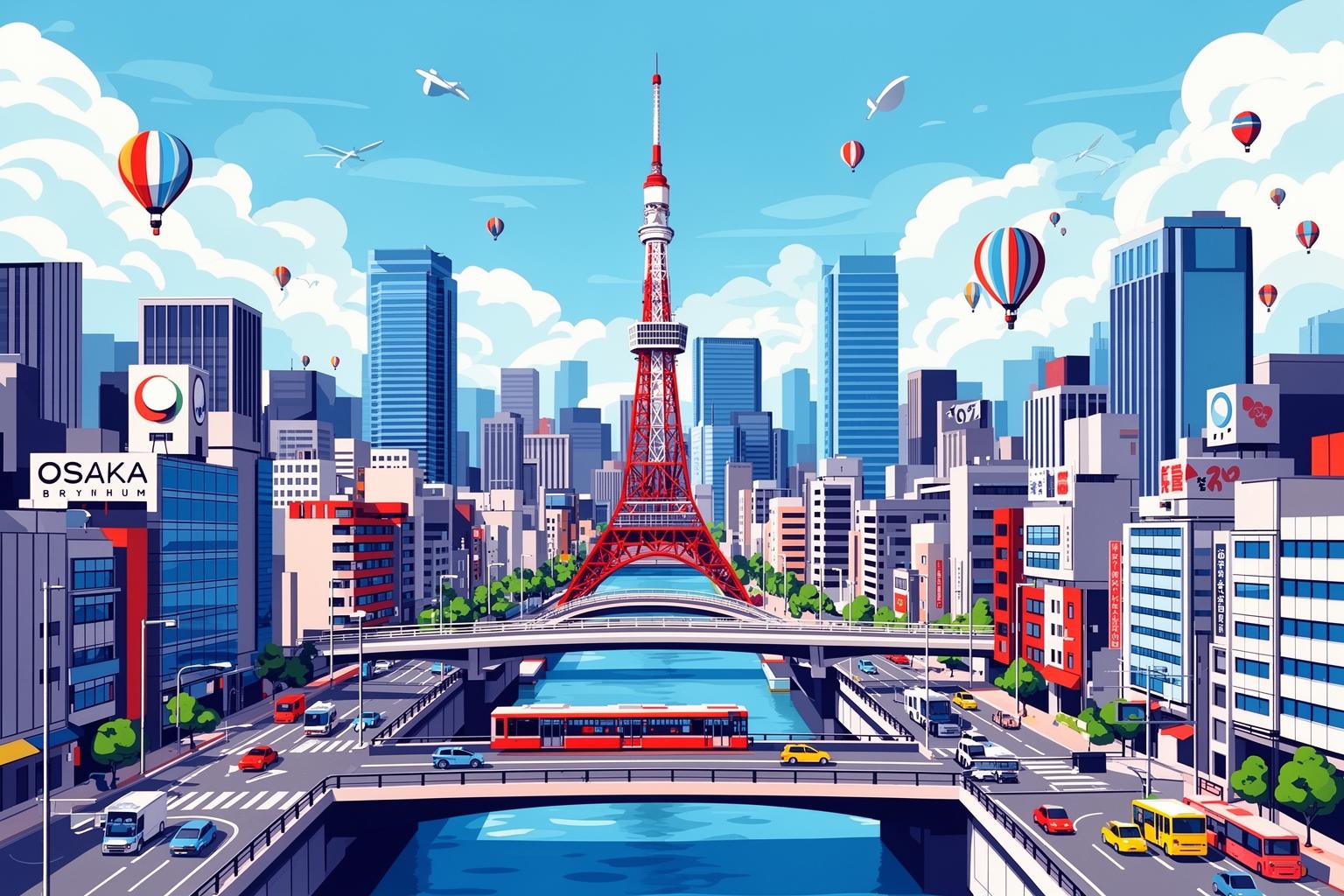
The pace of life in Osaka can seem paradoxical. On one side, the city pulses with an almost frantic, breathless energy. People walk fast, talk fast, and eat fast. The word sekkachi, meaning impatient or hurried, is often used to characterize the quintessential Osakan spirit. This energy is palpable in the train stations and along the main thoroughfares. The train doors slide open, triggering a surge of movement. When the pedestrian light turns green, you’re expected to be halfway across the street before it changes again.
The Merchant’s Clock
Yet, just when you think you’ve grasped the city’s relentless pace, it surprises you. Step off the main street and enter a covered shotengai (shopping arcade), like the expansive Tenjinbashisuji. Here, time seems to pass differently. The very person who nearly rushed you to catch the Midosuji Line will now linger for twenty minutes chatting with the woman at the vegetable stand about the weather, her grandchildren, and the quality of this season’s daikon radishes. This isn’t a contradiction; it’s a division of time. The rush applies to the impersonal, functional parts of life—the commute, the errands. It’s about efficiency. The slower pace is reserved for the personal, the human connections. It’s the merchant’s rhythm. You hurry through the practical tasks so you can savor the moments that matter: building relationships, closing a sale, sharing a laugh.
Misreading the Signals
This duality is often what foreigners misunderstand most about Osaka. They experience the rush hour crowds and label the people as pushy or aggressive. Then they meet a friendly, talkative shopkeeper and are puzzled by the apparent shift in demeanor. These aren’t two different types of people; it’s the same individual switching between two modes. The impatience in the station isn’t personal; it’s a shared dedication to keeping the city moving. The warmth in the shop isn’t a facade; it’s a sincere reflection of a culture that values human connection, especially within community and commerce. Recognizing this distinction is essential. You learn not to take offense at the speed and to cherish the moments of slowness. In Osaka, time is a tool—sometimes for speed, sometimes for connection.
Weaving Yourself into the Urban Fabric
So how do you shift from being an obstacle to becoming part of the flow? How do you master the steps of the Osaka shuffle? It’s less about memorizing a set of rules and more about developing a particular mindset. It involves observation, adaptation, and a willingness to understand the logic behind what initially seems like chaos.
The Gospel of Situational Awareness
The single most crucial skill for navigating Osaka is situational awareness. This means looking up from your phone. It means being aware of the people around you—those in front, behind, and beside you. Before stopping, you instinctively glance behind and move aside, out of the main stream of foot traffic. On a crowded train platform, you anticipate where the doors will open and position yourself not just to board, but to do so without blocking those disembarking. It’s a constant, subtle mental calculation. You are not simply an individual moving through a static environment; you are a node within a dynamic, interconnected network. Your actions create ripples, and the goal is to make those ripples as smooth as possible.
Walk With a Purpose
In Osaka, you should move with intention. Walk as if you know exactly where you’re headed, even when you’re completely uncertain. Hesitation is a cardinal sin against the flow. A sudden stop or a brief moment of indecision can cause a pile-up. If you need to check a map or gather your bearings, the proper etiquette is to finish your current movement—cross the street, exit the ticket gate, or clear the top of the stairs—and then find a safe spot. Nestle yourself into a corner, stand against a pillar, or step into a shop entrance. Complete your task, then confidently merge back into the flow. This decisive movement signals to others that you are a competent, predictable part of the system, making it easier for them to navigate around you.
Find the Method in the Madness
Ultimately, thriving in Osaka’s public spaces comes down to recognizing that the system, despite its apparent chaos, is deeply logical. The stand-on-the-right escalator rule, the sidewalk dance, the dominance of the mamachari, the sekkachi pace—it all serves a purpose. It’s the city’s homegrown solution to moving a huge number of people efficiently through a dense, energetic landscape. It’s a culture built on mutual, unspoken understanding. Once you stop resisting it and learn to read the currents, you’ll find yourself gliding through the station, sidestepping bicycles with ease, and standing on the correct side of the escalator without a second thought. And in that moment, moving perfectly in sync with the city around you, you’ll feel it. You’re no longer just living in Osaka; you’re part of its rhythm.