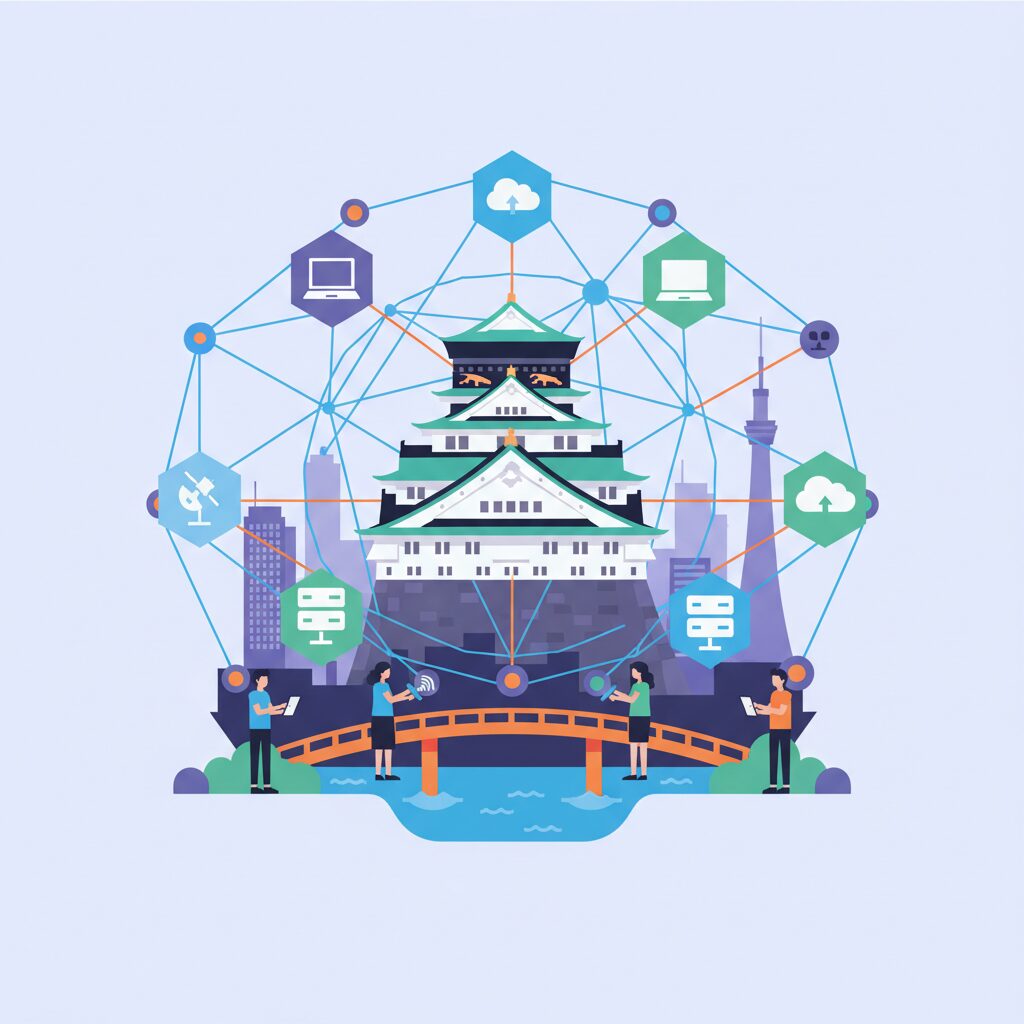
So you’ve landed in Osaka. You’ve got the apartment, the high-speed internet, the freedom of remote work. But after the initial thrill of exploring Dotonbori’s neon glow and the castle’s imposing silhouette fades, a quiet reality sets in. Your office is your kitchen table. Your colleagues are scattered across time zones, visible only in pixelated squares. The city hums with a life you’re watching from behind a screen, and a creeping sense of isolation begins to whisper: How do you plug into this place? How do you build a network when you don’t have a water cooler to gather around? In Tokyo, the answer might involve stiffly formal networking events, a frantic exchange of business cards under fluorescent lights, and a mountain of follow-up emails that lead nowhere. But this isn’t Tokyo. This is Osaka, and the rules of connection are written in a different language, one carved from centuries of commerce, community, and a healthy dose of laughter. Here, networking isn’t a scheduled task; it’s a byproduct of living. It’s a spirit called ‘Akindo’—the way of the merchant—and for the modern remote worker, it’s the key to unlocking the city. It’s about understanding that in Osaka, your community is your network, and your network is your community. They are one and the same, built not on LinkedIn profiles, but on shared drinks, neighborhood gossip, and a mutual desire to see everyone succeed.
Embracing Osaka’s unique ‘Akindo’ spirit means connecting with a vibrant community where even the way locals navigate daily errands on two wheels unveils the practical charm of everyday life.
The ‘Akindo’ Mindset: More Than Just Business
To truly understand Osaka, you need to grasp the ‘Akindo’ spirit—it’s the city’s cultural DNA. While Tokyo was molded by samurai, shoguns, and a strict bureaucratic hierarchy, Osaka evolved into the ‘tenka no daidokoro’—the nation’s kitchen. It was a city of merchants, traders, and artisans. Power wasn’t inherited; it was earned. Status wasn’t about family name but rather reputation, reliability, and the ability to negotiate well. This history ingrained a unique set of values into the Osakan mindset: pragmatism, directness, a focus on mutual benefit, and a deep understanding that relationships are the ultimate currency.
What is ‘Akindo’?
The ‘Akindo’ refers to the merchant, shopkeeper, or entrepreneur, but the spirit goes beyond a simple job title. It’s a whole worldview that values practical outcomes over superficial formalities. It favors a handshake deal between trusted partners rather than a volume of contracts filled with loopholes. Whereas the Tokyo mindset, shaped by a top-down power structure, asks, “Who do you work for? What is your rank?” the Osaka mindset, born from a bottom-up marketplace, asks, “What can you do? Are you reliable? Can we collaborate to make something great happen?” This difference is crucial. In Osaka, judgment is based less on credentials and more on character and contribution. It’s a marketplace meritocracy that runs from the stock exchange floor to the local takoyaki stand.
Key Principles of the Akindo Spirit
Several phrases and ideas serve as keys to this mindset. At first, they may seem odd, or even somewhat blunt, but once you understand their meaning, the social dynamics become clearer. The most iconic greeting is ‘Mokari makka?’ which literally means ‘Are you making a profit?’ A Tokyo native might be shocked, and a Westerner might think it’s a request to see their bank statement. But it’s not about money—it’s Osaka’s way of saying “How’s it going?” It shows camaraderie, signaling “Is your venture thriving? Is your hard work paying off? Because if you’re doing well, the community thrives.” The proper reply is a cheerful, ‘Bochi bochi denna’—meaning ‘So-so, getting by.’ It’s a modest way to say things are fine and invites a genuine conversation. This greeting embodies the core of the Akindo spirit: a belief in shared prosperity—my success depends on your success.
Another essential principle is the absolute importance of a ‘win-win’ outcome. An Osakan merchant would rather walk away from a deal than enter an unfair arrangement. A deal that leaves someone feeling cheated is no success; it’s a burned bridge. This directly applies to networking and collaboration. People instinctively assess this when meeting others: Is this person here only to take? Or are they aiming to build something together? That’s why a hard sell or a purely self-interested pitch usually fails in Osaka. People seek partners, not just clients or contacts. They want to know how you add value to their project or community—and they’ll consider how they can support you in return. It’s a continuous, reciprocal exchange of value rather than a zero-sum game.
Finally, there is the spirit of ‘Sonna atarimae ya,’ meaning ‘That’s just common sense.’ Osakans have little patience for bureaucracy or rules that hinder practical solutions. If there’s a faster, more efficient, and logical way to do something, that’s the way it should be done, no matter what the manual says. This encourages a culture of flexibility and innovation. For a remote worker, this is invaluable. It means people are often open to unconventional proposals, freelance collaborations, and new ways of working—so long as you can show that your approach makes sense and delivers results.
Where the Akindo Spirit Lives: Finding Your Network Beyond the Co-working Space
The biggest mistake a remote worker in Osaka can make is limiting their search for connection to designated ‘networking’ areas like sterile co-working spaces or formal industry gatherings. While these places exist, they often miss the city’s true essence. Genuine networking—the deep, authentic relationship-building—happens within the city’s lifeblood: its shopping arcades, standing bars, and neighborhood festivals. These are where the ‘Akindo’ spirit truly thrives.
The Shotengai: The Original Social Network
Long before Facebook or LinkedIn, Osaka had the ‘shotengai,’ covered shopping arcades. These bustling, sprawling passages are the core of local commerce and community. Walking down Tenjinbashisuji, Japan’s longest shotengai, reveals more than just shops; it reveals a vibrant ecosystem. The butcher has sourced vegetables from the same greengrocer for thirty years. The owner of the small bookstore knows which customers need tutors for their children. The elderly gentleman running the tea shop is a walking encyclopedia of local history and gossip. This is where the ‘Akindo’ network flourishes in its purest form. For a remote worker, the shotengai is an untapped goldmine. The approach is simple: become a regular. Choose a local arcade near your home. Don’t just rush in and out. Purchase groceries from small independent shops instead of large supermarkets. Find a favorite coffee shop (‘kissaten’) and visit every few days. Engage in small talk. Ask shopkeepers questions. Compliment their products. In surprisingly little time, you’ll stop being a stranger and become known as ‘the American writer who lives on the third floor’ or ‘that Australian web designer who loves coffee strong.’ Once you have that identity, the magic begins. One day, mentioning to the baker that you need an accountant might lead him to say, “Oh, you should talk to Tanaka-san. His office is just above the fish market. I’ll call him for you.” That’s a connection no online portal could provide. It’s one based on trust, familiarity, and a shared sense of place.
Tachinomi and Izakaya: The Boardroom of the People
If the shotengai is the community’s living room, then the ‘tachinomi’ (standing bar) and local ‘izakaya’ (pub) are its boardrooms. These aren’t sleek, corporate spaces but often cramped, noisy, and charmingly unpretentious venues where social hierarchies dissolve over cheap beer and grilled skewers. In a tachinomi in Kyobashi or Tenma, you’ll find construction workers, salarymen, artists, and small business owners standing shoulder-to-shoulder, sharing stories and complaining about the Hanshin Tigers. The close quarters encourage interaction, and the absence of seating means people frequently shift, creating a dynamic social flow. This is where serendipity comes alive. You might strike up a chat with the person next to you about the food and find out ten minutes later they run a small logistics company and need help improving their English website. The key is to be open and approachable. Don’t bury your face in your phone. Observe, listen, and if the moment feels right, jump into the conversation. Osaka’s directness plays to your advantage here. A simple, “That looks delicious, what is it?” can spark a meaningful connection. Unlike formal networking events where everyone’s guarded, izakaya visitors are relaxed and genuine. It’s in these places you meet the real person, and in Osaka, business always gets personal.
Community Hubs and Local Events
Beyond commerce and nightlife, the ‘Akindo’ spirit is sustained by community involvement. Every neighborhood hosts local events, from summer festivals (‘matsuri’) to shrine clean-up days and New Year’s mochi-pounding ceremonies. Taking part in these activities is one of the most effective ways to integrate yourself. It signals you’re not merely a transient resident but someone committed to the community’s well-being. Whether helping carry a portable shrine, serving drinks at a neighborhood barbecue, or just turning up and chatting, you demonstrate a willingness to contribute. This is the ‘win-win’ principle in practice: you invest your time and energy, and in return, you become woven into the social fabric. People remember the foreigner who helped clean the park. They value the effort. Later, when you need advice, a recommendation, or an introduction, those same neighbors are far more eager to assist. This isn’t a calculated networking tactic; it’s about being a good neighbor. And in Osaka, being a good neighbor is the best networking strategy of all.
The Unspoken Rules: How to Communicate Like an Osakan
Navigating Osaka’s social and professional scene means tuning into a different communication style. What may come across as brash or overly familiar in Tokyo is often viewed here as honest and efficient. Understanding these unspoken norms will help you build rapport and prevent misunderstandings. The city’s merchant heritage has cultivated a way of interacting that values clarity, humor, and genuine connection over strict, performative politeness.
Direct Talk Isn’t Rude, It’s Efficient
A common stereotype paints Osakans as loud and blunt. While volume can vary among individuals, the directness is a cultural trait, not a flaw. It originates from the ‘Akindo’ emphasis on efficiency. In a marketplace, there’s no time for the subtle, layered communication commonly found in Tokyo’s corporate environment. You need to get straight to the point. If someone spots a flaw in your idea, they’ll probably tell you outright. They’re not trying to be rude; they want to save time and achieve better outcomes quickly. For foreigners used to more indirect ways of communicating, this can be surprising at first. But once you grasp that it’s not personal, it becomes remarkably refreshing. It means less time spent decoding hidden meanings and more time having productive conversations. Politely embracing this directness will earn you respect. People value those who are straightforward and sincere.
Humor as a Social Lubricant
Osaka is known as the comedy capital of Japan. It’s the birthplace of ‘manzai,’ the fast-paced, two-person stand-up style that dominates TV. This comedic flair extends beyond the stage; it’s a vital part of everyday communication. Humor breaks the ice, softens direct comments, builds rapport, and signals not taking oneself too seriously. A self-deprecating joke is a powerful tool—it makes you relatable and dissolves pretension. If you’re explaining a complex project and stumble on a Japanese word, laughing it off with something like, “My Japanese is still under construction!” will earn a warmer response than a flustered apology. Learning to enjoy and even join in this playful banter is key. It’s the social glue that binds interactions. A successful meeting in Osaka often feels less like a formal presentation and more like a lively, joke-filled chat that ends with a business deal. Making someone laugh builds a bridge—a connection stronger than any exchanged business card.
The Power of ‘Maido’ and Reciprocity
‘Maido’ is a word you’ll hear frequently in Osaka’s shops and restaurants. It roughly means “always” or “every time,” used to thank regular customers for their loyalty. This simple word carries deep meaning—it acknowledges an ongoing relationship. For anyone building a network in Osaka, the goal is to reach the ‘maido’ stage. You want to be a regular, a familiar presence. You want the coffee shop owner, bartender, or bookstore clerk to greet you warmly with a ‘Maido!’ This feeling of belonging forms the basis for everything else. It’s grounded in consistency and reciprocity. The ‘Akindo’ world operates on a finely tuned system of give-and-take. If someone introduces you to a potential client, you incur a social debt that calls for repayment. You should seek ways to return the favor—whether by sharing valuable information, making an introduction yourself, or even bringing a small gift the next time you meet. This isn’t a strict bookkeeping system; it’s a natural process of strengthening relationships by showing your worth and your commitment to mutual success.
Bridging the Gap: Practical Strategies for the Remote Worker
Grasping the theory behind the ‘Akindo’ spirit is one thing; applying it as a remote-working foreigner is quite another. It demands a deliberate change in mindset and a readiness to step beyond your comfort zone. It’s about trading the efficiency of a purely digital lifestyle for the richer, more rewarding reality of genuine human connection.
Shift Your Mindset from ‘Networking’ to ‘Connecting’
First and foremost, abandon the term ‘networking.’ It suggests a transactional, goal-driven process where contacts are collected like trophies. In Osaka, this mindset feels cold and insincere. Instead, focus on ‘connecting’ or ‘community building.’ Your main objective shouldn’t be to find clients or collaborators, but to build authentic relationships. Show interest in people’s lives. Be curious about their work, neighborhood, and passions. Concentrate on what you can offer rather than what you can gain. Can you share your perspective as a foreigner? Offer a skill? Link two people who might benefit from meeting? By positioning yourself as a helpful, contributing member of the ecosystem, opportunities will naturally come your way. People do business with those they know, like, and trust. Your role is to become one of those people.
Find Your ‘Third Place’
Sociologists describe the ‘third place’ as a space that is neither home (the first place) nor work (the second place). For a remote worker, where home and work overlap, finding this third place is vital for both mental well-being and social connection. It must be a real, physical spot—perhaps a local cafe with a friendly owner, a library where freelancers gather, a public gym, or even a favorite seat at a neighborhood izakaya. The key is consistency. Regular attendance transforms you from a stranger into a familiar face. Other regulars recognize you. Staff remembers your order. Casual conversations begin to blossom. This ‘third place’ becomes your anchor in the community, your personal node in the local network. It’s where you’ll overhear fascinating chats, meet neighbors, and have those serendipitous moments that can’t be planned.
Leverage Your Foreigner Status (The Smart Way)
Being a foreigner in Osaka can be a significant advantage if handled well. People are naturally curious about your origins and why you’re in their city. This curiosity serves as a great icebreaker. But the conversation shouldn’t end there. The wrong approach is to remain ‘the foreigner,’ a perpetual outsider who only talks about their home country. The smarter way is to use that initial curiosity as a bridge to express sincere interest in their world. Ask questions about Osaka. Share what you appreciate about the city. Make an effort with the language, even if you stumble. Present your unique skills and global perspective not as separate but as contributions to the local community. Rather than saying, “I need work,” say, “I have experience helping companies reach international customers, and I’m very interested in how local Osaka businesses are approaching that.” This aligns with a ‘win-win’ mindset and positions you as a potential partner, not just a job-seeker.
Conclusion: Building Your Osaka
For the remote worker, Osaka offers a distinctive opportunity. It’s a vast, world-class city that functions with the warmth of a close-knit community. The loneliness that can often accompany a freelance lifestyle finds relief in the city’s deeply rooted ‘Akindo’ spirit. Building a professional network here relies less on algorithms and apps and more on showing up, engaging, and embracing a culture of practical, humorous, and sincere human connection. It means exchanging the sterile efficiency of a Zoom call for the lively camaraderie of a standing bar. It means understanding that your next big client might not come from a job board but from a referral by the person who sells you fish. This journey isn’t always the easiest or quickest. It demands patience, humility, and a genuine wish to be part of something bigger than yourself. But by drawing on this ancient merchant spirit, you can create more than just a list of contacts. You can build your own Osaka—a city that feels like a village, a network that feels like a neighborhood, and a place that, eventually, starts to feel like home.